Births Deaths Marriages, Enslaved People, Free People of Color, North Carolina, Paternal Kin

Adam Artis’ children, part 1: the Coleys.

In 1863, when the Confederate tax assessor queried administrator John Coley of Wayne County about W.W. Lewis’ estate, Coley enumerated several slaves, including Winney, age 29, Cane, age 9, and Caroline, 7. Adam Artis, the father of Winny’s children, lived nearby. He was a free man of color, and his and Winny’s relationship had not lasted long.

By adulthood, Cain Artis had adopted his father’s surname and farmed his own land in northwest Wayne County.  By 1890, he had bought a house in the nearby town of Wilson and the 1912 city directory shows him operating a small business just outside city limits on the town’s main road. He died of tuberculosis in Wilson County in 1917, survived by his second wife, Margaret Barnes.

In 1878, Caroline Coley married Madison Artis, son of Calvin and Serena Seaberry Artis. Her uncle Jonah Williams was a witness to the ceremony. Caroline and Madison appear in the 1880 census of Wayne County, but have not been found after.

Standard
Births Deaths Marriages, Maternal Kin, North Carolina, Photographs, Vocation

Mercy me.

ImageThe hospital was on East Green Street, right around the corner from Jackson Chapel and Saint John AMEZ and Calvary Presbyterian. That last Sunday in June, two days after her first delivery, my mother lay perspiring in an iron bed, smiling uncomfortably as she accepted congratulations from church ladies making their post-service rounds. (The first reports went out: the Hendersons had a jowly yellow girl with a slick cap of black hair, a “Chink” baby, as one later indelicately put it.) She was desperate to be discharged, but had to wait for an all-clear from the pediatrician. It was not as if he were right down the ward. Dr. Pope was white, and as his black patients were forbidden to come to him, making his rounds meant driving across the tracks to them, laid up in sweltering Mercy Hospital. He arrived Sunday evening, turned me this way and that, pronounced himself satisfied, and granted us a release for the next morning. A few months later, when federal law mandated that Wilson’s new hospital open as an integrated facility, Mercy closed.

Founded in 1913 as the Wilson Hospital and Tubercular Home, Mercy was one of a handful early African-American hospitals in North Carolina and the only one in the northeast quadrant of the state. Though it struggled financially throughout its 50 years of operation, the hospital provided critical care to thousands who otherwise lacked access to treatment. A small cadre of black nurses assisted the attendant physician. One was Henrietta Colvert, shown below at far left, my great-grandfather’s sister. Henrietta was born in 1893 in Statesville, Iredell County, and received training at Saint Agnes School of Nursing in Raleigh. How she came to Wilson is unknown. This photograph suggests that she cared for Mercy’s patients in its earliest days. (The man seated in the middle is Dr. Frank S. Hargrave, a founder of the hospital, and he left for New Jersey in the early 1920s.)  My father’s mother recalled that Henrietta also worked as a visiting nurse for Metropolitan Insurance Company in the 1930s and attended her children for two weeks after they were born.  My great-great-aunt was still at Mercy in the 1940s, but had left Wilson by time my mother married my father and moved there in 1961, and my family had long lost contact with her when she died in 1980 in Roanoke, Virginia.

Image

Photograph of Mercy Hospital taken in June 2013 by Lisa Y. Henderson. Photo of Mercy’s staff courtesy of the Freeman Round House Museum, Wilson NC.

Standard
Births Deaths Marriages, Maternal Kin, Newspaper Articles, North Carolina

Witnesses to a homicide.

Harriet Nicholson, then about 16, married Abner Tomlin on November 20, 1877, in Iredell County. Their marriage license lists “L. Nicholson” as Harriet’s mother and leaves blank the space for a father’s name. Harriet’s son Lon Colvert was two years old and remained with his father’s grandparents.

The couple settled in Olin township, likely near Abner’s family. Harriet may have been pregnant when she married; their son Milas (named after Ab’s father) was born about 1877. In subsequent census records, Harriet reported having given birth to as many as nine children by Abner, but my grandmother knew only one, Harvey Golar Tomlin, born about 1891. However, at least one other child, Lena, lived to young adulthood, as the newspaper article below attests:

——

HOMICIDE FRIDAY NIGHT.  Jess Shaw, Colored, Shot and Killed in Wallacetown — Bob Owens Charged With Murder — Conflicting Testimony

Jess Shaw, a colored man probably about 19 years old, was shot and killed between 10 and 11 o’clock Friday night in Wallacetown, a colored suburb on the A., T. & O. Railroad, just south of the Statesville depot.  Bob Owens, a young colored man is charged with the killing and was held by the coroner’s jury.

The shooting took place near the house of Emma Rhinehardt.  According to the testimony Shaw had borrowed a guitar from Grace Belk, colored.  She told him he could pick it but not carry it away.  He did carry it away and when the woman saw him, shortly before the killing, she cursed him about the guitar and advanced on him with a knife.  Jess stooped down to pick up a rock, or did pick up one, and just then he was shot.  Three shots were fired, but only one took effect.  It is known that Bob Owens, Grace Belk, Maggie Morrison, Dovey Gray and Emma Rhinehardt were present when the shooting occurred.  Jess ran up the railroad when shot, a distance of 100 or 150 yards, and calling to Ab. Tomlin’s wife told her he had been shot and that Bob Owens had shot him.  Tomlin and his daughter Lena went to him and carried him to their house.  He died in about 15 minutes but before dying told them again that Bob Owens had shot him.

… Dr. Long, who made the post mortem examination, assisted by Dr. Carlton, found that one ball had entered the abdominal wall of Shaw’s body, passed through a large intestine in two places, completely severed a large artery and buried itself in the muscular tissue of the pelvis, from which it was removed by the surgeons.  Death was due to internal hemorrhage produced by the shot.

The testimony as to the shooting is conflicting.  Ab Tomlin and his daughter testified to Shaw’s telling them that Owens shot him. …

Owens is a small black negro and bears a fair reputation among white people, but his reputation is said to be bad among those of his own race.

The locality where the shooting occurred is a colored settlement that is noted for rowdyism. 

— Statesville Semi-Weekly Landmark, 4 October 1898.

——

Ab Tomlin apparently died soon after this incident, as his wife Harriet is listed as a widow in the 1900 census. Of their son Harvey Golar, known as “Doc,” more later.

Standard
Births Deaths Marriages, Free People of Color, North Carolina, Oral History, Other Documents, Paternal Kin

The death of Lewis Henderson.

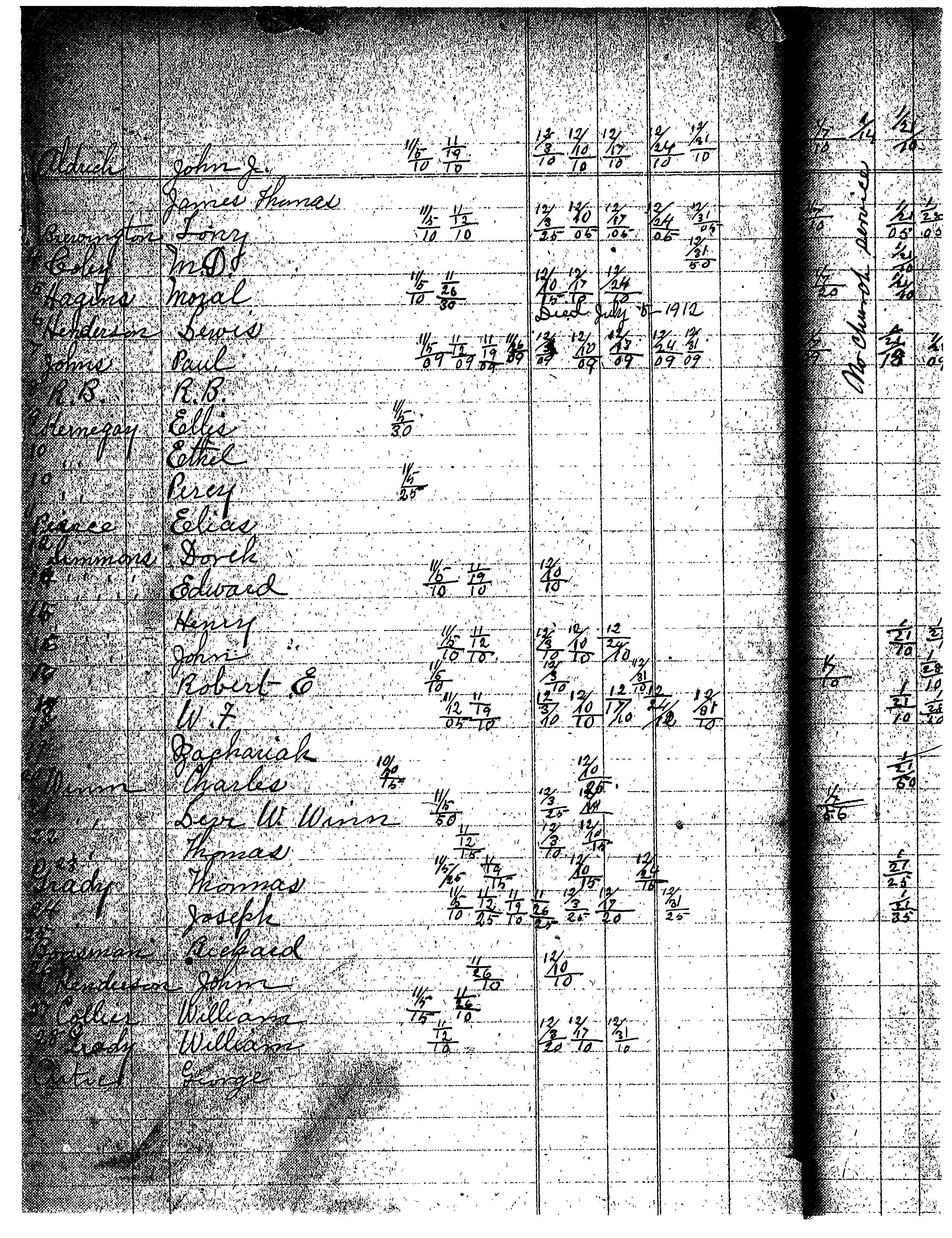
lhenders-20110225152701My grandmother, who was born in 1910, said her great-grandfather Lewis Henderson died when she was very small. She did not remember him, though her sister Mamie had reason to. He threw a brush at her — it hit her in the head —  because she was making too much noise. She could not have been older than four.

North Carolina did not keep death certificates until 1914, and Lewis’ grave is unmarked. How do we know exactly when he died? This is a page from one of the few volumes of early church records that survive for the Congregational Church of Dudley. Lewis had helped found the church in 1870, and this list shows tithes paid by male congregants. The sixth name: Henderson, Lewis. And this notation: “Died July 5 — 1912.” He would have been about 76.

Standard
Births Deaths Marriages, Enslaved People, Maternal Kin, Newspaper Articles, North Carolina, Virginia

The death of Walker Colvert.

Image

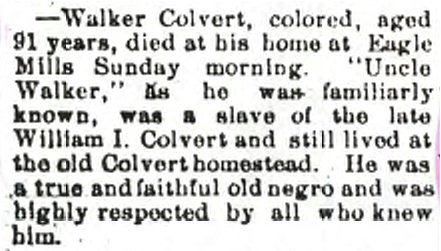
Born in Culpeper County, Virginia; bundled up with chairs and kegs and sundry and shipped to North Carolina after his first master died; reared with his future master, the William I. Colvert noted; husband to his beloved Rebecca; father of three, or maybe four (or more likely more); a middle-aged man when freedom came; a farmer who got a toehold and kept it long enough to pass it on. In the February 5, 1905, edition of the Statesville Landmark, a brief acknowledgement of the death of Walker Colvert, “a true and faithful old negro.” I feel some kind of way about the description, but I didn’t have to live in 19th century North Carolina, and I will not judge. (Him, anyway.)


Standard
Births Deaths Marriages, Free People of Color, Letters, Newspaper Articles, North Carolina, Oral History, Paternal Kin

Comments, upon the death of Rev. Silver.

REV. JOSEPH SILVER DIES AT HIS HOME AT 100 YEARS OLD

Reverend Joseph Silver, Sr., well known and highly respected Negro minister, died Tuesday at his home in the Delmar community, on Enfield Route 3.  He celebrated his 100th birthday anniversary last July 22 at a large gathering of friends and relatives. Rev. Silver had been in poor health about four years and had been confined to his bed for the past four months.

Funeral services will be held from the Plumbline Holiness Church, Sunday afternoon at 2 p.m. The body will lay in state at the church an hour before the funeral.  The Rev. L.G. Young, of Henderson, will preach the funeral and burial will be in the family plot.  Among those expected at the final rites are Bishop M.C. Clemmen of Richmond, Va., and Bishop H.B. Jackson of Ayden.

Rev. Silver began preaching in 1893 when he he organized and built Plumbline Church.  Among other churches built by his ministry are ones at Ayden and Summitt, near Littleton. He was an organizer of the United Holiness Church of America and served on the board of Elders until his death.

Rev. Silver was married three times; first to Felicia Hawkins, who died in 1931, then to Sarah Jacobs of Wilson, who died in 1938; and last to Martha Aldridge of Goldsboro, who survives.  In addition to his wife, Rev. Silver is survived by five sons N.D. and Samuel Silver, of Washington, DC; Gideon, of Pittsburg, Pa.; Joseph, Jr., of Halifax and A.M. Silver of Route 3, Enfield; three daughters, Epsi Copeland and Roberta Hewling, of Enfield, Route 3, and Emma Goines, of Pittsburg, Pa. Eighty grandchildren, 109 great-grandchildren, and 17 great great grandchildren also survive.

— Unnamed newspaper clipping, 10 January 1958.

——

P.O. Box 193 Nashville

N.C.   c/o Brake

Feb. 2, 1958

Dear Hattie –

You heard of Rev. Silver’s death Jan. 7th although I didn’t notify you as I was sick and still is sick but not confine to bed.  Sarah had some things in the home.  A bed which I am sure you wouldn’t care for and a folding single bed which I am going to get but my main reason for writing you she has an oak dresser and washstand that Rev. Silver told me you wanted and said he told you you could get it if you would send for it so it is still there and it is good material if you want it.  Amos has already seen a second hand furniture man about buying it.  The Silver’s will “skin a flea for his hide and tallow.”  The Aldridges holds a very warm place in my heart and always will.  If you wish to do so you may write to Rev. Amos Silver Route 3 Box 82 Enfield and ask him if your mother Sarah’s furniture is still there.  There is also a carpet on the floor in the living room you need not mention my name.  I am very fond of Johnnie Aldridge of Dudly.  Come to see me whenever you can I think you might get with Reka at Fremont some times, she and Luke come to Enfield to see me occasionally  I am going to write Reka next week.  I married your great uncle Rev Joseph Aldridge write me

Your friend and great aunt by marriage.

M.C. (Aldridge) Silver

——

And then this was what my grandmother had to say:

Mr. Silver, he had a bunch, he had 11 children, and his son had a whole bunch of ‘em.  Joseph Silver.  And I went up there one time and one of the brothers was crazy.  And they had one of them there things built up where you could put a person in it, and you can just slide their food right in it.  And it was a seat in there, least it was built in the thing where you could sit on.  When the person would act up, and you can’t do nothing with him, you’d lock him up in that thing, and he had one of them things in the backyard.  Big old thing.  It was just like one of them tanks where oil come in.  And I went in there, peeked through the thing, and I was scared, and I’m drawed all up and looked, but I couldn’t see in there.  But they told me how it was.  …  When Mama got married there on Elba Street, there at the house.  Yeah.  He come up there …  He was a little short brown-skinned man, and he was a elder and the head of the church where was down there in Halifax County.  And all the children ….  Epsie?  Epseline?  What was his first wife’s name?  But him and Mama fell out ‘bout the cooking stove.  She took and got the wood and got the little stove – was four caps on it.  I’ll never forget it.  And it was red-hot in the middle.  And he said, “Don’t put too much wood in that stove!  Get Epsie’s stove that hot!  I know she’ll turn over in her grave!”  And she told him, said, “What?  Epsie ain’t here!”  Said, “I’ll tear the whole stove down!” or something, and she hit the stove!  He didn’t want her to –  They had chinches all over the house.  It was a sealed plank house, and the chinches was all in the, where the cot was up against the wall?  And Mama said she went there and, I told her, I said, when she was telling me ‘bout she was scalding water, had the stove hot and had buckets of water up there on the stove so it would be hot enough to kill the eggs and everything.  And he didn’t want her to pour no water on it, talking ‘bout she got the stove red-hot and Epsie’ll turn over in her grave.   She had that stove that hot.  “Epsie didn’t never used to have it that hot.”  She said, “Well, Epsie ain’t here now, and I’ll burn it up!  House and all!”  She said, “To get rid of these here chinches.”  Chinches all over everywhere!

“Epsie,” of course, was Rev. Silver’s daughter, not his wife. This letter addressed to “Miss Hattie Jacobs  Sanatorium Wilson N.C.,” postmarked Feb 2 1958, Nashville N.C. is in my possession.  Martha Silver’s previous husband had been Joseph Aldridge, younger brother of my grandmother’s grandfather John W. Aldridge.  The Johnnie Aldridge referred to was my grandmother’s uncle.  Reka Aldridge Morrisey Ashford was the daughter of George W. Aldridge, John W. Aldridge’s older brother.  I interviewed my grandmother in her home in Philadelphia in 1994.

Standard
Births Deaths Marriages, Free People of Color, North Carolina, Paternal Kin, Photographs

On the Stoney Run Branch and Wilmington & Weldon Railroad.

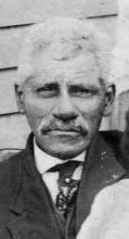
On 4 July 1902, dower laid off and partition made of Robert Aldridge‘s land as follows:

Dower — Eliza Aldridge received 53 acres on a run of Stoney Run Branch.

Lot No. 1 — Mathew W. Aldridge received 100 acres on Stoney Run and Hurricane Branches, excluding the Agustus Church and free school house lots.  An interest Mathew had bought from his father was included in the described tract and the residue was valued at $200.
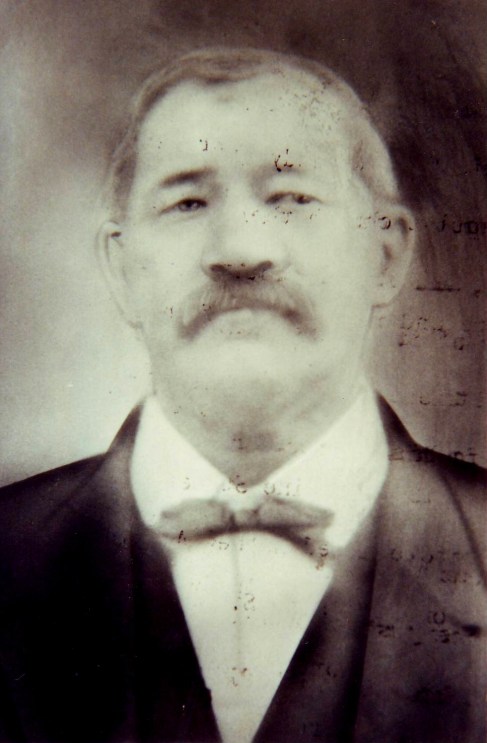
matthew-aldridge

Lot No. 2 — George W. Aldridge received 42 acres on Stoney Run and the county road valued at $200.
george-aldridge

Lot No. 3 — Joseph Aldridge received 53 acres on Stoney Run and the county road valued at $200.

Lot No. 4 — David Aldridge received 80 acres on Stoney Run and the county road valued at $200.

Lot No. 5 — Robert Aldridge received 41 acres on a prong of Stoney Run and the Spring Road valued at $200.

Lot No. 6 — John W. Aldridge received 50 acres on Stoney Run Branch below the mineral spring and the Spring Road valued at $285.

Lot No. 7 — Frances Locust received 33 acres on Stoney Run and the Spring Road valued at $200.

fannie-a-randall

Lot No. 8 — Talitha Brewington, Hattie Brewington, Elijah Brewington, Mattie Brewington, Lundy Brewington, and Toney Brewington jointly and subject to the life estate of Joshua Brewington, received 33 acres on W&W Railroad valued at $193.

Lot No. 9 — Louetta Aldridge received 32 acres on Stoney Run Branch valued at $193.

Lot No. 10 — Lizzie Aldridge received 32 acres on the W&W Railroad and Stoney Run Branch valued at $193.

Lot No. 11 — Louetta Artis, Robert Artis, Columbus Artis, Josephine Artis, J. Scott Artis, J.B. Artis, Lillie Artis, Annie Artis and Elberta Artis, jointly and subject to the life estate of Adam Artis, received 32 acres at the mouth of a ditch on the run of Stoney Run and the railroad valued at $193.

Submitted by Sam C. Casey, Walter C. O’Berry, Ira W. Hatch.

The margins of this document contain notations and signatures acknowledging receipt of moneys due to balance the lot values, including signatures of Lizzie Aldridge, Tilithia King, J.W. Aldridge, Joseph Aldridge, Hattie Brewington, Columbus Artis, Elijah Brewington, Tony C. Brewington, Robert Aldridge, Lundia Brewington, and June Scott Artis, and Eliza Artis’ mark.

John Aldridge, owner of Lot No. 6, paid $7 each to the owners of Lots 8-11, and $57 to the Clerk of Superior Court for costs of the division.

Louetta Aldridge’s share was divided among her siblings “the owner of said amount now being dead this day Aug 22=1904.”

——

Robert Aldridge, my great-great-great-grandfather, was born circa 1819, probably in Duplin County NC, and died about 1899. He appears as a hireling in the 1850 census in Sampson County in the household of Calvin Simmons. By 1860, he and his wife Mary Eliza Balkcum Aldridge were living in southern Wayne County with their youngest children. His accumulation of property is something of a mystery, as his recorded deeds do not yield the acreage distributed in his estate.  Bits of the land remain in family hands.

There is a Stoney Run in Wayne County today, but it courses several miles northwest of the area in which Robert Aldridge is known to have owned land. I suspect that the waterway referred to above is now known as Yellow Marsh Branch, which has been dammed to form Durhams Lake. Robert owned a brickyard in the vicinity. “Agustus Church” is now Augustus Chapel Missionary Baptist Church, and the current edifice stands on the original land as what is now 599 Durham Lake Road, Dudley. The church celebrated its 145th anniversary in 2012. The Wilmington & Weldon Railroad is now owned by Atlantic Coast Line. My best guess for the “county road” is the road now known as the Old Mount Olive Highway, which runs alongside the railroad.

Abstract of document in the file of Robert Aldridge, Estate Records, Wayne County Records, North Carolina State Archives.

Photos of Mathew Aldridge, George Aldridge and Frances “Fannie” Aldridge Locust, alias Fannie Randall, in the collection of Lisa Y. Henderson.

Standard
Births Deaths Marriages, Maternal Kin, Other Documents

She is now with child.

Image

During a recent trip to the North Carolina State Archives, I discovered documents related to an Iredell County bastardy action — State v. John Colvert, colored. Harriet Nicholson had been examined by county officials and found to be pregnant. She named John Colvert as the child’s father and, on 26 January 1874, a warrant was issued to force him into court. In May, John Colvert, with Alfred Dalton and Peter Allison giving bond, agreed to “maintain” the child, i.e. pay child support.

I was aware that Harriet and John were not married when their son Lon was born. Indeed, they never married. In an unusual turn for the era, the child was given his father’s last name and was reared by John’s father and stepmother, Walker and Rebecca Colvert. However, the date of the bastardy action struck me. First, in January 1874, Harriet was only 13 years old. (John was 23.) Second, Lon always gave his birth year as 1875. (June 10, to be exact. Belated shout-out.) Was he in fact born a year earlier in 1874? Could Harriet’s condition have been detected early enough for her to been hauled into court in January? Or was Lon Harriet’s second pregnancy, the first having resulted in a stillbirth or infant death?

My grandmother never mentioned an older child. Perhaps she never knew of one. Harriet married Abner Tomlin a couple of years after Lon’s birth and of their several children only one, Harvey Golar Tomlin, lived long enough for my grandmother to know. Her last child, Bertha Mae Hart, was born in 1904 of her second marriage.

Standard
Births Deaths Marriages, Free People of Color, North Carolina, Paternal Kin

Marriage.

Throughout the summer of 1866, they converged in pairs on the tiny hamlet of Goldsboro. In their least-patched clothing and maybe in shoes, they were dusty and footsore by time they arrived at the courthouse looming over the center of town. Under a scorching white sky, with depthless farmwork begrudging every moment away, they made their way to claim what had only recently seemed like fantasy — a marriage license. North Carolina had offered to legitimate all slave cohabitations, and thousands took up the offer.

Watching them go, self-proud and probably envious, were ancestors like mine — Lewis and Mag Henderson. They had been together 15 years by then and could have married legally at any time, but were too poor to afford the fees and too wary besides of inviting unnecessary scrutiny of their free colored lives. Even if they craved legitimacy, however, they did not avail themselves of the 1866 law. They had not been slaves. Until he died in 1912 and she in 1915, Lewis and Mag lived in quiet mutual devotion — without government sanction.

A hundred years after his forebears spurned the law, another Henderson happily paid for his license and was married in the shade-dappled sideyard of his bride’s grandparents’ house. My parents celebrated 52 years in May.

Standard
Births Deaths Marriages, Maternal Kin, Newspaper Articles, North Carolina, Oral History, Photographs

It was our aunt, screaming and crying.

Image

Hattie Hart Dead.

Hattie Hart, colored, wife of Alonzo Hart, died Thursday night at 9:30 o’clock at her home, death occurring at the age of 63 and resulting from a stroke of apoplexy.  The funeral took place at the Center Methodist Church at 3 o’clock in the afternoon.  — The Landmark, Statesville NC, 2 Jun 1924.

—–

This is how my grandmother recalled the death noted above:

“She was subject to high blood pressure, and she had this attack on this day, and we all had to go out there.  It was me — Louise was in Jersey — and it was Launie Mae, Mama and Papa.  And I think Golar went, too.  Anyway, I know we all went out there, and she was sick for a few days and then she died.  But the day that she died, we had gone to the store.  Some old country store, and we had to go a long ways, but we could see down the road, you know. So we went on down the road and when we came back, there were some people who lived across the pasture in some houses that belonged to Mr. Hart.  (That was the step-grandfather — stepfather of Papa.) He owned all these houses, and we saw these people running across the street, and Launie Mae said, “Lord, there’s something happening!” and I said, “There sure is.”  And the closer we got, the more we kept hearing this noise, you know?  And it was our aunt, screaming and crying, you know, ‘cause Grandma had passed.”

——

Photo of Harriet Nicholson Tomlin Hart in collection of Lisa Y. Henderson.

Standard