
Honoring the memory of my grandfather, John Christopher Allen Jr., on his 108th birthday.

The earliest known photograph of John C. Allen Jr., taken circa 1920.
Honoring the memory of my grandfather, John Christopher Allen Jr., on his 108th birthday.
The earliest known photograph of John C. Allen Jr., taken circa 1920.
My grandmother tells a story:
… Jay and I were supposed to clean the house on Saturday. You know, do the vacuuming and dusting and cleaning and everything. And then I would play, and we would play, and Grandma would say, “I’m gonna tell your mama. I’m gonna write your mama and tell your mama how you act.” She said, “I can’t write her right now ‘cause I’m nervous,’ you know.” Couldn’t write a lick. [I laugh.] Couldn’t read …. I don’t think she could read or write, but I know she couldn’t write. Bless her heart. She says, “I’m gonna tell your mammy on you. You see if I don’t. And, see, if I wont so nervous, I’d write her, but I’m too nervous” – couldn’t write any more than she could fly! [Laughs.]
Martha Miller McNeely, born into slavery in 1855, may not have been able to read or write, but her children signed their names in clear, firm hands that evidence both their early education and their easy familiarity with penmanship. Their father Henry, the literate son of a slaveowner, may have taught them rudiments, but they likely attended one of the small country schools that dotted rural Rowan County. (My grandmother said that her mother Carrie finished seventh grade and was supposed to have gone on to high school at Livingstone College, but the family used her school money to pay for an appendectomy for one of her sisters.) The document below is found in the estate file of Henry’s half-brother, Julius McNeely, who, unlike Henry, was not taught to read during slavery. Julius died without a wife or children, and Henry’s offspring were his sole legal heirs.

Signatures are often-overlooked scraps of information that yield not only obvious clues about literacy, but also subtleties like depth and quality of education and preferred names, spellings and pronunciations. They are also, in original documents, tangible traces of our forebears’ corporality — evidence that that they were once here.
——
Interview of Margaret C. Allen by Lisa Y. Henderson, all rights reserved. File of Jule McNeely, Rowan County, North Carolina Estate Files 1663-1979, https://familysearch.org. Original, North Carolina State Archives.
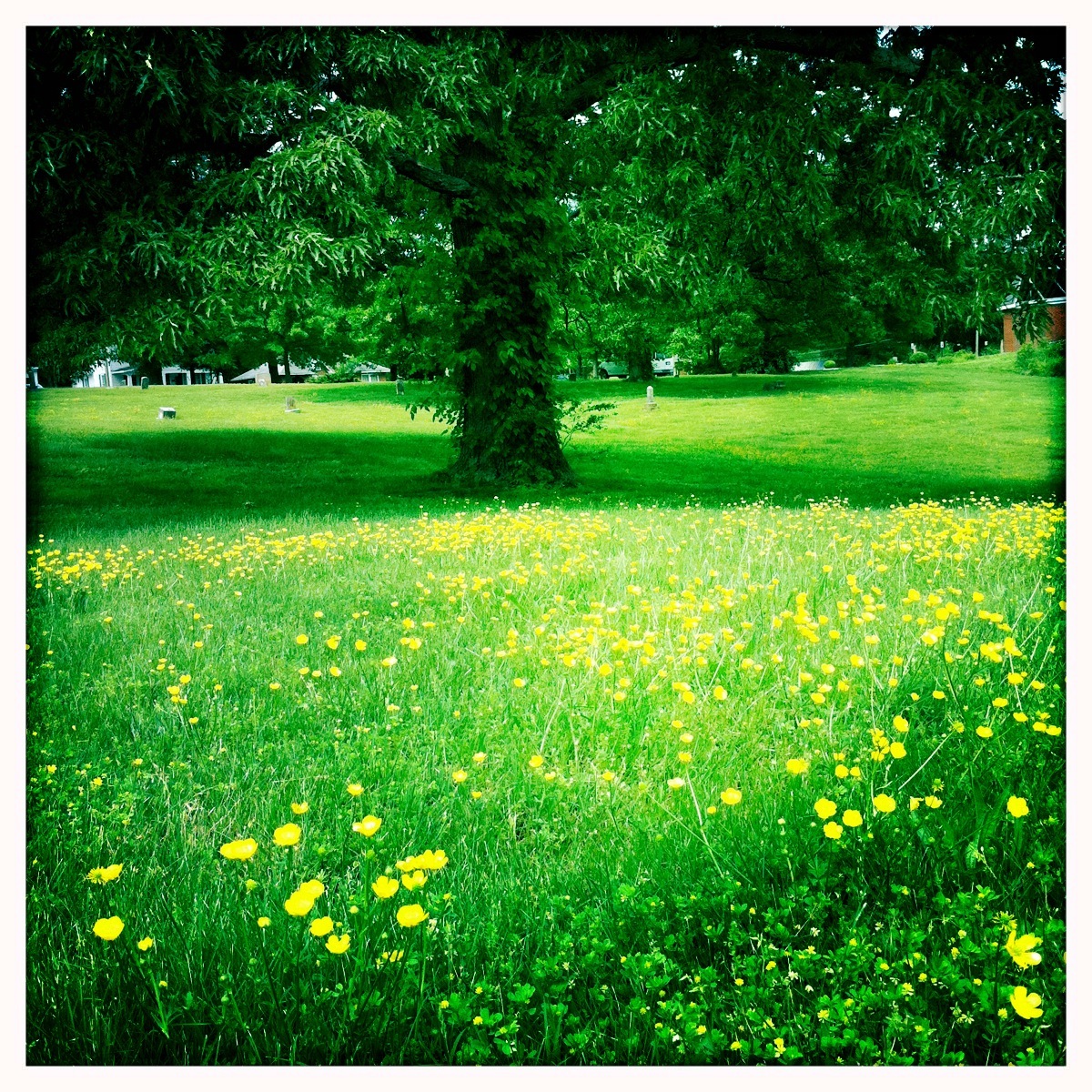
Statesville, North Carolina. April 2011.
Green Street cemetery, Statesville, North Carolina, abloom in buttercups. Though largely empty of headstones, this graveyard is probably close to full. Most of the existing stones, including that of my great-great-grandfather John W. Colvert, date from 1890-1930 — ex-slaves and their children. For some, it is the most detailed record of their lives. One: MARY WILLIAMS passed away Mar. 13, 1917 in her 94th Year Blind cheerful her simple faith was an inspiration Rest in peace Aunt Mary.
I had a bad feeling.
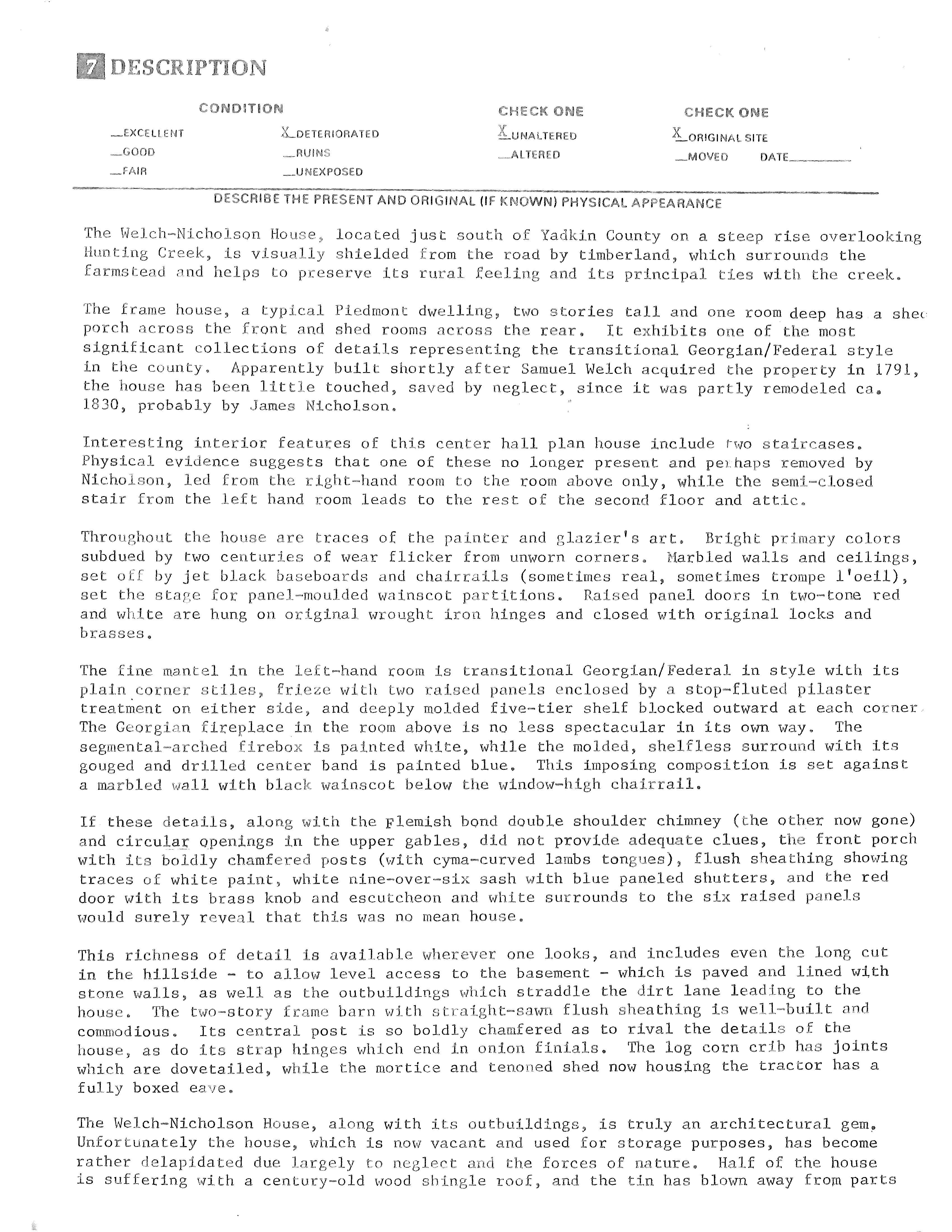
When the Welch-Nicholson House was nominated for the National Register of Historic Places in 1980, it was being used for storage and in parlous condition. Already nearly 200 years old, it seemed unlikely to me that the place could still be standing, much as I hoped it might. Over the weekend, I sent a message to Ann Swallow, National Register Coordinator at the North Carolina Historic Preservation Office of the North Carolina Department of Cultural Resources. I wanted to know if the original application file for the house was available for perusal by researchers. First thing Monday morning, she responded. Yes to my question, but this: “We were informed in early 2014 at the end of a survey conducted by the North Carolina Department of Transportation that the house was no longer standing.” Ms. Swallow kindly attached two photos of what’s left.


So. There will no emotional return to the house in which my great-great-grandmother Harriet Nicholson spent her earliest years.
I’ve written of Joseph R. Holmes’ death. What of his life? The details are sketchy and poorly documented. Nonetheless, here is what I know.
Birth, death, marriage and court records at Charlotte County Courthouse, Charlotte Court House, Virginia; other records as noted. Thanks, as always, for the incalculably valuable assistance of Kathy Liston.
I was on my way to posting this map when I stumbled across the Welch-Nicholson House application. Back to it:

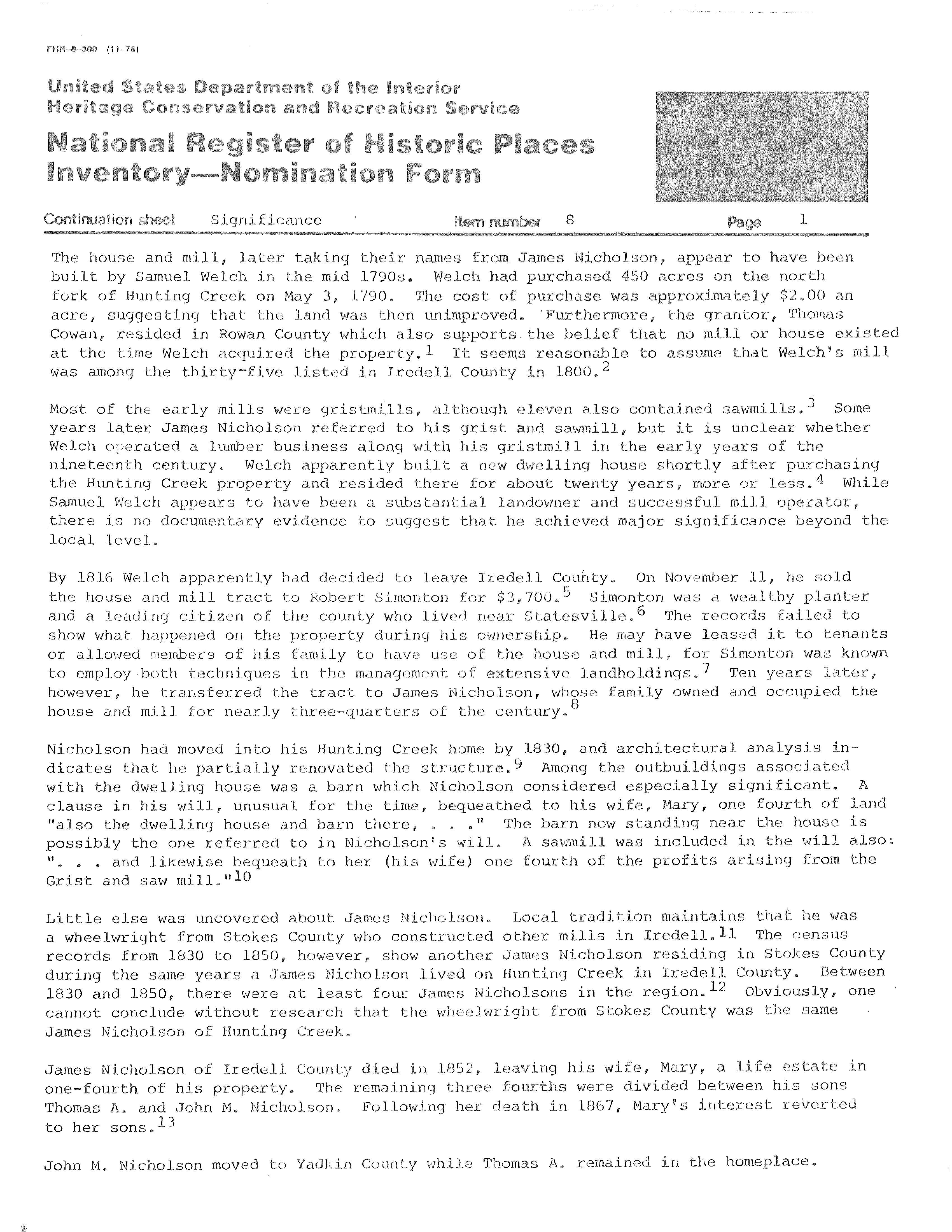
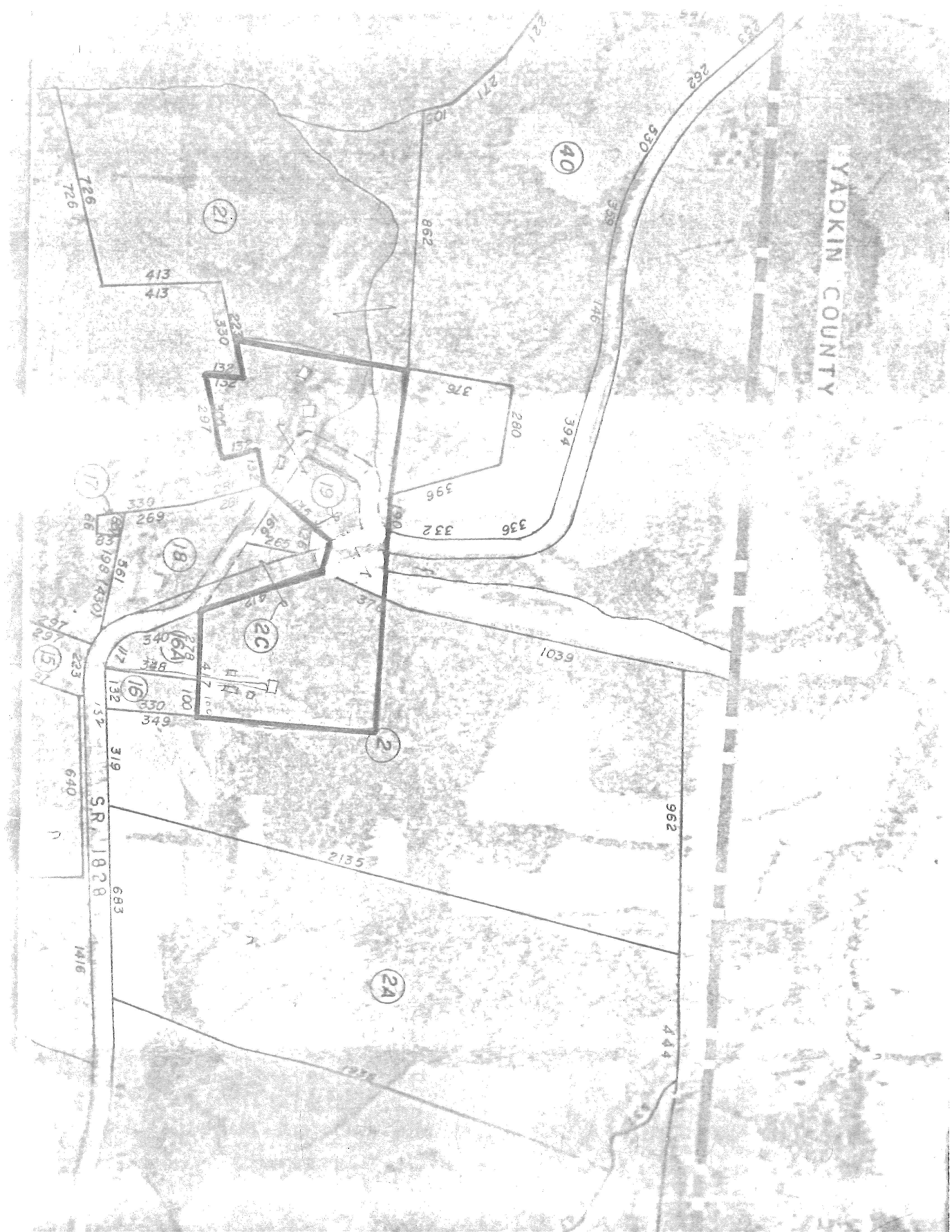
Historian and genealogist Margaret Miller created and holds the copyright on this map of early Iredell County settlers and landmarks. The county, taller than wide, stands on a narrow foot, and I’ve excerpted a section that covers roughly the top fifth of its territory. The world of my 19th-century Iredell County ancestors was largely contained within the borders of the superimposed red box. There, just south of the Yadkin County line, is the Nicholson Mill that anchored the farm that James Nicholson bought in 1826. His half-brother John Nicholson lived on adjoining land, and their children Thomas A. Nicholson and Rebecca C. Nicholson married in 1839. Thomas and Rebecca reared their children in the house James had owned, and their slaves worked both the mill and the farm. One enslaved woman, Lucinda, likely worked with Rebecca in the house and, in 1861, gave birth to a daughter, Harriet, whose father was Thomas and Rebecca’s son Lee. That same year, Lee married Martha Ann Olivia Colvert.
In the early 1870s, the adolescent Harriet Nicholson met John Walker Colvert, a 22 year-old farmhand still living on the farm at which he had been born a slave. That farm, which is also where Martha “Mattie” Colvert was reared, was near Eagle Mills, the ill-fated cotton mill on Hunting Creek due south of Nicholson Mill. Mattie’s father William I. Colvert, an early small-scale industrialist, had been a partner in the development of Eagle Mills in the 1850s. William’s father John A. Colvert had died just a few years after arriving in Iredell County, and William — still a child — had inherited a boy named Walker Colvert, later the father of John Walker Colvert.
Just a few miles apart as the crow flies, Nicholson Mill and Eagle Mills were the poles of the community in which Harriet Nicholson’s family and John Walker Colvert’s family lived for generations before merging in my great-grandfather, Lon W. Colvert.
How have I overlooked this?
The house in which Thomas A. Nicholson lived, in which J. Lee Nicholson grew up, in which Lucinda Cowles Nicholson toiled, and in or around which Harriet Nicholson spent her childhood in slavery is listed in the National Register of Historic Places. Since 1980. And only today did I find the gloriously detailed nomination report — which includes a photo! And to think that I must have been within a few hundred feet of the place, if it’s still standing, when I nosed around the Nicholson cemetery in the rain last December.
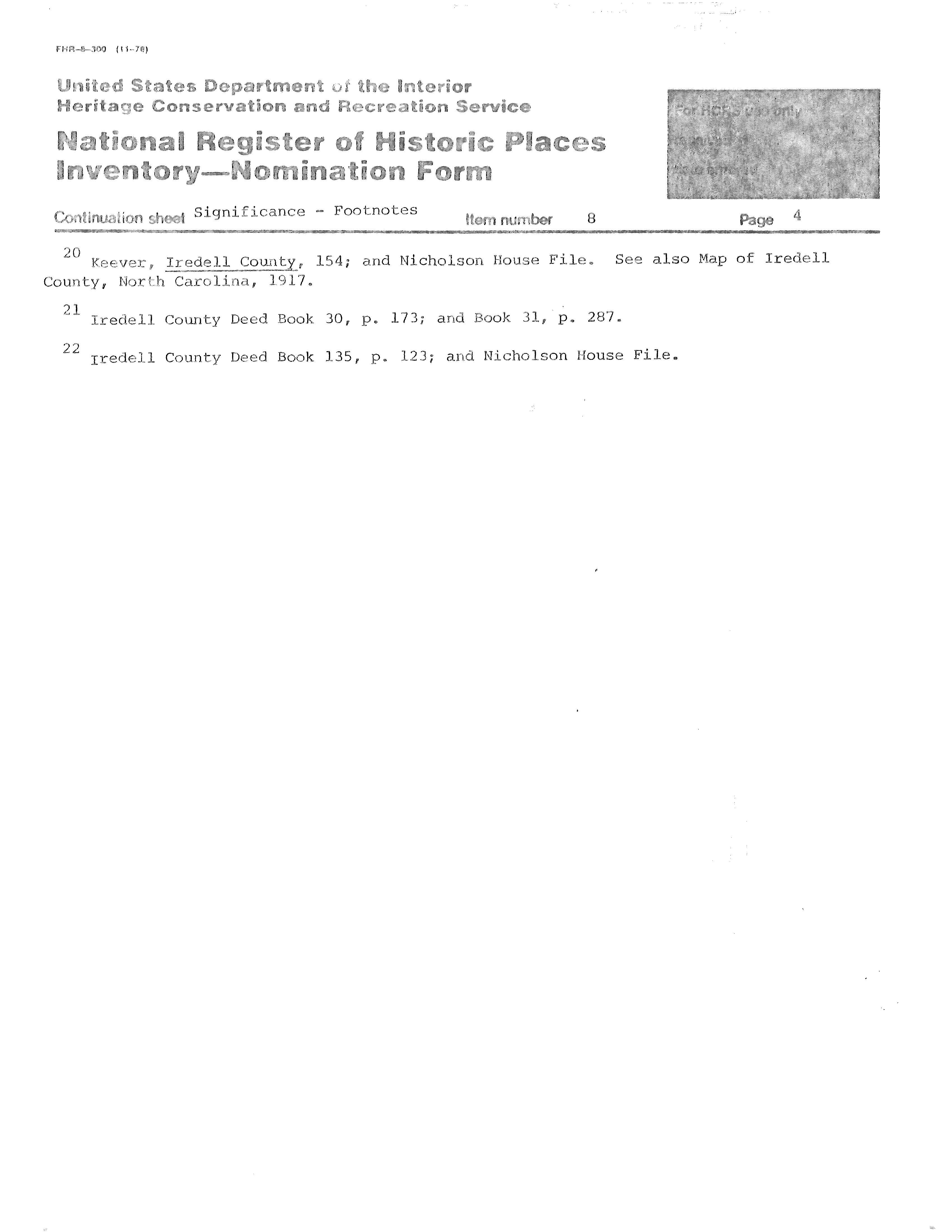
Bear with me. Here’s the entire report, all 13 pages’ worth. I’ve only read it through once, but give me time.








My grandmother’s maternal uncle, Edward Murray McNeely, made the local paper with his enthusiasm to fight in the Great War.

Statesville Sentinel, 12 April 1917.
In which my grandmother schools me on her grandmother and voting:
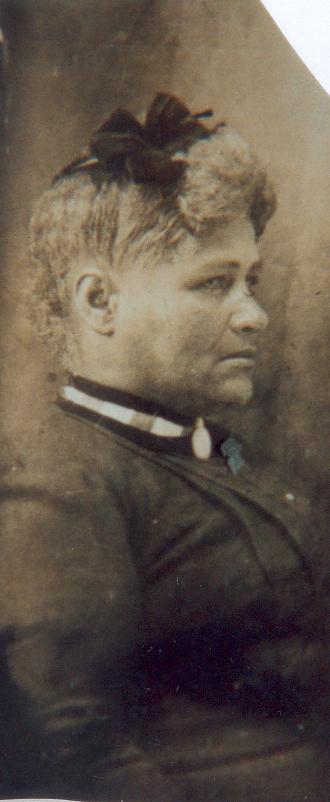
Harriet Nicholson Tomlin Hart (1861-1926)
Me: How did she work that? How did Harriet get to be the first black woman to vote?
Grandma: Well, because her husband [T. Alonzo Hart] was a lawyer.
Me: Right.
Grandma: He was a, whatchacall – a real estate lawyer. And he taught her how to read and write and do everything after he married her. Or while he was marrying her. Or something. And when time came for women to vote, she was the first black – he carried her down to the polls, and she was the first black woman to vote. And then at that time, you know, they gave you a quiz.
Me: Right. Right. Right. For black people to vote. Yeah. ‘Cause did your parents – well, did your father vote?
Grandma: Oh, yeah. Papa voted. He voted. And the people in my home, Lisa, fought in the streets [Statesville, North Carolina]. It was dange – I mean, we could not go outside the house on election night. The people — “Who’d you vote for?” “I’m a Democrat.” “I’m a Republican.” Pam-a-lam-a-lam! [Swings fists, and I break into laughter.] People acted like they were crazy! Papa didn’t allow us out the house. “You better be getting on home!” ‘Cause they were terrible.
Me: And now you got to drag people out to vote. And then you hear people going: “I’m not gon vote now. What’s the point? I blah-blah-blah.”
Grandma: Yeah. When I came here [Newport News, Virginia] you had to pay poll tax.
Me: Yeah.
Grandma: It wasn’t a whole lot, but it was ridiculous.
Me: Yep.
[My grandmother cast her last ballot — at age 100 — for Barack Obama in 2008.]
——
Interview of Margaret C. Allen by Lisa Y. Henderson; all rights reserved.
Of my zillions of matches at Ancestry DNA, to date I’ve able to document 13 of them. Four were cousins I already knew; one was a cousin I conjectured, but couldn’t prove; and two others are from family lines I knew, though I did not know the match. I am related to the remaining six — the most distant matches — via late colonial or early antebellum-era white ancestors previously identified but unproven.
The chart below shows Ancestry DNA’s estimates of my kinship to these 13, as well as our actual relationship. Ancestry tends to underestimate relationship slightly in matches closer than five degrees, and I try to keep this in mind when speculating about my mystery matches.
| Match | Ancestry Estimate | Actual Relationship |
| W.H. | 3rd-4th cousin | 2nd cousin, once removed |
| G.J. | 4th-6th cousin | 2nd cousin, once removed |
| H.B. | 4th-6th cousin | 3rd cousin, once removed |
| S.D. | 4th-6th cousin | 3rd cousin |
| G.P. | 5th-8th cousin | 3rd cousin, 3x removed |
| E.G. | 5th-8th cousin | 4th cousin |
| B.J. | 5th-8th cousin | 4th cousin |
| G.L. | 5th-8th cousin | 5th cousin, once removed |
| J.W. | 5th-8th cousin | 5th cousin, once removed |
| D.M. | 5th-8th cousin | 5th cousin, once removed |
| J.B. | 5th-8th cousin | 5th cousin, twice removed |
| E.D | 5th-8th cousin | 6th cousin, twice removed |
| L.B. | 5th-8th cousin | 7th cousin |
 Scuffalong: Genealogy.