Births Deaths Marriages, North Carolina, Paternal Kin

Lewis Henderson’s Simmons branch.

Of all Lewis and Mag Henderson‘s children, descendants of only Ann Elizabeth and Loudie walk this earth.  Loudie had just two children in her brief life, Jack and Bessie, but their collective offspring number in the hundreds. Ann Elizabeth did not live long either, but her children Daniel and Dollie ensured her legacy. I have talked about Loudie’s children here and introduced a purported photograph of Ann Elizabeth here. Now, more about Ann Elizabeth’s life.

Ann Elizabeth Henderson was born about 1862, probably in northern Sampson County. Her sister Isabella J. died early, leaving Ann Elizabeth the oldest girl in her family. The 1870 census of Brogden, Wayne County, North Carolina, shows Lewis Henderson, farmer, with wife Margarett and children James L. [known by his middle name, Lucian], Ann E., Caswell, and Mary S. [called “Sudie.”] On 21 January 1879, William Freeman applied at the Wayne County courthouse for a marriage license for Hilery Simmons, of Wayne County, age 24, colored, son of George Simmons and Axy Jane Simmons, both living, and Ann E. Henderson, of Wayne County, age 17, colored, daughter of Louis Henderson and Margret Henderson, both living.  Hillary’s brother, R[iley] H. Simmons, a Methodist minister of the AME Zion Church, married the couple on two days later at Ann’s father Lewis’ home in Dudley.  Hillary’s father G.W. Simmons (or maybe his brother General W. Simmons,) Hatch Brooks, and Ann’s brother Lucian Henderson officially witnessed the ceremony.

In the 1880 census of Brogden township, Wayne County, 28 year-old tenant farmer Hillory Simmons, his 17 year-old wife Ann Elizabeth, and 7 month-old daughter Abraskry shared a housheold with Ann’s sister nine year-old Sarah Henderson and 22 year-old brother Lucian Henderson. [“Abraskry”?!? Should that have been “Nebraska”? Was she named for a new state much in the news during the previous decade’s battles with Cheyenne, Pawnee, Sioux and other Natives?] The bulk of Ann Elizabeth Henderson Simmons’ life played in the two decades bracketed by the 1880 and 1900 censuses. We can assume that she was enumerated in 1890 with her husband and young children, but that record does not survive.

More intriguingly, the entire family is missing from the 1900 census, most likely the result of oversight but doubly unfortunate because she died around that time. In between, there are just a few glimpses of Ann Elizabeth in membership rolls of the Congregational Church of Dudley and in the deeds by which she and Hillary repeatedly mortgaged their 28-acre farm. In 1900 — 1901, at the latest — Ann Elizabeth Simmons died. She is surely buried in Congregational Church cemetery, perhaps next to her husband’s grave, or maybe with the Hendersons. Wherever she is, her grave is unmarked. Only children Minnie, Daniel and Annie C. “Dollie” survived her. In June 1902, Celestial Manuel Kemp, herself newly widowed, stepped into Ann Elizabeth’s shoes. Her first child with Hillary was born in 1904, the same year that H.B. Simmons applied for a marriage license for Jesse Budd of Wayne County, age 20, colored, son of John and Lou Budd, and Minnie Simmons of Wayne County, 17, colored, daughter of H.B. Simmons and Annie Simmons (he living, she dead).  Rev. W.H. Mapp, a Pentecostal Holiness minister from Norfolk, Virginia, performed the ceremony on 27 May at H.B. Simmons’ residence in the presence of Edie Hunter,  Cora Budd, and Sarah Jacobs, all of Wayne County.  Sarah Henderson Jacobs, Minnie Simmons’ aunt, was the little girl who lived with Ann Elizabeth and Hillary just after they married, as recorded in the 1880 census.

Minnie and Jesse Budd’s first child, Jesse Manuel Budd Jr., was born 27 February 1905. Shortly after, the family moved to Philadelphia, where William Edward Budd was born in October 1906. Eddie died at home at 1652 North Darien Street at the age of nine months.  Jesse Jr. died in Goldsboro of complications from an appendectomy in August 1916. Her own children lost, Minnie sought to adopt my grandmother Hattie Mae, her first cousin’s child, who was being reared by Sarah Henderson Jacobs. Sarah, however, would not separate Hattie from her sister Mamie.
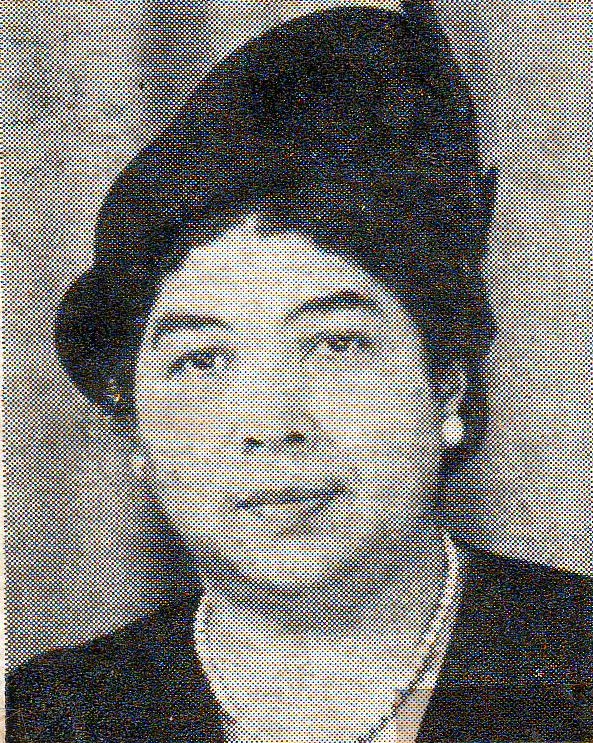
Minnie Budd 001

Minnie Simmons Budd, perhaps the 1940s.

In 1910, the censustaker found Hilory Simmons, wife Zalista, and children Daniel, Dollie, John, Susan A., Charles and Kajy living in Brogden township. The family remained in the Dudley area, and Hillary B. Simmons died 25 October 1941. On 24 Dec 1912, Hillery Simmons applied for a marriage license for Yancy Musgrave of Wayne County, age 21, colored, son of Alford and Pollie Musgrave, both living, and Annie C. Simmons, 17, colored, daughter of Hillery and Annie E. Simmons (he living, she dead).  Riley Simmons (now described as a Freewill Baptist minister) performed the ceremony the same day at Annie Simmons’ home in Dudley in the presence of Minnie Simmons of Dudley, Dave Budd of Mount Olive, and Liddie Winn of Dudley. Dollie’s children were Yancy Oliver (1913), Alfred Rudolph (1916), Bruce M. (1917), Marie Estelle (1920), Muriel (1922), Rossie Lee (1923), Ruth (1924), and Ralph Mordecai Musgrave (1926). Four months after Dollie’s marriage, on 10 April 1913, Daniel Simmons married Annie Irene Hogans, daughter of James and Annie Watson Hogans, in Goldsboro.

Daniel Simmons Annie I Hogans Wedding

The couple’s first two children, James Daniel (1914) and Hettie Louise (1915), died in infancy. The family then moved briefly to Rocky Mount, North Carolina, where daughter Harriet Latta Simmons (1916-1970) was born. Daniel and Annie Irene Simmons moved to Richmond, where a second James Daniel (1919-2001), Anna Bell (1921-2000) and twins Mary (1924-2004) and Martha (1924-2012) were born;  then to Philadelphia, where Hillary Bunn II (1926-2010), Stanley Armstead (1928-2000), and Matthew Dallas (1930-2009) were born; and finally Brooklyn, where twins Clement and Clifton (1931) died within a day of their birth. Annie Irene H. Simmons died soon after.
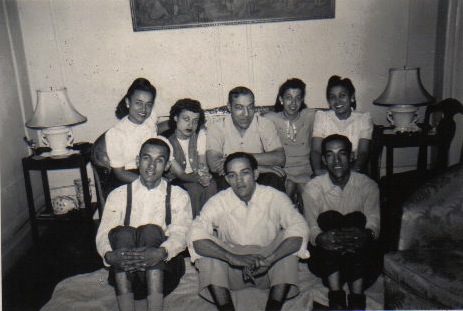
Annabelle Mary Daniel Martha Harriet Stanley Dallas Hillary Simmons

Top: Anna Bell, Mary, Daniel, Martha and Harriet. Bottom: Stanley, Dallas and Hillary.

Dollie Simmons Musgrave died in Norfolk, Virginia, in the early 1930s. Minnie Simmons Budd died in Philadelphia on 8 June 1961, and Daniel Simmons died in Farmingdale, New York, on 8 October 1964. Daniel Simmons in Dudley
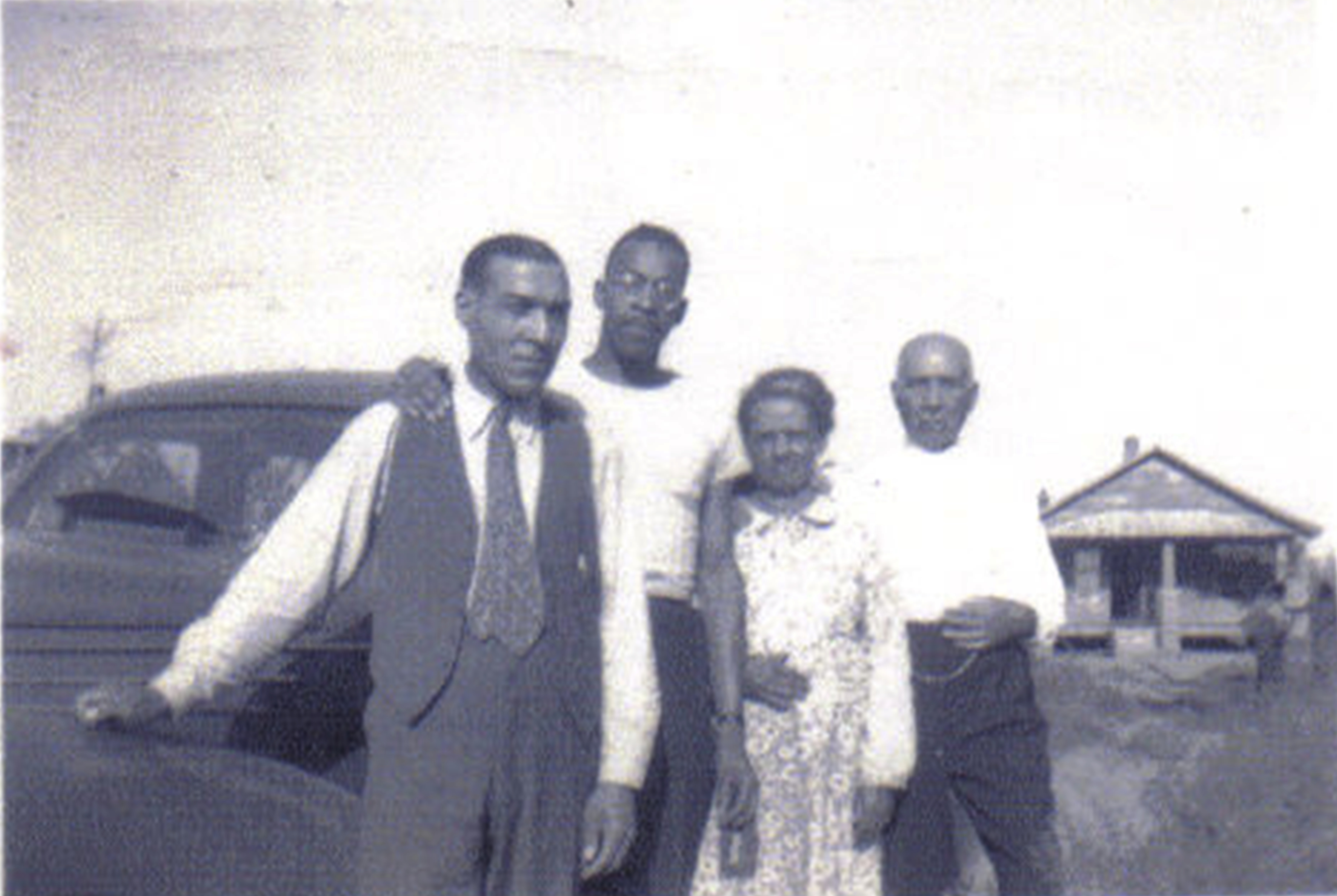
 Daniel Simmons at left, an unidentified man, and possibly his stepmother Celestial and father Hillary B. Simmons, perhaps late 1930s, Dudley, North Carolina.

Photo of Minnie S. Budd in collection of Lisa Y. Henderson; photos of Daniel Simmons and family courtesy of D. G. Campbell.

Standard
Free People of Color, Newspaper Articles, North Carolina, Paternal Kin, Politics, Rights

Enlighten me; or how to obtain just dues.

In 1899, North Carolina passed a constitutional amendment that created new literacy and property restrictions on voting, but exempted those whose ancestors had the right to vote before the Civil War. The intent and impact of the amendment was to prevent generally poor and often illiterate African-Americans from voting, without disfranchising poor and illiterate whites:

Public Laws of North Carolina, 1899, chapter 218.

(Sec. 4.) Every person presenting himself for registration shall be able to read and write any section of the constitution in the English language and before he shall be entitled to vote he shall have paid on or before the first day of March of the year in which he proposes to vote his poll tax as prescribed by law for the previous year. Poll taxes shall be a lien only on assessed property and no process shall issue to enforce the collection of the same except against assessed property.

(Sec. 5.) No male person who was on January one, eighteen hundred and sixty-seven, or at any time prior thereto entitled to vote under the laws of any states in the United States wherein he then resided, and no lineal descendant of any such person, shall be denied the right to register and vote at any election in this state by reason of his failure to possess the educational qualification prescribed in section four of this article….

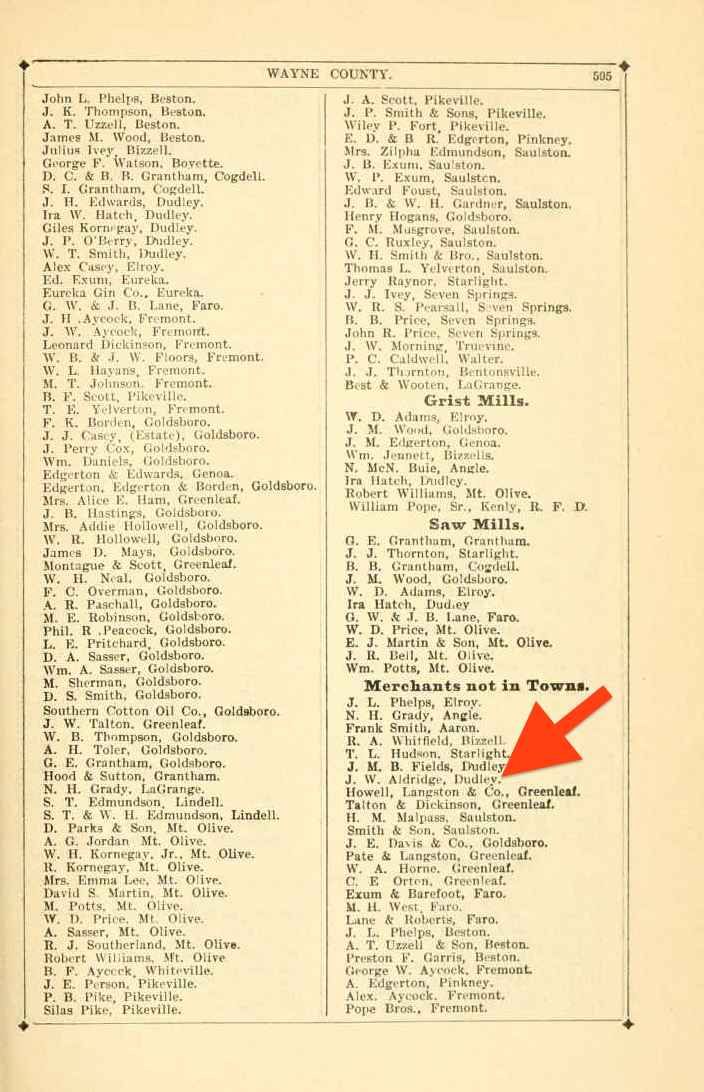
In 1902 — 112 years ago today — my great-great-grandfather John W. Aldridge, a steadfast if low-key supporter of local Republican politics, took pen in hand for a tight-jawed letter to the editor of a newspaper in the state capital:

Morning_Post_Raleigh_10_15_1902_JW_Aldridge_Voting_Rights

Raleigh Morning Post, 15 October 1902.

——

The following “colored” men were among those who registered to vote in Wayne County in 1902.  In accordance with Section 5, each was required to name the ancestor who “grandfathered” him in. Despite his very public protest, and his brothers’ successful registrations, John W. Aldridge’s name does not appear:

Joseph Aldridge, 36, Brogden, Robert Aldridge.

M.W. Aldridge, 45, Goldsboro, Robert Aldridge.

Robert Aldridge, 33, Brogden, Robert Aldridge.

Marshall Carter, 42, Brogden, Mike Carter. [Marshall Carter’s son Milford married John W. Aldridge’s daughter, Beulah.]

Williby Carter, 22, Brogden, Mike Carter. [Williby was Beulah Aldridge Carter‘s brother-in-law.]

H.E. Hagans, 34, Goldsboro, Napoleon Hagans. [Napoleon and Henry Hagans were the half-brother and nephew, respectively, of Frances Seaberry Artis, wife of Adam T. Artis.]

W.S. Hagans, 31, Nahunta, Dr. Ward. [William was another son of Napoleon. “Dr. Ward” was his white grandfather.]

John H. Jacob, 52, Brogden, Jesse Jacob.  [Jesse and John Jacobs were the father and brother of Jesse A. Jacobs Jr., who married Sarah Henderson.]

Wiley Mozingo, 76, Goldsboro, Christopher Mozingo. [Wiley Mozingo’s daughter Patience Mozingo married Noah Artis, son of Adam T. Artis. His granddaughter Ora B. Mozingo married John W. Aldridge’s son, John J. Aldridge.]


Standard
Births Deaths Marriages, Free People of Color, North Carolina, Other Documents, Paternal Kin, Religion

He was faithful in all his houses.

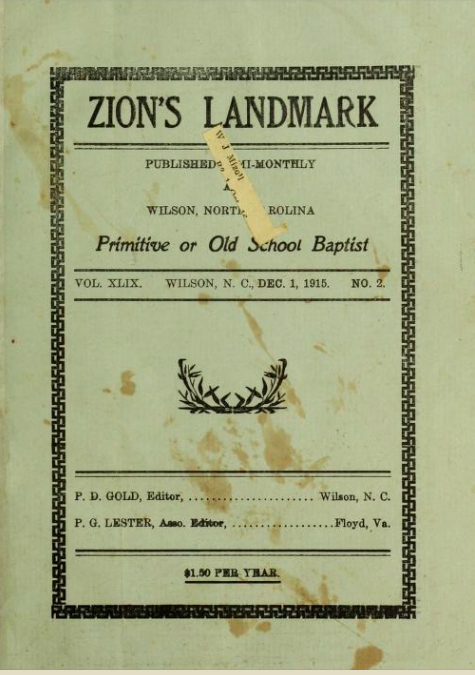
The Wilson Daily Times was an afternoon paper in my day. It was lying in the driveway when I arrived home from school, and I could read it first if I put it back like it was — pages squared and neatly folded. (Even today, I shudder at a sloppy newspaper, flipped inside out and pages sprawling.) The Daily Times‘ roots are in Zion’s Landmark, a semi-monthly newsletter begun in 1867 by Pleasant Daniel Gold. Elder Gold (1833-1920), pastor of Wilson Primitive Baptist Church, filled the periodical with sermons and homilies, ads for homeopathic remedies, testimonials, altar calls and, most enduringly, obituaries of Primitive Baptists throughout eastern North Carolina.

African-Americans did not often make it into the pages of the Landmark, but P.D. Gold held Jonah Williams in considerable esteem. Gold preached my great-great-great-great-uncle’s funeral and published in the Landmark a lengthy obituary by Brother Henry S. Reid, clerk at Turner Swamp Primitive Baptist Church:

Screen Shot 2014-10-12 at 10.41.54 PM

Screen Shot 2014-10-12 at 10.37.49 PM

Screen Shot 2014-10-13 at 7.34.42 AM

And what does this piece add to what I already know about Jonah Williams?

  • A marriage date for him and Pleasant Battle — 4 January 1867.
  • Some confusion about their children. I knew Pleasant had a slew of children from a previous marriage to Blount Battle. However, I had four children for Jonah and Pleasant — Clarissa (the surviving daughter referred to in the obit), Willie F. (1872-1895), Vicey (1874-1890), and J.W., whom I know only from a stone in the Williams’ cemetery plot. I’m thinking now that this is a foot marker, rather than a headstone, and I’ll revise my notes.
  • Jonah joined Aycock Primitive Baptist Church, part of the Black Creek Association, around 1875.
  • Around 1895, he and others were permitted to leave Aycock and form Turner Swamp Primitive Baptist Church, the first “organized colored” P.B. church in the area. The Black Creek Association ordained Jonah when he was called to serve at Turner Swamp.
  • Elder P.D. Gold preached Jonah Williams’ funeral.

Text found at https://archive.org/details/zionslandmarkse4919unse_0

Standard
DNA, North Carolina, Paternal Kin

DNA Definites, no. 16: Henderson.

Hard on the heels of my first Henderson match* comes another.

K.H.’s family tree shows that he or she is a descendant of Susan Henderson Wynn, half-sister of my great-great-great-grandfather Lewis Henderson. I’ve reached out to the woman who administers K.H.’s account — bizarrely, she’s someone who reached out to me a year or ago about some Artis research she was doing for a friend — to confirm the connection.

*By this, I mean a Henderson who is not also an Aldridge. They are my double-cousins, and much closer on the Aldridge side.


Standard
Migration, Newspaper Articles, North Carolina, Paternal Kin

That glorious climate of Arkansas.

Perhaps this sheds some light on Gus Artis and his sister Eliza Artis Everett‘s migration to Arkansas from North Carolina well after the Exoduster era:

Goldsboro_Headlight_11_6_1889_Arkansas_migrantsGoldsboro Headlight, 6 November 1889.

On 27 November 1889, the Wilson Mirror reprinted a Goldsboro Argus piece that described Williams and Herring as “railroad hirelings and speculators.” “However much the desire should be divided among our people — and by this we mean the white people — for the negro to exodus this country or remain, the solid, stubborn truth shall not be kept from the poor, deluded, half-informed negro, that this is his home, the climate of his nature; that our people are the most tolerant and generous in the world; and his best friends, and that, therefore, he should stay right here where his associations date back through the centuries; where his faults, and there are many (but who of us is without faults?) are borne with from custom; where his privileges as a free citizen are unquestioned and untrammeled, and where his destinies are linked by law with the whites, who, under a Democratic administration, have for twenty years paid 90 per cent. of his government and education, while he has furnished 90 per cent. of the crime and ignorance of the State.”

Best friends, indeed.

The 20 December 1889 issue of the Wilmington Messenger chimed in the mockery, noting that “Peg leg Williams and Silas Herring have not dissolved copartnership. Peg leg is now in [Goldsboro], and he and Silas are as active as bees in inducing the “coons” of this section to leave their homes of peace and plenty here, to go the far off miasmatic lands of the West, there to die like cattle with the black tongue.”

Robert “Peg-Leg” Williams is memorialized in 100 Americans Making Constitutional History: A Biographical History, edited by Melvin I. Urofsky. Described as the most famous and successful of Southern “emigrant agents, Mississippi-born Williams, a Civil War veteran, assisted 16,000 African-Americans in leaving North Carolina in the wake of discriminatory labor laws passed in 1889.

*Kizzy Herring Herring, who applied for her husband’s Civil War pension from Lonoke County, Arkansas, was another who left Wayne County for the West. So, I suspect was Guy Lane, Jr., son of Guy and Sylvania Artis Lane, who decamped from Wayne County to Memphis, Tennessee, sometime between 1880 and 1900. Did he just not quite make it to Arkansas? Or did he double back to the city after deciding that Arkansas did not suit?

Standard
North Carolina, Other Documents, Paternal Kin

Eureka! … Not.

I was flipping through an old notebook and came across this abstract of entries in the 1912-1913 city directory of Wilson, North Carolina:

Taylor, Bertha, laundress, h 114 w Lee

Taylor, Greenman, h Stantonsburg rd nr Rountree av

Taylor, Hennie, dom, h 114 w Lee

Taylor, Jordan, lab, h Stantonsburg rd nr Rountree av

Taylor, Mack, driver, h 114 w Lee

Taylor, Mattie, laundress, h 114 w Lee

Taylor, Robert, barber, h 114 w Lee

Taylor, Roderick, barber Paragon Shaving Parlor, h 114 w Lee

The house at 114 West Lee Street belonged to my great-grandfather Michael (“Mike,” not “Mack”) Taylor. Bertha, Hennie, and Mattie were his younger daughters. Roderick was his only son. Jordan and Greeman, over on Stantonsburg Road, were Mike’s niece Eliza’s husband and son. But who in the world was Robert Taylor?

Robert … Robert … An epiphany! Of course! This was Robert Perry, son of Mike’s wife Rachel‘s sister Centha Barnes Perry! The boy grew up in Mike and Rachel’s household and quite naturally he was sometimes known as Robert Taylor! … Right?

Well, perhaps, but this is not him. Robert Perry was only 9 years old in 1912. Not only would a child not have been plying a trade at that age, he would not be counted among the adults included in a city directory. (Even Rachel was omitted, as “dependent” homemakers did not make the cut either.)

So, who was this Robert Taylor who both lived in Mike Taylor’s house and worked in the same trade as Mike’s son Roderick?

Census records do not show an African-American Robert Taylor in all of Wilson County in the 1900 or 1910 censuses. In 1920, however, there is Robert Taylor, age 36, a laborer, with wife Mary G., age 29, living at 611 Green Street. Now this is really puzzling.

Two years earlier, when Roderick Taylor registered for the World War I draft, he stated his birth year as 1883, his occupation as barber, and his address as 611 East Green Street. There is no “Roderick Taylor” listed in the 1920 census, but in 1930, at 610 [sic, house numbers shifted in the early 1920s] Green Street, there is barber Roderick Taylor, 45, wife Mary J., 39, and three children.

While it is conceivable that there were both a Robert Taylor and Roderick Taylor of the same age, living in the same houses, with wives of the same name and age, and working in the same profession, it seems unlikely. Rather, in an era in which “Roderick” was rare name, an inattentive census taker or canvasser might easily have heard “Robert” when making his inquiries. Absent further independent evidence that a Robert Taylor existed, I conclude that Roderick’s doppelgänger is a figment of error.

Standard
Business, Newspaper Articles, Paternal Kin

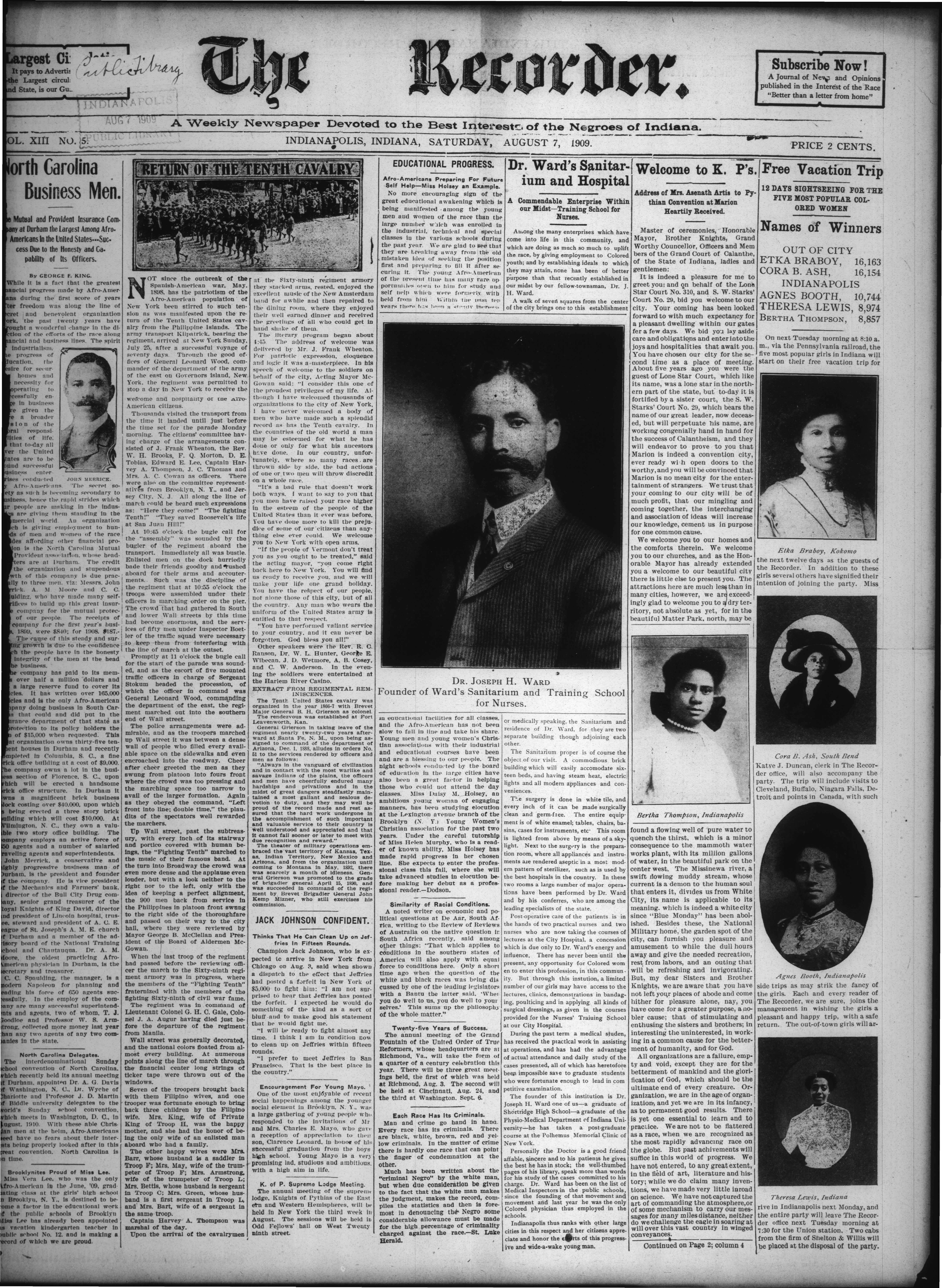
Dr. Ward’s commendable enterprise.

In which we learn that “among the many enterprises which have come into life in this community, and which are doing as much so much to uplift the race, by giving employment to Colored youth; and by establishing ideals to which they may attain, none has been of better purpose than that recent established in our midst by our fellow-townsman, Dr. J.H. Ward.”

JH Ward Ind Recorder 8 7 1909The Recorder, Indianapolis, 7 August 1909.


Standard
DNA, North Carolina, Paternal Kin

DNA Definites, no. 15: Henderson.

I spotted the match on Ancestry DNA back in February. A German surname. A family tree largely filled with what appeared to be Germans and Frenchmen. But interspersed among the list of ethnic origins — Nigeria, Mali, Ivory Coast/Mali, Senegal …? I examined the tree a little more closely, and — there — could it be? A name I recognized. A rather common name, but one that matched that of a grandson of Ann Elizabeth Henderson Simmons, my great-great-grandmother Loudie Henderson‘s sister.

I reached out.  I also emailed a cousin, the daughter of the named man’s sister, if she thought her uncle had offspring of that age, in that place. It was very possible, she said. This uncle had not been in touch much. He was believed to have assumed a sort of liminal identity — not quite white maybe, but far from black. He had married several times, she thought, and had died in California.

Months passed.

Then, at the beginning of September, I heard back from E.G. He doesn’t know much about his grandfather, the match, but wondered if I did. Yes, I replied, I do. Ancestry (with its usual underestimating) pegged E.G. and I as 5th to 8th cousins, but we are 4th. Our great-great-grandmothers were sisters. He is the first Henderson relative I have matched beyond my double-cousins (whom I match more closely as Aldridges), and the first in my own Lewis line beyond my immediate relatives.

Standard