

Charlotte News, 11 September 1914.
Jonah Williams rolled into Wilson on opening day and sold the first bale of cotton of the market season. From what I can glean from newspapers, $8.585 was not a good price, and 1914 was a poor cotton year.
Charlotte News, 11 September 1914.
Jonah Williams rolled into Wilson on opening day and sold the first bale of cotton of the market season. From what I can glean from newspapers, $8.585 was not a good price, and 1914 was a poor cotton year.

Goldsboro Weekly Argus, 16 September 1900.
Isham Smith’s wife, who probably milked this cow, was Nancy Henderson Smith (1865-1944), daughter of James and Louisa Armwood Henderson.
One of the most rewarding results of my decades of genealogical sleuthing has been the development of a deep connection with many of my Carter cousins, descendants of Milford and Beulah Aldridge Carter. My grandmother talked often of the Carter family, to which she was connected both via the Aldridges and “Papa” Jesse Jacobs, who was Milford Carter’s uncle.
The Carters looked ‘bout like white folks. I didn’t really know all of ‘em. I think it was nine of them boys. The three I knew was Milford and Johnnie and Harold, I think. They used to come to Wilson, but the older one [Willoughby] didn’t come up. But Milford, Harold — the two youngest ones come over and stayed with Annie Bell [Jacobs Gay, Papa’s daughter.] Johnnie – and Freddie, too. When I’d go to Uncle Lucian’s, they lived not too far from there. But I never went to their house. I think Harold was the youngest one. ‘Cause that’s the one came to Wilson, and Albert, Annie Bell’s husband, got him a job down to the station driving a cab. And he got his own car, and he was down there for a long time. Harold. He’s the youngest one. Carter. All of them was great big.
There were indeed nine Carter brothers — Willoughby (1880), Ammie (1881), Freddie (1890), Milford (1893), Granger (1895), Lippman (1898), John Wesley (1899), Harold (1903) and Richard (1906) — plus a sister Florence (1887). (Florence’s son William Homer Camp Jr. married Onra L. Henderson, Beulah A. Carter’s niece and my grandmother’s double cousin.) The brothers were born in Sampson and Wayne Counties to Archie Marshall (or Marshall Archie) Carter and Margaret Frances Jacobs, sister of Jesse A. Jacobs Jr. Marshall Carter (1860-1926) was the son of William and Mary Cox Carter of Sampson County. (My grandmother also spoke of Marshall’s sister, Virginia Ann “Annie” Carter, who married Hardy Cox and was a close friend of “Mama” Sarah Henderson Jacobs Silver.) William Cox (1833- ca. 1875) was the son of Michael Carter (ca. 1805-ca. 1875) and his wife, Patience.
As attached as Papa was to my grandmother, he did not take her with him on visits home to Dudley, very likely in deference to the feelings of his nephew’s wife Beulah, who had little use for the child her brother Tom fathered out of wedlock.
When Papa was living, he used to go to Dudley down there to the mill where they ground corn and all down there. They’d carry him around down there on horse and buggy, wagon, whatever it was. He was their uncle. Their mama’s brother. He’d go there every once in a while. But he didn’t never say nothing ‘bout taking me down there with him. I guess ‘cause Beulah, Milford’s wife, was my daddy’s sister, but she was kind of cool toward me. And he know he wasn’t gon carry Mamie. So we didn’t never get to go down there with him.
Early in their marriage, Beulah and Milford Carter lived in Wilson in a small house on Green Street whose yard touched those of Milford’s uncle and first cousin Annie Bell. The Carters’ second child, son Dewey Belvin, who died before his second birthday, was born during their short stay there.
Beulah stayed in Cora Miller’s house there on Green Street. A little house down there ‘cross from where we were staying, first house behind the church, near ‘bout on the corner there. And she and Milford were there.
After a few years shifting between Wayne to Duplin Counties, Milford moved his family north to Coatesville, Pennsylvania, and then New York City — first Brooklyn, then Queens — where he pursued a long career as a chef.

Milford E. Carter, during his time as a chef at H. Hicks & Son, 30 West 57th Street, New York City.
Freddie, Freddie was the one that went to Atlanta for a year and day. Moonshine. And Johnnie was fat. And rosy. Like, you know, like if somebody say like, seeing a baby and say that it was “oh so fat, look like you pinch they cheek the blood pop out?” And just fair, and just that red look.
Johnnie Carter was also the brother that cared for my grandmother’s great-uncle, J. Lucian Henderson, and his wife Susan Henderson in their final infirmity. In June 1934, John W. Carter was named administrator and sole legatee of Lucian’s estate. Johnnie and his family lived near Lucian just west of Dudley, but I am not sure of the genesis of their close relationship.
The Carter boys was always nice. They come up here, come to stay with Annie Bell, Papa’s youngest daughter. They wasn’t here at the same time. They was driving cabs. So they used to come over all the time. I went with Harold down to Dudley once ‘cause he was going and coming back that same day. See, Uncle Lucian was sick, so I went down with him and come back.

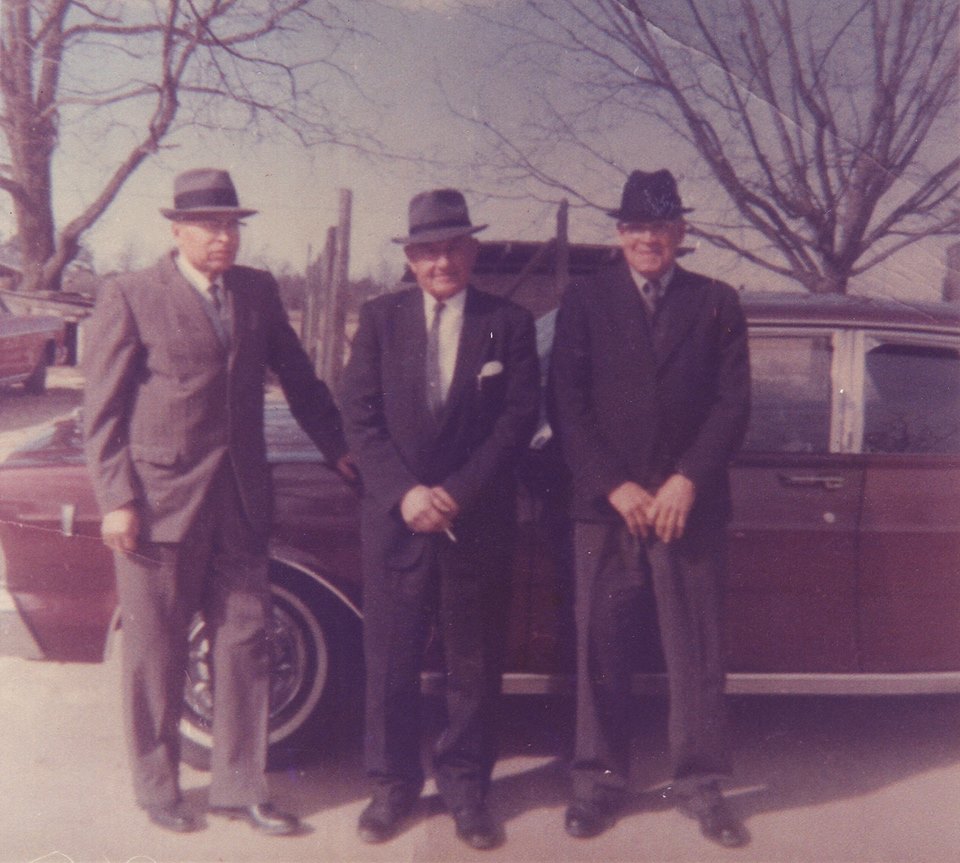
Top: John, Ammie, Wesley (a cousin), Richard, Granger, Richard Jr. and Harold Carter; bottom: Milford, John and Harold Carter; both 1955. Copies of photos courtesy of Dorothy Carter Blackman and Daniel M. Carter.
Interview of Hattie H. Ricks by Lisa Y. Henderson; all rights reserved.
My cousin Robbie‘s wife is a painter in Sweden. As a surprise gift, she interpreted the only known photograph of my great-grandmother, Bessie Lee Henderson.
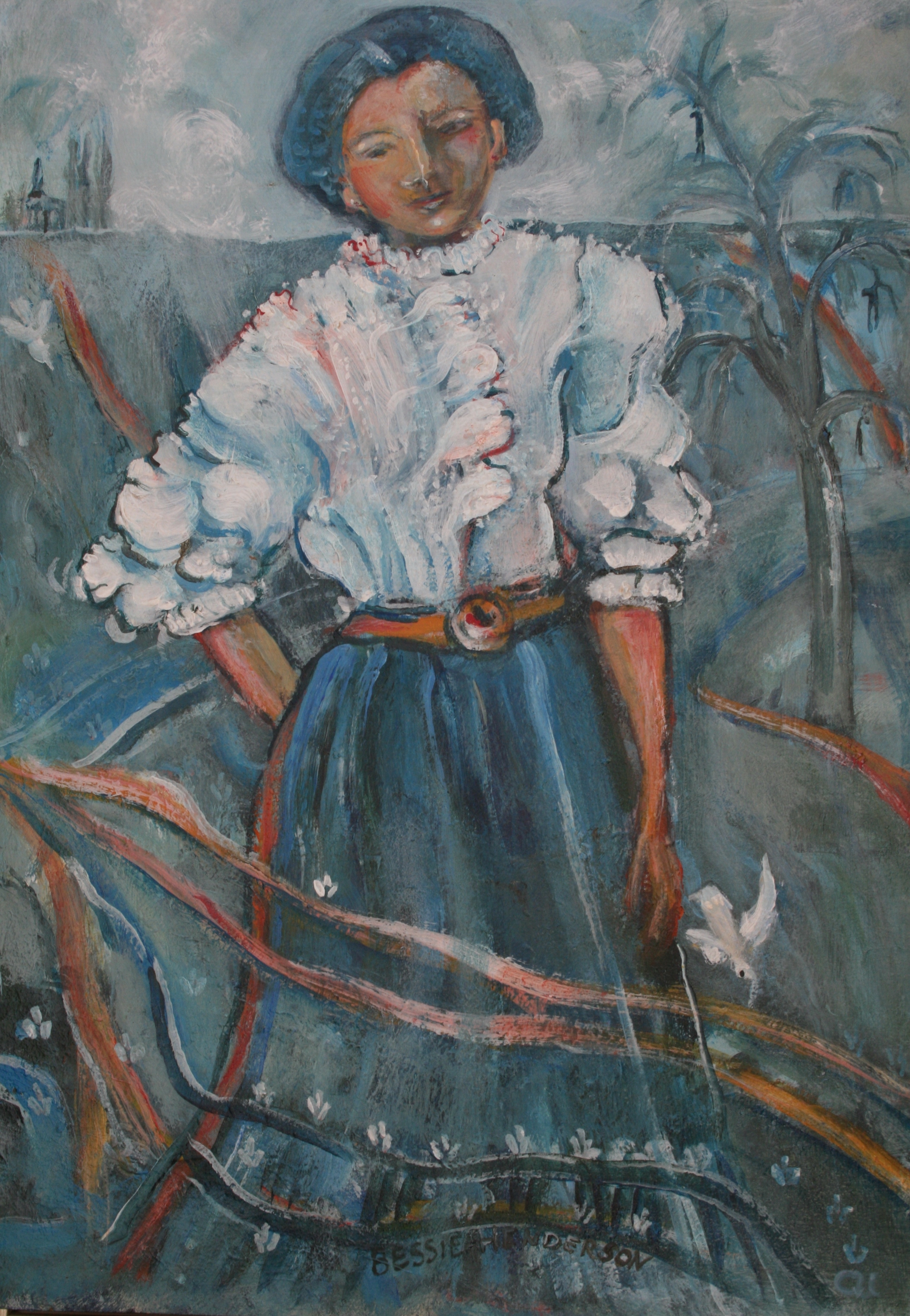
Many thanks to Catharina von Unge.
Shortly after my grandmother’s birth in the summer of 1910, her father, J. Thomas Aldridge, decamped for Shaw University. Dudley’s colored school went only through eighth grade, so Tom, already in his mid 20s, had to start in Shaw’s preparatory division. (He shaved ten years of his age the rest of his life.) The family’s pride and joy, Tom was the first to pursue higher education. Near the start of his second year, however, Tom was arrested for forgery. Ever vigilant for stories that cast colored people in a negative light, the story was picked up by newspapers across eastern North Carolina, no doubt amplifying his humiliation.

Wilmington Dispatch, 8 November 1911.

Clinton Caucasian, 9 November 1911.

Wilson Daily Times, 10 November 1911.
I don’t know the outcome of the prosecution. Presumably, Tom, at least, was not convicted. He is listed as an enrolled student at Shaw University each year from 1911 through 1917, as he worked his way through its preparatory and undergraduate divisions. (Early in his studies, Tom changed the spelling of his name from ‘Aldridge’ to ‘Aldrich.’ I don’t know why.) After Shaw, he went on to Meharry Medical School in Nashville, his brush with the law far behind him.


37th Annual Catalogue of the Officers and Student, Shaw University, 1911.

Wilson Daily Times, 12 August 1921.
This terrible dispute over the body of a dead 12 year-old girl took place in the early days of C.E. Artis‘ first undertaking business, Batts & Artis. The death certificate of Martha Lucas, who died of peritonitis, shows that Darden & Son prevailed.

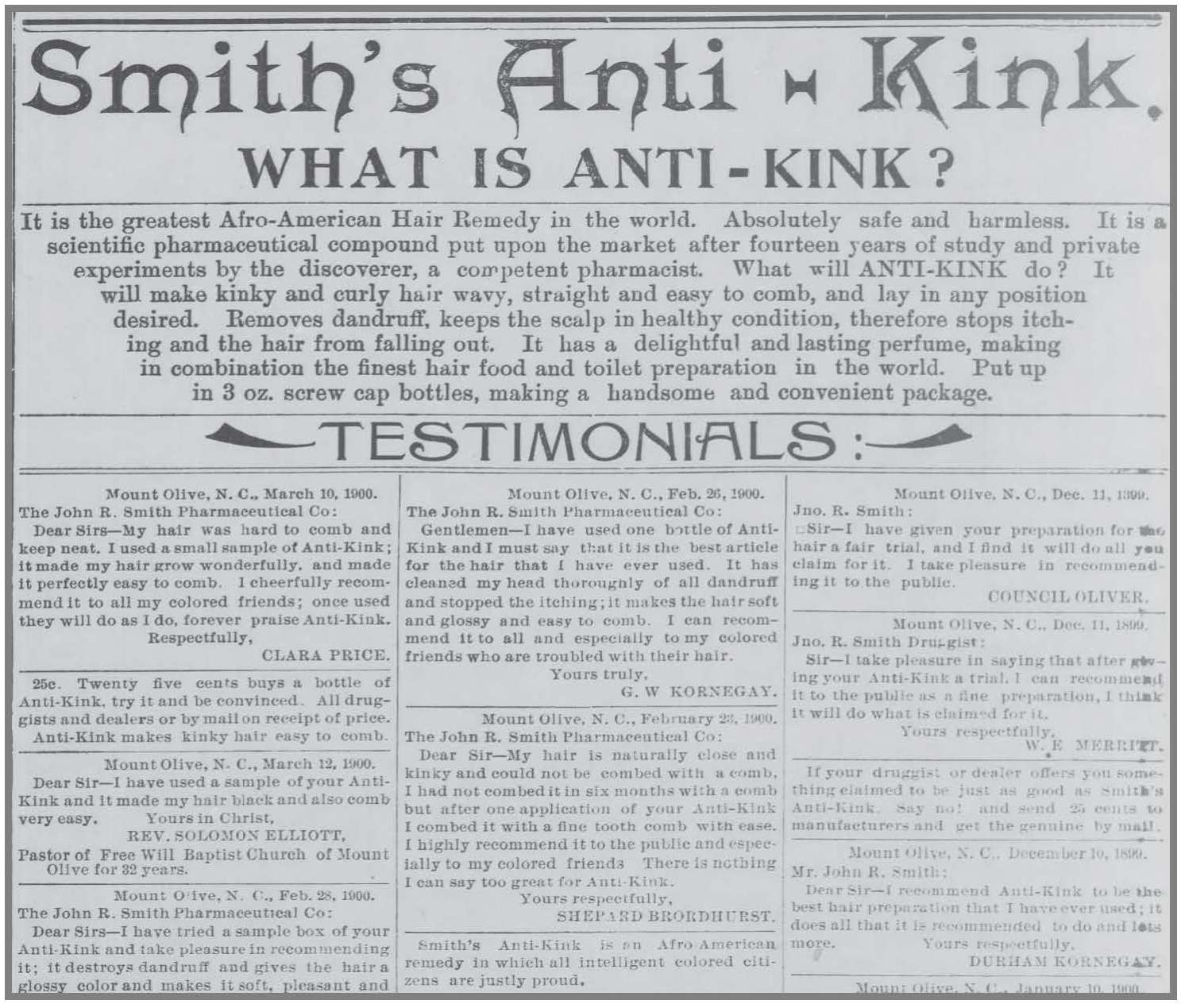
Goldsboro Weekly Argus, 5 April 1900.
Mercifully, I didn’t find a single relative of mine among folk giving testimonials for Smith’s Anti-Kink. (However, on a very different note, Dr. Joseph H. Ward, son of Napoleon Hagans and first cousin of my great-great-great-grandmother Louvicey Artis Aldridge, was the personal physician to Madame C. J. Walker, pioneer of the modern cosmetics industry. See A’Lelia Bundles’ engaging On Her Own Ground: The Life and Times of Madam C.J. Walker for details of Walker and Ward’s relationship.)
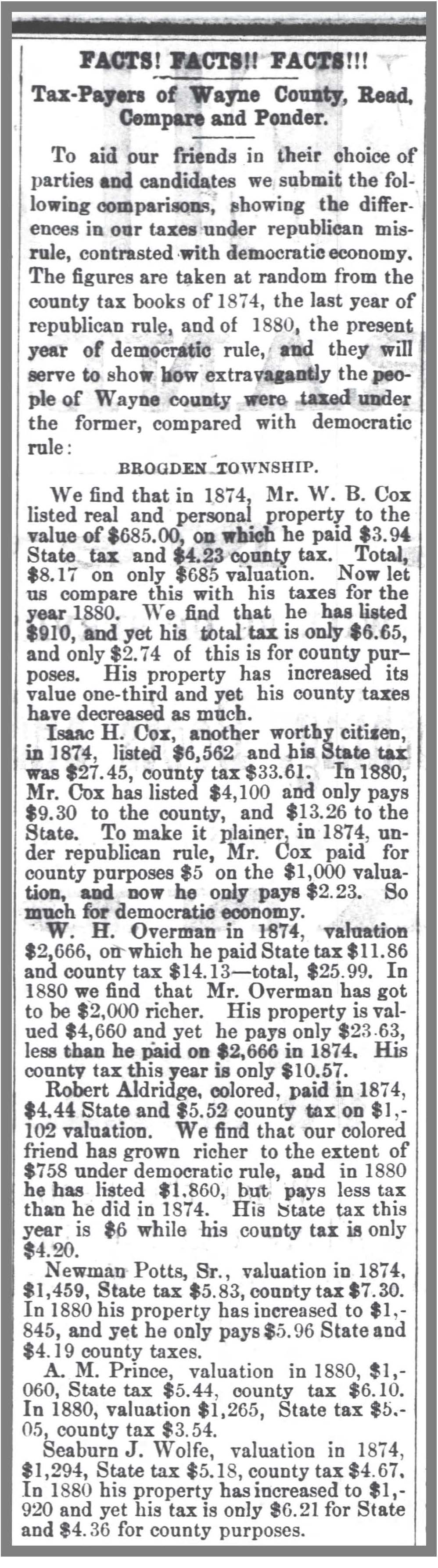
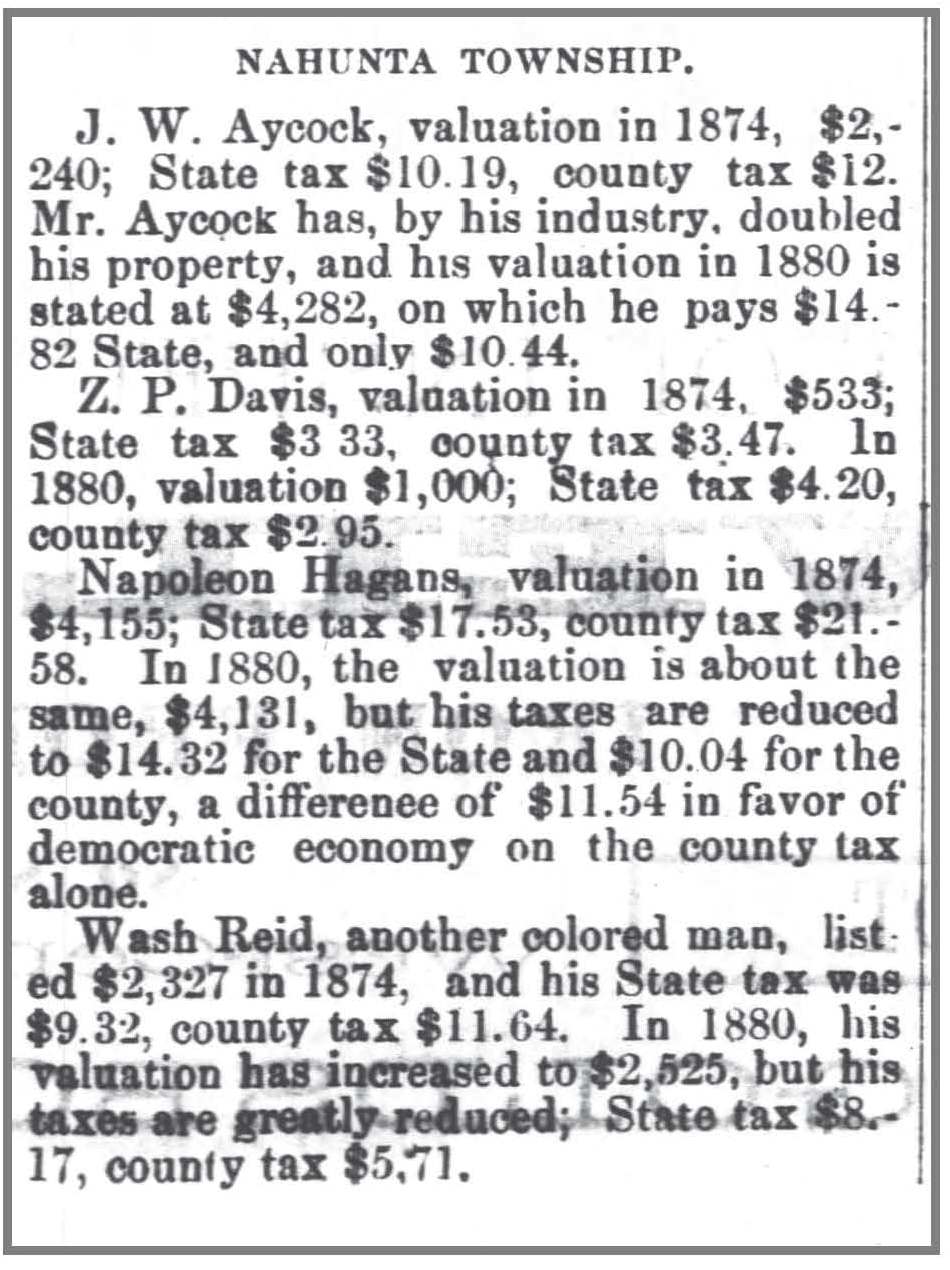 Goldsboro Messenger, 21 October 1880.
These propaganda pieces are part of a single article published to demonstrate that the rising tide of Democratic rule had floated all boats as land values increased while taxes fell. (In other words, the end of Republican rule meant more money in the pocket, as well as a foot on the neck of African-Americans.)
Two of the “colored friends” noted were my kin — my great-great-great-grandfather Robert Aldridge and Napoleon Hagans, the brother of my great-great-great-grandmother Frances Seaberry Artis. (And Washington Reid’s nephews William and Henry Reid, sons of John Reid, married Adam Artis’ niece Elizabeth Wilson and daughter Cora Artis, respectively.) Aldridge, Hagans and Reid (as well as Artis, Frances’ father Aaron Seaberry and Betty’s father John Wilson) were all prosperous free-born farmers.
An expanded version of the 47-children article that ran in the Statesville Landmark (and, indeed, all over North Carolina):

Wilmington Messenger, 3 January 1906.
I still don’t know more than 25 or so of Adam Artis‘ children (which is gracious plenty) and don’t believe there were many more than that. But if he didn’t have 80+ grandchildren by 1906, he certainly had many, many more than that before all was said and done. (As always, I ignore the snark, but what is a “typical southern darkey”?)

 Scuffalong: Genealogy.