Births Deaths Marriages, Free People of Color, North Carolina, Paternal Kin, Photographs

On the Stoney Run Branch and Wilmington & Weldon Railroad.

On 4 July 1902, dower laid off and partition made of Robert Aldridge‘s land as follows:

Dower — Eliza Aldridge received 53 acres on a run of Stoney Run Branch.

Lot No. 1 — Mathew W. Aldridge received 100 acres on Stoney Run and Hurricane Branches, excluding the Agustus Church and free school house lots.  An interest Mathew had bought from his father was included in the described tract and the residue was valued at $200.
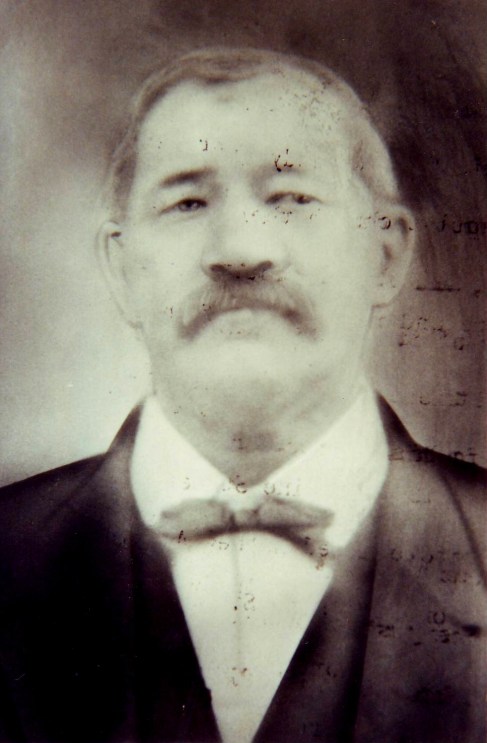
matthew-aldridge

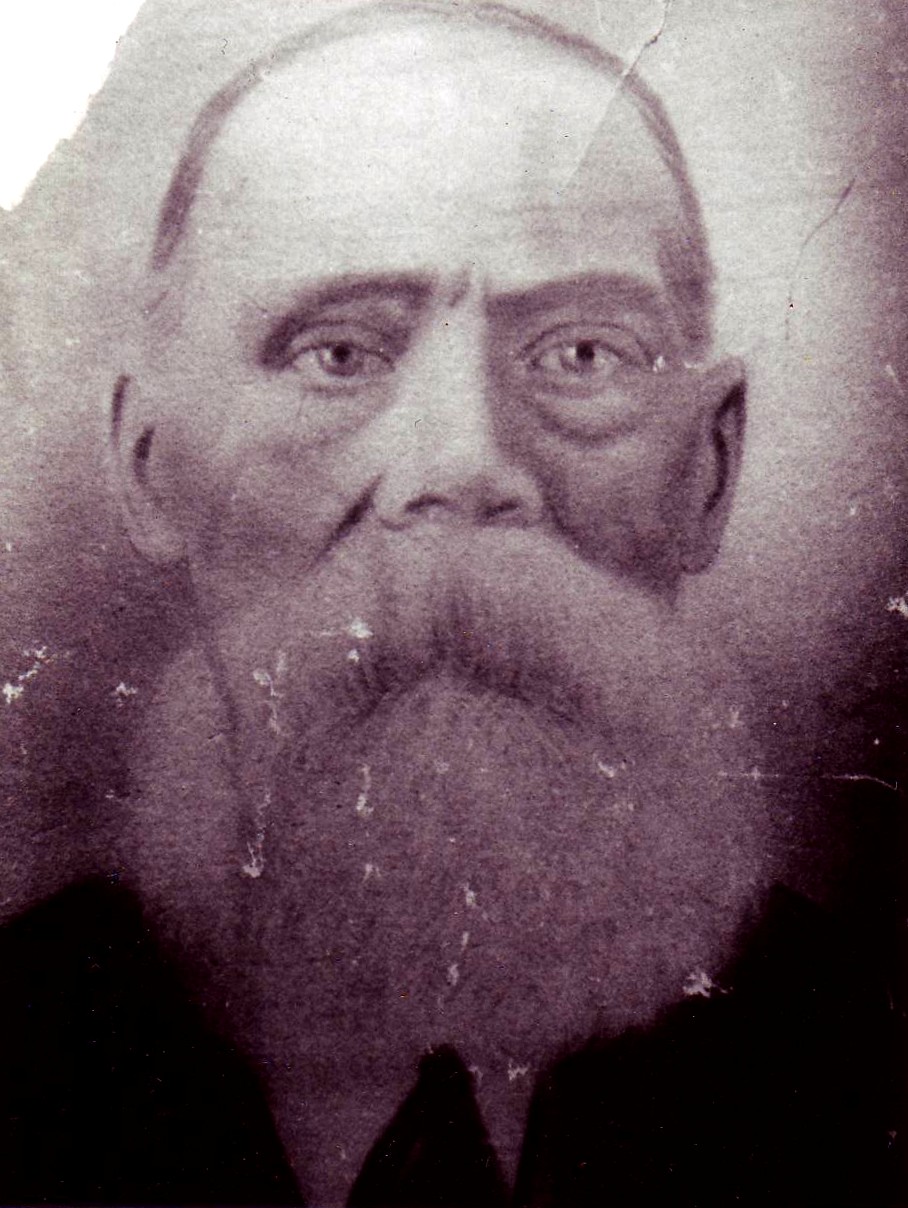
Lot No. 2 — George W. Aldridge received 42 acres on Stoney Run and the county road valued at $200.

george-aldridge

Lot No. 3 — Joseph Aldridge received 53 acres on Stoney Run and the county road valued at $200.

Lot No. 4 — David Aldridge received 80 acres on Stoney Run and the county road valued at $200.

Lot No. 5 — Robert Aldridge received 41 acres on a prong of Stoney Run and the Spring Road valued at $200.

Lot No. 6 — John W. Aldridge received 50 acres on Stoney Run Branch below the mineral spring and the Spring Road valued at $285.

Lot No. 7 — Frances Locust received 33 acres on Stoney Run and the Spring Road valued at $200.

fannie-a-randall

Lot No. 8 — Talitha Brewington, Hattie Brewington, Elijah Brewington, Mattie Brewington, Lundy Brewington, and Toney Brewington jointly and subject to the life estate of Joshua Brewington, received 33 acres on W&W Railroad valued at $193.

Lot No. 9 — Louetta Aldridge received 32 acres on Stoney Run Branch valued at $193.

Lot No. 10 — Lizzie Aldridge received 32 acres on the W&W Railroad and Stoney Run Branch valued at $193.

Lot No. 11 — Louetta Artis, Robert Artis, Columbus Artis, Josephine Artis, J. Scott Artis, J.B. Artis, Lillie Artis, Annie Artis and Elberta Artis, jointly and subject to the life estate of Adam Artis, received 32 acres at the mouth of a ditch on the run of Stoney Run and the railroad valued at $193.

Submitted by Sam C. Casey, Walter C. O’Berry, Ira W. Hatch.

The margins of this document contain notations and signatures acknowledging receipt of moneys due to balance the lot values, including signatures of Lizzie Aldridge, Tilithia King, J.W. Aldridge, Joseph Aldridge, Hattie Brewington, Columbus Artis, Elijah Brewington, Tony C. Brewington, Robert Aldridge, Lundia Brewington, and June Scott Artis, and Eliza Artis’ mark.

John Aldridge, owner of Lot No. 6, paid $7 each to the owners of Lots 8-11, and $57 to the Clerk of Superior Court for costs of the division.

Louetta Aldridge’s share was divided among her siblings “the owner of said amount now being dead this day Aug 22=1904.”

——

Robert Aldridge, my great-great-great-grandfather, was born circa 1819, probably in Duplin County NC, and died about 1899. He appears as a hireling in the 1850 census in Sampson County in the household of Calvin Simmons. By 1860, he and his wife Mary Eliza Balkcum Aldridge were living in southern Wayne County with their youngest children. His accumulation of property is something of a mystery, as his recorded deeds do not yield the acreage distributed in his estate.  Bits of the land remain in family hands.

There is a Stoney Run in Wayne County today, but it courses several miles northwest of the area in which Robert Aldridge is known to have owned land. I suspect that the waterway referred to above is now known as Yellow Marsh Branch, which has been dammed to form Durhams Lake. Robert owned a brickyard in the vicinity. “Agustus Church” is now Augustus Chapel Missionary Baptist Church, and the current edifice stands on the original land as what is now 599 Durham Lake Road, Dudley. The church celebrated its 145th anniversary in 2012. The Wilmington & Weldon Railroad is now owned by Atlantic Coast Line. My best guess for the “county road” is the road now known as the Old Mount Olive Highway, which runs alongside the railroad.

Abstract of document in the file of Robert Aldridge, Estate Records, Wayne County Records, North Carolina State Archives.

Photos of Mathew Aldridge, George Aldridge and Frances “Fannie” Aldridge Locust, alias Fannie Randall, in the collection of Lisa Y. Henderson.
Standard
Free People of Color, North Carolina, Oral History, Paternal Kin, Photographs

Introducing Lewis & Mag Henderson.

Though his brother Bryant disappeared from the record after apprenticeship, James Henderson achieved adulthood and shows up in the 1850 census as a mechanic and the father of four children whose last name was Skipp.  The children too were apprentices, which tells us that their mother, like James’ own, was unmarried. “Skipp” was an uncommon name in the area.  I know nothing else about her, and she apparently was dead by time the censustaker rode through their corner of Onslow County.  When James wandered 50 miles northeast to Sampson County to a tiny community of free people of color north of present-day Clinton, his sons Lewis and James Henry and daughter Eliza went with him. By this time, they had assumed their father’s last name.  Lewis Henderson, born about 1836, was my great-great-great-grandfather. There are no photographs of Lewis, but there is one of his brother James Henry, who was blue-eyed and bushy-bearded and generally indistinguishable from his Anglo-Saxon neighbors.

Image

Sometime around 1856 Lewis married a woman much like himself, free-born and colored and of uncertain antecedents.  Her first name was Margaret, and her last name seems to have been Balkcum.  And we do know what Grandma Mag looked like.  My great-aunt Mamie showed me the battered tintype; I was 21 years old and nearly lost consciousness.  Mag was born in 1836, too.  She was perhaps middle-aged when she sat for her portrait — her age, like her racial stock, is indeterminate.  But she had straight iron-gray hair parted down the middle and pulled back severely; high, broad cheekbones; and thin lips marking an ultra-wide mouth.  A handsome woman, if not a pretty one.  She seems to be smiling; there is a twinkle in her gray eyes.

Image

My grandmother remembered her like this:

We used to go down to Dudley to see Grandma Mag – we called her Mag, but her name was Margaret – before she died.  I remember her being alive, but she was in bed sick.  She was always in the bed.  Her hair looked like white, and she had it parted right in the middle and all carried back, don’t even look like she had none.  Couldn’t tell how much she had ‘cause she was laying on it, what I saw of it.  I don’t ever remember her getting up and down.  I remember ‘cause I wanted to know why she was in the bed all the time.  And I don’t remember seeing her walk but one time.  She stayed sitting around so much until she couldn’t hardly half walk – but she didn’t have nair stick with her.  She’d just hold on to different things.  I don’t know, I wouldn’t never ask a person, ask ‘em, “What’s wrong with your legs?” or “What’s the matter with you.  How come you can’t walk no better?”  But Mamie stayed with Grandma Mag and them until Grandpa Lewis died.  The house they was staying in where was up by the railroad, was just about to fall down.  So Mama Sarah built them a house.  

——

Photos of James H. Henderson and Margaret Henderson in the collection of Lisa Y. Henderson.
Standard
Free People of Color, North Carolina, Other Documents, Paternal Kin

She desired that her sons be bound.

I’ve spent a whole lot of time trying to figure it out, but I still don’t know much.  I can tell you this: that Martha Henderson, better known as Patsey — and my great-great-great-great-great-grandmother — was desperate.  That she could not adequately feed her children.  That children like hers could be claimed by any passing scoundrel.  That she needed to make the first move.  So she made her way to Wantland’s Ferry, to the Onslow Courthouse, and implored the justice to place her boys with the white man of her choosing.  They were to serve as apprentices until 21, to learn a trade, and maybe, if lucky, how to read and write.  The year was 1821.     

Patsey’s children were freeborn, as was she.  She was likely a dark twig on the family tree of the white Hendersons who lived in Onslow, having arrived by the mid-1700s from Scotland via Maryland.  She was nearly white herself, as were her children, but not so nearly as to confuse the court, which duly recorded them as free people of color and laid down the applicable laws, one of which dictated that “baseborn” children would not run the countryside, but would be made available to ambitious, cash-poor whites as short-term labor.  Not slaves, but not free labor either.  Apprentices.

Patsey could not escape this game, but she could try to work it, to play it, to squeeze from it what benefit she could.  The reality was that there was not much work for free colored women in a slave society – she could never sew or clean or mammy cheap enough to compete — and in sparsely populated rural areas like Onslow, there was even less call for other skills.  She may have been sickly to boot.  Patsey’s children faced real threats to their well-being by every measure of need.  So she struck some deals and went into court and pled that James and Bryant Henderson find shelter with a master she had selected.  Was he their father?  Another relative?  Simply a neighbor?  Her request was granted and, mission accomplished, she died. 

From the minutes of Onslow County Court of Pleas and Quarter Sessions, February term, 1821 —

“Patsey Henderson a free woman of color in Onslow County came into court and desired her two sons (viz) James Henderson and Bryan Henderson be bound to Jesse Gregory agreeable to law and give Jason Gregory and Hezekiah Williams for securities in the sum of $1000 each.”  

Standard
Births Deaths Marriages, Free People of Color, North Carolina, Paternal Kin

Marriage.

Throughout the summer of 1866, they converged in pairs on the tiny hamlet of Goldsboro. In their least-patched clothing and maybe in shoes, they were dusty and footsore by time they arrived at the courthouse looming over the center of town. Under a scorching white sky, with depthless farmwork begrudging every moment away, they made their way to claim what had only recently seemed like fantasy — a marriage license. North Carolina had offered to legitimate all slave cohabitations, and thousands took up the offer.

Watching them go, self-proud and probably envious, were ancestors like mine — Lewis and Mag Henderson. They had been together 15 years by then and could have married legally at any time, but were too poor to afford the fees and too wary besides of inviting unnecessary scrutiny of their free colored lives. Even if they craved legitimacy, however, they did not avail themselves of the 1866 law. They had not been slaves. Until he died in 1912 and she in 1915, Lewis and Mag lived in quiet mutual devotion — without government sanction.

A hundred years after his forebears spurned the law, another Henderson happily paid for his license and was married in the shade-dappled sideyard of his bride’s grandparents’ house. My parents celebrated 52 years in May.

Standard
Births Deaths Marriages, Enslaved People, Free People of Color, Newspaper Articles, North Carolina, Paternal Kin, Photographs, Vocation

These Artises.

“It comes from Fremont, Wayne county, that Adam Artis, colored, 75 years old, who lives near there, is the father of 47 legitimate children and that in addition there are 80 or 90 grandchildren.”   — Statesville Landmark, 9 Jan 1906.

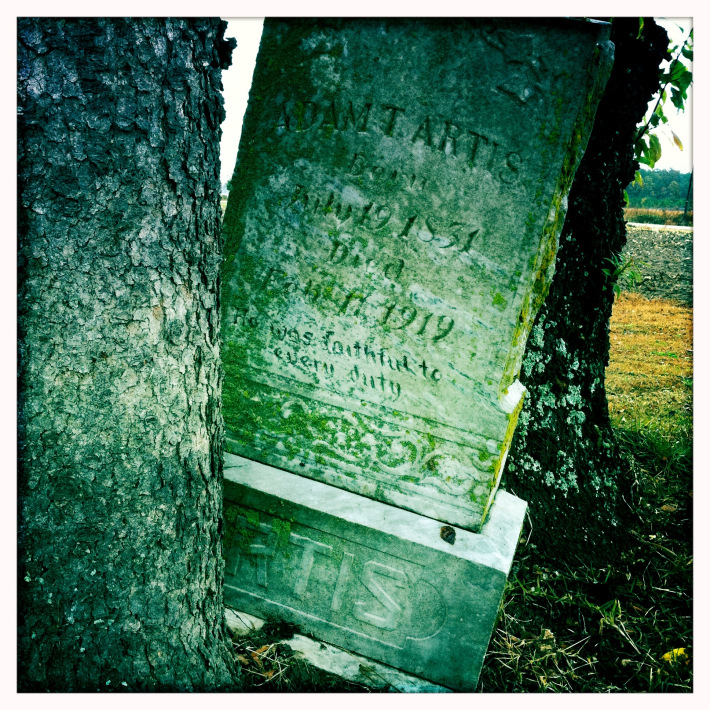
Try as I might, I can only account for 32 children.  My great-great-grandmother, by Adam’s third wife Frances Seaberry, was one of them.  Adam was born in 1831 in Greene County, North Carolina, to a freeborn mother and an enslaved father.  They gave him the middle name Toussaint, and I’d love to know that story.  He was apprenticed as a carpenter and purchased his first acreage in 1855 from his brother-in-law, John Wilson.  Over the years, he bought and sold a few hundred acres in northern Wayne County, and descendants still live on land that was his.  It is said that his fifth wife, 50+ years his junior, treated him badly in his last days, and was so afraid that he would haunt her that she had his feet cut off before the burial.  No photos of him remain, but his legacy is well-secured.  As his granddaughter Beulah Williams once told me: “These Artises, they are innumerable.”

Image

Standard