Births Deaths Marriages, Maternal Kin, Migration, Newspaper Articles, North Carolina, Oral History, Photographs

Finding J.T.

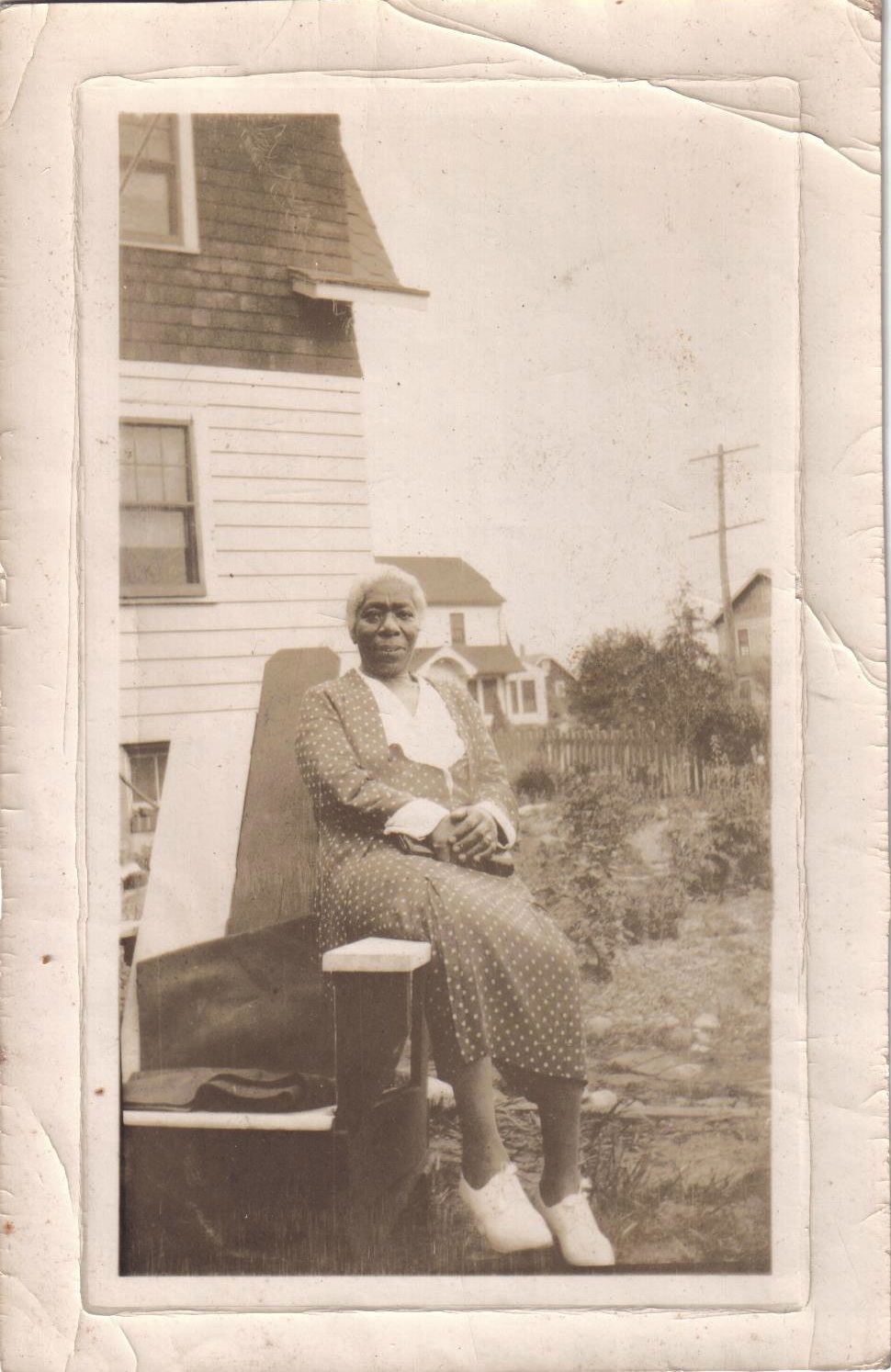
My grandmother’s favorite cousin was her Aunt Lethea’s son, “Jay” or “J.T.”:

My grandmother:  I had a cousin named Jay.  Aunt Lethea’s son.  She died and left three sons.  James –

Me:  Charles.

My grandmother:  Charles.  And Jay.

Me:  Okay.  J.T.

My grandmother:  Mm-hmm.  And Jay stayed with Aunt Min ‘cause Aunt Min reared him after Aunt Lethea died.  And he was at this same house with Aunt Minnie and Grandma.  Let’s see.  It was Aunt Min and Grandma and Uncle Luther and Jay and I.  We were all in the same house during the summer that I worked up there.  And Jay and I used to have a good time.  Oh, he was so nice.  He would, the first time I rode on a rollercoaster, he took me.  And we used to have a good time.  He was really nice.  He was a nice person.
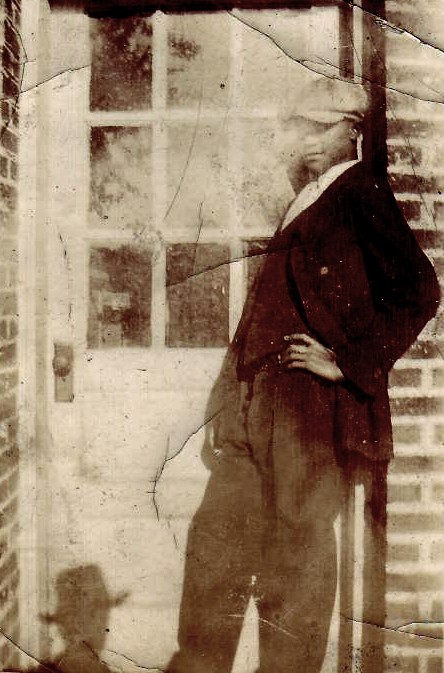
McNEELY -- Jay McNeely in doorway

Jay had two brothers, William and Charles. In the 1910 census of Statesville, Iredell County, I found three boys, William, 5, James, 3, and Charlie McNeeley, 2, living in the household of Sam and Mary Steelman and described as their grandsons. I identified these children, correctly I believe, as Elethea McNeely‘s children.  I also guessed that Charlie Steelman, listed in the household, was their father.  If he was, he and Lethea never married. Instead, in 1920, she wed Archie Weaver, a man my grandmother spoke of with vitriol.

My grandmother: Jay’s daddy had TB, and he just gave it to them.  And his mother and Jay.  But he lived years and years and years after both of them died.

Me: The father did?  

My grandmother: [Inaudible] give them all this stuff.  Oh, I could not stand him. She was my special aunt because she had boys, and she didn’t have any girls.  And she just took me over her house, you know, and let me do things that girls did, you know. 

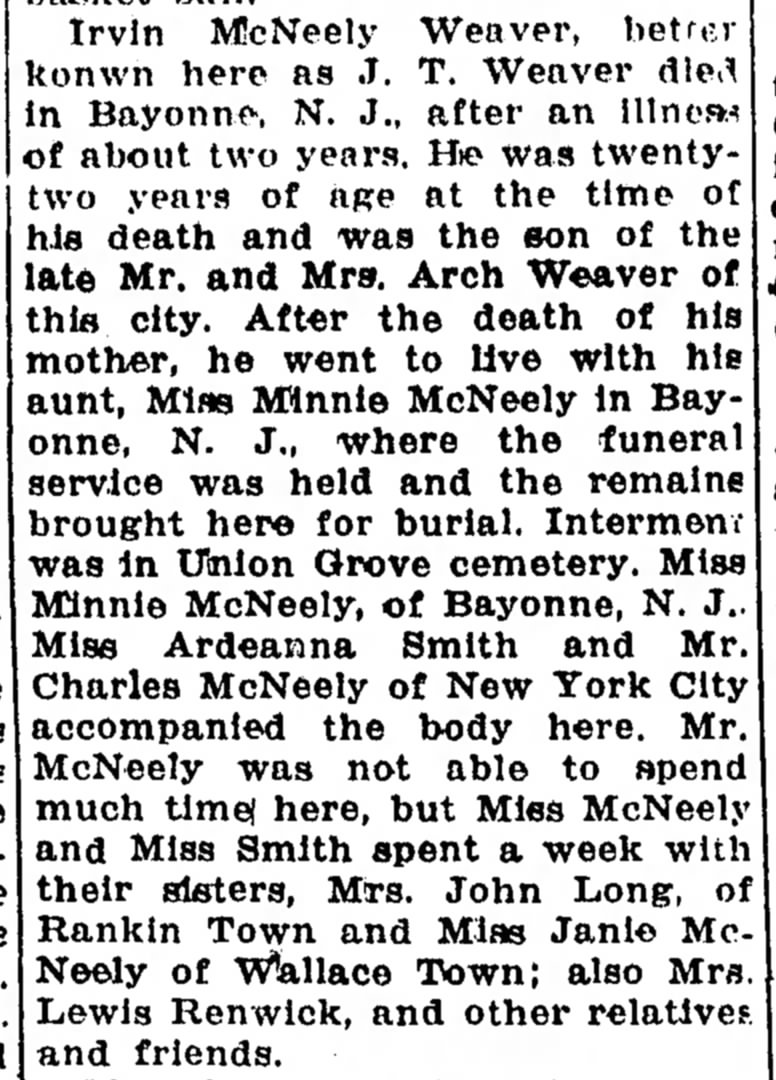
I was unable to find James McNeely, whom I believed to be “Jay,” in any other record. I knew Jay was reared by his aunt, Minnie McNeely, and died young of the same dread illness that killed his mother, but I was never able to find a trace of him. That changed last night, when I stumbled upon his death announcement in the 15 December 1933 issue of the Statesville Record & Landmark:
Image

As Grandma Carrie so memorably said, “Well, I’ll be damn.”  Here was J.T., as last. Not James McNeely — much younger, in fact — but Irvin McNeely Weaver. (The same “mysterious” Irving McNeely listed in the 1930 census in Martha McNeely‘s Bayonne household. He was described as her nephew, rather than her grandson, and I jotted in my notes: “Who is this???”) My grandmother was married and living in Newport News, Virginia, at the time of his death, and is not among his named survivors. Ardeanur Smith was his cousin, not his aunt, and Charles McNeely was his brother. Mrs. John Long was his aunt Lizzie McNeely Long, and Mrs. Lewis Renwick was his cousin Louise Colvert Renwick.

McNEELY -- McNeely Cousins

The first photo is Jay as a boy, perhaps around the time he moved to Bayonne. The second, taken in Bayonne circa 1928, shows Jay with his first cousins Ardeanur Smith, Margaret Colvert and Wardenur Houser, and an unknown girl seated in front. The last is Jay, alone, perhaps not long before he died.

McNEELY -- Jay McNeely near pole

——

This is just one of many, many times that I’ve found something that one or the other of my grandmothers would have been “tickled” to see. They both lived good, long lives — to 90 and 101 — but I would have kept them with me always if I could.

Interview of Margaret C. Allen by Lisa Y. Henderson; all rights reserved. Photos in the collection of Lisa Y. Henderson.

Standard
Births Deaths Marriages, Paternal Kin, Photographs

In memoriam: Richard B. Aldridge (1939-2013).

Image

Richard Bradley Aldridge, Sr., will be buried tomorrow just outside Washington DC. Born in Dudley, Wayne County, in 1939, he was the youngest child of John J. and Ora Bell Mozingo Aldridge.  Rick’s wife Carmen survives; their only child, Richard Jr., died in 1995. He is also survived by a brother, Edison Monzel Aldridge.

Standard
Births Deaths Marriages, Free People of Color, North Carolina, Paternal Kin, Photographs

Joshua & Amelia Aldridge Brewington.

Image 

Image

Joshua Brewington, son of Raiford Brewington and Bathsheba Manuel Brewington, was born in 1846 in Sampson County and died in 1931 in Wayne County.  His wife, Amelia Aldridge Brewington, daughter of Robert Aldridge and Mary Eliza Balkcum Aldridge was born in 1855 in Sampson County and died in 1895 in Wayne County. Their children were: Tilithia Brewington King Godbold Dabney (1878-1965), Bashua M. Brewington (1879-1899), Hattie Bell Brewington Davis (1880-1981), Mattie Amelia Brewington Braswell (1883-1952), Elijah Coleman Brewington (1886), Amelia Brewington (1888),  Lundy Brewington (1891-1914), Toney Cemore Brewington (1894-1973), and Murine Brewington (1895).

Joshua and Amelia Brewington are buried in the cemetery of the First Congregational Church, Dudley, North Carolina.

“Sleep on and take thy rest.”

——

Photo by Lisa Y. Henderson, August 2010.

Standard
North Carolina, Oral History, Paternal Kin, Photographs

Was it that long?

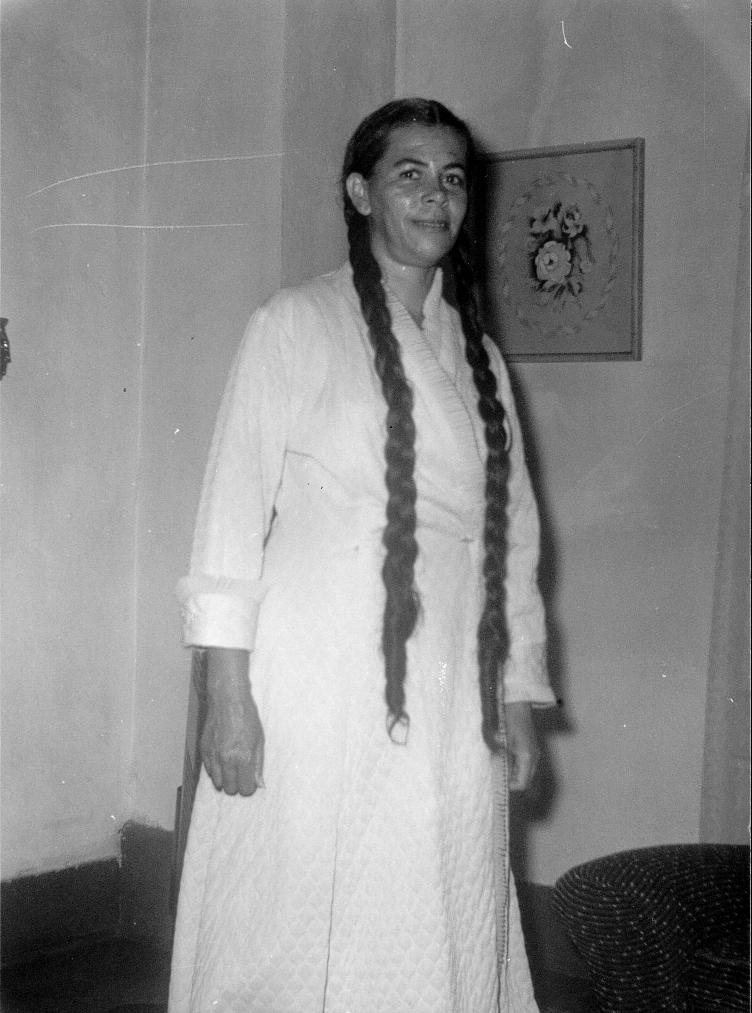
They are now swaddled in acid-free paper in an acid-free box: three coils of plaited hair. Two are narrow as fettucine (and nearly as flat after all this time), tapering through a curl to nothing; the first a deep, deep brown, the other sandy. The third braid is twice as long as the others and, at its thickest, the breadth of an infant’s forearm. If I place the cut end at the nape of my neck, the tip unfurls heavily to the seat behind me.

No visit to my grandmother was complete without her lifting a small green leatherette suitcase from atop a chifforobe in her bedroom. Underneath packets of photographs, which I also had to examine, she eased out the plastic bags preserving the hair cut from her own head (the great thick braid); her mother Bessie‘s (the thin dark brown one); and her mother’s first cousin, her namesake Hattie Mae (the blondeish plait.) Hattie Mae died in 1908 at the age of 13.  Bessie died in 1911 at the age of 19. Her own hair she cut in the late 1950s, after enduring years of headaches from the relentless pressure it exerted when coiled atop her head.  It was only the second time she’d cut it.

And so Mama was working at the factory, and I used to go up there and look at her.  And so that’s when I first cut my hair.  I went there, and the lady was asking Mama at the table where she worked to, and she didn’t say nothing to me, but she said, “Unh, who is that child with all of that long hair?”  And she took one of my plaits and held it up.  I had it in three plaits.  I’ll never forget it.  I had one down here used to come here.  Yeah, it come down to below the shoulder.  Like I plait it up, and it be from there.  Two plaits here and then this one down across.  And I always put that one behind my ear.   ‘Cause I didn’t like it parted in the middle.  Seem like it just wasn’t right in the middle.  So I asked Mama ‘bout cutting my hair, could I cut my hair.  ‘Cause everybody:  “How come you don’t cut your hair?  ‘Cause you’d look pretty in a bob.”  I don’t know.  I just wasn’t half combing it.  And it was nappy.  Like I’d go to try to comb it, and knots would be in there.  And then I’d get mad with it.  Then I’d take the scissors and clip that little piece off.    And then all that other part would come off.  And so I wondered, “Mama, could – ” “It’s your head.  It’s your hair.  I don’t care if you cut it off.”  And so one day, a fellow stayed up there on Vick Street was a barber downtown, a colored fellow, Charlie Barnes or whatever his name is.  So he passed there one day, and I asked him, “Would you cut my hair for me?”  And he said, “Yeah.”  Said, “You come on down to the shop.”  And I said, “Where is the shop?”  And he went on and tried to tell me, and then he stopped there one day, and he told me, he said, “You say you want to get your hair cut?”  He said, “You got too pretty a hair to cut.”  And I said, “Yeah, but I can’t half comb it.”   He said, “Well, anytime you want to come on down there, I’ll cut it for you, if it’s all right with your mama.  You ask your mama?”  I said, “Yeah, she allowed me to cut it.”  So sho ‘nough, I went around there one Saturday morning, went down there.  And so, he turned around and cut off my plaits on both sides ‘cause I had two plaits there.  He cut them off, and then he put some kind of stuff on it and then somehow fluffed it all up.  Awww, I thought I was something.  I reckon I was ‘bout 12, 13 years old.  After then I cut it off in a boyish bob. 

Image

I got a plait of Hattie Mae’s hair and a plait of my mama’s, Bessie’s hair, and then mine.  I was looking at that the other day, and I looked at it, and I said, “Huh, it was that long?”  Rudy, Rudy Farmer took that picture.  ‘Cause I –  He saw my hair.  I was standing there with my housecoat on.  I still got that thing now.  And: “Goodness!  I didn’t know your hair was that long!”  We were staying on Reid Street.  And he said, “I’d sure like to have a picture of that.”  And I said, “Well, you got a Kodak?”  And he said, “Yeah!  You’d let me take a picture?”  I said, “Yeah.”  And so he went home and got it and took a picture of it.  I was standing up in one and sitting down in one.

Image——

Interview of Hattie H. Ricks by Lisa Y. Henderson, all rights reserved. Photographs in the collection of Lisa Y. Henderson.
Standard
Births Deaths Marriages, Maternal Kin, Newspaper Articles, North Carolina, Oral History, Photographs

She was smart, and she was musical.

Image

FINALS AT COLORED SCHOOL.

Statesville Colored Graded School Closed Tuesday Night with a Very Creditable Performance.

The closing exercises of the Statesville graded school were held Tuesday night in the new building. Before the exercises began at 8.30, a representative of this paper had the pleasure of looking thru the building and inspecting the most creditable exhibits of the work accomplished by the pupils of the second, third, fourth, fifth, sixth and seventh grades. The exhibit showed surprising skill in drawing, sewing, fancy needle work and other forms of handiwork.

When the exercises began, the auditorium and two adjoining school rooms were filled, and the good order maintained was a noticeable feature.  The opening chorus and duet by members of the graduating class were much appreciated by the audience.

“Resolved: That girls are more expensive to raise than boys,” was the subject of the debate discussed in an interesting manner by Eugene Harris and Harry Chambers, on the affirmative, and Guy B.Golden and Jettie M. Davidson, on the negative.

GRADUATING EXERCISES.

Class History.      Buster B. Leach

Class Prophecy.   Annie B. Headen

Class Poem.      Willie D. Spann

Solo — ‘Be Still, O Heart.’   Thomas R. Hampton

Class Will.   Maurie Dobbins

Valedictory.    Louise Colvert

Class Song – ‘Fealty’

CLASS ROLL.

Mary Louise Colvert, Maurie Catherine Dobbins, Lillian Gennetta Moore, Willie DeEtte Spann, Buster Brown Leach, Annie Bell Headen, Thomas Richard Hampton, Eloise Earnestine Bailey.  

Class Motto – We Learn Not for School, But for Life.

The colored people of Statesville take great pride in their school.  They have a modern school building, steam heated and supplied with the latest equipment, something which very few towns and cities of the State have provided for its colored population.  C.W. Foushee, the principal, has proven himself to be a good school man.  He is assisted by eight teachers.

— Statesville The Landmark, 7 June 1923.

Image

Louise went up to New Jersey and finished high school.  They didn’t have a black high school in Statesville.  They just had tenth grade.  And she went to Jersey and finished high school in Jersey and then took a course in teacher’s education somewhere.  I don’t know whether it was Winston-Salem or Salisbury.  And then she taught at – Louise played an organ, I mean, she could play the piano. Yeah, she was just as smart as she could be.  And she not only could teach, but she was musical. And she had heard she could get a job anywhere because she could do that.  And I know Golar used to teach school, but Louise would do her commencement exercise for her.  She would, Louise would do that, and they would have concerts.  Not concerts, but the whole county would compete.  And Golar’s thing would always bring a group of children, ‘cause Louise would teach them, you know. I don’t know, I can’t remember the name of that place.  But she had a school out there.  Williams Grove. And Louise used to do all the playing for that school, and they would ask her to prepare them for the thing. They had these county somethings.  But it involved the whole county.  The schools were all over Iredell County.  And they would come together, and they would, it would be a big march, and then they would meet somewhere in particular, and then they would compete with the groups of singers and everything like that.  And, child, when Louise started that stuff, when she started teaching, she had groups singing – young people and the older people, and then Golar would take her to her school and get her to teach her children.

Happy birthday, Aunt Louise.
Mary Louise Colvert Renwick (6 October 1906-15 September 1989)
——

Interview of Margaret C. Allen by Lisa Y. Henderson; all rights reserved. Photographs in the collection of Lisa Y. Henderson. 

Standard
DNA, Maternal Kin, Photographs, Virginia

DNAnigma, no. 9: John Allen’s haplogroup.

JC Allen 2

John Allen resembled his mother Mary Brown Allen in the fullness of his face, in his heavy brow, and in the shape of his wide, straight mouth. Where her skin was a smooth walnut-brown, however, his was the creamy pale yellow of a pat of butter.  Of his father, we know nothing at all except this: he was white.  This conclusion, which has long rested on family lore, physical appearance and common-sense conjecture, has been confirmed in the Y-DNA haplogroup of his male descendants. The DNA of my uncle, son of John Allen’s son John Jr., yielded haplotype R1b1b2a1a1.  R1b is the most common haplogroup in western Europe and is particularly prevalent in men whose ancestors lived in modern-day England, Ireland and France.  Y-DNA is passed solely along the patrilineal line, from father to son.  (In other words, my grandfather and his brothers, then their sons, then the sons of those sons, inherited. By my count, seven of my great-grandfather’s patrilineal descendants survive.  Their ages range from 10 to 81.)  It does not recombine, and thus Y-DNA changes only by chance mutation at each generation. For this reason, it is useful in making connections among the male descendants of a common ancestor.  Additional testing may help solve the mystery of John Allen’s paternity. [Update here.]

Photograph in the collection of Lisa Y. Henderson.
Standard
Births Deaths Marriages, Maternal Kin, Military, Other Documents, Photographs, Virginia

Edward N. Allen.

After John C. Allen‘s birth in 1876, Graham and Mary Brown Allen had four children together. Emma, their only daughter, was followed by Willie, Alexander and Edward Noble.

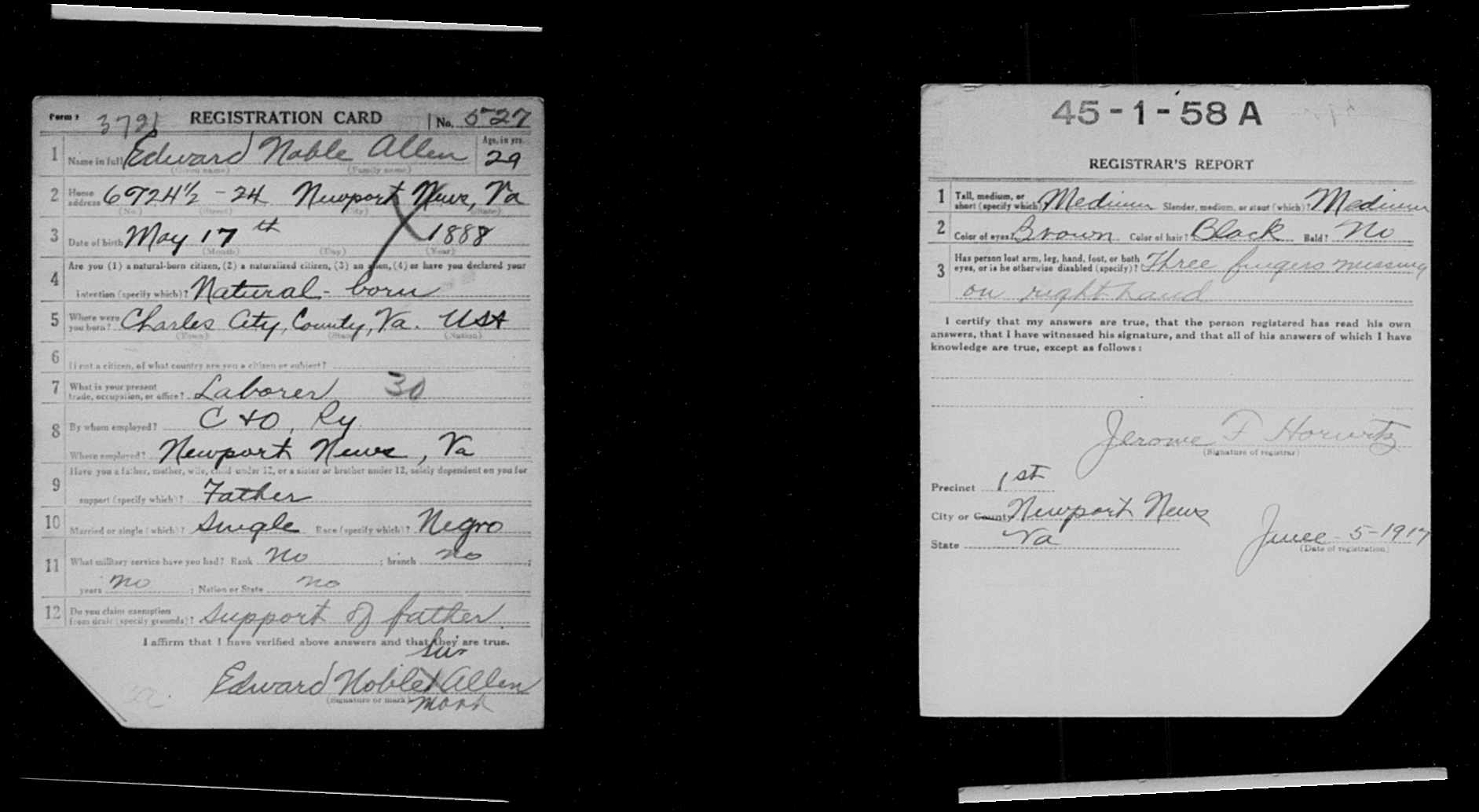
Edward N. Allen grew up in Charles City County, but followed his half-brother John to Newport News some time after 1910. He was working there as a laborer for the Chesapeake & Ohio Railroad when he registered for the draft at the outbreak of World War I. (And had had a tough life, as he reported missing three fingers on his right hand.)

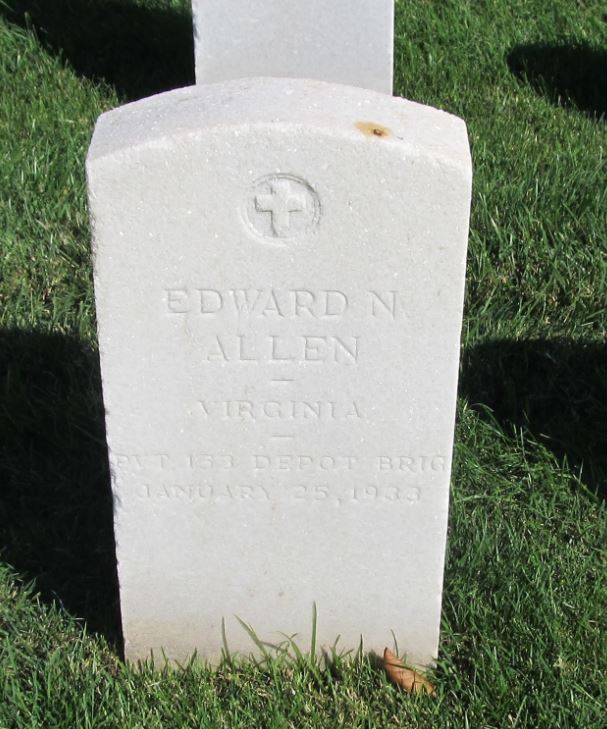
ImageEdward survived the war, but his life over the next 15 years is hidden from history. He apparently never married or had children. Unless he is the Virginia-born Edward Allen that is listed as a farmhand in upstate New York in 1920, he appears in neither that nor the 1930 census. He was back in Charles City County by the early 1930s, though, and died in early 1933 at the U.S. Marine Hospital in Norfolk. He was only in his early 40’s, but beset with an old man’s diseases.

Edward_N_Allen_Death_Cert

Edward Noble Allen is buried in Hampton National Cemetery.

Image

Standard
Maternal Kin, Photographs, Virginia

Speaking of Aunt Julia …

Here she is.

Image

Pretty much the way I remember her, though this photograph probably dates from the mid to late 1950s, ten to fifteen years before I knew her.  Her hair was always in pincurls behind the ears with a curly fluff of bang bunched up front. She always wore cotton print dresses, often with a bibbed apron. Her skin was a uniform pale, pale yellow, marshmallow soft on cheeks and upper arms, and smelling of … what? Powder? Faint perfume? My memory fails me; my mother will know.

I spent much of a summer with her when I was two, which I don’t at all recall but later Aunt Julia told me this: It is lunch time, and she has placed a biscuit on a plate before me, and as she bustles about to serve Uncle Bobby, I lay my cheek on this tiny warm pillow and fall straight into sleep.

My grandfather died long before I was born, and of his sisters and brother who lived into my childhood, she was the only one I knew. The return home from every visit to my grandmother in Newport News began with a slight jog to the left, a turn down Marshall Avenue to see Aunt Julia before we got on the road.

Standard
Maternal Kin, North Carolina, Photographs

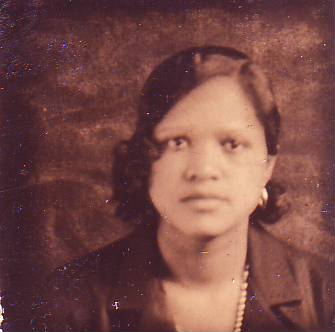
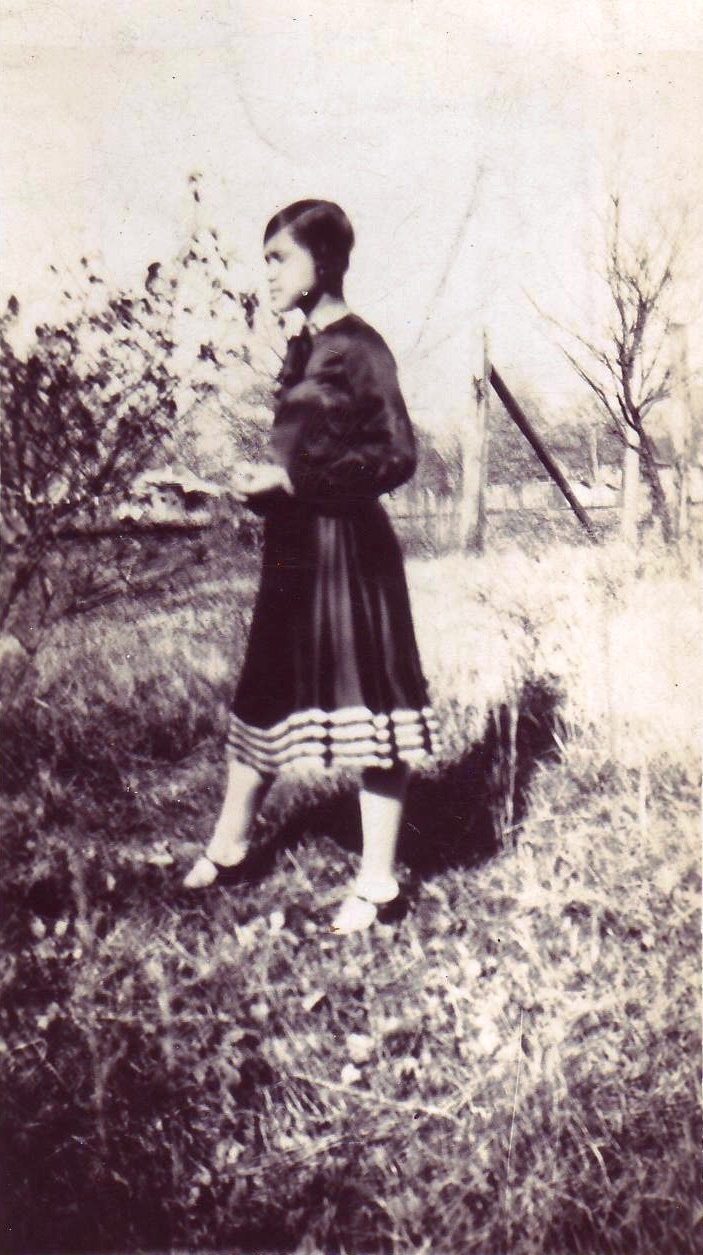
One of those McNeely girls.

This is a surely a McNeely sister, but which one?

ImageMy grandmother wasn’t sure, but knew it wasn’t her mother Carrie, or Aunt Emma, or Aunts Minnie or Janie. Nor, she thought, was it Aunt Lizzie or Aunt Elethea. Which leaves Addie, but she nixed her, too. Not to second-guess my grandmother — or, well, to second-guess her, but in the most respectful way — I’d put my money on Addie, who died when my grandmother was about 9 years old.

Photograph in collection of Lisa Y. Henderson.
Standard
Maternal Kin, Other Documents, Photographs, Virginia

Julia Holmes Jackson.

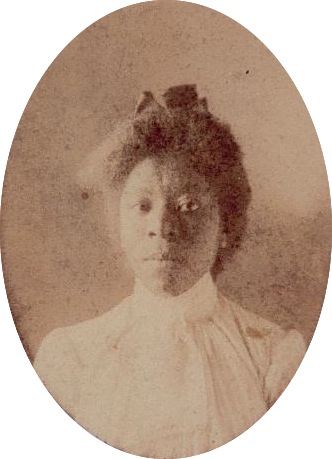
In the late 1980s, when I was in the early clutches of my genealogical addiction, I often made copies of old pictures by photographing them through a microfilter screwed onto my Canon AE1. I spent an afternoon at my great-aunt Julia Allen Maclin’s house, sifting through a box of faded sepia-toned prints and gasping with delight as she identified Holmeses and Allens. Two of the many I copied that day were small oval portraits of the same woman. In one, she faces the camera nearly head-on, her hair puffed into bouffant tied with a dark bow. In the second, she has donned a great fluffy disk of a hat and tilts her head to the right. Strong side-lighting revealed a tiny feature I recognized immediately – an epicanthic fold at the corner of her left eye. My grandfather (her nephew) had them, and my mother does, and I do, too, though mine are a mere suggestion of her prominent flaps. This was Julia Ellen Holmes, my great-grandmother’s sister and the woman for whom my great-aunt was named.

Image

Image

I don’t know a lot about Julia. Though just a child at the time, she is not listed in her parents’ household in the 1880 census of Charles City County, Virginia.  The first record of her that I’ve found is a deed of transfer filed 30 December 1899, at Charles City County Courthouse, from the estate of Jasper Holmes to Mary H. Allen and her husband John C. Allen and Martha H. Smith and her husband Jesse Smith, all of Newport News VA, and Julia E. Holmes, unmarried, of Charles City County, Jasper’s heirs at law.

Just months later, Julia (or a woman that appears to be her) is listed in the 1900 census of Manhattan, New York City, at 208 W. 72nd Street. There, Virginia-born Julia Holmes (born February 1880, which is not accurate if this is the right woman) lived in a boarding house that included three other servants, two waiters and a cook.  Headed by 39 year-old Mary A. Phillips, the tenants included blacks, whites, southerners, northerners, a Cuban and an Irishman.

(Or is this my Julia? In the 1900 census of Philadelphia, Philadelphia County, Pennsylvania: Julia Holmes, 17, Virginia-born servant, in the household of ice company treasurer Josiah A. McKee at 1838 Mount Vernon Avenue.)

The Holmes sisters sold off their father’s property over the next ten years, filing deeds of sale in 1905 and 1910. In the final transaction, on 10 Jan 1910, Mary Allen of Newport News and Julia Holmes of the City of New York, children and only heirs of Jasper Holmes (Martha Holmes Smith had died) filed a deed of transfer for property sold to James Clark for $300.

In the 1910 census of Manhattan, on Washington Square (North), Virginia-born Julia Holmes is listed as a servant in the household of Philo Hager, who worked in wholesale dry goods. By 1920, she had moved across the river to East Orange, which is where my great-aunt remembered her living. The censustaker found Julia Holmes at 1 Waters Avenue, listed as a servant in the household of B.C. Fenwick.  Her birthplace is given as New Jersey; her parents’ as Virginia; her age as 29. Only the middle statistic is correct.

I have not found Julia Holmes in either the 1930 or 1940 censuses and assumed that she died sometime before World War II. Certainly, my great-aunt never spoke of her as if she had lived a long time.

However.

When I found my great-grandmother’s obituary in a March 1961 edition of the Daily Press, there, among the survivors, was “sister, Mrs. Julia Jackson of Orange NJ.” And then, when my cousin M., daughter of my great-aunt Nita Allen Wilkerson, sent me scans of a bunch of photos she found in an album that had belonged to Julia Allen Maclin, I found this:

Julia E Holmes?

I can’t see the flaps, but I’m certain: great-GREAT-aunt Julia.

(So, when, in fact, did she die? Where was she buried? Who was Mr. Jackson? Did she have children?)

Standard