Births Deaths Marriages, Maternal Kin, Newspaper Articles, North Carolina, Oral History, Other Documents, Vocation

Irving Houser gets a McNeely Girl.

Me:  Okay, and Emma, she was up in Bayonne.

My grandmother:  This man went up there in his young years. I think he had an eye on her. People used to say that the men —  all of Mama and her sisters were supposed to have been catches, you know. They were good-looking women and everything, and they just said the men said it didn’t matter which one it was so long as they got one of them.

Me:  One of the McNeely girls?

My grandmother: McNeelys. Mm-hmm.

Me:  So he came back and married Aunt Emma and carried her to New Jersey. To Bayonne — oh! Irving Houser, Sr.

——

Irving L. Houser was born in 1885 in Iredell County to Alexander “Dan” and Lucy Houser. He and Emma McNeely were married 6 September 1910 in Statesville. The couple migrated to Bayonne, New Jersey, and settled on Andrew Street.
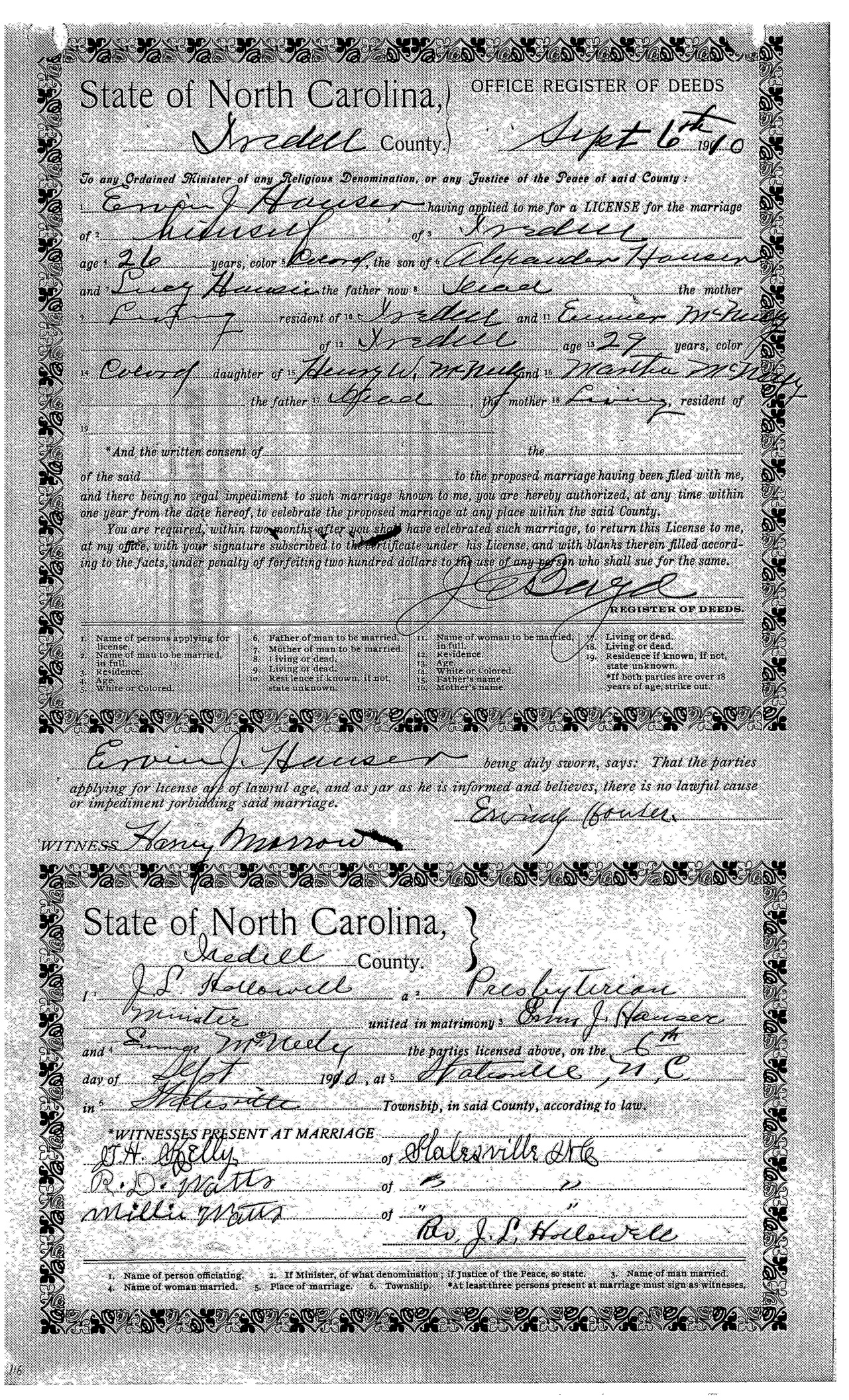
McNEELY -- Ervin Hauser & Emmer McNeely Marr Lic

Six years later, in a span of three days, Irving appeared twice in New York City newspapers. First:

OLD JOBS OFFERED BAYONNE STRIKERS

Standard Oil Co. Tells Them They May Come Back, But Without Increase of Wages.

MRS. CRAM PLANS NEW VISIT.

Says She Will Consult a Lawyer and Won’t Be Barred — Federal Conciliators at Work.

The Standard Oil Company refused yesterday to grant the wage increases demanded by employees whose strike has tied up practically every big Plant in the Constable Hook section of Bayonne, N.J. for more than a week, but offered to take the strikers back at the old wage scale whenever the men wanted to resume work.  The Committee of Ten, which learned these terms from George B. Hennessey, General Superintendent of the Bayonne plant, endeavored to report to the body of strikers.  The police prevented them because no police permit to hold a mass meeting had been requested, but one was issued for a meeting this morning, at which the strikers will decide whether to accept or decline the terms.

     …

Pending today’s meeting, the strikers were quiet yesterday.  Early in the morning there had been some disorder at Avenue E and Twenty-fourth Street, bringing a squad of policemen, who fired as many more.  They caught Irving Houser of 92 Andrew Street, an employee of the Edible Products Company, which plant is near the Tidewater Oil Company, and locked him when they found a revolver in his pocket.

New York Times, 18 Oct 1916.

Then,

Bayonne, N.J.

Miss Viola Houser, of Orange, N.J., visited her brother and sister, Mr. and Mrs. Irving Houser, Andrew Street, on Sunday, October 10.

New York Age, 21 Oct 1916.

Amid social unrest and social calls, Irving and Emma had three children: Mildred Wardenur (1913), Henry A. (1915) and Irving L. Houser Jr.  (1920).  For many years, Irving worked in various jobs in an oil refinery, but by time he registered for the “Old Man’s Draft” of 1942, he was employed at Bayonne City Hall.  By then, he had purchased a house at 421 Avenue C, a site now occupied by Bayonne Giant Laundromat.  Irving Houser Sr. died in 1962.
Standard
Maternal Kin, Newspaper Articles, North Carolina, Vocation

The colored fire company.

Members of the colored fire company of Statesville left yesterday for Oxford to attend the State tournament. Among those who went were F.F. Chamber, vice president of the State association; J.P. Chambers, first foreman and J.H. Gray second foreman of the local company; J.A. Brown, Clarence Carlton, W.G. Kimbrough, Jim Dalton, Luther McNeely, J.W. Byers, S.Y. Allison, J.P. Murphy and Smith Byers.

Statesville Landmark, 20 August 1912.

Standard
Births Deaths Marriages, Maternal Kin, North Carolina, Photographs, Vocation

Mercy me.

ImageThe hospital was on East Green Street, right around the corner from Jackson Chapel and Saint John AMEZ and Calvary Presbyterian. That last Sunday in June, two days after her first delivery, my mother lay perspiring in an iron bed, smiling uncomfortably as she accepted congratulations from church ladies making their post-service rounds. (The first reports went out: the Hendersons had a jowly yellow girl with a slick cap of black hair, a “Chink” baby, as one later indelicately put it.) She was desperate to be discharged, but had to wait for an all-clear from the pediatrician. It was not as if he were right down the ward. Dr. Pope was white, and as his black patients were forbidden to come to him, making his rounds meant driving across the tracks to them, laid up in sweltering Mercy Hospital. He arrived Sunday evening, turned me this way and that, pronounced himself satisfied, and granted us a release for the next morning. A few months later, when federal law mandated that Wilson’s new hospital open as an integrated facility, Mercy closed.

Founded in 1913 as the Wilson Hospital and Tubercular Home, Mercy was one of a handful early African-American hospitals in North Carolina and the only one in the northeast quadrant of the state. Though it struggled financially throughout its 50 years of operation, the hospital provided critical care to thousands who otherwise lacked access to treatment. A small cadre of black nurses assisted the attendant physician. One was Henrietta Colvert, shown below at far left, my great-grandfather’s sister. Henrietta was born in 1893 in Statesville, Iredell County, and received training at Saint Agnes School of Nursing in Raleigh. How she came to Wilson is unknown. This photograph suggests that she cared for Mercy’s patients in its earliest days. (The man seated in the middle is Dr. Frank S. Hargrave, a founder of the hospital, and he left for New Jersey in the early 1920s.)  My father’s mother recalled that Henrietta also worked as a visiting nurse for Metropolitan Insurance Company in the 1930s and attended her children for two weeks after they were born.  My great-great-aunt was still at Mercy in the 1940s, but had left Wilson by time my mother married my father and moved there in 1961, and my family had long lost contact with her when she died in 1980 in Roanoke, Virginia.

Image

Photograph of Mercy Hospital taken in June 2013 by Lisa Y. Henderson. Photo of Mercy’s staff courtesy of the Freeman Round House Museum, Wilson NC.

Standard
Births Deaths Marriages, Enslaved People, Free People of Color, Newspaper Articles, North Carolina, Paternal Kin, Photographs, Vocation

These Artises.

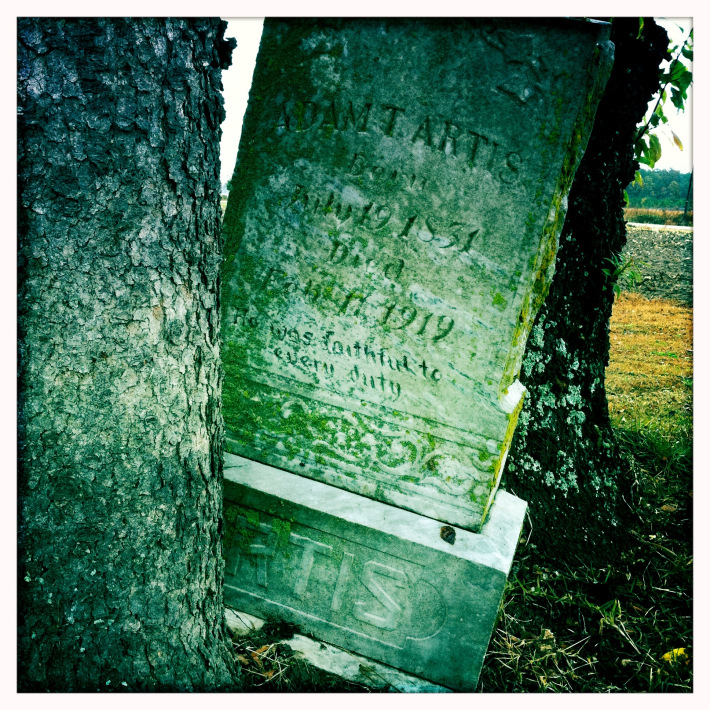
“It comes from Fremont, Wayne county, that Adam Artis, colored, 75 years old, who lives near there, is the father of 47 legitimate children and that in addition there are 80 or 90 grandchildren.”   — Statesville Landmark, 9 Jan 1906.

Try as I might, I can only account for 32 children.  My great-great-grandmother, by Adam’s third wife Frances Seaberry, was one of them.  Adam was born in 1831 in Greene County, North Carolina, to a freeborn mother and an enslaved father.  They gave him the middle name Toussaint, and I’d love to know that story.  He was apprenticed as a carpenter and purchased his first acreage in 1855 from his brother-in-law, John Wilson.  Over the years, he bought and sold a few hundred acres in northern Wayne County, and descendants still live on land that was his.  It is said that his fifth wife, 50+ years his junior, treated him badly in his last days, and was so afraid that he would haunt her that she had his feet cut off before the burial.  No photos of him remain, but his legacy is well-secured.  As his granddaughter Beulah Williams once told me: “These Artises, they are innumerable.”

Image

Standard
Maternal Kin, Photographs, Virginia, Vocation

Look at that.

John Allen on Aberdeen worksite

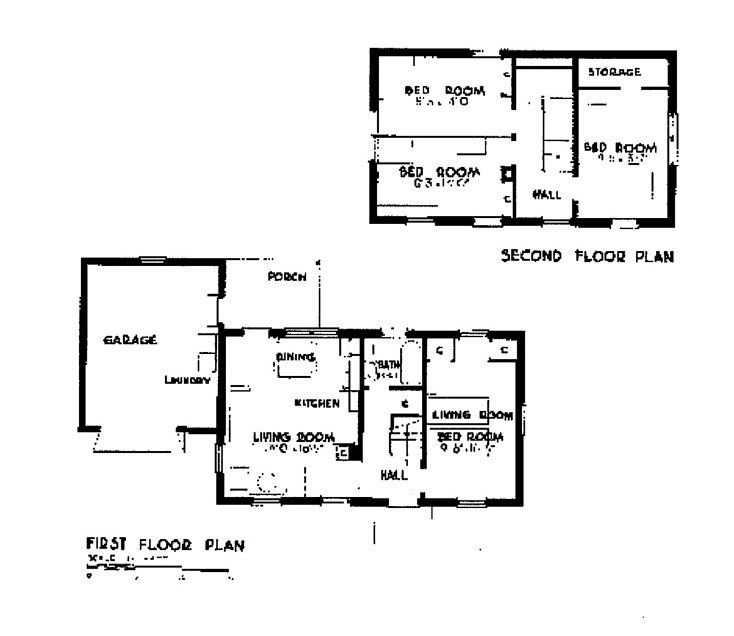
I rode through Aberdeen Gardens two or three times while I was in Newport News. “By Negroes, for Negroes” reads the historical marker near the school. Boxy, red-brick houses counterposed in neat lines along streets named for community heroes. My grandfather John C. Allen Jr. was a drywall supervisor during their construction in the late 1930s. Though he disdained the building standards, he briefly moved his family into one of the duplexes when my mother was three weeks old. Semi-furnished. A chicken coop out back. A vegetable garden. By 1940, the family was gone, into the two-story house on 35th Street that my grandmother called home until she died. There’s a rose alongside the porch that still blooms where my grandfather planted it, and he passed in 1948. This house is the most constant edifice of the whole of my life. My Gibraltar. Upstairs, my grandmother slept in the double bed that they brought with them from Aberdeen, along with a squat chest and a nightstand. Solid oak in a simple Shaker style. “Not a drawer sags to this day,” she told me, marveling. She pulled one precariously far out. “Look at that.” I gently tested its solidity. I laughed.

aberdeen

Above, John C. Allen (third from right) and his drywall crew at Aberdeen Gardens, circa 1937, and floor plan of Aberdeen Gardens home.

Standard