Births Deaths Marriages, Enslaved People, Maternal Kin, North Carolina, Other Documents

Cohabitation as man and wife.

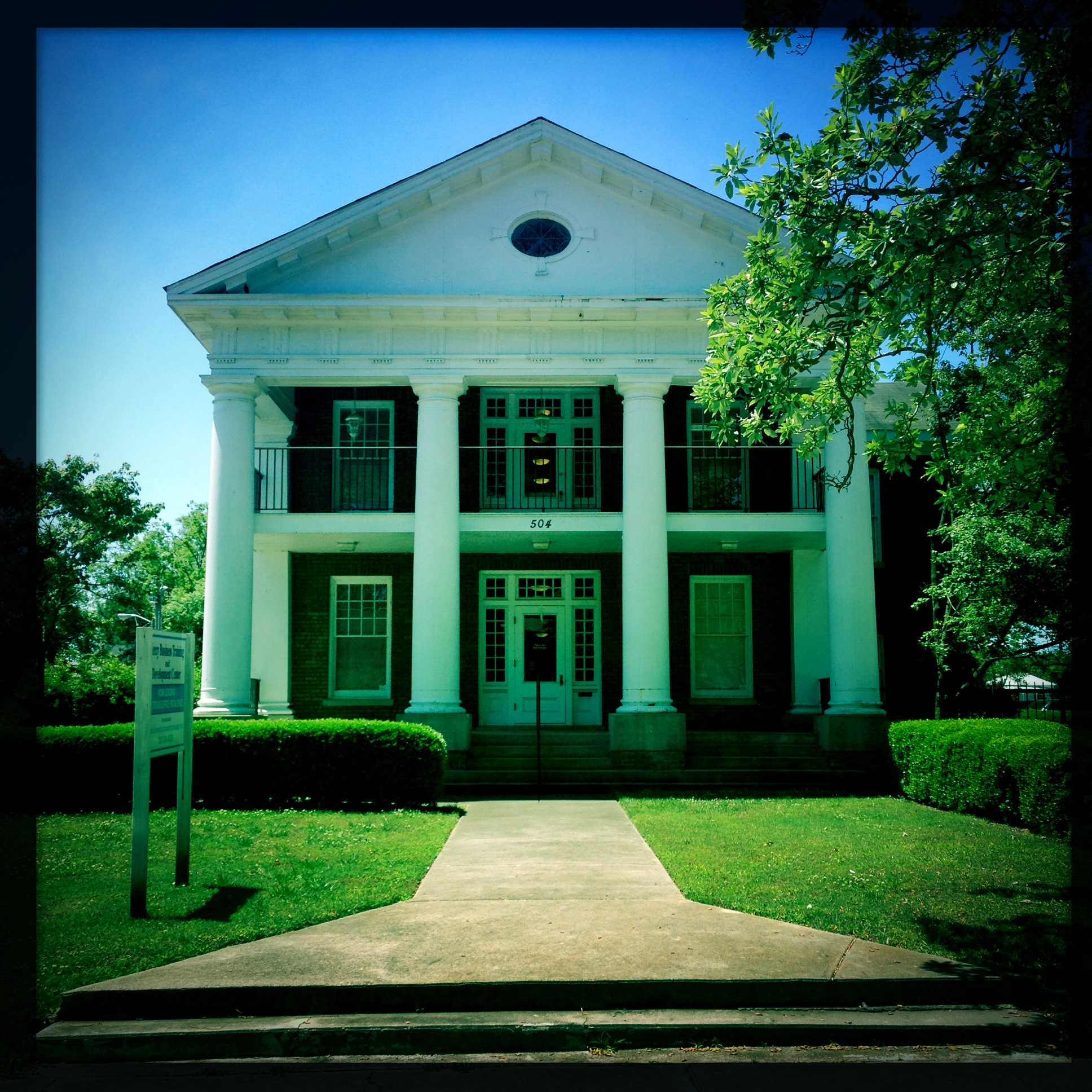
COLVERT -- Walker Colvert Rebecca Parks CohabitationIn March 1866, in order to ratify marriages and legitimate children, the North Carolina General Assembly passed an Act directing Justices of the Peace to collect and record in the County Clerk’s office the cohabitations of former slaves. Freedmen who did not record their marriages by September, 1866, faced misdemeanor charges. Stragglers rushed the courthouse that August, and on the 25th Walker Colvert and Rebecca Parks traveled the 12 miles or so from Eagle Mills to stand in line. They declared that they had been together for 13 years and named three children, John, Elvira and Lovenia. (There should also have been a son Lewis, the youngest — and who in the world is Lovenia? I have found no trace of her.)

Walker, fifty-ish at the time, was my great-great-great-grandfather. He was born in Culpeper County, Virginia, then passed, like a bedframe or milk cow, from one Colvert to another and into Iredell County, North Carolina. Rebecca was not his first wife, and his age suggests earlier children, names and fates unknown. My grandmother, who died in 2010 at age 101, knew and remembered Rebecca. And, like that, a link across five generations.

Standard
Enslaved People, Maternal Kin, North Carolina, Other Documents

6 chisels, a hammer & square, a grain box, a sorrell mare, 10 hogs and …

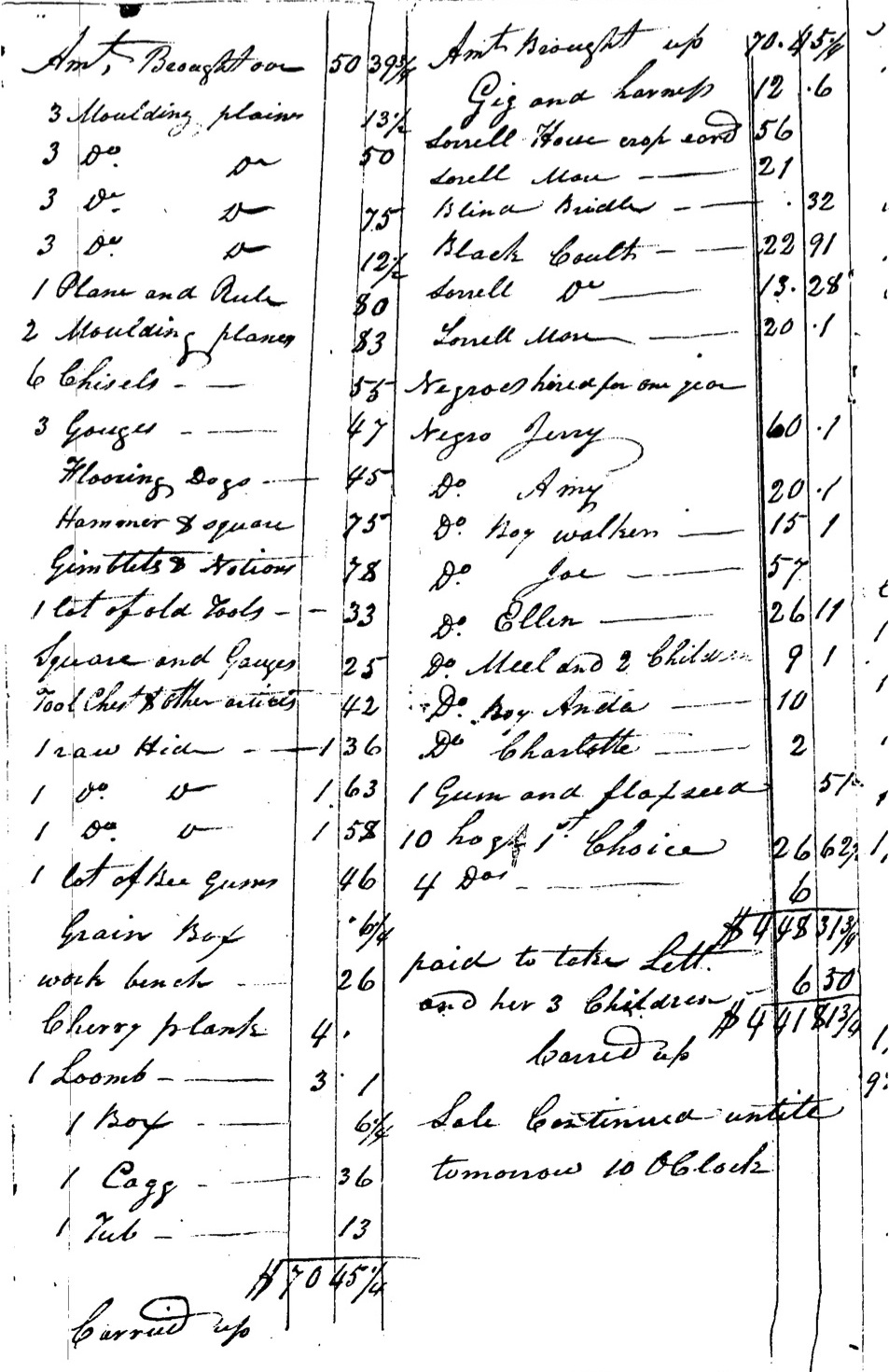
Inventory of the estate of John Alpheus Colvert, Iredell County, North Carolina, 1827.

ImageImage

On the second page, in the second column, are “Negroes hired for one year,” that is, slaves leased to neighbors to earn money for Colvert’s estate. “Boy Walker” was about eight years old. That he was listed without his mother suggests that he was an orphan, though he may have been kin to the others who appear in this list. Walker had arrived in North Carolina only two or three years before, passed to John Colvert from the estate of John’s father Samuel. When John’s died, his son William I. Colvert inherited Walker. William was even younger than his own slave, however, and Walker was likely hired out until the boy came of age.

Standard
Births Deaths Marriages, Maternal Kin, North Carolina, Photographs, Vocation

Mercy me.

ImageThe hospital was on East Green Street, right around the corner from Jackson Chapel and Saint John AMEZ and Calvary Presbyterian. That last Sunday in June, two days after her first delivery, my mother lay perspiring in an iron bed, smiling uncomfortably as she accepted congratulations from church ladies making their post-service rounds. (The first reports went out: the Hendersons had a jowly yellow girl with a slick cap of black hair, a “Chink” baby, as one later indelicately put it.) She was desperate to be discharged, but had to wait for an all-clear from the pediatrician. It was not as if he were right down the ward. Dr. Pope was white, and as his black patients were forbidden to come to him, making his rounds meant driving across the tracks to them, laid up in sweltering Mercy Hospital. He arrived Sunday evening, turned me this way and that, pronounced himself satisfied, and granted us a release for the next morning. A few months later, when federal law mandated that Wilson’s new hospital open as an integrated facility, Mercy closed.

Founded in 1913 as the Wilson Hospital and Tubercular Home, Mercy was one of a handful early African-American hospitals in North Carolina and the only one in the northeast quadrant of the state. Though it struggled financially throughout its 50 years of operation, the hospital provided critical care to thousands who otherwise lacked access to treatment. A small cadre of black nurses assisted the attendant physician. One was Henrietta Colvert, shown below at far left, my great-grandfather’s sister. Henrietta was born in 1893 in Statesville, Iredell County, and received training at Saint Agnes School of Nursing in Raleigh. How she came to Wilson is unknown. This photograph suggests that she cared for Mercy’s patients in its earliest days. (The man seated in the middle is Dr. Frank S. Hargrave, a founder of the hospital, and he left for New Jersey in the early 1920s.)  My father’s mother recalled that Henrietta also worked as a visiting nurse for Metropolitan Insurance Company in the 1930s and attended her children for two weeks after they were born.  My great-great-aunt was still at Mercy in the 1940s, but had left Wilson by time my mother married my father and moved there in 1961, and my family had long lost contact with her when she died in 1980 in Roanoke, Virginia.

Image

Photograph of Mercy Hospital taken in June 2013 by Lisa Y. Henderson. Photo of Mercy’s staff courtesy of the Freeman Round House Museum, Wilson NC.

Standard
Births Deaths Marriages, Enslaved People, Maternal Kin, Newspaper Articles, North Carolina, Virginia

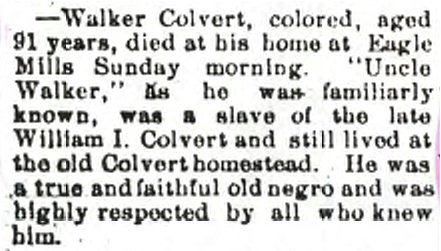
The death of Walker Colvert.

Image

Born in Culpeper County, Virginia; bundled up with chairs and kegs and sundry and shipped to North Carolina after his first master died; reared with his future master, the William I. Colvert noted; husband to his beloved Rebecca; father of three, or maybe four (or more likely more); a middle-aged man when freedom came; a farmer who got a toehold and kept it long enough to pass it on. In the February 5, 1905, edition of the Statesville Landmark, a brief acknowledgement of the death of Walker Colvert, “a true and faithful old negro.” I feel some kind of way about the description, but I didn’t have to live in 19th century North Carolina, and I will not judge. (Him, anyway.)


Standard
Births Deaths Marriages, Maternal Kin, Other Documents

She is now with child.

Image

During a recent trip to the North Carolina State Archives, I discovered documents related to an Iredell County bastardy action — State v. John Colvert, colored. Harriet Nicholson had been examined by county officials and found to be pregnant. She named John Colvert as the child’s father and, on 26 January 1874, a warrant was issued to force him into court. In May, John Colvert, with Alfred Dalton and Peter Allison giving bond, agreed to “maintain” the child, i.e. pay child support.

I was aware that Harriet and John were not married when their son Lon was born. Indeed, they never married. In an unusual turn for the era, the child was given his father’s last name and was reared by John’s father and stepmother, Walker and Rebecca Colvert. However, the date of the bastardy action struck me. First, in January 1874, Harriet was only 13 years old. (John was 23.) Second, Lon always gave his birth year as 1875. (June 10, to be exact. Belated shout-out.) Was he in fact born a year earlier in 1874? Could Harriet’s condition have been detected early enough for her to been hauled into court in January? Or was Lon Harriet’s second pregnancy, the first having resulted in a stillbirth or infant death?

My grandmother never mentioned an older child. Perhaps she never knew of one. Harriet married Abner Tomlin a couple of years after Lon’s birth and of their several children only one, Harvey Golar Tomlin, lived long enough for my grandmother to know. Her last child, Bertha Mae Hart, was born in 1904 of her second marriage.

Standard
DNA, Enslaved People, Maternal Kin, North Carolina, Virginia

Walker’s people.

Amelia.  Anthony.  Caroline.  Charles.  Daniel.  Eliza.  Frank & his wife Charlotte & their children Townsend, Jere, Little Frank, Lewis & Ellen.  George.  Harry.  Jane.  Mary.  Little Mary.  Patty.  Rachel.  Robert & his wife Milly & their children Easter, Jack, Reuben, Edmund & Rachel.  Sarah.  Siller.  Winny.

These are the men and women and children with whom my great-great-great-grandfather Walker Colvert lived in 1823, the year their master Samuel Colvert died and his Culpeper County, Virginia, estate was divided.  Walker and Amelia were sent 300 miles south to Samuel’s son John Alpheus Colvert in North Carolina.  Was Amelia Walker’s mother?  His sister?  No kin at all?  Was he an orphan, or did he leave his parents behind?  Who among these 30-odd slaves claimed Walker as their own?

Until I learned recently that I share DNA with descendants of Leonard Calvert, the first governor of colonial Maryland, it had never occurred to me that Walker might be blood-kin to his master, also a Calvert descendant.  The news set me wondering.  Not so much about which Colvert was Walker’s father, or maybe grandfather, but about Walker’s family in general.  I’ve long known that four years after his arrival in North Carolina, John Colvert died, and Walker was hired out until John’s son William was old enough to control him.  I know that Walker was married at least twice, and had at least four children, but age and circumstances suggest that he fathered even more.  Who were they? Where did they go?

Genealogical DNA testing may yield answers to some of these questions. I have learned already that I am distantly related to those Calvert descendants through my father’s family, not my mother’s, and thus Walker was probably not related to his owners at all. I’m still looking for Walker’s children.

Standard