Births Deaths Marriages, Maternal Kin, Migration, Newspaper Articles, North Carolina, Oral History, Photographs

Finding J.T.

My grandmother’s favorite cousin was her Aunt Lethea’s son, “Jay” or “J.T.”:

My grandmother:  I had a cousin named Jay.  Aunt Lethea’s son.  She died and left three sons.  James –

Me:  Charles.

My grandmother:  Charles.  And Jay.

Me:  Okay.  J.T.

My grandmother:  Mm-hmm.  And Jay stayed with Aunt Min ‘cause Aunt Min reared him after Aunt Lethea died.  And he was at this same house with Aunt Minnie and Grandma.  Let’s see.  It was Aunt Min and Grandma and Uncle Luther and Jay and I.  We were all in the same house during the summer that I worked up there.  And Jay and I used to have a good time.  Oh, he was so nice.  He would, the first time I rode on a rollercoaster, he took me.  And we used to have a good time.  He was really nice.  He was a nice person.
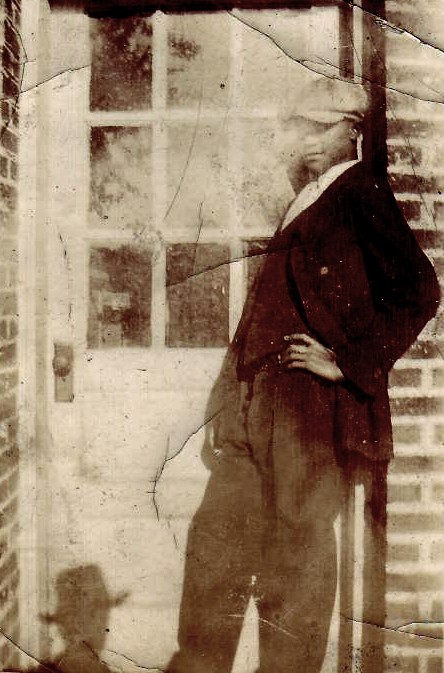
McNEELY -- Jay McNeely in doorway

Jay had two brothers, William and Charles. In the 1910 census of Statesville, Iredell County, I found three boys, William, 5, James, 3, and Charlie McNeeley, 2, living in the household of Sam and Mary Steelman and described as their grandsons. I identified these children, correctly I believe, as Elethea McNeely‘s children.  I also guessed that Charlie Steelman, listed in the household, was their father.  If he was, he and Lethea never married. Instead, in 1920, she wed Archie Weaver, a man my grandmother spoke of with vitriol.

My grandmother: Jay’s daddy had TB, and he just gave it to them.  And his mother and Jay.  But he lived years and years and years after both of them died.

Me: The father did?  

My grandmother: [Inaudible] give them all this stuff.  Oh, I could not stand him. She was my special aunt because she had boys, and she didn’t have any girls.  And she just took me over her house, you know, and let me do things that girls did, you know. 

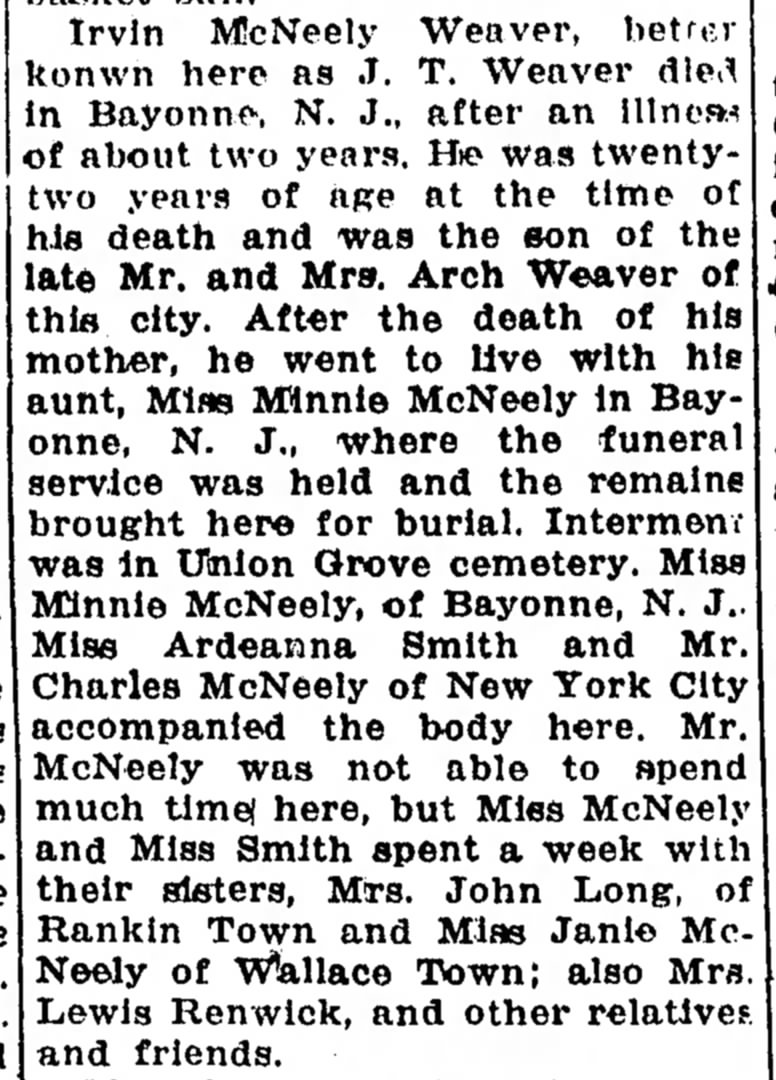
I was unable to find James McNeely, whom I believed to be “Jay,” in any other record. I knew Jay was reared by his aunt, Minnie McNeely, and died young of the same dread illness that killed his mother, but I was never able to find a trace of him. That changed last night, when I stumbled upon his death announcement in the 15 December 1933 issue of the Statesville Record & Landmark:
Image

As Grandma Carrie so memorably said, “Well, I’ll be damn.”  Here was J.T., as last. Not James McNeely — much younger, in fact — but Irvin McNeely Weaver. (The same “mysterious” Irving McNeely listed in the 1930 census in Martha McNeely‘s Bayonne household. He was described as her nephew, rather than her grandson, and I jotted in my notes: “Who is this???”) My grandmother was married and living in Newport News, Virginia, at the time of his death, and is not among his named survivors. Ardeanur Smith was his cousin, not his aunt, and Charles McNeely was his brother. Mrs. John Long was his aunt Lizzie McNeely Long, and Mrs. Lewis Renwick was his cousin Louise Colvert Renwick.

McNEELY -- McNeely Cousins

The first photo is Jay as a boy, perhaps around the time he moved to Bayonne. The second, taken in Bayonne circa 1928, shows Jay with his first cousins Ardeanur Smith, Margaret Colvert and Wardenur Houser, and an unknown girl seated in front. The last is Jay, alone, perhaps not long before he died.

McNEELY -- Jay McNeely near pole

——

This is just one of many, many times that I’ve found something that one or the other of my grandmothers would have been “tickled” to see. They both lived good, long lives — to 90 and 101 — but I would have kept them with me always if I could.

Interview of Margaret C. Allen by Lisa Y. Henderson; all rights reserved. Photos in the collection of Lisa Y. Henderson.

Standard
Maternal Kin, North Carolina, Oral History

Carrie, formally.

Me: Well, I wonder where she got her name from?

My grandmother: Who?

Me: Your mama. Your mother. Caroline Mary Martha –

My grandmother: Yeah.  Who ever heard tell of such as that?

Me: Fisher Valentine McNeely.  Well, I know where the Martha came from, ‘cause that was her mother’s name.

My grandmother: Yeah.

Actually, it was Caroline MARTHA MARY Fisher Valentine McNeely. And “Caroline” was the name of her aunt, Caroline McConnaughey, Martha Miller McNeely’s sister. But Mary and Fisher and Valentine?

——

Interview of Margaret C. Allen by Lisa Y. Henderson, all rights reserved.

Standard
Maternal Kin, North Carolina, Photographs

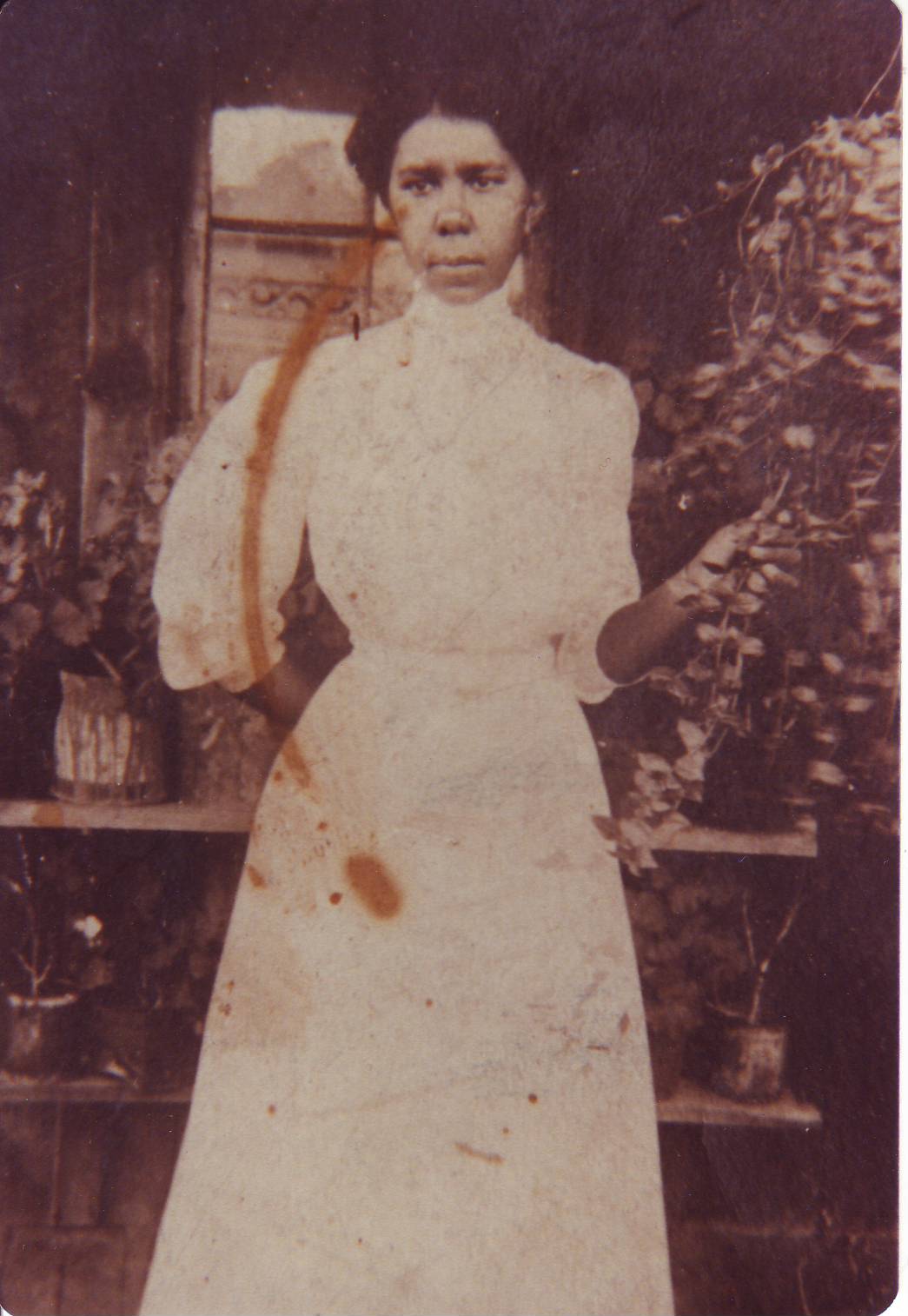
One of those McNeely girls.

This is a surely a McNeely sister, but which one?

ImageMy grandmother wasn’t sure, but knew it wasn’t her mother Carrie, or Aunt Emma, or Aunts Minnie or Janie. Nor, she thought, was it Aunt Lizzie or Aunt Elethea. Which leaves Addie, but she nixed her, too. Not to second-guess my grandmother — or, well, to second-guess her, but in the most respectful way — I’d put my money on Addie, who died when my grandmother was about 9 years old.

Photograph in collection of Lisa Y. Henderson.
Standard
Maternal Kin, North Carolina, Oral History, Photographs

Emma McNeely Houser.

Image

Aunt Emma was so pretty.  And I never heard her raise her voice.  Not ever.  And she was she was so sedate and so pretty.  We’d go to her house, and we’d eat, and everybody would get up and start – “Oh, goodness!  Leave the dishes alone,” she’d say, and we’d all go in the living room and sit down, and then she finally would let us get up and go clean up the kitchen. 

——

Photograph of Emma M. Houser in the possession of Lisa Y. Henderson; interview of Margaret C. Allen by Lisa Y. Henderson, all rights reserved.

Standard
Births Deaths Marriages, Maternal Kin, Newspaper Articles, North Carolina, Oral History, Other Documents, Vocation

Irving Houser gets a McNeely Girl.

Me:  Okay, and Emma, she was up in Bayonne.

My grandmother:  This man went up there in his young years. I think he had an eye on her. People used to say that the men —  all of Mama and her sisters were supposed to have been catches, you know. They were good-looking women and everything, and they just said the men said it didn’t matter which one it was so long as they got one of them.

Me:  One of the McNeely girls?

My grandmother: McNeelys. Mm-hmm.

Me:  So he came back and married Aunt Emma and carried her to New Jersey. To Bayonne — oh! Irving Houser, Sr.

——

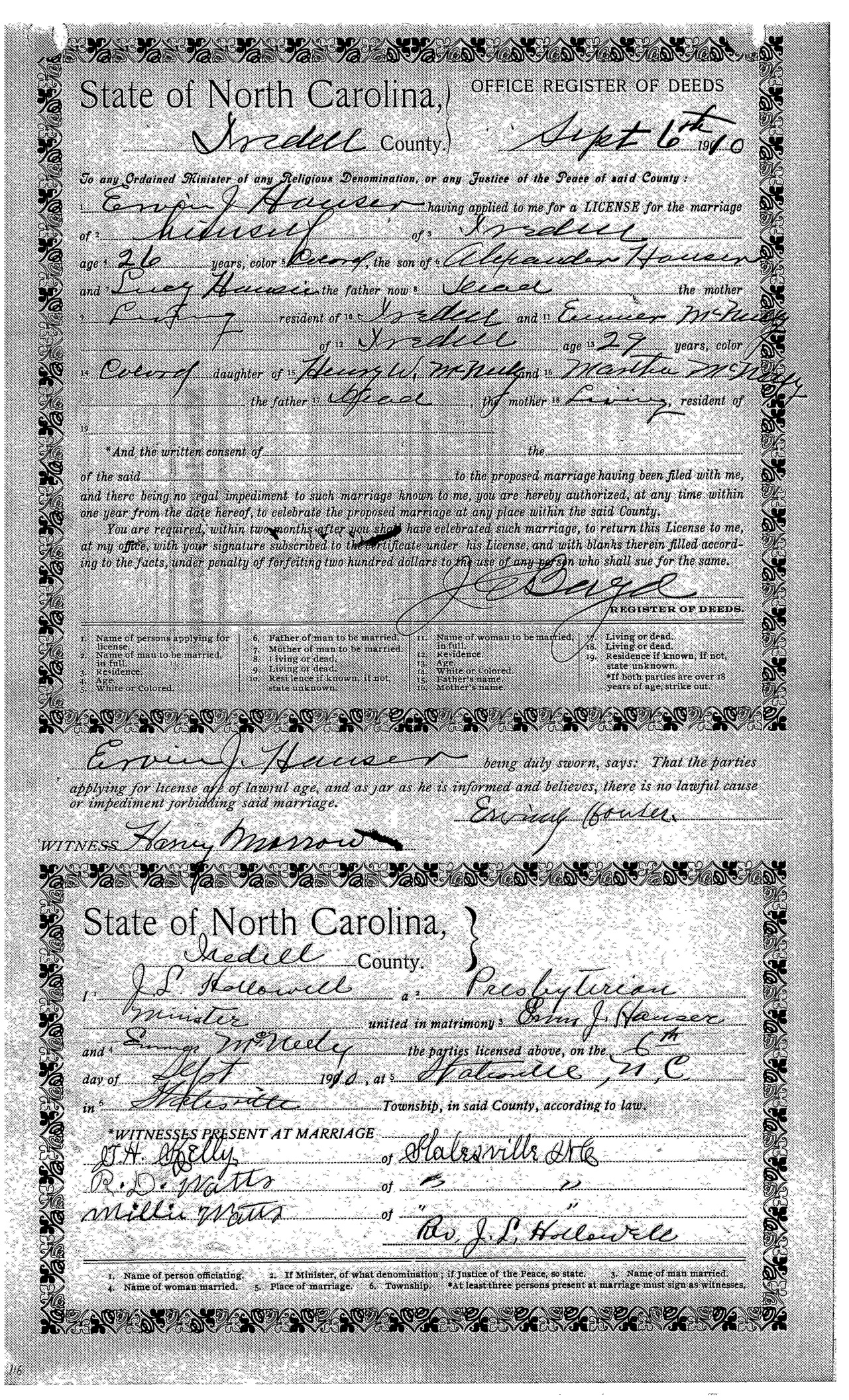
Irving L. Houser was born in 1885 in Iredell County to Alexander “Dan” and Lucy Houser. He and Emma McNeely were married 6 September 1910 in Statesville. The couple migrated to Bayonne, New Jersey, and settled on Andrew Street.

McNEELY -- Ervin Hauser & Emmer McNeely Marr Lic

Six years later, in a span of three days, Irving appeared twice in New York City newspapers. First:

OLD JOBS OFFERED BAYONNE STRIKERS

Standard Oil Co. Tells Them They May Come Back, But Without Increase of Wages.

MRS. CRAM PLANS NEW VISIT.

Says She Will Consult a Lawyer and Won’t Be Barred — Federal Conciliators at Work.

The Standard Oil Company refused yesterday to grant the wage increases demanded by employees whose strike has tied up practically every big Plant in the Constable Hook section of Bayonne, N.J. for more than a week, but offered to take the strikers back at the old wage scale whenever the men wanted to resume work.  The Committee of Ten, which learned these terms from George B. Hennessey, General Superintendent of the Bayonne plant, endeavored to report to the body of strikers.  The police prevented them because no police permit to hold a mass meeting had been requested, but one was issued for a meeting this morning, at which the strikers will decide whether to accept or decline the terms.

     …

Pending today’s meeting, the strikers were quiet yesterday.  Early in the morning there had been some disorder at Avenue E and Twenty-fourth Street, bringing a squad of policemen, who fired as many more.  They caught Irving Houser of 92 Andrew Street, an employee of the Edible Products Company, which plant is near the Tidewater Oil Company, and locked him when they found a revolver in his pocket.

New York Times, 18 Oct 1916.

Then,

Bayonne, N.J.

Miss Viola Houser, of Orange, N.J., visited her brother and sister, Mr. and Mrs. Irving Houser, Andrew Street, on Sunday, October 10.

New York Age, 21 Oct 1916.

Amid social unrest and social calls, Irving and Emma had three children: Mildred Wardenur (1913), Henry A. (1915) and Irving L. Houser Jr.  (1920).  For many years, Irving worked in various jobs in an oil refinery, but by time he registered for the “Old Man’s Draft” of 1942, he was employed at Bayonne City Hall.  By then, he had purchased a house at 421 Avenue C, a site now occupied by Bayonne Giant Laundromat.  Irving Houser Sr. died in 1962.

Standard
Births Deaths Marriages, Maternal Kin, Newspaper Articles, North Carolina, Oral History

Elizabeth. And Elizabeth.

Henry McNeely had two Lizzies.

The first Elizabeth McNeely appears as a 13 year-old in Henry’s household in the 1870 census of Rowan County. In a letter written in 1987, my grandmother explained that the girl was abandoned at her father’s doorstep. (Before Emancipation, or after?) He reared her, but I know nothing further about her.

My grandmother’s earliest memory involved the second Elizabeth McNeely, who was Henry’s oldest daughter with Martha Miller McNeely. My grandmother recalled riding on a train from Statesville to Winston-Salem to visit her mother’s sister.

Me: Which sister was that?

My grandmother: Lizzie.

Me: It was like a day trip, or y’all went for —

My grandmother: I don’t remember. You know, I was kind of young.

Me: Yeah. Yeah. You were what? Like, two?

My grandmother: Yeah. I think two. Somebody said I wouldn’t, I couldn’t possibly remember, but I do. I do because, you know, it looked like the trees were going like that. [Moves her hand across her face quickly.] ‘Round and ’round. And I was sitting up in the window. I know I was looking out the window. And that was one of my first memories.

This Elizabeth McNeely was born in 1877. In 1900, she married William Watt Kilpatrick in Statesville, and I discovered JUST TODAY, via their license, that her full name was Margaret Lougene Elizabeth McNeely. The marriage seems not to have been a happy one:

CUT AT A CHURCH FESTIVAL.

One Negro in Jail and Another Under Bond – Cases in the Local Courts.

Watt Kilpatrick was before Justice Carlton Wednesday for wife-beating and was fined $5 and the cost.

Statesville Landmark, 21 September 1906.

At the time of the 1910 census, around the time my grandmother went by train to visit, the couple were living in Oldtown, Forsyth County. Seven years later, when Watt registered for the World War I draft, he gave his address as 17 Roanoke in Winston-Salem and reported working as a shape puller at R.J. Reynolds Tobacco Company. Lizzie “Patrick” was listed as his next of kin, but resided in Statesville. When the censustaker returned in 1920, Watt was sharing a house with another woman, and Lizzie was not to be found.

On 1 February 1923, the Statesville Landmark posted this notice:

SUPERIOR COURT ADJOURNS.

… Elizabeth Kilpatrick, colored, was granted a divorce from Watt Kilpatrick.

Four months later, she married John Long. She spent the rest of her life in Iredell County.

In 1950, Lizzie Long died in a housefire. Beyond the basic tragedy of her death, there is something unsettling about this account of the “accident.”

Image

Statesville Landmark, 28 September 1950.

(My grandmother would have expressed a tart opinion about what happened, but I didn’t know to ask her.) Whatever the case, the shock of Lizzie’s death sent her youngest brother into cardiac arrest, and the family had to bury two McNeelys that September.

Standard
Maternal Kin, Newspaper Articles, North Carolina, Vocation

The colored fire company.

Members of the colored fire company of Statesville left yesterday for Oxford to attend the State tournament. Among those who went were F.F. Chamber, vice president of the State association; J.P. Chambers, first foreman and J.H. Gray second foreman of the local company; J.A. Brown, Clarence Carlton, W.G. Kimbrough, Jim Dalton, Luther McNeely, J.W. Byers, S.Y. Allison, J.P. Murphy and Smith Byers.

Statesville Landmark, 20 August 1912.

Standard
Land, Maternal Kin, North Carolina, Oral History

Land along the railroad.

Me: What did, why did Grandpa Henry come to Statesville? Was he a farmer? What did he do?

My grandmother: I don’t know. I really don’t know.

Me: He was from Rowan County.

My grandmother: He certainly didn’t have no farm in Statesville. It seems to me he had a big, big lot  of land where they had this house. Where they built this house. But it was near a railroad, and trains — cinders from the trains fell on the house and burnt it.

——

On 21 Dec 1903, G.M. Austin and wife J.A. Austin sold H.W. McNeely of Iredell County a parcel bounded as follows: “Beginning at a stake 300 feet from Bettie Van Pelts S.E. corner and 50 feet from the center of Rail Road, and running N. 10 degrees E. 200 feet to a stake then S. 11 W. 200 feet to a stake 50 feet N of the center of the Rail Road, then N 79 degrees W. 100 feet to the beginning also 1/2 acres adjoining the above lot, and known as the J.V. Houston land it being same land sold for taxes by M.A. White by deed from T.Y. Cowper.” McNeely paid $164.

Extract from interview of Margaret C. Allen by Lisa Y. Henderson; all rights reserved.

Standard
Births Deaths Marriages, Maternal Kin, Military, North Carolina, Oral History

We the 3rd N.C. regiment soldiers.

And again:

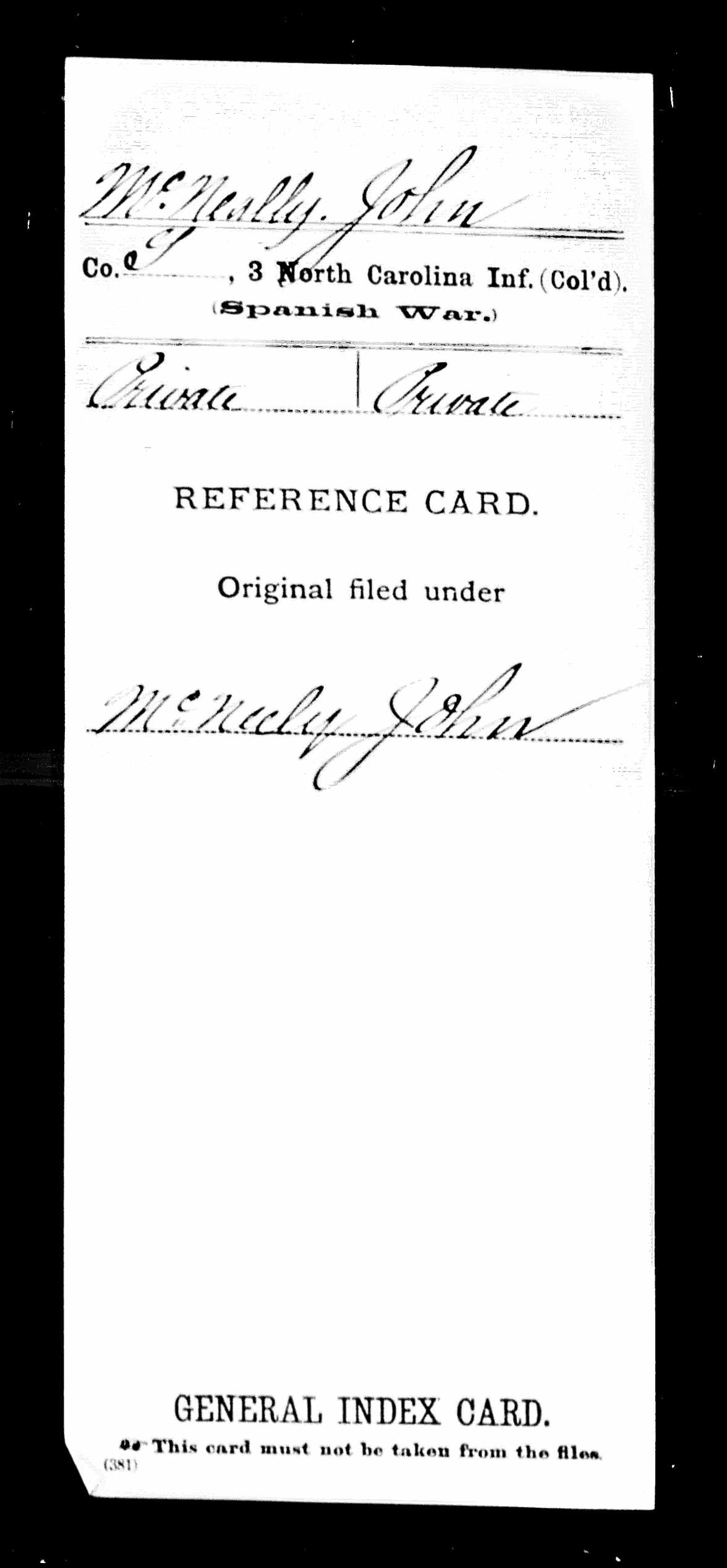
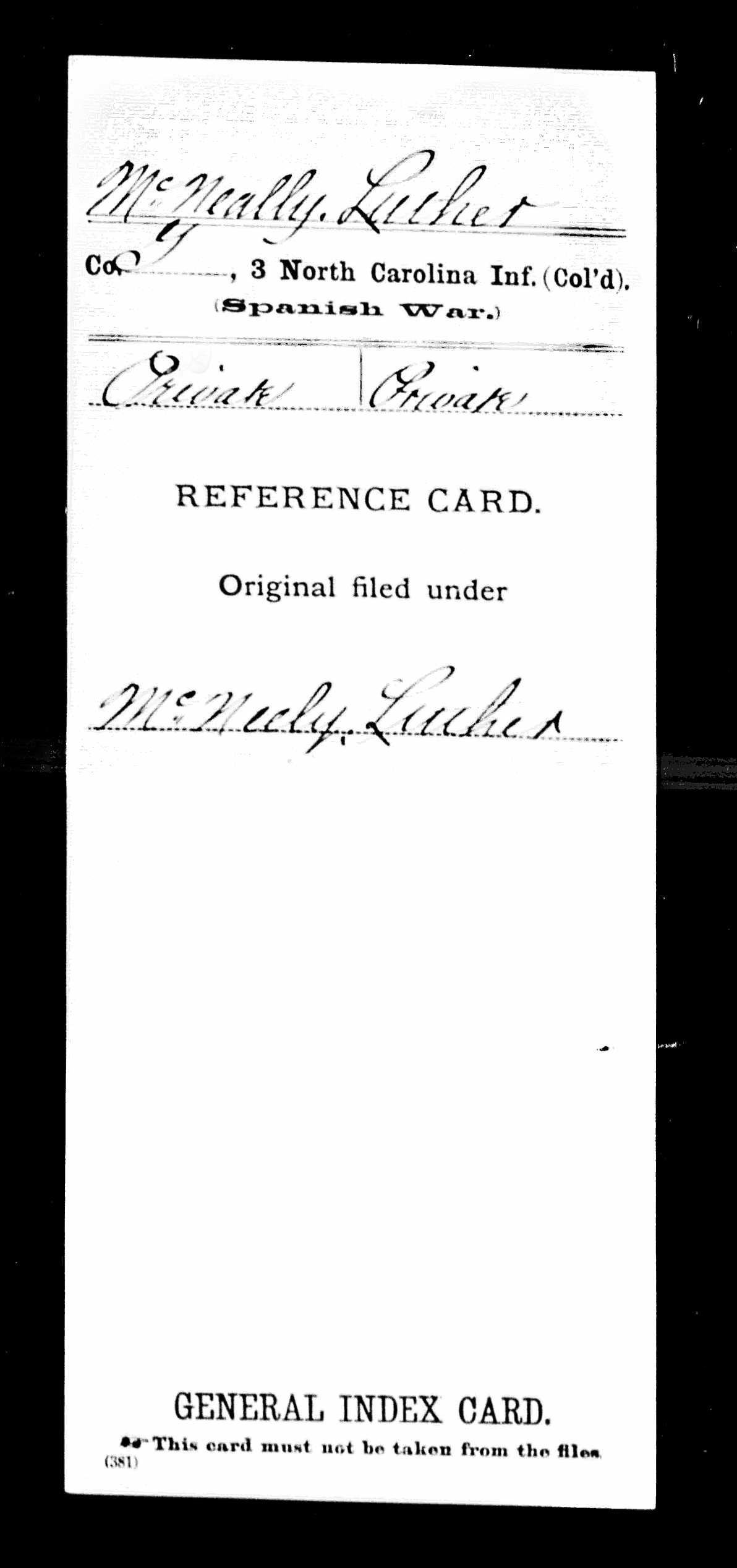
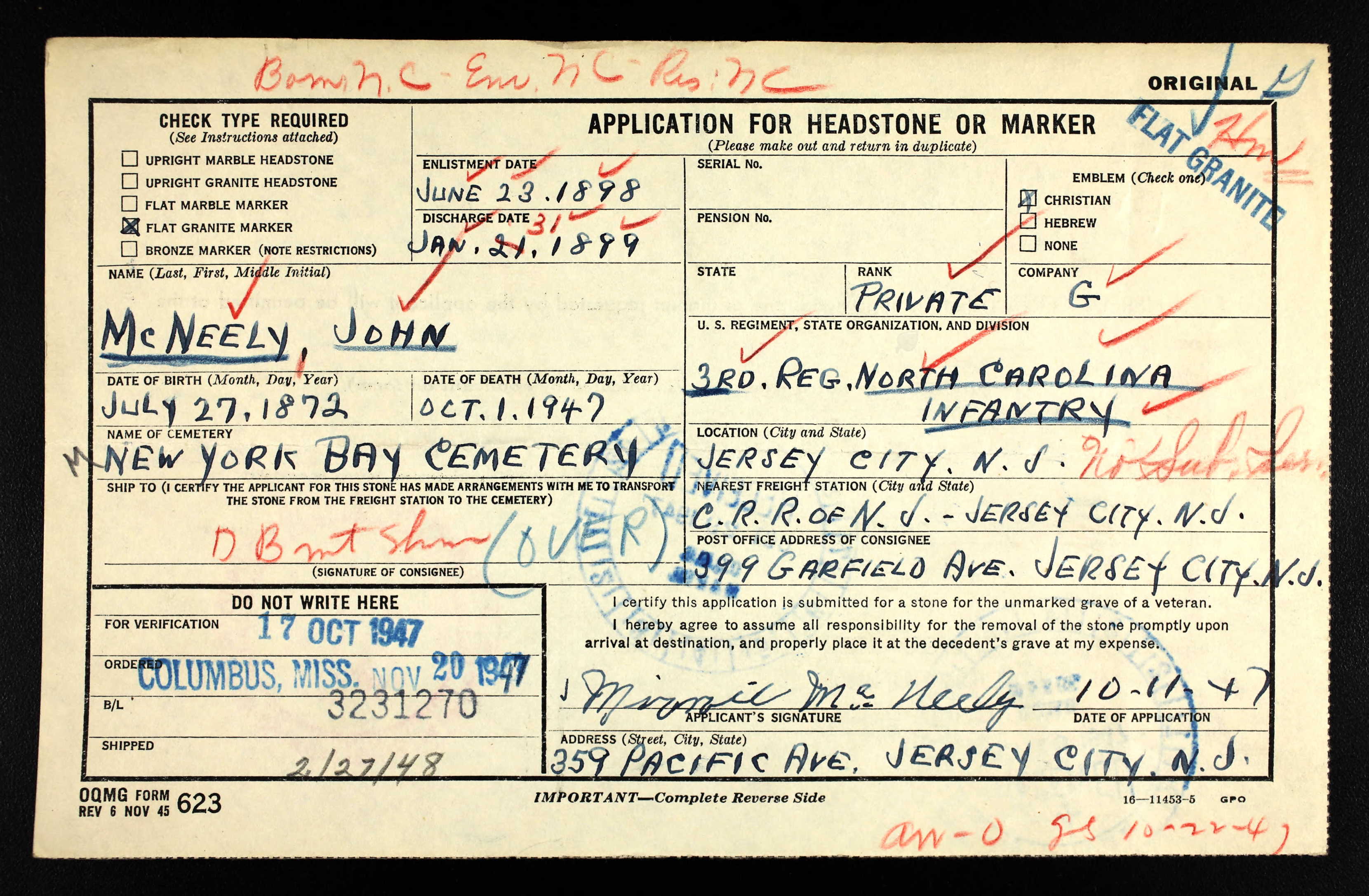
My mother’s brother went to World War I. Not Uncle John and Uncle Luther.  Oh, they were old.  Old men.  They went to the Spanish-American War.

Image

Image


In response to President William McKinley’s call for volunteers, the 3rd Battalion of North Carolina Volunteers mustered in on 12 May 1898 at Fort Macon, North Carolina. Seven companies — including Company G of Iredell County — joined them in July, forming the 3rd North Carolina Regiment.  The Regiment moved west to Knoxville in September, then to Macon, Georgia in January 1899. Though the 3rd NC was alerted to prepare to ship out to Cuba, the war ended before it saw action in battle.

The following letter is reported to have been sent to Secretary of War Alger by members of this regiment. The names of those who signed the letter were not given to The Journal and Tribune reporter with the copy of the letter.

Third North Carolina Regiment 
(All companies) Sept. 23, 1898,

To the Secretary of War:

Dear Sir:–We the undersigned many soldiers, heard that you had been instructed that we wanted to stay in service as garrison duty, but my dear sir, we are now pleading with mercy and deny any such report as there had been reported and we feel that our superior officers has treated us wrong to hold us in service without we knowing anything about it.

We the undersigned did not join the service for garrison duty. We only sacrificed our lives and left our homes simply for the honor of our flag and the destruction of our country and families as the war was going on at that time, but now the war is over and we do feel that we might be mustered out of service because we are getting letters from our families every day or two stating the suffering condition, and oh my God, the way that we are treated. We have to drill harder than any other regiment on the grounds and after drilling so hard, we have to work so hard. We have to cut ditches, sink holes and fill up gullies, put in water pipes. We, the 3rd N.C. regiment soldiers has not had but one pair of pants, one coat, two undershirts, one top shirt. We are in a box fit. Our food is not fit to eat, and oh my dear sir, we are bound up in a little place about 400 feet long 3 feet wide. Just think of the confinement we are under just because we volunteered freely to fight for our country.

We the undersigned many soldiers did not volunteer for garrison duty and we do not think that our honorable government will take the advantage of willing and faithful men who came to the rescue of the flag, stars and stripes. We have a great deal more to tell you but we can not express ourselves like it ought to be done.

Down at Fort Macon we was misled. The question was asked who wanted to stay in the service and go to the front if necessary, called upon them to raise hands, but the question never was asked if we wanted to do garrison duty. If they had of asked that question we never would have been in Knoxville today. Why don’t you know as a good thinking man that we don’t want to leave our wives and families to go on garrison duty. Why if so you would have had more applications in the white house than the mail box would have helt.

You know that these officers is getting a very good salary and they would go in three miles of hell after that dollar, but we who are brave men did not come for the sake of that $15.60, but we gloried in the flag and come to hold it up by the balls and shells. So as we did not get a chance to do so we hope that you will consider this matter. Look it over, give us the judgment of justice and if you do we will go home to our families who are in a suffering condition, so we will not write any more.

We the undersigned await your earliest reply. Many soldiers of the Third North  Carolina regiment. We want to go home. 

Journal and Tribune, Knoxville, 5 October 1898.

U.S.HeadstoneApplicationsforMilitaryVeterans1925-1963ForJohnMcNeely

U.S.HeadstoneApplicationsforMilitaryVeterans1925-1963ForLutherMcNeely

Standard
Maternal Kin, Newspaper Articles, North Carolina, Rights

Julius weathers Reconstruction and maintains his political life.

County Affairs.

The County Commissioners met, as usual, on first Monday in the month. The usual routine business was transacted. $45.50 was allowed to the out-door paupers of the county. The keeper of the poor reported an average of 17 paupers for the month of August – 8 white and 9 negroes. An itemized statement of expense for said month amounted to $39.08. A number of accounts were ordered to be paid, for various expenditures. D.E. Leonard, of Lexington, was granted to sell liquor at C.E. Mill’s old stand.

JUDGES OF ELECTION.

Oak Dale: Jno K Goodman, A E Sherrill, Jno T Goodman, Julius McNeely, (col).

The Carolina Watchman, 9 September 1886.

Standard