Free People of Color, Land, North Carolina, Other Documents, Paternal Kin

100 acres on Watery Branch.

Fourteen years into their marriage, Adam and Frances Seaberry Artis purchased three tracts of land totaling about 109 acres from her half-brother, Napoleon Hagans. All three are on or near Watery Branch, an east-flowing tributary of Contentnea Creek. The first two documents are a mortgage deed and deed of sale for two tracts on the creek. The third is a deed of sale for an additional nine acres nearby. Notably, this last is land upon which Adam had lived in prior years, as it contained the graves of his first wife, Lucinda Jones Artis, and a child.

—–

North Carolina, Wayne County  }  This indenture made this the 25th day of July AD 1874, between Adam T. Artis and wife Frances of the first part, and Napoleon Hagans of the second part, and all of the County and State above written, Witnesseth that the said parties of the first part for and in consideration of the sum of one dollar in hand paid by the said party of the second part, have bargained and sold and by these presents do convey unto the said party of the second part, and his heirs two tracts or parcels situated in the County of Wayne, and bounded as follows: viz: the first tract begins at a pine on the New Road in Willie Moorings line and runs with his line North 136 poles to a stake on the main run of Watery Branch, then up and with the various courses of the branch to the mouth of a small branch, then up the various courses of said branch to a stake, then E 20 poles to said new road, then with the same to the beginning, containing Eighty eight acres, more or less: the other tract begins at a stake in Cullen West’s line, and runs South 28 ¼ poles to a stake in said line Charity Bailey’s corner, then with his line West 67 ¼ poles to a stake Wm Bailey’s corner, then with his line West, 67 ¼ poles to the beginning, containing twelve and one fourths acres more or less _

And the said parties of the first part do for themselves and their heirs forever warrant and defend title to the above land, to the said party of the second part his heirs and assigns

The condition of the above deed is such whereas the above named Adam T. Artis is indebted to the said Napoleon Hagins in the amount of Fifteen hundred dollars, purchase money for the land herein conveyed, and for which said sum the said Artis has given promissory notes for $375.00 each, and payable in the manner following viz: the first note will be due on the 1st day of January AD 1876: at the same day and date the interest on the whole amount of the purchase money ($1500.00) from Jany 1st 1875 to that date will be paid annually on the first day of January. The amount of principal paid thereon to be deducted; the second note will be due on January 1st 1877, the third on January 1st 1878; and the fourth on Jany 1st 1879, and all are subject to the conditions set forth as to the first note above mentioned.

Now if the said Artis shall pay the interest as above set forth as they come due according to their tenor, then this deed to be void otherwise to be of full force and effect.

And upon the failure of said Artis to pay said noted and interest as above set forth as they severally fall due, then it shall be in the power of said Hagins to sell the land herein described after twenty days advertisement at the Court House door in Goldsboro and four other places in Wayne County, and after deducting the whole amount due him & the expenses of sale shall pay the balance if any to the said Artis or his legal representatives.

In testimony whereof the said parties of the first part have hereunto set their hands and seals the day and date first above written.

Witness: /s/ W.T. Faircloth             Adam X Artis, Frances X Artis

[Wife’s consent omitted.]

Deed Book 37, page 72, Wayne County Register of Deeds office.

—–

State of N. Carolina, Wayne County  } This indenture made this the 25th day of July in the year of Our Lord One thousand Eight hundred and Seventy four, between Napoleon Hagins and wife Absey Hagins of the first part and Adam T. Artis of the second part, all of the County and State aforesaid Witnesseth: that we said Hagins and wife parties of the first part for and in consideration of the sum of Fifteen hundred Dollars to us in hand paid by said Adam T. Artis  the receipt and payment whereof we said parties of the first part do by these presents hereby acknowledge ourselves fully satisfied content and paid before the ensealing signing and delivery of the same have bargained sold delivered given up conveyed unto said Artis his heirs and assigns two certain pieces or parcels of land lying in said County of Wayne on the South side of Watery Branch, the first tract adjoining the lands of Wiley Moring Charity Bailey and others, bounded as follows:  Beginning at a pine on the New Road in Willie Moring’s line and runs with said line N. 136 poles to a stake on the main run of Watery Branch, then up the various courses of the run as it meanders to the mouth of a small branch, then up the run of said small branch its various courses to a stake, then East 20 poles to said New Road, then with the same to the beginning, containing Eighty eight acres, more or less:

Also one other tract purchased from Wm. Bailey and wife Celia, adjoining the lands of Charity Bailey Wm. Bailey Cullen West and others bounded as follows: Beginning at a stake in Cullen West’s line and runs South 28 ¼ poles to a stake in said line Charity Bailey’s corner, then with her line West 69 ½ poles to a stake in said West’s other line, then with said line  N 28 ¼ to a stake, Wm Bailey’s corner then with his line W 69 ½  poles to the beginning, containing 12 ¼  acres more or less _

And we said Hagans and wife Absey parties of the first part do by these presents bind ourselves our heirs executors admrs & assigns forever free claims or encumbrances whatsoever

In testimony whereof we the said Hagins and wife have hereunto set our hands and affixed our seals, the day and date first mentioned.

Witness: /s/ W.T. Faircloth             Napoleon X Hagans, Absey X Hagans

[Wife’s consent omitted.]

Deed Book 37, page 74, Wayne County Register of Deeds office.

—–

North Carolina, Wayne County  }

This Deed made this thirty first day of October 1874 by Adam Artis and his wife Frances of Wayne County, and State of North Carolina to Napoleon Hagans of Wayne County, and State of North Carolina, Witnesseth that said Adam Artis in consideration of Two hundred & seventy five /100 Dollars, to them paid by said Napoleon Hagans, the receipt of which is hereby acknowledged, have bargained and sold and by these presents do bargain, sell and convey to said Napoleon Hagans and his heirs a tract of land in Wayne County, State of N.C. , adjoining the lands Bryant Yelverton & Jesse Mincey, and others, bounded as follows: viz: — Beginning at a stake on road in Yelverton’s line and runs S. 59 E. 51 ½ poles to a light stake in Yelverton’s line then N. 61 poles to another stake on said road then S. 54 W. with said road to the beginning containing 9 ¼ acres more or less.

Reserving a graveyard on said land, now paled in in which the said Adam Artis’ first wife & one child were buried.

To have and to Hold the aforesaid tract of land and all privileges and appurtenances thereto belonging to the said Napoleon Hagans and his heirs and assigns to them only

And the said parties of the first part do for themselves and their heirs forever warrant and defend title to the above land, to the said party of the second part his heirs and assigns to their only use and behalf

And this the said Adam Artis & wife Frances, covenant that they are seized of said premises in fee and have right to convey the same in fee simple, that the same are free from all incumbrances, and that they will warrant and defend the said title to the same, against the claims of all persons whatsoever

In testimony whereof, the said Adam Artis & wife Frances have known to set their hands and seals, the day and year above written  Adam X Artis, Frances X Artis

[Wife’s consent omitted.]

Deed Book 37, page 220, Wayne County Register of Deeds office.

deed

Standard
DNA

A wee bit.

It’s Saint Patrick’s Day, and I was asked how much Irish ancestry I have. Surprisingly little, it turns out. Like, less-than-one-percent little. (By Ancestry DNA’s reckoning.) All my “Irish” ancestors — such as my McNeelys — were Scots-Irish and are lumped in with my 19% Great British ancestry.  As far as I can tell, the tiny Irish Irish percentage is attributable to my great-great-great-great-great-great-grandfather Micajah Casey (circa 1745-1799, Wayne County NC) via J. Buckner Martin (1868-1926).

Standard
Maternal Kin, Paternal Kin, Vocation

Where we worked: morticians and embalmers.

Isham Smith, Goldsboro NC – husband of Nancy Henderson Smith; undertaker, circa 1900-1914.

William T. Abrams Jr., Union SC — husband of Mamie Aldridge Abrams Rochelle; undertaker in family business, circa 1930.

William J. Allen, Newport News VA – embalmer, 1930s-1970s?

James N. Guess Sr., Goldsboro NC —  husband of Annie Smith Guess; owner and operator of funeral home, Pine between James and Center Streets, 1910s-1950s.

Guess Fun Hom 6 22 1940 Af Am

The Afro-American, 22 June 1940.

James N. Guess, Jr., Goldsboro NC – worked for father’s funeral business.

Columbus E. Artis, Wilson NC – owner and operator of Artis & Freeman Funeral Home, 1920s; C.E. Artis Funeral Home, 1920s-1950s.

Concord Daily Tribune 5 24 1921

Concord Daily Tribune, 24 May 1921.

The twelfth in an occasional series exploring the ways in which my kinfolk made their livings in the 19th and early 20th centuries.

Standard
Enslaved People, North Carolina, Paternal Kin, Photographs

Appie Ward Hagans.

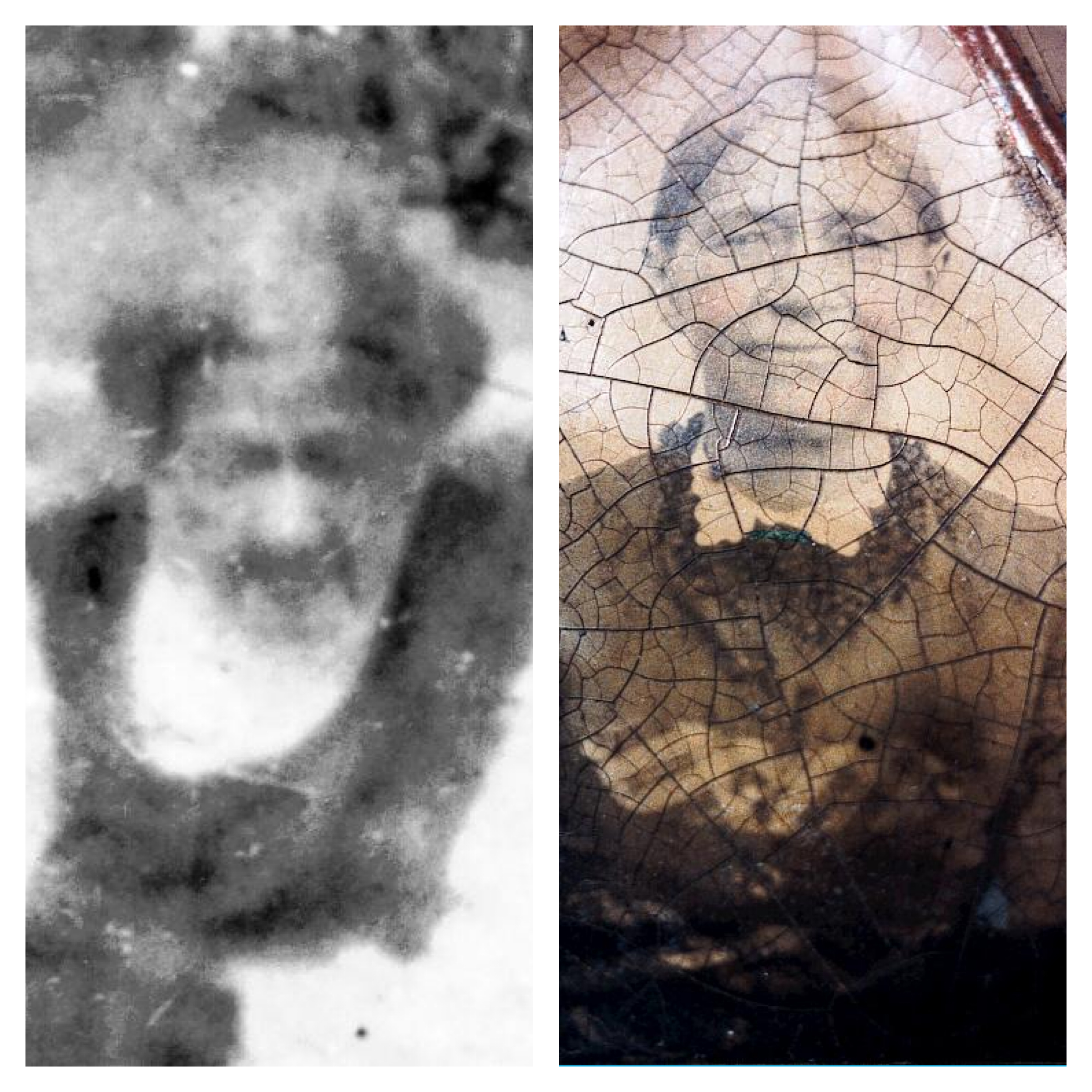
I’ve talked all around Apsilla (or, perhaps, Apsaline) “Appie” Ward Hagans here and here and here. So here she is:

Aspilla Ward Hagans

Appie and her twin Mittie Roena Ward were born 19 April 1849 near Stantonsburg, Wilson County, to David G.W. Ward and Sarah Ward, an enslaved woman. They likely spent their early years in and around this house. How and when Appie met her husband, Napoleon Hagans, who lived in northeast Wayne County perhaps 7 miles from the Ward plantation, is unknown. I have not located their marriage license. Appie and Napoleon had two sons, Henry Edward Hagans (1868-1926) and William Scarlett Hagans (1869-1946).

Appie left little trace in official records, appearing in two census enumerations and on a couple of deeds with her husband. She died 12 April 1895 and is buried near their home in northern Wayne County.

Photo courtesy of William E. Hagans.

Standard
DNA, North Carolina, Paternal Kin

DNAnigma, no. 15: Barnes?

Barnes is far and away the most common surname in Wilson County. It is the “Smith” of Wilson, so common that two Barneses who meet, without further reason, will not wonder if they are kin. It would not occur to them that they might be. My cousin has a Barnes maternal line, and a Barnes paternal line, and married a Barnes. None are connected. My Wilson County roots are neither wide nor deep, so I only have one Barnes line, and it’s a little iffy. Nonetheless, 23andme has matched my and my father’s chromosomes with W.B. and estimates that they are 3rd to 5th cousins, .58% share. (W.B. doesn’t match my cousin, despite her many Barnes lines.)

W.B.’s patrilineal line is traceable to John Barnes, born about 1860, probably in Wilson County. Shortly before 1880, John married Harriet Batts, daughter of Orange and Mary Batts. I have not found a death certificate for John, but census records indicate that he died before 1920. Is he the connection? If he is, the tie is in an earlier generation, as there is no John Barnes in my files.

W.B. also has an ancestor named Nancy Barnes Horne, daughter of Gray and Bunny Barnes and wife of Simon Horne Jr. Is she the connection? Is the connection a Barnes at all?

W.B. is a 3rd to 5th cousin to my father. I know all kinds of 3rd to 5th cousins. In real life. How can I have NO CLUE what our relationship is this one? 23andme and Ancestry DNA are wonderful tools that have been invaluable in confirming connections, but their deeper impact has been to drive home just how little I know.

Standard
Births Deaths Marriages, Oral History, Paternal Kin, Photographs

Remembering Nina F. Hardy.

My parents married in 1961. When my mother arrived in Wilson shortly after, my father took her around to meet the elders who had not been able to travel to Virginia for the wedding. Along the way, they stopped at Dew’s Rest Home. As my mother stepped through the door, Aunt Nina threw up a cautionary hand: “Wait. You ain’t expecting, is you?” My mother, mortified: “No, ma’am!” “All right. ‘Cause it’s some uggggly folks in here!”

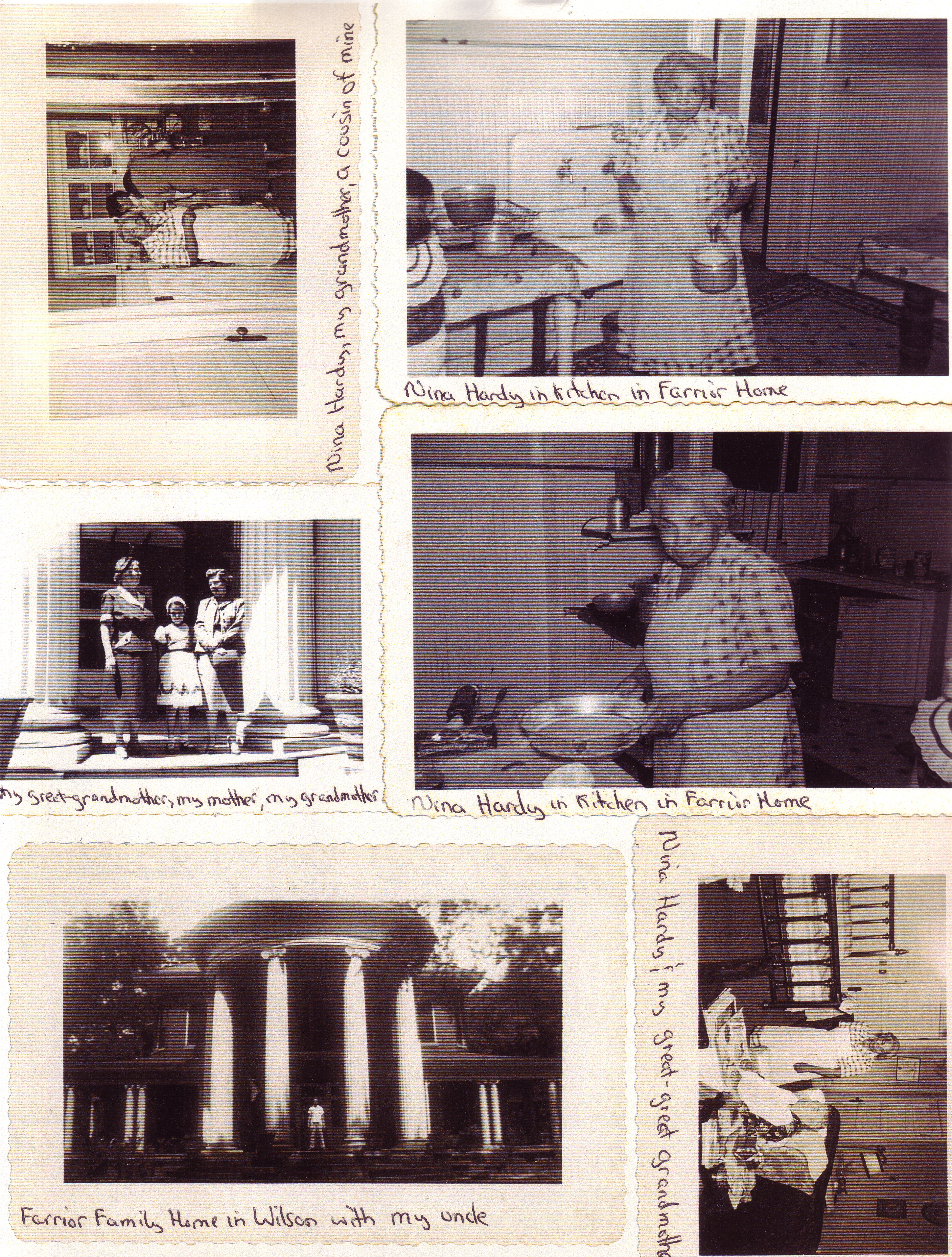
My paternal grandmother had a thousand stories about Nina — with a long I — Frances Faison Kornegay Hardy. Though she called her “aunt,” Nina in fact was her cousin. She was born March 15, 1882, probably in northern Duplin County, to John Henry Aldridge and Addie Faison. (John H. Aldridge, born 1844, was the son of John Mathew Aldridge, and first cousin of my grandmother’s grandfather, John W. Aldridge.)  She seems to have been married briefly to Joe Kornegay in 1899 in Wayne County, but I have not found her in the 1900 census. By 1910, she had made her way 40 or so miles north to Wilson and was boarding in the household of Jesse and Sarah Jacobs as “Nina Facin.” The census also shows a “Nina Facon” living and working as a servant in the household of Jeff Farrior in Wilson. Though described as white, this is almost surely Aunt Nina, who cooked and cleaned for the Farriors most of her working life. Though she and her husband lived just outside Wilson on what is now Highway 58, she was at home only on her days off.

Said my grandmother:

Aint Nina lived up over the Farrior house on Herring Avenue.  Herring’s Crossroads, whatever you call it.  And that’s where she come up there to live.  Well, the maid, as far as the help, or whoever, they stayed on the lot, where they’d have somewhere to sleep. So Aint Nina was living on Nash Road, way down there, and when we went to see her, me and Mamie would run down there five miles. She was working for Old Man Farrior then.  When she was living out in the country, she was working for white people, and so she went up to their house and cooked for them.  And when we’d go down to her house, she’d have to come from up there and cook when she get home.  So we would go and spend a day, but it would be more than likely be on her day off.  But when we had the horse and buggy, Mama drove out there once, and we went, I went with Papa with the wagon to where you grind corn to make meal, down to Silver Lake or whatever that place was down there.  Lord, them were the good old days.  

The Farriors, their back porch was closed in.  It had windows.  And had a marble floor in the back, and that stairway was on, where it was closed in on the back porch, you could go upstairs, and there was a room up there.  You couldn’t go from out of that room into the other part of the house.  You had to come back down them steps then go in the house.  And that’s where Aint Nina stayed.  I said, Lord, I wouldn’t want to have stayed up there.  And then something happen … She had to come down and go down the steps, go upstairs, I mean, and come out of the kitchen, and then go up them steps out on this porch in her room.  So she stayed up there.  Lord, I wouldn’t want to stay up there.  She get sick out there, she couldn’t get nobody.  I didn’t see no – I was up in there one time, and I went up there just to look around.  Well, she had a nice room, nice bed and chair and dresser and everything.  There was a whole set in the room where she was.  That was the only time I was up there. But I wouldn’t want to stay up there.

In 2004, J.M.B., a Farrior descendant, sent me copies of several photos of Aint Nina. My grandmother had described her (“She wasn’t real short.  But she was heavy built, and she had big limbs.  But she wasn’t that fat, but she just had big limbs and had a big face.”), and I had seen a couple of pictures of her before, like this one, taken in the mid-1950s with my uncle’s children:

Image

And this one,

IMG_0019

[There’s a photo booth shot that I can’t find right now. But I will.  UPDATE: I found it. 1/3/2016]

But these …

Scan10002

… these touch me. Nina at work. Nina in a kitchen with a floured pan, perhaps making biscuits, perhaps the dumplings my grandmother relished. Nina, her own legs aching, tending to whitefolks. The columned Farrior mansion, since torn down, with Nina’s little room tucked out of sight.

In 1917, Nina married Julius Hardy in Wilson township. It is likely their house that my grandmother and great-aunt visited out on Nash Road:

They had guinea chickens.  A car run over a chicken and killed it, and it kept going.  And we, me and Mamie, was going out there, and we picked up the chicken and carried it ‘round there.  And Aint Nina poured water and scald the chicken and picked it and cooked it, and we had the best time eating it.   Wont thinking ‘bout we was going out there to eat.  And so we come walking in there with that chicken, and she wanted to know, “Well, where’d you get that?”  “A car run over it, and we picked it up and brought it on over so you could cook it.”  And she said, “Yeah, it’s good.  A car just killed it?”  And it wasn’t too far from the house.  And I reckon it was one of her chickens anyhow.  Honey, she cooked that old stewed chicken, had to put pastry and vegetables in it.  Lord, we stayed out all that time, then had to come home from way out there.  But we was full. 

And her brother, his name was James Faison, lived across the street from her, and his wife, and I think the lady had been married before because they wasn’t his children.  It was two girls.  And he worked at the express, at the station.  The place was on that side, Nash Street station was over on this side.  Baggage used to come over there.  The baggage place where’d you take off the train.  That’s where you put it over on that side at that time.  And he was working over there.

Nina was a font of information about the family back in Dudley that my grandmother barely knew. Mama Sarah was impatient with questions about the past. Nina, on the other hand …

Mama never talked about her daughter Hattie.  But A’nt Nina, she would tell everything.  Mama got mad with her, said, “You always bringing up something.  You don’t know what you talking ’bout.”  So she’d go behind — Mama wouldn’t want her to tell things.  And she never did say, well, if she said, I wouldn’t have known him, but I never did ask her, who Hattie’s daddy was.  I figured he was white.  Because she looked — her hair and features, you know, white.

Even as she waited on others, Nina struggled with her health:

But she was kind of sickly, and I went up there for something.  See ‘bout her.  Carry her something.  And then when her leg was sore, and she come to stay with us.  Oh, she stayed with us a long time ‘cause she had to go to the doctor, had to be taken to the doctor with that leg.  That leg was still big.  But it was much bigger than the other one.  But it healed over.  But it was so knotty-looking, like it’d heal up and draw up in places, and it just looked so bad, and so she’d wear her dresses long.  But she had big feet!  Oooo, she had big feet.  With those big legs … And she was the one that Mama made Mamie iron her clothes on Sunday.  ‘Fore you even got to playing, had to get her clothes.  She was at Rocky Mount in the hospital with that leg.  They had operated on that leg and Mama would go every Sunday and take her clothes, bring her dirty clothes home and wash ‘em and bring them back to her.  So, Lord, we had a time with that.  And I looked at that big leg and just said, ‘Wooo….  What in the world is that?’  Looked like it just swelled up.  And I saw a lady right here in Philadelphia.  I had passed, and I seen her, and she had a great big leg.  And so by that woman having that big leg, I said, ‘Lord have mercy, I hope I don’t get that.  I wonder what’s wrong with it?  How come the swelling won’t go down in it?’  People don’t know what they’ll have to go through….  Yeah, ‘cause we went over there, and you didn’t have — it was an open sore, and it was always running.  She had to keep her foot up and had to keep the flies from on it, and so I said, well, finally it got better, but that leg healed up, it drawed up and you could tell where the sore was all on her leg.  And that leg was much bigger than the other one.  It took a long time to heal.  It was all healed up though before she died.

Image
In the photo above, taken in her last years at the rest home where she protected my young mother from a disastrous maternal impression, Nina smiles her same sweet smile despite ailing legs wrapped and swollen feet encased in split loafers.
N Hardy Death Cert
Aint Nina died 20 March 1969, just five days after her 86th birthday. Frances Sykes Goodman, granddaughter of Nina’s aunt Frances Aldridge Wynn, was the informant on her death certificate. She was buried in Rest Haven, Wilson’s black cemetery. (I’ve walked that graveyard and never seen her stone. Is her grave unmarked? If it is, and I can find it, it won’t be.)
Standard
Newspaper Articles, North Carolina, Paternal Kin

Cousin Mamie in the news.

As I’ve mentioned, for reasons unclear, my grandmother was close to her father’s first cousins, sisters Fannie Aldridge Randolph of Philadelphia, Pennsylvania, and Mamie Aldridge Abrams Rochelle of Union, South Carolina. Among my grandmother’s papers, I found cards and notes from Cousin Mamie, including this one sent in early 1980:

ALDRIDGE -- M Rochelle to H Ricks re Article

And here’s the article itself:

ALDRIDGE -- M Rochelle Article

Standard
Births Deaths Marriages, Maternal Kin, North Carolina

Family cemeteries, no. 10: Green Street.

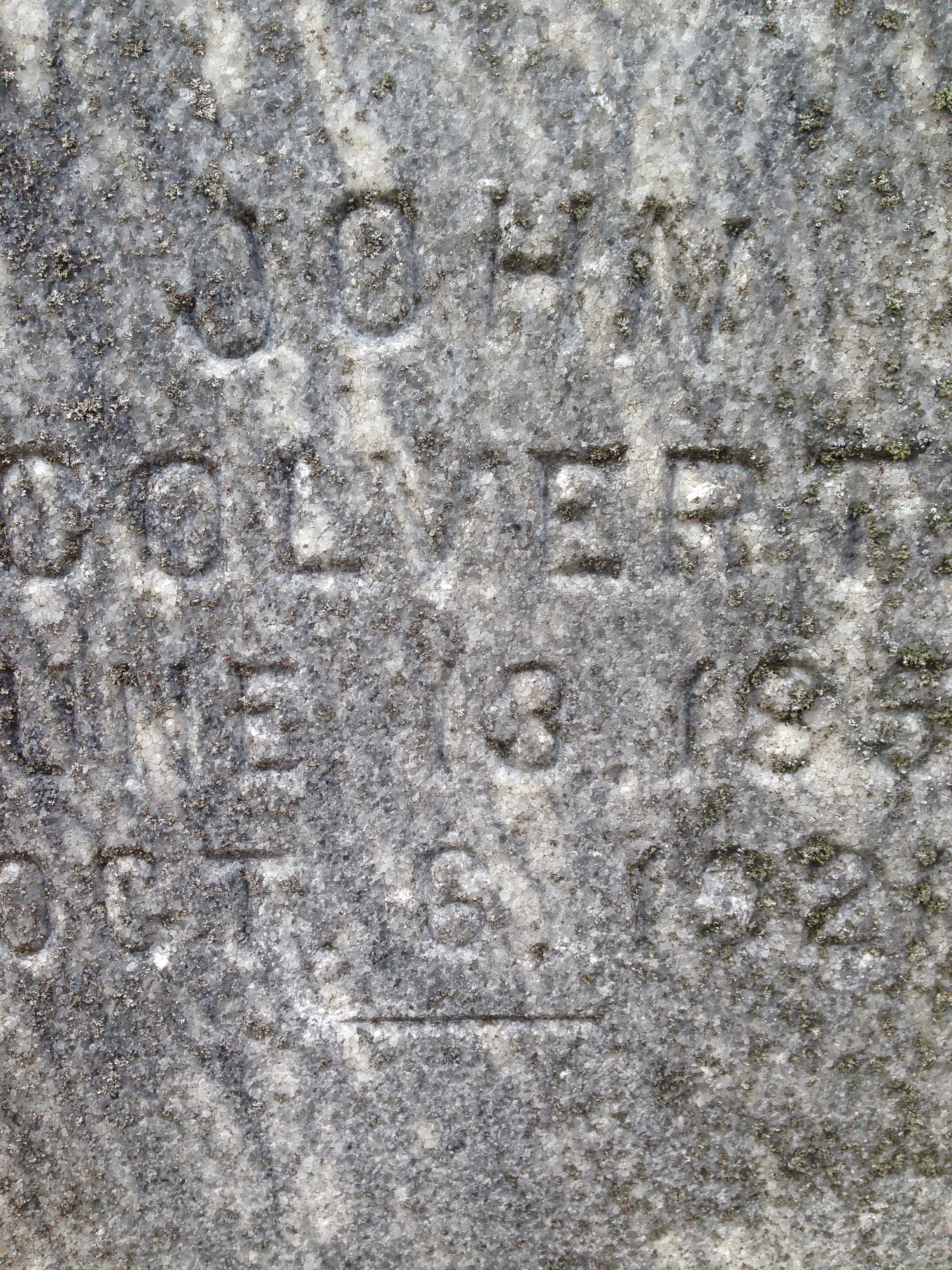
Green Street cemetery is a three-acre square smack in the middle of Statesville’s African-American southside. My great-aunt’s house faced the graveyard, but I don’t recall anyone ever talking about family members being buried there. Nonetheless, several years ago, I found three: my great-great-grandfather John W. Colvert, his wife Adaline Hampton Colvert (the double stone below) and their daughter Selma Eugenia Colvert, who is buried nearby. I suspect that others rest there, including John Colvert’s parents, his son Lon W. Colvert, Lon’s first wife Josephine Dalton Colvert, and his children Walker Colvert and Golar C. Bradshaw.

IMG_4585

IMG_4588

Standard