Maternal Kin, North Carolina, Oral History, Photographs

Papa used to keep him just slick and pretty.

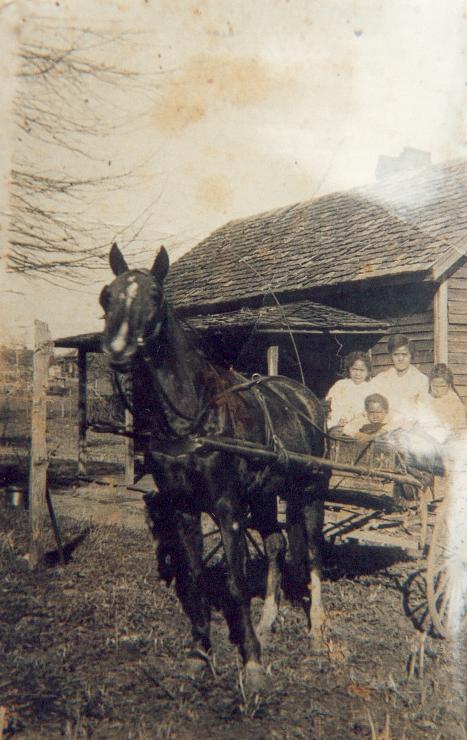
His name was Prince. And Papa sold Prince when he bought a car. But when he bought Prince, Prince had never been broken in. Nobody’d ever ridden him. And this man broke him in for Papa. But he was still high-spirited, because he was a race horse. And he had four white feet. That is what was so distinctive about him. He was chestnut. And we were so crazy about him that we would go in the – Papa had a big enclosed lot, like, that he could come out in. Other than the stable. And we would go in there with him, but he wouldn’t bother us. He would never bother us. And this old gentleman would be what was called currying. He would curry the horse and brush him and all, and he would hold me up and let me brush it. What was the man’s name? I can see him right now. He was an old man and real light. He was almost white. He had light hair, had white hair. And he loved Mama’s cooking. She used to bake something that was a pie. She called it a pie – but it was sweet potatoes. It was not mashed like you’d make up in a sweet potato pie ‘cause she would slice them and put them in the pie. Then she would make a sauce with nutmeg and lemon juice and thicken it with flour, you know. And then she would cook all of that in a big plate thing like that. And when Papa sold Prince, we went down where the man who had bought him had him, and he would look bad. His skin – you know Papa used to keep him just as slick and pretty. And that man would come to the house and wash him down with soap and water and everything and made him pretty. And he had pretty white feet. But Papa sold him to that man when he bought the car. And we went down there one day to see Prince, and he looked awful. He looked bony. He just looked awful. And we went down a little hill where he was in an enclosure. And we called him, and he came running over there where we were. We were so glad to see him. And we went home and told Papa that Prince said he wanted to come home. Yes, Lord. We wanted Prince moved.
COLVERT -- Colvert Girls & Bert

Possibly Prince (though he only has two white feet), circa 1913, with Louise Colvert, Launie Mae Colvert, Bertha Hart and Margaret Colvert.

—–

Interview with Margaret Colvert Allen by Lisa Y. Henderson; all rights reserved.

Standard
Foodways, Maternal Kin, North Carolina, Oral History, Virginia

I never ate a bite in my life.

My grandmother, Margaret Colvert Allen: Papa was a hunter.

Me: He hunted?

My aunt: Papa was?

Grandma: Yeah. He hunted.

Me: So, he had hunting dogs.

Grandma: Yes, indeed. He had a place made to put his dogs in and — hound dogs, you know. Hunting dogs.

Me: Did — he hunted deer or smaller things?

Grandma: Naw. He never hunted deer. But he hunted rabbits and squirrels and quail. [Inaudible] and he would catch ‘em [inaudible] but I didn’t ever cook one. [Laughs.] His mother used to cook possum.

Me: Used to cook possum?

Grandma: Oh, possum, honey. They would cook those dern things.

Me: Well, possum stew. I guess I have heard of that.

Grandma: Hmm?

Me: Possum stew. I guess I have heard people talk about that.

Grandma: Naw. They didn’t have no possum stew. They’d bake this thing.

Me: Awwww!

Grandma: And, look, wait a minute. You know they’ve got big mouths. Long mouths. A possum. And he’d put a sweet potato in the possum’s mouth. [I laugh, hard.] I don’t remember cooking one, but my grandmother sure used to cook ’em. And Papa cooked ’em. But I refused to cook ’em. Not me. And you know these people when I came here ate muskrats?

Me: [Laughing.] In Newport News?

Grandma: John’s people ate muskrats. And you know the merchants would have ‘em hung up all on the outside the street, you know, like you used to have chicken cages where you could go and pick ….? Well, they would have these muskrats killed, and they were real bloody, and they would be hanging, and they’d just be killed. I mean, it wasn’t nothing wrong with ‘em if you liked that kind of thing. I cooked it for your daddy, but I declare before God I have never eaten a bite. [I laugh.] Not a bite.

My aunt: When I went to Africa, and we would take our day trips, they would have some kind of animal that they had split open –

Me: Butterflied. [Laughing.]

My aunt: And a rodent. Some kind of rodent. And I ain’t eating that. They had some kind of little rodent. And they had, like, barbecued it or something. And his head was still on.

Grandma: What you mean – little or big?

My aunt: Ma’am?

Grandma: How big would it be? ‘Bout the size of a squirrel or something like that?

My aunt: I don’t think it was a squirrel.

Grandma: Aw. Well, I don’t know what they were then. But, honey, these merchants on Jefferson Avenue used to have those muskrats hanging out there, honey, and you talking ‘bout bloody, and they would have skinned them, you know. And they were hanging like that. Ah. And bloodied. Ooooo. They would be so bloody. I fixed one and cooked it, but seriously, my hand to God, I never ate a bite in my life. I never intended to eat a bite. And my daddy didn’t like ‘em either. So my grandmother used to always bring him something down, she’d come down sometimes Sunday afternoon or Saturday night.

My aunt: Grandma Allen?

Grandma: No, no, no, no, no. My daddy.

Me: Harriet.

Grandma: She would always bring him something. Always bring him something. And this day she was supposed to have brought him some rabbit. Fried rabbit, you know. And I never shall forget. He sat over there by the window. Now, he’d had his dinner. He’d had Mama’s dinner, but when Grandma came and brought something he had to have some of that. He sat over there, and he ate, ate that piece of what he thought was rabbit, and he got down to the bone, and he knew it wasn’t rabbit. Because he didn’t – and he said, “Mama, what is this?” And she was crying laughing at him eating muskrat when he swore he’d never eat a bite. And she, I can see her right now. She was sitting over there, and, child, she was laughing. Laughing ‘til she cried. And Papa said, “You better be glad you’re my mama, ‘cause I certainly would whip you today if you weren’t my mama.” He was so mad.

Muskrat_eating_plant

—–

Interview of Margaret C. Allen by Lisa Y. Henderson; all rights reserved. Photo courtesy of Wikipedia.

 

Standard
Vocation

Where we worked: department stores.

Lundy Brewington, Norfolk VA – elevator conductor, circa 1910.

R. Henry McNeely, Statesville NC – porter, Polk-Gray Drug Company, 1920s.

William McNeely, New York NY – elevator operator, circa 1930.

Jimmie Reaves, Greenville NC – deliveryman for department store, circa 1930; department store maintenance man, circa 1940.

Bertha Reaves, Greenville NC – department store “elevator girl,” circa 1940.

Bessie Henderson Smith, Wilson NC – “elevator girl,” circa 1940.

The thirteenth in an occasional series exploring the ways in which my kinfolk made their livings in the 19th and early 20th centuries.

Standard
Education, Newspaper Articles, North Carolina, Paternal Kin

School districts. (Colored.)


Gboro Messenger 11 19 1885 school commr

Goldsboro Messenger, 19 November 1885.

Phillip R. Coley, son of Winnie Coley, was the half-brother of Napoleon Hagans‘ son William M. Coley and Adam T. Artis‘ children Cain Artis and Caroline Coley Artis. Richard Artis was Adam T. Artis’ brother, and Simon Exum was his brother-in-law, husband of Delilah Williams Exum. Peter Coley may have been Phillip Coley’s father.


Standard
Free People of Color, Land, North Carolina, Paternal Kin, Photographs

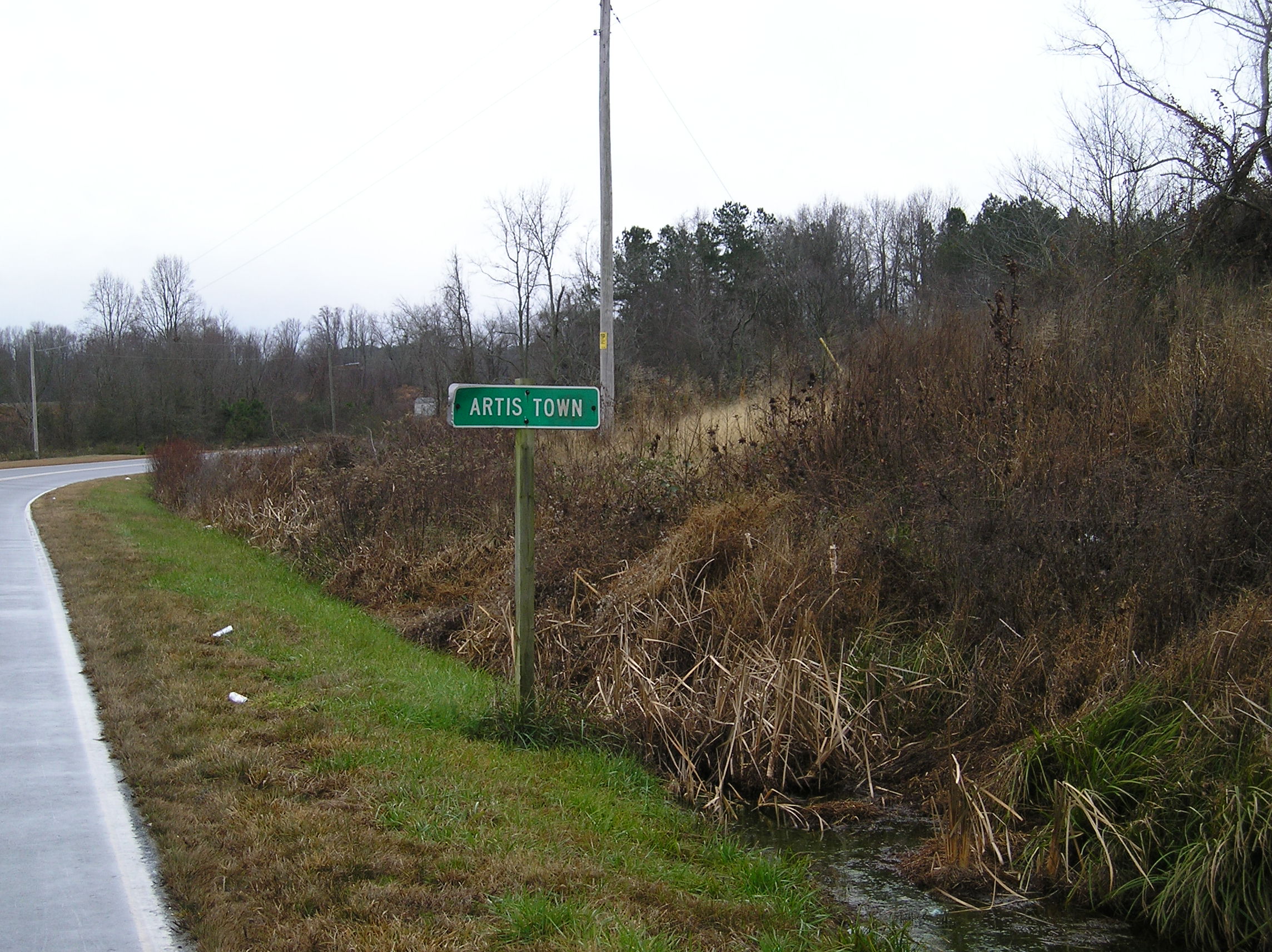
Artis Town, at last.

I checked first at the Court House. I had a hazy memory of a dusty, yellowed pull-down map hanging on a wall in the Register of Deeds office depicting Greene County townships in, perhaps, the 1950s. Most county roads were then unpaved, and the map bore witness to many now-abandoned crossroads and hamlets, including “Artis Town.” But the map was gone, cast aside in a reshuffling of office space that relegated Register of Deeds to the basement. The two ladies on duty — blue-permed and powder-fresh — interrupted their gossip (“He’s good as gold, but when he’s mad, he’ll … he’ll CATCH”) to help, gamely pulling two or three crumbling maps from storage, but none was what I sought. “Try EMS!,” one finally suggested, “They know all the roads.”

In the dim front office of a low brick building on the northern edge of Snow Hill, I explained myself: “I’m looking for a place in the road called Artis Town. There used to be a sign. Like, a green one with white letters. And it was somewhere off Speights Bridge Road, or maybe Lane Road, but I hunted up and down this morning and couldn’t find it.” The good old boys were puzzled. “Artis Town … Artis Town …” “Well, naw, I never heard of … Mike! You know where Artis Town is?” “Artis Town. Artis Town ….” An older man walked through the door and was put to the test. “Well, I think … hmmm. Hey. Call Donald. If he don’t know, don’t nobody.” … “Hey, Pam, is Donald — wait, you’re from out that way. Do you know where Artis Town is? … Okay … okay … okay. Donald? Yeah, Artis Town. … Okay … mm-hmm … that’s what Pam said. Okay, thankee.” And sure enough, it was in a bend of Lane Road, off Speights Bridge, and there had been a sign, and it was gone.

But I asked my mother about it, too, because she taught in Greene County for two years when she first came to North Carolina, and I thought maybe she’d heard of it. Her school had been in Walstonburg and probably drew students from Speights Bridge, and … “Let me look at my gazetteer.” She has the old version from the 1980s, which, of course, I pitched once I bought the shiny new one. And I’m regretting that surely, for Artis Town is marked quite clearly on her map, and I could have saved myself some gas and tire rubber had I consulted it. (Though I would have missed out on the helpful hospitality of the fine people of Snow Hill.)

I dug my old laptop out of storage today. It took a bit of searching, but finally: photos I took in December 2004 when I was wandering the roads of Greene County with no real purpose other than a penchant for what Least Heat-Moon calls “blue highways.” Almost ten years would pass before I’d connect Artis Town with my own Artises. The ancestors, though, are patient.

Image

Image

Photographs by Lisa Y. Henderson, 23 December 2004.

Standard
Births Deaths Marriages, North Carolina, Paternal Kin, Photographs

Family cemeteries, nos. 11 & 12: Rountree & Rest Haven.

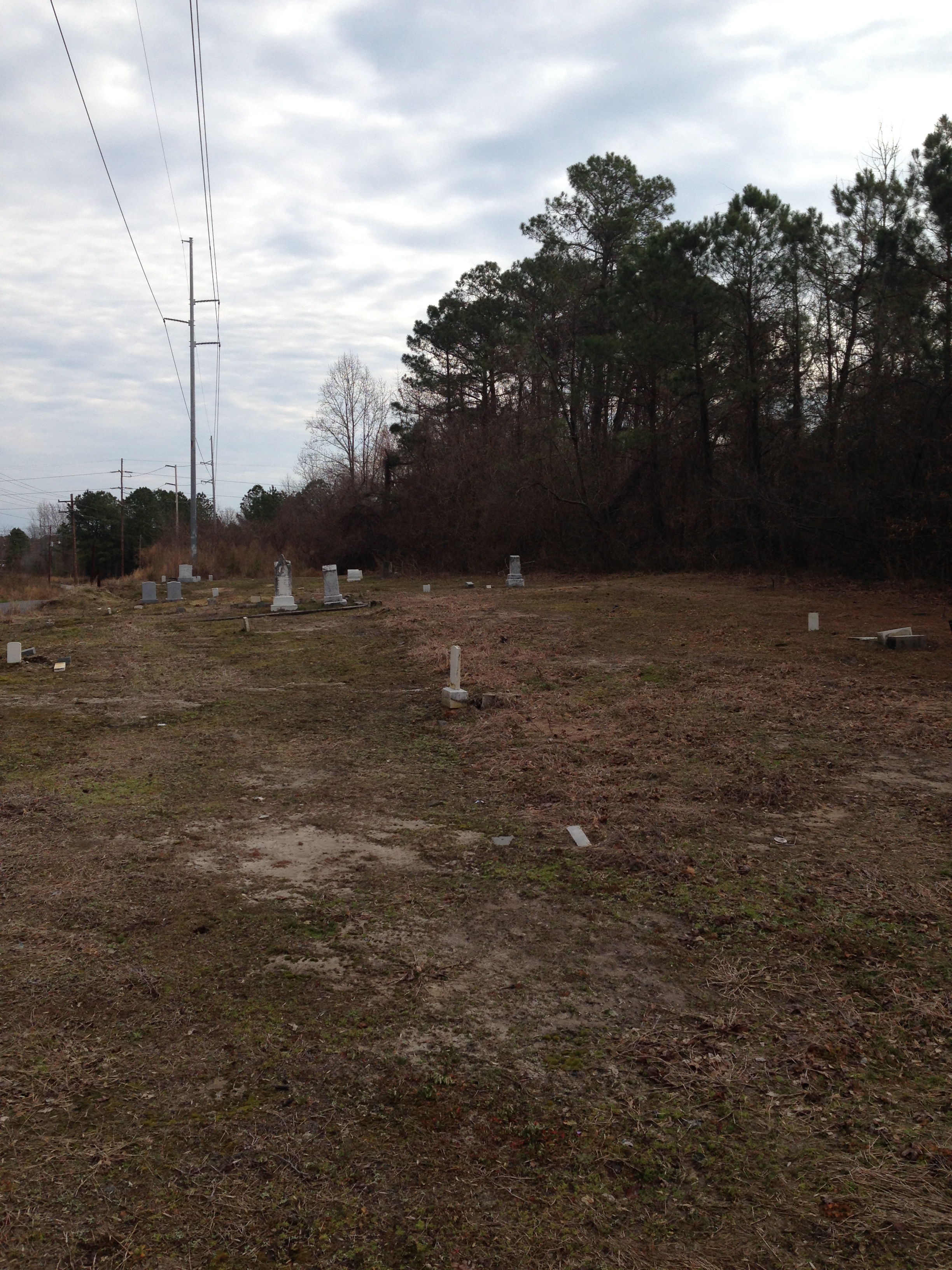
The wooden church was still standing then, on a sandy bank that rose from a curve in the highway at Lane Street.  In my father’s time, Rountree church was well beyond city limits, but our subdivision leapfrogged it in the early 1960s, and a grocery store popped up across the road, and it was no longer an outpost.  Still, when we were children, Lane Street was raw and unpaved and, for us, a gateway to adventure.  A hundred yards in, the road crossed over a sluggish branch, the pines began to crowd down to its ragged edge … and tombstones began to poke through the snarl of catbrier and cane choking the forest floor.  Here was the remnant of Wilson’s first colored cemetery*, abandoned at mid-century and, by the mid-1970s, when we prowled these woods, completely overgrown with bamboo and sweetgum and loblolly pine.  Burials by then had moved around the corner to Rest Haven cemetery, which is city-owned and maintained.  Perhaps 20 years ago, after several half-hearted clean-up efforts, a small, ragged section of Rountree was cleared and its remaining stones propped up.  A hundred yards down the road, in an open field, a memorial was erected to Rountree’s many hundreds of lost graves. A set of my great-grandparents were probably buried there, as well as my father’s stillborn brother, Uncle Jack’s sickly boys, and other kin unknown and maybe unknowable.

IMG_4992

 The sad remnants of Rountree cemetery, February 2014.

My grandmother was buried at Rest Haven in 2001 and my uncle in 2005, but only recently did I begin to regard that cemetery’s conventional, lettered rows as as interesting as wild Rountree. My grandmother’s headstone, like all from the last 30 years or so, is machine-cut, its lettering precise and even. Older markers, however, reveal an artist’s hand, quickly recognizable in a squarish font with flared serifs and, especially, the long, pointed tails of the 9’s. Marble cutter Clarence Benjamin Best carved headstones for more than 50 years, chiseling lambs, stars, flowers, and Masonic emblems, as well as pithy, grammatically idiosyncratic epitaphs, into slabs of gray granite. I have found his work in rural Wilson County cemeteries and as far afield as Wayne and Greene County, but Rest Haven is ground zero for his oeuvre.

IMG_4996

 An early example of Clarence Best’s marble-carving in Rountree — before he developed his signature long-tailed 9’s. (Foster was an early investor in Commercial Bank.)

IMG_8931

A late example — with 9’s and a bit of a extra verbiage, Rest Haven.

IMG_8937

 Rifle, fish, peaches — a Best creation for husband and wife, Rest Haven.

In addition to my father’s mother and brother, my paternal grandfather is buried in Rest Haven, as are my aunt’s husband; Uncle Jack and his family; Josephine A. Sherrod and countless other Artises; and, somewhere, Aunt Nina.

Jesse A Henderson headstone

My uncle, Jesse A. Henderson.

Jack Henderson headstone

Cousin Jesse “Jack” Henderson and wife, Pauline “Polly” Artis Henderson.

*I have since learned that it was not, in fact, the first. That distinction may belong to a small cemetery just off Pender Street, memorialized in today’s Cemetery Street. All traces of it have disappeared.

Standard
Births Deaths Marriages

Pandemic.

The 1918 influenza flu pandemic (January 1918 – December 1920) was an unusually deadly outbreak. It infected 500 million people across the world, including remote Pacific islands and the Arctic, and killed 50 to 100 million of them—3 to 5 percent of the world’s population—making it one of the deadliest natural disasters in human history. For an in-depth analysis of this pandemic, check out:

great influenza

A running tally of members of my family lost to this fearsome disease:

Ernest Smith, age 30. Goldsboro NC, 5 October 1918.

Joseph H. Ward Jr., age 9. Indianapolis IN, 1918.

Amanda Aldridge Newsome, age 26. Great Swamp township, Wayne County NC, 10 November 1918.

Standard