Births Deaths Marriages, Free People of Color, North Carolina, Paternal Kin, Photographs

On the Stoney Run Branch and Wilmington & Weldon Railroad.

On 4 July 1902, dower laid off and partition made of Robert Aldridge‘s land as follows:

Dower — Eliza Aldridge received 53 acres on a run of Stoney Run Branch.

Lot No. 1 — Mathew W. Aldridge received 100 acres on Stoney Run and Hurricane Branches, excluding the Agustus Church and free school house lots.  An interest Mathew had bought from his father was included in the described tract and the residue was valued at $200.
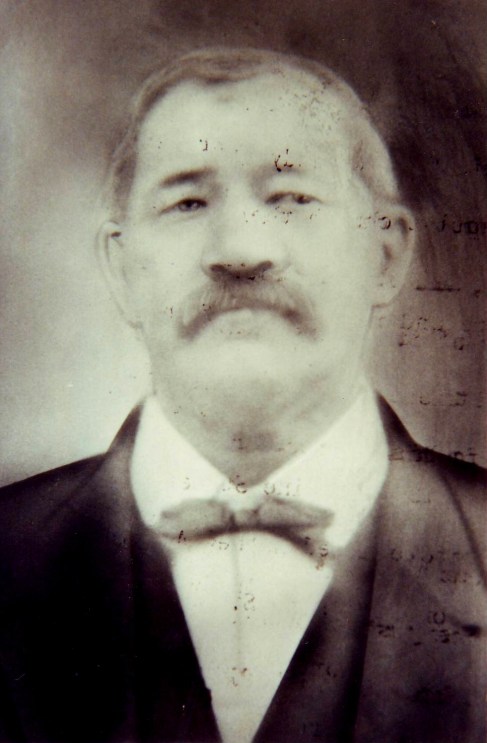
matthew-aldridge

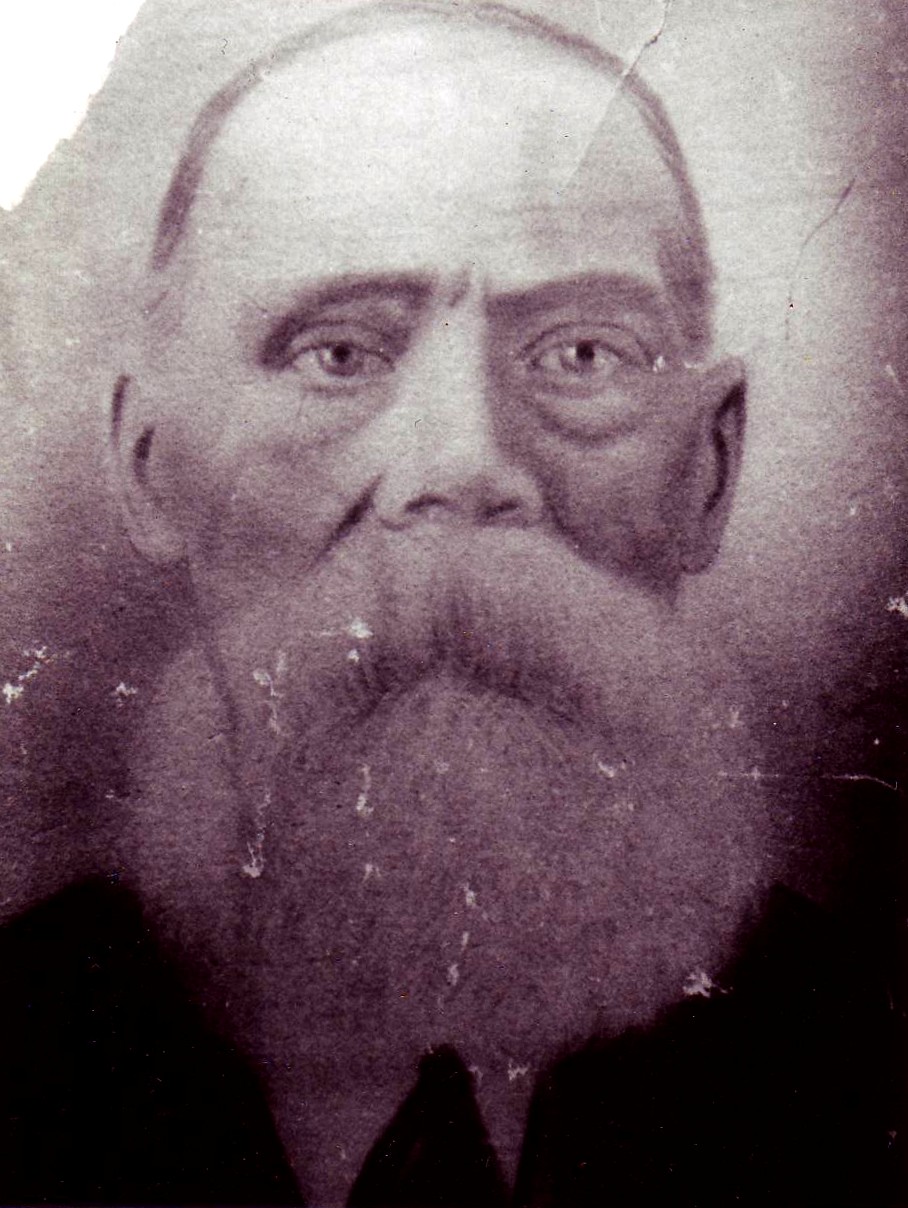
Lot No. 2 — George W. Aldridge received 42 acres on Stoney Run and the county road valued at $200.

george-aldridge

Lot No. 3 — Joseph Aldridge received 53 acres on Stoney Run and the county road valued at $200.

Lot No. 4 — David Aldridge received 80 acres on Stoney Run and the county road valued at $200.

Lot No. 5 — Robert Aldridge received 41 acres on a prong of Stoney Run and the Spring Road valued at $200.

Lot No. 6 — John W. Aldridge received 50 acres on Stoney Run Branch below the mineral spring and the Spring Road valued at $285.

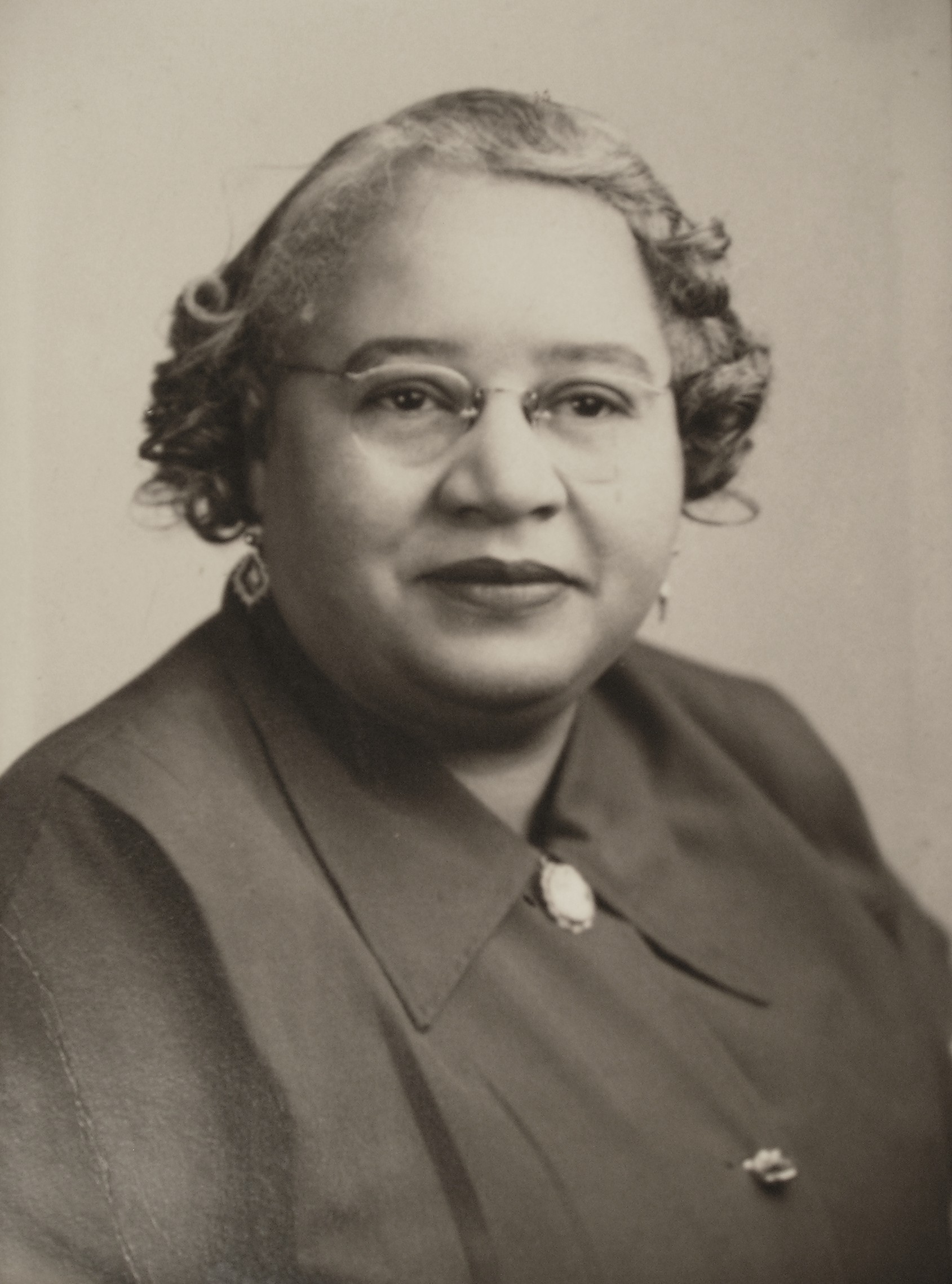
Lot No. 7 — Frances Locust received 33 acres on Stoney Run and the Spring Road valued at $200.

fannie-a-randall

Lot No. 8 — Talitha Brewington, Hattie Brewington, Elijah Brewington, Mattie Brewington, Lundy Brewington, and Toney Brewington jointly and subject to the life estate of Joshua Brewington, received 33 acres on W&W Railroad valued at $193.

Lot No. 9 — Louetta Aldridge received 32 acres on Stoney Run Branch valued at $193.

Lot No. 10 — Lizzie Aldridge received 32 acres on the W&W Railroad and Stoney Run Branch valued at $193.

Lot No. 11 — Louetta Artis, Robert Artis, Columbus Artis, Josephine Artis, J. Scott Artis, J.B. Artis, Lillie Artis, Annie Artis and Elberta Artis, jointly and subject to the life estate of Adam Artis, received 32 acres at the mouth of a ditch on the run of Stoney Run and the railroad valued at $193.

Submitted by Sam C. Casey, Walter C. O’Berry, Ira W. Hatch.

The margins of this document contain notations and signatures acknowledging receipt of moneys due to balance the lot values, including signatures of Lizzie Aldridge, Tilithia King, J.W. Aldridge, Joseph Aldridge, Hattie Brewington, Columbus Artis, Elijah Brewington, Tony C. Brewington, Robert Aldridge, Lundia Brewington, and June Scott Artis, and Eliza Artis’ mark.

John Aldridge, owner of Lot No. 6, paid $7 each to the owners of Lots 8-11, and $57 to the Clerk of Superior Court for costs of the division.

Louetta Aldridge’s share was divided among her siblings “the owner of said amount now being dead this day Aug 22=1904.”

——

Robert Aldridge, my great-great-great-grandfather, was born circa 1819, probably in Duplin County NC, and died about 1899. He appears as a hireling in the 1850 census in Sampson County in the household of Calvin Simmons. By 1860, he and his wife Mary Eliza Balkcum Aldridge were living in southern Wayne County with their youngest children. His accumulation of property is something of a mystery, as his recorded deeds do not yield the acreage distributed in his estate.  Bits of the land remain in family hands.

There is a Stoney Run in Wayne County today, but it courses several miles northwest of the area in which Robert Aldridge is known to have owned land. I suspect that the waterway referred to above is now known as Yellow Marsh Branch, which has been dammed to form Durhams Lake. Robert owned a brickyard in the vicinity. “Agustus Church” is now Augustus Chapel Missionary Baptist Church, and the current edifice stands on the original land as what is now 599 Durham Lake Road, Dudley. The church celebrated its 145th anniversary in 2012. The Wilmington & Weldon Railroad is now owned by Atlantic Coast Line. My best guess for the “county road” is the road now known as the Old Mount Olive Highway, which runs alongside the railroad.

Abstract of document in the file of Robert Aldridge, Estate Records, Wayne County Records, North Carolina State Archives.

Photos of Mathew Aldridge, George Aldridge and Frances “Fannie” Aldridge Locust, alias Fannie Randall, in the collection of Lisa Y. Henderson.
Standard
Free People of Color, North Carolina, Oral History, Paternal Kin, Photographs

Introducing Lewis & Mag Henderson.

Though his brother Bryant disappeared from the record after apprenticeship, James Henderson achieved adulthood and shows up in the 1850 census as a mechanic and the father of four children whose last name was Skipp.  The children too were apprentices, which tells us that their mother, like James’ own, was unmarried. “Skipp” was an uncommon name in the area.  I know nothing else about her, and she apparently was dead by time the censustaker rode through their corner of Onslow County.  When James wandered 50 miles northeast to Sampson County to a tiny community of free people of color north of present-day Clinton, his sons Lewis and James Henry and daughter Eliza went with him. By this time, they had assumed their father’s last name.  Lewis Henderson, born about 1836, was my great-great-great-grandfather. There are no photographs of Lewis, but there is one of his brother James Henry, who was blue-eyed and bushy-bearded and generally indistinguishable from his Anglo-Saxon neighbors.

Image

Sometime around 1856 Lewis married a woman much like himself, free-born and colored and of uncertain antecedents.  Her first name was Margaret, and her last name seems to have been Balkcum.  And we do know what Grandma Mag looked like.  My great-aunt Mamie showed me the battered tintype; I was 21 years old and nearly lost consciousness.  Mag was born in 1836, too.  She was perhaps middle-aged when she sat for her portrait — her age, like her racial stock, is indeterminate.  But she had straight iron-gray hair parted down the middle and pulled back severely; high, broad cheekbones; and thin lips marking an ultra-wide mouth.  A handsome woman, if not a pretty one.  She seems to be smiling; there is a twinkle in her gray eyes.

Image

My grandmother remembered her like this:

We used to go down to Dudley to see Grandma Mag – we called her Mag, but her name was Margaret – before she died.  I remember her being alive, but she was in bed sick.  She was always in the bed.  Her hair looked like white, and she had it parted right in the middle and all carried back, don’t even look like she had none.  Couldn’t tell how much she had ‘cause she was laying on it, what I saw of it.  I don’t ever remember her getting up and down.  I remember ‘cause I wanted to know why she was in the bed all the time.  And I don’t remember seeing her walk but one time.  She stayed sitting around so much until she couldn’t hardly half walk – but she didn’t have nair stick with her.  She’d just hold on to different things.  I don’t know, I wouldn’t never ask a person, ask ‘em, “What’s wrong with your legs?” or “What’s the matter with you.  How come you can’t walk no better?”  But Mamie stayed with Grandma Mag and them until Grandpa Lewis died.  The house they was staying in where was up by the railroad, was just about to fall down.  So Mama Sarah built them a house.  

——

Photos of James H. Henderson and Margaret Henderson in the collection of Lisa Y. Henderson.
Standard
Maternal Kin, Newspaper Articles, North Carolina, Oral History

Aunt Bert shot a white man.

Damage Suit Asks $25,000

Suit for $25,000 personal damages has been filed by James L. Warren against Odessa Waddell Williams, executrix of the estate of the late Bertha Mae Murdock, in Iredell Superior Court.

Warren contends in his company that he suffered the damages when Bertha Mae Murdock allegedly shot him in a restaurant near here March 28, 1944, prior to her death.

According to Warren’s complaint, she allegedly shot him while he was visiting at Bill Bailey’s Barbecue Stand four miles west of here. He claims she was a co-partner in that firm at the time.

Warren says that, as result of the alleged shooting, his leg had to be amputated.

Statesville Record & Landmark, 16 December 1955.

—–

OLYMPUS DIGITAL CAMERA

I’ve been looking for an article like this for years, and I don’t know how I missed this one. Still, I’m hoping to find something from 1944, the year Bertha Mae Hart Murdock, daughter of Harriet Nicholson Hart, shot James Warren.

Here’s the version of events my family tells: Aunt Bert married a scandalous man who ran a roadhouse out in the country catering to white folks looking for a little liquor with their barbecue. A patron said something to her one day, and maybe got fresh, and she pulled a pistol and shot him. (There was no “allegedly” about it.) She was convicted and sent to the state women’s prison in Raleigh, where she served as cook for the governor before her release.

Photo of Bertha M. Murdock in collection of Lisa Y. Henderson.

Standard
Free People of Color, North Carolina, Other Documents, Paternal Kin

She desired that her sons be bound.

I’ve spent a whole lot of time trying to figure it out, but I still don’t know much.  I can tell you this: that Martha Henderson, better known as Patsey — and my great-great-great-great-great-grandmother — was desperate.  That she could not adequately feed her children.  That children like hers could be claimed by any passing scoundrel.  That she needed to make the first move.  So she made her way to Wantland’s Ferry, to the Onslow Courthouse, and implored the justice to place her boys with the white man of her choosing.  They were to serve as apprentices until 21, to learn a trade, and maybe, if lucky, how to read and write.  The year was 1821.     

Patsey’s children were freeborn, as was she.  She was likely a dark twig on the family tree of the white Hendersons who lived in Onslow, having arrived by the mid-1700s from Scotland via Maryland.  She was nearly white herself, as were her children, but not so nearly as to confuse the court, which duly recorded them as free people of color and laid down the applicable laws, one of which dictated that “baseborn” children would not run the countryside, but would be made available to ambitious, cash-poor whites as short-term labor.  Not slaves, but not free labor either.  Apprentices.

Patsey could not escape this game, but she could try to work it, to play it, to squeeze from it what benefit she could.  The reality was that there was not much work for free colored women in a slave society – she could never sew or clean or mammy cheap enough to compete — and in sparsely populated rural areas like Onslow, there was even less call for other skills.  She may have been sickly to boot.  Patsey’s children faced real threats to their well-being by every measure of need.  So she struck some deals and went into court and pled that James and Bryant Henderson find shelter with a master she had selected.  Was he their father?  Another relative?  Simply a neighbor?  Her request was granted and, mission accomplished, she died. 

From the minutes of Onslow County Court of Pleas and Quarter Sessions, February term, 1821 —

“Patsey Henderson a free woman of color in Onslow County came into court and desired her two sons (viz) James Henderson and Bryan Henderson be bound to Jesse Gregory agreeable to law and give Jason Gregory and Hezekiah Williams for securities in the sum of $1000 each.”  

Standard
Births Deaths Marriages, Maternal Kin, Other Documents

She is now with child.

Image

During a recent trip to the North Carolina State Archives, I discovered documents related to an Iredell County bastardy action — State v. John Colvert, colored. Harriet Nicholson had been examined by county officials and found to be pregnant. She named John Colvert as the child’s father and, on 26 January 1874, a warrant was issued to force him into court. In May, John Colvert, with Alfred Dalton and Peter Allison giving bond, agreed to “maintain” the child, i.e. pay child support.

I was aware that Harriet and John were not married when their son Lon was born. Indeed, they never married. In an unusual turn for the era, the child was given his father’s last name and was reared by John’s father and stepmother, Walker and Rebecca Colvert. However, the date of the bastardy action struck me. First, in January 1874, Harriet was only 13 years old. (John was 23.) Second, Lon always gave his birth year as 1875. (June 10, to be exact. Belated shout-out.) Was he in fact born a year earlier in 1874? Could Harriet’s condition have been detected early enough for her to been hauled into court in January? Or was Lon Harriet’s second pregnancy, the first having resulted in a stillbirth or infant death?

My grandmother never mentioned an older child. Perhaps she never knew of one. Harriet married Abner Tomlin a couple of years after Lon’s birth and of their several children only one, Harvey Golar Tomlin, lived long enough for my grandmother to know. Her last child, Bertha Mae Hart, was born in 1904 of her second marriage.

Standard
Births Deaths Marriages, Free People of Color, North Carolina, Paternal Kin

Marriage.

Throughout the summer of 1866, they converged in pairs on the tiny hamlet of Goldsboro. In their least-patched clothing and maybe in shoes, they were dusty and footsore by time they arrived at the courthouse looming over the center of town. Under a scorching white sky, with depthless farmwork begrudging every moment away, they made their way to claim what had only recently seemed like fantasy — a marriage license. North Carolina had offered to legitimate all slave cohabitations, and thousands took up the offer.

Watching them go, self-proud and probably envious, were ancestors like mine — Lewis and Mag Henderson. They had been together 15 years by then and could have married legally at any time, but were too poor to afford the fees and too wary besides of inviting unnecessary scrutiny of their free colored lives. Even if they craved legitimacy, however, they did not avail themselves of the 1866 law. They had not been slaves. Until he died in 1912 and she in 1915, Lewis and Mag lived in quiet mutual devotion — without government sanction.

A hundred years after his forebears spurned the law, another Henderson happily paid for his license and was married in the shade-dappled sideyard of his bride’s grandparents’ house. My parents celebrated 52 years in May.

Standard
Maternal Kin, Photographs, Virginia

John C. Allen Jr.

Image

If he were living, he would be 107. I never knew him. My mother barely did; he died when she was 10; he is a mythological figure. His children speak of him reverentially, wistfully, with smiles. His widow sometimes spoke of him with a tinge of anger, a sense of abandonment that simmered low. He is a wraith made more so by her timeless solidity at our family’s core. Her light had only just begun to dim when she left us in 2010; she was 101. He was 41– younger than the youngest of his grandchilden. Frozen in 1948 — a slight, brown-skinned man with swayback legs and a small smile. My little ears are his. The tiny flaps at the inner corners of my eyes. The flare-ups of inner darkness. Who was he? Why?

Standard
Births Deaths Marriages, Maternal Kin, Newspaper Articles, North Carolina, Oral History, Photographs

It was our aunt, screaming and crying.

Image

Hattie Hart Dead.

Hattie Hart, colored, wife of Alonzo Hart, died Thursday night at 9:30 o’clock at her home, death occurring at the age of 63 and resulting from a stroke of apoplexy.  The funeral took place at the Center Methodist Church at 3 o’clock in the afternoon.  — The Landmark, Statesville NC, 2 Jun 1924.

—–

This is how my grandmother recalled the death noted above:

“She was subject to high blood pressure, and she had this attack on this day, and we all had to go out there.  It was me — Louise was in Jersey — and it was Launie Mae, Mama and Papa.  And I think Golar went, too.  Anyway, I know we all went out there, and she was sick for a few days and then she died.  But the day that she died, we had gone to the store.  Some old country store, and we had to go a long ways, but we could see down the road, you know. So we went on down the road and when we came back, there were some people who lived across the pasture in some houses that belonged to Mr. Hart.  (That was the step-grandfather — stepfather of Papa.) He owned all these houses, and we saw these people running across the street, and Launie Mae said, “Lord, there’s something happening!” and I said, “There sure is.”  And the closer we got, the more we kept hearing this noise, you know?  And it was our aunt, screaming and crying, you know, ‘cause Grandma had passed.”

——

Photo of Harriet Nicholson Tomlin Hart in collection of Lisa Y. Henderson.

Standard
DNA, Enslaved People, Maternal Kin, North Carolina, Virginia

Walker’s people.

Amelia.  Anthony.  Caroline.  Charles.  Daniel.  Eliza.  Frank & his wife Charlotte & their children Townsend, Jere, Little Frank, Lewis & Ellen.  George.  Harry.  Jane.  Mary.  Little Mary.  Patty.  Rachel.  Robert & his wife Milly & their children Easter, Jack, Reuben, Edmund & Rachel.  Sarah.  Siller.  Winny.

These are the men and women and children with whom my great-great-great-grandfather Walker Colvert lived in 1823, the year their master Samuel Colvert died and his Culpeper County, Virginia, estate was divided.  Walker and Amelia were sent 300 miles south to Samuel’s son John Alpheus Colvert in North Carolina.  Was Amelia Walker’s mother?  His sister?  No kin at all?  Was he an orphan, or did he leave his parents behind?  Who among these 30-odd slaves claimed Walker as their own?

Until I learned recently that I share DNA with descendants of Leonard Calvert, the first governor of colonial Maryland, it had never occurred to me that Walker might be blood-kin to his master, also a Calvert descendant.  The news set me wondering.  Not so much about which Colvert was Walker’s father, or maybe grandfather, but about Walker’s family in general.  I’ve long known that four years after his arrival in North Carolina, John Colvert died, and Walker was hired out until John’s son William was old enough to control him.  I know that Walker was married at least twice, and had at least four children, but age and circumstances suggest that he fathered even more.  Who were they? Where did they go?

Genealogical DNA testing may yield answers to some of these questions. I have learned already that I am distantly related to those Calvert descendants through my father’s family, not my mother’s, and thus Walker was probably not related to his owners at all. I’m still looking for Walker’s children.

Standard
Maternal Kin, Newspaper Articles, Virginia

Cousin John gets off lightly.

Baltimorean Attends Services for Father.

CHARLES CITY COUNTY, VA. – Memorial services for the late Stephen Whirley, who served as deacon at the New Vine Baptist Church for 47 years, prior to his death seven years ago, were held Memorial Day at the church.

Among the out-of-towners attending was a son, John Whirley, proprietor of Club Ubangi café and nightclub in Baltimore.  — Baltimore Afro-American, 4 Jun 1949.

I happened upon this snippet unexpectedly while updating some old genealogy files.  Stephen Whirley was the husband of Emma Allen Whirley, my great-grandfather John C. Allen Sr.’s sister.  John Whirley was Emma’s step-son.  John and Emma lost contact — intentionally? negligently? — when my grandfather was young, and no one in my family knows much about the Whirleys.  However, thanks to the Baltimore Afro-American, now searchable via Google, my irrepressible almost-cousin John comes to life:

AFRO Goes Out On “Check Day”

Friday, Sept. 10, was Welfare Check Day in Baltimore.

That’s “Mother’s Day” when the money flows (“one great big bash”) and crime soars (“reaches its peak”), all according to Jerry Cartledge, author of the News American’s “Welfare Wastelands” series.

So absorbed was Cartledge with his “Mother’s Day” expose that he challenged one and all:

“Stroll down Dream Street (Pennsylvania Ave.) or Gay St. next Mother’s Day – if you don’t value your life – and see for yourself.”

Seven AFRO staffers decided if American reporters can risk their lives in such places as Vietnam, they could venture out on “Mother’s Day” in Baltimore.

They found the day and night like any other Friday or Saturday and concluded that much of the Mother’s Day piece was pure fantasy which appears questionable in so far as personnel [sic] observation and interview can determine – and that those charges that can checked by police or court records definitely are false.

The busy and dangerous places cited in the article include Pennsylvania, Fulton and Fremont Aves., Gay, Orleans and Madison Sts.; the Wagon Wheel, the Ubangi Club, the Sportsmen, “Della’s” and the Charleston.

The AFRO team hit them all – and some others – and still could not find justify charges that “Mother’s Day” is the worst every month.

Owners like Jack Roosevelt of the Sportsman, Bill Kramer of the Maryland Bar, and all the owners and operators contacted, laughed at claims they put in extra stocks for “Mother’s Day.”

John Whirley of the Ubangi Club said, “I never saw or talked to Cartledge.  Nobody has been in here seeing the things in the article.  Two or so welfare people might come in here.  The receipts (on Mother’s Day) are the same as any other day without the checks.

“I know he’s lying.  I wish he’d come around.  Look around here.  These are working people.  That’s the kind of people I get, working people.”

…    — Baltimore Afro-American, 14 Sep 1965.

and

Numbers Personalities Pay Fines of $8,500.

BALTIMORE.  Appearing in Criminal Court this week were nearly two dozen numbers personalities who in 1968 were known to literally thousands of lottery players in all sections of the city.

In the group were nine defendants who paid a total of $8,750 in fines alone.

Two persons received jail sentences.

One defendant swallowed a numbers slip.  Another drove his car in reverse up the street to avoid police and a veteran Avenue bar owner and a longtime South Baltimore real estate dealer pleaded guilty.

JOHN WHIRLEY.

Getting off lighter was another familiar Avenue figure, John Whirley, 70, owner of the 2200 block Pennsylvania Ave. Ubangi Bar.

Judge Sodaro suspended a prison sentence of three months and imposed a $250 fine and costs on the elderly man who pleaded guilty to lottery violations.

According to testimony before the court, Whirley was arrested in a Vice-Squad raid on his bar at 11:20 a.m., Nov. 25, 1968. An arresting officer said he found one slip indicating $2.50 in play wrapped in a roll of $55 cash in Whirley’s pocket. In the basement, according to testimony, there were two slips containing 15 numbers and $11.50 in play.  — Baltimore Afro-American, 2 Aug 1969.

Standard