


Happy 53rd anniversary to REDERICK and BEVERLY ALLEN HENDERSON!
Happy 53rd anniversary to REDERICK and BEVERLY ALLEN HENDERSON!
After Rev. Joseph Silver died, my grandmother received a letter from his widow:


Martha C. Silver is a bit of a mystery. She was born about 1873 in Halifax County to William Hilliard Hawkins (born 1833 to Ambrose and China Harwell Hawkins) and his wife Mary E. Hulin Hawkins (born 1840 to Hilliard and Tabitha Locklear Hulin), both born free. I have found her with her birth family in the 1880 census of Enfield, Halifax County. I lose sight of her, though, until 5 August 1912 when she is listed as Cary Hawkins Henderson in her father’s Halifax County will and then until 16 December 1925, when as “Martha C. Henderson” she married Joseph Aldridge (born 1869), my great-great-great-grandfather John W. Aldridge‘s younger brother. (I cannot find a marriage license for Martha and any Henderson (much less one related to me).) In the 1930 census of Goldsboro, Wayne County, “Carry” Aldridge is listed with Joseph and his children by his deceased first wife, Louberta Manley. Joseph died in 1934, and I lose Martha again until 8 September 1943 when she married Joseph Silver in Wayne County. He was 86 (and widowed five years previously by the death of my great-great-great-aunt Sarah Henderson Jacobs Silver), and she was 70. Martha returned to Halifax County and remained there at least until Rev. Silver died in 1958. Past that, though, I know little, for I have not found her death certificate.

A few years ago, I obtained a copy of a photo of family group from someone who knew only that they were Aldridges. Last year, a cousin confirmed what I had suspected. Eight of the nine people pictured above are Joseph and Louberta M. Aldridge’s children. The ninth? Martha Cary Hawkins Henderson Aldridge Silver, with whom they remained close even after their father’s death. My cousin told me that Martha had children of her own when she married Joseph Aldridge and had gone to live with a son in Washington DC in her latter years. My cousin and her father, Joseph’s son George, visited her regularly until her death at age 100 or older. [Update: on 27 May 2014, Martha’s grandson contacted me and advised that, while she had a son named Charles who lived in New York, Martha had spent her final years with her daughter in DC.]
(By the way, the “Johnnie Aldridge of Dudley” referred to in the letter was Joseph’s nephew, and my great-great-uncle, John J. Aldridge. “Reka” was Reka Aldridge Ashford Morrisey, daughter of Joseph’s brother George W. Aldridge. Luke Morrisey was her husband.)
Hat tip to Patricia Aldridge Polack for her identification of William J.B. Aldridge, Milford Aldridge, Lillie Mae Aldridge, George Mitchell Aldridge and Joseph Leon Aldridge (top) and Daniel W. Aldridge, Allen Aldridge and Mary Eliza Aldridge Sawyer (below).
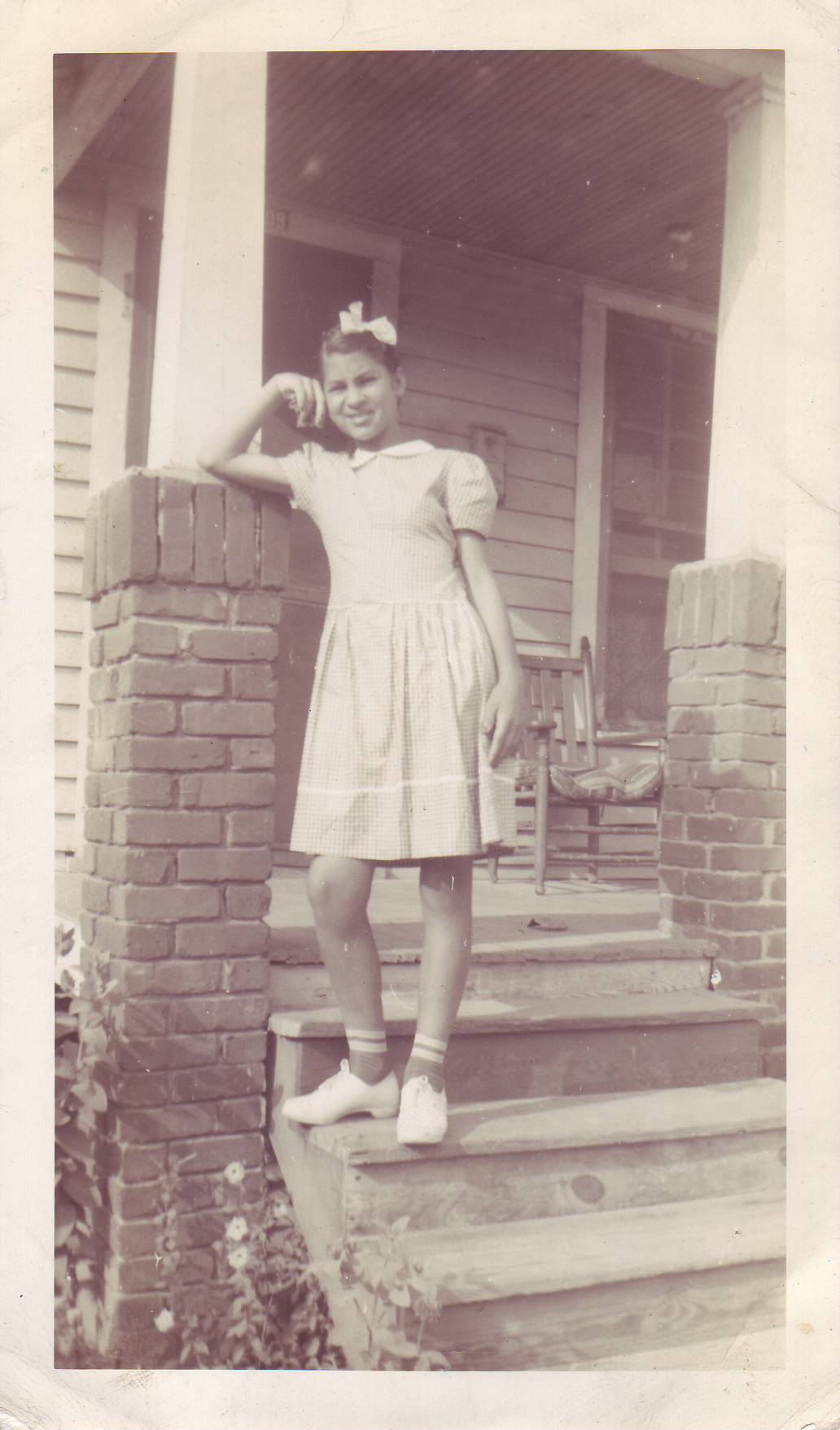


Remembering Hattie Mae Holt Crawford (18 May 1930-23 September 2011), daughter of Basil and Mamie Henderson Holt.
Sidenote: the first picture was taken on a visit to Wilson circa 1940. Cousin Hattie Mae was standing on the porch of 1109 Queen Street.
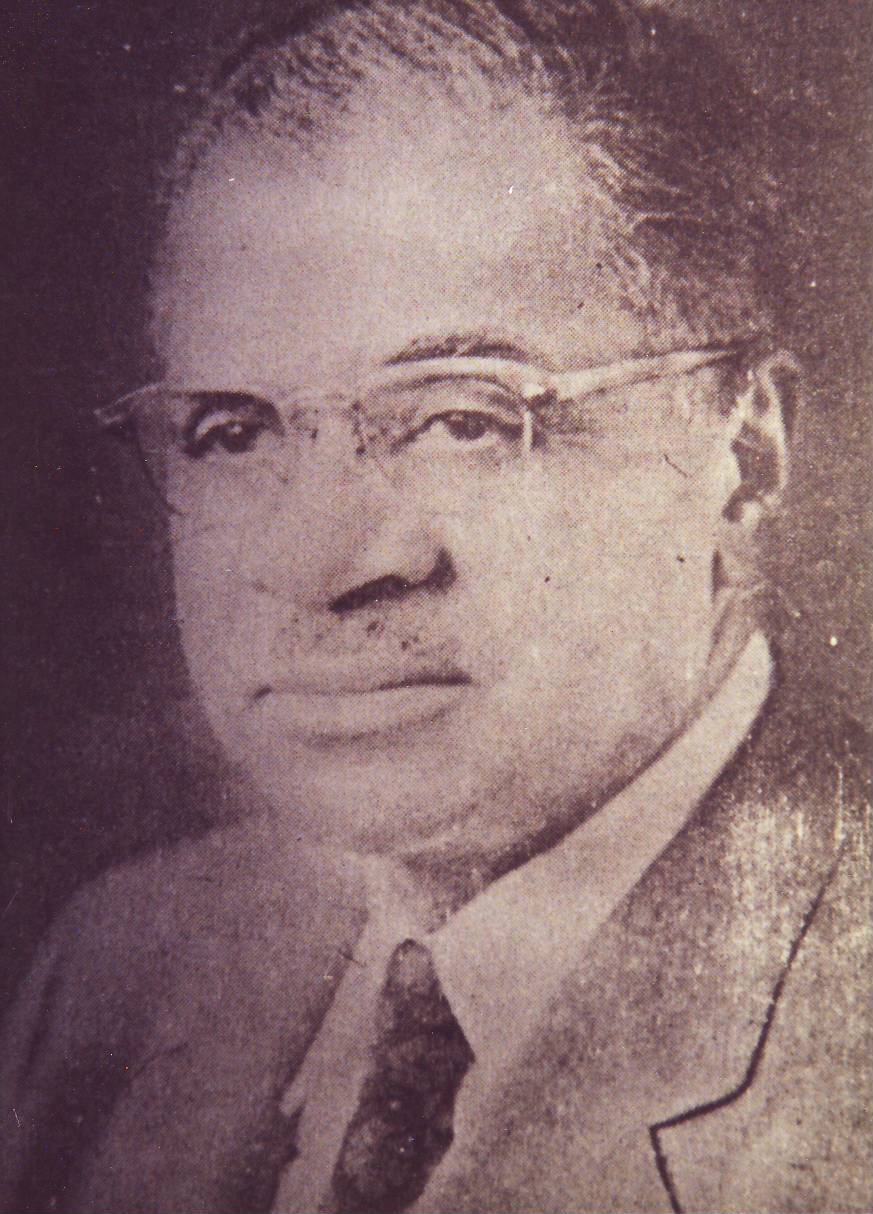
My great-grandfather, James Thomas Aldridge, was born 127 years ago today. Ordinarily, I’d do a “remembering so-and-so” kind of post, but something stays my hand. I don’t literally remember him, of course, but that’s not surprising. The problem is neither my father nor my grandmother, if she were living, could really say they much remember him either.
Nora and them stayed up there where the old house burnt down. And her mama, Aint Vicey — we called her Aint Vicey, but she was my grandmama. Her son was my daddy. And I stayed at Nora’s, they taken me up there, and Johnny always bring me watermelons. He’d say, “You just like your daddy.” And those kinds of things. So I ain’t made nothing outn it. I said, whatever. I would just say something like, well, “I’m some kin to the Aldridges.”
Johnny, he called me and I was working to the hospital. And he called me and told me, at least he called the hospital and wanted to speak to me: “Well, if you want to see your daddy – you said you ain’t never seen him before – come down here. He’s down here now. So, don’t let him know I told you.” So, I went down – I said, well, I’m gon go down there and see Silas Cox ‘bout selling the lots where Grandma Mag’s house was on. So, I got off. So, I got Mr. Fisher to take me down there. I said, “Mm, I wanna see that man.” So Nora had been all good to me and always said, ‘bout, “Tom was your daddy,” and she’d come and visit me, and I’d go down there, go down there and stay with her. When Jesse was a baby, I went down there and stayed. And when I was a child, when I went up to New York, that’s when Frances took me ‘cause I was her son’s, her brother’s child. I said, then in later years, nobody wanted to own me. But whatever.
So my grandmother met her father only once, after his brother Johnnie Aldridge called and she invented a ruse for stopping by his sister’s Nora Aldridge Henderson‘s house. The visit did not go terribly well, and Nora, to whom she’d been closest, never spoke to her again. My grandmother had spent time with her grandmother Vicey Artis Aldridge and aunts in Dudley and had started school in New York City while living with Tom’s sister Frances Aldridge Cooper Newsome, but over time — after Tom married and as his professional star rose — the Aldridges mostly drifted away. Or clanged shut the door.
Science has settled the question of my grandmother’s kinship to the Aldridges, though she did not live long enough for the validation. Happy birthday, Tom Aldridge.
——
Interview of Hattie Henderson Ricks by Lisa Y. Henderson; all rights reserved.
Lucinda McNeely‘s son John Rufus McNeely and Emeline Atwell registered their 11-year cohabitation in 1866. John and Emeline’s youngest son, born in 1873, was Rufus Alexander McNeely. He died in 1964.

This photo of Rufus is attached to the Ancestry.com public family tree of jeromemurray128. I’ve reached out unsuccessfully several times with offers to share information about the McNeelys. Perhaps he’ll see this post and get in touch. In the meantime, I hope he won’t mind me sharing this wonderful snapshot!
We passed Edwards cemetery on the left, rounded the curve, and there, just where I suspected, was the turn-off onto a farm road leading to Artis Town cemetery. The graveyard is a rectangle of green amid bare spring fields, neatly mowed. A row of weedy trees bristles down one side, broken limbs scattered from recent storms. The oldest stones tilt sideways or sprawl toppled on their backs, but the cemetery is obviously cared for. It lies at the heart of what was once known as Artis Town, a hundred or more acres between Highway 58 and Speights Bridge Road on which lived and farmed Artises and Edwardses in every direction, descendants of Daniel Artis, who bought the land in the 1800s. There was even a racetrack here, said my cousin, where men would line up horses and buggies for weekend contests. As time went by, however, the land got “swindled down.”
Daniel Artis’ headstone stands in a shadowy pocket underneath a chinaberry tree, the grave itself sprinkled with wrinkled yellow fruit. The small white marble obelisk is a testament to Daniel’s prosperity and the esteem in which his offspring held him.
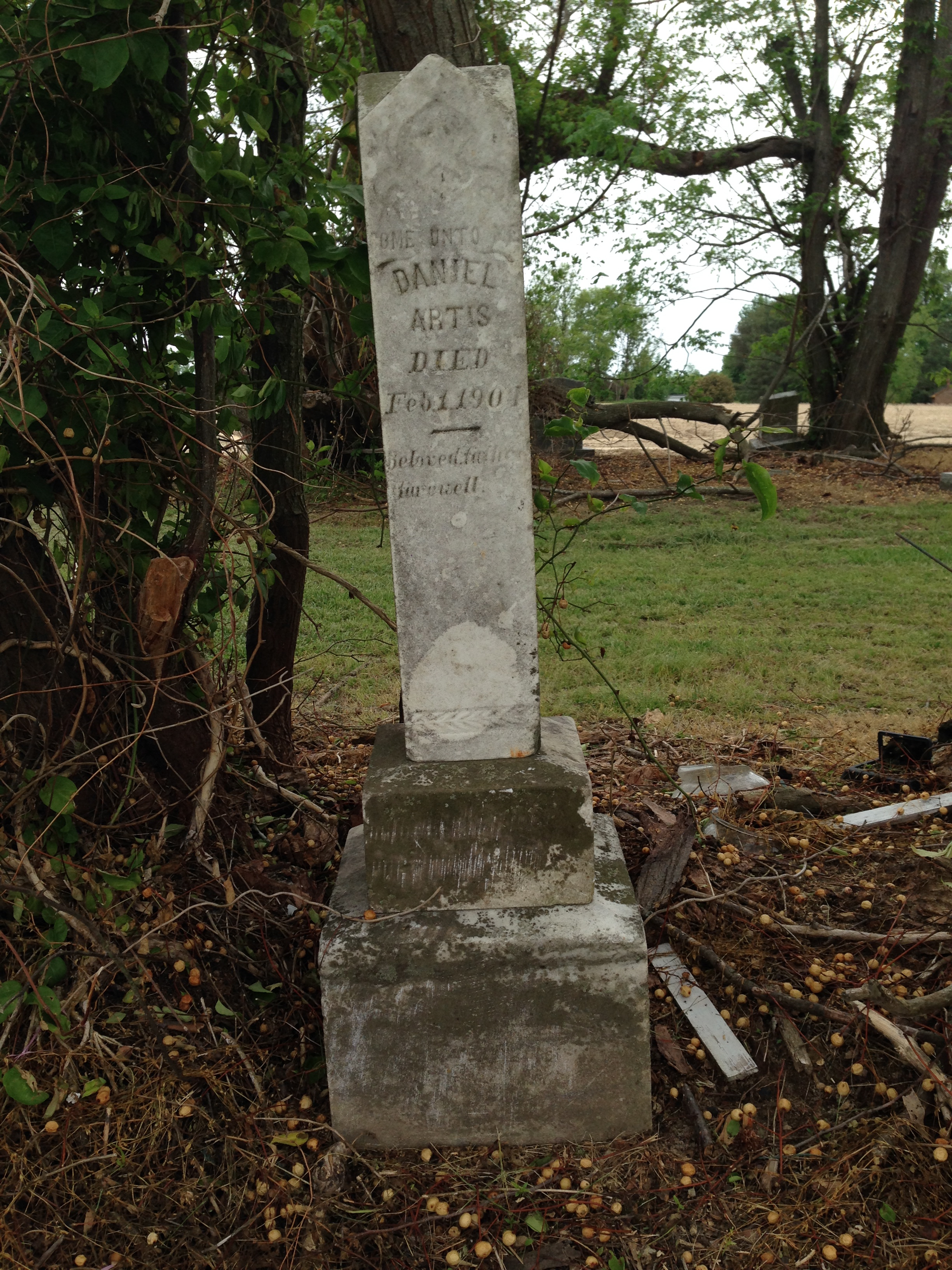
I did not locate stones for any of Daniel’s children in the graveyard, though surely some are buried there. (Daughter Clara Artis Edwards is buried in the nearby Edwards cemetery.) Many markers memorialize the deaths of descendants of Loderick Artis and Prior Ann Artis Sauls Thompson, including Loderick’s daughter Sarah Artis Speight:

and son, Manceson Artis:

and daughter Hannah Artis Mitchell, as well as Prior Ann’s daughter Mariah Sauls Edwards:

and a host of other Saulses, Forbeses, Artises, Speights and Mitchells descended from Daniel Artis.
Photos taken by Lisa Y. Henderson, 2 May 2014.
Angeline McConnaughey‘s mother Caroline may have lived long enough to breathe the sweet air of freedom, but not deeply. By 1870, she was gone, and her only child is listed in the census that year with Caroline’s mother, Margaret McConnaughey. By 1875, Angeline had left the Mount Ulla countryside for the town of Salisbury and in February of that year she married Fletcher Reeves, the 21 year-old son of Henry and Phrina (or Fina) Overman Reeves. With unusual candor, Angeline named her father on her marriage license. He was Robert L. McConnaughey of Morganton, white and a relative of Angeline’s former owner, James M. McConnaughey.
Angeline Reeves gave birth to her first two children, Caroline R. (1875) and M. Ada (1878), in Salisbury. The Reeves had plans bigger than that town could hold, however, and shortly after 1880 the family settled at 409 East Eighth Street in Charlotte’s First Ward, a racially integrated, largely working-class neighborhood in the city’s center. Fletcher Reeves went to work as a hostler for John W. Wadsworth, who climbed to millionaire status with his livery stables even as Charlotte’s first electric streetcars were poised to dramatically transform the city’s landscape. In short order, three more children — Frank Charles (1882), Edna (1884) and John Henry (1888) — joined the household, and Angeline took in washing to supplement the family’s income.
Fletcher and Angeline’s combined incomes created a comfortable cushion for their children. On 1 March 1894, in an article snarkily titled “A Fashionable Wedding in Colored High Life,” the Charlotte Observer identified Carrie Reeves, accompanied by Cowan Graham, as a bridal attendant at the marriage of Hattie L. Henderson and Richard C. Graham, “one of the best and most popular waiters at the Buford Hotel.” The ceremony was held at Seventh Street Presbyterian Church and “‘owing to the prominence of the contracting parties,’ a number of white people were present.” Carrie herself was a bride eight months later when she married James Rufus Williams. Her sister Ada’s nuptials, in March 1895, were announced in the March 14 edition of the Observer: “Frank Eccles and Ada Reeves, colored, were married Tuesday night. The groom is Farrior’s man ‘Friday.’ He is a good citizen and deserves happiness and prosperity.”
By 1900, the Reeveses were renting a house at 413 East Eighth. Fletcher continued his work as a “horseler,” but Angeline reported no occupation, apparently having withdrawn from public work. Eighteen year-old son Frank worked as a porter, and youngest children Edna (15) and John (11) were at school. On 21 August 1902, Frank made an ill-starred marriage to Kate Smith. Two and a half years later, his sister Edna married William H. Kiner of Boston, Massachusetts.
When the censustaker returned in 1910, he found Fletcher and Angeline still living in the 400 block of East Eighth. All of their children had left the nest, and in their place was 7 year-old grandson Wilbur Reeves, who was probably Frank and Kate Reeves’ child. If the boy found comfort and stability in his grandparents’ home, however, it was not to last. On 4 September 1910, Fletcher succumbed to kidney disease. He was buried in Pinewood Cemetery, and Angeline went to live with her oldest daughter’s family.
In the 1900 census, Rufus and Carrie Williams and sons Worth (5) and Hugh J. (2) shared a house at 419 Caldwell Street with Frank and Ada Eccles and their son Harry. Rufus, who owned the house, worked as a hotel waiter and Frank as a day laborer. In 1906, Carrie posted a series of ads in the Charlotte News seeking customers for her sewing business.

Charlotte News, 5 September 1900.
Rufus seems to have spent his free team pitching for a top local baseball team:

Charlotte News, 13 August 1900.

Charlotte News, 4 September 1900.
In the 1910 census, the family is listed at 212 West First Street. Rufus worked as a porter at a club and Carrie as a seamstress. Sons Worth (14) and Jennings (12) were students. Ada Eccles, already a widow, had migrated to Cambridge, Massachusetts, and is listed at 8 Rockwell Street with brother-in-law William H. Kiner, sister Edna E. and their children Addison F. (4) and Carroll M. (2), plus brother John H. Reeves. William worked as a clothes presser in a tailor shop, Ada as a servant, and John as a hotel waiter. William was born in Virginia, all the others except Carroll in NC. (The Kiners also spent time in Oak Bluffs, on Martha’s Vineyard. Son Carroll Milton was born there in 1907; the birth register gave William’s occupation as theological student.) Frank is not found in the 1910, but the state of his marriage can be inferred from a newspaper article about his wife, passing for white in Hollywood.

Charlotte News, 15 May 1910.
Hugh Jennings Williams died after a battle with tuberculosis in 1913, during his final year in Biddle University‘s preparatory division. (His older brother, Worth Armstead Williams, also attended Biddle for high school and college.) Jennings’ obituary paints a charming picture of the boy and makes clear his parents’ status in the eyes of white Charlotte. 
Charlotte News, 20 November 1913.
Just months later, more than 800 miles away in Cambridge, Jennings’ uncle John H. Reeves also contracted TB. He was dead by April 1915.
By 1920, the Williamses had moved a little ways out of the heart of the city to 826 South Church Street in the Ninth Ward. Widow Angeline Reeves was listed in the household with Rufus, Carrie, and 24 year-old Worth Williams. Rufus was a porter at a club, Carrie was a dressmaker, and Worth a student at a dental college. (Worth was only at home temporarily. He was enrolled at Howard University’s dental school.)Meanwhile, up in Cambridge, Massachusetts, the censustaker found William H. Kiner (a chipper at a shipyard), wife Edna E., and children Addison F., Carroll M. and Evelyn C. living at 8 Rockwell Street, and Ada Eccles and her son Harry at 65 Grigg Street.

Rufus Williams continued to enjoy the esteem of his employer and patrons at the Southern Manufacturers Club — at what personal cost unknown. Waiting on the cream of the Queen City’s burgeoning manufacturing magnates was a path to economic security, but that path was strewn with daily indignity, both casual and intentional. Rufus, and his father before him, were what some fondly called “white man’s niggers,” but to acknowledge this is not to indict them. In a 1924 news article, note that Rufus’ speech honoring his benefactor, John C. McNeill, also shines a light on the fruit of his years as a servant — his “son, W.A. Williams, who is a surgeon dentist at New Bern.”
 Charlotte News, 1 June 1924.
James Rufus Williams died 24 May 1947 in Charlotte. Six years later, on 25 March 1953, his mother-in-law Angeline McConnaughey Reeves passed away at the age of 94. Her mother and husband gone, Carrie Reeves Williams lived just six months more and died 28 September 1953. I have not found record of Frank Reeves’ death. His sisters Edna Reeves Kiner died in New York City in 1969 and Ada Reeves Eccles in Cambridge in 1979.
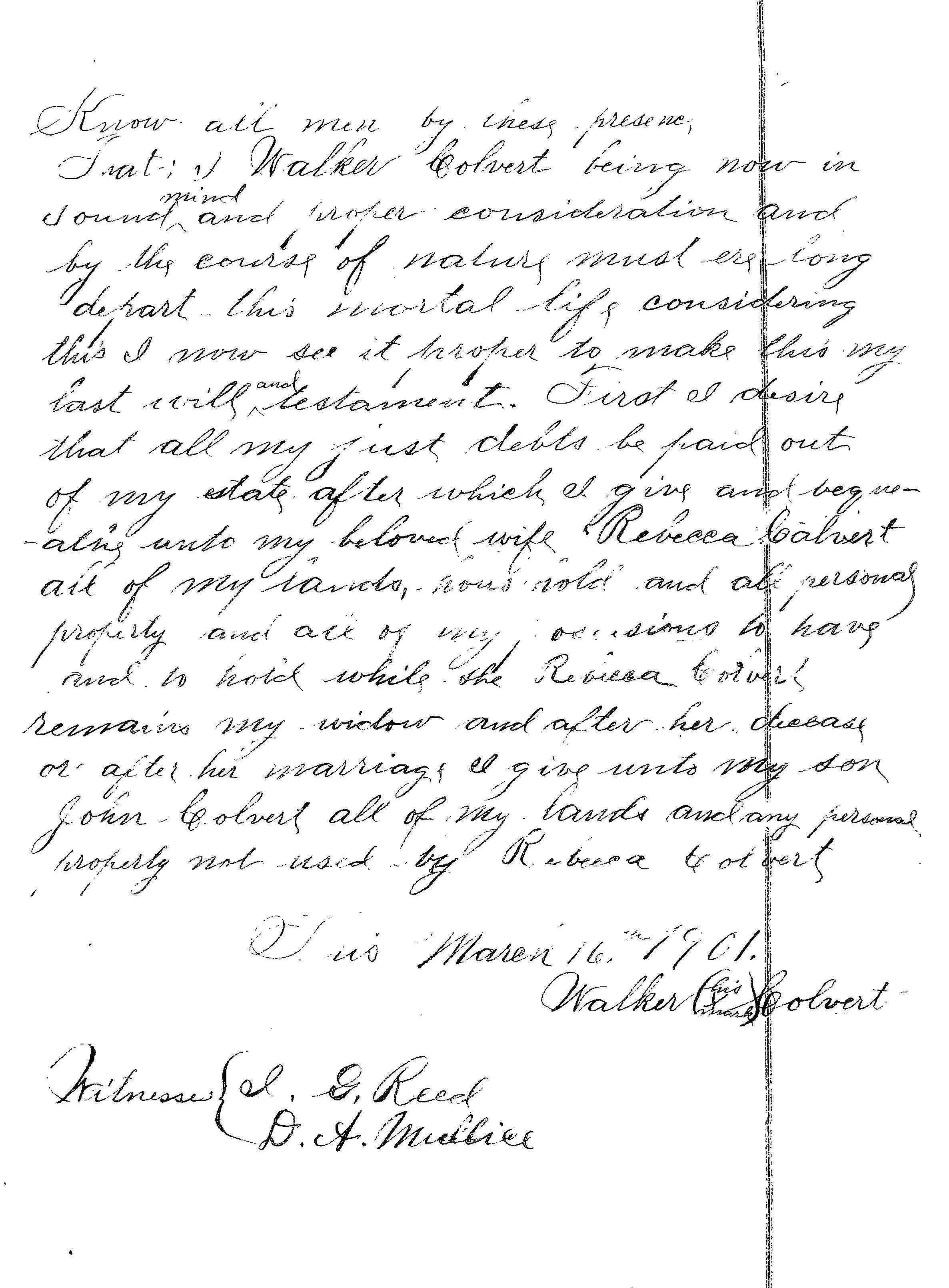

Born 40 years into American independence, and less than ten after the importation of African slaves was banned, Walker Colvert could have prayed for, but never foreseen, that he would gain his freedom just past the midpoint of his life and that he would die possessed of something to leave his wife and son.
From old journals, notes from my last two visits to my grandmother’s house in June 2000 and April 20-22, 2001. Both are tinged with the sadness that overwhelmed me in her final year. Though they do not reflect the warmth and happiness of my years of wonderful visits to 5549 Wyalusing Avenue, they do capture place in a way that has helped me hold on to those memories.
——
One old exhausting voyage. My grandmother’s health is failing. My uncle is not equipped to take care of her. My father is exasperated by his inability to get either to do what they need to do.
I had a premonitory 15-minute massage in terminal D. Dreamy. Painful. …
What is the story with the landscaping at Philadelphia International? Where is the mulch? The poor young trees stand bare-ankled, save weeds. I am hardly prepared for the 50-some degree weather I encounter. The SEPTA train runs through wetlands on its trek to 30th Street Station. I can barely make them out through the window’s grime. I spot wildflowers in profusion, but cannot identify them readily. Still, behind Franklin Field, I spy spiderwort.
Mother Dear and Uncle Jesse have adopted two kittens, born to a stray they kept for a while. They appear to be perhaps seven or eight weeks old. One is white with a gray face and a few gray patches. The other — larger, bolder — is white with black ears and a black tail. They are shot out with fleas. My grandmother calls them both “Becky.” An older kitten, Beckys’ broke-down half-sibling, lurks on the front porch. Though it is a lovely black and white, it has a large head and crooked legs.
In a vacant lot near the old Super Fresh, a viney thing with purple-tinged leaves and a small, purple flower. What? It is chilly. I don’t recall Wyalusing Avenue being so desolate. And the crackheads! I had forgotten how pervasive ….
The Wyalusing Inn has a new name. After all these notorious years. Club 421 is still the same, though rode hard.
I find a photo from the 1940s that shows the shotgun house at 1109 Queen Street that my father grew up in. Out front, there is a profusion of what appear to be white petunias.
The patience of the poor. Ooo. I would not call this place — District Health Center No. 4 — chaotic, but it is as far removed from my private healthcare experience as night from day. I am joined on a row of chairs by a jittery piper who, when I come out of the conference with the nurse, demands, “What she say? What she say?,” as if we were all sitting here joning for methadone. Or whatever. The epidemic has not slowed in Philadelphia. I am so fucked up — I don’t want to sit next to anyone.
My grandmother lives in a two-story rowhouse, three-over-three. 5549 Wyalusing Avenue. At 56th Street. Girard Avenue runs a few blocks north, Haverford Avenue slants a block south. Downstairs, there is a living rom, dining room and kitchen. Upstairs, three bedrooms and a bathroom. Once, a short passage jutted into the living room behind the front door. It was gone long before I was born, but on the ceiling you can see the faint ridges left when it was torn out. Whan I was a child, Miss Sarah’s house next door still had its vestibule, which Mother Dear pronounced with an “f.” I faintly recall it lined with narrow white tile laid subway-style.
The walls and ceiling of the living room are plaster; they join in a seamless curve. The floors are hardwood, but have been painted light brown as long as I can remember. They are covered with rugs. The room’s highlight is the fireplace, which probably originally contained gas jets. All my life, the “opening” has been a solid surface, scored faintly in imitation of tile, with an ornate register cover lodged in its bottom edge. The mantel is elaborately carved.
There are two couches in this room, both much older than I. In fact, my father slept on one as a child. My grandmother has cushioned its shot-out springs with several layers of old blankets. Above the mantel hangs a yellowed reproduction of some idyllic Rhine Valley vista. It is flanked by a pair of vaguely Art Deco lamps, probably ’50s-era. On the wall: two circular plaques, their backgrounds silver glitter, featuring black silhouettes of a fairy bathing in a blossom and a swimming swan. In the corner, a floor-to-ceiling pole hung with cone-shaped adjustable lamps. (We had one of those on Carolina Street. I think my aunt still does.) The front door is original. Its top two-thirds has eight lights. There’s a mailslot below. Hanging nearby, a round mirror with roses etched at its border. One large window overlooks the porch and, beyond, the street. There are photographs of us on the wall above one couch, as well as some sort of mirrored, gilted shelf thing.
Upstairs I hear murmurs. My father is attempting to prise from my grandmother’s porous memory the whereabouts of her medicine and the money she has stashed.
The garden is a forlorn rectangle, perhaps twelve feet by seven, overrun with weeds. A hollyhock struggles to glory in one corner. A hydrangea is smothered under large clumps of something that looks mightily like miniature chrysanthemums. A clothesline depends from side to side. The bag holding clothespins is shaped like a tiny dress.
There are nine open porches going east from the bar at the corner, and then the first enclosed one. This has been the case all my life. I vaguely remember the two old white women, sisters, who lived at 5551 when I was very young. They were the last of the European immigrants, mostly Jewish, that used to dominate West Philadelphia. The rail between my grandmother’s porch and 5547 is the last of the original wooden balustrades. The rest have been replaced by rickety black wrought iron. Mother Dear’s house is faced in a fine-textured, dark reddish-brown brick. The mortar also is oxblood. There are cement steps – two, then a sort of mini-stoop, then another. The cellar window is barred. The porch floor is plywood over damaged tongue-and-groove. She has three green metal lawn chairs and one small white table. The chairs have been painted repeatedly. 5549 is painted in gold numerals on a transom above the front door. Beside the door is a small, tarnished plaque: “J.C. RICKS.” The street was once lined with mature sycamores. Perhaps 15 years ago, some sort of blight began to wipe them out, one by one. I can see a few standing down toward 55th street, but the loss here is stunning. In summer, the light and heat are unbearable. [June 6, 2000]
——
April 20-22. Philadelphia. The Last Time.
I love that: the demarcation between land and water. [As we fly over the Chesapeake Bay.]
Fingers, tufts of land, cut by water. Tiny patches of woodland. A river breaks free, asserts itself. [Is this Maryland?]
What appear to be solid woods, then sun reflects from water glinting beneath the trees.
A marsh, like crackled glaze.
First glimpse of Center City. Of Camden. Could I have remained here? Above the Walt Whitman Bridge, block after indistinguishable block of South Philly. Below, the drydocks of the Naval Yard, where Uncle Lucian left his lungs.
Being in Mother Dear’s house was not as overwhelming as I’d expected. Her spirit was already so far gone from the place. It was sad and shabby, but not in the grief-filled way I was expecting. I just had to let the loss of the Hoosier cabinet go [a picker had tricked my ailing uncle into selling everything of real value] and focus on the things we were able to save — letters, pictures, Bibles, bills, knick-knacks. The barber scissors, her Sweet 16 ring, the gourd. I found a letter from Mother Dear to her children, never mailed, in which she describes how she met their father. And a letter from Uncle Caswell to Aunt Sarah. [20-22 April 2001]
Part II of Bailham and Hannah Sauls Speight’s pension application file arrived today, and here are some extracts from witnesses deposed 4 June 1904:
And a letter dictated by Bailham Speight himself:
February 11th 1896, Kinston N.C.
Mr. I.S. Kurtz Dear Sir, Relative to my age and the way that my name has been spelled. Now I wished to informs you that I used to belong to the old man names Edwards before the war (white) Therefore I enlisted in the Military Services of the United states. I enlisted by the name of Bailham Edwards and I answered at roll call. Bailham Edwards. But the Yankees, they called the name some what like this. Balum Edwards. But however you is speaking to the same man after all. …” [The letter is written in a very florid hand, and the signature does not show his “X.” However, other documents reveal that Bailham Speight could not, in fact, read or write.]
 Scuffalong: Genealogy.