
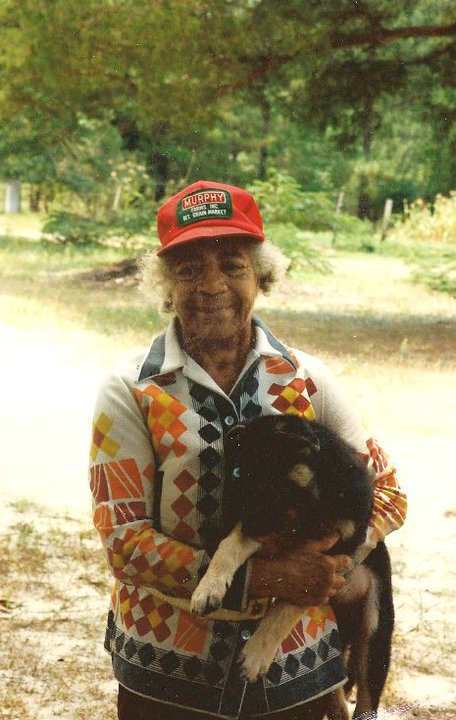
Remembering Catherine Aldridge Davis (22 August 1900-3 April 2009), daughter of John W. and Louvicey Artis Aldridge.
Remembering Catherine Aldridge Davis (22 August 1900-3 April 2009), daughter of John W. and Louvicey Artis Aldridge.

Goldsboro Messenger, 19 November 1885.
Phillip R. Coley, son of Winnie Coley, was the half-brother of Napoleon Hagans‘ son William M. Coley and Adam T. Artis‘ children Cain Artis and Caroline Coley Artis. Richard Artis was Adam T. Artis’ brother, and Simon Exum was his brother-in-law, husband of Delilah Williams Exum. Peter Coley may have been Phillip Coley’s father.
I checked first at the Court House. I had a hazy memory of a dusty, yellowed pull-down map hanging on a wall in the Register of Deeds office depicting Greene County townships in, perhaps, the 1950s. Most county roads were then unpaved, and the map bore witness to many now-abandoned crossroads and hamlets, including “Artis Town.” But the map was gone, cast aside in a reshuffling of office space that relegated Register of Deeds to the basement. The two ladies on duty — blue-permed and powder-fresh — interrupted their gossip (“He’s good as gold, but when he’s mad, he’ll … he’ll CATCH”) to help, gamely pulling two or three crumbling maps from storage, but none was what I sought. “Try EMS!,” one finally suggested, “They know all the roads.”
In the dim front office of a low brick building on the northern edge of Snow Hill, I explained myself: “I’m looking for a place in the road called Artis Town. There used to be a sign. Like, a green one with white letters. And it was somewhere off Speights Bridge Road, or maybe Lane Road, but I hunted up and down this morning and couldn’t find it.” The good old boys were puzzled. “Artis Town … Artis Town …” “Well, naw, I never heard of … Mike! You know where Artis Town is?” “Artis Town. Artis Town ….” An older man walked through the door and was put to the test. “Well, I think … hmmm. Hey. Call Donald. If he don’t know, don’t nobody.” … “Hey, Pam, is Donald — wait, you’re from out that way. Do you know where Artis Town is? … Okay … okay … okay. Donald? Yeah, Artis Town. … Okay … mm-hmm … that’s what Pam said. Okay, thankee.” And sure enough, it was in a bend of Lane Road, off Speights Bridge, and there had been a sign, and it was gone.
But I asked my mother about it, too, because she taught in Greene County for two years when she first came to North Carolina, and I thought maybe she’d heard of it. Her school had been in Walstonburg and probably drew students from Speights Bridge, and … “Let me look at my gazetteer.” She has the old version from the 1980s, which, of course, I pitched once I bought the shiny new one. And I’m regretting that surely, for Artis Town is marked quite clearly on her map, and I could have saved myself some gas and tire rubber had I consulted it. (Though I would have missed out on the helpful hospitality of the fine people of Snow Hill.)
I dug my old laptop out of storage today. It took a bit of searching, but finally: photos I took in December 2004 when I was wandering the roads of Greene County with no real purpose other than a penchant for what Least Heat-Moon calls “blue highways.” Almost ten years would pass before I’d connect Artis Town with my own Artises. The ancestors, though, are patient.

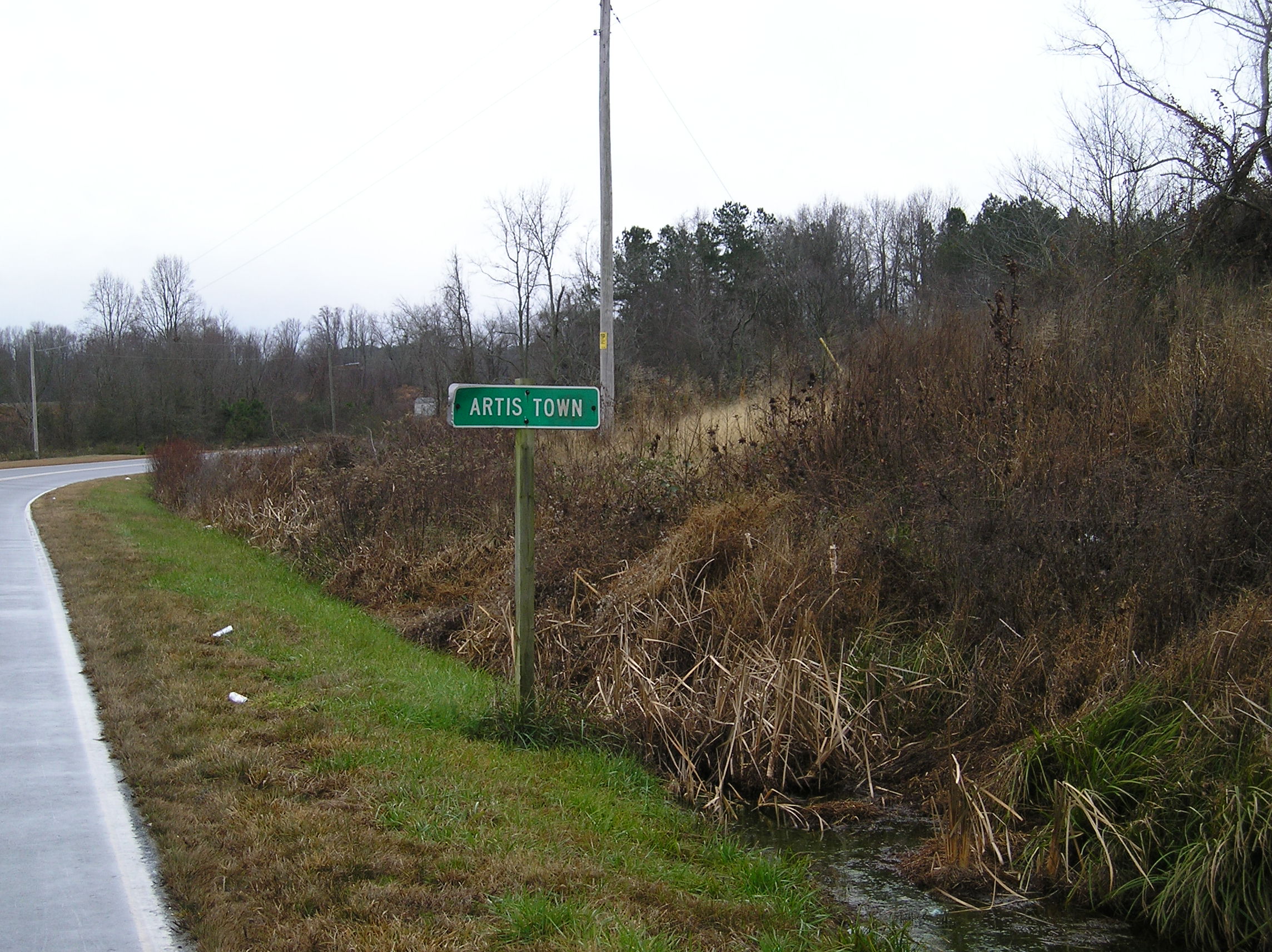
Photographs by Lisa Y. Henderson, 23 December 2004.

King’s Weekly (Greenville NC), 6 March 1900.
Cousin Cain D. Sauls, grocer, merchant, farmer and all-around businessman, suffered a blow in 1900.
The wooden church was still standing then, on a sandy bank that rose from a curve in the highway at Lane Street. In my father’s time, Rountree church was well beyond city limits, but our subdivision leapfrogged it in the early 1960s, and a grocery store popped up across the road, and it was no longer an outpost. Still, when we were children, Lane Street was raw and unpaved and, for us, a gateway to adventure. A hundred yards in, the road crossed over a sluggish branch, the pines began to crowd down to its ragged edge … and tombstones began to poke through the snarl of catbrier and cane choking the forest floor. Here was the remnant of Wilson’s first colored cemetery*, abandoned at mid-century and, by the mid-1970s, when we prowled these woods, completely overgrown with bamboo and sweetgum and loblolly pine. Burials by then had moved around the corner to Rest Haven cemetery, which is city-owned and maintained. Perhaps 20 years ago, after several half-hearted clean-up efforts, a small, ragged section of Rountree was cleared and its remaining stones propped up. A hundred yards down the road, in an open field, a memorial was erected to Rountree’s many hundreds of lost graves. A set of my great-grandparents were probably buried there, as well as my father’s stillborn brother, Uncle Jack’s sickly boys, and other kin unknown and maybe unknowable.
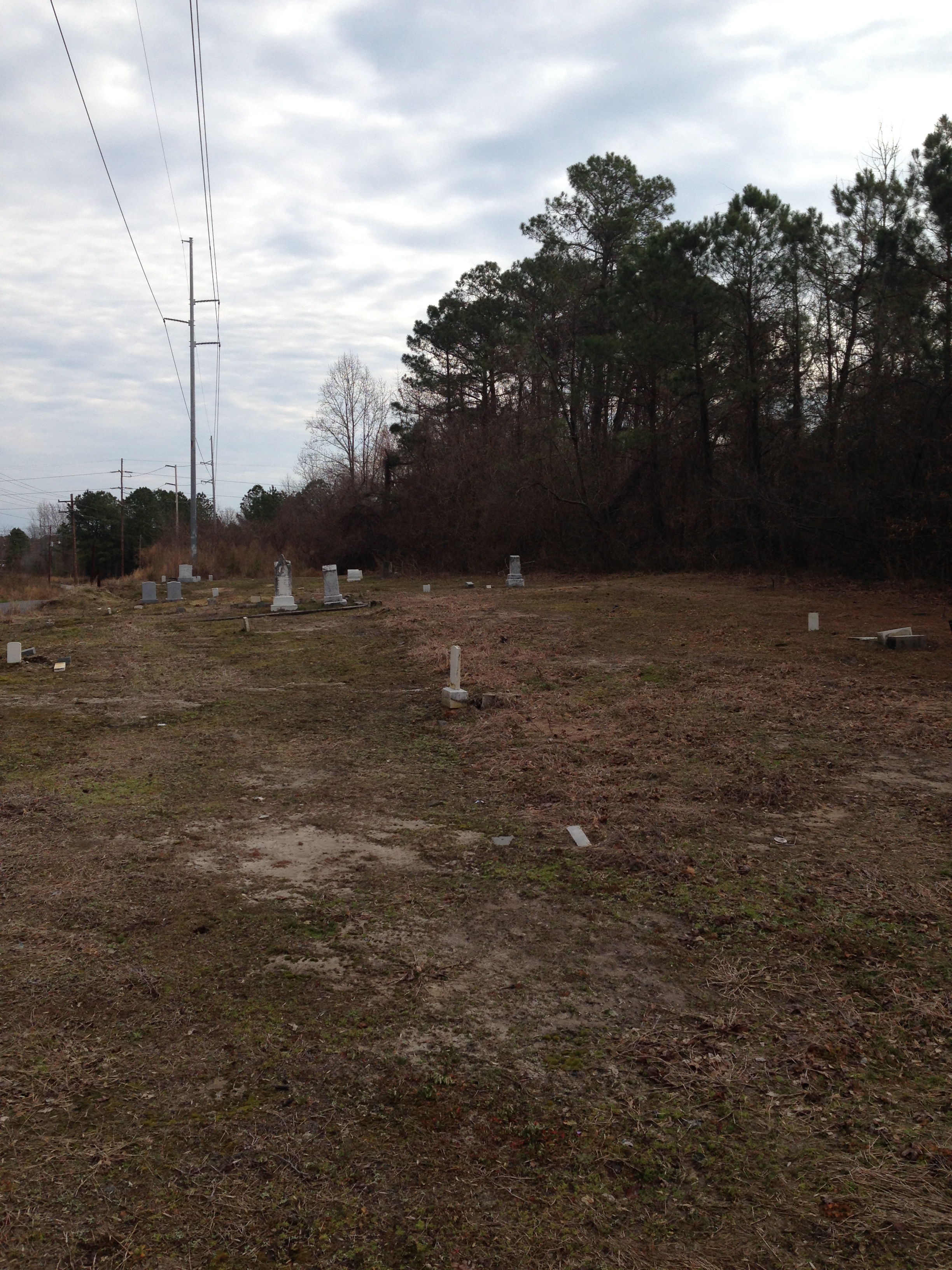
The sad remnants of Rountree cemetery, February 2014.
My grandmother was buried at Rest Haven in 2001 and my uncle in 2005, but only recently did I begin to regard that cemetery’s conventional, lettered rows as as interesting as wild Rountree. My grandmother’s headstone, like all from the last 30 years or so, is machine-cut, its lettering precise and even. Older markers, however, reveal an artist’s hand, quickly recognizable in a squarish font with flared serifs and, especially, the long, pointed tails of the 9’s. Marble cutter Clarence Benjamin Best carved headstones for more than 50 years, chiseling lambs, stars, flowers, and Masonic emblems, as well as pithy, grammatically idiosyncratic epitaphs, into slabs of gray granite. I have found his work in rural Wilson County cemeteries and as far afield as Wayne and Greene County, but Rest Haven is ground zero for his oeuvre.

An early example of Clarence Best’s marble-carving in Rountree — before he developed his signature long-tailed 9’s. (Foster was an early investor in Commercial Bank.)

A late example — with 9’s and a bit of a extra verbiage, Rest Haven.

Rifle, fish, peaches — a Best creation for husband and wife, Rest Haven.
In addition to my father’s mother and brother, my paternal grandfather is buried in Rest Haven, as are my aunt’s husband; Uncle Jack and his family; Josephine A. Sherrod and countless other Artises; and, somewhere, Aunt Nina.

My uncle, Jesse A. Henderson.

Cousin Jesse “Jack” Henderson and wife, Pauline “Polly” Artis Henderson.
*I have since learned that it was not, in fact, the first. That distinction may belong to a small cemetery just off Pender Street, memorialized in today’s Cemetery Street. All traces of it have disappeared.
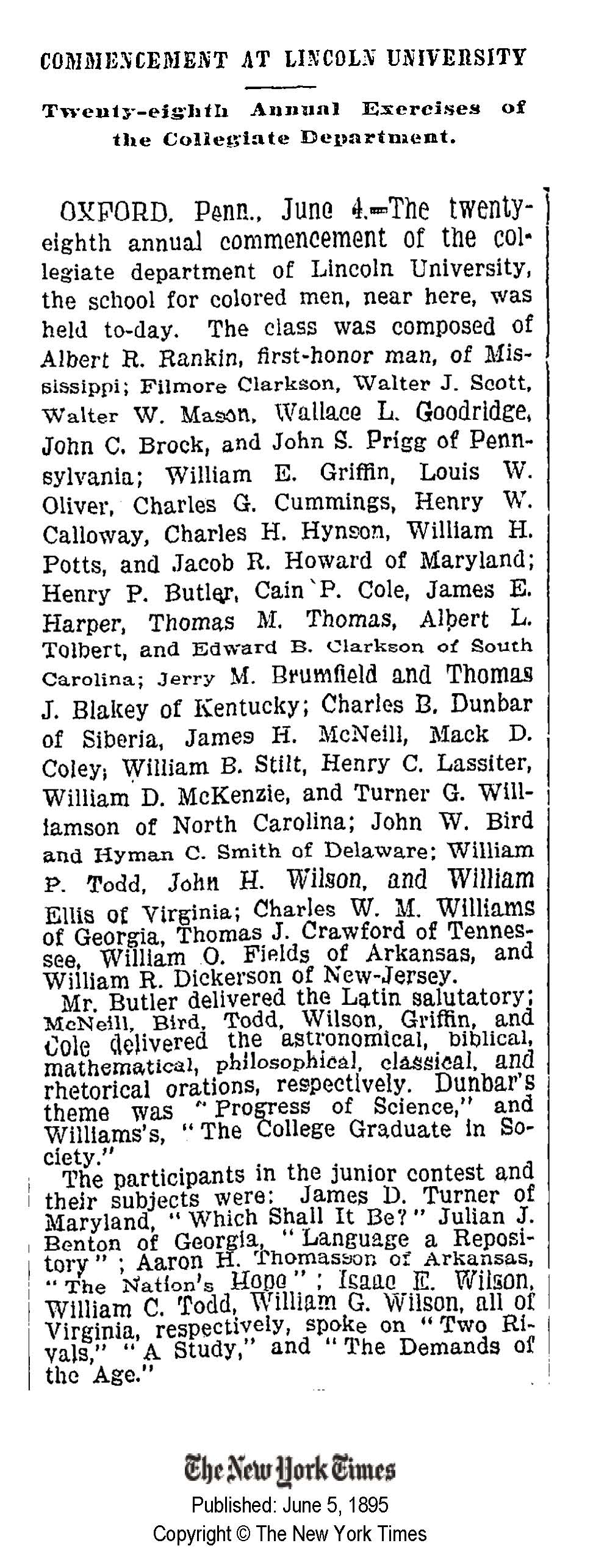
Mack Daniel Coley was born in 1866 in northern Wayne County. He graduated from Hampton Institute’s preparatory division in 1890, then received a bachelor’s degree from Lincoln in 1895. He returned to North Carolina shortly after and, in November 1896, married fellow Hampton graduate Hattie B. Wynn, daughter of Charles W. and Frances Aldridge Winn.
M.D. Coley’s remarkable career as educator — and lawyer — was chronicled in Arthur Bunyan Caldwell’s History of the American Negro and His Institutions (1921):
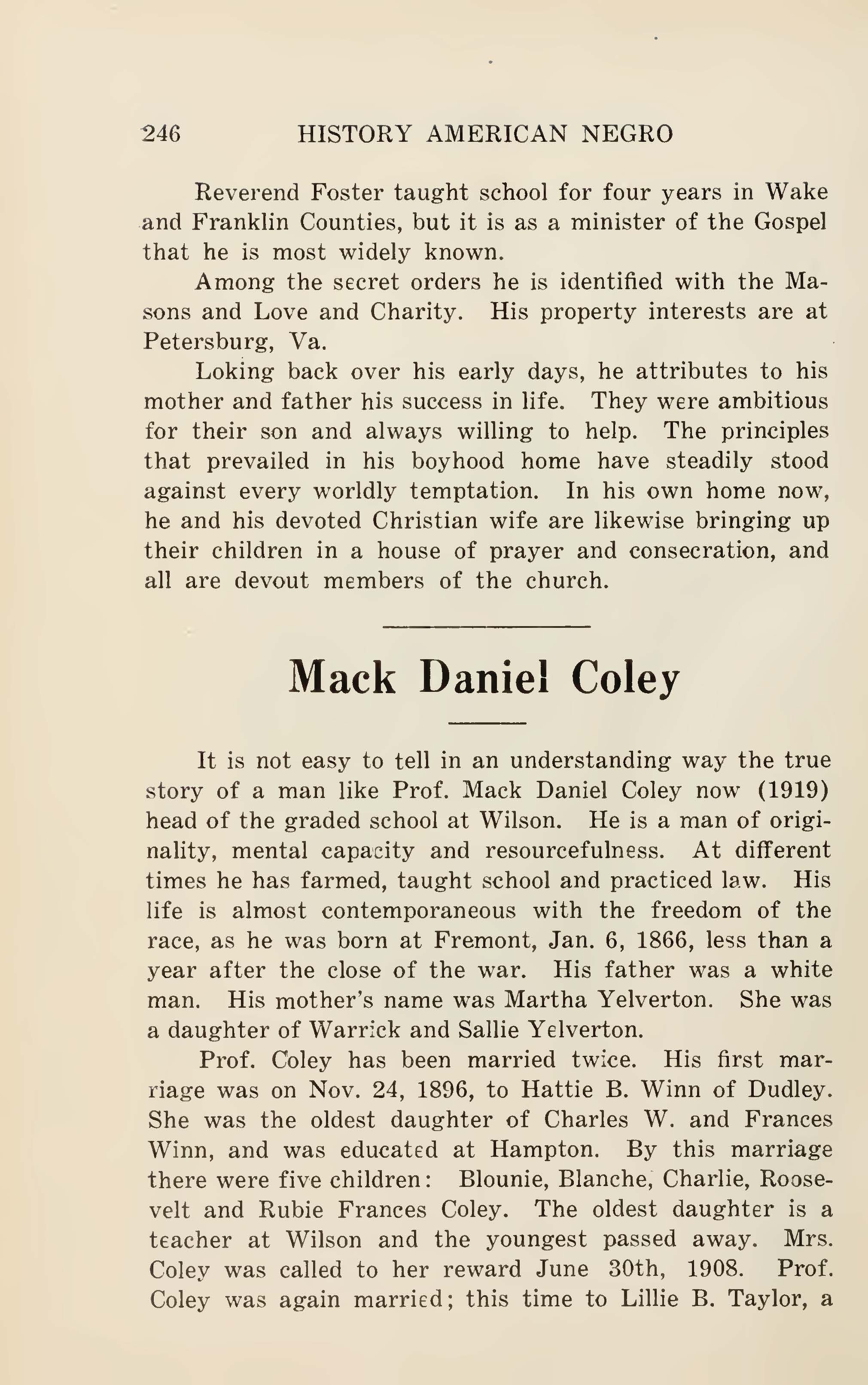

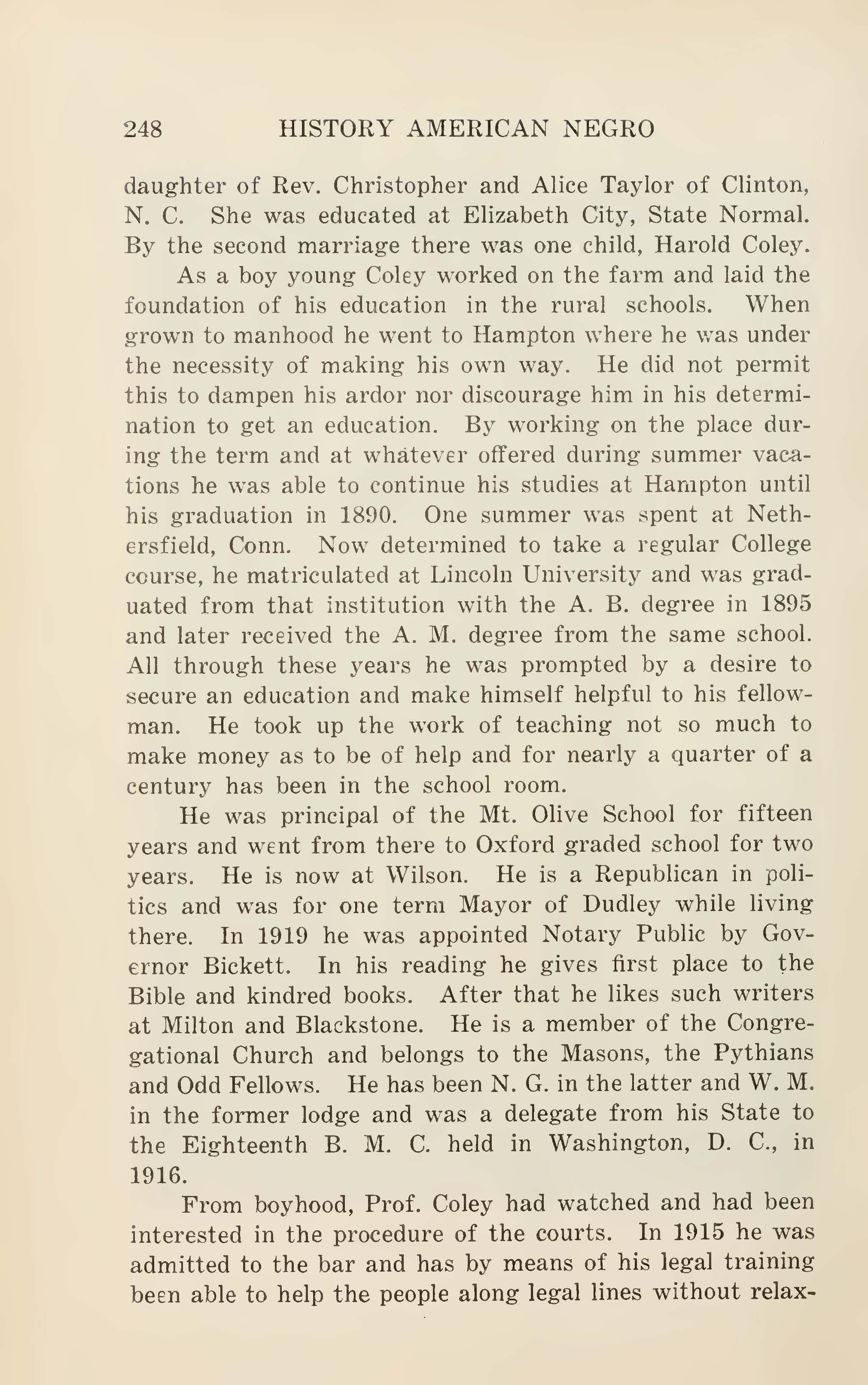

[Sidenote: Mack Coley appears in the 1870 census of Wayne Coley in a household headed by Winney Coley. At age 61, she is too old to have been his mother (never mind the bad information posted on a dozen family trees on Ancestry.com.) Grandmother, perhaps? If so, how do the Yelvertons mentioned above fit? Winnie Coley is not kin, but she was the mother of children by Napoleon Hagans and Adam T. Artis. Stay tuned.]

Wilmington Messenger, 3 April 1889.
John W. Aldridge was born in northern Sampson County and grew up near Dudley in southern Wayne County. In the late 1870s, he and his brother George taught at a school near Fremont, in northern Wayne County, where John met and married his wife Louvicey Artis in 1879. I had always assumed that the couple immediately returned to Dudley to raise their family and establish a farm and later a general store. However, this announcement clearly shows that John Aldridge was a firmly entrenched resident of the Fremont district as late as 1889. (In hindsight, this would explain why the Aldridges do not appear in Congregational Church records in the 1880s and 1890s.) When did the family return to Dudley? John and his brothers George and Matthew purchased land together in the 1870s. I’ve never looked at these deeds in detail, but clearly need to do so. Are there other traces of John Aldridge’s tenure in north Wayne?
David Sloan Aldridge is the mystery brother. Born about 1858, he was Robert and Mary Eliza Balkcum Aldridge‘s fourth son and fifth child and appears with them in the Wayne County censuses of 1860, 1870 and 1880. By 1896, David, also called Sloan, had married Lillie Uzzell, though no license has been found. The couple filed three deeds for real estate purchases in Goldsboro and Grantham township in the late 1890s. In 1900, David and Lillie (called Dilley in the census) are listed in Goldsboro, and he received his share of his father’s estate in 1902. And then he disappeared.
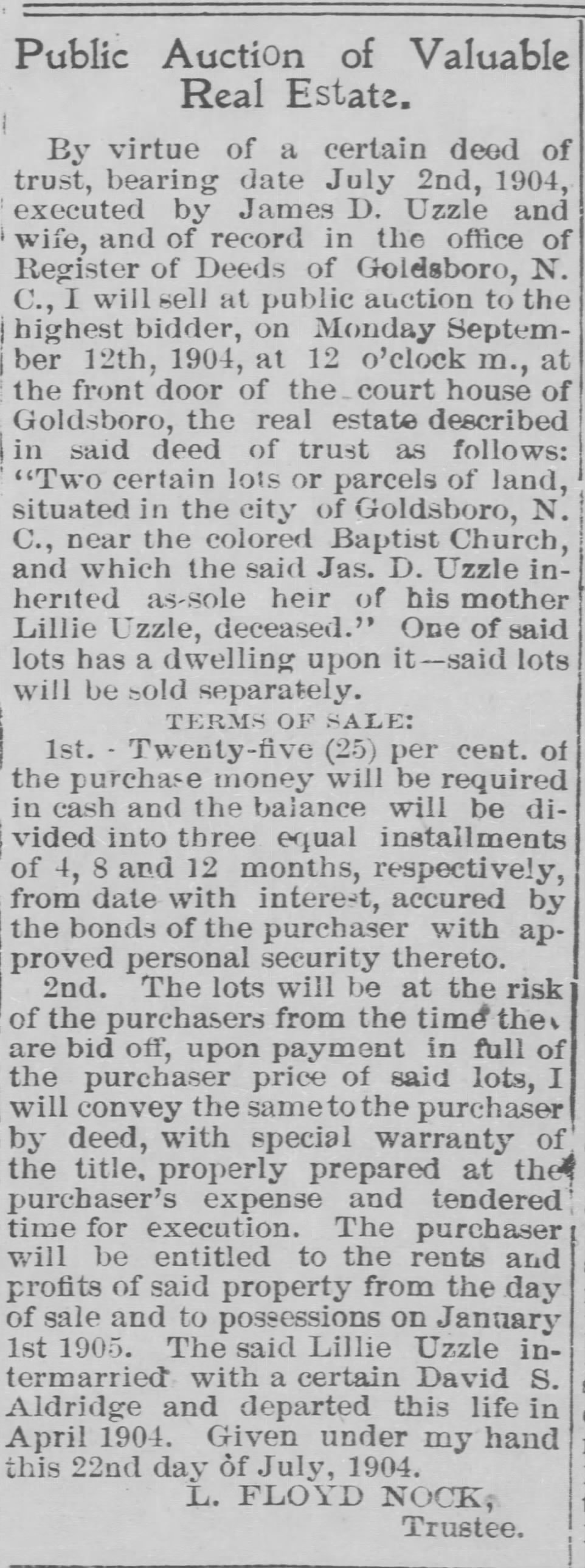
Goldsboro Weekly Argus, 1 September 1904.
I have not found David S. Aldridge in the 1910 census or after. Until I found this article last night, I had no record of him beyond Robert Aldridge’s estate settlement. The lots offered at auction were jointly purchased by David and his wife. In 1904, after his wife’s death, David sold his share in the property to Lillie Uzzell’s sole heir, her adult son, and, after this notice was published, disappears from the record again.
In December 1920, five of Wilson, North Carolina’s leading African-American citizens executed a certificate of incorporation to establish the Commercial Bank of Wilson. The bank was necessary, they asserted, “to promote thrift and economy,” “to encourage agriculture and industrial enterprises,” and “to place in circulation money otherwise unavailable.” Farmer, realtor and businessman Samuel H. Vick; barber William H. Hines; school principal J. James D. Reid; funeral home operator and businessman Camillus L. Darden and physician Frank S. Hargraves — the unquestioned cream of east Wilson‘s crop — each invested in 100 shares of bank stock and, after filing the document, set about designating a president (Hines) and board of directors (J.R. Rosser, Isaac A. Shade, Cain D. Sauls, Charles S. Thomas, R.A. Worlds, John Lucas, C.S. McBrayer, J.O. Mitchell, Lee Pierce, Alfred Robinson and Judge D. Reid), and a cashier (G.W.C. Brown).
Attached to the filing are three pages listing the names of all the bank’s investors and providing information about their net worth and occupation. Most of more than 150 shareholders — overwhelmingly African-American men — lived in Wilson or Wilson County, but adjoining counties like Wayne, Greene and Johnston were represented, as well as more far-flung cities like Durham and Elizabeth City, North Carolina. They were farmers and contractors, merchants and ministers, teachers and barbers, with estimated worths ranging from $300 to $50,000.


At least two of my relatives were among the bank’s investors. C.D. Sauls of Greene County, whose connection through Daniel Artis I chronicled here, was a bank officer, and his cousin Columbus E. Artis, who owned and operated a funeral business in Wilson, bought five shares.
 Hill’s Directory of Wilson, North Carolina, 1922.
Newspapers reported the bank’s opening excitedly.

Wilmington (NC) Morning Star, 18 November 1920.

Elizabeth City The Independent, 25 February 1921.
 Elizabeth City The Independent, 4 March 1921.
In the 1921-1922 issue of The Negro Year Book: An Annual Encyclopedia of the Negro, Monroe N. Work, editor, Commercial Bank of Wilson was listed as one of only eight black banks in the state of North Carolina, which trailed only Virginia (13) and Georgia (9) in the number of such institutions. [Sidenote: one of Virginia’s was Crown Savings Bank of Newport News, for which my great-grandfather John C. Allen served as board member.]
Alas, things fell apart. After a fire in the vault destroyed records, the State launched a criminal investigation that resulted in the closing of the bank on 4 September 1929 and the indictments of vice-president (and chief promoter) J.D. Reid and cashier H.S. Stanbank on charges of embezzlement, forgery and deceptive banking practices. As reported in the 22 February 1930 issue of the Pittsburgh Courier, the courtroom was daily packed with victimized depositors and shareholders, all of whom bore an “intense feeling of resentment against the accused….” Both were convicted and sentenced to five-year prison terms — at hard labor — but released after two years.

Burlington Daily Times-News, 22 December 1931.
Sarah Henderson Jacobs Silver left two Bibles. One, a gift from her second husband, Rev. Joseph Silver, had originally belonged to his first wife, Felicia Hawkins Silver. The other passed through several hands before arriving in mine.
There are three inscriptions inside the front cover. “This book was give to Sarah Jacobs from Ganny Caroline 1920 of Wilson NC” — that’s my grandmother’s handwriting. Then, faintly: “Present by Mrs Caroline Vick of Wilson N.C. present in May 18th year 1904.” Then: “Gladys OKelley book give to her by Charity Pitt keep as long as I live no one to take it a way from me year 1913 Dec 23.”

Who are these folk?
Carolina Williamston Vick was born in Newton County, Georgia in 1844. How or why she came 425 miles north to settle in Wilson, North Carolina, may never be known, but a clue might lie in her maiden name. “Williamson” was a prominent southwest Wilson County family that included slaveholders. Did some migrate — or sell their slaves — South? In any case, Carolina was in Wilson by 1880 when she is listed in a household headed by 28 year-old Robert Vick. They are married and have three children, Alice, 18, Willie, 15, and Cora Vick, 3. (It appears that the older two were Robert’s step-children.) By 1900, Carolina was living in the 700 block of Green Street (around the corner from the Elba Street house) and spent the reminder of her life living with a rotating series of children, grandchildren, in-laws and lodgers and serving as a midwife to women in the community. “Granny Caroline” died in July 1925, when my grandmother was 15 years old.

As for Gladys O’Kelly (or Gladys O. Kelly), the nine year-old that so vigorously assorted her ownership in 1913 — see below.
The Bible’s frontispiece introduces another owner:

Unfortunately, her name is too common to begin to identify her.
As was custom in good quality Bibles of the era, the book’s text is halved by a shiny section of maps and illustrations and charts. My grandmother filled blank pages and the backs of leaves with the births and deaths and marriages of her family, her handwriting gradually shifting from a barely recognizable, youthful, curlicued version to the one I know so well.

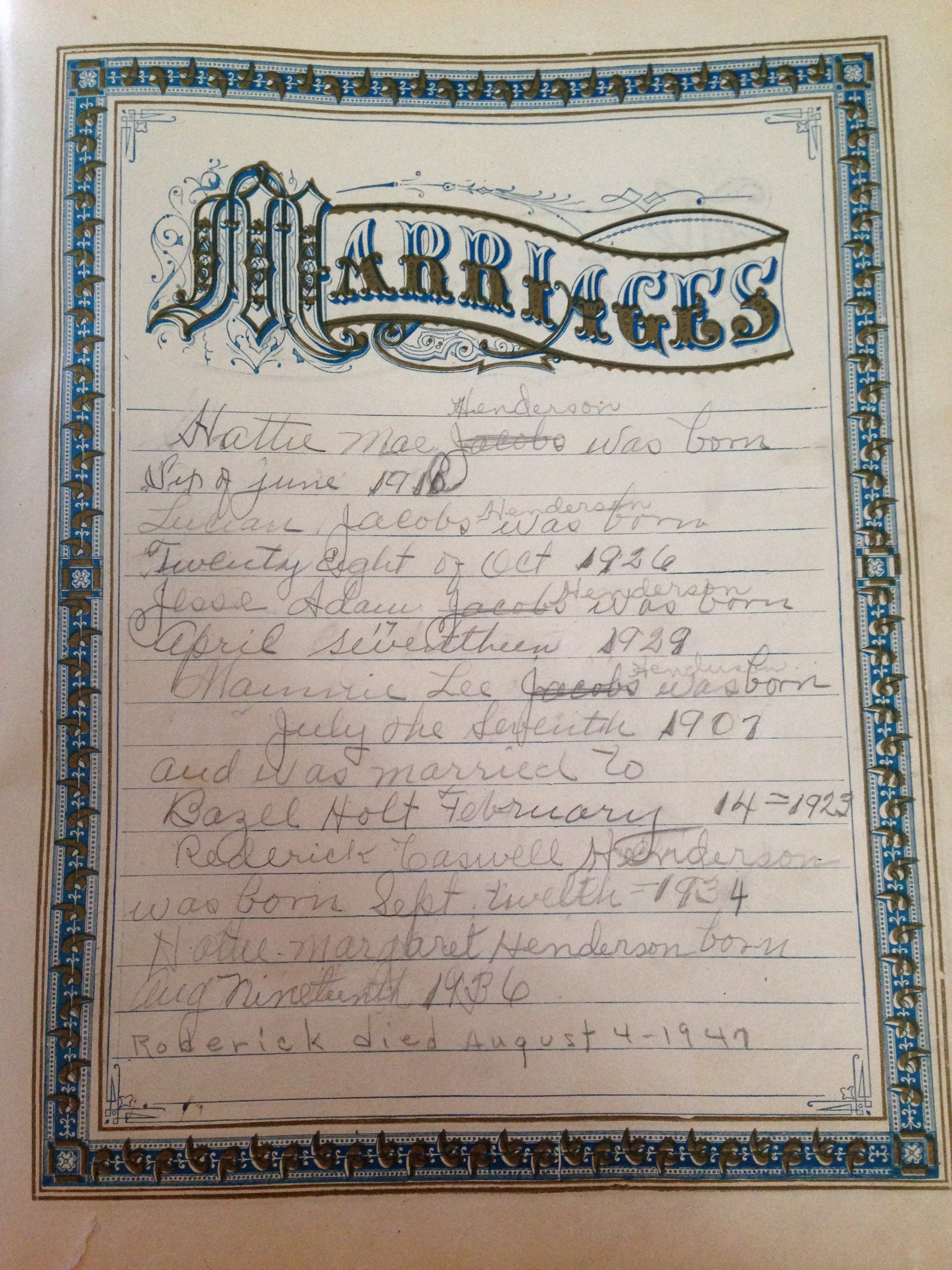
The “Births” page introduces another family. Or maybe families. Gladys O’Kelly is there, and there are two Carolina Vick entries.

The others seem to be members of an extended family I found in the 1880 census of Hillsboro, Orange County, North Carolina: Yunk Strayhorn (45), his wife Patsey (36), son Isaac (18), son-in-law Louis Pitt (25) and daughter Charity Pitt (23), children Rose (24), Jane (17), Henry and Reuben (13), Sandy (23) and Clara (21), and grandchildren Richard (3), Adeline (12) and Margaret (9). (Lewis Pitt married Charity Strayhorn in Edgecombe County in 1872 and moved to Wilson.) Little Gladys O’Kelly? She seems to have been the daughter of Rose Strayhorn’s daughter Gatsey and her husband, Reubin O’Kelly, both of Orange County.
And then there are Madison Perry, son of Carolina Vick’s daughter Cora, who married Isham Perry, and the Shiverses:
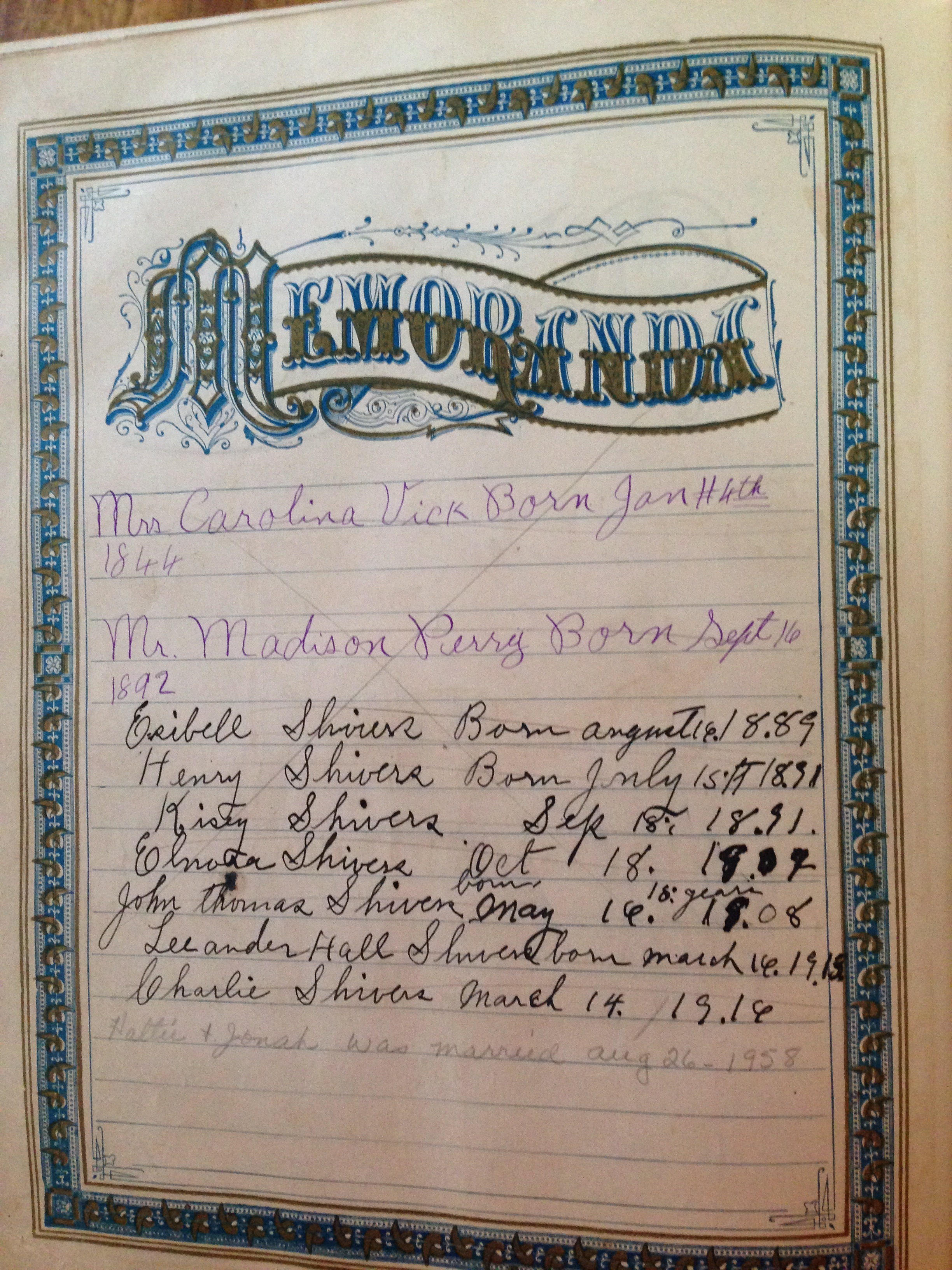
 I’ve been unable to find all the Shiverses, and what I have found doesn’t align cleanly with the dates inscribed here (for example, John and Nicey Shivers, born about 1872 and 1880, are listed in the 1900 census with six-month-old daughter Kizzy), but this appears to be a family that lived in Greenville, Pitt County at the turn of the 20th century.
I don’t hope to be able to reconstruct how this Bible bounced all over eastern North Carolina like this before coming to rest with my family, which has had it nearly 100 years. I share it here in hopes that descendants of the other families who cherished it will find themselves in its pages.
 Scuffalong: Genealogy.