Births Deaths Marriages, Free People of Color, Land, North Carolina, Paternal Kin, Photographs

Family cemeteries, no. 15: Henderson-Aldridge.

There was another Aldridge cemetery, but its whereabouts are only vaguely remembered.  Not far off Highway 117.  A few miles north of Dudley. Robert Aldridge was buried there about 1899 and, presumably his wife Mary Eliza Balkcum Aldridge, too. There they remain, though others who died in that era were disinterred and moved to what is now known as the Henderson-Aldridge cemetery.

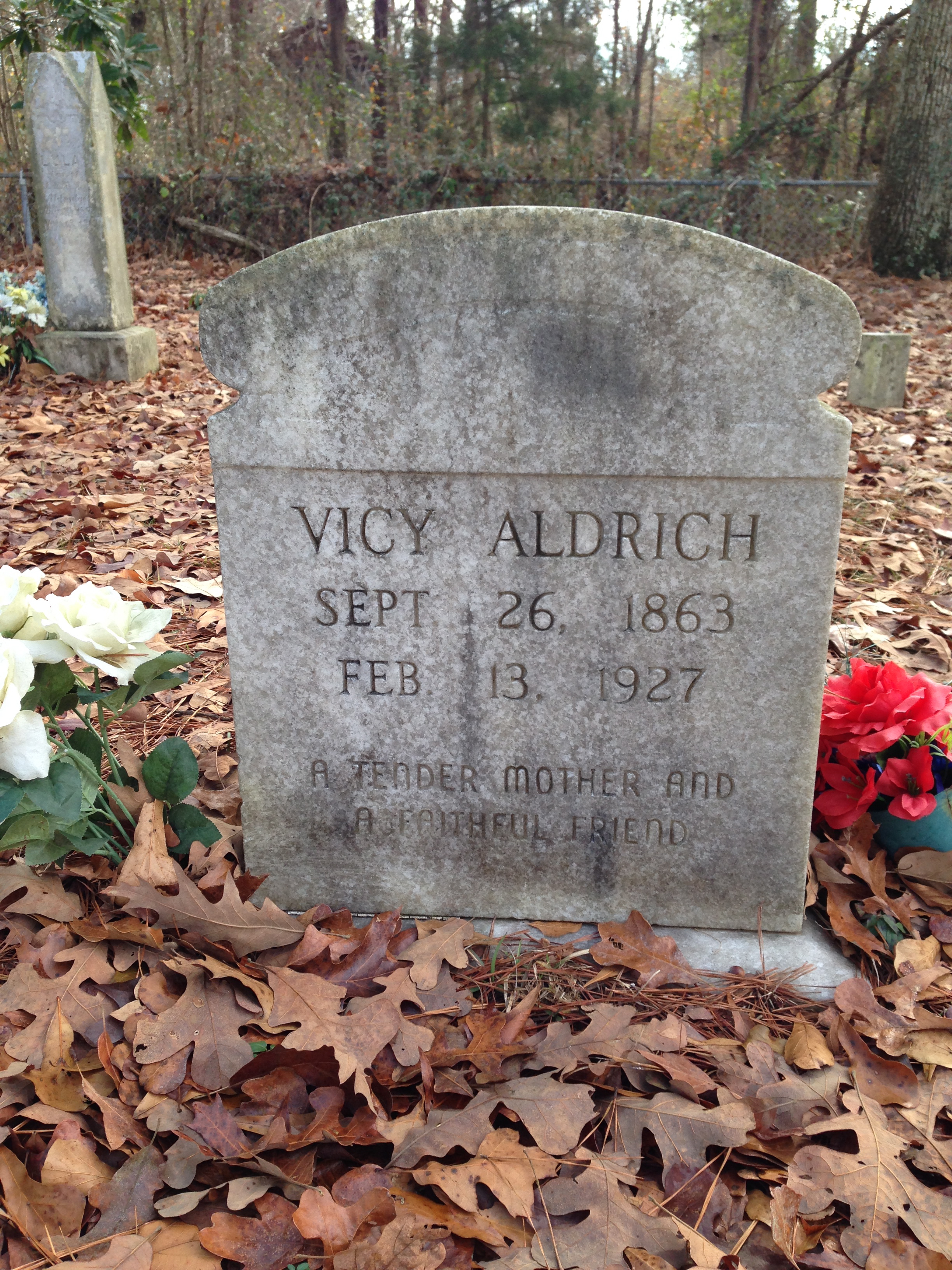
The oldest graves belong to Robert and Eliza’s son John W. Aldrich (1853-1910), his wife Vicey Artis Aldrich (1865-1927), and their daughters Lula Aldridge (1882-1918) and Amanda Aldridge Newsome. [“Aldrich” was the preferred spelling of son J. Thomas Aldrich, who erected the stones.] Most of the other graves belong to descendants of John and Vicey, or of John’s brother Robert Jr. and his offspring.

IMG_4665

IMG_4666

Burials include Catherine Aldridge Davis (1900-2009) and her son George E. Davis (1921-1964); Lenora Henderson (1902-1961) and husband Henry Lee Henderson (1901-1942); Aaron H. Henderson (1922-1943); Horace B. Henderson (1923-1984) and wife Katie Lee Henderson (1924-1963); Hoover Aldridge (1929-1970); Dr. James T. Aldrich (1890-1968) and wife Athalia F. Aldrich; Frances Newsome (1883-1961); Allen Aldridge (1908-1969); Milford Aldridge (1913-1985); Sarah Eliza Aldridge Powell (1918-1998); Paul Aldridge (1913-1947) and wife Lonie Mae Aldridge (1919-1940); Robert Aldridge (1865-1941); Lula Aldridge (1882-1919); Amanda A. Newsome (1892-1918); Bennie R. Aldridge Jr. (1940-2008); and, most recently, Isaiah Len Henderson (1998-2013) and Ross M. Sutton (1935-2013).

Photos by Lisa Y. Henderson, 2013.

Standard
Maternal Kin, North Carolina, Photographs

The reunion.

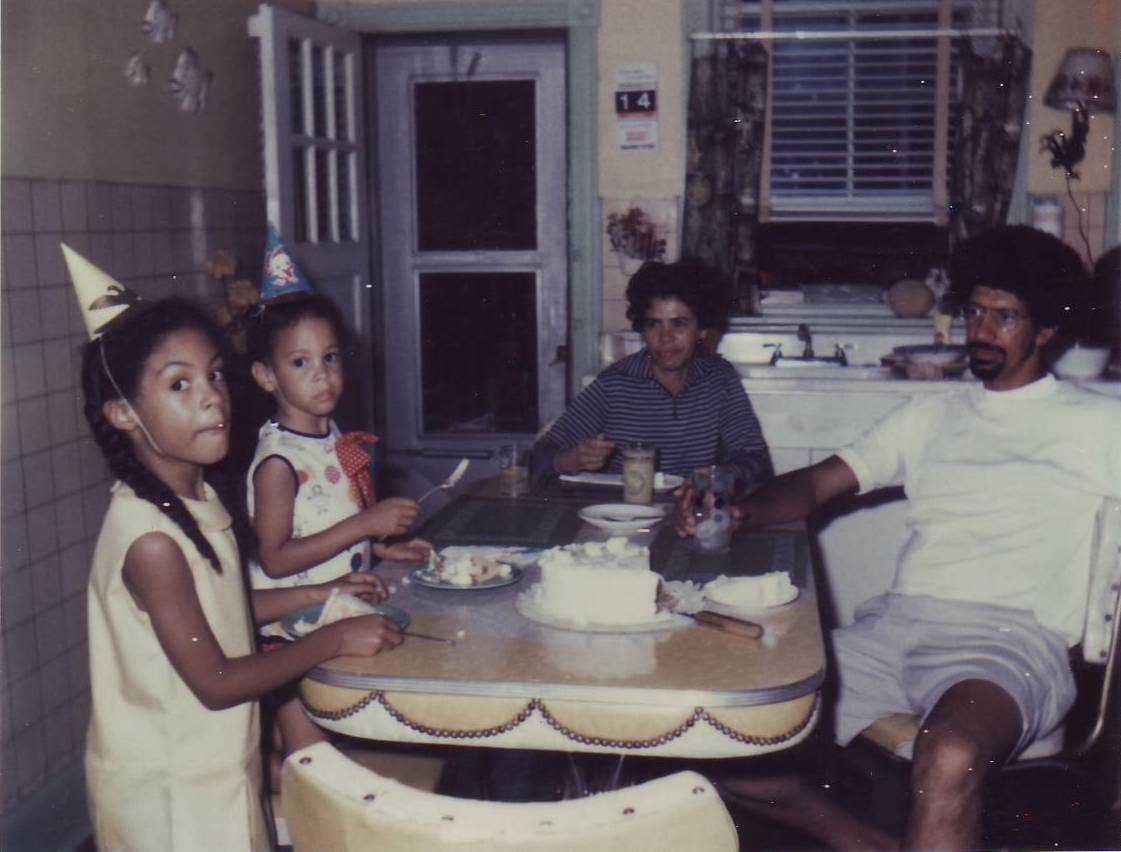
Reunion 1978 01My grandmother and her children: the first reunion.

It was in July. I’m sure of that, but not the actual date. The first Colvert-McNeely family reunion. We gathered in Statesville, of course, where my grandmother Margaret and her sisters Louise and Launie Mae were born and grew up. The reunion called not only their descendants, but those of their older half-sisters, Mattie and Golar, and their maternal McNeely kin. I was 14 that summer and not much interested in anyone more than three or four years older than I. Nor had I been seized with the unquenchable genealogical fervor that would light me up a decade later . So I lounged around the hotel pool and wasted opportunities that year, and subsequent, to winnow every broad hint and slender clue from the ever-waning recollections of my elders. My great-aunt Louise, who lived in Statesville all her life and probably knew the most. My great-great-aunt Min, last of the McNeely siblings. The “other” Colverts, cousins and children of my great-grandfather’s half-sisters — were they even there? I’d been surprised to learn later that some were living in 1978. (They were not much spoken of. Was there a rift?) Who was in Statesville that summer? Whom did I miss?

CM Reunion 1978

The last day. Or maybe the first. My uncle John’s wife Gladys, my mother, my grandmother (in curlers — she would not approve of this post), my uncle John, an unknown man (a Colvert? a McNeely? who?), my mother’s first cousin Donald, my aunt Lynne, my father. Statesville, 1978.


Standard
Births Deaths Marriages, Civil War, Enslaved People, Other Documents, Photographs, Virginia

Has the old fuss died out yet?

Here’s another account of Joseph Holmes‘ murder, presented as a pivot point in the romanticized life of the author’s father:

When Jim Wilkes rode into Raft River Valley in 1870, he had two pasts behind him though he was barely twenty-one. His real name was Griffin Seth Marshall. He had called himself Jim Wilkes only since a spring evening in 1867 when an incident in a Virginia village had sent him into exile as a fugitive from the law.

I heard the story from Mother — I am the daughter of Kate Parke and Griffin Marshall. Father wouldn’t have considered it suitable for a little girl, but Mother had no such qualms. Mother had a strong sense of drama, and for her the story was the thing.

“Your father changed his name,” she told us, “because he got in trouble back home and had to leave the country. He never done anything. No indictment was ever found” — Mother was careful to insert the formal, exonerating phrase — “but he was in a crowd one night with his brother John and this colored man was killed. He’d been a slave of your grandfather’s before the war, so when he was shot they thought the Marshall boys had something to do with it. There were soldiers there, northern soldiers, but your father and his brother got away. They left the country that same night — without even saying goodbye to their mother. That was when they changed their name. That’s History,” Mother would add, as she usually did when she told us a story about the early days. “Do what you will with it.”

The time came when I visited the Virginia village. And I discovered not only that every word of Mother’s account was true, but that the full story was adorned with details and a couple of postscripts that would have delighted her.

THE NAME of the village is Charlotte Court House and it is the seat of Charlotte County. It’s the courthouse, built in 1823, is a handsome building of red brick, with a white portico and four white columns overarched by venerable trees. Before the courthouse on an evening is the spring of 1867 a crowd had gathered to listen to a speech. The speaker was a Negro, who was able to make a speech only because Federal troops were camped in a grove of trees across the street. His name was Jo Holmes. He had been a slave, the butler of Judge Hunter Marshall whose plantation Roxabel was five miles from the village. Now Jo Holmes was not only a free man but also a member of the Virginia legislature. Jo Holmes’ podium was the slave block that still stands at the point where the walk from the courthouse joins the street. According to the local story, he was advocating mixed marriages. He didn’t get very far with his speech. A shot was fired and Jo Holmes fell dead. The bullet, I was told is buried in the front wall of the courthouse.

In the crowd were my father and his older brother John who were home on vacation from Clifton Academy in Fauquier County. John had been in the Confederate cavalry. (Their oldest brother Hunter had been killed in the Civil War — four days after Appomattox.) Griffin, who was only seventeen, had been too young to go to war. With them was cousin David Morton, actually a second or third cousin, and a friend named Fred Beal.

The shot that killed Jo Holmes came from the part of the crows where the four young men were standing. One of the four did fire the shot — then slipped the gun into the hand of a friend who threw it into the creek that runs through the hollow beside the courthouse. The Federals came running, but before they could get to the scene the four boys had made their escape with the help of relatives and friends. They were hidden for several hours in a house in the village. Before dawn they were driven to Pamplin, the nearest station on the Norfolk and Western Railway, and put on a train headed west.

The four fugitives soon parted. A letter from Griffin to his older sister Mary dated May 29,1867 — I got it from the daughter of Father’s sister — shows that he and John had been commended to the care of people named Taylor in country that might be Texas. There is no mention of the other two boys. The letter is written on a piece of stationery embossed in the upper left-hand corner with the head of an Indian and, beneath it, the legend “N.P. Co.”; but there is no place name on the letter and the envelope is missing. It reads as follows:

May 29, 1867

My Dear Sister: You must really excuse me for not writing to you sooner but I have been sick nearly ever since I have been here and the other part of the part of the time I didn’t feel like writing. I haven’t had anything to do at all- we have been waiting for Mr. Taylor’s son to come down here- but he has been sick and is now worse and probably never will be able to come. The old man said that he (his son) could get better situations than anyone else and advised us to wait for him and of course as we are under his care we took his advice and are now waiting to see what is going to turn up. Mr. T. Sr. went up to see about his son yesterday and we are expecting him back every day. Morgan is well and in pretty good spirits, but I am not in good spirits. I am getting tired of doing nothing and paying board.

This is the hardest country I ever saw; there isn’t a tree of any consequence in two hundred miles of this place. One day it is hot as five hundred (this was a simile my father often used) and the next day you can’t wrap up and keep comfortable-now today it is very hot. I wrote to Ma some two or three days ago; tell her to write to me and that often. Has the old fuss died out yet or not? I am very anxious to know the effect that thing produced. I haven’t got anything to write about and I am going to stop. Give my love to Bee Jim and all at Roxobel and regards to all of my friends and write soon to your affectionate Brother

The handwriting is the same that appears in two letters Griffin had written to his mother a few months before from Clifton Academy, but the writer signs himself not “G. S. M.” or “G. S. Marshall” as in the earlier letters but “J.T. Wilkes.” The “Morgan” he refers to can only be his brother John. “I never understood,” said my cousin Sarah when she handed me the worn sheet, “what a letter with that strange signature was doing in Mother’s papers.”

I once asked my father who killed Jo Holmes. He replied only it was not he.

— An American Memoir, Margaret Marshall, originally published in The Hudson Review, volume 24, number 2 (1971).

—–

Gawd.

I could pick at the details of this account — starting with the date of the letter, a full two years before Joseph Holmes was actually killed — but what’s the point? It is so obviously unconcerned with Joe Holmes — “delightful postscripts”? — or his life that accuracy is too much to ask.

This photo is found among literary editor Margaret Marshall’s papers in the Yale Collection of American Literature, Beinecke Rare Book and Manuscript Library, Yale University:

Roxabel Margaret Marshall papers

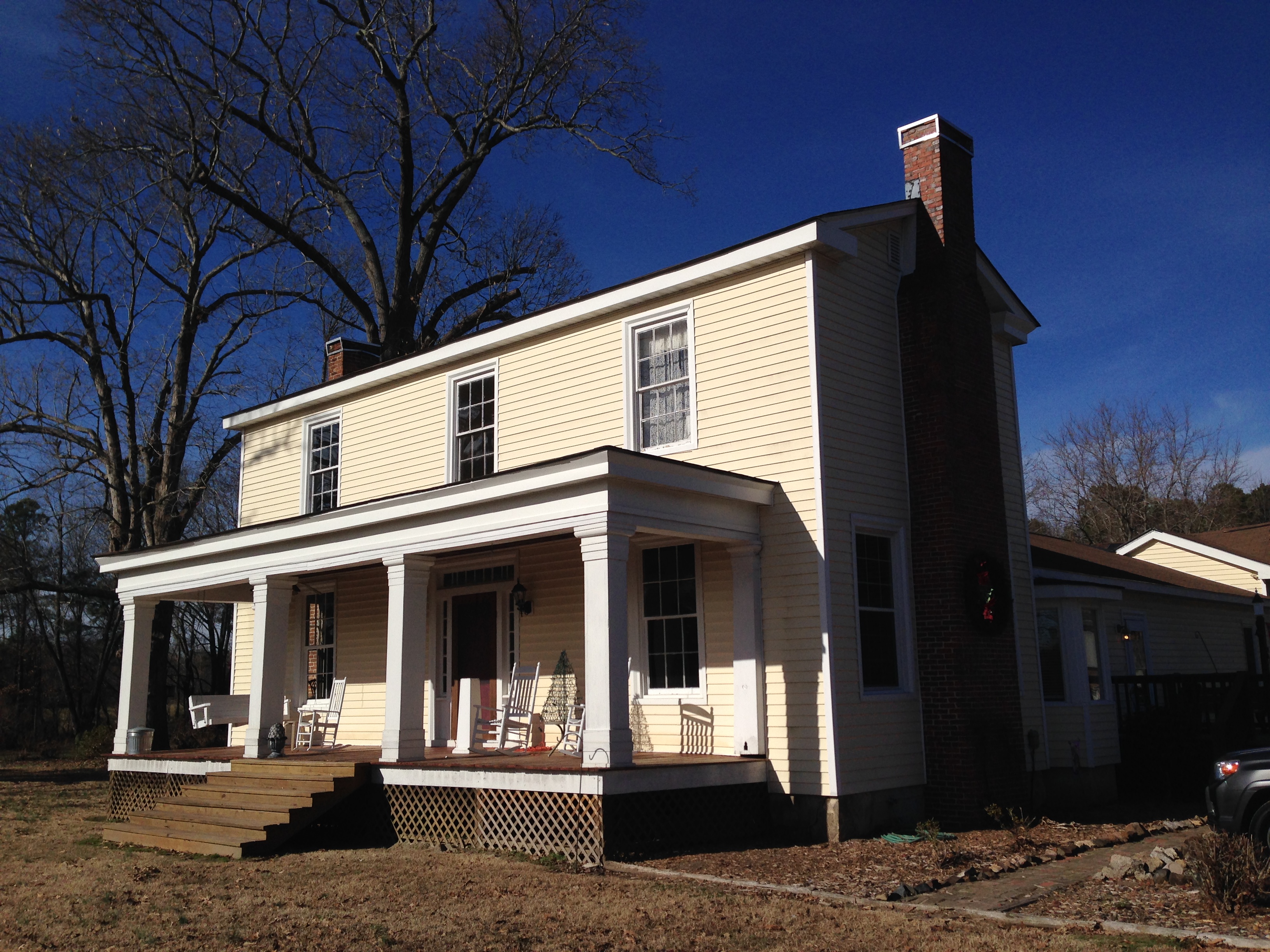
It is labeled “Roxabel.”  This is either a photograph of the back of the house, which has been much modified if it is, or is mislabled. It certainly does not match Marshall’s white portico-and-columns description. (That’s a shed roof porch with posts.) Further, Roxabel is still standing, and I’ve been there. It’s used primarily as the background for tasteless plantation-themed weddings these days, but was mercifully still when I drove up with Kathy Liston, a Charlotte County archeologist-cum-genealogical researcher who opened many a door, literal and figurative, for me in my quest for Jasper and Joseph’s roots. With a wing added long after the Marshalls left, here is Roxabel today:
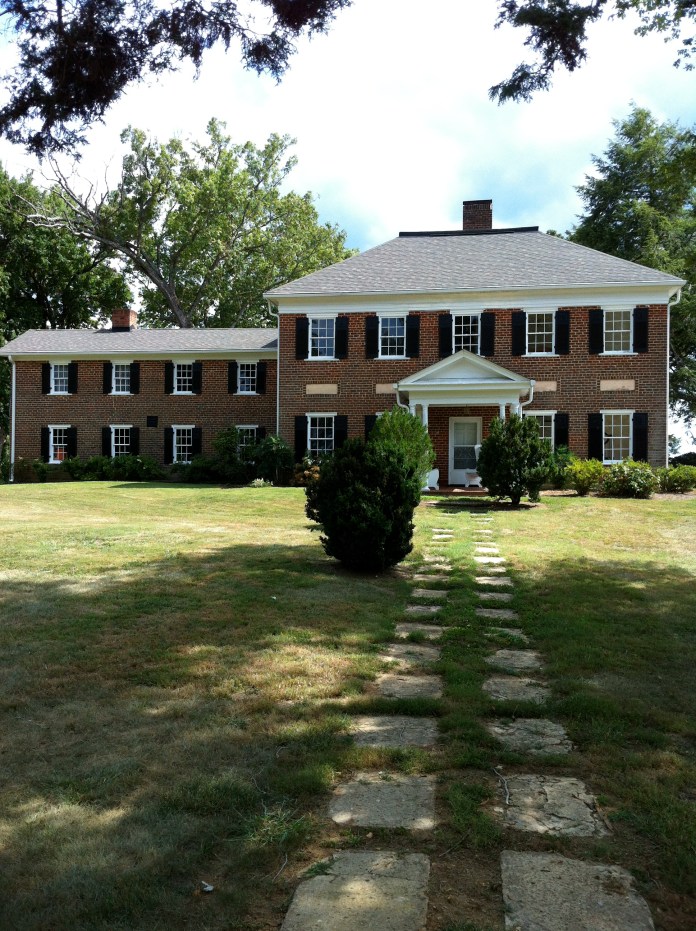
IMG_9982

If Joseph R. Holmes was enslaved here, was his brother Jasper as well? Or had they been separated early, Jasper perhaps sold locally as excess or to settle a debt. I don’t know. But I do know that, emancipated in 1865 and at least free to build a relationship on their terms, the brothers’ bond was sundered forever by a rash pistol shot.

Standard
Enslaved People, Land, North Carolina, Other Documents, Paternal Kin, Photographs

Where we lived: Taylor’s Crossroads.

A plat included among Kinchen Taylor’s estate papers revealed the core of the man’s property.  With little difficulty, I matched waterways shown on one parcel with creeks running in modern Nash County. Fishing Creek forms its northern border with Halifax County, and Beaverdam Swamp flows into it a few miles northwest of the town of Whitakers. The hundreds of acres in the fork of these creeks belonged to Kinchen Taylor. For years I harbored a fantasy of hiring a prop plane to fly over this land while I scoured the ground for brick piers and broken chimneys and heaps of hewn logs and any other traces of Kinchen’s plantation.

Last year, I turned to the practical and learned that the I-house built by Kinchen’s son Kinchen Carter Taylor is not only still standing near Whitakers, but has been renovated and is occupied. After some sleuthing, I contacted the current resident, B.B., told him my interest in the place, and asked if I might be able to visit.  His response was quick and unequivocal: “Anytime.”

On disgracefully short notice, I emailed B.B. just before I went home last December. Would he have some time to show me around over the holidays? We made tentative plans for after Christmas and firmed them up a few days later. B.B. had to leave town for work, but his wife A. was more than happy to give me a tour.

On a sunny Saturday, I pointed my car north on US 301 and drove 40 minutes up to Whitakers. In the middle of town, I made a left and headed out Bellamy Mill Road toward Taylor’s Crossroads. Here’s the area on a 1918 map of Nash County:

Taylors XRoads

(A) marks the location of the largest chunk of Kinchen Taylor’s property at the fork of Fishing Creek and Beaverdam Swamp. (At some point the confluence was dammed to create Gum Lake shown above.) (B) is where Kinchen C. Taylor built his house, probably in the 1850s, on land inherited from his father called the Duncan Cain tract.

Taylors lived on the land well into the 20th century. In the 1980s, B.B.’s parents bought the house and surrounding acreage and set about repairing and renovating the abandoned dwelling, which looked like this:

IMG_4804

As set forth in Richard L. Mattson’s The History and Architecture of Nash County, North Carolina, “[t]his Greek Revival house symbolizes the role of the Taylor family in the early settlement of the Whitakers vicinity. It was built in the 1850s, probably by Kinchen Carter Taylor, whose father (also Kinchen Taylor) may have occupied a house (demolished) across the road. … Though deteriorating, this house remains one of Nash’s finest examples of the vernacular Greek Revival. The facade includes such notable features as end chimneys with tumbled-brick shoulders, moulded gable returns, and heavy square porch columns with simple square capitals. The central-hall plan is entered through original double doors framed by sidelights and transom. The rear kitchen ell, which may have been moved up to the house at a later date, includes an engaged porch, close eaves, and a nine-over-six windows. … The house stands at the northwest corner of Taylor’s Crossroads. Located well back from the road and shaded by a cluster of oak trees, the Kinchen Carter Taylor House still evokes the image of the plantation seat it once was.”

A.B. warmly welcomed me when I pulled up beside the house. She graciously shared not only the photo above, but a map drawn by Kinchen C. Taylor’s nearly 100 year-old grandson that showed the locations of surrounding outbuildings, groves and pastures. Where possible, the character of the original house has been preserved in its interior, and I could not help but wonder if my Taylors, Green and Fereby, who had belonged to Kinchen C.’s father, had ever walked where I did. Even if not, they surely knew this house and were intimately familiar with its inhabitants.

IMG_4813

Many thanks to Mark Bunn for alerting me that this house is still standing and putting me in touch with its owners and to them for opening their doors to give me a glimpse of my family’s world.

Standard
Free People of Color, North Carolina, Oral History, Paternal Kin, Photographs

Collateral Kin: the Carters.

One of the most rewarding results of my decades of genealogical sleuthing has been the development of a deep connection with many of my Carter cousins, descendants of Milford and Beulah Aldridge Carter. My grandmother talked often of the Carter family, to which she was connected both via the Aldridges and “Papa” Jesse Jacobs, who was Milford Carter’s uncle.

The Carters looked ‘bout like white folks. I didn’t really know all of  ‘em. I think it was nine of them boys. The three I knew was Milford and Johnnie and Harold, I think. They used to come to Wilson, but the older one [Willoughby] didn’t come up. But Milford, Harold — the two youngest ones come over and stayed with Annie Bell [Jacobs Gay, Papa’s daughter.] Johnnie – and Freddie, too.   When I’d go to Uncle Lucian’s, they lived not too far from there. But I never went to their house. I think Harold was the youngest one. ‘Cause that’s the one came to Wilson, and Albert, Annie Bell’s husband, got him a job down to the station driving a cab. And he got his own car, and he was down there for a long time. Harold. He’s the youngest one. Carter. All of them was great big.

There were indeed nine Carter brothers — Willoughby (1880), Ammie (1881), Freddie (1890), Milford (1893), Granger (1895), Lippman (1898), John Wesley (1899), Harold (1903) and Richard (1906) — plus a sister Florence (1887). (Florence’s son William Homer Camp Jr. married Onra L. Henderson, Beulah A. Carter’s niece and my grandmother’s double cousin.) The brothers were born in Sampson and Wayne Counties to Archie Marshall (or Marshall Archie) Carter and Margaret Frances Jacobs, sister of Jesse A. Jacobs Jr. Marshall Carter (1860-1926) was the son of William and Mary Cox Carter of Sampson County. (My grandmother also spoke of Marshall’s sister, Virginia Ann “Annie” Carter, who married Hardy Cox and was a close friend of “Mama” Sarah Henderson Jacobs Silver.) William Cox (1833- ca. 1875) was the son of Michael Carter (ca. 1805-ca. 1875) and his wife, Patience.

As attached as Papa was to my grandmother, he did not take her with him on visits home to Dudley, very likely in deference to the feelings of his nephew’s wife Beulah, who had little use for the child her brother Tom fathered out of wedlock.

When Papa was living, he used to go to Dudley down there to the mill where they ground corn and all down there.   They’d carry him around down there on horse and buggy, wagon, whatever it was. He was their uncle. Their mama’s brother. He’d go there every once in a while. But he didn’t never say nothing ‘bout taking me down there with him. I guess ‘cause Beulah, Milford’s wife, was my daddy’s sister, but she was kind of cool toward me. And he know he wasn’t gon carry Mamie.  So we didn’t never get to go down there with him. 

Early in their marriage, Beulah and Milford Carter lived in Wilson in a small house on Green Street whose yard touched those of Milford’s uncle and first cousin Annie Bell. The Carters’ second child, son Dewey Belvin, who died before his second birthday, was born during their short stay there.

Beulah stayed in Cora Miller’s house there on Green Street. A little house down there ‘cross from where we were staying, first house behind the church, near ‘bout on the corner there. And she and Milford were there.

After a few years shifting between Wayne to Duplin Counties, Milford moved his family north to Coatesville, Pennsylvania, and then New York City — first Brooklyn, then Queens — where he pursued a long career as a chef.

OLYMPUS DIGITAL CAMERA

Milford E. Carter, during his time as a chef at H. Hicks & Son, 30 West 57th Street, New York City.

Freddie, Freddie was the one that went to Atlanta for a year and day. Moonshine. And Johnnie was fat. And rosy. Like, you know, like if somebody say like, seeing a baby and say that it was “oh so fat, look like you pinch they cheek the blood pop out?” And just fair, and just that red look.

Johnnie Carter was also the brother that cared for my grandmother’s great-uncle, J. Lucian Henderson, and his wife Susan Henderson in their final infirmity. In June 1934, John W. Carter was named administrator and sole legatee of Lucian’s estate. Johnnie and his family lived near Lucian just west of Dudley, but I am not sure of the genesis of their close relationship.

The Carter boys was always nice. They come up here, come to stay with Annie Bell, Papa’s youngest daughter. They wasn’t here at the same time. They was driving cabs. So they used to come over all the time. I went with Harold down to Dudley once ‘cause he was going and coming back that same day. See, Uncle Lucian was sick, so I went down with him and come back.

1780668_10151973289313527_579699652_n

1911665_10151973293123527_1534360898_n

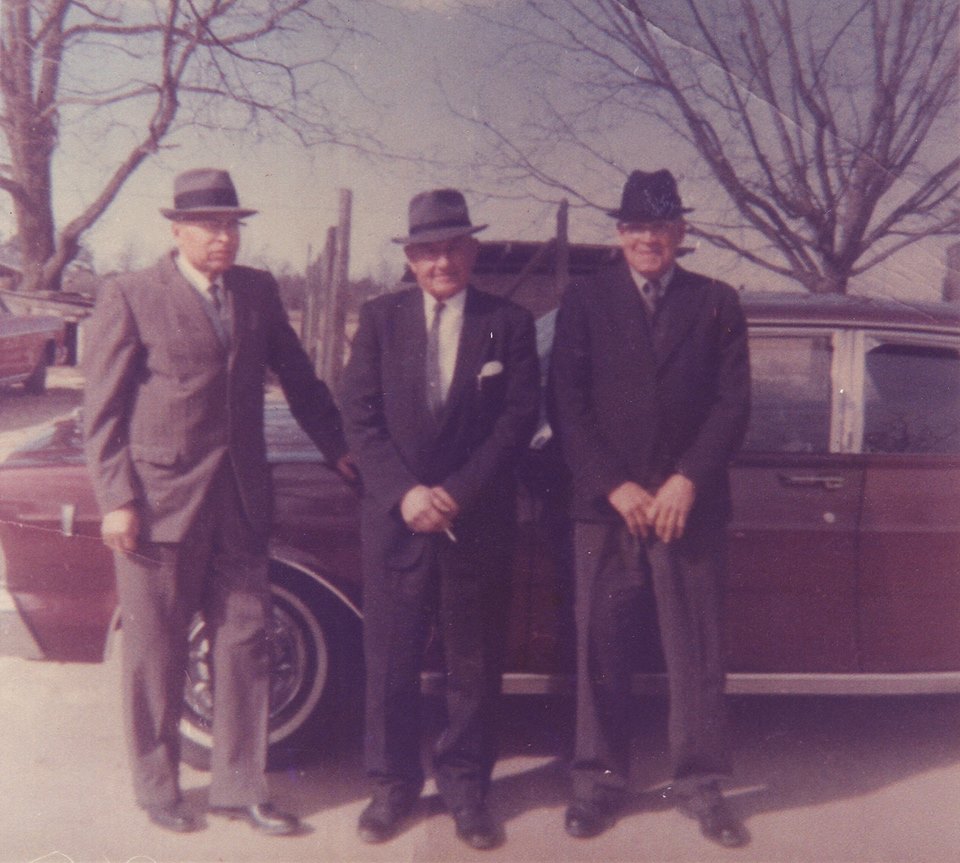
Top: John, Ammie, Wesley (a cousin), Richard, Granger, Richard Jr. and Harold Carter; bottom: Milford, John and Harold Carter; both 1955. Copies of photos courtesy of Dorothy Carter Blackman and Daniel M. Carter.

Interview of Hattie H. Ricks by Lisa Y. Henderson; all rights reserved.

Standard
Births Deaths Marriages, Maternal Kin, Photographs

Family cemeteries, no. 14: Pleasant Shade.

Cardinal direction can be difficult to gauge on a peninsula, but you leave my late grandmother’s house in Newport News headed west (I think) on 35th Street. After a couple of blocks, you’ll cross Chestnut Avenue, and the street becomes Shell Road. You are now in Hampton, and a cemetery is on your left. Don’t turn at the entry to the first part — that’s white. Go down a little further to the second — Pleasant Shade.

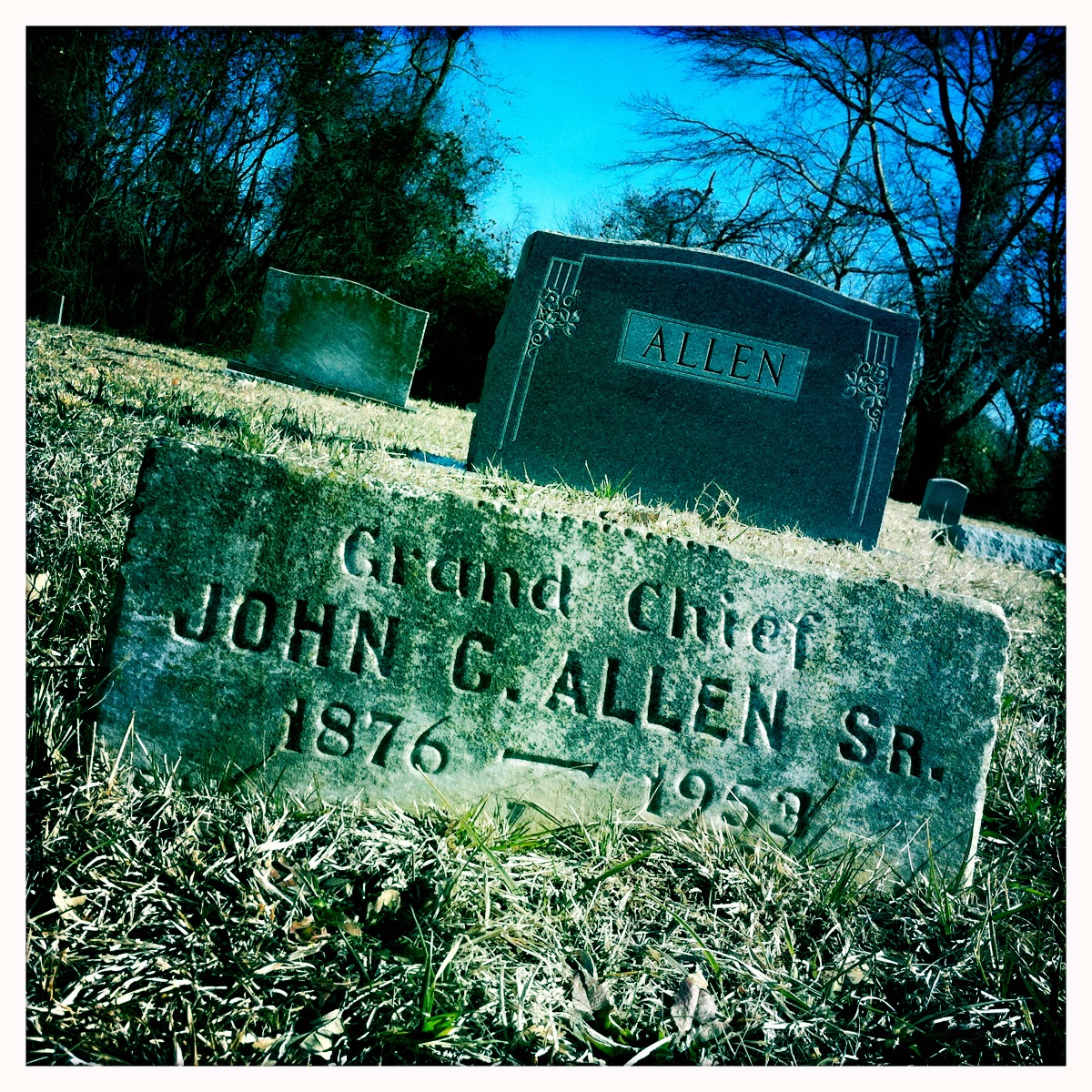
Pleasant Shade is, according to founder James East’s headstone, “the first cemetery to be operated and controlled by colored people in Tidewater Va.” My mother’s parents, John C. Allen jr. and Margaret Colvert Allen; her paternal grandparents, John C. Allen Sr. and Mary Holmes Allen; and her aunt Marion Allen Lomans are buried there.

I have never seen it looking wild (though it often feels desolate), but Pleasant Shade’s condition warranted the formation in 2011 of a restoration group. Its website mentions my great-grandfather John C. Allen Sr. among notable burials. Even had it not, I obviously need to contribute.

IMG_1275

IMG_1286

Photos by Lisa Y. Henderson, February 2011.

Standard
Business, Civil War, Enslaved People, Land, Maternal Kin, Newspaper Articles, North Carolina, Photographs

Eagle Mills.

An abstract from Heritage of Iredell County, Vol. I (1980) —

In 1846, peddlar Andrew Baggerly bought the old Francis Barnard mill tract on Hunting Creek in north Iredell County.  In 1849, he placed an ad in Salisbury’s Carolina Watchman: “Capital Wanted And If Not Obtained Then Valuable Property For Sale.”  He described the property as “the most valuable water power in the Southern Country … situated on Hunting Creek in Iredell County, twenty-eight miles west of Salisbury … [on] a never-failing stream, … remarkable for its purity, … [and] adapted to the manufacture of paper, to calico printing, to bleaching etc.”  Baggerly noted that there was a dam in place, an active sawmill, a grist mill soon to open, and a factory building about half-finished.

On 2 Mar 1850, Baggerly, James E.S. Morrison, William T. Gaither, William R. Feimster, William I. Colvert, G. Gaither Sr. and Andrew Morrison filed a deed for a 318 1/4-acre tract called the Eagle Mills place.  By 1852, the factory was operating with William I. Colvert as its agent.  It had 700 spindles and 12 looms and employed an overseer and 22 workers, 20 of whom were women. By 1854 the adjacent former Inscore Mill had been added to the works, and Baggerly claimed the “intrinsic and speculative value” of the complex was $2,700,000.  

In 1855, Baggerly advertised in Charlotte’s North Carolina Whig and in the Carolina Watchman, calling the complex “Eagle City, the Great Point of Attraction, Destined to be the great center of manufacturing interests in Western North Carolina and perhaps the United States.”  He deeded the president and Congress of the United States a ten-acre block in Eagle City called Eagle Square, located on Market Street.  

After Baggerly was forced to liquidate his assets during the Panic of 1857, William Colvert became the owner of his interest in Eagle Mills.  “According to tradition there was a tobacco factory, hotel, oil mill, and general store at Eagle Mills in addition to the grist mill and cotton factory.  A number of homes stood in the horseshoe bend above the mills and a church was eventually constructed on the edge of the settlement.”

In the spring of 1865, Stoneman’s raiders came upon Eagle Mills unexpectedly and burned it to the ground.  The mills were rebuilt, but Eagle Mills never recovered its former prosperity.  The cotton factory and grist mill operated until destroyed by fire in April 1894.  At that time, William I. Colvert, Robert S. Colvert, and James E.S. Morrison were the owners.  

The only remains at the site are gravestones in the church cemetery, traces of the main road to the mill, the grist mill’s foundation stones, and, a short distance upstream, remains of the stone supports where a covered bridge crossed the creek.

——

Sville_Record_and_Landmark_4_19_1894_Eagle_Mills

Statesville Record & Landmark, 19 April 1894.

——

When William I. Colvert took charge of Eagle Mills in 1852, my great-grandfather Walker Colvert was in his early 30s and father of a one year-old boy, John Walker Colvert. I don’t know exactly what kind of work Walker did for W.I., but they had grown up together, and Walker was an entrusted slave. Even if his primary labors were not at the cotton factory complex, I am certain that he spent considerable time in and around his master’s largest investment. So, too, would John Walker, who remained with W.I. after Emancipation. He is listed in W.I.’s household in the 1870 and 1880 censuses, and I suspect he stayed at Eagle Mills until the final fire closed down the works.

On a rainy December morning I cruised the backroads of northern Iredell County, drinking in the landscape that was home to my Colverts and Nicholsons for much of the 19th century. I made a left onto Eagle Mills Road, headed north. A sharp bend in the road and there, a bridge over Hunting Creek. I pulled over and, ignoring a No Trespassing sign, clambered down to the sandy bank. The waterway is too shallow and rocky to have been paddled or poled, but I imagine that Walker and John Walker knew its course very well. Hunting Creek powered Eagle Mills and was a direct link between W.I. Colvert’s lands and those of Thomas A. Nicholson, whose son James Lee married W.I.’s daughter and whose granddaughter, Harriet Nicholson, gave birth to John Walker Colvert’s first child.

IMG_4618

Photograph by Lisa Y. Henderson, December 2013.

Standard
North Carolina, Paternal Kin, Photographs

Ann Elizabeth?

My cousin L.E. sent me this photo a few days ago and asked if I could identify the woman depicted.

Unknown Portrait Musgrave

There are many possibilities, but here is my best guess:

I’d say the portrait dates from the 1880s to about 1900. It’s either a charcoal drawing or, more likely, a charcoal-enhanced photograph. I believe it to be a portrait of Ann Elizabeth Henderson Simmons, my cousin’s great-grandmother, and sister of my great-great-grandmother Loudie Henderson. Ann Elizabeth was born in 1862 and died in 1900, which matches the portrait’s time frame. The woman appears to be in her 20s, which approximates Ann Elizabeth’s age at the early end of the portrait’s range. Ann E. died young, as did her daughter Annie C. “Dollie” Simmons Musgrave, and it makes sense that her photograph would have passed to Yancy Oliver Musgrave Jr. (1913-1988), the oldest of Dollie’s children.

It is possible, of course, that the image depicts a relative of Oliver’s from a different line, but this seems unlikely.  His grandfather Hillary B. Simmons had two older sisters, but their ages do not match well with the portrait. However, Polly Ann King Musgrave (1855-1935), Oliver’s paternal grandmother, is a possibility, and I have no real basis for eliminating her.

I have photos of two of Ann Elizabeth’s sisters, Sarah Henderson Jacobs Silver and Carrie Henderson Boseman Grantham. Neither especially looks like the woman this photo, though they don’t favor one another either. Still, I have one very small additional basis for claiming this woman as a Henderson — the hint of protrusion in the lower lip. My grandmother had it and my father does, and so do some of their cousins. For now, I’ll regard this solemn lovely as my great-great-great-aunt.

My thanks to L.E. for sharing a copy of this photograph.


Standard
Births Deaths Marriages, North Carolina, Oral History, Paternal Kin, Photographs

Mother Dear remembers.

The last time I saw my grandmother was on her 90th birthday. It was a bittersweet visit to Philadelphia that I talked about here. In happier times, though, I spent hours recording her recollections, especially those of her childhood. This is one of my favorite stories:

Papa told me to go in the house, and ask ‘em for some water, a pitcher. Talking ‘bout my daddy wanted some water. And the first time I ever seen a grapefruit was there. I said I’d never forget that. ‘Cause I went in that house and asked for some water, and I said “Daddy said” – I called him Papa. Anyway, he wanted to know if he could have some water. And the lady [school superintendent Charles L. Coon’s wife] said, “Yeah,” and she got a pitcher and a glass. And I took it on out there. So Papa stopped and drinked him some water, and I was just standing there while they was fixing the water, and I looked on that table, and all ‘round the table there by the plate they had a salt cellar and half a grapefruit and a cherry sitting in the middle. And that thing just looked so pretty, looked so good. And I said, “Unh, that’s a BIG orange!” I said, “Well, next time I go to the store I’m gon get me one, too.” And sho’ nuff, I asked Papa, when we left – I don’t remember whether it was, it wont that particular time, but we come out, and were on our way to Edmundson’s store, and he wanted me to go in and get a plug of tobacco. Part of a plug. And tell Old Man Edmundson to put it on the bill. So he waited, he was out there on a wagon, he had a little horse, and I went in and told Mr. Edmundson Papa wanted a, whatever amount it was, he didn’t get a whole plug, ‘cause I think it was three or four sections to a plug of tobacco, and for him to put it on the bill, and I said, “He said I could have a orange. And put that on the bill.” And it was boxes sitting up – I’ll never forget it – the boxes sitting up with all the oranges sitting up in there. And I got the biggest one out of the group. The one that wasn’t even orange. I made sure I was gon get me a big orange! I got that and come on back out there and got on the wagon and coming from Five Points to almost home, I was peeling that thing and peeling it ‘til I got it off, and it was SOUR, “Ugh, that’s a sour orange!” I never SEEN a orange that sour. From then on I didn’t want no big orange. And I never even said nothing ‘bout it. And I said, “Now, that didn’t look like, that’s a light-complected, yellow,” it’s not a dark orange, like a orange, and it was so big. And now I always get little oranges. TODAY. I don’t buy no big orange. ‘Cause the little ones is sweeter than the big ones. But, honey, that was a GRAPEFRUIT, and that was the first I’d ever known it was a grapefruit. We ain’t never had no grapefruit. And so, I told Mama that was a, ugh, sour orange. And I told her ‘bout what the Coons had on there when I went up there. And she said, “Well, that was a grapefruit.” “A grapefruit?” I said, “Well, what’s a grapefruit?” And she said, “It’s like a big orange. But you have to put sugar on it most time. It’s a little sour. It’s got a little twang to it.” She said, “But your daddy didn’t never like none, so I don’t care that much about it.” And I said, “A grapefruit? I got myself a grapefruit.” But, anyway, it was sour, but I learned the taste, you put a little sugar on it, makes a little bit sweeter. I swear, Lord, I think about those things that I did when I was little.

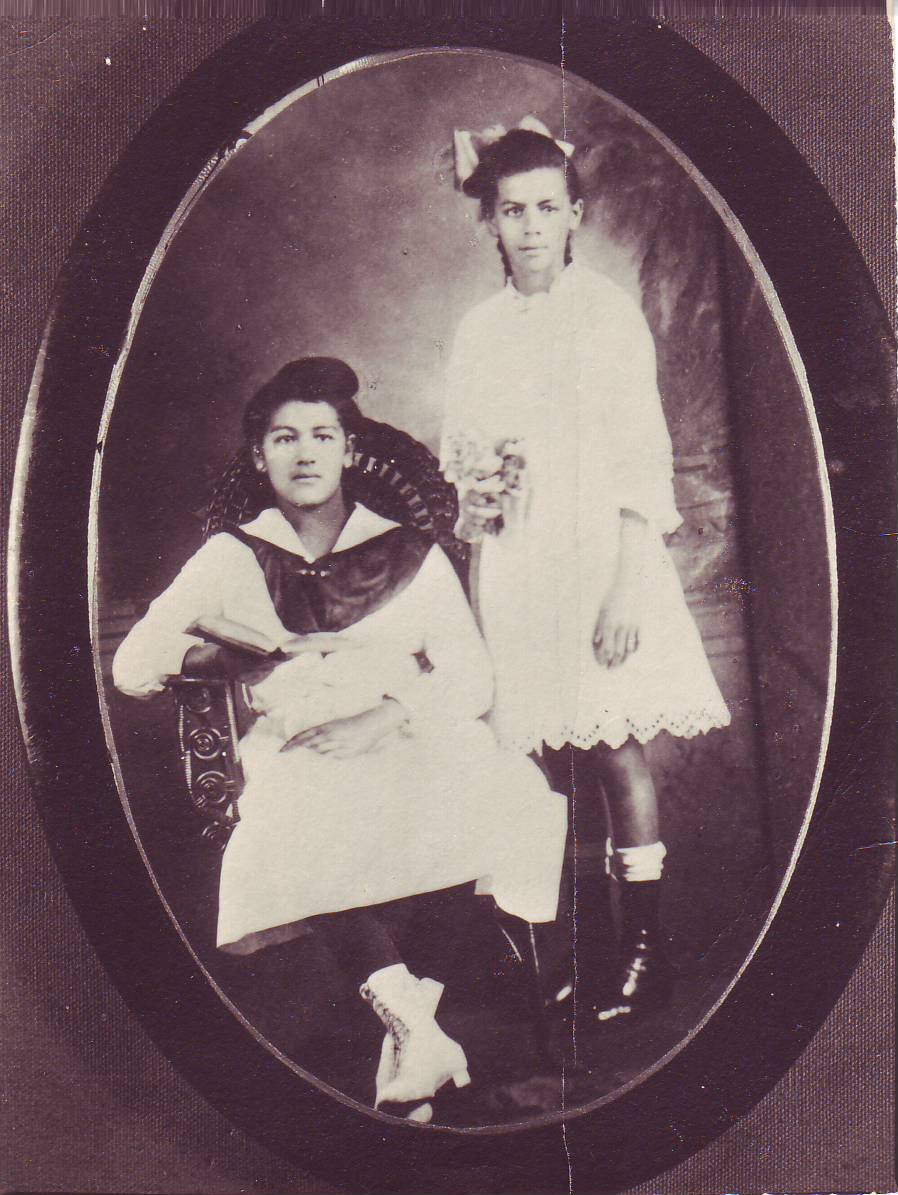
And here’s the only photo of her, little. She was about 10 years old, and her sister Mamie was 13:

Image

Mama made our little skirts and gathered skirts and blouses and every kind of thing, and sometimes Papa might buy one. But she measured your arms, see ‘bout what the sleeve is. I said, Lord, I’m glad them days gone. ‘Cause you couldn’t do nothing to suit … I don’t know, you couldn’t do nothing to suit the older people in them days, ‘cause they, what you ask, you didn’t have but so much, and every once in a while when you get a new piece of change, and you’d get something and you was glad ‘cause it was new, but not ‘cause it was fitting.   And that picture where me and Mamie, Mamie was sitting in the chair and I was standing up by it with that white dress on. Mamie sitting in the chair with her feet crossed …. Well, she had on a middy blouse, dress. It was all, it had a collar on it where had the tape running down there with the square collar and [inaudible]. And Mama made me that dress I had on out of her petticoat! She had, she used to sew a bit, and at that time embroidery wide pieces of cloth that come up, and the bottom part be all embroideried and scalloped all the way around there. Well, that dress I had on had all that scallop on there where Mama took her – she was wearing them hip underskirts, and where she was gathered up here, that had a band on it under there, and then this here was the whole yoke from halfway up to make this part, and she took that part and made me a dress.

Remembering my Mother Dear, Hattie Mae Henderson Ricks (6 June 1910-15 January 2001.)

——

Interview of Hattie H. Ricks by Lisa Y. Henderson; all rights reserved. Photos from collection of Lisa Y. Henderson.

Standard