About ten years ago, when we were all in Newport News for a family reunion, I asked my uncle to take us on a tour of houses our grandfather built.
——
He designed every house he built. And there were a couple he designed that he didn’t build. I’ll show you those, too. One of them, he really hated to lose. That was a, Dr. Woodard was a dentist. I mean, a pharmacist. And so, he – that was one of the lots that Daddy had sold, and so I think Daddy was a little ticked with the guy. He sold him the lot and designed the house, then the man went to another contractor. But you know what was interesting at that time? There were about five or six good general contractors around, you know, that did small buildings. And Daddy was one of those, but these guys were pretty competitive. They had a decent market. Daddy built an average of about a house a year, I guess. The war cut him off, you know. He had to get reestablished after the war. But he had a friend named Buster Reynolds. And Buster Reynolds was reputed to have made his money in the numbers, and so when the numbers were getting real hot and heavy, when it was reputed that the Mafia was trying to take the numbers over, Buster got out. And he built this service station, and he had a Texaco franchise, and he had Daddy to build the station. And Texaco liked the work so much that Daddy built two more stations for Texaco. And both of the stations that were built in the black community are still up. They’re not gas stations anymore, but the buildings are still up. And the one that was built Overtown is gone. But even the station that was in the white community Texaco had him to build that one, too. And with the money Daddy bought – I’ll never forget – he bought an International truck, great big truck, to carry his materials around.

——
… the churches that he used to do expansions and modernizations on all the time, but I know one of ‘em is gone, and I don’t know where the other one is. I know the one – he used to take me down to that one from time to time. But I don’t know where they are now. The thing he did throughout all of these communities – he had a strong maintenance clientele, but Daddy was a – you see these cabinet shops now? Well, Daddy used to make, put in new cabinet work in people’s kitchens for them. And, so, that’s what carried him through the winter. ‘Cause he would also do designs and drawings for other contractors. Like Jimmy’s daddy. Mr. Scott. He used to do most of their design work, he’d sit there and draw those drawings for them. But that’s what got him through the winter. That and he used to do a lot of maintenance. Put in new windows, cabinet work, doors. Put little small additions to houses. But that was generally for a white clientele. He used to do a lot of work for the shipyard management people up in North Huntington Heights.
——
This house Daddy was building when he died. He was building it for a family named Kramer. A white family. See the one with the little entrance and the white wrought iron?

1316 – 22nd Street
——
The 800 block of Hampton Avenue, this is where Daddy owned those lots. Slow down … this house right here. This tan house. 855. This house was built at that time for the Tynes family, which owned a very nice house and property up in the next block.

855 Hampton Avenue
But the Tynes family ran into some – I guess it was financial difficulty. Anyway, that house was sold to Wendell Walker, who was a lawyer and a part of the Walker family. You know his father was a lawyer, who was William. And his son William jr. is Howard Walker’s father, who was my classmate. And then there were, like, four sons and a daughter, I believe it was. Three of ‘em were lawyers, and then Wendell and Phillip were lawyers. The son William was an engineer, but when he came back home, he was manager of Aberdeen. He went into real estate and insurance. Daddy sold him the lot, designed and built the house.
——
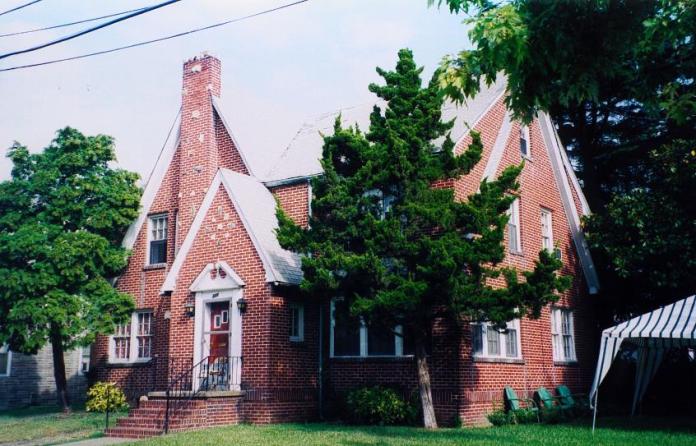
819 Hampton Avenue
Let me tell you about this house right here. This house was the undoing. This house was built for his friend Leroy Ridley. And there were, I think, four lots – four or three lots. Leroy Ridley was the son of John Ridley, who founded Crown Savings Bank with Pa Pa Allen. Okay? But he became – one of the Ridley sons, he became the one who took over the bank. And the man turned out to be not the most moral and forthright businessman. He talked into Daddy into $5000 worth of extras in this house, which was almost the same size as the house. And then when it came time to close the deal, he refused to pay Daddy because he said Daddy had not duly executed the extensions in the contract to do that. And not only that – Daddy had borrowed money from his bank. The long and short of the story is the last of that was paid when Pa Pa’s estate was executed [in 1961, 13 years after John Allen’s death.] We told Mother to pay that loan off ‘cause she still owed a thousand dollars. But this house turned out to be what kept Daddy from building Mama her house. ‘Cause he was gon build it on another lot. See? But when he got caught in that deal, then he couldn’t. So then he had to sell off all the lots that he had for houses, okay? So that’s when he sold this lot – the Woodard lot. And designed that house for Dr. Woodard.
Me: This incredible – this house right here?
My uncle: Yes. That’s Daddy’s design.
My cousin, J: Wow!
Me: Sheeze. Oh, my God.
He did not do it. He designed it. Okay. See, this was an extra lot. This is another one of the large lots he had. You see what I’m saying? And this house was across the street, that was his pride and joy. That was a Cape Cod. But I’m saying, the Ridley house was a fantastic house. I mean, you know, the design was great, but anyway, so this was done for his buddy Picott. Mr. Picott. He was president — well, he wasn’t president – yes, well, he was, of Virginia Education Association, which was the black unit of the National Education Association. He was one of the guys who lost their jobs over the equal rights fight with Mr. Palmer for black teachers to have equal pay. And he left and moved to Richmond, and that’s when he sold his house. But that was a beautiful home. Solid oak floors, cabinetry that Daddy built. All of that, that house. But that’s the thing that – she won’t talk about it too much – but that’s the thing that really embittered Mother, was when she lost the opportunity to build her house because of that deal.

816 Hampton Avenue
——
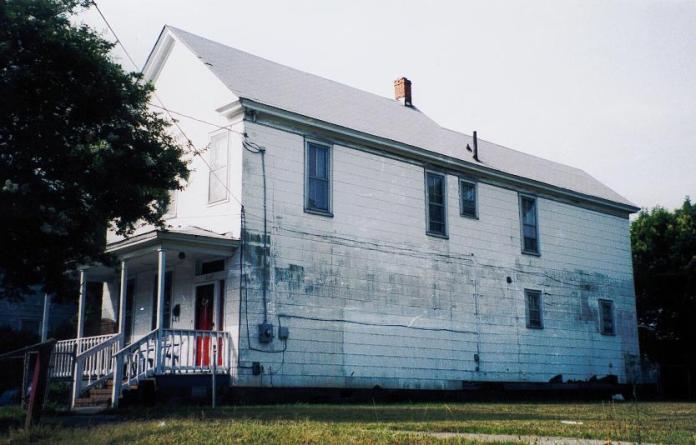
2107 Marshall Avenue, my great-grandparents’ house.
You know, he did all that for his father. He put the addition – designed that addition to go on the back. Right behind the bathroom window. Okay, that’s where the bathroom was. And then Daddy designed and started that addition for the house. And that’s when he went to the Army. And they put that addition up there so – so the bottom addition was the barbershop, remember? You remember the beauty shop? Yeah, the bottom addition was the beauty shop, and the upper addition was the bedroom for Aunt Nita for the war. Pa Pa did that for his children.
——

3105 [I didn’t note the street name]
On the corner here, similar to the Kramer house. Designed it and built it. That was done for Dr. Fultz, who was a dentist. Actually, he was the school dentist. He built 3015. This at that time was a predominantly white neighborhood. Yeah, that’s the house. See that little carpentry he did? Those little arched doorways? That’s the original wood. That’s Daddy’s work.
——
Remembering John Christopher Allen, Jr., carpenter, draftsman, builder, contractor, father of five, grandfather of eight, great-grandfather of six, born 107 years ago today.
—–
Interview by Lisa Y. Henderson; all rights reserved. Photos taken by Lisa Y. Henderson, 2002.







 Scuffalong: Genealogy.