Births Deaths Marriages, Free People of Color, North Carolina, Paternal Kin, Photographs

Richard Artis.

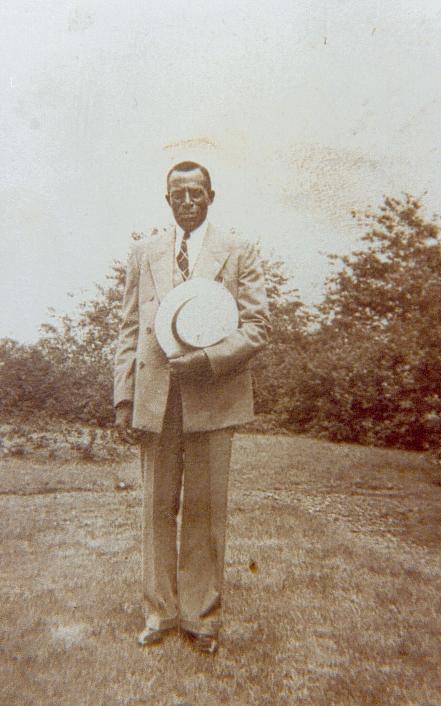
There had been a photograph of Adam Artis, cousin Daisy told me, but it was stored with other things in an old barn, and rain ruined it. She recalled an image of a tall, brown-skinned man — or the suggestion of brown skin, anyway, in the soft sepia and charcoal tones of portraits of that day — but not what he actually looked like.

If no photograph of Adam exists, however, there is one of his youngest brother. This image, in fact, is the only one known of any of Vicey Artis and Solomon Williams‘ children.

Image

Richard Artis was born in 1850 in Greene County, very near Wayne. He spent his youth out of sight of censustakers, but in 1873, he married Susanna Yelverton (also known as Susanna Hall,) the daughter of free woman of color Nicey (or Caroline) Hall and a white Yelverton. Their children included: Lucinda Artis Shearod, Emma Artis Reid, Ivory L. Artis, Loumiza Artis Grantham, Richard Artis Jr., Susan Artis Cooper, Jonah Artis, Charity Artis Coley, Frances Artis Newsome, John Henry Artis and Walter Clinton Artis.

Richard Artis farmed in northern Wayne County all his life. He died of apoplexy on 12 February 1923 in Great Swamp township and was buried the next day by his sister’s son, Adam Wilson.

——

Photo courtesy of Teresa C. Artis.

Standard
Births Deaths Marriages, Maternal Kin, Newspaper Articles, North Carolina, Photographs

Death of a colored man.

“Death of Colored Man.”

John Colvert, aged 70 years, a respected colored man, died Thursday night at his home on Green Street.  Funeral arrangements have not been made as he has relatives in the west who will attend.

Statesville Landmark, 10 Oct 1921.

This, of course, is John Walker Colvert, son of Walker Colvert. But who in the world were the “relatives in the west”???  His mysterious sisters and their progeny? And what was “the west”?  Ohio? Missouri? California?

IMG_2081

John Colvert was buried in Green Street cemetery, a square, three-acre concavity surprisingly devoid of markers in the heart of black Statesville. His and his wife Addie’s tombstones stand at the edge of South Elm Street, near that of his daughter Selma, and they are the only Colvert grave markers I have been able to locate.

Standard
North Carolina, Paternal Kin, Photographs

Loudie’s legacy.

Loudie was the youngest of Lewis and Mag Henderson’s children, the one who never left home, the one who scarcely had time to do so, for she died at 19, but not before making her mark in the form of her children Bessie and Jesse. Loudie died in childbirth and, had circumstances been different, her children’s father might have reared them, but that was not to happen in that place and time.  Their father was a white man, a lifelong bachelor farmer named Joseph Buckner Martin and called Buck.  If his love for his second set of children, also by a colored woman, is any indication, he felt for Loudie and her two, but there was a long way between loving one’s yellow babies and taking them in, and so Lewis and Mag and their daughter Sarah (who would have a child of her own by a white man) reared them.

Jesse Henderson, then called Buddy, followed his aunt Sarah and her husband Jesse Jacobs to Wilson. They and Jesse’s younger children by his first wife settled into a L-shaped, three-roomed bungalow on Elba Street, a block off black Wilson’s best residential address and a few blocks over from the main business drag, East Nash Street.  Jesse found work at Jefferson Farrior’s livery stable on Barnes Street, perhaps through a Dudley connection who worked as Farrior’s maid.  When Big Jesse brought his wife’s nephew Jesse into the livery, Farrior christened the younger man “Jack” to cut down confusion.  (The name stuck so well that some of his children never knew anything different, and a rumor grew that Farrior was Jack’s real daddy.)

Jack I almost knew.  Our lives overlapped, and we could have met, but I was a child when he was a sick old man, and before my sixth birthday, he was gone.  I know his children, and I have his few photographs, and I will have to be content with that. He is below, with open collar and cheroot.

Image

Photograph of Jack Henderson, friend and dog in the collection of Lisa Y. Henderson.

Standard
North Carolina, Oral History, Paternal Kin, Photographs

She raised 13.

My father’s mother said:

Every day she needed, had to eat some fish.  ‘Cause she couldn’t eat pork.  Good as she loved ham and stuff, and Papa always raised a pig every year.  She had a bad heart.  And so she wasn’t supposed to eat no pork.  And so that’s what she had, fish.  Fish and beef.  Fish and beef. … Well, she raised chickens.  But she got to put the chicken in a coop.  Even if it was running ‘round out there in a bigger pen.  She put it one of them little coop places where was built up like that, and let it stay a week, cleaning it out.  That’s what she said to do.  I reckon you let ‘em run ‘round in the yard eating dirt, so she was gon clean ‘em out. She would get her about five or six biddies out the bunch, and she just put them in that coop, and by them being out there in the back yard fenced in that part, picking up all the gravel and everything else they want … Put ‘em in that coop, let ‘em stay a week, clean ‘em out.  So, I said to Mama, “Why you got to take ‘em out the yard and put ‘em in a pen?  And then feed ‘em nothing but corn in there?”  She said that cleans ‘em out.  At the time, when she was telling me, I didn’t know what cleaning ‘em out was.  Wonder, “Why she talking ‘bout cleaning ‘em out?”  I wanted to ask her again, but she would scold at you.  She done called herself telling you what to do.  But she didn’t tell you the whole thing.  So I’d just hush.  And then go and try to get it out of somebody else.

She weighed 200 pounds.  She was fat.  But she wore dresses longer than what they’re wearing now.  Just like, that one up there, that skirt she had on, she made that.  And she, it was blue silk.  And then she made a ruffle, that ruffle that was ‘round that skirt, she took and sewed all ‘round it…. Her hair was shoulder-length, but she always rolled it, always turned it up and pinned it back there and had this part that come around.  She didn’t never cut it real short.  And it didn’t, I don’t never remember seeing it when it was real long.  But she was always tucking it in and trying to make a ball back there.

Image

She didn’t have but one child.  But she raised 13.  Papa’s children, and then my mama Bessie and Jack, and me and Mamie.  Her own child was named Hattie Mae, too.

Sarah Daisy Henderson Jacobs Silver was my great-great-grandmother’s sister.

——

Photo of Sarah Henderson Jacobs Silver in the collection of Lisa Y. Henderson. Interview of Hattie Henderson Ricks by Lisa Y. Henderson; all rights reserved.

Standard
Births Deaths Marriages, Maternal Kin, Newspaper Articles, North Carolina, Oral History, Photographs

Edward Murray McNeely.

My mother’s brother went to World War I. Not Uncle John and Uncle Luther.  Oh, they were old.  Old men.  They went to the Spanish-American War.  Edward went to World War I — 

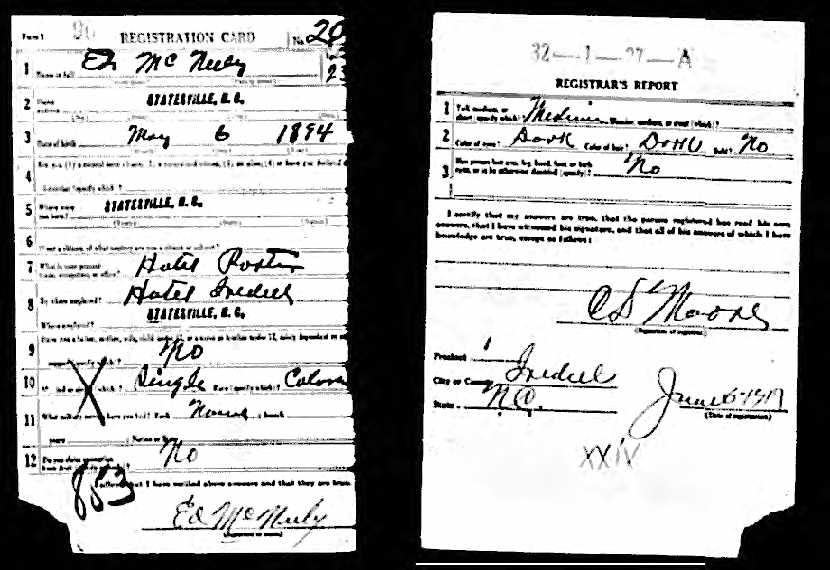
ed mcneely draft card

Yeah.  If he went.  ‘Cause he was the laziest man, dodged everything.  Running all the time.  The ladies were just crazy about him.  He had to leave Statesville.  He went to Asheville and, too ….  They were just about to lynch him because of, you know, these women running after him.  He went to New York.  I think he married two or three women up there.  [I laugh.]  Honey, he was sharp as a tack.  Lord, Lisa, that was one good-looking man.  Tall.  Like Carey.  And he was sharp.  I remember when I went to New York from Hampton to work, went to Jersey from Hampton to work.  He carried me to New York.  First time I had ever been to New York, and he carried me to New York to this Elks Club.  He was a big-time Elk, you know.  And those men swore that I was not his niece, that I was somebody else.  And they said, “Man, you know that’s….”  And I liked to dance with them, you know, and all.  And I would just go with him – I mean, I didn’t go there a lot of times, but I might have went two, three times, but he would take me to that Elks Club.  And he would never let me have anything to drink.  He would drink some wine or something like that.  But he would take me, and one time when I was in New York — Wardenur and I, he used to take us.

McNEELY -- Edward McNeely


Edward Murray McNeely, born 15 June 1894, was the youngest of Henry and Martha McNeely’s sons. He married Lucille Tomlin in 1910 in Statesville and worked as a bellhop in a local hotel. He and Lucille had a son, Quincy Edward McNeely, in late 1910. When the marriage broke up, the boy and his mother moved to Asheville and were lost to the rest of the family. (Or to my grandmother, his first cousin, in any case.) Ed McNeely was in fact inducted into the Army in 1917, but I have no details of his service. By the late 1920s, he had migrated north to join his mother and several siblings in and around Bayonne, New Jersey. In 1942, he registered for the “Old Man’s Draft” and reported his address as 344 Grand Avenue, Brooklyn. (A two-story brownstone in Clinton Hill worth $1 million today. He also gave his height as  5’11, some considerable inches shorter than my cousin Carey.) When he died on 28 September 1950, Edward was living at 454 Avenue C in Bayonne and was married to Delphine Peterson McNeely. Two days later, the Statesville Daily Record published this tragic report:

“Double Funeral Service Planned”

Double funeral services will be conducted for brother and sister here Monday.

Lizzie Long, who burned to death when her home on Bingham Street was almost completely destroyed by fire Thursday morning, will be buried with her brother who died that night in New York.  The brother, Edward McNeeley, a veteran of World War I, died in Veterans hospital, Staton [sic] Island, upon hearing the news of his sister’s death.  His body will be returned here Monday morning and services will be conducted jointly for them at 2:30 p.m. Monday.  Burial will be in Belmont cemetery.  

The funeral will be conducted by Rev. Spurgeon Frost at Rankintown Congregational church.

Photo of Edward McNeely in collection of Lisa Y. Henderson. Interview of Margaret C. Allen by Lisa Y. Henderson, all rights reserved.
Standard
Births Deaths Marriages, Free People of Color, North Carolina, Oral History, Paternal Kin, Photographs

Papa Jesse.

Bessie died when I was eight months old.  And Mama Sarah took me as a baby and brought me to Wilson.  And her husband was the only papa I knew.  His daughters all disliked me being there, but I loved him and he loved me.  But they all just said he loved me better than he did them, and I wont nothing no kin to him.  But when you take a child that’s with you all the time, and every Sunday you send to the store to get you some oil to wash your feet … just nobody but me there.  Nobody but Mama, Papa, and me.  Mamie wasn’t even there then.  She was down in Dudley with Grandma Mag.  And so, I guess he just learned to love me.  And he told me, if I wanted to stay with him, I could stay, and if he didn’t have but one biscuit, he’d divide it and give me one half and he’d have the other half.  And that way I wanted to go with him ‘cause Mama’d fuss all the time.  She was always talking, got to be doing something.  And so I wanted to follow him.  And so I went with him everywhere. 

In late 1895, the freshly widowed Jesse Adams Jacobs Jr. married Sarah Daisy Henderson in Dudley, Wayne County. He brought children as young as a year old to the marriage, and she brought a daughter, a niece and a nephew. Around 1905, Jesse, Sarah, his youngest children and her nephew Jesse Henderson joined the flow of farm dwellers to Wilson, then entering into its golden era as the World’s Largest Tobacco Market. A couple of years later, when Sarah’s niece, Bessie Henderson, died, Jesse and Sarah took in her small children, the younger of which was my grandmother.

Jesse&Sarah Jacobs

Jesse was born in 1856 in Sampson County to Jesse Jacobs Sr., a prosperous free colored farmer, and his wife Abigail. Many of Jesse and Abigail’s modern descendants are members of the Coharie Native American tribe. Others, like Jesse Jr.’s descendants, identify as African-American.

Jesse A. Jacobs bought a small house at 303 Elba Street in 1908. Over the years, he worked as a hostler and a janitor and for extra cash farmed small plots of land he rented on the edge of town. My grandmother was his constant companion.

And so I wanted to follow him.  And so I went with him.  Up there to First Baptist Church, help him dust the seats, and he’d run the sweeper and all that kind of stuff.  And when he was over to another school up there, the college.  He used to be janitor to the college.  And then he had the school out there at Five Points.  Winstead School out there at Five Points.  And I would be the one at all those places.  Go cut Professor Coon’s grass, I’d be right with him. And then, out to Five Points. I went out there – I was in school ‘cause I run all the way from up the school, came by the house, get me a bite to eat and run from there to clean to Five Points School where was out there – white folks.  And sweep up that whole building by myself.  Papa’s down there in the field, up there by – uh, what is the people be putting them … they had chains on their legs and had the white stripes – convicts.  It was a place up there.  And I’d go ‘round there and sweep that whole building up by myself.  Papa was gon get me a bicycle so I could ride over there.  ‘Cause, see, he had the horse and wagon, and so he was already over there, and he had been there by where the pigpen was down by that little stream, that little ditch.  And I’d come back on the wagon at night with him.  But while he was plowing, ‘cross the street over there where he had a acre of cotton.  And while he was working, plowing that garden where was on the side, Professor Coon let him have whatever he put in it.  He would buy all the stuff to go in the ground, if Papa would just work it.  So he’d plant that, and then me and Mamie had to get up two o’clock in the morning, go down there and pick up potatoes.  Light night.  It’d be so bright you could see ‘em. He’d plow it up, turn that ground over, and all them old potatoes down there, put ’em in baskets, and what we couldn’t see ‘fore it got real daylight, we had to go out there and pick ‘em up when it got day. 

My grandmother’s young life was difficult, and she carried scars of hurt and disappointment even into the years that I knew her. But her voice always softened when she spoke of her adored Papa, the single source of unconditional love in her childhood.

I used to brush Papa’s hair.  He didn’t have much. Take one of them soft brushes, hand brushes.  Two of ‘em, he brought ‘em from New York.  He brought the brushes home, and I was always messing with his hair.  And I’d get the brush and hold it on one side and part it off and brush it down.  It was real soft.  And near ‘bout all of it come off where was on top.   And I was always asking a nickel, a penny:  “What, ain’t you got some change in your pocket?  I want to go the store.”  So I was feeling his legs, feeling for pennies or nickels up there.  So I said, want to know if he’d give me a nickel, or give me a penny, or whatever it is.  So he run his hand in his pocket, a penny or a nickel or whatever, he’d give it to me.  I’d go on to the store, and he said, “Wait.  Wait a minute.”  He had to have tobacco.  So then he’d give me a dollar.  And he told me to go down to the store down, right down there from our house.  Old Man Bell’s store, the white man that run the store.  “Get me a quarter.  Don’t spend it all.”  It’s three sections or four sections on a plug of tobacco.  And they cut into it where the cracks is, and it sells for so much.  And so I’d go down there to the store and get it and come back and give it to him. 

——

Original photo of Jesse and Sarah H. Jacobs on their wedding day in the collection of Lisa Y. Henderson. Edited excerpts from interviews of Hattie H. Ricks by Lisa Y. Henderson; all rights reserved.

Standard
Births Deaths Marriages, Education, Maternal Kin, Oral History, Photographs, Virginia

Remembering Margaret Colvert Allen on her birthday.

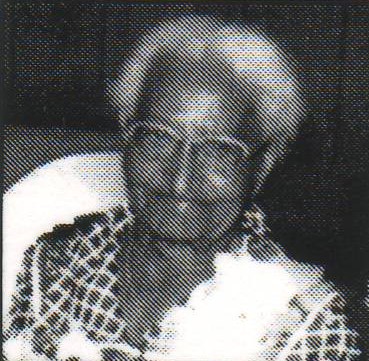
Oh, yeah, I always liked that picture.  That was on Hampton’s administration steps.  That was a brand-new coat, child.  And it was real soft.  It was light – I don’t know what you would call it.  Light tan or something.  Anyway.  But it had a summer fur collar on it. … Who sent it to me?  Golar or Walker or some of those people sent it to me…

ImageMy grandmother would have been 105 today. When she passed away in February 2011, she was Hampton’s oldest living graduate. Her funeral service was held on a clear, cold day in the campus chapel, fitting in its reserved beauty.

—–

Interview of Margaret C. Allen by Lisa Y. Henderson, 4 November 2004; all rights reserved.

Standard
Births Deaths Marriages, North Carolina, Oral History, Paternal Kin, Photographs

Louvicey Artis Aldridge.

Image

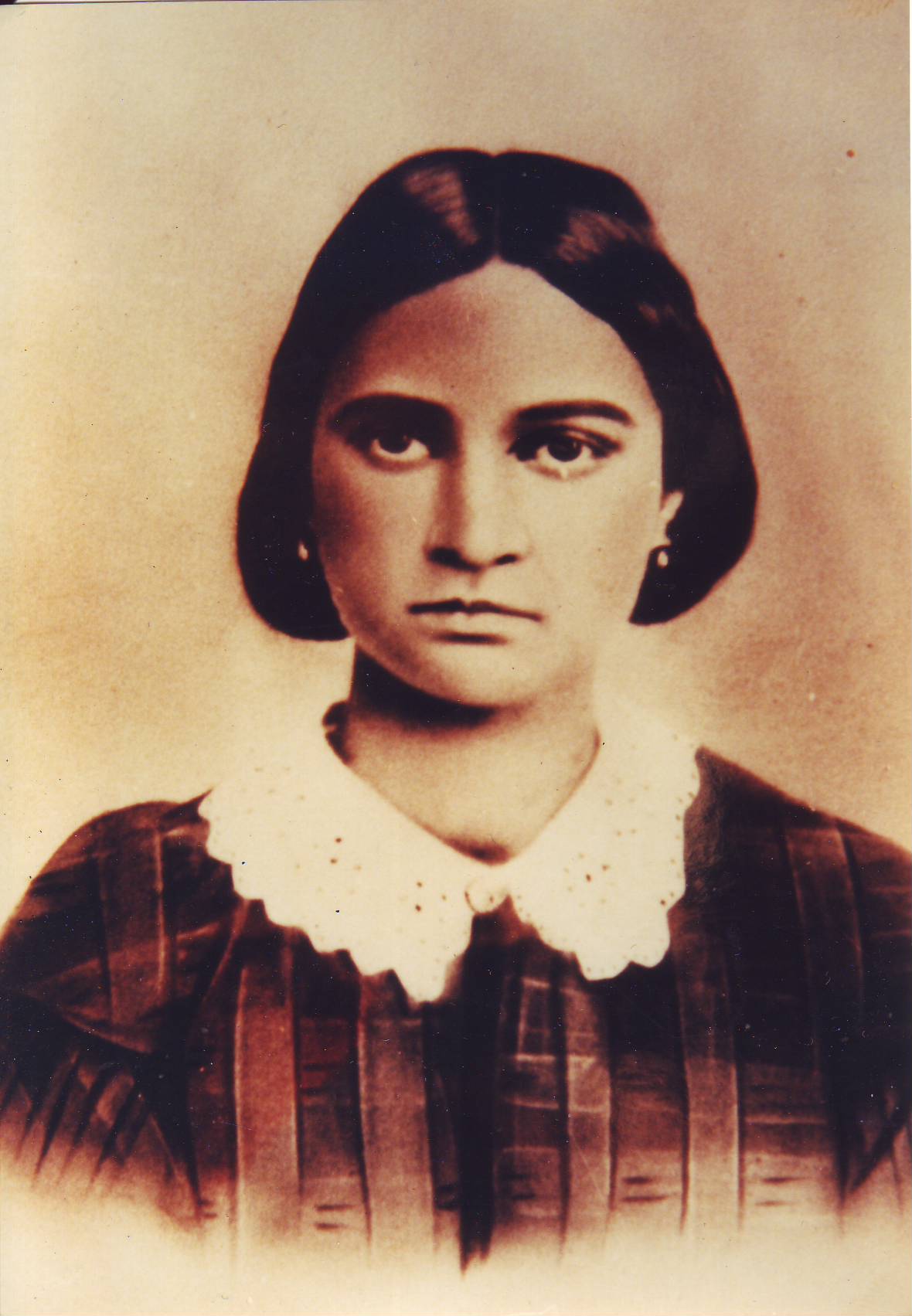
Vicey was little, rawboned-ed.  With a peaked nose, and she was more Indian color.  But she had that pretty hair.  I remember her when she used to come to Wilson.  She come up there visiting once in a while.  Vicey was, ahh ….  You remember Josephine Sherrod?  Well, she was lighter than her.  But she had that peaky nose and had nice hair.

Image

This is my grandmother’s description of her paternal grandmother, Louvicey Artis Aldridge. Josephine Artis Sherrod (in the second photo) was Louvicey’s half-sister — and niece. Their father was Adam T. Artis. After the death of Vicey’s mother, Adam married Amanda Aldridge, sister of Vicey’s husband John W. Aldridge.

Photographs in the collection of Lisa Y. Henderson. Interview of Hattie H. Ricks by Lisa Y. Henderson; all rights reserved.

Standard
Births Deaths Marriages, Free People of Color, North Carolina, Paternal Kin, Photographs

James Henderson’s children, part 1: the Skipps.

James Henderson had two sets of children. His first set bore the surname Skipp in childhood, when they were apprentices, and these facts suggest that James and their mother were not married. Son James Henry’s death certificate gives his mother’s name as Sallie Henderson. Was she instead Sallie Skipp?  Skipp is rare name in Onslow County, but a free man of color named William Skipp headed a household in 1820. Her father, perhaps?

The children of James Henderson and “Sallie Skipp”:

Lewis Henderson married Margaret Balkcum, a free woman of color from Sampson or Duplin County.  The family settled near Dudley, in southern Wayne County, and in 1870 Lewis and Mag became founding members of the Congregational Church.  By 1880, Lewis was growing corn, wheat and cotton on about 150 acres.  He and Mag had nine children, but descendants of only two, Ann Elizabeth and Loudie, remain today. Lewis died 12 July 1912.

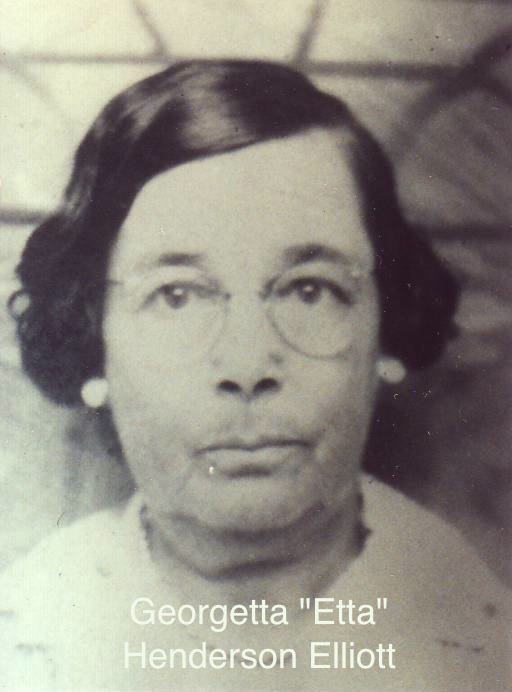
James Henry Henderson’s first child, Carrie Faison, was born about 1869 to Keziah Faison.  Soon after, James married Frances Sauls and settled in Wayne County as tenant farmers.  James and Frances’ children were Mary Ella Henderson (1867-??), Elizabeth Henderson (1869-??), Nancy Henderson (1873-??), Amelia Henderson Braswell (1877-1914), Elias L. Henderson (1880-1953), James Ira Henderson (1881-1946), Lewis Henderson (1885-1932), and Georgetta Henderson Elliott (1889-1972).  In 1900, James married Laura Roberts. Though James’ modern heirs descend from only a few of his children, Lewis, Georgetta “Etta,” and Elias, they comprise the largest sub-branch of the family. James died 21 June 1920 in Duplin County.

Mary E Henderson Text

Amelia Henderson 001 Text

Elias L Henderson Text

Georgetta Henderson 001 Text

Mary Henderson seems to have died in childhood.

Eliza Henderson moved to Sampson County with her rest of her family, but has not been found after the 1860 census.

Standard