Maternal Kin, Virginia

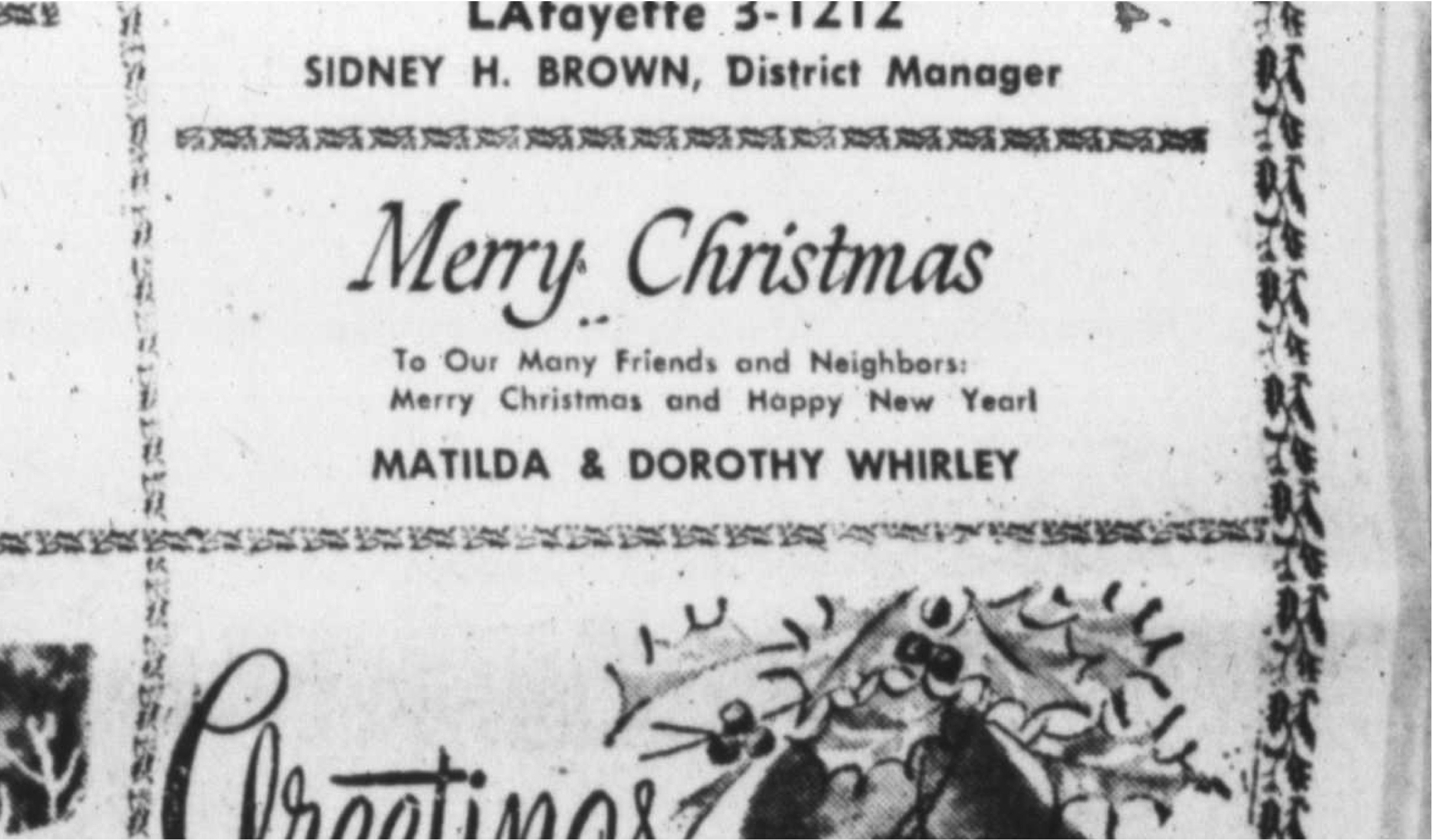
Matilda & Dorothy Whirley.

I called her cold, admittedly. Never could she have expected to pick up the phone to a call from her great-uncle’s great-granddaughter. Still, I’ve made lots of these kinds of calls in my life. Dorothy Whirley was decidedly more guarded than most and had a little edge in her voice that sounded almost irritated. She could not deny me though, for what slick stranger could pull names and dates out of Charles City County like that?

Dorothy was the daughter of Matilda Whirley and granddaughter of Emma Allen Whirley, my great-grandfather’s sister. Dorothy could not, or would not, tell me much, except to confirm that Emma, her husband and children had migrated to Baltimore, where she continued to live. Her mother, to whom she had been very close, had died not too many years before our connection, and she seemed somewhat estranged from her remaining kin. She knew of John Allen Sr., but had little more to say about him than that he held himself apart from — thought himself better than — his half-siblings because of his light skin. Our conversation foundered, and I hung up with a promise to send her a family tree. I never got around to it, and she died in 1999. I have not been able to track down any other living Whirleys, but have found small traces of Dorothy and her mother.

ImageThe Baltimore Afro-American, 26 December 1959.

Standard
Births Deaths Marriages, Maternal Kin, Other Documents, Photographs, Virginia

Mary Brown Allen.

There’s a Mary Brown, age 20, listed in the 1870 census of Amelia County, Virginia. She worked as a laborer and shared her home with a 24 year-old man named Grief Bratcher. This is probably my great-great-grandmother.

Mary Brown Allen

Six years later, Mary Brown was in Charles City County, perhaps with a young daughter Nannie, and certainly pregnant. By a white man. A rape? A convenience? Love? We may never know. We do know, however, that just a few months into the pregnancy she married Graham Allen, a 24 year-old laborer from the other side of the James River in Prince George County. When she bore a son on Christmas, 1876, he was named John Christopher Allen. Over the next 40 years, Mary reared four children to adulthood (another four or five died), as well as some grandsons, while Graham farmed the small parcels of land he painstakingly accumulated and led a flock at New Vine Baptist Church. She never learned to read or write and left scant trace in the public record. Mary Brown Allen died April 1, 1916.

ImagePhotograph from the collection of Lisa Y. Henderson.

[UPDATE, 27 July 2015: As detailed here and here, DNA testing has led to the discovery of the father of Mary’s oldest son, John C. Allen, Sr. He was Edward C. Harrison of Charles City County.]

Standard
Maternal Kin, Photographs, Virginia

John C. Allen Jr.

Image

If he were living, he would be 107. I never knew him. My mother barely did; he died when she was 10; he is a mythological figure. His children speak of him reverentially, wistfully, with smiles. His widow sometimes spoke of him with a tinge of anger, a sense of abandonment that simmered low. He is a wraith made more so by her timeless solidity at our family’s core. Her light had only just begun to dim when she left us in 2010; she was 101. He was 41– younger than the youngest of his grandchilden. Frozen in 1948 — a slight, brown-skinned man with swayback legs and a small smile. My little ears are his. The tiny flaps at the inner corners of my eyes. The flare-ups of inner darkness. Who was he? Why?

Standard
Maternal Kin, Newspaper Articles, Virginia

Cousin John gets off lightly.

Baltimorean Attends Services for Father.

CHARLES CITY COUNTY, VA. – Memorial services for the late Stephen Whirley, who served as deacon at the New Vine Baptist Church for 47 years, prior to his death seven years ago, were held Memorial Day at the church.

Among the out-of-towners attending was a son, John Whirley, proprietor of Club Ubangi café and nightclub in Baltimore.  — Baltimore Afro-American, 4 Jun 1949.

I happened upon this snippet unexpectedly while updating some old genealogy files.  Stephen Whirley was the husband of Emma Allen Whirley, my great-grandfather John C. Allen Sr.’s sister.  John Whirley was Emma’s step-son.  John and Emma lost contact — intentionally? negligently? — when my grandfather was young, and no one in my family knows much about the Whirleys.  However, thanks to the Baltimore Afro-American, now searchable via Google, my irrepressible almost-cousin John comes to life:

AFRO Goes Out On “Check Day”

Friday, Sept. 10, was Welfare Check Day in Baltimore.

That’s “Mother’s Day” when the money flows (“one great big bash”) and crime soars (“reaches its peak”), all according to Jerry Cartledge, author of the News American’s “Welfare Wastelands” series.

So absorbed was Cartledge with his “Mother’s Day” expose that he challenged one and all:

“Stroll down Dream Street (Pennsylvania Ave.) or Gay St. next Mother’s Day – if you don’t value your life – and see for yourself.”

Seven AFRO staffers decided if American reporters can risk their lives in such places as Vietnam, they could venture out on “Mother’s Day” in Baltimore.

They found the day and night like any other Friday or Saturday and concluded that much of the Mother’s Day piece was pure fantasy which appears questionable in so far as personnel [sic] observation and interview can determine – and that those charges that can checked by police or court records definitely are false.

The busy and dangerous places cited in the article include Pennsylvania, Fulton and Fremont Aves., Gay, Orleans and Madison Sts.; the Wagon Wheel, the Ubangi Club, the Sportsmen, “Della’s” and the Charleston.

The AFRO team hit them all – and some others – and still could not find justify charges that “Mother’s Day” is the worst every month.

Owners like Jack Roosevelt of the Sportsman, Bill Kramer of the Maryland Bar, and all the owners and operators contacted, laughed at claims they put in extra stocks for “Mother’s Day.”

John Whirley of the Ubangi Club said, “I never saw or talked to Cartledge.  Nobody has been in here seeing the things in the article.  Two or so welfare people might come in here.  The receipts (on Mother’s Day) are the same as any other day without the checks.

“I know he’s lying.  I wish he’d come around.  Look around here.  These are working people.  That’s the kind of people I get, working people.”

…    — Baltimore Afro-American, 14 Sep 1965.

and

Numbers Personalities Pay Fines of $8,500.

BALTIMORE.  Appearing in Criminal Court this week were nearly two dozen numbers personalities who in 1968 were known to literally thousands of lottery players in all sections of the city.

In the group were nine defendants who paid a total of $8,750 in fines alone.

Two persons received jail sentences.

One defendant swallowed a numbers slip.  Another drove his car in reverse up the street to avoid police and a veteran Avenue bar owner and a longtime South Baltimore real estate dealer pleaded guilty.

JOHN WHIRLEY.

Getting off lighter was another familiar Avenue figure, John Whirley, 70, owner of the 2200 block Pennsylvania Ave. Ubangi Bar.

Judge Sodaro suspended a prison sentence of three months and imposed a $250 fine and costs on the elderly man who pleaded guilty to lottery violations.

According to testimony before the court, Whirley was arrested in a Vice-Squad raid on his bar at 11:20 a.m., Nov. 25, 1968. An arresting officer said he found one slip indicating $2.50 in play wrapped in a roll of $55 cash in Whirley’s pocket. In the basement, according to testimony, there were two slips containing 15 numbers and $11.50 in play.  — Baltimore Afro-American, 2 Aug 1969.

Standard
Maternal Kin, Photographs, Virginia, Vocation

Look at that.

John Allen on Aberdeen worksite

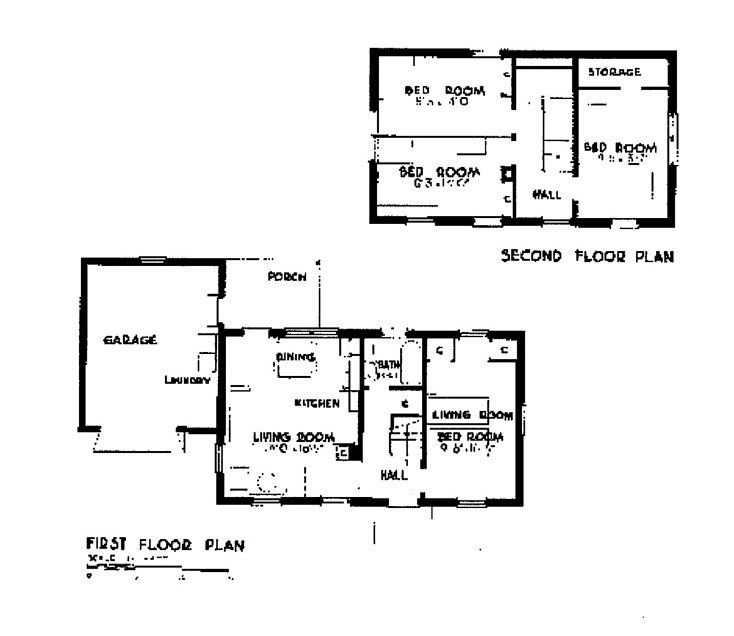
I rode through Aberdeen Gardens two or three times while I was in Newport News. “By Negroes, for Negroes” reads the historical marker near the school. Boxy, red-brick houses counterposed in neat lines along streets named for community heroes. My grandfather John C. Allen Jr. was a drywall supervisor during their construction in the late 1930s. Though he disdained the building standards, he briefly moved his family into one of the duplexes when my mother was three weeks old. Semi-furnished. A chicken coop out back. A vegetable garden. By 1940, the family was gone, into the two-story house on 35th Street that my grandmother called home until she died. There’s a rose alongside the porch that still blooms where my grandfather planted it, and he passed in 1948. This house is the most constant edifice of the whole of my life. My Gibraltar. Upstairs, my grandmother slept in the double bed that they brought with them from Aberdeen, along with a squat chest and a nightstand. Solid oak in a simple Shaker style. “Not a drawer sags to this day,” she told me, marveling. She pulled one precariously far out. “Look at that.” I gently tested its solidity. I laughed.

aberdeen

Above, John C. Allen (third from right) and his drywall crew at Aberdeen Gardens, circa 1937, and floor plan of Aberdeen Gardens home.

Standard