Free People of Color, North Carolina, Paternal Kin

An action for seducing away two colored boys.

John Jones v. James Mills, 13 NC 540 (1830).

Jones sued Mills in Jones County Court for “seducing” two apprentices from him. Jones produced evidence of his indentures of the boys, and Mills countered with proof that Jones had not properly executed bond, as required by law, not to remove the apprentices out of the county. The trial judge charged the jury that Jones had indentured the boys and taken care of them, and Mills, a stranger, “could not avail himself of any irregularity or defect in the bond” as a defense to the suit. The jury returned a verdict for Mills, and Jones appealed. The North Carolina Supreme Court overturned the decision, opining that, even if the bond were defective, the apprentices had not been turned loose, “fit subjects to be seduced and employed by any stranger that thinks proper to interfere.

——

I first encountered this case many years ago when I was researching my master’s thesis, which examined the involuntary apprenticeship of free children of color. The published decision in Jones v. Mills is not terribly interesting. I was stunned, then, when I peeked into the case file, now stored at the North Carolina State Archives: “This was an action on the case for seducing away two colored boys Durant and Willis Henderson alias Dove claimed by the plaintiff as his apprentices by virtue of indentures with the County Court of Onslow.”

Durant and Willis Henderson — alias Dove?

I knew that my Hendersons originated in Onslow. I also had a good friend during my college years who was a Dove. A bit of research quickly established that L.D. was a descendant of Durant Dove, via his son Lewis James Dove. Further research, still ongoing, strongly suggests that Durant and Willis’ mother, Nancy Henderson alias Dove, was the sister of my great-great-great-great-great-grandmother, Patsey Henderson. Their father appears to have been Simon Dove, a free man of color from Craven County.

The case file also reveals that John Jones bound Durant and Willis in 1819 to serve as his apprentices and learn the art of farming. They remained with Jones until 1828, when Mills took them into Jones County, giving rise to this suit.


Standard
Births Deaths Marriages, Free People of Color, Letters, North Carolina, Paternal Kin, Photographs

Your friend and great-aunt by marriage.

After Rev. Joseph Silver died, my grandmother received a letter from his widow:

MC SIlver to H Henderson 2 2 1958_Page_1

MC SIlver to H Henderson 2 2 1958_Page_2

Martha C. Silver is a bit of a mystery. She was born about 1873 in Halifax County to William Hilliard Hawkins (born 1833 to Ambrose and China Harwell Hawkins) and his wife Mary E. Hulin Hawkins (born 1840 to Hilliard and Tabitha Locklear Hulin), both born free. I have found her with her birth family in the 1880 census of Enfield, Halifax County. I lose sight of her, though, until 5 August 1912 when she is listed as Cary Hawkins Henderson in her father’s Halifax County will and then until 16 December 1925, when as “Martha C. Henderson” she married Joseph Aldridge (born 1869), my great-great-great-grandfather John W. Aldridge‘s younger brother.  (I cannot find a marriage license for Martha and any Henderson (much less one related to me).) In the 1930 census of Goldsboro, Wayne County, “Carry” Aldridge is listed with Joseph and his children by his deceased first wife, Louberta Manley. Joseph died in 1934, and I lose Martha again until 8 September 1943 when she married Joseph Silver in Wayne County. He was 86 (and widowed five years previously by the death of my great-great-great-aunt Sarah Henderson Jacobs Silver), and she was 70. Martha returned to Halifax County and remained there at least until Rev. Silver died in 1958. Past that, though, I know little, for I have not found her death certificate.

Image

A few years ago, I obtained a copy of a photo of family group from someone who knew only that they were Aldridges. Last year, a cousin confirmed what I had suspected. Eight of the nine people pictured above are Joseph and Louberta M. Aldridge’s children. The ninth? Martha Cary Hawkins Henderson Aldridge Silver, with whom they remained close even after their father’s death. My cousin told me that Martha had children of her own when she married Joseph Aldridge and had gone to live with a son in Washington DC in her latter years. My cousin and her father, Joseph’s son George, visited her regularly until her death at age 100 or older. [Update: on 27 May 2014, Martha’s grandson contacted me and advised that, while she had a son named Charles who lived in New York, Martha had spent her final years with her daughter in DC.]

(By the way, the “Johnnie Aldridge of Dudley” referred to in the letter was Joseph’s nephew, and my great-great-uncle, John J. Aldridge. “Reka” was Reka Aldridge Ashford Morrisey, daughter of Joseph’s brother George W. Aldridge. Luke Morrisey was her husband.)

Hat tip to Patricia Aldridge Polack for her identification of William J.B. Aldridge, Milford Aldridge, Lillie Mae Aldridge, George Mitchell Aldridge and Joseph Leon Aldridge (top) and Daniel W. Aldridge, Allen Aldridge and Mary Eliza Aldridge Sawyer (below).

Standard
Births Deaths Marriages, North Carolina, Oral History, Paternal Kin, Photographs

In remembrance, if not memory.

My great-grandfather, James Thomas Aldridge, was born 127 years ago today. Ordinarily, I’d do a “remembering so-and-so” kind of post, but something stays my hand. I don’t literally remember him, of course, but that’s not surprising. The problem is neither my father nor my grandmother, if she were living, could really say they much remember him either.

Nora and them stayed up there where the old house burnt down. And her mama, Aint Vicey — we called her Aint Vicey, but she was my grandmama. Her son was my daddy. And I stayed at Nora’s, they taken me up there, and Johnny always bring me watermelons. He’d say, “You just like your daddy.” And those kinds of things. So I ain’t made nothing outn it. I said, whatever. I would just say something like, well, “I’m some kin to the Aldridges.”  

Johnny, he called me and I was working to the hospital. And he called me and told me, at least he called the hospital and wanted to speak to me: “Well, if you want to see your daddy – you said you ain’t never seen him before – come down here. He’s down here now. So, don’t let him know I told you.”   So, I went down – I said, well, I’m gon go down there and see Silas Cox ‘bout selling the lots where Grandma Mag’s house was on. So, I got off. So, I got Mr. Fisher to take me down there. I said, “Mm, I wanna see that man.” So Nora had been all good to me and always said, ‘bout, “Tom was your daddy,” and she’d come and visit me, and I’d go down there, go down there and stay with her. When Jesse was a baby, I went down there and stayed. And when I was a child, when I went up to New York, that’s when Frances took me ‘cause I was her son’s, her brother’s child. I said, then in later years, nobody wanted to own me. But whatever.

So my grandmother met her father only once, after his brother Johnnie Aldridge called and she invented a ruse for stopping by his sister’s Nora Aldridge Henderson‘s house. The visit did not go terribly well, and Nora, to whom she’d been closest, never spoke to her again. My grandmother had spent time with her grandmother Vicey Artis Aldridge and aunts in Dudley and had started school in New York City while living with Tom’s sister Frances Aldridge Cooper Newsome, but over time — after Tom married and as his professional star rose — the Aldridges mostly drifted away. Or clanged shut the door.

Science has settled the question of my grandmother’s kinship to the Aldridges, though she did not live long enough for the validation. Happy birthday, Tom Aldridge.

Tom Aldridge older

——

Interview of Hattie Henderson Ricks by Lisa Y. Henderson; all rights reserved.

Standard
Maternal Kin, North Carolina, Paternal Kin, Photographs, Virginia

Happy Mother’s Day!

Thinking of my mother and remembering my grandmothers with love and gratitude this day.

Mama

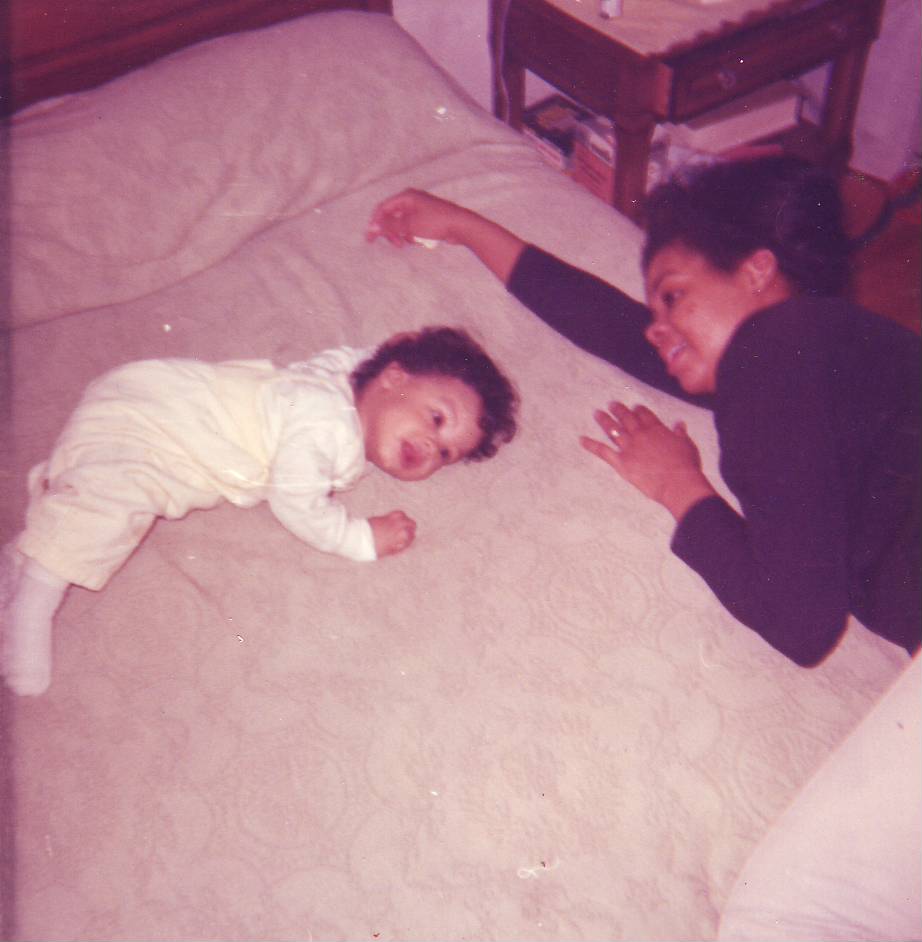
My mother and me.

Hattie&Margaret Henderson 001

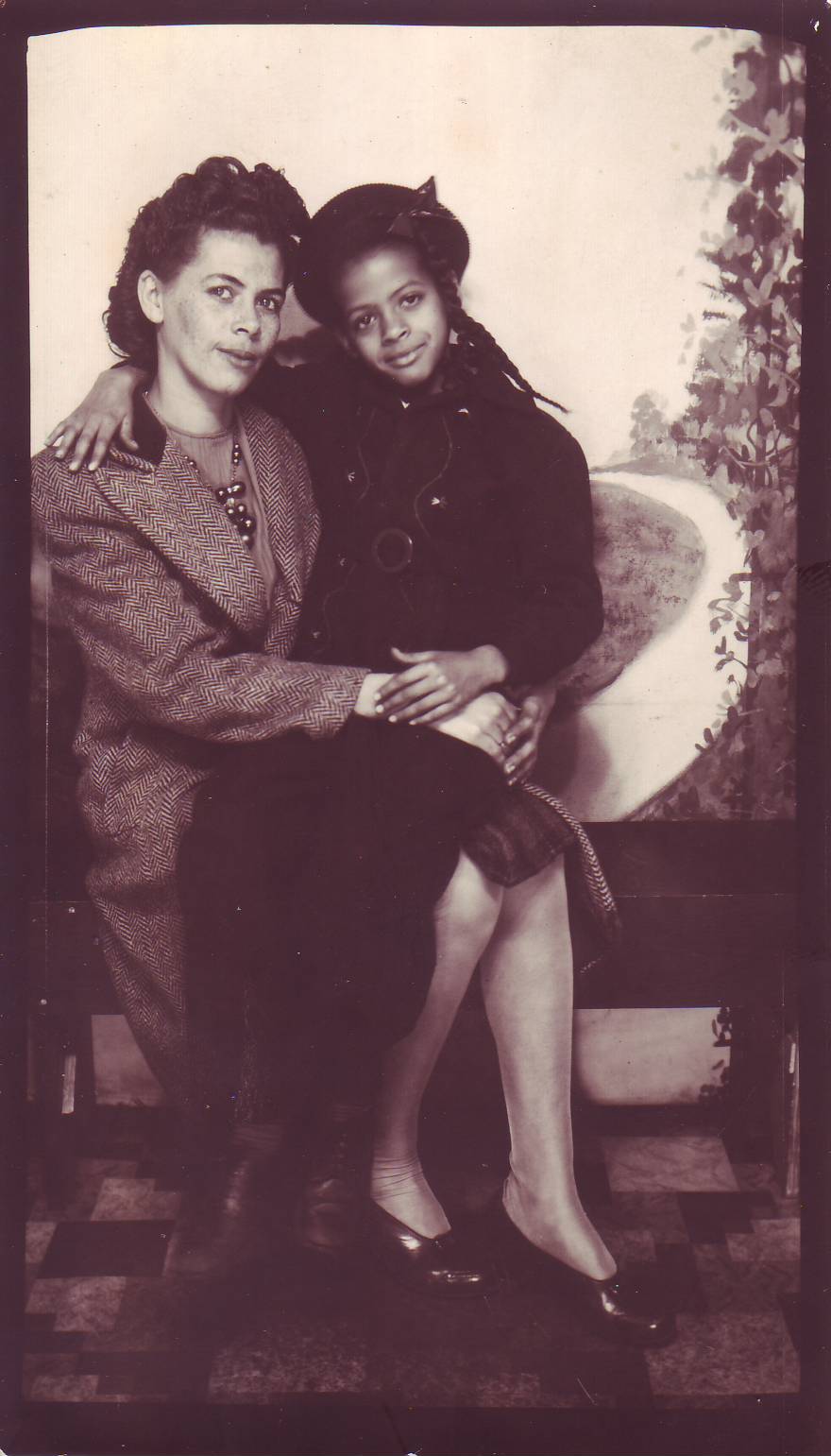
My father’s mother and his sister, circa 1942.

Aberdeen

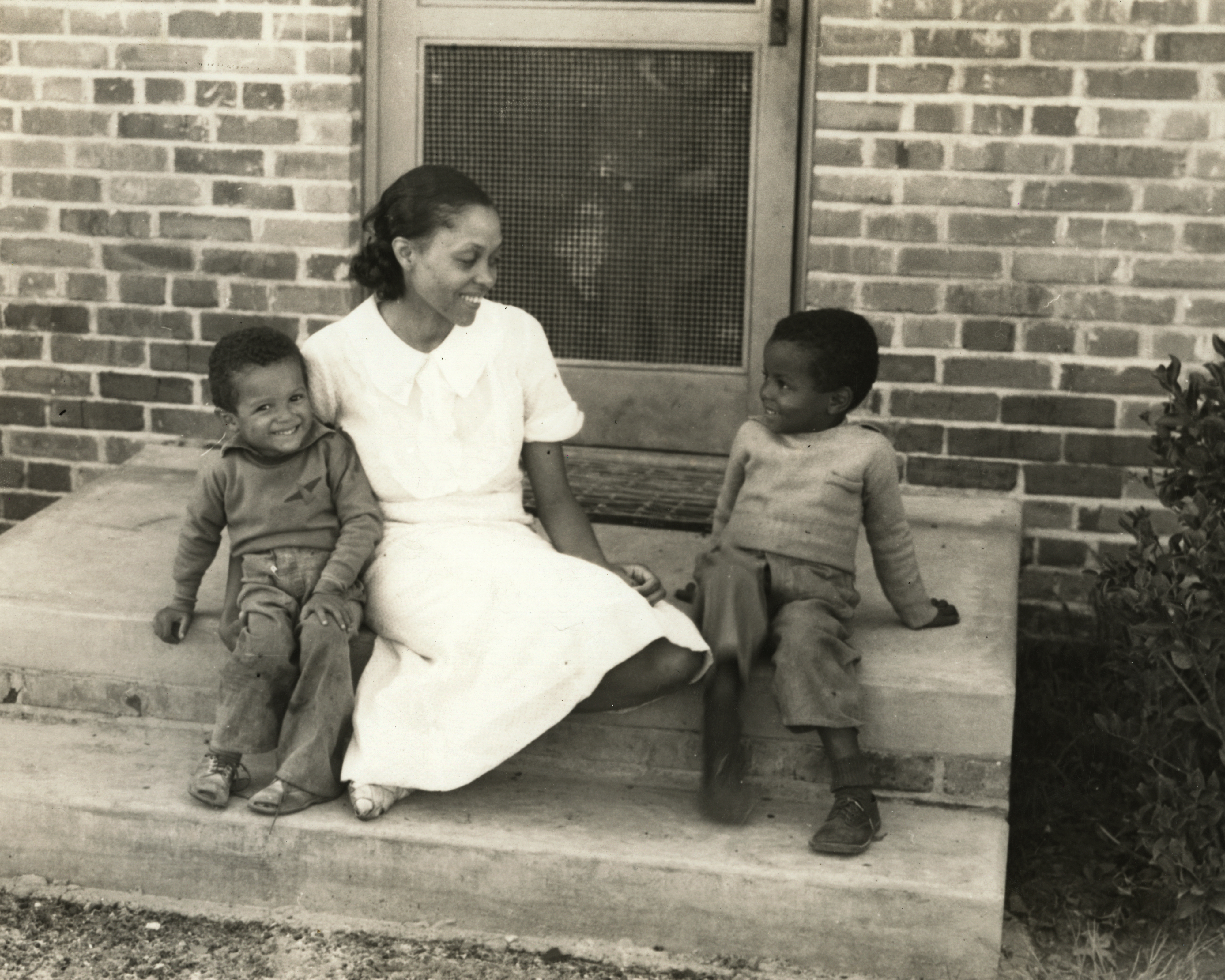
My mother’s mother and her brothers, circa 1938. 

——

Sidenote: I first saw the last photo in a magazine article about Aberdeen Homes, a late New Deal housing project in Hampton, Virginia. My grandfather worked as a construction supervisor at the site and moved his young family into one of the first apartments. I finally tracked this photo down in the photo archives of the Virginia State Library.

Standard
Maternal Kin, Photographs, Virginia

Order of Moses.

 IMG_0008

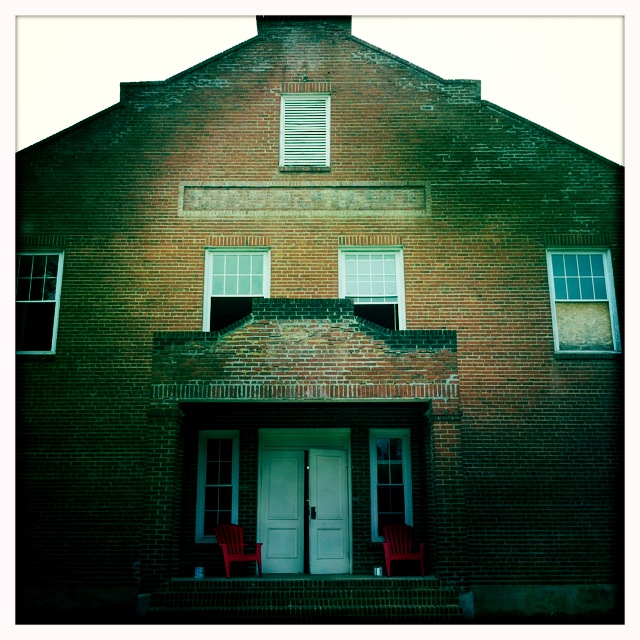
Moses Hall, Charlotte Court House, Virginia.

The Grand United Order of Moses, Inc., was a small fraternal insurance society for black men and women based in rural south-central Virginia. The founder and lifelong leader of the Order of Moses was James Murray Jeffress (1873–1951), who organized the society in 1904 at his birthplace, the village of Charlotte Court House. Jeffress graduated from Hampton Institute in 1894 and Howard University divinity school in 1901. He was ordained a Baptist minister and served as principal of a public school in Charlotte County.

By 1900, white Virginians had disenfranchised blacks and had segregated schooling and public transportation. Jeffress, sometimes called “the Booker Washington of Charlotte County,” was an accommodationist who tried to make life tolerable for his fellow blacks without challenging white racists directly. Fraternal societies such as the Order of Moses offered a modicum of economic security through medical and funeral insurance. They also supplemented the churches as black organizations that whites were willing to tolerate. They were organizations in which African Americans could vote, hold office, and brighten their drab lives with the color and spectacle of regalia and ritual, impressive titles and fancy-dress parades, lodge meetings and funerals.

Even more than in other fraternal societies, a charismatic oligarch dominated the Order of Moses: Murray Jeffress. He depicted the origins of his society in quasiprophetic language. “It was in 1901 that I began having visions repeatedly. These visions consisted of a single blackboard in which was chalked the words: The Grand United Order of Moses. After the third vision, I decided that I would do something about it.” In 1904, the Order of Moses recruited 203 members, and the society received a state charter. A few years later, it acquired Moses Hall as its headquarters. Jeffress took the title “right worshipful grand leader.”

A crisis in the society occurred when a black man, presumably instigated by whites, alleged that the Order of Moses had been organized to keep African Americans from working for white people. A prominent white man squelched this rumor by offering $ 150 for evidence in its support, evidence that never materialized. For his efforts, the Order of Moses made him an honorary member.

Jeffress resented the injustice of segregation and disenfranchisement, but he considered small economic advances the only realistic goals. “Let us teach every boy and girl to build and not tear down. Teach them that being God-fearing, property-owning and debt -paying citizens is greater than being a voter or being on social equality with [a] king.” He encouraged his followers to buy farmland or learn a vocational trade.

Although Jeffress opposed urban migration, many rural black Virginians moved to northern cities. As a result, Order of Moses lodges appeared outside Virginia, mostly in Pennsylvania and New Jersey. Northern lodges unsuccessfully asked for the headquarters to be moved to Philadelphia, which they regarded as more convenient than Charlotte Court House, which at the time of Jeffress’s death had only 250 residents and neither a railroad station nor a bus stop.

The strength and the weakness of the Order of Moses was its identification with Charlotte Court House and Charlotte County. The order helped establish a high school there for black youth, provided bus transportation for the students, constructed and equipped a hospital building, and provided electrical service for the village. The order owned an auditorium that could accommodate four hundred people, an office building, and apartments for black schoolteachers. The society also owned three hundred acres of farmland worked by black sharecroppers.

As leader of the Order of Moses, Murray Jeffress became a respected figure in African American life. He was elected first vice president of the Negro Organization Society and president of the Federation of Negro Fraternal Organizations. He served a number of Baptist churches as pastor.

At the time of Jeffress’s death in 1951, the Order of Moses claimed a little more than five thousand members. Apparently, his son Wilson became the society’s new leader. How long it continued to operate is unknown. In any event, the little Order of Moses had survived into the post—World War II era, an achievement that few better-known African American fraternal societies equaled.

— Adapted slightly from Organizing Black America: An Encyclopedia of African American Associations, Nina Mjagkij, ed.

——

My grandfather’s older brother, Jasper Maxwell Allen (1904-1959), married J. Murray Jeffress’ daughter Lena P. Jeffress, settled in Charlotte Court House, and opened a dental office in Moses Hall.

IMG_0011

Photographs by Lisa Y. Henderson, July 2012.

Standard
Education, Enslaved People, Land, North Carolina, Oral History, Paternal Kin, Photographs

Meeting the Saulses.

All week, I was pressed. Wave after wave of thunderstorms had been crashing over eastern North Carolina, tornadoes swirling in their wake. The rain didn’t stop until the night before I flew in, and I knew that Contentnea Creek floods early and often. Friday dawned bright and blue though. I headed down Highway 58, excitement brimming like the sheets of water standing in fields on both sides of the pavement. Though several roads around Stantonsburg were still closed, my path was clear, and I pulled into the Saulses’ driveway at the stroke of 10 A.M.

Cousin Andrew Sauls is a reserved man, but welcoming and friendly, and he and his wife, Cousin Jannettie, put me quickly at ease. They were curious about my connection to Daniel Artis and the Saulses, and as I began to explain about Vicey and Sylvania and Adam T., we realized that he had known many of “my” Artises as a young man. In addition to farming hundreds of acres northwest of Snow Hill, his father, Isaac Sauls Jr., bought, rehabbed and sold farms, was a skilled carpenter, and operated several businesses. In 1947, after a short-lived stint operating a funeral home in Snow Hill, Isaac bought a saw mill, refurbished it, and began cutting lumber the following year. Cousin Andrew started working there as a ten year-old and recalled that the factory made good money for more than 20 years because there was a high demand for raw lumber. In those days, he said, “I didn’t know nair black person had a brick house in Greene County. Nor hardly any white ones.” People needed lumber for home repairs and to build tobacco barns and other out buildings. Though most of the Saulses’ customers were white, they also sold to many black farmers in Greene and surrounding counties, including Les, William and Walter Artis in Wayne County. Brothers William and Walter were sons of Adam T. and Frances Seaberry Artis, and Leslie, son of Napoleon Artis, was their nephew. (William, Walter and Napoleon were brothers of my great-great-grandmother, Louvicey Artis Aldridge. All were grandchildren of Vicey Artis Williams, who was Daniel Artis’ sister.)  Cousin Isaac recalled Les as one of the richest black men in Wayne County, and the first he knew of to own a Cadillac. He laughed as he recounted hauling a load of lumber to Walter Artis as a 17 year-old and being offered some liquor. Isaac Sauls Jr. also operated a “stick mill” that cut tobacco sticks for farmers during the summer months.

After a while, Cousin Andrew’s only surviving sibling, sister Hattie, who lives nearby in the “home house,” joined us and chimed in as Andrew talked about their father’s and grandfather’s achievements. He has an astounding memory and reeled off the dates and details of land purchases dating back ninety years to his father’s first acquisition of 57 acres for $400 in 1924. Today the family owns about 440 acres, which it leases to another farmer. When I mentioned his great-uncle Cain “C.D.” Sauls‘ involvement with an African-American bank in Wilson, he astonished me by exclaiming, “I remember my daddy talking about that! It went under. I think he said it was Stanback and Reid.” [And sure enough, J.D. Reid and H.S. Stanback were the bank officers convicted of the fraud that led to the bank’s failure.]

According to Cousin Andrew, in 1929, Isaac Sauls Jr. leased land to the state for the erection of a Rosenwald school. That school served African-American students in the area from 1930 until 1959. When it closed, Cousin Isaac bought the building and converted it into a house in which his son William lived until his death. The structure now stands a few hundred feet north of Cousin Andrew’s house. [Here for National Register of Historic Places nomination form for another Rosenwald school in Greene County.]

IMG_5186

Cousin Hattie spoke of C.D. Sauls’ ownership of several businesses in Snow Hill, including a hotel and a funeral home. She was not sure if he was a formally educated man, but he appeared to be. He was on personal terms with Booker T. Washington and traveled to Tuskegee Institute to speak on occasion. He also owned shares in a cotton mill in Concord, North Carolina. (This would have been the ill-fated Coleman Manufacturing Company.) He apparently occasionally contibuted a column to a newspaper in Kinston, and she promised to send me a copy of an article.  Later, when I mentioned that my mother had taught at North Greene Elementary School for a few years when she first came to North Carolina, Cousin Hattie asked if she knew Annie Edwards Moye, who’d taught there for 45 years. (Annie Moye was a descendant of Clara Artis Edwards, daughter of Daniel Artis.) I didn’t know the answer at the time, but soon learned that my mother in fact had commuted to Greene County with Mrs. Moye and other teachers who lived in Wilson!

Neither his father nor his grandfather had much education, said Cousin Andrew, but they were smart and shrewd and skilled and able to form strong business relationships on the strength of their word. Isaac Sr., born at the start of the Civil War to the enslaved daughter of a free-born, land-owning man and his enslaved wife, was a master carpenter who began to accumulate land at an early age and passed his drive and determination on to his children. One hundred and fifty years later, his gift shines in his grandson Andrew.

me and AS

Cousin Andrew and me at Artis Town cemetery, 2 May 2014.

Standard
Births Deaths Marriages, Enslaved People, Maternal Kin, North Carolina, Other Documents, Photographs

Cousin Rufus McNeely.

Lucinda McNeely‘s son John Rufus McNeely and Emeline Atwell registered their 11-year cohabitation in 1866. John and Emeline’s youngest son, born in 1873, was Rufus Alexander McNeely. He died in 1964.

Image

This photo of Rufus is attached to the Ancestry.com public family tree of jeromemurray128. I’ve reached out unsuccessfully several times with offers to share information about the McNeelys. Perhaps he’ll see this post and get in touch. In the meantime, I hope he won’t mind me sharing this wonderful snapshot!

Standard