Free People of Color, Migration, Newspaper Articles, North Carolina, Paternal Kin

Another Arkansas Artis.

Scrolling through old notes, I found two more Artises — Nathan and John — who migrated to Arkansas, probably in the 1880s.

Here’s what I know about them:

  • Nathan and John Artis were the sons of Charity Artis, daughter of Solomon Williams and Vicey Artis. I don’t know who their father was. They were first cousins of Gus Artis and Eliza Artis Everett and second cousins of Guy Lane Jr., all of whom headed west from Wayne County, North Carolina.
  • The 1870 census of Nahunta, Wayne County, shows Solaman Williams, 70 year-old farm laborer, with daughters Charity and Daliley and grandsons Anderson, Nathan, and John.
  • In the 1880 census of Pikeville, Wayne County, Nathan Artis is listed as a nephew in the household of farmer Jonoah Williams, farmer, his wife Pleasant, and children George, Cora, Clarissa, Willie and Vicey.
  • This is a notice of delinquent and insolvent taxpayers published in the Goldsboro Headlight on 28 September, 1893. Nathan Artis is GONE.
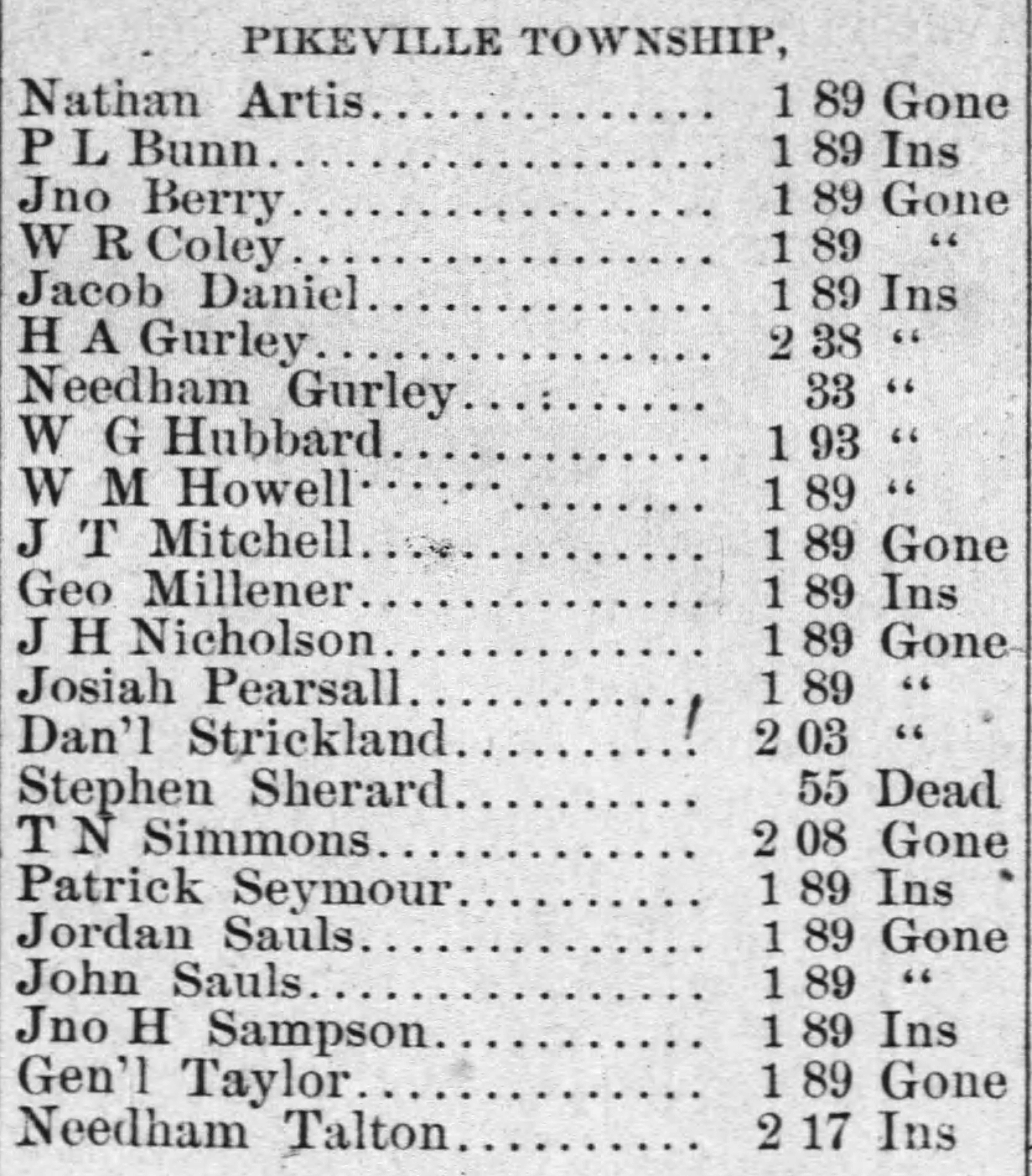
The_Goldsboro_Headlight_Thu__Sep_28__1893_

Goldsboro Headlight, 1893. 

  • In the 1900 census of Point, Woodruff County, Arkansas: Nathan Artist (born February 1852, NC, farmer), Nora (born Dec 1863), and children John F. (October 1877), Bicy Ann (December 1880), Nathan jr. (March 1883), Adalina (February 1885), James H. (October 1887), Lou (August 1890), Solomon (September 1891), and McKinley (November 1897); plus Nathan’s brother John Artis (May 1866, NC), nieces Parthena (December 1894) and Alsie (February 1899) and nephew John H. (February 1897).  Nathan’s last four children were born in Arkansas.  The nieces and nephews were born in Arkansas to a North Carolina-born father and Tennessee-born mother.
  • In the 1910 census of Point, Woodruff County, Nathan Artis (55, farmer, b. NC), wife Norah (50, b. NC), and children Solomon (16), McKenley (11), Markannon (11), Mittie Ann (8) and Anderson (6), all born in Arkansas.  Nora reported 10 of 15 children living. John Artis (47, born NC) appears in the same township with second wife Bettie (33, born Georgia) and children Parthenia (14), John Henry (12), Elsia Jane (11), Pinkie Ann (7), Josheway (5) and Daisy (3), plus Mary Artis (65), described as “mother.” [Who was this? A stepmother? Bettie’s mother?]
  • Nathan Artis died 3 August 1915 in Woodruff County, Arkansas, and was buried in Harris cemetery in that county. His headstone gives his birthdate as 23 January 1849.
  • Nathan’s five sons registered for the World War I draft: (1) Nathan Artis, born 12 March 1885; resided Brinkley, Monroe County, Arkansas; section laborer for St.L.S.W.Ry.; wife Mary Artis; tall, medium build, brown eyes, black hair; signed his name; registered 12 September 1918; (2) James Artis, born 14 November 1888 in “Goldsburg,” NC; resided Aubrey, Arkansas; farmer for self; supported wife and three children; medium height, slender, brown hair and eyes; registered 5 June 1917; (3) Mark Hanna Artis, born 6 November 1896; resided Audrey, Arkansas; employed by T.F. Turner; nearest relative, Nora Artis; medium height, slender, black hair and eyes; signed with X; registered 5 June 1918; Mark’s twin (4) McKinley Artis, born 6 November 1896; resided Audrey, Arkansas; employed by Angeline Steward; nearest relative, Frances Artis; tall, medium build, black hair and eyes; signed with X; registered 5 June 1918; and (5) Solomon Artis, born 16 November 1893; resided Aubrey, Arkansas; farmer for self; single; medium height and build, black hair and eyes; signed with X; registered 5 June 1917.
  • So did John’s oldest son John Henry Artist, born 8 April 1899; resided Gregory, Arkansas; farmer for John Artist; nearest relative, John Artist; tall, medium build, brown eyes, black hair; signed with X; registered 12 September 1918.
  • John Artis was alive as late as 1930, when he appears in the census of Mississippi County, Arkansas.
  • At least two of Nathan Artis’ sons migrated to the Memphis. McKinley, died there in 1925 of tuberculosis. His first cousin John Henry, who lived in Oakville, Shelby County, died three years later of the same disease brother. His brother “Jack,” however, lived into early middle age, dying in Memphis in 1939. The remainder of Nathan and John Artis’ children seem to have remained, at least till the eve of World War II, in eastern Arkansas.
 

Standard
Births Deaths Marriages, North Carolina, Paternal Kin

Delayed birth certificates.

When I was home last week, I had some time to kill, so I spent an hour or so in the Wayne County Register of Deeds office, flipping through Delayed Birth registers. North Carolina did not mandate vital records until 1913, but people born before that year could obtain a “delayed” certificate if they could provide certain proof of their birthdate.

What struck me:

  • Certificate after certificate relied upon an entry in a family Bible to substantiate a birth date. Where have all these Good Books gone??? Who’s got them now?
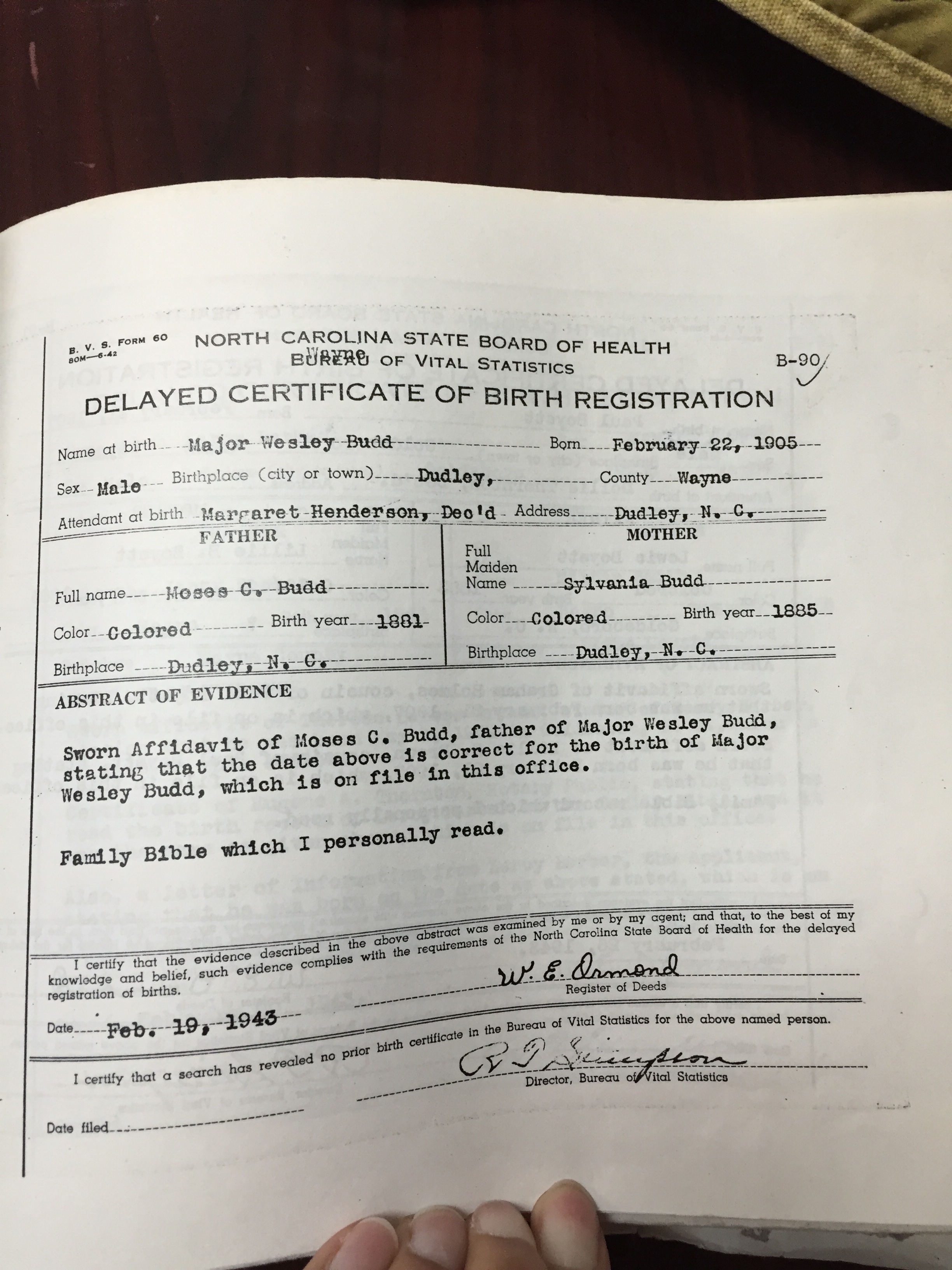
  • The evidence of family midwives. For example, Major Wesley Budd’s delayed birth certificate cites my great-great-great-grandmother Margaret Henderson as the midwife for his 1905 birth; my great-great-grandmother Vicey Aldridge delivered her brother-in-law Joseph Aldridge‘s daughter Mary Eliza in 1906; and Frances Aldridge (which one?) delivered Joseph’s son William B. Aldridge in 1911.
  • My great-grandfather’s sister Catherine Aldridge Davis obtained two delayed birth certificates. The first, issued 10 February 1943, was based on affidavits from her sister Lenora Henderson and a family friend named W.N. Anderson. (She was described as “colored” in this document.) The second, issued 30 November 1943, was based on the affidavits of her sisters Frances Newsome and Lenora Henderson and of a New York Justice of the Peace who swore that he had examined her family Bible.  (In that one, she was described as “American Indian.”)
  • Mathew Aldridge‘s daughter Mamie Jael‘s delayed birth certificate was issued on the basis of affidavits provided by her cousins, Mary J. Simmons and Annie B. Hogans. (This isn’t Annie B. Watson Hogans, mother of Daniel Simmons‘ wife, Annie Irene Hogans — she died in 1906.) How were Hogans and Simmons related to Mamie Aldridge? And why is Mathew’s middle name listed as Augusta, when every other reference I’ve seen shows middle initial W.?
  • Further evidence of the sway of my great-grandfather Thomas Aldrich over his siblings — his sister Christena Lenora used his preferred alternate name spelling rather than “Aldridge” when she applied for a delayed birth certificate. Nora offered as evidence the license for her marriage to Henry Henderson and affidavits from her brother Johnnie and cousin A.J. Carter. Who was A.J. Carter??

FullSizeRender

Standard
Civil War, Free People of Color, Military, North Carolina, Paternal Kin, Photographs

Lane photographs.

My Daniel Artis/Christopher Lane posts have attracted even more fruitful attention. S.C. has researched the John Lane family for her half-brother, who is descended from one of Christopher Lane’s brothers, and has generously shared photos she has collected.

This photo, taken perhaps in the 1980s, depicts the ruins of John Lane’s house in Bullhead, Greene County. It was in and around this house, presumably, that Sylvania Artis‘ children worked during their involuntary apprenticeship to Lane. S.C. says the house has since been pulled down, though some its interior was salvaged. She also said the family’s cemetery is nearby.

LaneHouse

And then this rather leprous image shows Christopher C. Lane, the young soldier who took Daniel Artis with him as a valet when he entered Confederate service.

ChristopherCLane

Many thanks to S.C. for reaching out and for sharing these photographs.

Standard
Newspaper Articles, North Carolina, Paternal Kin

Matilda Love Divine?

Back when I took terrible notes, I wrote this on a slip of paper: LUCY MATILDA LOVETT DIVINE.

All I remember about it is that my grandmother told me that this was the name of a Henderson relative. There aren’t any Lucys in the family, so I’m fairly certain she was talking about her grandmother — whose name actually was “Ludie” or “Loudie” and who died when my grandmother’s mother was a toddler. If I probed for more details, though, I didn’t record them.

A couple of days ago, I ran across this:

Wilson_Advance_7_27_1883_euphonious_names

Wilson Advance, 27 July 1883.

What?!?!

I Googled “Matilda Love Divine” and found:

  • family trees containing Ann Matilda Love Divine Seymour Salmon, born maybe in Fayetteville, North Carolina, around 1900; Sarah Ann Caroline Matilda Love Divine Seymour Terry Bell Jones, born near Jones County, North Carolina, in 1915; and Lucy Matilda Love Divine Isabella Susan Caroline Bray, born Pike County, Alabama, in 1864; and
  • a snarky Tuscaloosa News article about “unique Southern Negro names,” dated 11 January 1938, that mentioned a Perry County, Alabama, girl named Melissa Ann Queen of Loaf Henry Foster’s Oldest Daughter Sarah Matilda Love Divine Seymoure Cyndie Caroline Foster; and
  • a snarky Raleigh Enterprise bit from 16 April 1906 about a local “chocolate”-colored girl named Lucy Matilda Love Divine Seymour Terry Belle Caroline; and
  • a marriage announcement in the Goldsboro Headlight, 15 July 1897, for Mary Margaret Lucy Levy Jane Sarah Matilda Love Divine Seymour Carrie Bell Caroline Bartlett; and
  • much further afield, a mention in Maine’s Daily Kennebec Journal, 1 August 1903, of Ruth Matilda Love Divine Seymour Terry Belle Caroline Finney.

So what to make of this? Was Loudie Henderson really another of the “Matilda Love Divine” sisterhood? Who in the world was the original? And how did her name seize popular imagination?

Standard
Maternal Kin, North Carolina, Oral History, Politics, Rights

When time came for women to vote.

In which my grandmother schools me on her grandmother and voting:

NICHOLSON -- Harriet Nicholson 1

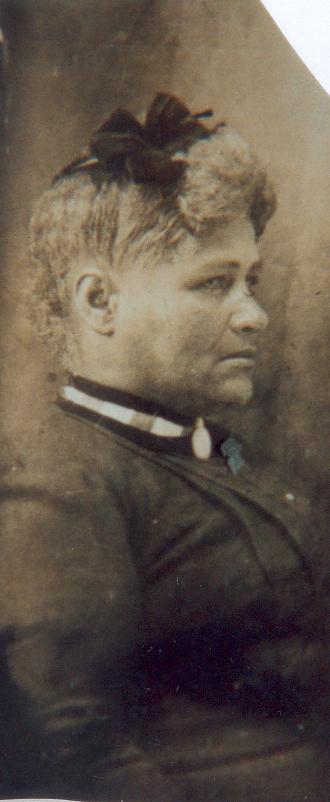
Harriet Nicholson Tomlin Hart (1861-1926)

Me: How did she work that? How did Harriet get to be the first black woman to vote?

Grandma: Well, because her husband [T. Alonzo Hart] was a lawyer.

Me: Right.

Grandma: He was a, whatchacall – a real estate lawyer. And he taught her how to read and write and do everything after he married her. Or while he was marrying her. Or something. And when time came for women to vote, she was the first black – he carried her down to the polls, and she was the first black woman to vote. And then at that time, you know, they gave you a quiz.

Me: Right. Right. Right. For black people to vote. Yeah. ‘Cause did your parents – well, did your father vote?

Grandma: Oh, yeah. Papa voted. He voted. And the people in my home, Lisa, fought in the streets [Statesville, North Carolina]. It was dange – I mean, we could not go outside the house on election night. The people — “Who’d you vote for?” “I’m a Democrat.” “I’m a Republican.” Pam-a-lam-a-lam! [Swings fists, and I break into laughter.] People acted like they were crazy! Papa didn’t allow us out the house. “You better be getting on home!” ‘Cause they were terrible.

Me: And now you got to drag people out to vote. And then you hear people going: “I’m not gon vote now. What’s the point? I blah-blah-blah.”

Grandma: Yeah. When I came here [Newport News, Virginia] you had to pay poll tax.

Me: Yeah.

Grandma: It wasn’t a whole lot, but it was ridiculous.

Me: Yep.

[My grandmother cast her last ballot — at age 100 — for Barack Obama in 2008.]

——

Interview of Margaret C. Allen by Lisa Y. Henderson; all rights reserved.

Standard
Births Deaths Marriages, Free People of Color, North Carolina, Paternal Kin

She was named after …

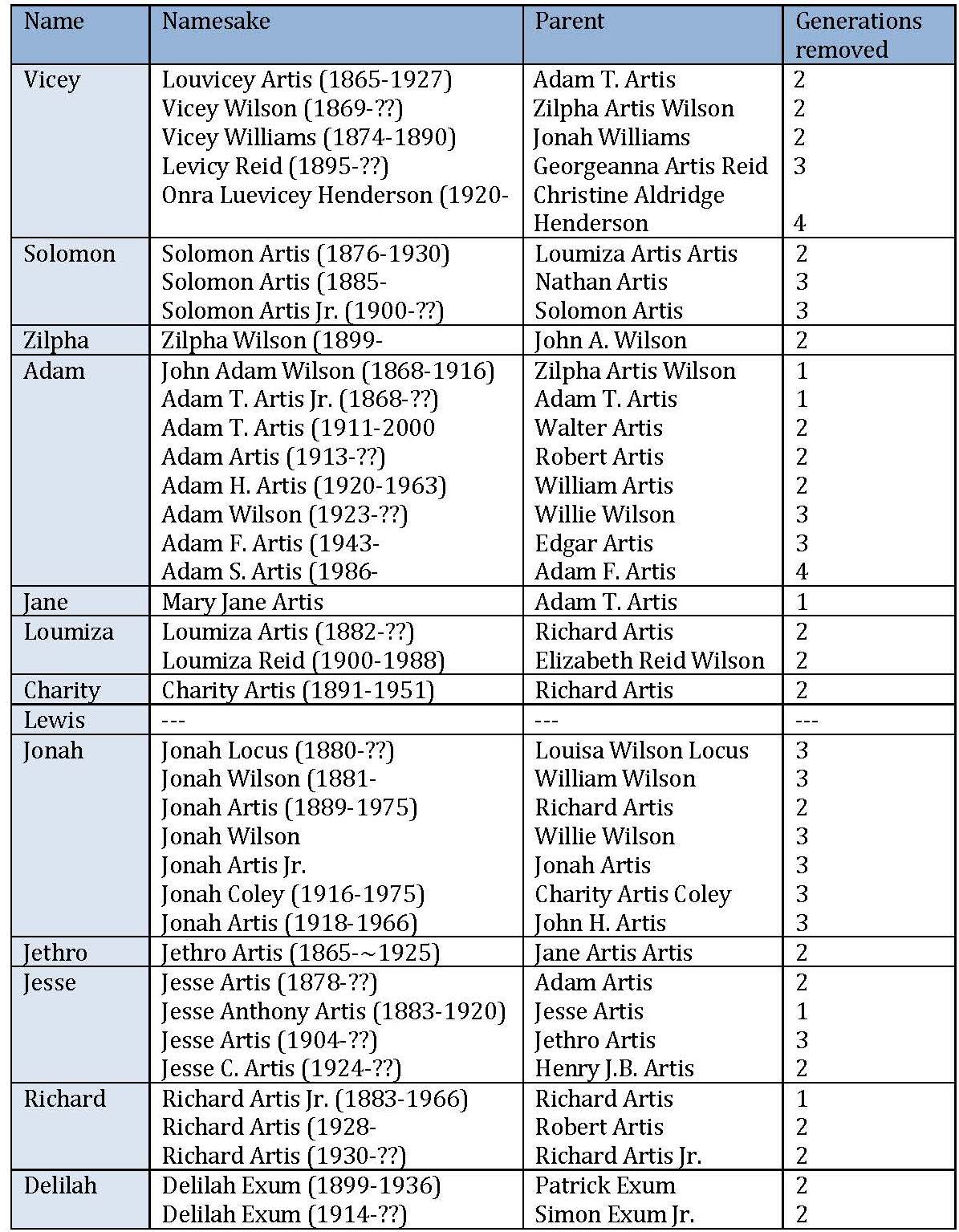
As in many early American families,  the descendants of Solomon and Vicey Artis Williams honored their forebears and living kin by naming children after them. The practice did not begin with them, and it is intriguing to speculate about which of the names that Vicey bestowed upon her offspring had been handed down from earlier generations.

The chart below sets forth all known namesakes of Solomon, Vicey or their children Zilpha, Adam, Jane, Loumiza, Charity, Lewis, Jonah, Jethro, Jesse, Richard and Delilah.

Match

Standard
Births Deaths Marriages, North Carolina, Paternal Kin, Photographs

Row Q.

Less than an hour after we got from the WCGS meeting last night, I received an email from president Joan Howell. I’d mentioned to her that I was trying to locate an unmarked grave at Rest Haven, she’d offered to check her records, and there it was: Nina F. Hardy, Section 3, Lot 20, Q in the street, Space 4.

This is how the morning went:

  • My father and I drove over to Rest Haven, but quickly realized that there was no way to determine where A’nt Nina’s grave was just by looking.
  • We got back in the car and crossed town to Maplewood Cemetery, where the City of Wilson Cemetery Commission is headquartered. The manager provided a chart and a print-out and a good suggestion. “Walk about halfway up Q,” she said. “Then call me and tell me what headstones you see.” [Sidenote: Q was once a track running through Sections 3 and 4 of the cemetery, like P and R to either side of it. Years ago, Q and the other odd-lettered rows were closed off and converted to burial space. The designation “Q in the street” means that A’nt Nina’s grave lies under what was once a pathway.]
  • Back to Rest Haven. A few minutes and a call later, we had the general location of A’nt Nina’s grave between those of Rev. Calvin Harris Boykin and Annie Thompson. I snapped a shot or two, though there is nothing much to see. [Cemetery employees can pinpoint graves, but none were available at the time.]
  • No time like the present, so we headed to our cousin L.H.’s house. His family owns a vault business that does a sideline in gravestones. I ordered a simple flat granite marker to be inscribed with A’nt Nina’s name, birth and death dates; my dad wrote a check (I’d left mine in Georgia, and L.H. doesn’t truck with credit cards); and it was done. I kissed L.H.’s new grandson, and he promised to send me a photo when the marker is installed. [L.H. remembers A’nt Nina. I don’t know why that surprised me. When they arrived in Wilson from Wayne County, Nina and L.H.’s grandfather, Jesse “Jack” Henderson, both lived with Jesse and Sarah Henderson Jacobs on Elba Street.]

IMG_5217

My father standing at the approximate location of Nina Hardy’s grave this morning. Rest Haven cemetery, Wilson, North Carolina.

Standard
North Carolina, Paternal Kin

Tonight.

April 1998. I’d been a member of Wilson County Genealogical Society perhaps six months. The group’s Colonial Roads Tour felt like something I couldn’t miss, so I made a special trip home to board a bus that would introduce us to Wilson County’s earliest past. The late, great Henry Powell narrated, identifying and illuminating obscure landmark after obscure landmark as Wilson County’s backroads unspooled beneath the bus’ wheels. For the first time, I began to understand Wilson as a palimpsest created not just by time, but by race and class. There were whole layers of culture and memory and history accessible only to those who had inherited the right keys. The keys I had unlocked none of these doors. But they did grant access to the Society.

From the beginning, I was welcomed into the group — encouraged, consulted and listened to. WCGS’ efforts to be inclusive have been organic and sincere, and I have appreciated the opportunity to be a resource for others in and out of the group. Living in Atlanta means that I’ve only attended a handful of the Society’s Tuesday night meetings, but over the years I’ve been able to contribute dozens of articles to its excellent newsletter.

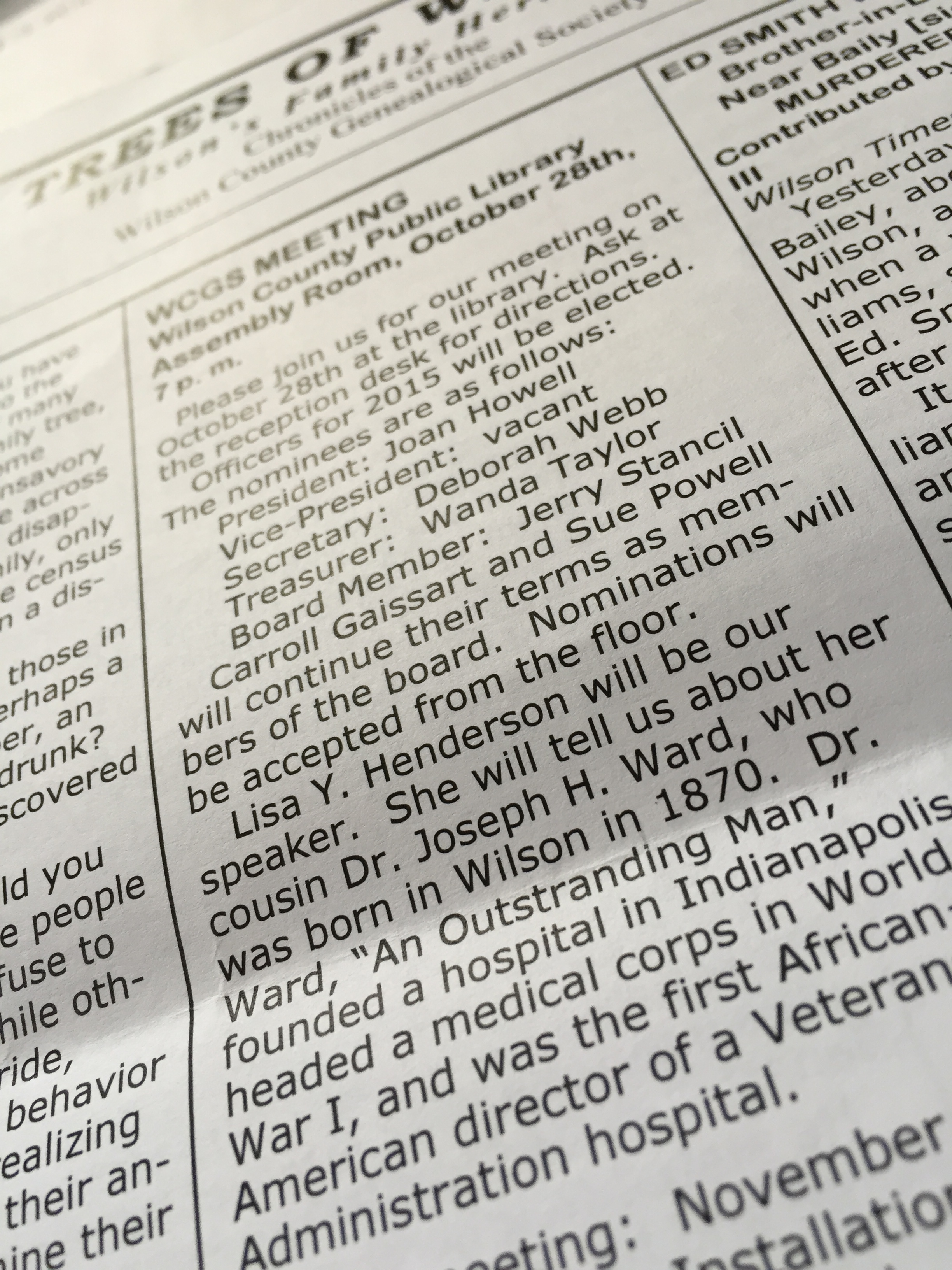
This week I again came home just for a WCGS event. Tonight, at the Society’s invitation, I used my keys to open a door to Wilson County to which few society members have access. My presentation touched on slaves and free people of color and segregation, but was focused on the awesome life of one of Wilson’s “lost” sons, my cousin Dr. Joseph H. Ward. After I set my nerves aside, my talk went well, eliciting thoughtful questions and positive comments at its conclusion.

IMG_5157

I thank Wilson County Genealogical Society for the opportunity to give back to a community that has encouraged and supported my research for 17 years. And I thank the little fan club that came out to support me — my parents; Mrs. L and Mr. and Mrs. M, who have been surrogate parents all my long life; and a couple of staunch childhood friends. After the program, I spoke by phone with Cousin Joseph’s great-granddaughter, who is named after his beloved wife. One of the joys of my recent research has been being able to fill in the blanks in her ancestor’s early life, and she and her mother hope to visit his birthplace soon.

Standard
DNA, Maternal Kin, Paternal Kin

DNA Definites: Ancestry (under)estimates.

Of my zillions of matches at Ancestry DNA, to date I’ve able to document 13 of them. Four were cousins I already knew; one was a cousin I conjectured, but couldn’t prove; and two others are from family lines I knew, though I did not know the match. I am related to the remaining six — the most distant matches — via late colonial or early antebellum-era white ancestors previously identified but unproven.

The chart below shows Ancestry DNA’s estimates of my kinship to these 13, as well as our actual relationship. Ancestry tends to underestimate relationship slightly in matches closer than five degrees, and I try to keep this in mind when speculating about my mystery matches.

Match Ancestry Estimate Actual Relationship
W.H. 3rd-4th cousin 2nd cousin, once removed
G.J. 4th-6th cousin 2nd cousin, once removed
H.B. 4th-6th cousin 3rd cousin, once removed
S.D. 4th-6th cousin 3rd cousin
G.P. 5th-8th cousin 3rd cousin, 3x removed
E.G. 5th-8th cousin 4th cousin
B.J. 5th-8th cousin 4th cousin
G.L. 5th-8th cousin 5th cousin, once removed
J.W. 5th-8th cousin 5th cousin, once removed
D.M. 5th-8th cousin 5th cousin, once removed
J.B. 5th-8th cousin 5th cousin, twice removed
E.D 5th-8th cousin 6th cousin, twice removed
L.B. 5th-8th cousin 7th cousin
Standard
Births Deaths Marriages, Maternal Kin, Newspaper Articles, North Carolina

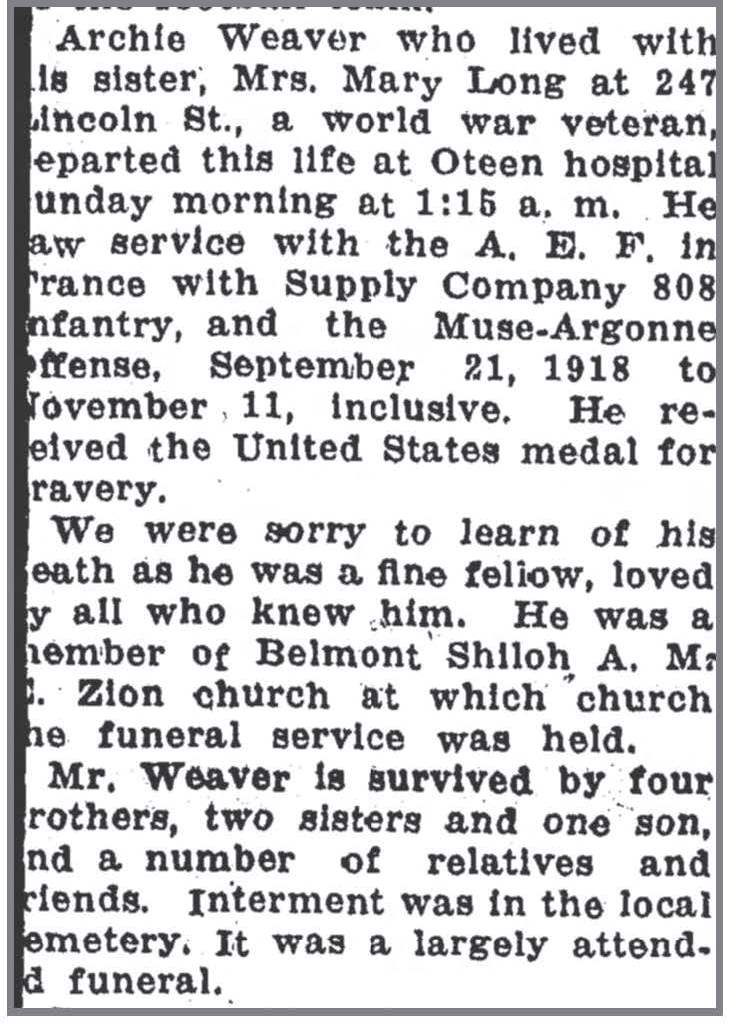
Archie Weaver departs this life.

statesville_record_6_2_1933_archie_weaver

Statesville Record, 2 June 1933.

My grandmother, for one, would not have agreed with this glowing assessment of Archie Weaver as hail-fellow-well-met and certainly would have put the lie to “loved by all who knew him.”

I’ll repeat it: Jay’s daddy had TB, and he just gave it to them. To my aunt and Jay. But he lived years and years and years after both of them died. But he give them all this stuff. Oh, I could not stand him. She was my special aunt because she had boys, and she didn’t have any girls. And she just took me over her house, you know, and let me do things that girls did, you know. 

In other words, for her money, Arch Weaver killed her beloved aunt Elethea and favorite cousin, Irving “Jay” McNeely Weaver. Though she was right that Arch survived “years and years and years” — eleven, to be exact — after Elethea, Jay, in fact, outlived his father by five months. No matter. They died, and much too soon for her.

Interview of Margaret C. Allen by Lisa Y. Henderson, all rights reserved.

Standard