Births Deaths Marriages, Maternal Kin, Oral History, Photographs, Virginia, Vocation

He designed every house he built.

About ten years ago, when we were all in Newport News for a family reunion, I asked my uncle to take us on a tour of houses our grandfather built.

——

He designed every house he built. And there were a couple he designed that he didn’t build. I’ll show you those, too. One of them, he really hated to lose. That was a, Dr. Woodard was a dentist. I mean, a pharmacist. And so, he – that was one of the lots that Daddy had sold, and so I think Daddy was a little ticked with the guy. He sold him the lot and designed the house, then the man went to another contractor. But you know what was interesting at that time? There were about five or six good general contractors around, you know, that did small buildings. And Daddy was one of those, but these guys were pretty competitive. They had a decent market. Daddy built an average of about a house a year, I guess. The war cut him off, you know. He had to get reestablished after the war. But he had a friend named Buster Reynolds. And Buster Reynolds was reputed to have made his money in the numbers, and so when the numbers were getting real hot and heavy, when it was reputed that the Mafia was trying to take the numbers over, Buster got out. And he built this service station, and he had a Texaco franchise, and he had Daddy to build the station. And Texaco liked the work so much that Daddy built two more stations for Texaco. And both of the stations that were built in the black community are still up. They’re not gas stations anymore, but the buildings are still up. And the one that was built Overtown is gone. But even the station that was in the white community Texaco had him to build that one, too. And with the money Daddy bought – I’ll never forget – he bought an International truck, great big truck, to carry his materials around.

Texaco 2

——

… the churches that he used to do expansions and modernizations on all the time, but I know one of ‘em is gone, and I don’t know where the other one is. I know the one – he used to take me down to that one from time to time. But I don’t know where they are now. The thing he did throughout all of these communities – he had a strong maintenance clientele, but Daddy was a – you see these cabinet shops now? Well, Daddy used to make, put in new cabinet work in people’s kitchens for them. And, so, that’s what carried him through the winter. ‘Cause he would also do designs and drawings for other contractors. Like Jimmy’s daddy. Mr. Scott. He used to do most of their design work, he’d sit there and draw those drawings for them. But that’s what got him through the winter. That and he used to do a lot of maintenance. Put in new windows, cabinet work, doors. Put little small additions to houses. But that was generally for a white clientele. He used to do a lot of work for the shipyard management people up in North Huntington Heights.

——

This house Daddy was building when he died. He was building it for a family named Kramer. A white family. See the one with the little entrance and the white wrought iron?

House 1

1316 – 22nd Street

——

The 800 block of Hampton Avenue, this is where Daddy owned those lots. Slow down … this house right here. This tan house. 855. This house was built at that time for the Tynes family, which owned a very nice house and property up in the next block.

Hampton Avenue 1

855 Hampton Avenue

But the Tynes family ran into some – I guess it was financial difficulty. Anyway, that house was sold to Wendell Walker, who was a lawyer and a part of the Walker family. You know his father was a lawyer, who was William. And his son William jr. is Howard Walker’s father, who was my classmate. And then there were, like, four sons and a daughter, I believe it was. Three of ‘em were lawyers, and then Wendell and Phillip were lawyers. The son William was an engineer, but when he came back home, he was manager of Aberdeen. He went into real estate and insurance. Daddy sold him the lot, designed and built the house.

——

Hampton Avenue 3.1

819 Hampton Avenue

Let me tell you about this house right here. This house was the undoing. This house was built for his friend Leroy Ridley. And there were, I think, four lots – four or three lots. Leroy Ridley was the son of John Ridley, who founded Crown Savings Bank with Pa Pa Allen. Okay? But he became – one of the Ridley sons, he became the one who took over the bank. And the man turned out to be not the most moral and forthright businessman. He talked into Daddy into $5000 worth of extras in this house, which was almost the same size as the house. And then when it came time to close the deal, he refused to pay Daddy because he said Daddy had not duly executed the extensions in the contract to do that. And not only that – Daddy had borrowed money from his bank. The long and short of the story is the last of that was paid when Pa Pa’s estate was executed [in 1961, 13 years after John Allen’s death.] We told Mother to pay that loan off ‘cause she still owed a thousand dollars. But this house turned out to be what kept Daddy from building Mama her house. ‘Cause he was gon build it on another lot. See? But when he got caught in that deal, then he couldn’t. So then he had to sell off all the lots that he had for houses, okay? So that’s when he sold this lot – the Woodard lot. And designed that house for Dr. Woodard.

Me: This incredible – this house right here?

My uncle: Yes. That’s Daddy’s design.

My cousin, J: Wow!

Me: Sheeze. Oh, my God.

He did not do it. He designed it. Okay. See, this was an extra lot. This is another one of the large lots he had. You see what I’m saying? And this house was across the street, that was his pride and joy. That was a Cape Cod. But I’m saying, the Ridley house was a fantastic house. I mean, you know, the design was great, but anyway, so this was done for his buddy Picott. Mr. Picott. He was president — well, he wasn’t president – yes, well, he was, of Virginia Education Association, which was the black unit of the National Education Association. He was one of the guys who lost their jobs over the equal rights fight with Mr. Palmer for black teachers to have equal pay. And he left and moved to Richmond, and that’s when he sold his house. But that was a beautiful home. Solid oak floors, cabinetry that Daddy built. All of that, that house. But that’s the thing that – she won’t talk about it too much – but that’s the thing that really embittered Mother, was when she lost the opportunity to build her house because of that deal.

Hampton Avenue 2

816 Hampton Avenue

——

2107 Marshall Ave

2107 Marshall Avenue, my great-grandparents’ house.

You know, he did all that for his father. He put the addition – designed that addition to go on the back. Right behind the bathroom window. Okay, that’s where the bathroom was. And then Daddy designed and started that addition for the house. And that’s when he went to the Army. And they put that addition up there so – so the bottom addition was the barbershop, remember? You remember the beauty shop? Yeah, the bottom addition was the beauty shop, and the upper addition was the bedroom for Aunt Nita for the war. Pa Pa did that for his children.

——

House 3

3105 [I didn’t note the street name]

On the corner here, similar to the Kramer house. Designed it and built it. That was done for Dr. Fultz, who was a dentist. Actually, he was the school dentist. He built 3015. This at that time was a predominantly white neighborhood. Yeah, that’s the house. See that little carpentry he did? Those little arched doorways? That’s the original wood. That’s Daddy’s work.

——

Remembering John Christopher Allen, Jr., carpenter, draftsman, builder, contractor, father of five, grandfather of eight, great-grandfather of six, born 107 years ago today.

—–

Interview by Lisa Y. Henderson; all rights reserved. Photos taken by Lisa Y. Henderson, 2002.

Standard
Births Deaths Marriages, Other Documents, Paternal Kin, Photographs

Funeral Program Friday: Bessie Henderson Smith.

Bessie Henderson schoolgirlBessie, aged about 12.

Jack Henderson named his first child, born 24 September 1917, after his sister Bessie Lee Henderson. In the early years of World War II, she and her only child moved from Wilson to Baltimore, where she lived for 54 years.

zeke & bessieCousin Bessie, right, with her sister Alice Henderson Mabin on the porch of their sister Mildred Henderson Hall in Wilson, 1986.

FP Besse H Smith_Page_1FP Besse H Smith_Page_2

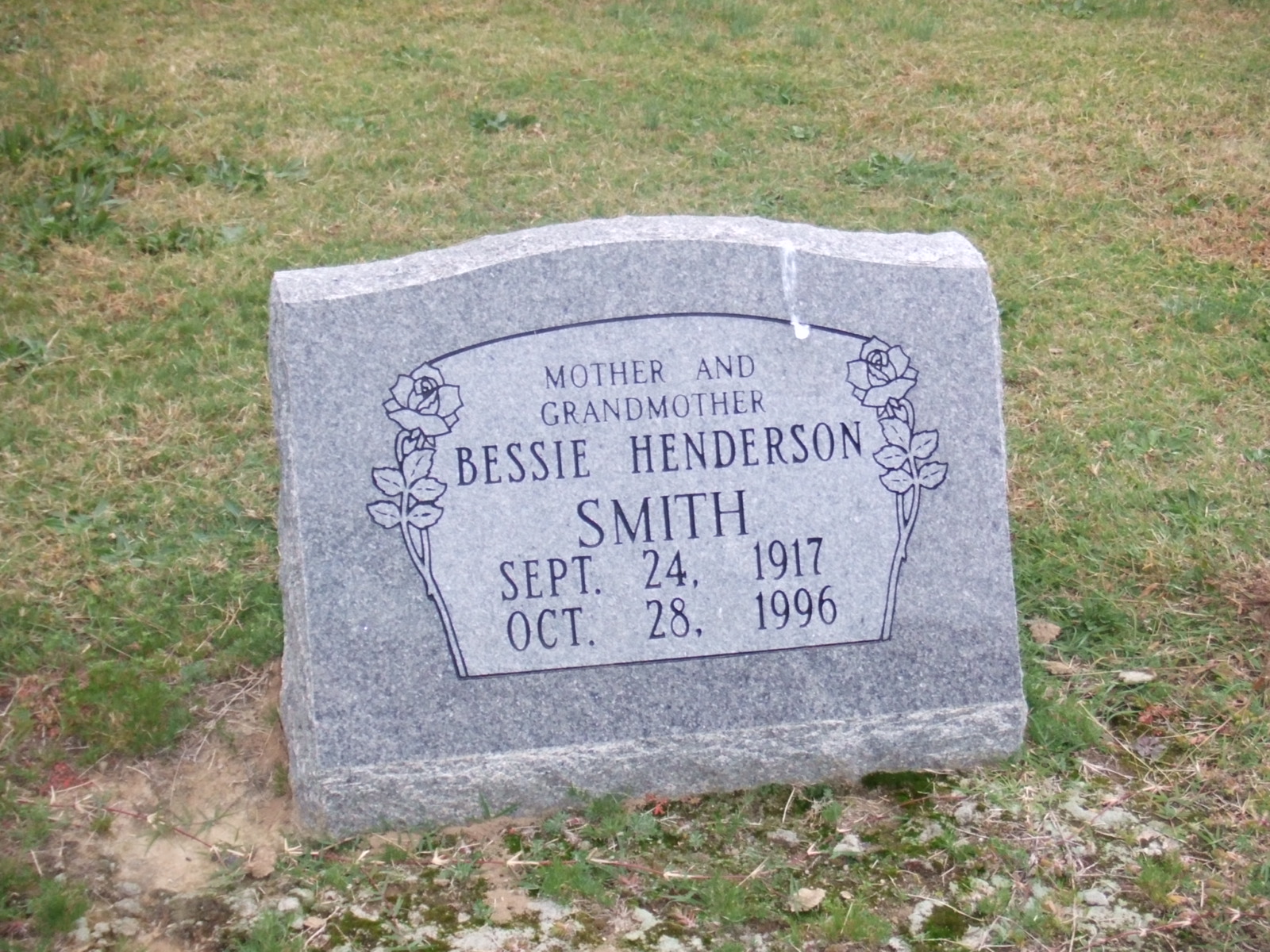
Cousin Bessie is buried in Rest Haven cemetery, Wilson NC.

Bessie H Smith headstone

Standard
Births Deaths Marriages, North Carolina, Paternal Kin, Photographs

Remembering Jesse Lee.

My Aunt Mamie had two handsome boys. John‘s birthday was last week. Jesse Lee‘s would have been today.

Image

Jesse Lee was a quiet, brown-eyed, blunt-featured version of his brother. Together, they were beautiful.

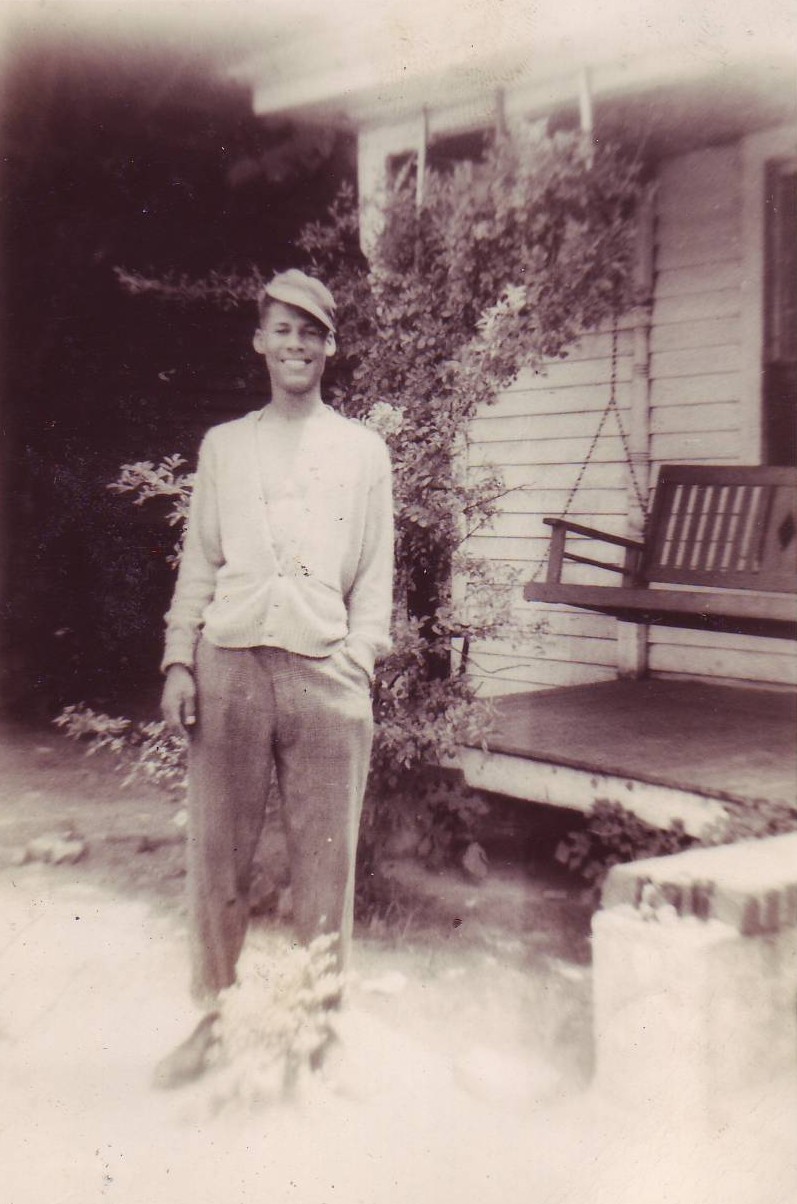
Image Happy birthday, Jesse Lee Holt (11 December 1927-27 May 1993).

——

Photographs (or copies) in the possession of Lisa Y. Henderson.

Standard
Letters, Migration, Paternal Kin

Where we lived: Caswell C. Henderson’s New York City.

It’s not clear when Caswell Henderson arrived in New York, but 1890 is a good guess. In the 35 or so years that he lived in the city, Caswell claimed at least eight addresses in two boroughs and Westchester County, most during a decade in which he and his wife seemed to move almost yearly.

This is Caswell’s New York:

NYC

1. 326 West 37th Street. When Caswell married Emma Bentley in 1893, he reported this address. He is listed there in 1896 in Trow’s New York City Directory. It’s a bit south of the 1 on the map, between 8th and 9th Avenues in the overlap between Hell’s Kitchen and the Garment District, and is now a parking deck.

2. 47 West 66th Street. By the 1900 census, Caswell and Emma had moved north to an address just outside the notorous San Juan Hill neighborhood. Caswell was still living here when he married his second wife, Carrie Lowe, in 1907.  Address located in the block off Central Park West, now occupied by ABC headquarters.

3. 247 West 143rd Street. By 1909, Caswell and Carrie had moved way uptown to Harlem. Block between Adam Clayton Powell and Frederick Douglass Boulevards, now the site of basketball courts in the Drew-Hamilton housing project.

4. 901 Grant Avenue. Per the 1910 city directory, Caswell and Carrie lived in Morrisania in the Bronx, a few blocks west of current Yankee Stadium, now the site of the Bronx School for Law, Government and Justice.

5. 527 East 167th Street. In 1912, a little deeper into the Bronx, a few blocks from Bronx-Lebanon Hospital Center, now a parking lot.

6. 446 West 163rd Street. By 1915, the Hendersons were back in Manhattan at an address they held for the next ten years. Washington Heights, between Edgecombe and Amsterdam Avenues near Highbridge Park and the Harlem River, a few blocks southeast of Columbia University Medical Center.

7. 3777 Third Avenue. In 1926, they returned to the heart of the Bronx to an address that is now Gouverneur Playground. (Or did they? Caswell wrote his sister a letter from this address, but his widow was living on West 163rd when he died. Were they separated? He mentions the health benefits of living in “the country” — what did Third Avenue look like in the early 1920s?)

8. 6 Belknap Avenue. Caswell died at this home in Yonkers in 1927, though his death certificate lists his wife’s address as 446 West 163rd. It’s not clear who owned the Belknap Avenue house, but in 1930, it is occupied by French West Indian chef Marshall Mingo and family.

Standard
North Carolina, Other Documents, Paternal Kin

Jonah’s apprentices.

On 24 Sept 1870,  Geo. Jno. Robinson, Probate Judge, bound to “Jonah Williams (col)” John H. Britt, Ida Britt and Cora Britt, aged 12, 10 and 6, to “live after the manner of an apprentice and servant until the said apprentice shall attain to the age of twenty-one years and until Ida & Cora shall attain the age of eighteen years”  John was to be taught trade of a farmer, and Ida and Cora that of house servant.  Williams “shall further provide said apprentices each with a new suit of clothes, six dollars in cash & a new Bible at the end of said apprenticeship.”  Williams signed the indenture with an X.*

Who were the Britts to Jonah Williams?

They are not listed in Jonah’s household in the 1870 census. Rather, Ida, 9, and Corah Britt, 6, and their mother Hannah Britt, 39, appear in the household of drayman Doctor Thompson, his wife Feribee, and daughter Lucy in Goldsboro, Wayne County.  John Britt is not found.

Ten years later, Ida Britt, 20, is listed in the Wayne County household of Jonah’s 80 year-old father, Solomon Williams. Ida and Charity Artis, 42, were described as Solomon’s “daughters.”  Charity certainly was, but Ida? It is possible, certainly, that Solomon fathered three children with Hannah Britt in the eight years prior to Emancipation and his 1866 marriage to the mother of his 11 other children, born between 1828 and 1851.  If so, the arrangement with his son Jonah might have been a way to insure their care. Solomon did not legitimate the Britts, however, as none appear in his 1883 estate records. The more likely explanation is that Ida was in the household  as a quasi-servant, and the censustaker assigned her relationship based on his assumptions. I have not found her in any record after 1880.

——

*Wayne County Apprentice Bonds, NC State Archives.

Standard
Maternal Kin, Paternal Kin, Vocation

Where we worked: teamsters, drivers and draymen.

Lewis Colvert, Statesville NC – drayman, circa 1895.

Haywood Artis, Norfolk VA – driver, 1897.

Isham Smith, Goldsboro NC – husband of Nancy Henderson Smith; wagon driver, circa 1900.

Wesley Barnes, Wilson NC – teamster, 1900-1910; drayman, Tomlinson Co., circa 1919.

Mike Taylor, Wilson NC – drayman, circa 1900; drayman, circa 1908-1910s.

Dock Simmons, Logansport IN – teamster, 1900s-1920s; trucking, circa 1945.

Luther McNeely, Statesville NC – driver, dray wagon, circa 1910; driver, Statesville Grocery Company, 1916.

John W. Colvert, Statesville NC – dray wagon driver, circa 1910; driver, circa 1916; teamster, circa 1920.

William Henderson, Goldsboro NC – driver, circa 1916.

Jack Henderson, Wilson NC – transfer driver, Sam Vick, circa 1917; truck driver for woodyard, circa 1920; truck driver, Liggett & Myers tobacco company, 1930s-1940s.

Junius Allen, Newport News VA – drayman, circa 1920.

John Sampson, Goldsboro NC – husband of Cora Reid Sampson; drayman for city, circa 1920.

Bazel Holt, Greensboro NC – husband of Mamie Henderson Holt; driver, 1920s-1950s; Foster-Caveness, Inc., circa 1930.

John Long, Statesville NC – husband of Lizzie McNeely Long; railway truck driver, circa 1930.

James L. Henderson, Goldsboro NC – truck helper, “CoCola” plant, circa 1936.

Jimmie Reaves, Greenville NC – husband of Bertha Taylor Reaves; driver for department store, circa 1940.

——

“Drayman” — historically, the driver of a dray, a low, flat-bed wagon without sides, pulled generally by horses or mules and used to transport goods.

“Teamster” — historically, the driver of a wagon drawn by a team of draft animals, usually oxen, horses, or mules.

——

The fourth in an occasional series exploring the ways in which my kinfolk made their livings in the 19th and early 20th centuries.

Standard
DNA, Enslaved People

DNAnigma, no. 10: Sold down the river.

We finally made our way to a theatre to see “12 Years a Slave” today. Throughout this gripping, gut-wrenching film, this ran through my head: “These are my cousins. These are my cousins. These are my cousins.”

My 23andme Relative Finder is filled with matches who know only that their families lived in Mississippi or Louisiana. All my African-American lines are upper South, rooted in Virginia and North Carolina. The link is obvious. My DNA matches are the descendants of the mothers and fathers, aunts, uncles, cousins, and siblings of my ancestors, sold down South in America’s domestic slave trade. The connections are nearly impossible to recreate, the names lost to time, but I take comfort in the fact that the bonds remain detectable in blood and bone.

Standard
Maternal Kin, Military, North Carolina, Other Documents

Ordered to report.

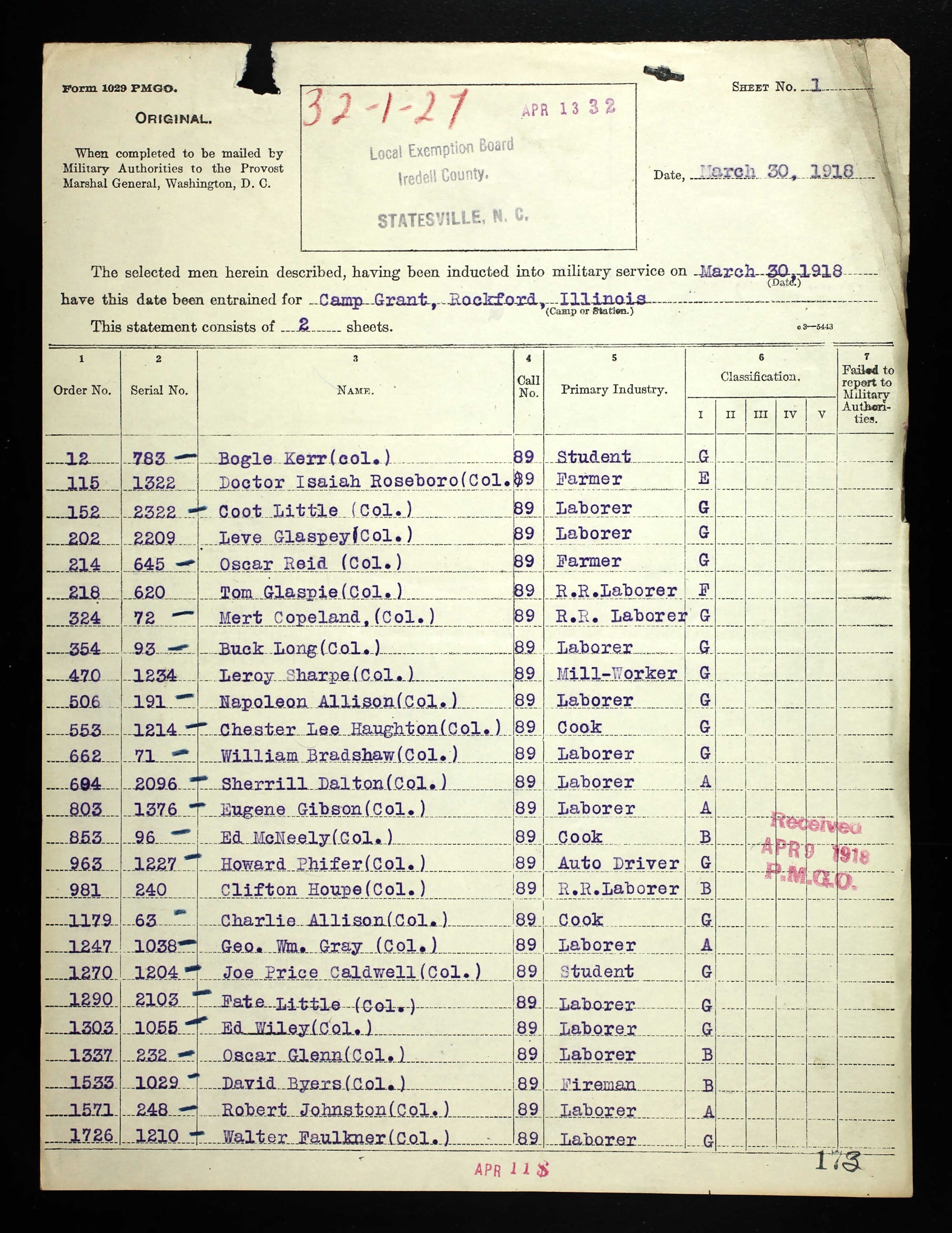
Image

This roster of African-American men from Iredell County inducted on March 30, 1918, and ordered to report to Camp Grant, Rockford, Illinois, included my grandmother’s maternal uncle, Ed McNeely, and brother-in-law William Bradshaw. (Bradshaw married Golar Colvert eight days after his induction.)

[War Department, Office of the Provost Marshal General, Selective Service System, 1917– 07/15/1919. Lists of Men Ordered to Report to Local Board for Military Service, 1917–1918. Records of the Selective Service System (World War I), Record Group 163. National Archives, Atlanta, Georgia.]

Standard
DNA, North Carolina, Paternal Kin

DNA Definites, no. 9: Hagans.

23andme characterizes K.H. as my father’s first cousin (8.11% share) and my second (4.4% share). We are related via my Henderson and Aldridge lines, and much more closely in the latter. He is, in fact, my father’s first cousin, once removed. K.H.’s mother and my father’s grandfather were siblings.

K.H. shows a distant match with W.B., but not her daughter W.M.  (My father and I show no match with either.  Nor does E.H., who is K.H.’s nephew.) W.B. and W.M. are descended from Napoleon Hagans through his son William S. Hagans. Napoleon was the half-brother of Frances Seaberry Artis (my great-great-great-grandmother and K.H.’s great-grandmother.)

Standard
Births Deaths Marriages, Paternal Kin, Photographs

Family cemeteries, no. 2: Artis & Bunch.

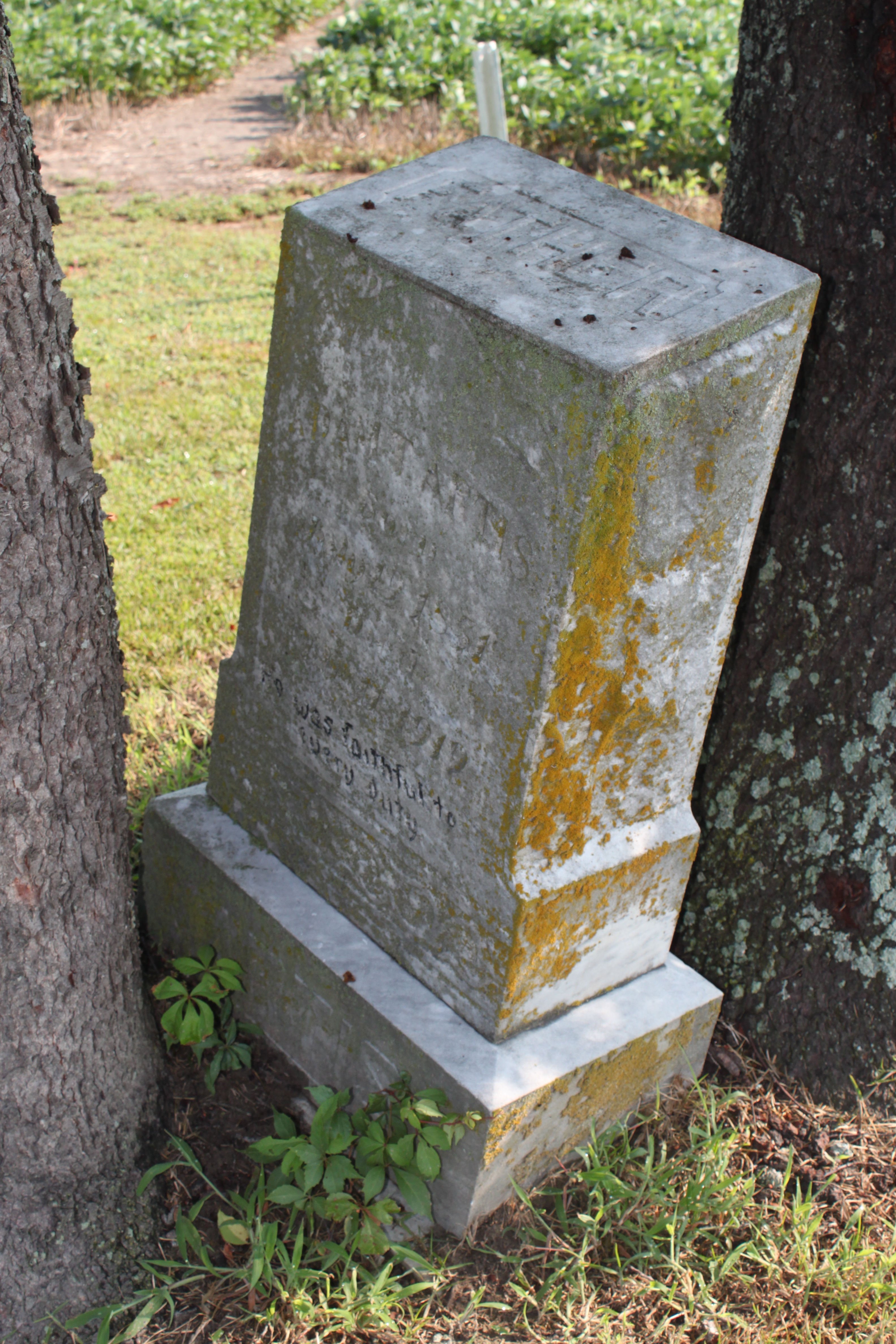
Image

The small “Artis & Bunch” cemetery is located on Highway 222 East in Wayne County between Stantonsburg and Eureka NC on land still owned and occupied by Adam’s descendants. There are several graves, including those of Adam T. Artis (9 July 1831-11 February 1919) and his granddaughters Odessa Artis Baker and Esther Artis Bunch. (Apparently, none of Adam’s wives are buried with him.)

Image

——

Photographs taken by Lisa Y. Henderson, 2010.

Standard