Births Deaths Marriages, Maternal Kin, Newspaper Articles, North Carolina

Lon W. Colvert.

Image

Lon W. Colvert was born 10 June 1875 to Harriet Nicholson and John W. Colvert. He possibly was their second child and certainly was the only one to reach adulthood. My grandmother emphatically stated that his middle name was Walter, but her sister Launie Mae thought “Walker” – after his grandfather – and that’s the name that appears on certain records. Lon’s paternal grandparents reared him, but he was extremely close to his mother as an adult.

Lon was probably in his late teens when he arrived in Statesville from his family’s farm in the northern reaches of Iredell County. He was an ambitious young man with an eye on the main chance and a penchant for the shady that followed him even into his respectable years. By time he was 30, he was well-established downtown as a first-class barber, and the local paper obliged him with recognition:

Image Statesville Landmark, 7 May 1907

Lon and his first wife, Josephine Dalton, had three children, Mattie (1895), Golar Augusta (1897) and John Walker II (1898). Soon after Josephine’s death, he married Caroline M.M.F.V. McNeely and fathered three more daughters, Mary Louise (1906), Margaret Beulah (1908) and Launie Mae (1910).

In the mid-1920s, Lon’s business successes were short-circuited when his health began to fail. He passed away 23 October 1930, 83 years ago today.

Lon Walker Colvert Dies in Wallacetown.

Lon Walker Colvert, colored, 55 years old, died this morning at 1 o’clock at the home of his daughter, Gola Bradshaw, in Wallacetown.  He was an old resident of Statesville, and for a number of years had a barbershop on South Center street, near the Southern station.

The funeral service will be Friday at 2:30, at Center Street A.M.E. Zion church, with interment in the local cemetery.

Surviving are his wife and six children; also one brother and one sister.

— Statesville Landmark, 23 Oct 1930.

Standard
Births Deaths Marriages, North Carolina, Other Documents, Paternal Kin

Keeping it in the family.

James N. Guess operated a funeral home that served Goldsboro, North Carolina’s black community for at least 40 years. (He also ran a barbershop for a half-century and, in the early years, a billiards and pool hall.) Guess’s father Matthew Guess, father-in-law Isham Smith, nephew Kennon Guess and son James N. Guess Jr. worked for or with him to build his business.

ImageGoldsboro City Directory, 1916-17. 

Image Hill’s Directory of Goldsboro, NC, 1950-51.

Not surprisingly, Guess provided services to members of the extended family of his wife, Annie Smith Guess, daughter of Isham and Nancy Henderson Smith. Among those he buried were:

Baby Wooten 2

James N. Guess was born 2 May 1882 in Goldsboro to Matthew and Martha Guess. He died 28 November 1957 in Chapel Hill, North Carolina, after a lengthy illness.

Standard
Enslaved People, Maternal Kin, North Carolina

Where did they go?, no. 1: Nicholson.

In 1850, James Nicholson of northern Iredell County dictated a will that distributed 17 enslaved people – Milas, Dinah, Jack, Liza, Peter, Elix, Paris, Daniel, Carlos, Nelson, Lucinda, Joe, Manoe, Armstrong, Manless, Calvin and Sophie — among his heirs. I am descended from one, Lucinda, whose daughter Harriet was conceived after she joined Thomas A. Nicholson’s household. As I wrote here, Lucinda is found post-slavery only on death certificates of two of her children.  What of the other 16? Are they any easier to trace?

In a word – no.

Mary Allison Nicholson received five slaves from her husband’s estate.  Son Thomas received three outright and a share in five others. Son John McCombs Nicholson received four and a share in the same five. (It is not at all clear whether the groupings of these 17 people respected family units or were simply combinations devised with an eye for equal value.) Mary died in 1857 and, presumably, her property passed to her sons. However, in the 1860 slave schedule of Iredell County, only two Nicholson slaveholders appear: Thomas, who owned 13, and Martin T. Nicholson, who owned three. (Martin was Thomas’ brother-in-law and first cousin.)  In the population schedule, Thomas reported owning $11,000 worth of personal property, a figure that would have included the value of his slaves. His brother John reported only $565. Had he sold his?

And the bigger question, where did Thomas’ slaves go after Emancipation?  Freedmen did not always adopt the surnames of their immediate masters, of course, but in the 1870 census of Iredell County, only four black residents claimed the surname Nicholson. Eliza Nicholson, age 25, lived in the household of Thomas Nicholson’s son Wes. She presumably is the Liza of James’ estate.  Manless Nicholson, 22, his wife (?) Maggie Nicholson, 24, and daughter Annie, 5, lived in Thomas’ household and worked for him. Manless had been jointly owned by Thomas and his brother. In Yadkin, the adjoining county, 35 year-old Alaxander Nicholson (probably the “Elix” above) is listed in the household of Isabel Cartwright. But that is it.  No more.

Obviously, some people were simply inadvertently omitted from the 1870 schedule, such as Lucinda and her daughter Harriet, who were clearly living in Iredell then, and Milas Nicholson, who appears ten years later in Turnersburg township, Iredell County, as a 33 year-old with a wife and child. Also, the 1880 census of Deep Creek, Yadkin County, shows an 80 year-old Sophia Nicholson who may have been “Soffie.” (And was probably Manlius “Manless” Nicholson’s mother, as a Yadkin County marriage license and his death certificate indicate.)  Of Dinah, Daniel, Nelson, Armstrong and the others, however, there is no trace, either in surrounding counties or under a different surname.

Standard
Births Deaths Marriages, Free People of Color, Land, North Carolina, Other Documents, Paternal Kin

Zilpha’s will.

State of North Carolina, Wayne County    }   I, Zilphy Wilson, of the County and State, aforesaid begin of sound mind and memory, but considering the uncertainty of my earthly existence to make and declare this my last Will and Testament in manner and form following, that is to say: — That my Executor hereinafter named shall provide for my body a decent burial, suitable to the wishes of my relations and friends, and pay all funeral expenses together with my just debts out of the first money that may come into his hands as a part or parcel of my estate.

Item 1. I give and bequeath to my daughter Bettie Reid 7 acres of land to be cut off the North East corner of the tract of land on which I now reside for and during her natural life, and after her death to be equally divided between all of her children that she may have now, or may have living at the time of her death, the said Bettie Reid not to have possession of said Land until the debts against my estate are paid.

Item 2. I give devise and bequeath to my son Adam Wilson and my daughter Vicey Wilson, share and share alike all of the tract of Land on which I now live, with the exception of the seven acres given away in Item first of this will, with all the priviledges and appertances thereunto belonging for and during their natural like, should they both have heirs, then they to have their mother & Father part, and should Adam or Vicey only one of them leave heirs, then and in that case I give said land to the surviving heirs of that one to them and their heirs in the fee simple forever.

Item 3. I give and devise unto my son Adam Wilson and Vicy Wilson, share and share alike, all of my Household and Kichen furniture of every description Farming implements of every description, Tools of Mechanics &c &c, Stocks of all kinds, and all the poultry of kind to them and their heirs in fee simple forever.

Item 4. It is my will and I so direct, that my son Adam Wilson to retain possession of the whole of my land at yearly rental of seven hundred lbs. of lint cotton which is to be applied to the payment of the debts against my estate, as soon as said debts are paid, I direct that Bettie Reid be put in possession of the seven acres of land given to her in a former Item of this Will. I also desire that my daughter Bettie Reed become an equal heir in my household and kitchen furniture with my son Adam and daughter Vicey.   Changes made in Zilphia Wilson’s Will Oct[?] 4, 1893

Item 5. I give and devise unto William and Jonah Wilson children of William Wilson Sixty dollars to be paid to them when they arrive at lawful age.

Item 6. I give and devise unto Johney, Lominary, Levy, Laronzo Locus, Children Louisa Locus Sixty dollars to be paid to them as they arrive at lawful age.

Item 7. It is my will and so direct that the Legacies mentioned in Items 5 & 6 of this Will be assessed by my son Adam and my Daughter Vicy Wilson, and I direct that they pay to each one of the above mentioned heirs, as they arrive of lawful age their proportionable part of said Legacies with interest on the same from the time the debts of the estate are settled.

Lastly, I hereby constitute and appoint my brother Jonah Williams and my son Adam Wilson Executors to this my last Will and Testament, hereby revoking all the Wills heretofore made by me.    Zilphy X Wilson

Signed and sealed in the presence of Fred I. Becton and Thomas Artis, who witnessed the same at her request.  /s/ Richard H. Battle, Fred I. Becton

——

Zilpha Artis Wilson was born about 1828, the first known child of Vicey Artis and Solomon Williams. About 1855, she married John “Jack” Wilson, a free man of color of completely unknown origins. That year, Jack bought 55 acres in Wayne County from Zilpha’s brother Adam Artis and settled his family close to the Artises.

Zilpha and Jack Wilson’s children were William Wilson (1856), Louisa Wilson Locus (1858), Elizabeth “Betty” Wilson Reid (1864-1947), John Adam Wilson (1865-1916) and Vicey Wilson (1869).

Zilpha Wilson’s will was proved 17 December 1902 and recorded at page 421 of Will Book 2, Wayne County Superior Court.

Standard
DNA, Maternal Kin

My mtDNA: haplotype L2d1a.

Mitochondrial (mt) DNA is passed down in a matrilineal line from mother to offspring of both sexes. Unlike Y-DNA (passed on the Y chromosome from father to son only), it mutates very rarely. MtDNA is classified into haplogroups. The L haplogroup is the oldest of all mtDNA haplogroups and originated in Africa. My haplotype is L2d1a, which is part of the L haplogroup. I inherited this from my mother’s mother’s mother’s mother and on back to an African maternal ancestor who lived many thousands of years ago.

Though each of us carries mtDNA, only a small group of my mother’s extended family shares my L2d1a haplotype. Of all of Martha Miller McNeely‘s daughters, only Carrie McNeely Colvert, Emma McNeely Houser and Janie McNeely Taylor passed L2d1a to female children. However, only Carrie’s daughters Louise, Margaret and Launie Mae passed it further. (Emma’s daughter Wardenur died childless, as did Janie’s daughters.) All of Louise, Margaret and Launie Mae’s children are L2d1a, but only six of their collective daughters passed it further. In my grandmother Margaret’s 2nd and 3rd generations, only I, my sister, my neice, and two first cousins carry it.

McNEELY -- Martha McNeely Three Quarter

to

McNEELY -- Carrie M Colvert 3:4 profile

to

OLYMPUS DIGITAL CAMERA

to

Beverly Ann

to

IMG_9656[By the way: Harriet Nicholson Hart’s mtDNA line ended when her only daughter died childless.  Also, there are no known carriers of Walker Colvert’s or Henry W. McNeely’s Y-DNA. ]

Standard
Births Deaths Marriages, Migration, Newspaper Articles, Paternal Kin

Anna’s children succumb.

Image

Kokomo Tribune, 13 April 1936.ImageKokomo Tribune, 13 September 1937. 

Image

Kokomo Tribune, 7 August 1942.

Edward Simmons, Susan Simmons Bassett and Muncie Simmons Bassett Palmer were children of Montreville and Anna J. Henderson Simmons.  Susan’s age was seriously overstated. (She was about 60.)  And Muncie’s obit completely elides the years the family spent in Ontario.

[By the way, Second Missionary Baptist Church in Kokomo remains active.]

Standard
Maternal Kin, North Carolina, Oral History

Possums and sweet potatoes.

My grandmother:  His mother used to cook possum. 

Me:  Used to cook possum?

My grandmother:  Oh, possum, honey.  They would cook those dern things.

Me:  Well, possum stew.  I guess I have heard of that.

My grandmother:  Naw.  They didn’t have no possum stew.  They’d bake this thing.

Me:  Awwww!

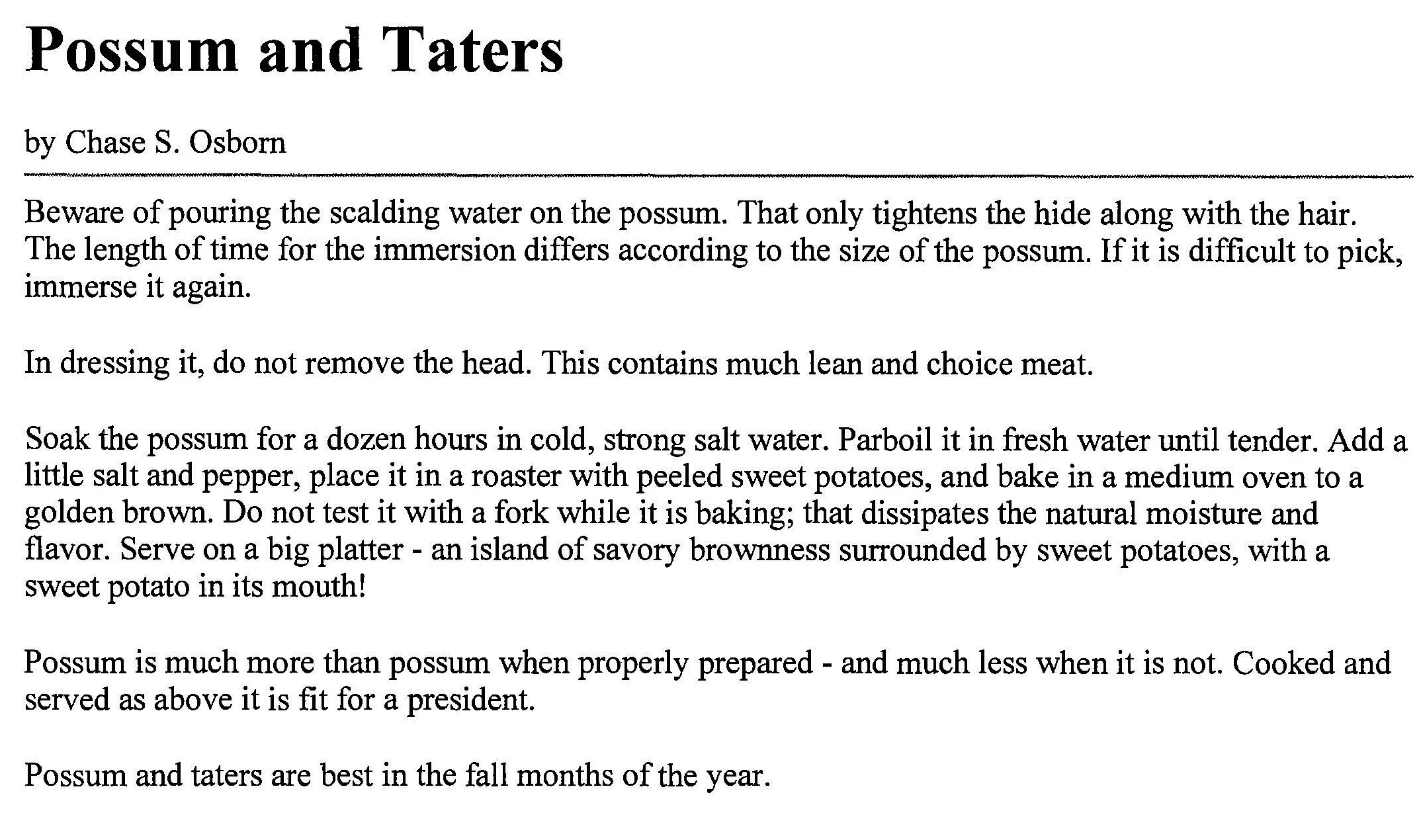
My grandmother:  And, look, wait a minute.  You know they’ve got big mouths.  Long mouths.  A possum.  And he’d put a sweet potato in the possum’s mouth.  [I laugh, hard.]  I don’t remember cooking one, but my grandmother sure used to cook ‘em.  And Papa cooked ‘em.  But I refused to cook ‘em.  Not me.  And you know these people when I came here ate muskrats?!

Possum_and_taters-1

It was Harriet Nicholson Hart who fixed such special dishes for her favorite son.

Interview of Margaret C. Allen by Lisa Y. Henderson; all rights reserved.

Standard
North Carolina, Paternal Kin

Napoleon’s sons.

Napoleon Hagans had four sons. William Coley was born to Winnie Coley, an enslaved woman who lived on a nearby farm.  Henry E. and William S. Hagans, were born to his wife Apsilla “Appie” Ward Hagans.  Joseph H. Ward was born to Appie’s sister, Mittie Ward.  By virtue of their father’s wealth and foresight (Henry and William) or their own pluck and good fortune (Joe), three were well-educated and accomplished men.

Though I knew the names of Appie’s boys, for many years I was unable to trace them beyond the early 20th century. (I didn’t know of Joseph’s existence at all.)  A stroke of luck led to me to one of William’s granddaughters, then to a grandson, then to Joe’s granddaughter. My collaborative research (and development of “cousinhood”) with B., the grandson, has been one of the highlights of my many years of genealogical sleuthing.

Standard
Births Deaths Marriages, Maternal Kin, Oral History, Photographs, Virginia

Mary Agnes Holmes Allen.

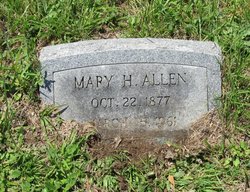
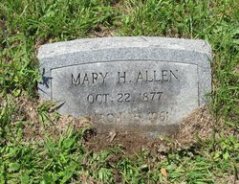
Her headstone is wrong. Mary Agnes Holmes was born October 15, 1877 — not October 22 — on the R.L. Adams’ plantation in Charles City County, Virginia. Her parents were tenant farmers there, and Agnes was one of a handful of Jasper and Matilda Holmes‘ children to survive to adulthood.

Agnes’ mother died when she was about 8 years old, and her father apparently did not remarry. Jasper Holmes was an ambitious man and managed to purchase several small plots of farmland upon which he supported his family in a degree of comfort. The Holmeses may have attended New Vine Baptist Church and, if so, that is likely where Agnes met John C. Allen.

There is an ugly story told about their marriage: John had quickly established himself as an eligible bachelor in Newport News’ East End, and his appeal was heightened — in the standards of the day — by his light skin and wavy hair. When he brought his new bride home shortly after Christmas 1900, his neighbors, peeking through curtains, were shocked to see a plain, broad-featured, brown-skinned woman step from the carriage. (Agnes herself was not immune to such prejudices, and her color-struck notions would reverberate among her offspring.)

Image

During the early years of her marriage, Agnes did “day’s work” as a housemaid. I did not know this. I had assumed that she was always a housewife, which is a reflection of my failure to understand just how my great-grandparents were able to achieve the middle-class respectability that marked their lives by the middle of the 20th century. (Not to mention how they maintained their dignity on the climb.)

Me:  Now, his mama didn’t ever work, did she?

My grandmother:  Who?  Indeed, she did work.

Me:  Like, outside the home?

My grandmother:  Yeah, during the late years, she didn’t, but she worked outside the home ‘cause she told me one time she walked across the bridge, ‘cross 25th Street bridge, and said it was snowing and ice, and the ice froze on the front of her coat.  And I never shall forget, she worked for a lady, and this lady had a small child.  And she asked her would she wash the child’s sweaters.  Sweaters that the baby had.  And she took and said, “Asking me to do all kinds of extra work like that,” and said, “You know what I did?”  Said, “I washed the sweater in hot water, and then I put it in cold water.  When I got through with it, it was ‘bout big as my fist.”  I said, “How can [whispering, inaudible.]”  And she knew it –

Cousin N: Was gon shrink up.

My grandmother:  And I said, “Oh, my God, that is awful!”  And it was.  Anyway, she told me that.  She said, “I washed it all right for her, and I put it in hot water, as hot as I could find, and then put it in cold water.  When I got through with it, couldn’t nothing wear it.”

By the time my mother and her siblings were children, Mary Agnes Allen had assumed the domestic role I’d always imagined her in — at home on Marshall Avenue, among Tiffany lamps and lace antimacassars, preparing roast beef to serve on Blue Willow china to a husband just home from this board meeting or that union affair. Her grandchildren speak of her ambivalently, aware of the casually cruel distinctions she drew among them, but unable to name any particular misdeed.

Me:  Well, was Mary Agnes mean to y’all or what?

My mother:  She was not to me, that I remember.  I don’t know what this was about.  Ahh … maybe it was that she was not friendly.  Maybe she wont like Grandma Carrie, joking and saying little funny stuff.  I don’t know.  I don’t know what it was.

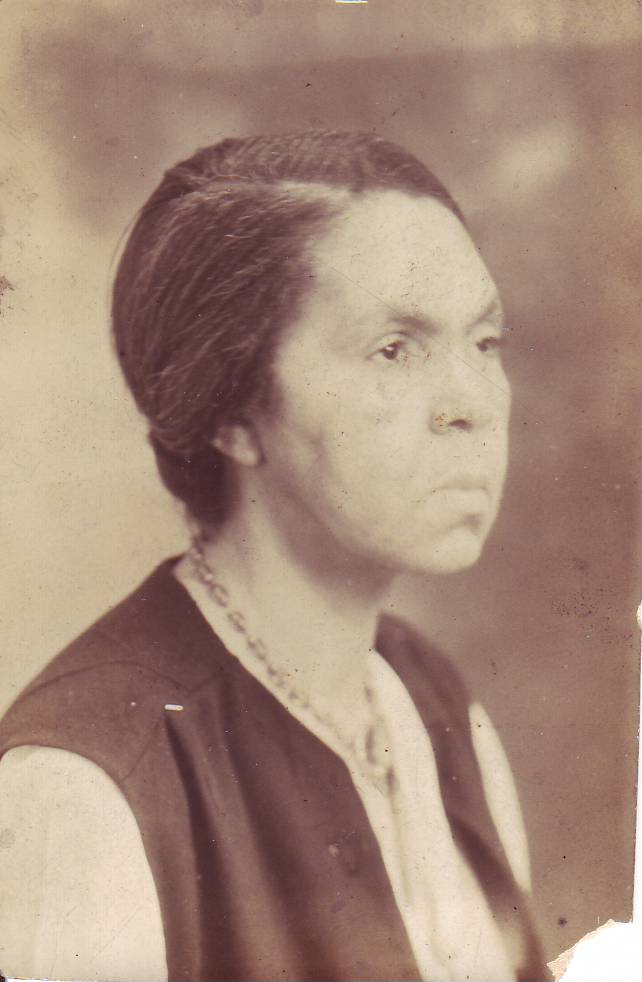
Her grandchildren — at least, her son John’s offspring — felt that lack of warmth acutely. Though their 35th Street home was only a mile away from hers, Mary Agnes Allen does not feature much in the stories of their childhood. (Nor, frankly, does John Allen Sr.)  In her later years, she left Newport News to live with her daughter Edith Allen Anderson in Jetersville, Amelia County, Virginia. The photo below, I’m guessing, was taken shortly before her move. And seems to reveal a softer side.

Image

Mary Agnes Holmes Allen died March 15, 1961, just two months before my mother married in the sideyard at Marshall Avenue.  A brief obituary ran in the Daily Press on the 17th, noting that she was a member of Armenia Tent No. 104 and the Court of Calanthe. She was survived by three daughters, a son, a “foster son” (actually, her nephew), a sister, and, most curiously, “12 grandchildren and 10 great-grandchildren.” In fact, she had ten grands and no more than three great-grands.
Image

Interviews by Lisa Y. Henderson, all rights reserved.  Photographs in collection of Lisa Y. Henderson.

Standard