Enslaved People

Roots.

Christmas 1976.

My father was, and is, a voracious reader and tucked under the tree was the most talked-about work of the season, especially among African-Americans — Alex Haley’s Roots. I’d read about it, I’m sure, in Ebony or Jet. “The Saga of an American Family.” I cracked open the hefty volume after Christmas dinner … and didn’t put it down until the wee hours of the 26th when I’d turned the 700th page.

155689a_lg

Over the long course of that late night, I started wondering about my own Kizzys and Kunta Kintes. Though Roots, largely fictional, is not the miraculous straight line back to the Mother Land that most of us believed it to be when we read the book (or, better yet, sat glued to the TV eating up the mini-series — all those black folk!), it stirred in African-Americans a little anger and a lot of pride and a great desire to reclaim their people and know their pasts. Though I was still a child, Roots was that same spark for me, and I am grateful to Alex Haley for it.

Standard
Education, Enslaved People, Land, Maternal Kin, North Carolina, Other Documents

Writing.

My grandmother tells a story:

… Jay and I were supposed to clean the house on Saturday. You know, do the vacuuming and dusting and cleaning and everything. And then I would play, and we would play, and Grandma would say, “I’m gonna tell your mama. I’m gonna write your mama and tell your mama how you act.” She said, “I can’t write her right now ‘cause I’m nervous,’ you know.” Couldn’t write a lick. [I laugh.] Couldn’t read …. I don’t think she could read or write, but I know she couldn’t write. Bless her heart. She says, “I’m gonna tell your mammy on you. You see if I don’t. And, see, if I wont so nervous, I’d write her, but I’m too nervous” – couldn’t write any more than she could fly! [Laughs.]

Martha Miller McNeely, born into slavery in 1855, may not have been able to read or write, but her children signed their names in clear, firm hands that evidence both their early education and their easy familiarity with penmanship. Their father Henry, the literate son of a slaveowner, may have taught them rudiments, but they likely attended one of the small country schools that dotted rural Rowan County. (My grandmother said that her mother Carrie finished seventh grade and was supposed to have gone on to high school at Livingstone College, but the family used her school money to pay for an appendectomy for one of her sisters.) The document below is found in the estate file of Henry’s half-brother, Julius McNeely, who, unlike Henry, was not taught to read during slavery. Julius died without a wife or children, and Henry’s offspring were his sole legal heirs.

Power of attorney

Signatures are often-overlooked scraps of information that yield not only obvious clues about literacy, but also subtleties like depth and quality of education and preferred names, spellings and pronunciations. They are also, in original documents, tangible traces of our forebears’ corporality — evidence that that they were once here.

——

 Interview of Margaret C. Allen by Lisa Y. Henderson, all rights reserved. File of Jule McNeely, Rowan County, North Carolina Estate Files 1663-1979, https://familysearch.org. Original, North Carolina State Archives.

Standard
Births Deaths Marriages, Enslaved People, Maternal Kin, North Carolina, Photographs

Landscape, no. 2.

tumblr_lke4bqgaJi1qd9jg8o1_r1_1280

Statesville, North Carolina. April 2011.

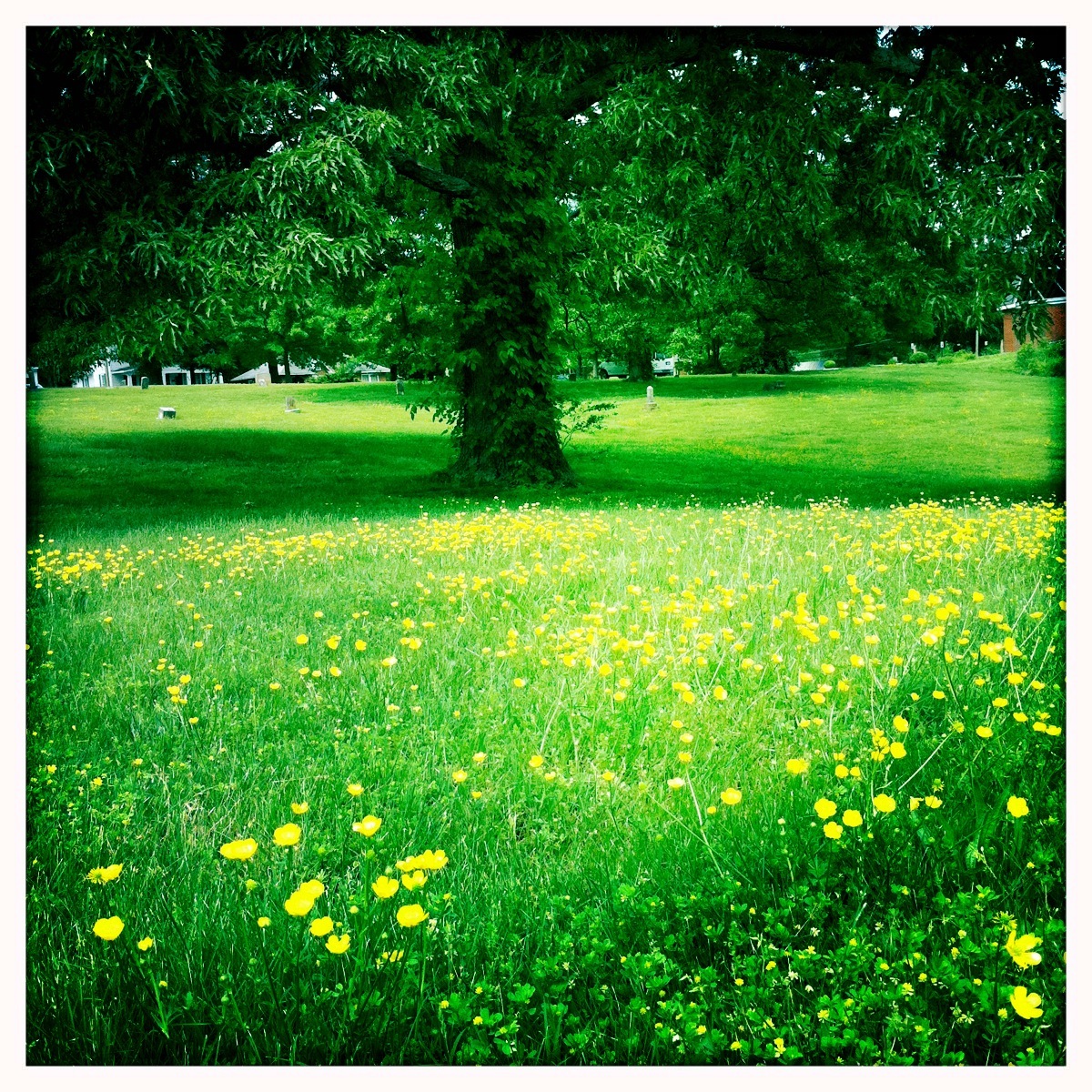
Green Street cemetery, Statesville, North Carolina, abloom in buttercups.  Though largely empty of headstones, this graveyard is probably close to full.  Most of the existing stones, including that of my great-great-grandfather John W. Colvert, date from 1890-1930 — ex-slaves and their children.  For some, it is the most detailed record of their lives.  One: MARY WILLIAMS passed away Mar. 13, 1917 in her 94th Year Blind cheerful her simple faith was an inspiration Rest in peace Aunt Mary.

Standard
Civil War, Enslaved People, North Carolina, Paternal Kin

Battle possibilities.

A few weeks ago, I ran across a reference to Joel Craig and Sharlene Baker’s As You May Never See Us Again: The Civil War Letters of George and Walter Battle, 4th North Carolina Infantry (2004). George and Walter were sons of Amos Johnston Battle, a prominent (and peripatetic) Baptist minister who spent his last years in Wilson County.  I wondered if the brothers mentioned any of the family’s slaves in their letters, so when I was at home I stopped by the Wilson County Public Library to skim their copy.

I found only a single reference to a Church, presumably enslaved, who was charged with delivering certain items to the letter writer. A footnote appended to the passage states: “The boy ‘Church’ has been referred to by some as one of the Battle’s [sic] slaves. Whether this is referring to the Raleigh Battle’s or the Wilson Battle’s is unclear. However, if the Rev. Battle did own slaves in the midst of the war it might mean that he was not the abolitionist as previously thought.”

Two things struck me: (1) given Hugh B. Johnston’s confident identification of Amos Battle as the owner of my ancestor Cherry, was his possession of slaves a question? (2) “abolitionist” is a mighty strong word to describe anybody coming out of Wilson County.

First, I did what I’ve apparently never bothered to do — check the 1850 and 1860 federal slave schedules for Amos J. Battle. He appears in neither, but his wife Margaret H. Battle is listed with 32 slaves in 1860. (Hugh Johnston noted that Amos Battle’s “wife owned a small farm north of Wilson not far from the Barnes plantation.”) She is not listed in the 1850 slave schedule, and the sudden acquisition of that many slaves suggested inheritance. After figuring out her maiden name (Margaret Hearne Parker) and father’s name (Weeks Parker) I went looking for estate records.

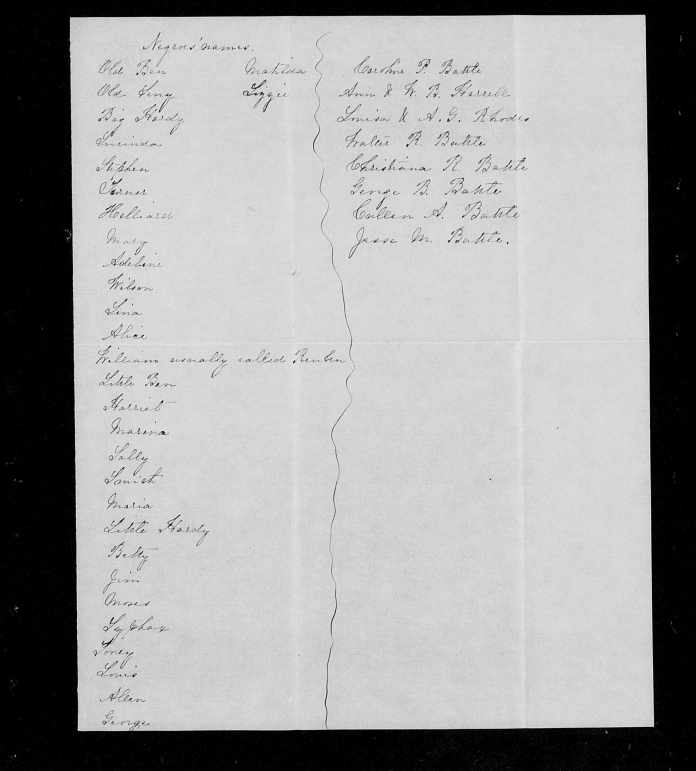
Sure enough, Weeks Parker died in January 1844 in Edgecombe County, leaving a widow and three children. (One predeceased him.) The 88 pages of his estate file span more than a decade, and Emancipation eventually intervened to prevent a final distribution. There was this, though, a listing of those slaves apportioned to daughter Margaret H. Battle and her children, apparently dating from the late 1850s:
record-image-25

Old Ben, Old Seny, Big Hardy, Lucinda, Stephen, Turner, Hilliard, Mary, Adeline, William, Lena, Alice, William “usually called Reuben,” Little Ben, Harriet, Marina, Sally, Smith, Maria, Little Hardy, Betty, Jim, Moses, Syphax, Toney, Louis, Allen, George, Matilda, Lizzie. I was disappointed not to find a Cherry listed among them, but intrigued nonetheless. Would Weeks Parker’s will shed more light?

Yes. And no.

Weeks Parker executed his will on 31 July 1843. The document mentions his wife Sabra [Irwin Hearn]; son Simmons B. Parker; deceased son Dr. John H. Parker, who had migrated to Florida; and daughters Henrietta, wife of Benjamin Battle, and Margaret, wife of Amos J. Battle. [Benjamin Dossey Battle was Amos’ brother.]

Weeks designated son Simmons as his executor and trustee. He bequeathed certain slaves — Polly, Godwin, Old Ned, Winny, Hardy, Charlotte and her child Cintha, and Nelly —  to pass to Simmons after wife Sabra’s death, and mentioned that he had already given Simmons 14 slaves in a deed of gift. He also directed Simmons to sell the land and slaves in Florida inherited from son John’s estate. (And tweaked this last provision in a codicil.)

Weeks’ bequests to his daughters are curious though.  After Sabra’s death, Simmons was to hold in trust slaves Lucindy, Stephen, Turner, Lewis, George, Marina, Tony, Matilda, Caroline, William, Holly, Big Hardy, Ben, Cena, Moses, Syphax, Little Hardy, Jim, Lucy and Little Jim “for the sole and separate use and benefit of daughter Margaret H. Battle wife of Amos J. Battle during her natural life free from the management and control of her present or any future husband.”  Similarly, he directed that Simmons hold in trust after Sabra’s death slaves Barbara, Sarah, Luke, Ned, Sophia, Elick, Harrison, Milly, Jeffrey, Dorcas, Silas, Bill, Lou, Julia, Randal, Will and Abner for the benefit of daughter Henrietta Battle. Why the specific attempt to keep Amos Battle’s hands off his wife’s property? Was he in fact an abolitionist likely to try to free them? Or were Weeks’ concerns more prosaic?

Simmons and his mother went into court to have Weeks’ will admitted to probate, and the skirmishes began. The two sets of Battles teamed up to claim that they had not been notified prior to probate and that the will’s codicil had been made under undue influence. Simmons and the other trustees admitted that Battles may not have been given formal notice, but claimed that they knew anyway. They also charged Amos Battle with having taken a slave named Jim to Wilmington.  The Battles fired a second volley with a claim that Simmons was in “extreme bad health” and “great physical inability” and “utterly incapable of carrying out his duties” as a trustee. Simmons responded meekly, acknowledging that he had been shot in the chest many years before and had never recovered, a circumstance that sometimes completely debilitated him. He agreed to surrender his trusteeship. Nathan Matthewson, too, stepped down, and was replaced by Benjamin Oliver of Duplin County. In one of Oliver’s reports, he advised the court that he had sold for $600 a slave named Jim “in consequence of grossly bad behavior and general bad deportment.” The buyer was Wyatt Moye. With the funds received, Oliver then spent $500 to purchase Lilah from a Dr. Arrington. (She later gave birth to a son Charles.) In 1849, Oliver moved to Bladen County and resigned his trusteeship; Uriah Vaughan of Hertford County — where Margaret then lived — was appointed in his stead. In the mid-1850s, Margaret, Amos and their children moved to the town of Wilson, where Sabra Parker bought them a house and lot. In another plaintive petition for yet another trustee, submitted in September 1856, Margaret complained that she had no other property and that the family was “dependent on their own exertions for a support” as their trust fund was inadequate. The younger children were chiefly supported by Margaret’s “exertions” [she was an innkeeper], while the creditors of her husband Amos, “who is greatly embarrassed,” tried to take her earnings at every opportunity.

Another source shines light on the Battle family’s financial situation. In 1911, Amos and Margaret’s youngest son, Jesse Mercer Battle, published memoirs titled Tributes to my Father and Mother and Some Stories of My Life. In the chapter on his mother, he recalled that his “mother’s family lived in Wilson, N.C. We lived in a large house, and it was called ‘The Battle House.'” There, to her humiliation, his mother took in boarders and other passers-through to earn money for the family’s keep. His father, though “rich in lands and negroes,” gave away his wealth to the point that his younger sons’ educations were neglected. The chapter on Amos J. Battle goes further. Amid fifty hagiographic pages limning his father’s Christlike-ness, Jesse reveals that “his money, his lands, his negoes, his stocks, his bonds, his personal property of every description went as his free will offering to the Church as a whole, and to anyone of its members individually, or to those who were not members.” (This was not offered ironically, and there is no attempt to square Battle’s slaveholding with his Christian values.)

Ah. So. And therein lies the motive for Weeks Parker’s determined attempt to keep his wealth out of pious Amos Battle’s hands.

Jesse Battle’s memoir also provides a peek at the family’s slaves and demonstrates that the thirty or so inherited from Weeks did not define the extent of Margaret’s holdings. “Negroes were my companions,” he wrote. “I played with them, and spent my time with them all day, till I was about seven years old, when I was started to school. I knew my alphabet and how to read a little. This start on my way to an education was given to me by a good old colored woman I called Mammy. (Her name was Dinah.) … This good woman remained with our family till 1865, when the Civil War ended, when she left us and moved down to Greenville, N.C., where her husband, whose name was ‘Shade,’ lived. After the emancipation of the slaves she said that she could never enjoy her ‘freedom’ as long as she lived with her master and mistress.”  [Three cheers for Dinah!] Jesse elsewhere mentioned that Dinah had lived with the family at a farm called Walnut Hill, “about three miles from Wilson N.C., on the railroad toward Rocky Mount.”

In the end, I still don’t know if Hugh B. Johnston was correct about Cherry Battle Barnes’ ownership, but I have confirmed that Amos J. and Margaret Hearne Battle owned slaves and that some of those slaves worked on a farm just north of Wilson, not far from where Cherry lived at the time of the first post-Emancipation census.

Will Book F, Edgecombe County, North Carolina Probate Records, 1735-1970, familysearch.org; Estate of Weeks Parker (1844), Edgecombe County, North Carolina Estate Files, 1663-1979, familysearch.org; other sources as named.


Standard
Births Deaths Marriages, Enslaved People, Land, Maternal Kin, Newspaper Articles, Other Documents, Paternal Kin, Photographs, Virginia

The life of Joseph R. Holmes, radical.

I’ve written of Joseph R. Holmesdeath. What of his life? The details are sketchy and poorly documented. Nonetheless, here is what I know.

  • Joseph R. Holmes was born circa 1838, probably in Charlotte County, Virginia. His parents are listed as Payton and Nancy Holmes on his death certificate. I don’t know what the “R” stood for.
  • According to Luther Porter Jackson, Joseph had a brother named Watt. According to my great-aunt Julia Allen Holmes, he also had a brother named Jasper Holmes, born circa 1841, who was her grandfather.
  • The “Inventory and Appraisal of the Personal Estate of Capt. John H. Marshall,” filed in Charlotte in June 1857, lists 20 “Negroes,” including Joe, $600; Peyton, $900; and Nancy, $1000. There’s no Jasper. Nor are there any children bearing the names of Nancy’s younger children, some of whom who were born before 1857. Thus, though I’m tempted, I can’t draw any conclusions about whether these enslaved people are Joseph R. Holmes and his parents.
  • Joseph probably was last owned by John H. Marshall’s son, judge Hunter Holmes Marshall, whose plantation “Roxabel” was (and still is) located about five miles west of Charlotte Court House.
  • Joseph learned to read and write most likely as a child, as he exhibited a well-formed penmanship when in his mid-20s.
  • He was trained as a shoemaker or cobbler.  In Negro Office-Holders in Virginia 1865-1895, Luther Porter Jackson
    asserted that brother Watt was also a shoemaker and that Joseph was “hired out by his master to engage in shoemaking by traveling from plantation to plantation.”
  • However, according to “Shooting in Charlotte Court House,” published in volume VIII, number 2, of The Southsider quarterly, Joseph served as a butler for Marshall, then became a cobbler and opened a shop on the Kings Highway (now U.S. Route 360) near Dupree’s old store.
  • Some time around 1865, Joseph married Mary Clark, born about 1849 to Simon and Jina Clark of Charlotte County. The couple had at least four children: Payton (1865), Louisa (1866), Joseph (1867) and William H. Holmes (August 1868).
  • Tax records filed in Charlotte Court House for 1866 list Joseph R. Holmes in District #2 (T.M. Jones, revenue commissioner), paying one black poll tax, as well as taxes on four hogs valued at $5 and $20 worth of real property. I have not found a deed for this property.
  • In 1867, Joseph R. Holmes was elected to represent Charlotte and Halifax Counties at Virginia’s Constitutional Convention. In A List of the Officers and Members of the Virginia Constitutional Convention, Holmes is
    described:  “… Jos. R. Holmes. Colored. Shoemaker. Can read and write a little. Ignorant. Bad character.” [This comes from an unfortunately unattributed photocopy of a page from a scholarly journal. I’ll hunt down the source.]
  • Charlotte County tax records for 1867 show Joseph R. Holmes living at A.J. Johnson’s in District #2, paying only a black poll tax. (This seems to indicate that he was landless and working as either a sharecropper or tenant farmer.)
  • In 1867, he registered to vote at Clements’ in Charlotte Court House. (So did Watt Carter, who may have been Joseph’s stepfather.)
  • On 2 May 1868, Joseph Holmes purchased 11 1/2 acres in Charlotte County from A.J. Johnson for $92. The metes and bounds: “beginning at a corner on John R. Baileys on the Roanoke Valley Extension Rail Road marked as the plat (A) and thence along the Road South 15 W 22 poles to a corner at B. thence off the Road a New line S 70 E 17 poles to corner chestnut oak S 25 E 46 poles to pointers on John P. Dickersons line, thence his line N 55 E 44 poles to pointers on William H. Fulkers line thence N 57 W 80 poles to the beginning.”
  • An entry for August 1868 in the Charlotte County birth register shows a son William H. born to Mary and Joe Holmes. Joe’s occupation was listed as “radicalism.”
  • A letter Joseph wrote on 22 August 1868 is preserved among Freedmen’s Bureau records. In it, he requested of Thomas Leahey, Assistant Subassistant Commissioner at the Bureau’s office in Farmville, Virginia, that a school be established in the Keysville area. The plea was effective, and there’s a 24 November letter in the records from Leahey to Holmes enclosing vouchers for rent for the school, as well as triplicate leases for “Mrs. Jenkins'” signature. “I send them in your charge (believing you call to the D.O. daily) in order there may be no delay.”
  • An anonymous article in the 23 November 1868 Richmond Whig, signed “Roanoke,” reported a visit to Charlotte County and, among comments about African-Americans and politics, stated: “They seem to be realizing the fact that politics won’t fill their empty stomachs nor clothe their naked bodies, and those who have been idle during the summer and did not make hay while the sun shone, meet with no sympathy and are left out ‘in the cold.’ I passed by the shop of our former representative, ‘Hon.’ Joseph Holmes, a few days ago; he was busily at work pegging away at a pair of boots. I told him I thought he was much better at making a boot than a constitution; and as he was anxious to make a pair for me, I believe, he agreed with me.”
  • On 3 May 1869, Joseph was shot and killed in front of Charlotte County Courthouse by a group of men that included John M. Marshall, Griffin S. Marshall, William Boyd and M.C. Morris. The Marshalls were sons of his former master.
  • In the 1870 census of Walton, Charlotte County: Wat Carter, 70, wife Nancy, 70, and children Mary, 23, Liza, 17, and Wat, 16; plus Payton, 4, Louisa, 3, and Joseph Homes, 2, and Fannie Clark, 60. I strongly suspect that Nancy Carter was Joseph Holmes’ mother and Wat, his stepfather. The young children are clearly Joseph’s. Mary may have been his half-sister, but more likely was his widow.) The younger Wat is likely the “Watt” referred to L.P. Jackson’s book.
  • Joseph Holmes, age 12, son of Joe and Mary Holmes, died 11 March 1880 in Charlotte County.
  • H.C. Williamson’s Memoirs of a Statesman: Being an Account of the Events in the Career of a Mississippi Journalist-Legislator were published by descendant Fred Thompson (actor and failed Republican presidential candidate) in 1964. In reminiscing about his youth, Williamson wrote: “Among the bolder of this presumptuous class of Negroes in my native county was one named Joe Holmes, a saddle-colored shoe cobbler, who occupied a small hut on the side of the public road a few miles from our home. Holmes aspired to the office of representative in the State Legislature and insolently asserted his equality ‘with any white man.’ Feeling that he was protected in his new-found rights by his white allies, he denounced, in public harangues throughout the county, the men who had so lately been the masters and believed themselves secure in control of that government which they had constructed and hitherto maintained. Such a condition prevailing over all the Southern States prompted the organization and active operations of that secret society of native, white southern men known as the Ku Klux Klan, which proved to be the salvation of the remnant left of southern homes and southern civilization. I remember passing Holmes’ shop one dae day and seeing nailed to the door the picture of crossbones and skull (the sign of the Ku Klux Klan, as I afterwards learned). But this did not deter him in the least. A short time thereafter, he fell in the Court House door, pierced with a leaden messenger of death from an unknown source, as he was entering to make an inflammatory speech to a horde of Negroes assembled.”

Birth, death, marriage and court records at Charlotte County Courthouse, Charlotte Court House, Virginia; other records as noted. Thanks, as always, for the incalculably valuable assistance of Kathy Liston.

Standard
Enslaved People, Land, Maternal Kin, North Carolina

Between mills.

I was on my way to posting this map when I stumbled across the Welch-Nicholson House application. Back to it:

Miller_Map_section

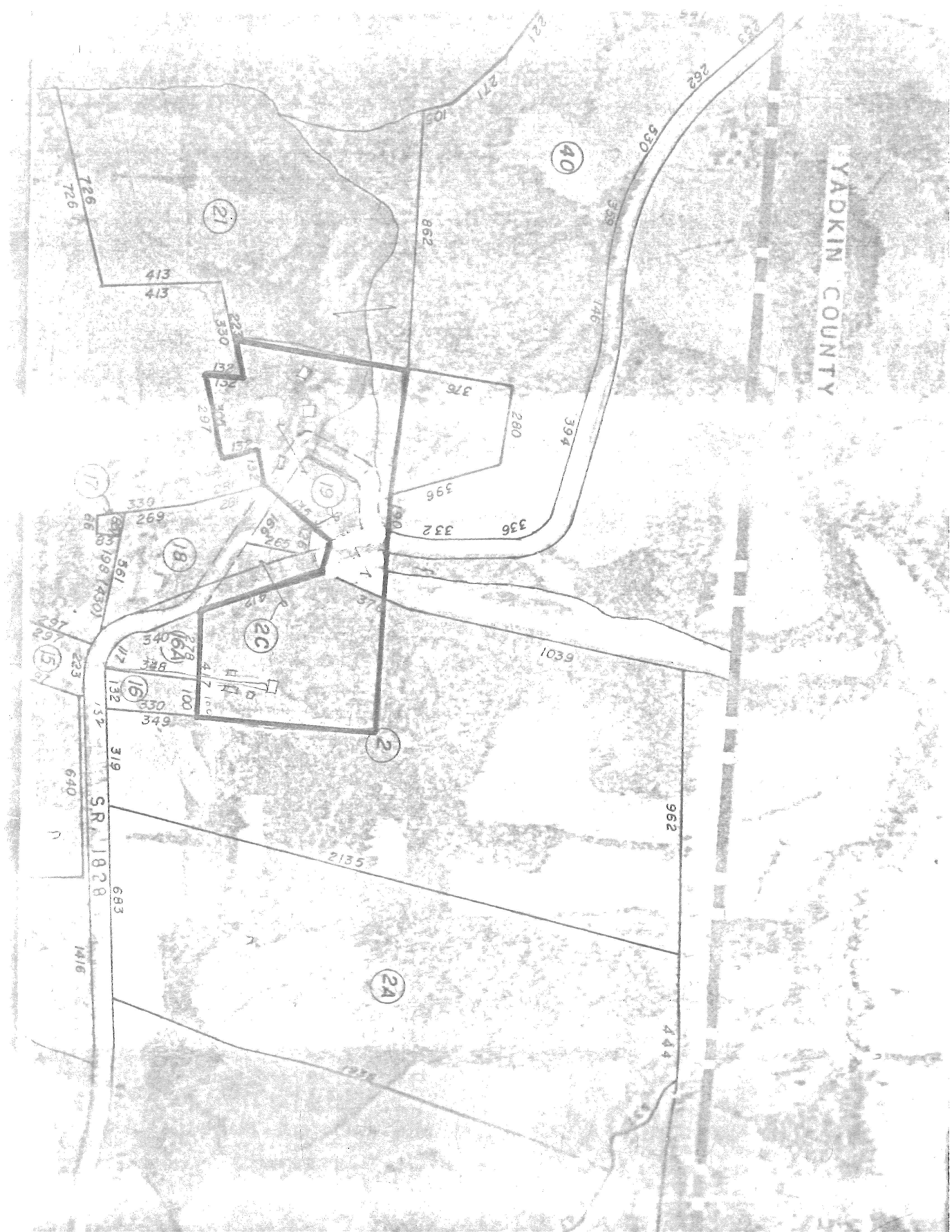
Historian and genealogist Margaret Miller created and holds the copyright on this map of early Iredell County settlers and landmarks. The county, taller than wide, stands on a narrow foot, and I’ve excerpted a section that covers roughly the top fifth of its territory. The world of my 19th-century Iredell County ancestors was largely contained within the borders of the superimposed red box. There, just south of the Yadkin County line, is the Nicholson Mill that anchored the farm that James Nicholson bought in 1826. His half-brother John Nicholson lived on adjoining land, and their children Thomas A. Nicholson and Rebecca C. Nicholson married in 1839. Thomas and Rebecca reared their children in the house James had owned, and their slaves worked both the mill and the farm. One enslaved woman, Lucinda, likely worked with Rebecca in the house and, in 1861, gave birth to a daughter, Harriet, whose father was Thomas and Rebecca’s son Lee. That same year, Lee married Martha Ann Olivia Colvert.

In the early 1870s, the adolescent Harriet Nicholson met John Walker Colvert, a 22 year-old farmhand still living on the farm at which he had been born a slave. That farm, which is also where Martha “Mattie” Colvert was reared, was near Eagle Mills, the ill-fated cotton mill on Hunting Creek due south of Nicholson Mill. Mattie’s father William I. Colvert, an early small-scale industrialist, had been a partner in the development of Eagle Mills in the 1850s. William’s father John A. Colvert had died just a few years after arriving in Iredell County, and William — still a child — had inherited a boy named Walker Colvert, later the father of John Walker Colvert.

Just a few miles apart as the crow flies, Nicholson Mill and Eagle Mills were the poles of the community in which Harriet Nicholson’s family and John Walker Colvert’s family lived for generations before merging in my great-grandfather, Lon W. Colvert.

Standard
Agriculture, Enslaved People, Land, Maternal Kin, North Carolina, Other Documents, Photographs

The Welch-Nicholson House and Millsite.

How have I overlooked this?

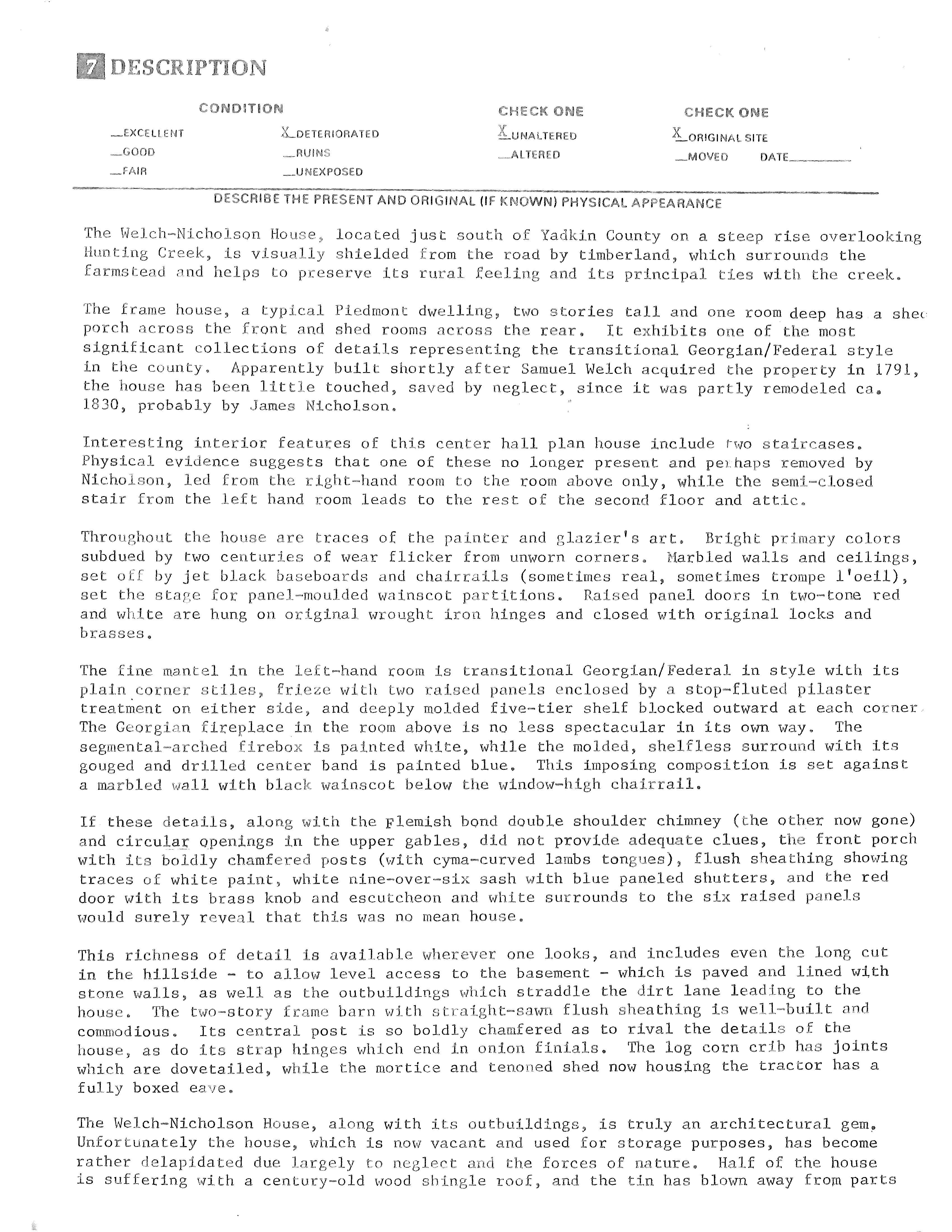
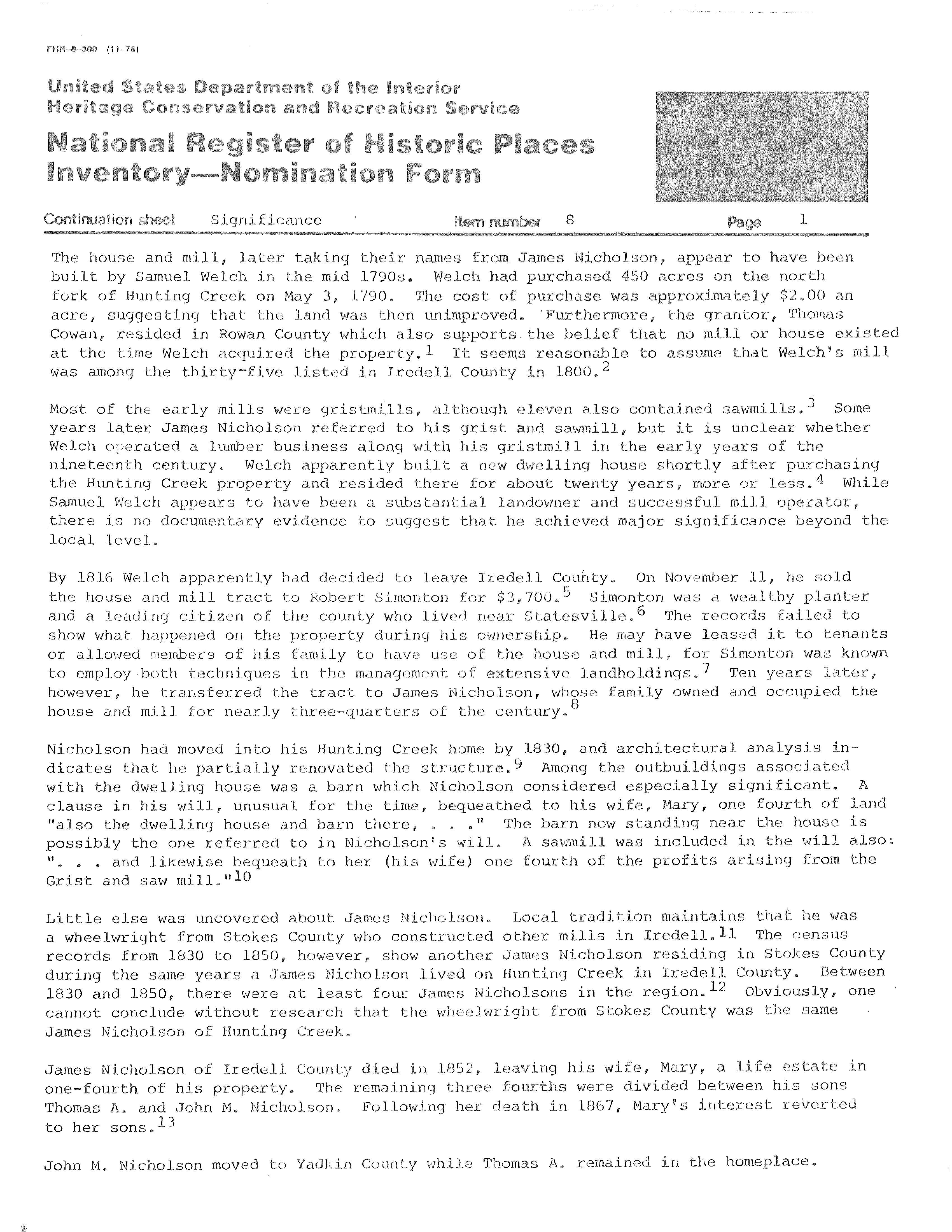
The house in which Thomas A. Nicholson lived, in which J. Lee Nicholson grew up, in which Lucinda Cowles Nicholson toiled, and in or around which Harriet Nicholson spent her childhood in slavery is listed in the National Register of Historic Places. Since 1980. And only today did I find the gloriously detailed nomination report — which includes a photo! And to think that I must have been within a few hundred feet of the place, if it’s still standing, when I nosed around the Nicholson cemetery in the rain last December.

Bear with me. Here’s the entire report, all 13 pages’ worth. I’ve only read it through once, but give me time.

Nicholson_NR_Page_01

Nicholson_NR_Page_02

Nicholson_NR_Page_03

Nicholson_NR_Page_04

Nicholson_NR_Page_05

Nicholson_NR_Page_06

Nicholson_NR_Page_07

Nicholson_NR_Page_08

Nicholson_NR_Page_09

Nicholson_NR_Page_11

Nicholson_NR_Page_12

Nicholson_NR_Page_13

Standard
Births Deaths Marriages, Enslaved People, Maternal Kin, Newspaper Articles, North Carolina

Collateral kin: the Hamptons.

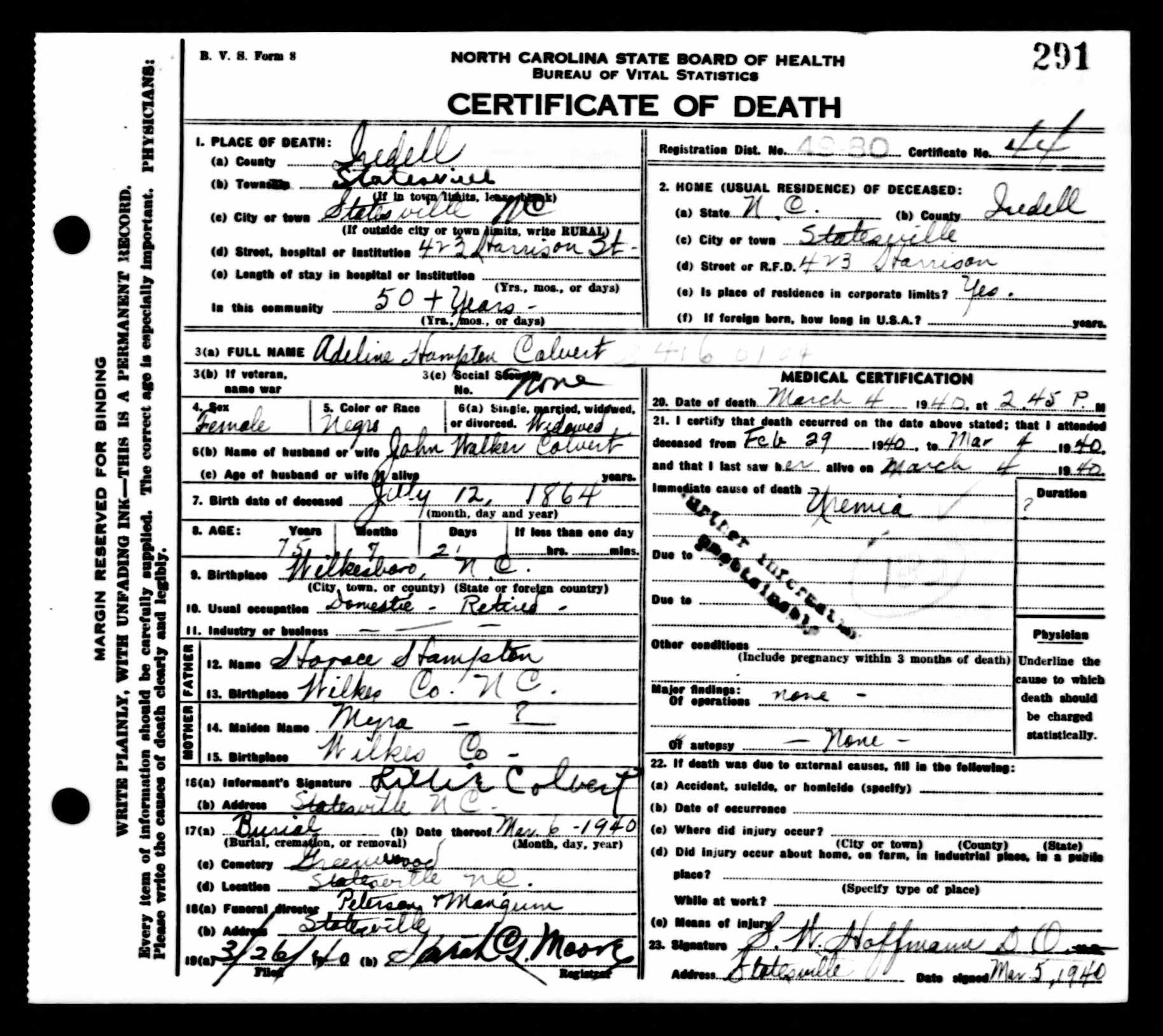
On 30 Jan 1905, in Statesville, North Carolina, my great-great-grandfather John W. Colvert married Adeline Hampton.  The marriage was performed by J.H. Pressley, the same Presbyterian minister who would marry John’s son Lon and Caroline McNeely a year later.  John and Adeline had had four daughters together. Selma Eugenia, Ida Mae, Lillie Mae and Henrietta were born between 1889 and 1893, and I don’t know what kept John and Addie from marrying for so long — or finally induced them to tie the knot. Separate or apart, I’ve found none in the 1900 census.

Addie’s whole family, in fact, is elusive in enumeration records. Her marriage license and death certificate reveal that she was born about 1864 in Wilkes County, North Carolina — northwest of Iredell — to Horace and Myra Hampton. (Other death certificates report Myra’s maiden name as Russell.) In the 1880 census of Wilkes, Addie appears in Wilkesboro township with her parents, younger siblings Vance, Josephine and Henry, and nephews and niece Arthur, Horace and Emma Hampton. Ten years earlier, however, in the 1870 census, Horace and Myra cannot be found, and Addie seems to be living in a household headed by much older siblings.

The 1890 census has perished, but Horace Hampton, “the veteran bridge keeper,” appears in a brief congratulatory article in the Wilkesboro Chronicle on the prosperity and good behavior of the county’s colored people.

Wilkseboro_Chronicle_1_14_1891_Horace_Hampton

Wilkesboro Chronicle, 14 January 1891.

Unfortunately, the family’s next mention is an obituary for Myra Hampton, which reveals a surprising number of siblings for Addie. Most of the children were adults before Emancipation, thus do not appear in census records with their parents. Also, though Myra’s age is given as “about 80,” the 1880 census suggests that she was closer to 70 at the time of her death.

Wilkesboro_Chronicle_1_3_1900_Myra_Hampton

Wilkesboro Chronicle, 3 January 1900.

Just over a year later, the Chronicle mocked Horace Hampton’s efforts to reclaim his position as bridge tender on the Yadkin River.

Wilkesboro_Chronicle_4_3_1901_H_Hampton_bridge

Wilkesboro Chronicle, 3 April 1901.

In June 1905, less than six months after his next-to-youngest daughter finally married the father of her children, Horace Hampton passed away.

Wilkesboro_Chronicle_6_14_1905_H_Hampton

Wilkesboro Chronicle, 14 June 1905.

 Adeline “Addie” Hampton Colvert outlived her husband by almost 20 years. She is buried next to him in Green Street cemetery in Statesville.

Adeline H Colvert death cert

Standard
Enslaved People, Maternal Kin, North Carolina, Oral History, Religion

Church home, no. 8: Back Creek Presbyterian Church, Rowan County NC.

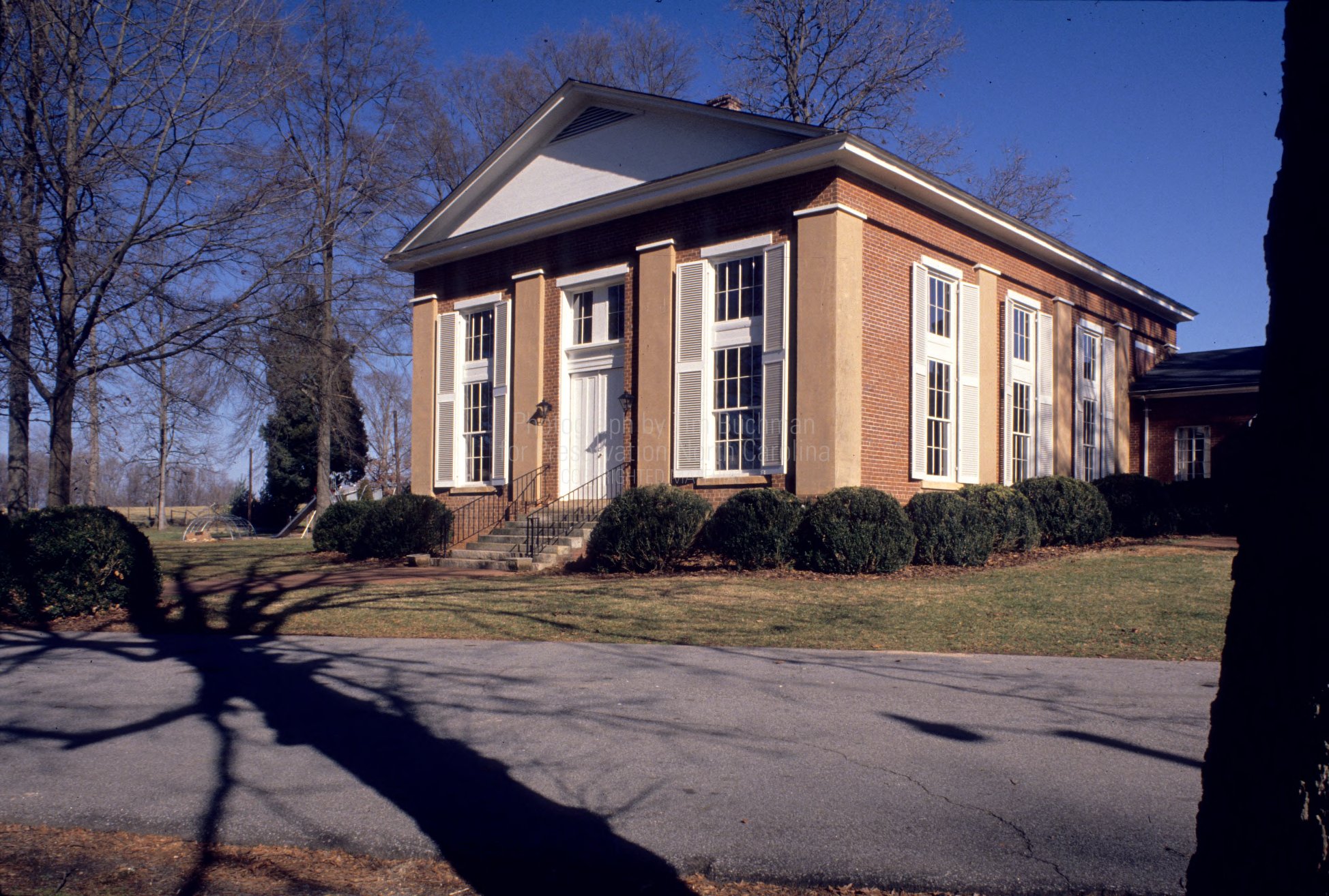
Founded in 1805, Back Creek Presbyterian Church is a historic church in Mount Ulla, North Carolina. In 1809, the congregation built a small log house of worship, which was replaced by the congregation’s present Greek Revival sanctuary in 1857. This building was added to the National Register of Historic Places in 1983.  — From http://en.wikipedia.org/wiki/Back_Creek_Presbyterian_Church_and_Cemetery

resolver

Back Creek was the church of my white McNeely forebears — John Wilson McNeely and his father Samuel.  In 1905, Rev. S.C. Alexander and John K. Goodman published History of Back Creek Presbyterian Church, Rowan County, N.C., for 100 Years. It is too much to call it a scintillating work, but its dramatic retelling of the church’s founding compels:

During the latter part of last century, infidelity spread like a contagion all over our country, from one end of it to the other. It gathered round the Church, and settled down upon it like a thick cloud of moral death Although far removed from the busy marts and thorough- fares of the world, this retired part of the Lord’s vineyard did not wholly escape the infection. A cold dead formality had well nigh chilled the vitals of true religion. But this state of things was not permitted to remain long. God heard and answered the prayers of his faithful servants. His life-giving spirit was sent forth with power, and breathed upon the valley of dry bones, and an army of living men stood up to praise Jehovah’s name. This was an important era in the history of our Church and country. It was a time when angels in heaven, and men on earth rejoiced together. It was a time when a most powerful and sudden death-stroke was given to the cause of infidelity. So that its hideous form has never since been reared so high in the majesty of its ugliness to pollute and annoy the Church Thyatira with her then widely extended limits, seemed to have been thoroughly aroused in those exciting times.

As in all communities, so in that venerable Church, there necessarily existed a great diversity of sentiment. The time had now come, when this diversity was to be fully manifested, The Revival of 1802, let it be remembered, was accompanied with many strange phenomena, such as “jerking,” “leaping,” “shouting,” “swooning,” and many such-like bodily exercises. Those who were possessed of more ardent zeal and strong affection, thought this a necessary part of the revival, and produced by the influence of the Spirit. While those of a more phlegmatic temperament, and less impulsive nature, looked upon it as dross around the precious metal; or rather, as the work of Satan trying to counterfeit and hinder the work of religion. Thus there were two parties formed, and each doubtless conscientiously thought they were right. Those who favored the “exercises” were called the “revival party,” as if they alone were desirous of promoting the cause of religion. While those who thought differently were called “opposers” or “anti-revivalists,” as if they wished to hold back the Gospel car. One party wished to have profound silence during public worship. It mattered not how eloquent the speaker was, or how powerful the movings of the Spirit, all must be quiet and still. The other party wished to give vent to their feelings in whatever way inclination might lead. If they felt happy they would shout aloud for joy, or if distressed they would cry out for mercy. The congregation ofttimes presenting the appearance of a Bochim-Babel.

Thus the matter went on for two or three years each party becoming more and more sensitive; and owing to the weakness of human nature, one seemed to exasperate the other, until it became evident to all that some final and decisive action should be taken for the welfare of the Church. A day of fasting and humiliation was appointed, that they might pray for wisdom to guide them in the path of duty, and that they might adopt some plan of action which would be for their peace and edification. The day was accordingly observed. At which meeting the Session was publicly charged with a neglect of their duty in permitting what was looked on by one party as disorder and confusion to exist in time of public worship. The Elders defended their conduct in a mild and Christian-like manner, but all to submit to the other. Thus the day seemed likely to close without having bettered their condition. But something must be done was the universal feeling. Whereupon, it was resolved unanimously, that all those who sympathized with the “Revival Party,” and acted under its influence, should be permitted to withdraw from the Congregation, and leave the other party in the quiet possession of their house and minister. This resolution was acted upon immediately, when about thirty families withdrew, including five Elders — all that Thyatira [Presbyterian Church] then had — men of whom the world might be proud. This was the birthday of Back Creek. The mother travailed with pain, and a noble daughter was born. —

Thus the infant colony, springing off from the western part of Thyatira principally, was left without a minister, and without a house in which to worship. But with zeal like theirs, with hearts so large, and hands so willing, all difficulties were soon removed, and their necessities met. They resolved to build a house in their midst, in which they could worship as their conscience dictated.

A year after Back Creek’s founding, my great-great-great-great-grandfather assumed a leadership role:

On the 27th of December, 1806, William Kilpatrick, Samuel McNeely, and George Andrew, were added to the list of Elders — men of whom we cannot speak too highly. Each was distinguished for his own excellency of character. When sitting in council about the welfare of the Church, it is said William Kilpatrick would devise ways and means for the prosperity of Zion. George Andrew would discourse on its practicability. He would present it in one aspect and then in another, in order that it might be weighed well, — while the venerable John Barr and Samuel McNeely who knew their Bible by heart, would decide whether it were right or not, or whether it would be for the general good. Thus each wheel in the machinery performed its part; and the consequence was, the Church like a healthy plant, grew and flourished, and became a praise in the land. In 1833, another addition was made to the Session by the election and ordination of William King, Thomas Mathews, John Houston, John M. Lowrance and Abner Adams. — Only two of this number are spared to be with us now. The other three have fallen asleep. They were men with whom you were all familiar. Their names are embalmed in your memories. Their excellencies are well known. — And you have long since mourned their loss.

Fifty years later, his son was elected deacon:

On August 10, 1856, the last public service, the last sermon was preached in the “Old Log Church,” built in 1811. The first Deacons in Back Creek Church were elected on May 22, 1858, viz:— Col. Alfred M. Goodman, Jno. F. Clodfelter, Jacob P. Goodman, Moses Lingle, James Miller and J. Wilson McNeely; and on the following June 27 they were regularly ordained and installed. Prior to this the financial,and temporal affairs of the Church were administered, (under the session) by a board of trustees elected by the Congregation, but not regularly ordained and installed into office as is now the more scriptural practice with Deacons.

Given the close association of the McNeelys with Back Creek, it is likely that their slaves also attended the church.

Before the emancipation of the Southern Negro he worshipped with his master in the same church, and enjoyed all the church privileges, consistent with the relations existing between the white and negro races; many of them being worthy members of the church. The gallery in this church was built for their express accommodation. Faithful attention was given to their moral and religious training. Frequently the minister in charge would preach a sermon specially to them; they leading and furnishing the music, of no inferior quality. And they were not forgotten in the Sabbath-School; separate classes were formed of them, taught by the whites. This relation and condition continued for some time after “freedom;” finally, they changed order of relation, and natural trend of events led to their separation from the church of the whites, and to their distinct organization; still, however, some reluctantly took this step.

I don’t know about the “natural trend” or the reluctance. In any case, my forebears remained in the larger fold for, as my grandmother put it, Henry W. McNeely, J. Wilson’s son and former slave — “when he moved to Statesville, when Mama’s daddy moved to Statesville, child, he ran that Presbyterian church.”

The early lists of church members do not determine the proportion of whites to colored.

In regard to the numerical strength of Back Creek, from time to time, complete records fail us. In 1829 the membership was 124, but it is not stated how many white.

In 1850 we numbered 136 white and 26 colored — total 162.

In 1864, 96 white and 74 colored — total 170.

In 1869, 58 white and 50 colored — total 108.

In 1880, 83 white and no colored — total 83.

In 1894, 77 white; in 1900, 90 white; and in 1905, 150 white.

Sometime after 1869, African-Americans left — or were put out of — Back Creek en masse. Hopefully, a little research will reveal their new church home.

Photograph at http://d.lib.ncsu.edu/collections/catalog/buch0494, all rights reserved.


Standard
Enslaved People, North Carolina, Paternal Kin

My Barneses.

Last night, I happened upon a fascinating newspaper source of information about Ned Barnes, brother (half-brother?) of my paternal great-grandmother, Rachel Barnes (or Battle) Taylor. Before I lay it out, though, a deeper introduction to the Barneses is in order.*

Willis Barnes and Cherry Battle registered their six-year cohabitation in Wilson County in 1866. The 1870 census found the family in Wilson township, Wilson County: farm laborer Willis Barnes, 30, wife Cherry, 25, and children Rachul, 7, West, 5, Jesse, 2, and Ned, 5 months. They remained in North Wilson township in the 1880 census: Willis Barnes, 42, wife Cherey, 40, “step-daughter” Rachel Battle, 17, Wesley, 15, Jesse, 13, Ned, 11, Eddie, 7, Mary, 4, and Willey Barnes, 1, plus niece Ellen Battle, 1.  [Very nearby were Hardy Battle, 58, and wife America Battle, 50. Relatives of Cherry?]

Cherry Battle Barnes died after 1880. In 1897, Willis married Fereby Barnes Artis, widow of Benjamin Artis. In the Wilson NC city directory of 1908-09, Willis is listed as a laborer living at 500 South Lodge. Two years later, he was living with his youngest daughter and her family. Willis Barnes died 15 September 1914 in Wilson, Wilson County. His death certificate notes that he was 73 years old, married and a farmer, and that he had been born in Nash County to Tony Eatman and Annie Eatman. Son Jesse Barnes was informant.

On 21 Sep 1882, H.G. Whitehead applied for a marriage license for Mike Taylor of Wilson, aged 20, colored, son of John [sic, his name was Green] Taylor and unknown mother, both living. [This makes no sense — mother is living, but unknown?] and Rachel Barnes of Wilson, age 19, colored, parents unknown, father dead, mother’s status not given. [No sense either, her parents were certainly known. The takeaway — the registrar was not very interested in the facts.]  On the same day, Louis Croom, Baptist minister, married Taylor and Barnes in Wilson before W.T. Battle and Edman Pool.  [Was W.T. Battle related to Rachel?  Is he the W. Turner Battle who married Louvina Knight in Wilson on 24 May 1875?]

Rachel and Mike Taylor had six children. Their first, and only son, Roderick, was born in 1883, followed by the improbably named Maggie (1885), Mattie (1887), and Madie (1888), then Bertha E. (1892) and Henrietta G. Taylor (1893). More about Rachel’s family elsewhere.

Wesley “West” Barnes married Ella Mercer on 4 June 1885 at her father Dempsey Mercer’s house in Wilson County. (The marriage license refers to him as “Sylvester” Barnes.) Wesley worked as a driver or drayman, and though he and Ella had at least seven children, I know the names only of five: Joseph Barnes (1885), Lucy Barnes Watson (1889-1959), Sylvester Barnes (1893-1936), Viola Barnes (1894-1943), and Charley Barnes (1896-??) West died of apoplexy in 1919.

Jesse Barnes married Ella Mercer’s sister Mary Mag Mercer on 1 April 1889. His brothers Wesley and Ned witnessed the ceremony. They had at least three children, Jesse Jr. (1890), Marnie (1892-1943), and Nettie (1895-1917). He died in 1916.

On 27 Oct 1891, J.T. Dean applied for a marriage license for Edward Barnes, 22, of Wilson, son of Willis and Cherry Barnes, and Louisa Gay, daughter of Samuel and Alice Gay.  The ceremony took place 29 Oct 1891 before J.W. Levy, AMEZ Church minister, at Samuel Gay’s.  Witnesses were S.H. Vick, Spencer Barnes, Thomas Davis. [This “Edward” is very definitely Ned Barnes, but the entry is confusing because the 1880 census shows Willis and Cherry with children Ned and Eddie (born about 1873). If there was an “Eddie,” he appears in no other records.] Ned worked as a coachman and around 1901 moved his family to Raleigh for better opportunities. Ned and Louisa Gay Barnes’ children included Mattie Radcliffe Barnes Hines (1895-1923), Alice Ida Barnes (1897-1969), Ned Barnes Jr. (1900), Howard Barnes (1902), Blonnie Barnes Zachary (1908-1932) and Jerrel Randolph Barnes (1909-1929). Ned died in Raleigh in 1912.

Mary Barnes is an enigmatic figure. She married first in Wilson County in 1893 to Pierce Barnes, son of Robert and Hannah Barnes, and then a man named Jones. She never had children of her own, but adopted her nephew, Robert Perry. She died almost 11 months to the day after her brother Wesley in 1919.

William “Willie” Barnes died of tuberculosis in 1917. It is not clear if he ever married or had children.

As detailed here, I believe Cherry Battle had one more child, daughter Lucinda “Cintha” Barnes. Cintha also died young, and her children were reared by her sisters.

 *Barnes is by far the most common surname in Wilson County. My cousin A.B. is descended from at least four separate Barnes lines, and any two given Barneses are more likely to be unrelated than not.

Standard