
“Aaron Seaberry family” “Luther McNeely Spanish American War” “Minnie Hargrove Columbus Ohio” “Adam Artis” “Dove Lenoir County” — all search terms used to find posts on scuffalong.com in the last 30 days. I hope the searchers discovered something of interest or usefulness in this blog, and I invite them to make contact next time they visit. I’ve made several amazing connections via comments, and I would love to “meet” all of you. We’re family!
Category Archives: Maternal Kin
To look like new.

Mountain Scout (Taylorsville), 23 August 1916.
This ad appears several times in Taylorsville’s Mountain Scout in the latter half of 1916. Did Lon Colvert open a branch of his Statesville operation a few miles away in Alexander County? Like barber shops, clothes cleaning and pressing businesses were frequently operated by African-Americans in the late 19th and early 20th-century South.

Playing in “The Servant in the House.”
As reported in the 2 June 1932 edition of the Pittsburgh Courier, my great-uncle J. Maxwell Allen did a little acting while at seminary: 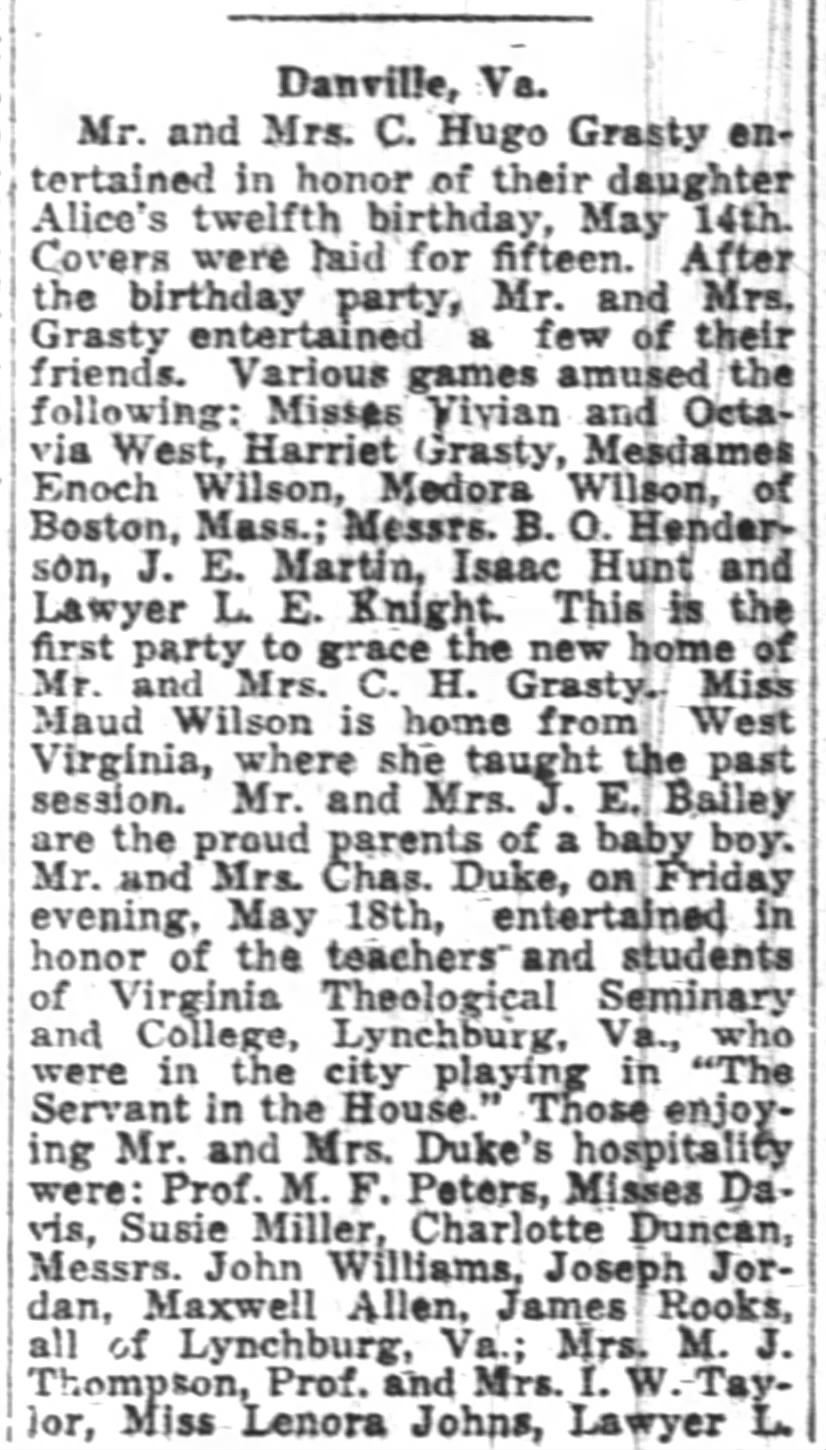
(Coincidentally, his middle brother’s first child, my Aunt Marion, was born that day.)
Happy Mother’s Day!
Thinking of my mother and remembering my grandmothers with love and gratitude this day.
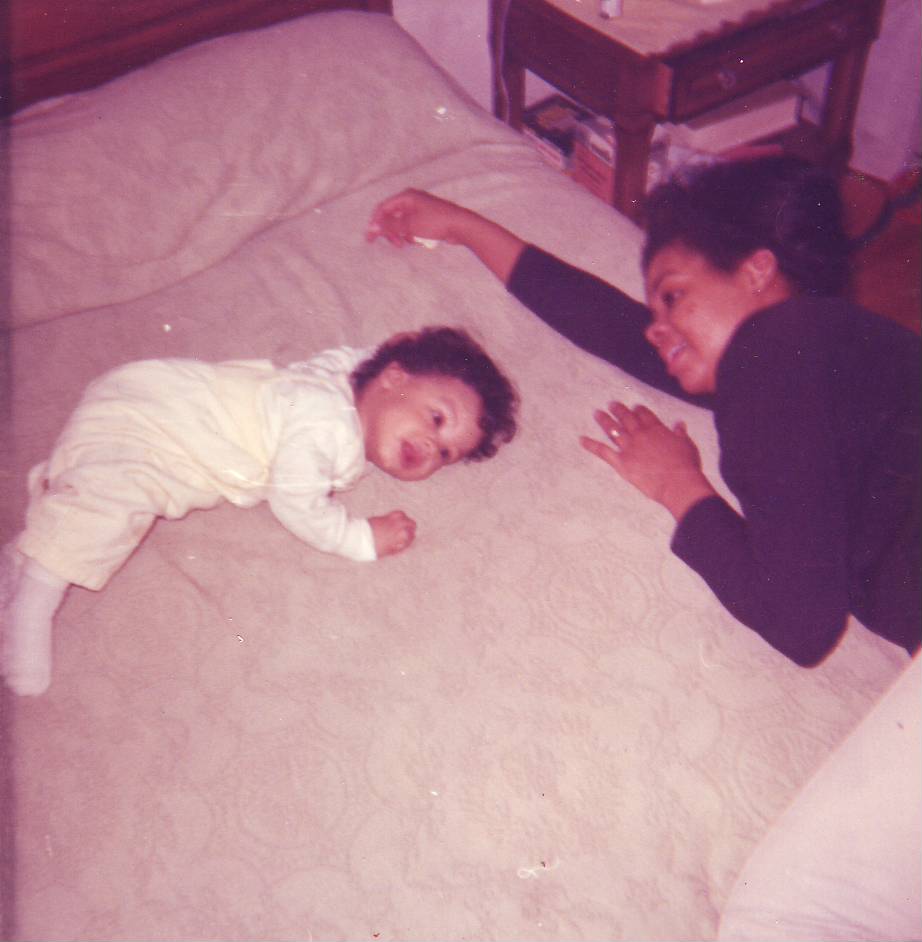
My mother and me.
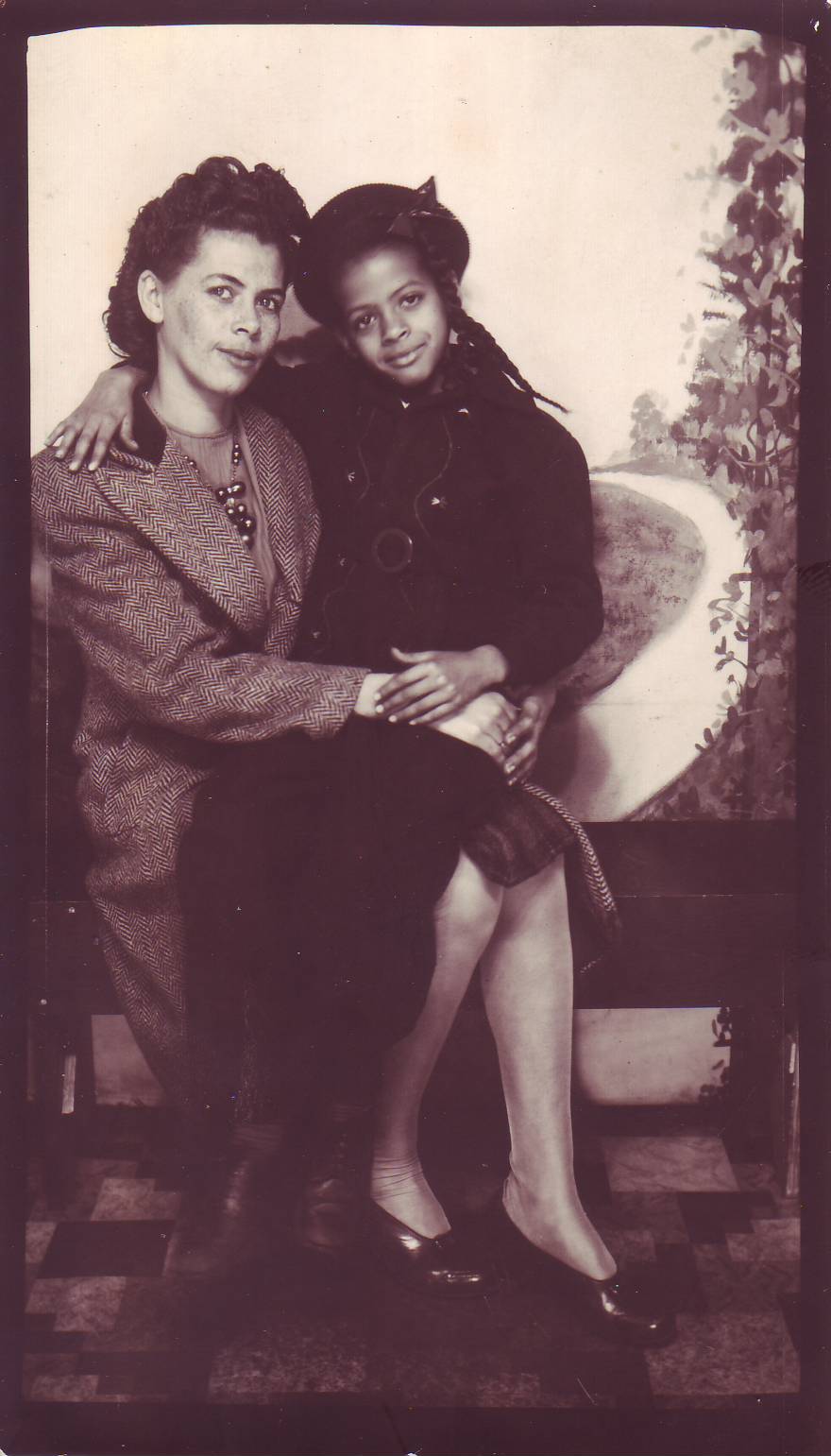
My father’s mother and his sister, circa 1942.
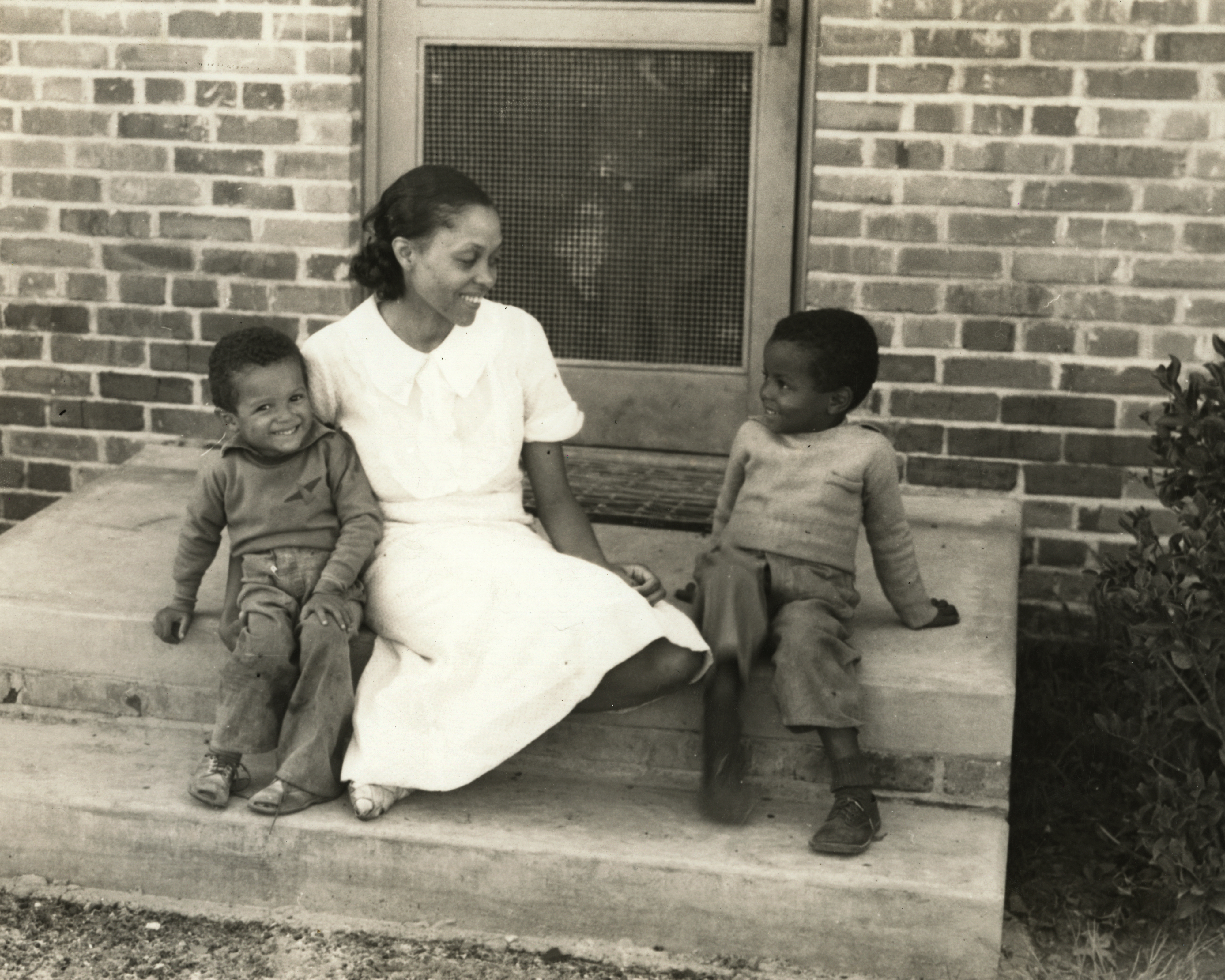
My mother’s mother and her brothers, circa 1938.
——
Sidenote: I first saw the last photo in a magazine article about Aberdeen Homes, a late New Deal housing project in Hampton, Virginia. My grandfather worked as a construction supervisor at the site and moved his young family into one of the first apartments. I finally tracked this photo down in the photo archives of the Virginia State Library.
Order of Moses.

Moses Hall, Charlotte Court House, Virginia.
The Grand United Order of Moses, Inc., was a small fraternal insurance society for black men and women based in rural south-central Virginia. The founder and lifelong leader of the Order of Moses was James Murray Jeffress (1873–1951), who organized the society in 1904 at his birthplace, the village of Charlotte Court House. Jeffress graduated from Hampton Institute in 1894 and Howard University divinity school in 1901. He was ordained a Baptist minister and served as principal of a public school in Charlotte County.
By 1900, white Virginians had disenfranchised blacks and had segregated schooling and public transportation. Jeffress, sometimes called “the Booker Washington of Charlotte County,” was an accommodationist who tried to make life tolerable for his fellow blacks without challenging white racists directly. Fraternal societies such as the Order of Moses offered a modicum of economic security through medical and funeral insurance. They also supplemented the churches as black organizations that whites were willing to tolerate. They were organizations in which African Americans could vote, hold office, and brighten their drab lives with the color and spectacle of regalia and ritual, impressive titles and fancy-dress parades, lodge meetings and funerals.
Even more than in other fraternal societies, a charismatic oligarch dominated the Order of Moses: Murray Jeffress. He depicted the origins of his society in quasiprophetic language. “It was in 1901 that I began having visions repeatedly. These visions consisted of a single blackboard in which was chalked the words: The Grand United Order of Moses. After the third vision, I decided that I would do something about it.” In 1904, the Order of Moses recruited 203 members, and the society received a state charter. A few years later, it acquired Moses Hall as its headquarters. Jeffress took the title “right worshipful grand leader.”
A crisis in the society occurred when a black man, presumably instigated by whites, alleged that the Order of Moses had been organized to keep African Americans from working for white people. A prominent white man squelched this rumor by offering $ 150 for evidence in its support, evidence that never materialized. For his efforts, the Order of Moses made him an honorary member.
Jeffress resented the injustice of segregation and disenfranchisement, but he considered small economic advances the only realistic goals. “Let us teach every boy and girl to build and not tear down. Teach them that being God-fearing, property-owning and debt -paying citizens is greater than being a voter or being on social equality with [a] king.” He encouraged his followers to buy farmland or learn a vocational trade.
Although Jeffress opposed urban migration, many rural black Virginians moved to northern cities. As a result, Order of Moses lodges appeared outside Virginia, mostly in Pennsylvania and New Jersey. Northern lodges unsuccessfully asked for the headquarters to be moved to Philadelphia, which they regarded as more convenient than Charlotte Court House, which at the time of Jeffress’s death had only 250 residents and neither a railroad station nor a bus stop.
The strength and the weakness of the Order of Moses was its identification with Charlotte Court House and Charlotte County. The order helped establish a high school there for black youth, provided bus transportation for the students, constructed and equipped a hospital building, and provided electrical service for the village. The order owned an auditorium that could accommodate four hundred people, an office building, and apartments for black schoolteachers. The society also owned three hundred acres of farmland worked by black sharecroppers.
As leader of the Order of Moses, Murray Jeffress became a respected figure in African American life. He was elected first vice president of the Negro Organization Society and president of the Federation of Negro Fraternal Organizations. He served a number of Baptist churches as pastor.
At the time of Jeffress’s death in 1951, the Order of Moses claimed a little more than five thousand members. Apparently, his son Wilson became the society’s new leader. How long it continued to operate is unknown. In any event, the little Order of Moses had survived into the post—World War II era, an achievement that few better-known African American fraternal societies equaled.
— Adapted slightly from Organizing Black America: An Encyclopedia of African American Associations, Nina Mjagkij, ed.
——
My grandfather’s older brother, Jasper Maxwell Allen (1904-1959), married J. Murray Jeffress’ daughter Lena P. Jeffress, settled in Charlotte Court House, and opened a dental office in Moses Hall.

Photographs by Lisa Y. Henderson, July 2012.
Cousin Rufus McNeely.
Lucinda McNeely‘s son John Rufus McNeely and Emeline Atwell registered their 11-year cohabitation in 1866. John and Emeline’s youngest son, born in 1873, was Rufus Alexander McNeely. He died in 1964.

This photo of Rufus is attached to the Ancestry.com public family tree of jeromemurray128. I’ve reached out unsuccessfully several times with offers to share information about the McNeelys. Perhaps he’ll see this post and get in touch. In the meantime, I hope he won’t mind me sharing this wonderful snapshot!
Colored children of school age.
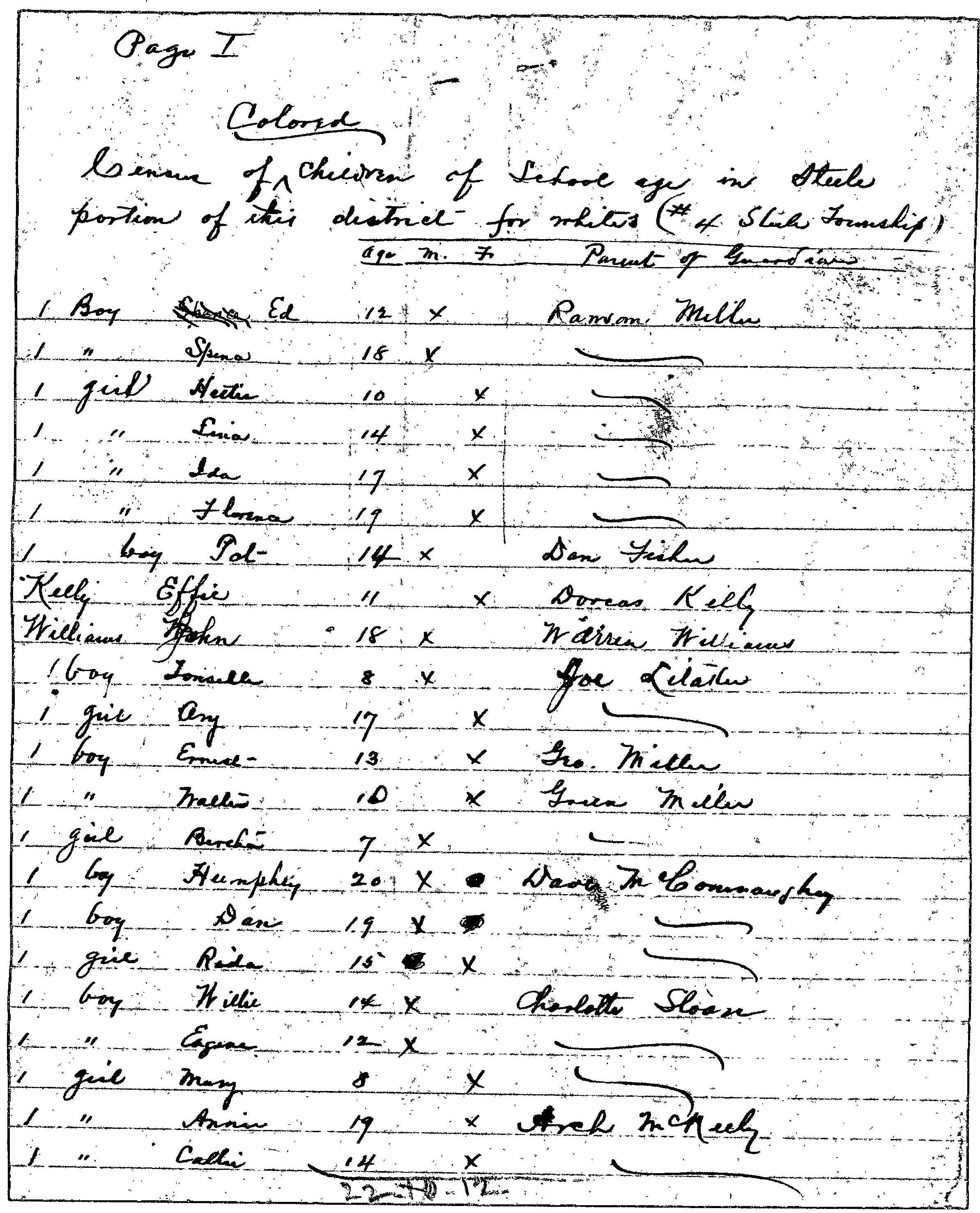

Thirty-five years after Emancipation, the Miller-McConnaughey and McNeely families were still clustered in western Rowan County, working small farms that they owned or rented. Education was a prized advantage, and many children in the neighborhood completed at least a few years. This school census, taken in 1900, lists all school-aged children in a household, though there is no way to tell if the children actually attended.
The six youngest children of Ransom and Mary Ann McConnaughey Miller are listed: Florence A., Ida L., Margaret Lina, Spencer Lee, Hattie A., and Thomas Eddie Miller.
Green and Grace Adeline Miller Miller‘s household included Walter, 10, and Bertha, 7. Both children were listed as the couple’s grandchildren in the 1900 census. Bertha Todd was the daughter of Green and Adeline’s daughter Margaret Miller and Alfred Todd. I don’t know who Walter Kerr’s parents were, but it seems likely that his mother was either Margaret or Mary Caroline Miller.
George Miller, by then in his mid-60s, is listed with a 13 year-old boy named Ernest. This appears to be the Earnest Hilliard listed in his household in the 1900 census and described as a grandson. Was he Maria Miller’s son?
Finally, Arch McNeely, nephew of Martha Miller McNeely‘s husband Henry W. McNeely, is listed with four of his children, Ann J., Callie, Julius L.A., and Mary E. McNeely.
Copy of document from School Records, Rowan County Records, North Carolina State Archives.
Saint Agnes Hospital.

This only looks like a Civil War ruin. In reality, Saint Agnes Hospital closed in the early 1960’s, after Raleigh’s Wake Medical Center integrated. Saint Agnes trained generations of African-American nurses, including my great-great-aunt, Henrietta Colvert.

From the Annual Catalogue of St. Augustine’s School, Raleigh, N.C., A Normal School and Collegiate Institute For Colored Students of Both Sexes, Thirty-Third Session, 1911-12.
Angeline McConnaughey Reeves; or, Charlotte and beyond.
Angeline McConnaughey‘s mother Caroline may have lived long enough to breathe the sweet air of freedom, but not deeply. By 1870, she was gone, and her only child is listed in the census that year with Caroline’s mother, Margaret McConnaughey. By 1875, Angeline had left the Mount Ulla countryside for the town of Salisbury and in February of that year she married Fletcher Reeves, the 21 year-old son of Henry and Phrina (or Fina) Overman Reeves. With unusual candor, Angeline named her father on her marriage license. He was Robert L. McConnaughey of Morganton, white and a relative of Angeline’s former owner, James M. McConnaughey.
Angeline Reeves gave birth to her first two children, Caroline R. (1875) and M. Ada (1878), in Salisbury. The Reeves had plans bigger than that town could hold, however, and shortly after 1880 the family settled at 409 East Eighth Street in Charlotte’s First Ward, a racially integrated, largely working-class neighborhood in the city’s center. Fletcher Reeves went to work as a hostler for John W. Wadsworth, who climbed to millionaire status with his livery stables even as Charlotte’s first electric streetcars were poised to dramatically transform the city’s landscape. In short order, three more children — Frank Charles (1882), Edna (1884) and John Henry (1888) — joined the household, and Angeline took in washing to supplement the family’s income.
Fletcher and Angeline’s combined incomes created a comfortable cushion for their children. On 1 March 1894, in an article snarkily titled “A Fashionable Wedding in Colored High Life,” the Charlotte Observer identified Carrie Reeves, accompanied by Cowan Graham, as a bridal attendant at the marriage of Hattie L. Henderson and Richard C. Graham, “one of the best and most popular waiters at the Buford Hotel.” The ceremony was held at Seventh Street Presbyterian Church and “‘owing to the prominence of the contracting parties,’ a number of white people were present.” Carrie herself was a bride eight months later when she married James Rufus Williams. Her sister Ada’s nuptials, in March 1895, were announced in the March 14 edition of the Observer: “Frank Eccles and Ada Reeves, colored, were married Tuesday night. The groom is Farrior’s man ‘Friday.’ He is a good citizen and deserves happiness and prosperity.”
By 1900, the Reeveses were renting a house at 413 East Eighth. Fletcher continued his work as a “horseler,” but Angeline reported no occupation, apparently having withdrawn from public work. Eighteen year-old son Frank worked as a porter, and youngest children Edna (15) and John (11) were at school. On 21 August 1902, Frank made an ill-starred marriage to Kate Smith. Two and a half years later, his sister Edna married William H. Kiner of Boston, Massachusetts.
When the censustaker returned in 1910, he found Fletcher and Angeline still living in the 400 block of East Eighth. All of their children had left the nest, and in their place was 7 year-old grandson Wilbur Reeves, who was probably Frank and Kate Reeves’ child. If the boy found comfort and stability in his grandparents’ home, however, it was not to last. On 4 September 1910, Fletcher succumbed to kidney disease. He was buried in Pinewood Cemetery, and Angeline went to live with her oldest daughter’s family.
In the 1900 census, Rufus and Carrie Williams and sons Worth (5) and Hugh J. (2) shared a house at 419 Caldwell Street with Frank and Ada Eccles and their son Harry. Rufus, who owned the house, worked as a hotel waiter and Frank as a day laborer. In 1906, Carrie posted a series of ads in the Charlotte News seeking customers for her sewing business.

Charlotte News, 5 September 1900.
Rufus seems to have spent his free team pitching for a top local baseball team:

Charlotte News, 13 August 1900.

Charlotte News, 4 September 1900.
In the 1910 census, the family is listed at 212 West First Street. Rufus worked as a porter at a club and Carrie as a seamstress. Sons Worth (14) and Jennings (12) were students. Ada Eccles, already a widow, had migrated to Cambridge, Massachusetts, and is listed at 8 Rockwell Street with brother-in-law William H. Kiner, sister Edna E. and their children Addison F. (4) and Carroll M. (2), plus brother John H. Reeves. William worked as a clothes presser in a tailor shop, Ada as a servant, and John as a hotel waiter. William was born in Virginia, all the others except Carroll in NC. (The Kiners also spent time in Oak Bluffs, on Martha’s Vineyard. Son Carroll Milton was born there in 1907; the birth register gave William’s occupation as theological student.) Frank is not found in the 1910, but the state of his marriage can be inferred from a newspaper article about his wife, passing for white in Hollywood.

Charlotte News, 15 May 1910.
Hugh Jennings Williams died after a battle with tuberculosis in 1913, during his final year in Biddle University‘s preparatory division. (His older brother, Worth Armstead Williams, also attended Biddle for high school and college.) Jennings’ obituary paints a charming picture of the boy and makes clear his parents’ status in the eyes of white Charlotte. 
Charlotte News, 20 November 1913.
Just months later, more than 800 miles away in Cambridge, Jennings’ uncle John H. Reeves also contracted TB. He was dead by April 1915.
By 1920, the Williamses had moved a little ways out of the heart of the city to 826 South Church Street in the Ninth Ward. Widow Angeline Reeves was listed in the household with Rufus, Carrie, and 24 year-old Worth Williams. Rufus was a porter at a club, Carrie was a dressmaker, and Worth a student at a dental college. (Worth was only at home temporarily. He was enrolled at Howard University’s dental school.)Meanwhile, up in Cambridge, Massachusetts, the censustaker found William H. Kiner (a chipper at a shipyard), wife Edna E., and children Addison F., Carroll M. and Evelyn C. living at 8 Rockwell Street, and Ada Eccles and her son Harry at 65 Grigg Street.

Rufus Williams continued to enjoy the esteem of his employer and patrons at the Southern Manufacturers Club — at what personal cost unknown. Waiting on the cream of the Queen City’s burgeoning manufacturing magnates was a path to economic security, but that path was strewn with daily indignity, both casual and intentional. Rufus, and his father before him, were what some fondly called “white man’s niggers,” but to acknowledge this is not to indict them. In a 1924 news article, note that Rufus’ speech honoring his benefactor, John C. McNeill, also shines a light on the fruit of his years as a servant — his “son, W.A. Williams, who is a surgeon dentist at New Bern.”
 Charlotte News, 1 June 1924.
James Rufus Williams died 24 May 1947 in Charlotte. Six years later, on 25 March 1953, his mother-in-law Angeline McConnaughey Reeves passed away at the age of 94. Her mother and husband gone, Carrie Reeves Williams lived just six months more and died 28 September 1953. I have not found record of Frank Reeves’ death. His sisters Edna Reeves Kiner died in New York City in 1969 and Ada Reeves Eccles in Cambridge in 1979.
 Scuffalong: Genealogy.