Enslaved People, Maternal Kin, North Carolina, Oral History

Henry W. McNeely.

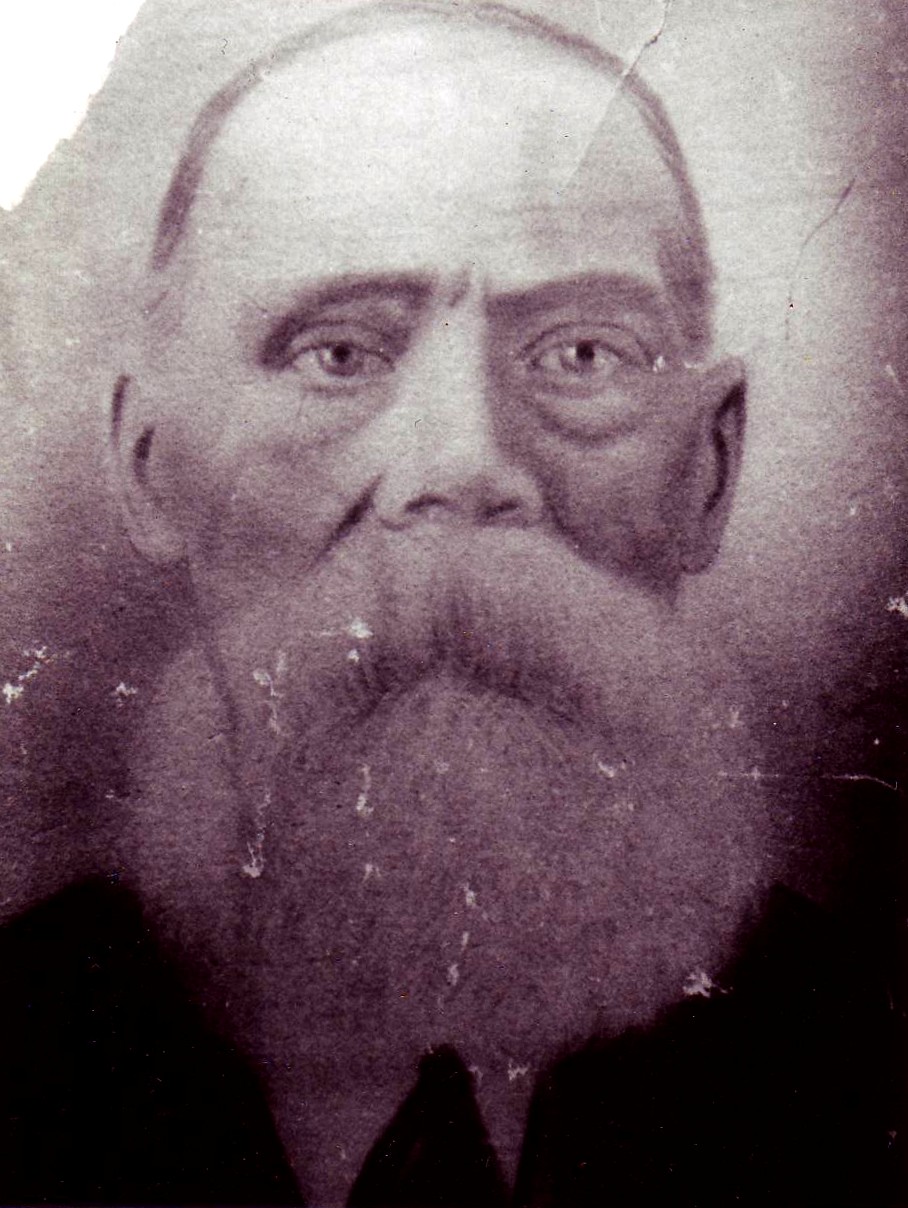
My grandmother said he looked a bit like a poet. Or so she was told:

See, I never did know Grandpa Henry. I didn’t know him.  He died just as Louise was born. Mama had just had Louise, and it was real hot and all, and they told her she couldn’t go to the funeral because it was so warm and she would take cold.  But I didn’t know him. 

And:

Mama said he looked just like Walt Whitman.  You know, he was, his father was white. I don’t know who his mother was. I don’t know if she was mulatto or what.  But anyway, he was really light.  And he lived on the same farm as his daddy.  And he provided him, he provided for him as if he was his own child.

White child, that is.

Henry W. McNeely was 22 years old the year his father reported to the tax assessor that he was worth $1500. The tax list is his first named appearance in the record, and documentation of his life is relatively scarce thereafter. He registered to vote in Rowan County in 1868 and appears in his mother’s household in Atwell township, Rowan County, in the 1870 census.  (He was described as a schoolteacher. Had his father taught him to read while he was enslaved? Or was he a quick learner in a Reconstruction school?) In 1872, he married 18 year-old Martha Miller and, in a daring gesture, named Wilson McNeely as his father on the license. The register of deeds did not blink and dutifully noted that all parties, except Wilson, were colored.
Image

[Sidenote: “Louise” was Mary Louise Colvert Renwick, my grandmother’s sister, born in 1906. — LYH]

——

Interview of Margaret C. Allen by Lisa Y. Henderson; all rights reserved.

Standard
Free People of Color, North Carolina, Oral History, Paternal Kin

Lewis & Mag’s children, part 1: sons.

Lewis and Margaret Balkcum Henderson had nine or so children in Sampson County before shifting a few miles north into Wayne County, where they settled with other free-issue families near a tiny crossroads town called Dudley.  Before the Civil War, Margaret bore Lewis T. (1856), James Lucian (1858), Isabella J. (1860), Ann Elizabeth (1862), and Caswell C. (1864), and after, Mary Susan (1868), Carrie (1870), Sarah Daisy (1872), and Loudie (1874).

Of Lewis T., Isabella and Mary Susan, there is not enough known to talk about; they died as children.  But Lucian was my grandmother’s favorite great-uncle; the only one of Lewis and Mag’s children to stay in Dudley and farm.  He and his wife Susie (born a McCullin) had only one child, a daughter Cora Q., who died early and is remembered only by her headstone in the cemetery of the Congregational Church.  (I am endlessly fascinated by the Q.  What could it possibly have stood for?) Lucian so impressed my grandmother that she named her firstborn son after him. He is gone, but my cousins Lucian Jr., the III and the IV, remain.

My grandmother said:

Uncle Lucian, now he look more like an Indian to me than anybody.  Didn’t have too much hair, but what he had was straight and was that brownish color like it was fair.  We’d come down there and stay with them.  Get off the train and run all the way down there to their house.  That wont nothing.  And they had two beds in that front room.  One on one side and one on the other’n, and they slept on that one side, and me and Mamie slept in the other’n.  In the same room.  ‘Cause it wasn’t no door to it, and the fireplace was in the front room.  I don’t think they ever had a lamp or no light.  We’d go to bed with the chickens and get up with the chickens.  ‘Cause time it’s day, Uncle Lucian was up.  A’nt Susie couldn’t cook.  Because she couldn’t be over the stove, she’d fall out if she was over the stove.  She never left the house that I know of.  ‘Cause she had this thing, that, her head shook all the time.  I said to Mama Sarah, I said, “That thing’s gon shake her head off.”  I told Mama, “She’s gon shake her head off.”  She said, “It was a palsy, that’s how come.”  So Uncle Lucian always got up and cooked breakfast.  And, Lord, I used to love to go down there.  We would get up early mornings, and Uncle Lucian would cook breakfast and, honey, that old ham where he cooked you could smell a mile!  Honey, you could smell that ham before you even got there.  It was on the highway, and we didn’t go all the way ‘round the bend and come up the road.  We’d come down over the fence and come down the cornrow and come up to the house.  And he’d make rice, and it would be that ham gravy.  And the biscuits, they looked like they’s hamburg muffins, the biscuits was so big.  And you talking ‘bout good.   Ooo, you’d be ‘bout to have a fit, it smelled so good. Cooking ham and rice, and had to have ham gravy, just pour water in there from frying.  Great big old milk biscuits.  You eat one of them — you couldn’t even eat a whole one, ’cause they was so big.  And cooked on a little old bitty tin stove, a four-cap stove — the burner wont no more than bigger than that — where you had to put two, three pieces of wood in the stove, and the pipe run right straight up in the house.  Yeah, I thought that was some good days and some good food.  Look like to me, I thought it was the best.  We had good food at home, but seem like down there, it just taste better.  We didn’t have no ham everyday like they had down there, and by him having and curing it, the way they cured ham, his was different from what we had.  Like with that pepper and salt and stuff and seasoning outdoors.  And every one they’d kill, he’d get the hog and cook ‘em and hang ‘em in his packhouse. 

But every great-uncle was not as favored as Lucian.  There was also Caswell, from whom my father gained his middle name, but about whom my grandmother was ambivalent.  Caswell was in New York City by 1890, where he was a white man on his job with the Customs House, but moved among colored folks at home in the Tenderloin and later in Harlem and the Bronx:

Uncle Caswell come to Wilson visiting Mama Sarah.  He didn’t never bring his wife down there ‘cause he was passing for white, and she was kind of brown-complexioned.  But he’d leave our house, and he would go and get a paper every morning down there to Cherry Hotel.  Walk down there for the exercise and get that paper.  He’d go in the hotel there and ask for a paper and talk to the people, and they all said, “Who is this white man?”  And then he’d come all the way back a different way, then walk back down Green Street and come on home, so they wouldn’t know he was crossing the tracks.   And so he wanted Mamie, he didn’t want me, he wanted Mamie to come stay with him and his wife.  And he was gon send her to school and take care of her.  He’d buy all her clothes and everything.  But me, he ain’t said nothing ‘bout me.  But Mama said, “Naw, you can’t. I don’t want her to go to New York.  ‘Cause she don’t know nothing ‘bout New York, and, too, that would leave Hattie down here by herself.”  She said, “They’s gon stay, she gon stay with me ‘cause I promised Bessie that I’d take care of them as long as I lived.  I promised Bessie I’d keep ‘em together.  But if you want to give her something, or help me out with her, buy ‘em clothes or something like that, you can.”  So I didn’t like that. He ain’t said nothing ‘bout me.  But then they said I liked to read, and so he saved the papers where he was taking, and he would send ‘em in the mail to me.  But he sent Mamie candy.  And I told him I wont no goat!  Uncle Caswell didn’t like me.  And I started to tell him he was down there trying to be cute, playing, wanting folks to think he was white.  Passing for white.  Well, he could pass for white.  Least that’s what he was doing up in New York.  ‘Cause he was working at the roundhouse, had a good job.

——

Interview of Hattie H. Ricks by Lisa Y. Henderson; all rights reserved.

Standard
Births Deaths Marriages, Maternal Kin, Newspaper Articles, North Carolina, Oral History

Introducing Martha McNeely.

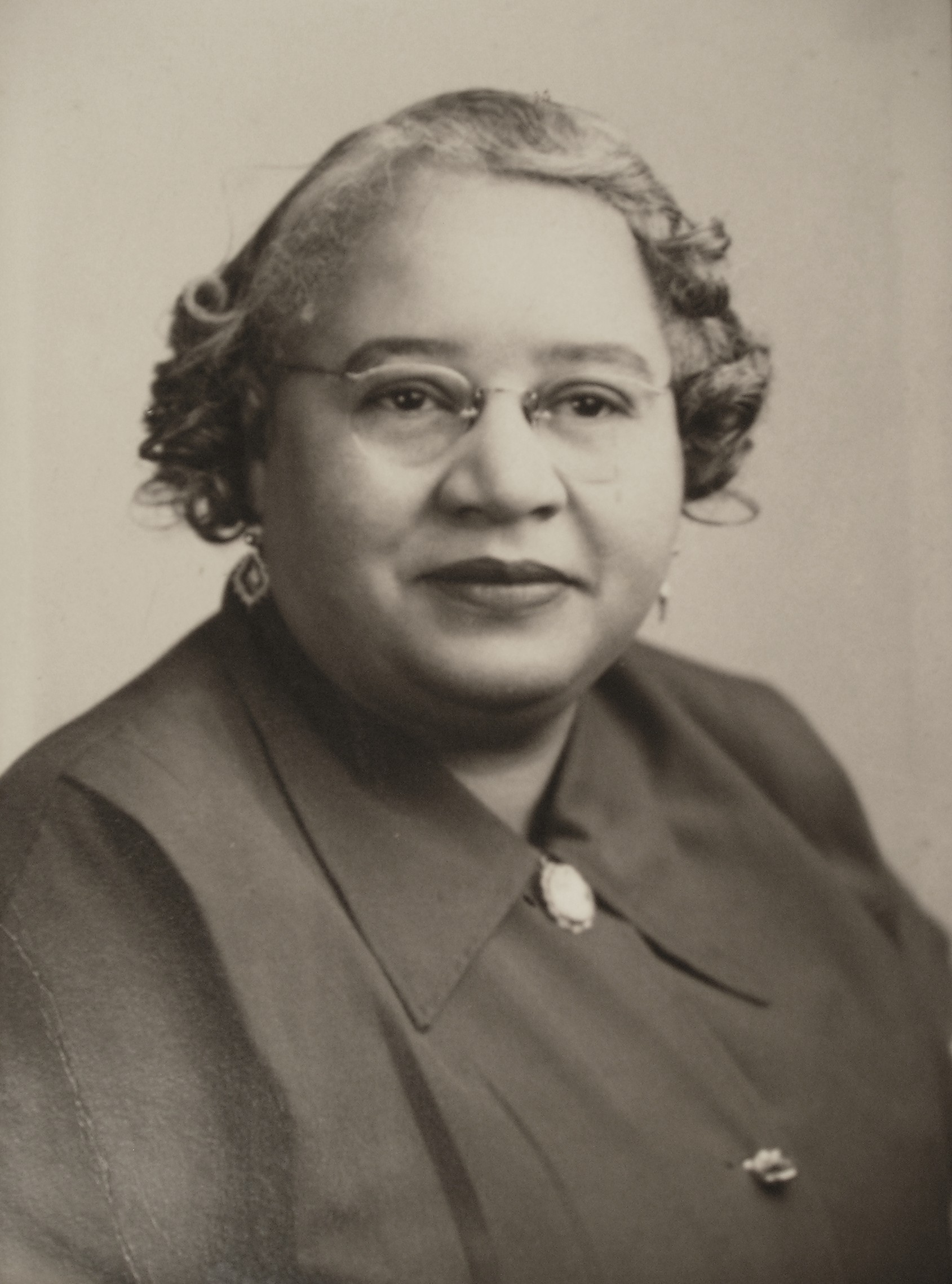
My grandmother had the sweetest memories of her mother’s mother, Martha Margaret Miller McNeely.Image

In the 1920s, Martha McNeely left Statesville for Bayonne, New Jersey, where her daughter Emma McNeely Houser had settled, followed by several siblings. She settled a few blocks in from the river at 87-A West Sixteenth Street, a 1920 duplex that is still occupied. Said my grandmother:

I went up there one summer from Hampton and worked, and she would let me help her in the kitchen and everything like that, and so I told her, I said, “I’ll cut the corn.”  And she said, “Baby, you can’t cut no corn.  You can’t cut my corn.”  And I said, “Yes, I can, too.”  She said, “I’m sure you can’t, but if you insist, let me see you cut it.”  So I cut the ear of corn like Mama had done, you know.  And she said, “Mmph.  Your mammy taught you.”  [Laughs.]  I didn’t ever forget that.  “Your mammy taught you.”  I said, “Yes, she did.”

And the same story, another time:

… She was so sweet and — I said, “Grandma, now, I can cut the corn.” And she liked to cook. She didn’t think anybody could cook but her. I said, “I can cut the corn for you.” She said, “Honey, you can’t cut no corn for me.” I said, “Yes, I can, too.” And so she said, “well, I’ll let you try it,” she said, “to get rid of you.” So I cut this corn down. She would split the grain, split the grain, and then you cut the top of the grain off, and you cut the second one off, and then you scrape it. And when I did this first ear, she said, “Hmph! Your mammy must have taught you!” “She did.”

When my great-great-grandmother died in 1934, two newspapers marked her passing.  On June 16th, the Bayonne Times announced:

“McNEELY – Martha, at her residence, 87A West Sixteenth street, on Saturday, June 16, 1934, beloved mother of Mrs. Emma Houser, Mrs. Carrie Colvert, Miss Minnie McNeely, John and Edward.  Notice of funeral later.”

Two weeks later, the New York Age informed readers that:

“Mrs. MARTHA McNEELY, one of the older residents of our city, died at her home on Saturday.  Her body was taken to Statesville, N.C. for burial.  Funeral service was preached by Rev. W. Atkinson at Wallace Temple.”

Photo of Martha M. McNeely in the collection of Lisa Y. Henderson.

Standard
Births Deaths Marriages, Free People of Color, North Carolina, Oral History, Other Documents, Paternal Kin

The death of Lewis Henderson.

lhenders-20110225152701My grandmother, who was born in 1910, said her great-grandfather Lewis Henderson died when she was very small. She did not remember him, though her sister Mamie had reason to. He threw a brush at her — it hit her in the head —  because she was making too much noise. She could not have been older than four.

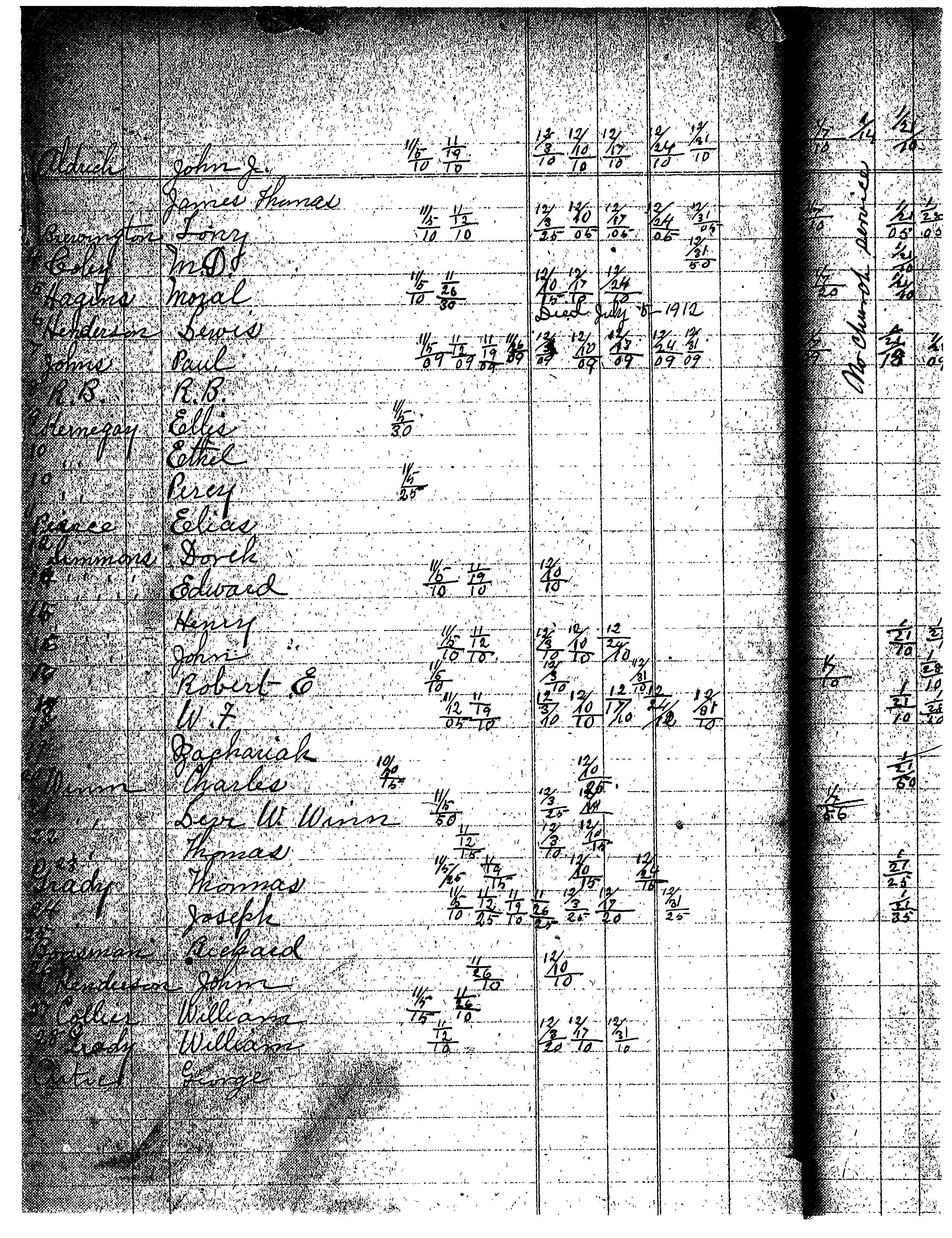
North Carolina did not keep death certificates until 1914, and Lewis’ grave is unmarked. How do we know exactly when he died? This is a page from one of the few volumes of early church records that survive for the Congregational Church of Dudley. Lewis had helped found the church in 1870, and this list shows tithes paid by male congregants. The sixth name: Henderson, Lewis. And this notation: “Died July 5 — 1912.” He would have been about 76.

Standard
North Carolina, Oral History, Paternal Kin

Scuffalongs and muscadines.

Great big old black ones.  Lord, he might as well have told me to go out there and eat all I wanted.  I eat all the way down the corn row down to that lady’s house, Mary Budd, and come up through the corn field and come back to the road and went over there stood up there and eat all I want and throwed the hulls over in the pasture.  The hog pasture, or whatever that thing was out there where pigs was.  They thought I was gon give ‘em something to eat, I reckon.  And I throwed the things over there, and I reckon that’s where Uncle Lucian discovered that we was eating ‘em.  And he said, “Y’all stay away from out there!  Somebody’s been out there —!”  “Wont me!”  [She laughs.]  Them things seem like was the best things I ever had.  And the arbor there on the yard where was all up in the trees, it’d be grapes.  And I’d go there and eat them, but they was little.  It was what they call scuffalongs.  White grapes.  And I’d eat them, too, but I wanted some of them old big ones.  Them old big black ones.

Image

I recorded interviews with my father’s mother in 1994, 1996 and 1998. Her scuppernong story was one of my favorites.

Interview of Hattie H. Ricks by Lisa Y. Henderson; all rights reserved.

 
Standard
Births Deaths Marriages, Free People of Color, Letters, Newspaper Articles, North Carolina, Oral History, Paternal Kin

Comments, upon the death of Rev. Silver.

REV. JOSEPH SILVER DIES AT HIS HOME AT 100 YEARS OLD

Reverend Joseph Silver, Sr., well known and highly respected Negro minister, died Tuesday at his home in the Delmar community, on Enfield Route 3.  He celebrated his 100th birthday anniversary last July 22 at a large gathering of friends and relatives. Rev. Silver had been in poor health about four years and had been confined to his bed for the past four months.

Funeral services will be held from the Plumbline Holiness Church, Sunday afternoon at 2 p.m. The body will lay in state at the church an hour before the funeral.  The Rev. L.G. Young, of Henderson, will preach the funeral and burial will be in the family plot.  Among those expected at the final rites are Bishop M.C. Clemmen of Richmond, Va., and Bishop H.B. Jackson of Ayden.

Rev. Silver began preaching in 1893 when he he organized and built Plumbline Church.  Among other churches built by his ministry are ones at Ayden and Summitt, near Littleton. He was an organizer of the United Holiness Church of America and served on the board of Elders until his death.

Rev. Silver was married three times; first to Felicia Hawkins, who died in 1931, then to Sarah Jacobs of Wilson, who died in 1938; and last to Martha Aldridge of Goldsboro, who survives.  In addition to his wife, Rev. Silver is survived by five sons N.D. and Samuel Silver, of Washington, DC; Gideon, of Pittsburg, Pa.; Joseph, Jr., of Halifax and A.M. Silver of Route 3, Enfield; three daughters, Epsi Copeland and Roberta Hewling, of Enfield, Route 3, and Emma Goines, of Pittsburg, Pa. Eighty grandchildren, 109 great-grandchildren, and 17 great great grandchildren also survive.

— Unnamed newspaper clipping, 10 January 1958.

——

P.O. Box 193 Nashville

N.C.   c/o Brake

Feb. 2, 1958

Dear Hattie –

You heard of Rev. Silver’s death Jan. 7th although I didn’t notify you as I was sick and still is sick but not confine to bed.  Sarah had some things in the home.  A bed which I am sure you wouldn’t care for and a folding single bed which I am going to get but my main reason for writing you she has an oak dresser and washstand that Rev. Silver told me you wanted and said he told you you could get it if you would send for it so it is still there and it is good material if you want it.  Amos has already seen a second hand furniture man about buying it.  The Silver’s will “skin a flea for his hide and tallow.”  The Aldridges holds a very warm place in my heart and always will.  If you wish to do so you may write to Rev. Amos Silver Route 3 Box 82 Enfield and ask him if your mother Sarah’s furniture is still there.  There is also a carpet on the floor in the living room you need not mention my name.  I am very fond of Johnnie Aldridge of Dudly.  Come to see me whenever you can I think you might get with Reka at Fremont some times, she and Luke come to Enfield to see me occasionally  I am going to write Reka next week.  I married your great uncle Rev Joseph Aldridge write me

Your friend and great aunt by marriage.

M.C. (Aldridge) Silver

——

And then this was what my grandmother had to say:

Mr. Silver, he had a bunch, he had 11 children, and his son had a whole bunch of ‘em.  Joseph Silver.  And I went up there one time and one of the brothers was crazy.  And they had one of them there things built up where you could put a person in it, and you can just slide their food right in it.  And it was a seat in there, least it was built in the thing where you could sit on.  When the person would act up, and you can’t do nothing with him, you’d lock him up in that thing, and he had one of them things in the backyard.  Big old thing.  It was just like one of them tanks where oil come in.  And I went in there, peeked through the thing, and I was scared, and I’m drawed all up and looked, but I couldn’t see in there.  But they told me how it was.  …  When Mama got married there on Elba Street, there at the house.  Yeah.  He come up there …  He was a little short brown-skinned man, and he was a elder and the head of the church where was down there in Halifax County.  And all the children ….  Epsie?  Epseline?  What was his first wife’s name?  But him and Mama fell out ‘bout the cooking stove.  She took and got the wood and got the little stove – was four caps on it.  I’ll never forget it.  And it was red-hot in the middle.  And he said, “Don’t put too much wood in that stove!  Get Epsie’s stove that hot!  I know she’ll turn over in her grave!”  And she told him, said, “What?  Epsie ain’t here!”  Said, “I’ll tear the whole stove down!” or something, and she hit the stove!  He didn’t want her to –  They had chinches all over the house.  It was a sealed plank house, and the chinches was all in the, where the cot was up against the wall?  And Mama said she went there and, I told her, I said, when she was telling me ‘bout she was scalding water, had the stove hot and had buckets of water up there on the stove so it would be hot enough to kill the eggs and everything.  And he didn’t want her to pour no water on it, talking ‘bout she got the stove red-hot and Epsie’ll turn over in her grave.   She had that stove that hot.  “Epsie didn’t never used to have it that hot.”  She said, “Well, Epsie ain’t here now, and I’ll burn it up!  House and all!”  She said, “To get rid of these here chinches.”  Chinches all over everywhere!

“Epsie,” of course, was Rev. Silver’s daughter, not his wife. This letter addressed to “Miss Hattie Jacobs  Sanatorium Wilson N.C.,” postmarked Feb 2 1958, Nashville N.C. is in my possession.  Martha Silver’s previous husband had been Joseph Aldridge, younger brother of my grandmother’s grandfather John W. Aldridge.  The Johnnie Aldridge referred to was my grandmother’s uncle.  Reka Aldridge Morrisey Ashford was the daughter of George W. Aldridge, John W. Aldridge’s older brother.  I interviewed my grandmother in her home in Philadelphia in 1994.

Standard
Free People of Color, North Carolina, Oral History, Paternal Kin, Photographs

Introducing Lewis & Mag Henderson.

Though his brother Bryant disappeared from the record after apprenticeship, James Henderson achieved adulthood and shows up in the 1850 census as a mechanic and the father of four children whose last name was Skipp.  The children too were apprentices, which tells us that their mother, like James’ own, was unmarried. “Skipp” was an uncommon name in the area.  I know nothing else about her, and she apparently was dead by time the censustaker rode through their corner of Onslow County.  When James wandered 50 miles northeast to Sampson County to a tiny community of free people of color north of present-day Clinton, his sons Lewis and James Henry and daughter Eliza went with him. By this time, they had assumed their father’s last name.  Lewis Henderson, born about 1836, was my great-great-great-grandfather. There are no photographs of Lewis, but there is one of his brother James Henry, who was blue-eyed and bushy-bearded and generally indistinguishable from his Anglo-Saxon neighbors.

Image

Sometime around 1856 Lewis married a woman much like himself, free-born and colored and of uncertain antecedents.  Her first name was Margaret, and her last name seems to have been Balkcum.  And we do know what Grandma Mag looked like.  My great-aunt Mamie showed me the battered tintype; I was 21 years old and nearly lost consciousness.  Mag was born in 1836, too.  She was perhaps middle-aged when she sat for her portrait — her age, like her racial stock, is indeterminate.  But she had straight iron-gray hair parted down the middle and pulled back severely; high, broad cheekbones; and thin lips marking an ultra-wide mouth.  A handsome woman, if not a pretty one.  She seems to be smiling; there is a twinkle in her gray eyes.

Image

My grandmother remembered her like this:

We used to go down to Dudley to see Grandma Mag – we called her Mag, but her name was Margaret – before she died.  I remember her being alive, but she was in bed sick.  She was always in the bed.  Her hair looked like white, and she had it parted right in the middle and all carried back, don’t even look like she had none.  Couldn’t tell how much she had ‘cause she was laying on it, what I saw of it.  I don’t ever remember her getting up and down.  I remember ‘cause I wanted to know why she was in the bed all the time.  And I don’t remember seeing her walk but one time.  She stayed sitting around so much until she couldn’t hardly half walk – but she didn’t have nair stick with her.  She’d just hold on to different things.  I don’t know, I wouldn’t never ask a person, ask ‘em, “What’s wrong with your legs?” or “What’s the matter with you.  How come you can’t walk no better?”  But Mamie stayed with Grandma Mag and them until Grandpa Lewis died.  The house they was staying in where was up by the railroad, was just about to fall down.  So Mama Sarah built them a house.  

——

Photos of James H. Henderson and Margaret Henderson in the collection of Lisa Y. Henderson.

Standard
Maternal Kin, Newspaper Articles, North Carolina, Oral History

Aunt Bert shot a white man.

Damage Suit Asks $25,000

Suit for $25,000 personal damages has been filed by James L. Warren against Odessa Waddell Williams, executrix of the estate of the late Bertha Mae Murdock, in Iredell Superior Court.

Warren contends in his company that he suffered the damages when Bertha Mae Murdock allegedly shot him in a restaurant near here March 28, 1944, prior to her death.

According to Warren’s complaint, she allegedly shot him while he was visiting at Bill Bailey’s Barbecue Stand four miles west of here. He claims she was a co-partner in that firm at the time.

Warren says that, as result of the alleged shooting, his leg had to be amputated.

Statesville Record & Landmark, 16 December 1955.

—–

OLYMPUS DIGITAL CAMERA

I’ve been looking for an article like this for years, and I don’t know how I missed this one. Still, I’m hoping to find something from 1944, the year Bertha Mae Hart Murdock, daughter of Harriet Nicholson Hart, shot James Warren.

Here’s the version of events my family tells: Aunt Bert married a scandalous man who ran a roadhouse out in the country catering to white folks looking for a little liquor with their barbecue. A patron said something to her one day, and maybe got fresh, and she pulled a pistol and shot him. (There was no “allegedly” about it.) She was convicted and sent to the state women’s prison in Raleigh, where she served as cook for the governor before her release.

Photo of Bertha M. Murdock in collection of Lisa Y. Henderson.

Standard
Births Deaths Marriages, Maternal Kin, Newspaper Articles, North Carolina, Oral History, Photographs

It was our aunt, screaming and crying.

Image

Hattie Hart Dead.

Hattie Hart, colored, wife of Alonzo Hart, died Thursday night at 9:30 o’clock at her home, death occurring at the age of 63 and resulting from a stroke of apoplexy.  The funeral took place at the Center Methodist Church at 3 o’clock in the afternoon.  — The Landmark, Statesville NC, 2 Jun 1924.

—–

This is how my grandmother recalled the death noted above:

“She was subject to high blood pressure, and she had this attack on this day, and we all had to go out there.  It was me — Louise was in Jersey — and it was Launie Mae, Mama and Papa.  And I think Golar went, too.  Anyway, I know we all went out there, and she was sick for a few days and then she died.  But the day that she died, we had gone to the store.  Some old country store, and we had to go a long ways, but we could see down the road, you know. So we went on down the road and when we came back, there were some people who lived across the pasture in some houses that belonged to Mr. Hart.  (That was the step-grandfather — stepfather of Papa.) He owned all these houses, and we saw these people running across the street, and Launie Mae said, “Lord, there’s something happening!” and I said, “There sure is.”  And the closer we got, the more we kept hearing this noise, you know?  And it was our aunt, screaming and crying, you know, ‘cause Grandma had passed.”

——

Photo of Harriet Nicholson Tomlin Hart in collection of Lisa Y. Henderson.

Standard