Births Deaths Marriages, Maternal Kin, Oral History, Virginia

Kin to Thomas Jefferson.

My mother told me this long ago, and today she repeated it: “I don’t know where this came from, but they always used to say that Papa was kin to Thomas Jefferson.”

Thomas Jefferson’s mother was Jane Randolph Jefferson. Jane had a sister, Susannah Randolph, who married Carter Henry Harrison. Carter and Susannah had a son named Randolph Harrison, who had a son, Thomas Randolph Harrison; who had a son, William Mortimer Harrison; who had a son, Edward Cunningham Harrison.

“Papa” was John C. Allen Jr.  Papa was Edward C. Harrison’s son.  And so, as Thomas Jefferson’s first cousin five times removed, Papa was kin indeed.

I’ve always wondered if John Allen knew who his birth father was. This bit of family lore suggests that he did.

Standard
Births Deaths Marriages, North Carolina, Oral History, Paternal Kin, Photographs

“Well, she was pretty.”

And Mama’s daughter’s name Hattie, Hattie Mae. That’s who they named me after. I asked them why they named me Hattie after a dead person. “What, you don’t like Hattie? Well, I just thought ’twas nice.” And after I looked at the picture, I said, “Well, she was pretty.” Well, since Jack knew her, and he wanted her picture, so when I come up here, I give him the picture. And he kept it. They thought she was white, wanted to know what old white girl was that. And the frame was out on, right on whatchacallem street now where Mildred live, it was out there on her back porch, and I saw the frame, and I asked something about the picture, what happened to the picture, and she said she didn’t know what happened to it, it was some of Daddy’s stuff he brought here. I said, “Well, I know ’cause I gave him the picture, that frame where was sitting right out on the back porch.” He wanted it, and it was Bessie — not Bessie, but Hattie, Mama’s daughter Hattie. I said, “’Cause they grew up together.” “I don’t know who that old white girl was. I don’t know what happened, … he brought the stuff when he got sick, you know. Waited on him, you know… And he died, so…” Never did find out what ever come of the picture. They thought ’twas a white woman.

Mama never talked about her. But A’nt Nina, she would tell everything. Mama got mad with her, said, “You always bringing up something. You don’t know what you talking ’bout.” So she’d go behind — Mama wouldn’t want her to tell things. And she never did say, well, if she said, I wouldn’t have known him, but I never did ask her who Hattie’s daddy was. I figured he was white. Because she looked — her hair and features, you know, white.

IMG_1643

It’s hard to see, but here lies the first Hattie Mae.  Born just seven months before their marriage, Jesse Jacobs Jr. adopted Sarah Henderson‘s daughter as his own. (I need to clean this stone next time I’m in Dudley. I’m ashamed I left it like this this time.)

Interview of Hattie Henderson Ricks by Lisa Y. Henderson; all rights reserved.

Standard
Births Deaths Marriages, North Carolina, Oral History, Paternal Kin

Collateral kin: McCullin.

In October 1998, I received an email from P.M., who was seeking information about her Simmons forebears. During the antebellum era, the Simmonses were a large free family of color in Duplin and Wayne Counties. Though I am not one, I’ve researched them both in my free people of color work and because several Simmonses have intermarried into my lines. I quickly identified P.M.’s great-grandfather, George Robert Simmons, as the son of George W. and Axey (or Flaxy) Jane Manuel Simmons and, accordingly, brother of Ann Elizabeth Henderson Simmons‘ husband Hillary B. Simmons. I was also able to provide information about her Artis line, but came up blank when she mentioned her great-grandmother, Mary McCullin Simmons. Then: “Mary’s sister Susie married a Lucien Henderson,” P.M. wrote. “I think they lived in Dudley. My mother remembers visiting her when she was a little girl. Does his name ring a bell?”

It did indeed. James Lucian Henderson, whom I’ve written about several times, including here and here, was my grandmother’s beloved great-uncle. In the hours I recorded her talking about her people, my grandmother mentioned Aunt Susie several times:

And A’nt Susie was real light, and her hair was all white, and she’d plait it in little plaits, and then tuck ’em up. It didn’t grow that much, ’cause it wasn’t long. And she had a rag on her head all the time. Only time she’d comb it was — when she’d be combing her head, you’d see it. And it was just about like this. [Indicates the length of two finger joints.] Shorter than this. I don’t know whether she cut it off or not. But it didn’t grow, and it was white, and she’d put that rag back around her head. After she’d comb her hair. And it was doing like that all the time. Shaking. Her head was shaking, and I asked Mama, “What’s wrong with her?” How come her head was shaking all the time? And she said, “Well, it’s a sickness.” She said, “I don’t remember what they call it.” So I didn’t say nothing else about that. I used to go down there.  She couldn’t cook. Like over the stove, like cook dinner, after twelve o’clock. Had to cook it before twelve o’clock before it got too hot. Because she couldn’t be over the stove, she’d fall out, if she was over the stove. So Uncle Lucian always got up and cooked breakfast.

So we come up there and stay, and Aunt Susie, she’d be out there in the yard to the pump or something. I never did see her with her hair. She’d always have a pocket handkerchief, look like, tied to the corner and out it up on her head and tuck it up under her hair. And it was white like cotton. And so, I don’t think she ever left the house. See Uncle Lucian always went to church right up there from the house. I don’t know what the name of Uncle Lucian’s church was.   It had a funny name, but I don’t know whether it was Methodist or Baptist, but she didn’t go to church. She never left the house that I know of. I told Mama, “She’s gon shake her head off.” She said, “It was a palsy, that’s how come.” I said to Mama, I said, “That thing’s gon shake her head off.” And I said, ‘Hmm, why she have a rag on her head all the time and her head just shaking like that?’ It be a white rag up there. I wanted to ask her so bad. But I didn’t. Didn’t never ask her.

I recently heard from P.M. again and pulled out our old correspondence. Here’s what I now know about the McCullins:

Rose (or Rosa) McCullin was an enslaved woman born perhaps 1825. She is believed to have been enslaved by Calvin J. McCullin or his brother Benjamin F. “Frank” McCullin in Buck Swamp township, Wayne County, and to have been the mother of at least four daughters – Jane, Mary, Susan and Virginia – by Frank McCullin. Rose McCullin appears in no census records and seems to have died before 1870. The only known references to her are on the marriage and death records of her children, as detailed below.

Jane McCullin

  • was born about 1850.
  • In the 1860 slave schedule of Buck Swamp township,Wayne County, B.F. McCullum is listed with five slaves, all female, aged 35, 12, 8, 7, and 4. The woman is described as black; the girls as mulatto. Are these Rose and her children? [Benjamin McCullin’s mother, Amy Ann “McCullum,” wife of C.J. McCullin, is listed with 12 slaves. C.J. McCullin is not listed.]
  • Jane McCullin married Irvin Manly on 20 January 1870 in Wayne County.
  • In the 1870 census of Brogden, Wayne County: Irvin Manly, 26, Jane, 20, Rachel, 54, and Hosea Manley, 6. The family lived within a cluster of households headed by white farmer Allen Manly, 60, Henry Manly, 32, and William Manly, 28.
  • In the 1880 census of Brogden, Wayne County: Irvin Manley, 40, Jane, 30, Fannie, 8, Joe, 7, Mary, 5, Nancy, 3, and Jesse Manley, 10 months, and sister-in-law Susan McCullen, 22.
  • In the 1900 census of Grantham Wayne County: Irvin Manly, 57, Jane, 58, and children Mary, 24, Jesse, 20, Nathan, 17, and Arthur, 16. Jane reported 5 of 7 children living.
  • In the 1910 census of Grantham, Wayne County: Irvin Manley, 65, and wife Jane, 64, with daughter Mary Flowers, 30, and her son Marshal C. Flowers.
  • In the 1920 census of Grantham, Wayne County, 75 year-old Jane Manley appears to have lived alone, but next to her son Arthur Manley and family. On the other side of Arthur was Irvin Manley, 75.
  • In the 1930 census of Grantham, Wayne County: Irvan Manley, 85, and Jane Manley, 88, were listed as in-laws in the household of Marshall and Mary Flowers on Grantham and Faison Road.
  • Jane Manley died 19 July 1931 in Brogden township, Wayne County. Her death certificate reports that she was colored and married to Irvin Manley and that she was born 14 July 1839 to an unknown father and Rose McCullen. She was buried the next day at an unnamed location in Wayne County.

Mary Ann McCullin

  • was born about 1853.
  • In a 1863 tax assessment of property and slaves in Wayne County, C.J. McCullen reported owning Hardy, 62; Dinah, 54; Fereby, 40; Toney, 26; Phillis, 20; Jimmy, 17; Henrietta, 15; Grace, 14; Ballard, 17; Liza, 38; Creasy, 2; Susy, 4; T[illegible], 12; Ollin, 14; Henry, 9; Isabell, 8; Mary, 6; Clarisy, 3; Rose, 3; Isaac, 50; and Fountin, 10. [The sex and age of several men and women correlate roughly with those listed with Amy Ann McCullin in the 1860 slave schedule. Does this  list show Mary McCullin? Susan McCullin? If so, where are Rose,  Jane and Virginia? Also, there is no entry for B.F. McCullen, though he reported five slaves in the 1860 census.]
  • In the 1870 census of Grantham, Wayne County: B.F. McCullin, 51, Penny, 28, Theophilus A., 9, Martha A., 6, Susan C, 5, Ordelia J., 3, Sarah B., 5/12, Mary, 17, and Susan, 15. Mary and Susan were described as black; the rest as white.
  • On 28 December 1871, Geo. R. Simmons and Mary A. McCullin were married by John Scott, M.G. Her mother was listed as Rosa McCullin; her father, unknown.
  • In the 1880 census of Brogden, Wayne county: Robt. Simmons, 33, Mary, 24, and children Nettie, 8, Stephen A., 6, and E. Robt. [Robert Elder], 2. [Mary’s last child, Bertha, was born in 1883.]
  • Mary McCullin Simmons seems to have died before 1900.

Susan McCullin

  • was born about 1855.
  • Per above, “Susy, age 4” is listed among C.J. McCullin’s slaves in an 1863 tax assessment.
  • In 1870, she and her sister Mary were listed in B.F. McCullin’s household in Grantham, Wayne County.
  • In the 1880 census of Brogden, Wayne County, she was listed in the household of Irvin and Jane Manley, her sister and brother-in-law.
  • On 4 April 1883, in Wayne County, Susan McCullin, 20, married Lucias [sic] Henderson, 24, son of Lewis and Margaret Henderson. She is listed as the daughter of F. McCullin and R. McCullin.
  • Susie and Lucian’s daughter Cora Q. Henderson was born 2 February 1887.
  • In the 1900 census of Dudley, Brogden, Wayne County: Lucious Henderson, wife Susan, and daughter Cora.
  • Susan’s daughter Cora died 20 March 1907. She is buried in the cemetery of First Congregational Church, Dudley, Wayne County.
  • In the 1910 census of Brogden, Wayne County, farmer Lucious Henderson, 52, and wife Susie, 50. Susie reported having had one child, but none living.
  • In the 1920 census of Brogden, Wayne County, farmer Luchon Henderson, 62, wife Susan, 61, with Mary Budd, 56, her son James, 28, and grandson Vernell, 11 mos.
  • In the 1930 census of Brogden, Wayne County, Luchion Henderson, 70, farmer, and wife Susie, 70.
  • Susan’s husband Lucian Henderson died 22 June 1934. His death certificate lists her as Susie Manly Henderson. The informant, Johnnie Carter, was the beneficiary of Lucian’s estate: “to John Wesley Carter, … my home place, 8 acres, provided that John W. Carter care for me and my wife Susan Henderson …”
  • An entry in my grandmother Hattie Henderson Ricks’ Bible states that Susie Henderson died 15 March, 1940. She lived briefly with my grandmother in Wilson before her death, but I assume that she died in Wayne County, but have not found her death certificate.

42091_343598-01165

Marriage license of Lucian Henderson and Susan McCullin, Wayne County Register of Deeds.

Virginia McCullin

  • Virginia was born about 1857.
  • On 3 January 1877, Virginia McCullen, 20, married Isaac Raynor, 21, in Wayne County.
  • In the 1900 census of Mount Olive, Wayne County: Isaac Rayner, 48, Virgina, 36, and children Mary, 20, Zekiel, 19, Florence, 16, and Grainger Rayner, 14; boarder Fountain Futrell, 20; and Sweena Rayner, 70, Isaac’s mother. The couple reported being married 21 years, and Virginia reported 4 of 4 children living.
  • In the 1910 census of Fork, Wayne County: washwoman Virginia Raynor, 43, widow, with daughters Mary, 28, and Florence, 24, and grandchildren Lillie M., 5, and William D., 4.
  • Virginia Bradley died 3 December 1914 in Fork township, Wayne County. Her death certificate lists her parents as Frank McCullen and Rosa (last name unknown.) [When did Virginia marry a Bradley?]
  • Ezekiel Raynor died 8 February 1940 in Mount Olive, Wayne County. He was born 1884 to Isaac Raynor of Duplin County and Virginia McCullin of Wayne County.
  • Daughter Florence Moore died 21 June 1945 in Goldsboro, Wayne County, aged 56. She was a widow and was born 30 March 1889 to Isaac Raynor and Virginia McCullens.
  • Daughter Mary Lane died 23 April 1960 in Goldsboro, Wayne County, aged 76. She was a widow and was born 9 September 1883 to Isaac Raynor and Virginia (last name unknown.)
  • Son Granger Raynor died 18 November 1964 in Goldsboro, Wayne County. He was born in August 1886 to Isaac Raynor and Virginia Manley.

Interview of Hattie Henderson Ricks by Lisa Y. Henderson, all rights reserved.

Standard
North Carolina, Oral History, Paternal Kin, Photographs

A Kerchief of Sense.

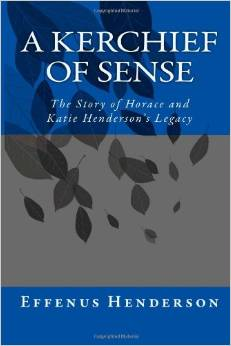
Timed to coincide with the anniversaries of his father’s birth in 1923 and his mother’s death in 1963, Effenus Henderson‘s recent memoir, A Kerchief of Sense, is available at Amazon.com. It is a simultaneously heart-breaking and heart-warming story of family and faith.

kerchief

So much of what Effenus has written of occurred during the period that our branches of both the Henderson and Aldridge families had lost contact. I found my way back to them through my grandmother and father, who often mentioned that we had a cousin called Snook — Horace Henderson — still down in Dudley. My grandmother only knew bits and pieces of the story told here, but her recollections led to our reconnection with his children and our larger family. Tribulation was no stranger to either of our lines, but we survived and now thrive. Thank you, Effenus, for capturing this aspect of our common legacy.

snook 12 2

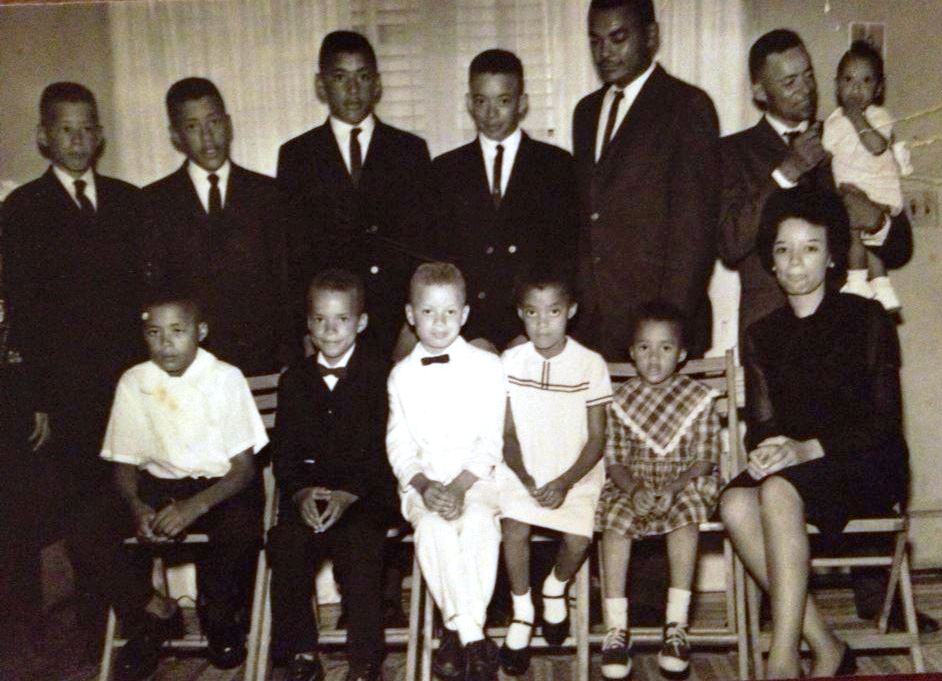
Horace Henderson Sr. and his twelve children, 1963.

Standard
Births Deaths Marriages, Maternal Kin, North Carolina, Oral History

Collateral kin: the Daltons.

Me: And you said he looked just like your dad. Your dad looked just like his father.

My grandmother: Papa looked just like him. And one thing, with all that white in him, he was brown like Grandpa.

Me: Unh-uh.

Grandma: And I don’t know who Mat and Golar and Walker’s mother was, but Walker was real dark. But handsome. Honey, he was one beautiful child and had this pretty hair. Curly. And it wouldn’t even keep a part or nothing in it. And he came home one time, and he had cut this part, cut this place through his hair. And he said his friends had parts in their hair, but his was so curly it wouldn’t stay. So he had to cut this part. Another time, that was just after Mama had married Papa. And she was just so crazy ‘bout him, he was such a pretty little boy. And she made him this velvet suit.

My aunt L.: Who, Walker?

Grandma: Walker. Fauntleroy. You know what a Fauntleroy suit is?

Me: Mm-hmm.

Grandma: She made him this Fauntleroy suit for commencement. And she said it had this little collar, you know [inaudible] collar. And said when Walker came out on the stage to do his part, he had stuffed all that collar on the inside of his coat and pulled them sleeves down. [Laughing.] Mama said, “See. Will you look at this young’un.” [Laughing.]

Me: ‘Cause they were fairly young, right, when —

Grandma: Yeah, they were six —  something like six, eight and ten. And they may have been younger than that.

Me: And their mother died?

Grandma: Yeah. I don’t know how she died. But her sisters were really nice to Mama. Oh, they were really nice to her. Mama loved them like her own sisters. They were so nice to her. And, see, they were sort of taking care of the children while Papa was in between two marriages you know.
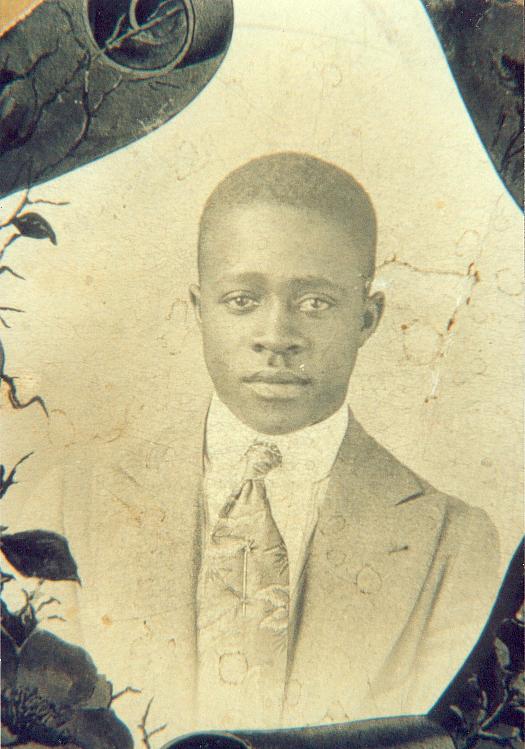
COLVERT -- Walker Colvert Border

J. Walker Colvert II, perhaps in his early twenties.

——

So, who was Lon Colvert’s first wife? I know her name — Josephine Dalton — but little else.

In the 1880 census of Eagle Mills, Iredell County, one year-old Josapene Dalton is listed in the household of her parents, Anderson and Vincey Dalton, along with brother Andrew, 17; sister Mary B., 3; her great-grandmother, Mary Houston, 85; and a boarder named Joe Blackburn, 28. The family lived among a little cluster of Dalton households, the first headed by 67 year-old John H. Dalton, a white farmer. Dalton, born in Rockingham County, North Carolina, arrived in Iredell County in 1840’s. He married the daughter of Placebo Houston, a prominent planter, and is credited with introducing tobacco cultivation in Iredell County. According to a 8 April 1974 article in the Statesville Record and Landmark, by 1850 Dalton had established a tobacco plug factory that employed 17, but had to haul bright leaf tobacco from counties along the Virginia line. This scarcity drove his efforts to jumpstart local tobacco production. In 1858, John Hunter Dalton built Daltonia, described as “an imposing Greek Revival house whose richness and diversity of detail make it one of the most architecturally outstanding houses” in the county.  The 1860 census counted among Dalton’s possessions 57 slaves living in eight houses. Josephine Dalton’s father, and maybe her mother, were likely among them.

Josephine was born well after the Civil War — after Reconstruction even — but her family seems to have remained tethered to Daltonia for decades after Emancipation. [After I started this blog post, I traveled to Iredell County, met P.P., and visited Daltonia. That story, and more about Josephine’s family, is here.] Sometime around 1894 — I have not located a license — Josephine married Lon W. Colvert, an ambitious 19 year-old Eagle Mills native set to make his mark in the town of Statesville. [Update, 4/6/2015: license found.] The young family appears in the 1900 census of Statesville, Iredell County — Lon Colvert, 25, wife “Joseph,” 23, and children Gola, 5, Mattie, 4, and Walker, 2. No more than five years later, Josephine was dead.

Standard
Enslaved People, Maternal Kin, North Carolina, Oral History, Photographs

Roadtrip chronicles, no. 5: Daltonia.

I saw that big, block of a white house, but I didn’t know what I was looking at. And, really, I wasn’t even much looking at it, because my whole attention was zeroed on a small building a couple hundred feet beside and behind it. A one and-a-half story log cabin sitting on fieldstone piers, mud-chinked, with small windows in the gable ends and central front door. In pristine condition. What was this?

IMG_6022

I turned to P.P., who shifted uncomfortably in her seat. “I don’t even want to say this,” she started, “but it’s true. It’s just so ugly.”

“Please do. Please do,” I urged.

“Well, the official story is that’s where the Daltons lived while they were building the house.”

The house — oh. This was Daltonia.

IMG_6027

“But that log cabin was Anse Dalton’s house.”

Wait. “Anse Dalton!? Anderson Dalton? That was — he was the father of my great-grandfather Lon W. Colvert‘s first wife, Josephine.”

“Yes, well, after the War, he was a driver for the Daltons. But in slavery …”

Yes? “In slavery, he was a — I hate to say it — he was used to breed slaves. That’s what they called this — ‘the slave farm.'”

I sat with that for a minute.

“It’s terrible,” she continued. “They thought, just like you can disposition an animal, you could breed people with certain traits. He had I-don’t-know-how-many children.”

I knew about slave breeding, of course. About the sexual coercion of both enslaved men and women, particularly in the Upper South. I’ve read slave narratives that speak of “stockmen,” but never expected to encounter one in my research. I thanked P.P. for her openness, for her willingness to share the stories that so often remain locked away from African-American descendants of enslaved people. Not long ago, I started working on a “collateral kin” post about the Daltons. I knew Josephine Dalton was born about 1878 to Anderson and Viney (or Vincey) Dalton; that her siblings included Andrew (1863), Mary Bell (1876), Millard (1880), Lizzie (1885) and Emma (1890); and that she was from the Harmony/Houstonville area. I’d stumbled upon articles about Daltonia and had conjectured that her parents had belonged to wealthy farmer John Hunter Dalton. I’d set the piece aside for a while though, because I had no specific evidence of the link beyond a shared surname. However, here was an oral history that not only placed Josephine’s father among Dalton’s slaves, but detailed the specific role he was forced to play in Daltonia’s economic and social structure.

P.P. did not know Anse Dalton, but Anse’s son Millard and her grandfather had grown up together. P.P. was reared in her grandfather’s household and vividly recalled Millard Dalton riding up to visit on his old white horse. “You can have her till I go home,” he’d tell her as he handed off the reins.

I can finish my Dalton piece now. Though I will never know the names of the children that Anderson fathered as a “stockman,” genealogical DNA testing may yet tell the tale, and I have a clearer picture of Josephine Dalton Colvert’s family and early life.

Photographs taken by Lisa Y. Henderson, February 2015.

Standard
Agriculture, Foodways, North Carolina, Oral History

52 Ancestors in 52 Weeks: 5. Plowing through.

Week 5 of the 52 Ancestors Challenge asks bloggers to consider “plowing through.” I immediately thought of two very different recollections by my grandmothers of gardens their families’ tended in their childhood.

——

Me: Did you grow all your vegetables and stuff, or was there a store?

My mother’s mother: Child, Papa would, every spring of the year, Papa would start out with this great big garden. Everybody would be out there hoeing and carrying on and planting and doing. And he wouldn’t go back out there anymore, and in a few weeks, the weeds would have taken over. [Laughs.] Oh, we might have some things that grew quickly first. Now, we always had potatoes, white potatoes. He would plant white potatoes, and what else would he plant? Green peas. You know, like snow peas. And I can see now, the cabbage with the worms eating that up. [Laughs.] That was no good. And what else did he have out there? Tomatoes. He’d have tomatoes. That was just about all. There’d be just those things that’d come early in the spring. And we wouldn’t have anything later. And then we had somebody who came in and – we lived on about an acre. It was just about an acre of land. And he would have all this cornfield, cornfield and pole beans. Ohhh, I can see those beans and great big ears of corn. I don’t think Mama ever canned any corn or anything like that, but we would eat corn, and all the neighbors would eat corn from that cornfield. And this old gentleman that I told you that helped Papa…. What was that man’s name? I can’t think of it, but anyway, he was the one who cultivated the land and did the planting.

——

My father’s mother: Yeah, they said he could use it and grow a little cotton. Old Man Price was in a house over on one corner, and the school over here. And while he was working, plowing that garden where was on the side, Professor [Charles L.] Coon[, superintendent of Wilson city schools] let him have whatever he put in it. He would buy all the stuff to go in the ground, if he would just work it. The part there where was to the children’s playground. But they had it barred off, the children didn’t actually go over in that part. So he’d plant that, and then he’d [inaudible] me and Mamie had to get up two o’clock in the morning, go down there and pick up potatoes. Light night. It’d be so bright you could see ‘em. He’d plow it up, turn that ground over, and all them old potatoes down there, put ’em in baskets, and what we couldn’t see ‘fore it got real daylight, we had to go out there and pick ‘em up when it got day.

Interviews of Margaret C. Allen and Hattie H. Ricks by Lisa Y. Henderson, all rights reserved.


Standard
Maternal Kin, North Carolina, Oral History

52 Ancestors in 52 Weeks: 4. Closest to your birthday.

I don’t know if her birthday (June 22) is closest to mine (June 26), but it’s pretty doggone close, so this week’s featured ancestor is my great-grandmother, Carrie McNeely Colvert Taylor, whom I’ve written about before here and here.

McNEELY -- Carrie_church_NJ

Grandma Carrie in Jersey City, New Jersey, with her daughter Launie Mae’s children, early 1940s.

——

Me: Well, I wonder where she got her name from?

My grandmother: Who?

Me: Your mama. Your mother. Caroline Martha Mary —

My grandmother: Yeah. Who ever heard tell of such as that?

Me: — Fisher Valentine McNeely. Well, I know where the Martha came from, ’cause that was her mother’s name.

My grandmother: Yeah.

Interview of Margaret C. Allen by Lisa Y. Henderson; all rights reserved.

Standard
North Carolina, Oral History, Paternal Kin

It felt like a weight fell off of her.

Papa asked Mama would she come back ‘cause the café wasn’t doing nothing, and she’d put all her money out, so she told Papa she’d come back home. And she come back, and, I don’t know, she seemed kind of puny and sickly. Papa said, “Well, a old man came here and he said he – Well, you come back just like the man said.” And she said, “What man?” And he said, “Well, somebody told me, said go out there and see somebody called a rootworker,” or, well, he didn’t call it rootwork, but see some person like that. And said maybe he could make her come back. And he said — well, I don’t know what he paid him, but anyway, he said he gave him stuff and told him to bore a hole in a tree on the north side and put that stuff in it and take and put a corkscrew in it. To make it stay in there. And for him to, I think he told me, for him to wet on it for nine mornings or something like that, and she would come back. Well, she come back, and she said, “Well, how come you didn’t take the mess out?” Well, he was arguing about it, saying something about it, and what I did, I got the ice pick. And went out there to – we had a peach tree and a apple tree. It was in the apple tree, and I went out there and looked around sure enough it was a corkscrew, great big one ‘bout like that there, stuck up in there, and I took that icepick and picked it out. And it come out this little trashy stuff in this cloth. And it was part of Mama’s underclothes. [We laugh.] And I think it come off – you know at that time they had a lot of lace and stuff — and one of them little pieces cut off where was the lace was up there, and he wrapped it up and put in that…. Least the man fixed it for him and told him how to bury it in the hole. And Mama, and I don’t know whether it was so or not, but she said when that stuff come out of that hole, felt like a weight fell off of her. I’ll never forget that thing. And the tree died. So, I said I don’t know whether it killed the tree, but it didn’t kill her. And Mama told me if that thing stayed there long enough [inaudible] in that mess, she’d a died.

For a scholarly in-depth study of hoodoo and root work, see Katrina Hazzard-Donald’s Mojo Workin’: The Old African American Hoodoo System.

Interview of Hattie H. Ricks by Lisa Y. Henderson; all rights reserved.

Standard
Maternal Kin, Oral History

Christmas crazy.

In which my mother’s mother reminisces about Christmas with my grandfather and Santa Claus innocence lost:

How did you all celebrate Christmas? Did you get a tree and all that or what did you do?

Ohhh, Daddy was Christmas crazy. He was Christmas crazy, honey. He would buy everything in the world he could afford. And fruitcake. We would make fruitcake. He would help me stir ‘em and cook ‘em, and one time we made some and it didn’t look dark like fruitcake usually is, and I said I wonder why … He said, “Well, I tell you what, let’s put some cocoa in it to make it dark.” [Laughs.] And he used to stir ‘em for me, stir the cake for me and beat the eggs. The batter. He was a better cook than I was. He really taught me to cook.

What about Christmas when you were a child? When you were little?

We had nice Christmases. Walker and Golar and Mat were older than we were, and they used to have to pass through our room some kind of way to get to the front. When they’d come home, when they’d come in the back porch, they would have to pass through that room. And I was a big girl and should have had more sense. But they passed through there, and — I thought Santa Claus brought oranges and apples and everything else. And they thought that we were asleep. They came through our room for something, and they thought that we were asleep, and my brother said, “Did you bring the oranges out the car?” And I mean it just upset me so bad, I didn’t know what in the world to do because I thought Santa Claus was in the morning and everything else. “Did you get the oranges out the car?” Boy, that took care of my Christmas. I don’t know how old I was either, but it never excited me anymore after that. And we used to give gifts – everybody got a gift. I mean, it wouldn’t be anything. A pair of socks or something, but we would wrap all the gifts and things. And our bedroom had a grate in it. You know what a grate is?

Like in the floor?

No, no, no. In the fireplace. It had a grate and invariably we would fire this grate for New Year’s during the holidays, you know. And when Mama and Golar would go – why they had to go all the way to town at the last, you know. Now, it gets dark now. They didn’t stay all that long, but I would be so frightened. I would just be so frightened while they were gone. And we used to have to always have oyster stew on New Year’s night, and that’s what we used to be waiting for. For Mama to come back and bring the oysters for the stew, and the oysters were clean before we went to bed.

——

No photos or other artifacts exist from my mother’s or grandmother’s childhood Christmases. Plenty do from mine, however, including these fine verses:

996086_10151875262788527_351515647_n

Merry Christmas!

Interviews of Margaret C. Allen by Lisa Y. Henderson; all rights reserved.

Standard