Maternal Kin, North Carolina, Paternal Kin, Photographs, Virginia

Happy Mother’s Day!

Thinking of my mother and remembering my grandmothers with love and gratitude this day.

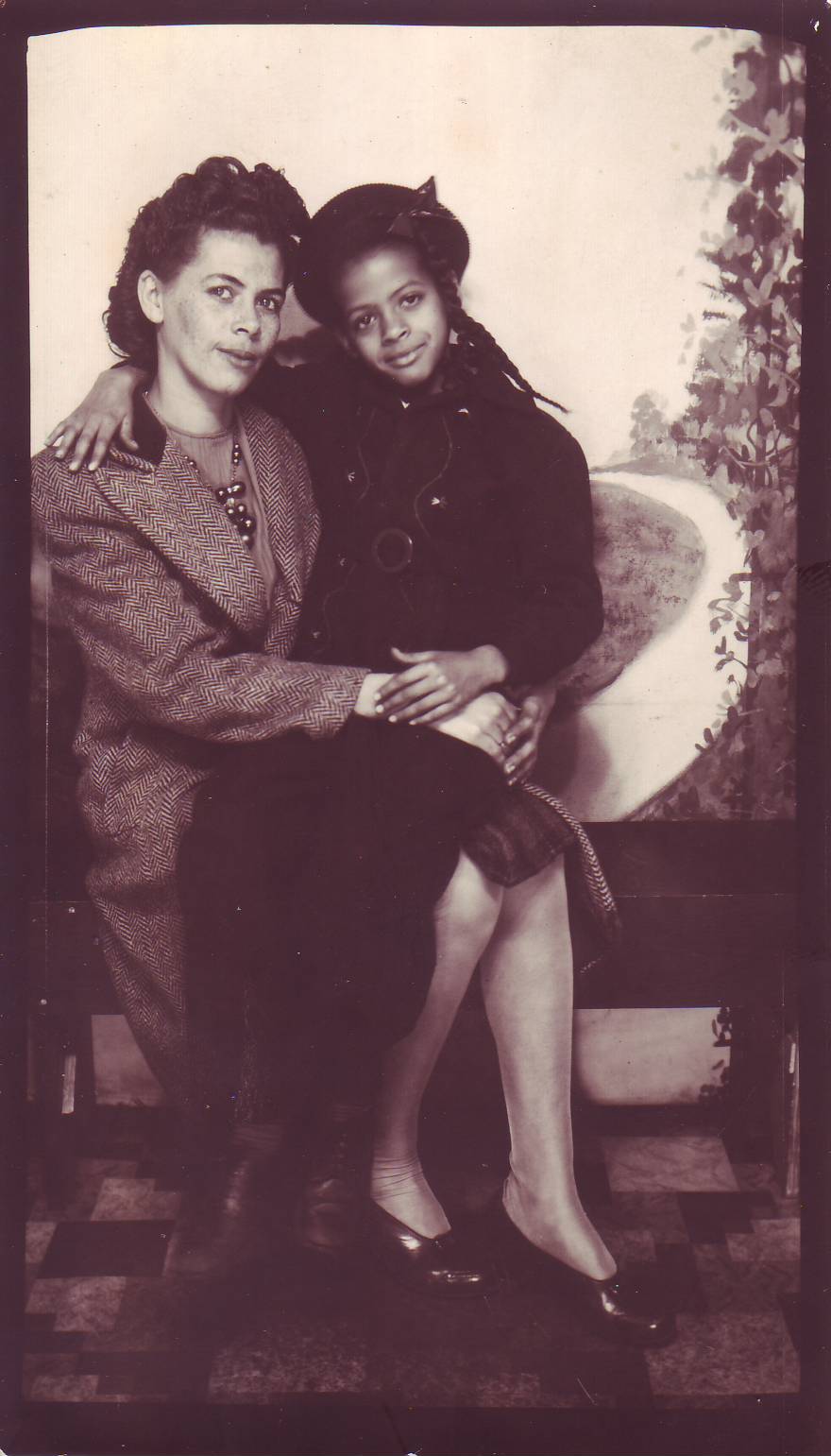
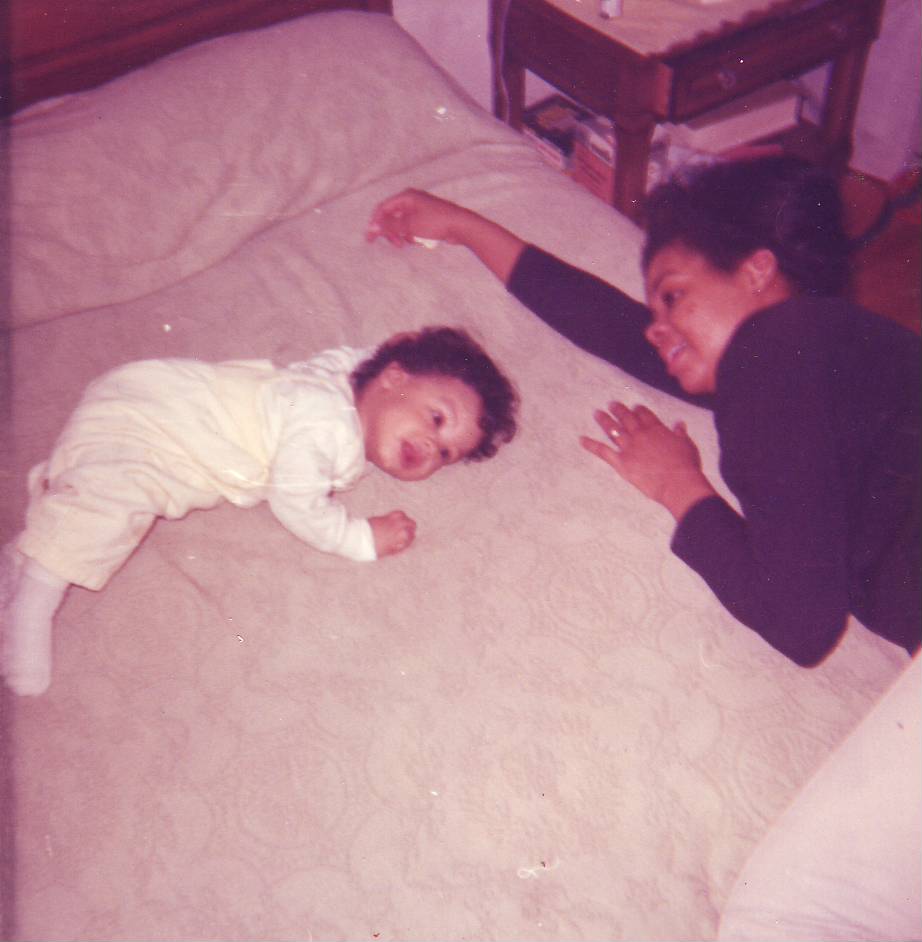
Mama

My mother and me.

Hattie&Margaret Henderson 001

My father’s mother and his sister, circa 1942.

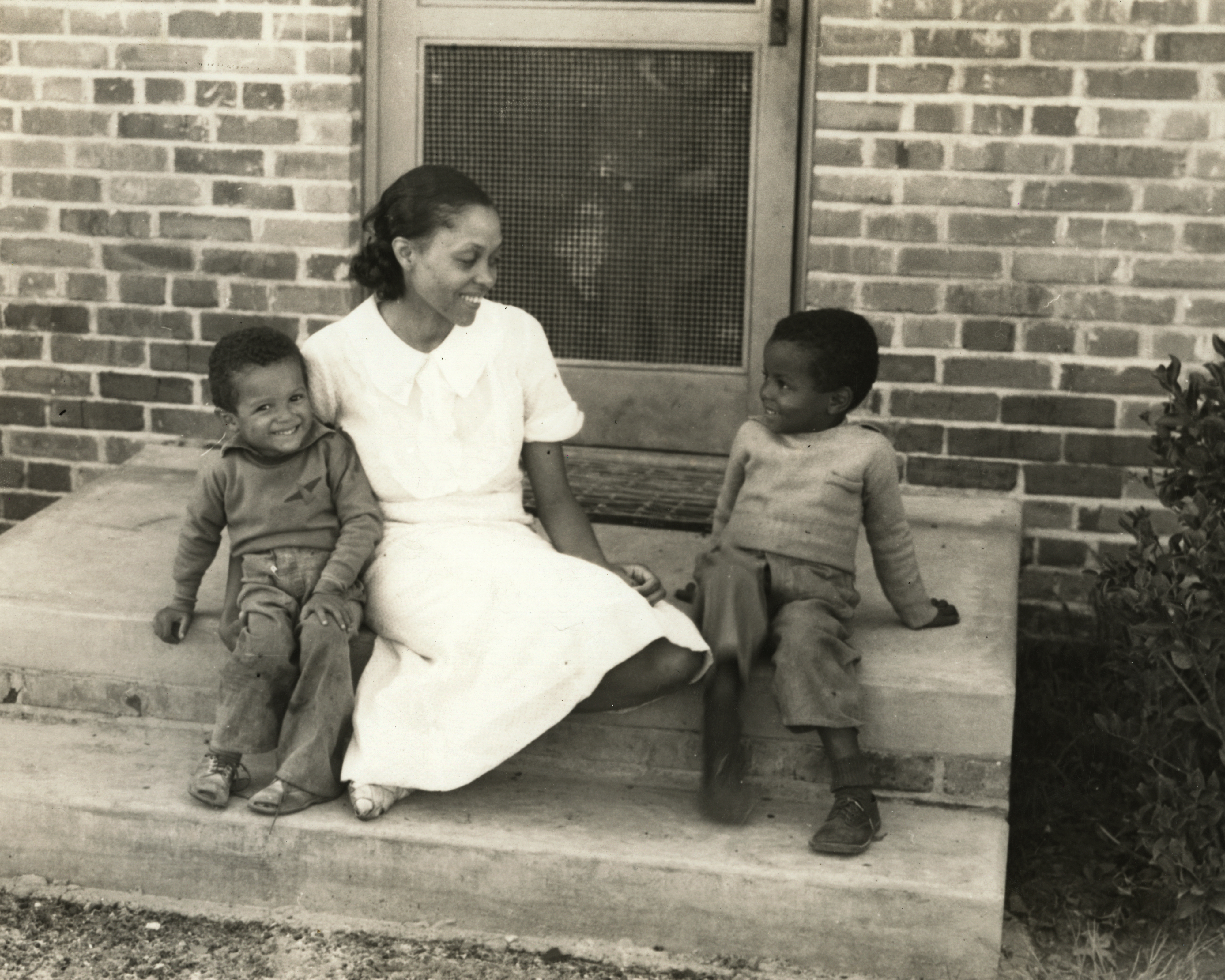
Aberdeen

My mother’s mother and her brothers, circa 1938. 

——

Sidenote: I first saw the last photo in a magazine article about Aberdeen Homes, a late New Deal housing project in Hampton, Virginia. My grandfather worked as a construction supervisor at the site and moved his young family into one of the first apartments. I finally tracked this photo down in the photo archives of the Virginia State Library.

Standard
Education, Enslaved People, Land, North Carolina, Oral History, Paternal Kin, Photographs

Meeting the Saulses.

All week, I was pressed. Wave after wave of thunderstorms had been crashing over eastern North Carolina, tornadoes swirling in their wake. The rain didn’t stop until the night before I flew in, and I knew that Contentnea Creek floods early and often. Friday dawned bright and blue though. I headed down Highway 58, excitement brimming like the sheets of water standing in fields on both sides of the pavement. Though several roads around Stantonsburg were still closed, my path was clear, and I pulled into the Saulses’ driveway at the stroke of 10 A.M.

Cousin Andrew Sauls is a reserved man, but welcoming and friendly, and he and his wife, Cousin Jannettie, put me quickly at ease. They were curious about my connection to Daniel Artis and the Saulses, and as I began to explain about Vicey and Sylvania and Adam T., we realized that he had known many of “my” Artises as a young man. In addition to farming hundreds of acres northwest of Snow Hill, his father, Isaac Sauls Jr., bought, rehabbed and sold farms, was a skilled carpenter, and operated several businesses. In 1947, after a short-lived stint operating a funeral home in Snow Hill, Isaac bought a saw mill, refurbished it, and began cutting lumber the following year. Cousin Andrew started working there as a ten year-old and recalled that the factory made good money for more than 20 years because there was a high demand for raw lumber. In those days, he said, “I didn’t know nair black person had a brick house in Greene County. Nor hardly any white ones.” People needed lumber for home repairs and to build tobacco barns and other out buildings. Though most of the Saulses’ customers were white, they also sold to many black farmers in Greene and surrounding counties, including Les, William and Walter Artis in Wayne County. Brothers William and Walter were sons of Adam T. and Frances Seaberry Artis, and Leslie, son of Napoleon Artis, was their nephew. (William, Walter and Napoleon were brothers of my great-great-grandmother, Louvicey Artis Aldridge. All were grandchildren of Vicey Artis Williams, who was Daniel Artis’ sister.)  Cousin Isaac recalled Les as one of the richest black men in Wayne County, and the first he knew of to own a Cadillac. He laughed as he recounted hauling a load of lumber to Walter Artis as a 17 year-old and being offered some liquor. Isaac Sauls Jr. also operated a “stick mill” that cut tobacco sticks for farmers during the summer months.

After a while, Cousin Andrew’s only surviving sibling, sister Hattie, who lives nearby in the “home house,” joined us and chimed in as Andrew talked about their father’s and grandfather’s achievements. He has an astounding memory and reeled off the dates and details of land purchases dating back ninety years to his father’s first acquisition of 57 acres for $400 in 1924. Today the family owns about 440 acres, which it leases to another farmer. When I mentioned his great-uncle Cain “C.D.” Sauls‘ involvement with an African-American bank in Wilson, he astonished me by exclaiming, “I remember my daddy talking about that! It went under. I think he said it was Stanback and Reid.” [And sure enough, J.D. Reid and H.S. Stanback were the bank officers convicted of the fraud that led to the bank’s failure.]

According to Cousin Andrew, in 1929, Isaac Sauls Jr. leased land to the state for the erection of a Rosenwald school. That school served African-American students in the area from 1930 until 1959. When it closed, Cousin Isaac bought the building and converted it into a house in which his son William lived until his death. The structure now stands a few hundred feet north of Cousin Andrew’s house. [Here for National Register of Historic Places nomination form for another Rosenwald school in Greene County.]

IMG_5186

Cousin Hattie spoke of C.D. Sauls’ ownership of several businesses in Snow Hill, including a hotel and a funeral home. She was not sure if he was a formally educated man, but he appeared to be. He was on personal terms with Booker T. Washington and traveled to Tuskegee Institute to speak on occasion. He also owned shares in a cotton mill in Concord, North Carolina. (This would have been the ill-fated Coleman Manufacturing Company.) He apparently occasionally contibuted a column to a newspaper in Kinston, and she promised to send me a copy of an article.  Later, when I mentioned that my mother had taught at North Greene Elementary School for a few years when she first came to North Carolina, Cousin Hattie asked if she knew Annie Edwards Moye, who’d taught there for 45 years. (Annie Moye was a descendant of Clara Artis Edwards, daughter of Daniel Artis.) I didn’t know the answer at the time, but soon learned that my mother in fact had commuted to Greene County with Mrs. Moye and other teachers who lived in Wilson!

Neither his father nor his grandfather had much education, said Cousin Andrew, but they were smart and shrewd and skilled and able to form strong business relationships on the strength of their word. Isaac Sr., born at the start of the Civil War to the enslaved daughter of a free-born, land-owning man and his enslaved wife, was a master carpenter who began to accumulate land at an early age and passed his drive and determination on to his children. One hundred and fifty years later, his gift shines in his grandson Andrew.

me and AS

Cousin Andrew and me at Artis Town cemetery, 2 May 2014.

Standard
North Carolina, Oral History, Paternal Kin

Where we lived: 1109 Queen Street, Wilson.

My father: Let’s go back to when I remember when we moved to 1109 Queen Street. When I was about six years old. And we had what they call a shotgun house. Three rooms. Front room, middle room, and a kitchen. And to get to the kitchen, you had to go out on the back porch and come through. Now there were some people who had a door cut in between the middle room and the kitchen, so you wouldn’t have to go out on the back porch. But they said if you cut that door somebody in your family would die. [Laughs.] So we wouldn’t cut the door. All of us slept in the middle room. See, we did have a bed in the front room later on, but first we slept in the middle room. And we had, like, what they called a day bed. You pull it out. And me, Lucian, and Jesse slept in that bed. And Hattie Margaret and Mama slept in the other bed. And then we had a laundry heater in the middle. We had to make fires every night. Go out –

Me: Laundry heater?

My father: Yeah, well, it was what you’d call a space heater. Laundry heater.

Me: Oh. Okay.

My father: — that you put, well, we used coal. Some people were afraid to use coal because it would get so hot it would turn red. And, you know, sparks would fly and sometimes things would catch on fire. And that’s what we used to heat the iron to iron clothes, too. You’d put ‘em on top of that stove. But we had to make fires every morning. Had to get up. And we had linoleum in there, so the floor’d be cold. So when you walk around you had to walk on your heels when – [we start laughing] – you get up out the bed and go out and get the wood. And then, you know, we had that little slop jar up under the big bed. You had get up to go — then, see, that house didn’t have a bathroom. So the bathroom was outside — the bathroom sat in between the two houses. And you had just a stool. And that stool had a big water tank on the top. And so when you lift the lid up, it would flush. So that was for 1109 and the one right beside it. Probably just had a little partition between. It was probably 1107, and that’s where the Davises, Miss Alliner [Alliner Sherrod Davis, daughter of Solomon and Josephine Artis Sherrod, and actually a cousin], she lived right there at 1107. And then we had the water outside, and it was at her house. So there were two houses that had one toilet and one spigot. So we would go out there and get the water and stuff like that.

Me: And so you said you remember moving in there?

My father: Yeah, we moved from off Elba Street. ‘Cause we moved at night. You know when your stuff a little shaky…. [Laughs.] Somebody come by, it’d be dark, with all your stuff on the truck. And I remember I had a little hat, and it blew off on Green Street [laughs], and I couldn’t stop to get my hat. ‘Cause it was dark when we moved. And that was when I was probably in the first grade. I think it was 1940 when we moved around there in all those little endway houses. C.C. Powell owned the houses, and I don’t know how much we were paying, but we weren’t paying a whole lot. Behind the outhouse, we had built up like a little shed, like. Used to keep pigeons in there. Everybody had pigeons. The ones that go off – we’d see in the movies the ones that take little messages and all. So everybody would have pigeons. And then we had a little, I guess it was a garden. We had a victory garden in the back. I had to take a hoe and a shovel and dig up the backyard. Turn it over. Then Mama would go out there and make some rows and plant tomatoes and stringbeans and squash and stuff like that, and we used that to eat. Now, when I was growing up, at that time, we didn’t have no money. I went to school, all the way through almost, some days I’d go and didn’t have a penny. Not one penny. In my pocket. Not one penny. … And the icebox, it was a little small icebox, and you’d take the ice and put it in the top, and then there was a little hole so when the ice’d melt, it would run down. You’d have to have a little water container underneath. You’d have to empty that everyday. If not, the water would run out on the floor, out on the back porch. And it would always be so clear and just cold, but we had to go to the ice house, and the ice house was out there on Herring Avenue. And I would ride the bicycle out there to get it.

1109 Queen

This house was one of a row of six identical shotgun houses on Queen Street built circa 1925. I took this dim Polaroid image sometime in the very early 1980s, and they were torn down not long after.

Young Rederick 01

My father, age about 10, sitting outside a house on Queen Street. I’m guessing it’s 1107 because the door is on the opposite side of the house. Otherwise, the houses were identical.

——

Interview of R.C. Henderson by Lisa Y. Henderson; all rights reserved.

Standard
Births Deaths Marriages, Enslaved People, Free People of Color, Land, North Carolina, Paternal Kin, Photographs

Family cemeteries, no. 13: Artis Town.

We passed Edwards cemetery on the left, rounded the curve, and there, just where I suspected, was the turn-off onto a farm road leading to Artis Town cemetery. The graveyard is a rectangle of green amid bare spring fields, neatly mowed. A row of weedy trees bristles down one side, broken limbs scattered from recent storms. The oldest stones tilt sideways or sprawl toppled on their backs, but the cemetery is obviously cared for. It lies at the heart of what was once known as Artis Town, a hundred or more acres between Highway 58 and Speights Bridge Road on which lived and farmed Artises and Edwardses in every direction, descendants of Daniel Artis, who bought the land in the 1800s. There was even a racetrack here, said my cousin, where men would line up horses and buggies for weekend contests. As time went by, however, the land got “swindled down.”

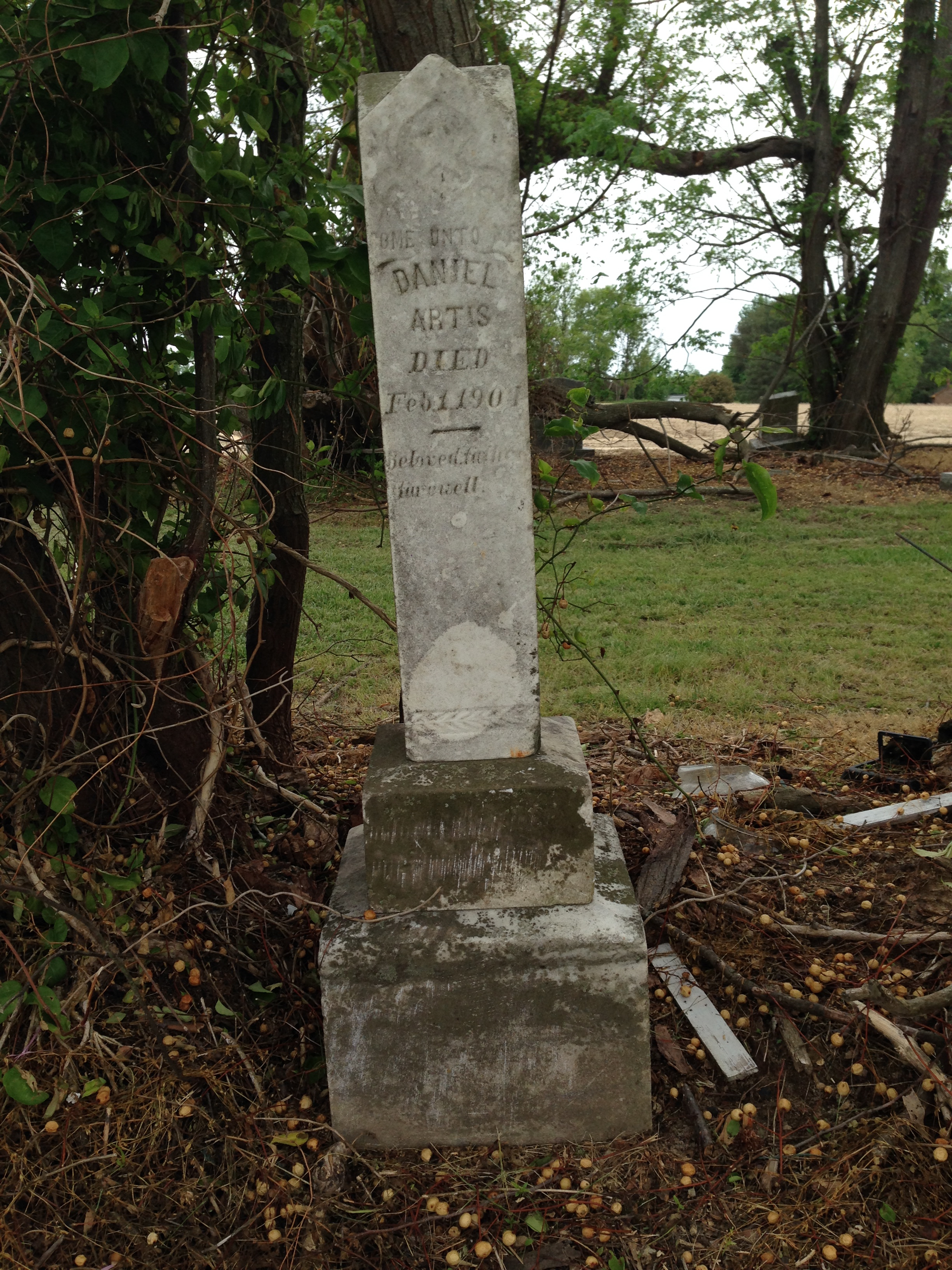
Daniel Artis’ headstone stands in a shadowy pocket underneath a chinaberry tree, the grave itself sprinkled with wrinkled yellow fruit. The small white marble obelisk is a testament to Daniel’s prosperity and the esteem in which his offspring held him.

IMG_5197

I did not locate stones for any of Daniel’s children in the graveyard, though surely some are buried there. (Daughter Clara Artis Edwards is buried in the nearby Edwards cemetery.) Many markers memorialize the deaths of descendants of Loderick Artis and Prior Ann Artis Sauls Thompson, including Loderick’s daughter Sarah Artis Speight:

IMG_5192

and son, Manceson Artis:

IMG_5210

and daughter Hannah Artis Mitchell, as well as Prior Ann’s daughter Mariah Sauls Edwards:

IMG_5195

and a host of other Saulses, Forbeses, Artises, Speights and Mitchells descended from Daniel Artis.

Photos taken by Lisa Y. Henderson, 2 May 2014.

Standard
Civil War, Enslaved People, Free People of Color, North Carolina, Oral History, Paternal Kin

Daniel was always spoken of with respect and love.

I recently received a comment from a reader in response to my posts on the Daniel Artis family. She was hesitant to contact me because her ancestor John Lane had owned slaves — quite possibly some of the people I’ve written about — but was anxious to share a story about Daniel that had been passed down in her family for 150 years. I was surprised and excited to read her message and encouraged her to get in touch. Here’s our April 28 exchange:

Hi, Tammi! Please forgive my excitement and inability to wait for your response. I’m traveling to NC next week to meet some of my newfound Sauls relatives — descendants of Daniel Artis. I’m just beside myself wondering about John Lane — whom I believe apprenticed several of Daniel’s sister Sylvania’s children and might have owned Sylvania’s husband, Guy Lane. I know you’re busy, but I hope you’ll be able to touch base soon. Thanks again!

——

Lisa, thank you for getting back to me! … Yes, apparently there were a few children apprenticed. I recall, I think, five or six on one census. The younger Daniel Artis was 17 years old on, I think, the 1860 census in my g-g-grandfather John Lane’s home. From my family’s handed down stories, the little Daniel was my g-g-g-uncle Christopher Lane’s body servant. Christopher was one of John’s sons and only about seven years older than little Daniel. So they kind of grew up together. The story is that when they both grew up Christopher went to War and Daniel was allowed to go with him as his servant because Christopher was an officer. Only officers could take a servant with them. Daniel was considered free before the war although an apprentice as you probably know. Well, Christopher was captured by the northern troops and taken to their POW camp at Fort Pulaski, Ga. He died there from dysentery. The thing that my family is grateful for is that Daniel went to the camp with Christopher and stayed with him until his death, never leaving his side. When he died, Daniel made his way back to Bull Head, NC to let Christopher’s family and his father John Lane know what happened to him. Daniel was always spoken of with respect and love for what he did for Christopher.

I thank you so much for replying to me, Lisa, because I’ve always wanted to thank his descendants for what Daniel did and for his devotion to our family in such a terrible time. I always wondered if the Daniel Artis next door who was older was related to little Daniel. I saw on the census that he owned property near John Lane, my relative. I hope this information helps some, and I wish all of his relatives happiness and blessings.

——

What a pleasure to hear from you! The Daniel you speak of was the older Daniel’s nephew. “Your” Daniel was the son of Sylvania Artis, a free woman of color, and Guy Lane, her enslaved husband. My direct ancestor, Vicey Artis, was the sister of Sylvania and Daniel the elder. Vicey also married a slave, Solomon Williams. Most of their children were apprenticed by Silas Bryant, a close neighbor of John Lane’s. Daniel the elder’s wife was enslaved, as were their children.

Thanks so much for sharing the story about Daniel the younger. I had no idea that he served in the War. I need to look in my files, but I don’t think I know much about him, though I recall that he married Eliza Faircloth. I do not know of any his descendants either. I grew up in Wilson NC, but with no knowledge of my Greene County links. During a visit home this weekend, I’m going down to Bull Head to meet some Saulses and visit Artis Town cemetery, which is where Daniel the elder was buried in 1905. I’ll keep you posted on anything I find about Daniel the younger.

If you are willing, I would love to share Daniel and Christopher’s story on my blog. I so appreciate your coming forth with this bit of history. Researching African-Americans is generally incredibly difficult, and so much lies locked away with other families. I always dream that someone will contact me just like you did!

Best wishes, keep in touch, and thanks again!

——

I’d be honored for you to use Daniel’s story, of course. I’ve also dreamed and wanted for years to find his relatives, as I mentioned, so I could thank all of them. To be honest, I don’t know if the younger Daniel was enlisted or just went along as an aide to Christopher. I’m only learning recently about the service of black troops both Confederate and Union. I don’t think Daniel was enlisted but I may be wrong. I’ve found the Saulses in many of my genealogy searches but not able to make a connection directly to the Lanes. I can’t remember if I mentioned but my genealogy research came to a brick wall with my g-g-grandfather John Lane. No one anywhere, not even Ancestry.com knows who his father was for sure. I have hints but nothing else. It’s all fascinating.

I can only imagine the difficulty there must be tracing African American genealogy, but I see DNA is being used which is great. It’s part of why I find Scuffalong so interesting. There’s so much information. I really love hearing about Vicey, Sylvania and the elder Daniel since their names have come up so often in my own research. And so happy to meet you, a descendant! Many of my Lane ancestors ended up in Wilson, NC after leaving Bull Head. I’m not sure why, but there were many there in my research including a great-grandmother of mine. Please pay my respects at the Artis Cemetery, to their memory, Lisa, when you visit it. Feel free to write me anytime, if you have any thoughts or questions or just to say hello!

——

CCLane Page 2

Christopher C. Lane enlisted in the 3rd North Carolina Infantry on 23 April 1861 at Snow Hill, Greene County. He was wounded at Gettysburg on September 1863, recuperated at home, then returned to war. He was captured 12 May 1864 at the Battle of the Wilderness, Virginia, and sent to Fort Delaware. In August, in retaliation for the Confederate Army’s imprisonment of Union officers as  human shields in Charleston, U.S. Secretary of War Edwin Stanton sent 600 Confederate officers to Morris Island, South Carolina, to serve as human shields. Lane was among them. After 45 days, the men were transferred to Fort Pulaski, Georgia, and imprisoned in dismal conditions. Christopher Lane died there on 8 December 1864.

I have found no record of Daniel Artis’ service to Christopher Lane during the Civil War, which is not surprising. He was not a soldier; he would not have enlisted. The role of body servants in the early days of the War is the subject of intense debate, and Artis’ status as a free man of color, rather than a slave, further complicates any assessment of his motives (or volition) in following Lane to war.

Many thanks to Tammi Lane for reaching out and sharing a part of Daniel Artis’ life that would otherwise be lost to his family.

——

Image found at http://www.fold3.com.

Standard
Free People of Color, Land, North Carolina, Other Documents, Paternal Kin

Either of us do promise to pay.

G Winn Note_Page_2

On demand the first day of January 1848 we or Either of us do promise to pay John Lewis the Admr for ayres of urban Lewis decd it being for the Sum of thirty dollars and fifty cents it for Rent of the land belonging to W. Husted lying on the East side of the Railroad Joining James Kelly this January 29th 1847   Gray X Winn, Levi Winn, Adam X Greenfield  Test Obed Brock

This promissory note is listed in John Lewis‘ inventory of his father Urban’s perishable and personal property. Via Joseph Buckner Martin, Urban Lewis of Wayne County is my great-great-great-great-great-great-grandfather. (He was Buck’s father Lewis Martin‘s mother Eliza Lewis Martin‘s father.) Gray Winn, Levi Winn and Adam Greenfield were prosperous free men of color and the ancestors of many of my Henderson cousins, though not my own.


Standard
DNA, North Carolina, Paternal Kin

DNA Definites, no. 14: Artis.

Well, I’ll be….

Several months ago, I sent a share request to N.S. on 23andme because he listed Kinston NC as a family location. N.S. is a match to my cousin K.H. Though K.H. and I don’t have ancestors from Lenoir County, it’s close enough to Dudley that I thought it worthwhile to establish contact.

I was skimming through K.H.’s matches yesterday and stopped short at N.S. … Hmmm … Kinston? Speight? Could he …?

I sent a message, “Are you descended from Lemmon Speight?,” and he quickly responded that he is indeed, that Lemmon was his grandfather.

If you remember, I discovered Lemmon Speight a few weeks ago in the Civil War pension application file of Bailham Speight. Speight’s widow Hannah Sauls Speight, several friends and relatives, and Lemmon himself testified that Lemmon, Hannah’s first child, had been fathered by Loderick Artis, whom she had never married. Loderick Artis was the son of Daniel Artis, who was brother of my great-great-great-great-grandmother Vicey Artis Williams.

N.S. and K.H. share .46%, and 23andme estimated their relationship as 3rd-5th cousins. They are, in fact, 4th cousins.

[UPDATE: I was at the North Carolina State Archives last week when my phone rang with an unfamiliar number from area code 202. I stepped out to answer it and found myself talking to N.S.’ brother-in-law, the family historian. We talked in depth later that night, and he told me that the family had long known the identity of Lemmon Speight’s father, that several descendants migrated to Georgia and are holding a reunion here next year, that he himself is also a Greene County Speight, and did I know D.S.? “Are you kidding??? He lives two doors down from my parents! I’ve known him all my life!” They are both descended from Stephen and Fereby Speight and are somehow related to Mr. Kenny!  — LYH, 6 May 2014]

Standard
Births Deaths Marriages, Paternal Kin

Where we lived: 5549 Wyalusing Avenue, Philadelphia.

From old journals, notes from my last two visits to my grandmother’s house in June 2000 and April 20-22, 2001.  Both are tinged with the sadness that overwhelmed me in her final year. Though they do not reflect the warmth and happiness of my years of wonderful visits to 5549 Wyalusing Avenue, they do capture place in a way that has helped me hold on to those memories.

——

One old exhausting voyage. My grandmother’s health is failing. My uncle is not equipped to take care of her. My father is exasperated by his inability to get either to do what they need to do.

I had a premonitory 15-minute massage in terminal D. Dreamy. Painful. …

What is the story with the landscaping at Philadelphia International? Where is the mulch? The poor young trees stand bare-ankled, save weeds. I am hardly prepared for the 50-some degree weather I encounter. The SEPTA train runs through wetlands on its trek to 30th Street Station. I can barely make them out through the window’s grime. I spot wildflowers in profusion, but cannot identify them readily. Still, behind Franklin Field, I spy spiderwort.

Mother Dear and Uncle Jesse have adopted two kittens, born to a stray they kept for a while. They appear to be perhaps seven or eight weeks old. One is white with a gray face and a few gray patches. The other — larger, bolder — is white with black ears and a black tail. They are shot out with fleas. My grandmother calls them both “Becky.” An older kitten, Beckys’ broke-down half-sibling, lurks on the front porch. Though it is a lovely black and white, it has a large head and crooked legs.

In a vacant lot near the old Super Fresh, a viney thing with purple-tinged leaves and a small, purple flower. What? It is chilly. I don’t recall Wyalusing Avenue being so desolate. And the crackheads! I had forgotten how pervasive ….

The Wyalusing Inn has a new name. After all these notorious years. Club 421 is still the same, though rode hard.

I find a photo from the 1940s that shows the shotgun house at 1109 Queen Street that my father grew up in. Out front, there is a profusion of what appear to be white petunias.

The patience of the poor. Ooo. I would not call this place — District Health Center No. 4 — chaotic, but it is as far removed from my private healthcare experience as night from day. I am joined on a row of chairs by a jittery piper who, when I come out of the conference with the nurse, demands, “What she say? What she say?,” as if we were all sitting here joning for methadone. Or whatever. The epidemic has not slowed in Philadelphia. I am so fucked up — I don’t want to sit next to anyone.

My grandmother lives in a two-story rowhouse, three-over-three. 5549 Wyalusing Avenue. At 56th Street. Girard Avenue runs a few blocks north, Haverford Avenue slants a block south. Downstairs, there is a living rom, dining room and kitchen. Upstairs, three bedrooms and a bathroom. Once, a short passage jutted into the living room behind the front door. It was gone long before I was born, but on the ceiling you can see the faint ridges left when it was torn out. Whan I was a child, Miss Sarah’s house next door still had its vestibule, which Mother Dear pronounced with an “f.” I faintly recall it lined with narrow white tile laid subway-style.

The walls and ceiling of the living room are plaster; they join in a seamless curve. The floors are hardwood, but have been painted light brown as long as I can remember. They are covered with rugs. The room’s highlight is the fireplace, which probably originally contained gas jets. All my life, the “opening” has been a solid surface, scored faintly in imitation of tile, with an ornate register cover lodged in its bottom edge. The mantel is elaborately carved.

There are two couches in this room, both much older than I. In fact, my father slept on one as a child.  My grandmother has cushioned its shot-out springs with several layers of old blankets. Above the mantel hangs a yellowed reproduction of some idyllic Rhine Valley vista. It is flanked by a pair of vaguely Art Deco lamps, probably ’50s-era. On the wall: two circular plaques, their backgrounds silver glitter, featuring black silhouettes of a fairy bathing in a blossom and a swimming swan. In the corner, a floor-to-ceiling pole hung with cone-shaped adjustable lamps. (We had one of those on Carolina Street. I think my aunt still does.) The front door is original. Its top two-thirds has eight lights. There’s a mailslot below. Hanging nearby, a round mirror with roses etched at its border. One large window overlooks the porch and, beyond, the street. There are photographs of us on the wall above one couch, as well as some sort of mirrored, gilted shelf thing.

Upstairs I hear murmurs. My father is attempting to prise from my grandmother’s porous memory the whereabouts of her medicine and the money she has stashed.

The garden is a forlorn rectangle, perhaps twelve feet by seven, overrun with weeds. A hollyhock struggles to glory in one corner. A hydrangea is smothered under large clumps of something that looks mightily like miniature chrysanthemums. A clothesline depends from side to side. The bag holding clothespins is shaped like a tiny dress.

There are nine open porches going east from the bar at the corner, and then the first enclosed one. This has been the case all my life. I vaguely remember the two old white women, sisters, who lived at 5551 when I was very young. They were the last of the European immigrants, mostly Jewish, that used to dominate West Philadelphia. The rail between my grandmother’s porch and 5547 is the last of the original wooden balustrades. The rest have been replaced by rickety black wrought iron. Mother Dear’s house is faced in a fine-textured, dark reddish-brown brick. The mortar also is oxblood. There are cement steps – two, then a sort of mini-stoop, then another. The cellar window is barred. The porch floor is plywood over damaged tongue-and-groove. She has three green metal lawn chairs and one small white table. The chairs have been painted repeatedly.  5549 is painted in gold numerals on a transom above the front door. Beside the door is a small, tarnished plaque: “J.C. RICKS.” The street was once lined with mature sycamores. Perhaps 15 years ago, some sort of blight began to wipe them out, one by one. I can see a few standing down toward 55th street, but the loss here is stunning. In summer, the light and heat are unbearable.   [June 6, 2000]

——

April 20-22. Philadelphia. The Last Time.

I love that: the demarcation between land and water. [As we fly over the Chesapeake Bay.]

Fingers, tufts of land, cut by water. Tiny patches of woodland. A river breaks free, asserts itself. [Is this Maryland?]

What appear to be solid woods, then sun reflects from water glinting beneath the trees.

A marsh, like crackled glaze.

First glimpse of Center City. Of Camden. Could I have remained here? Above the Walt Whitman Bridge, block after indistinguishable block of South Philly. Below, the drydocks of the Naval Yard, where Uncle Lucian left his lungs.

Being in Mother Dear’s house was not as overwhelming as I’d expected. Her spirit was already so far gone from the place. It was sad and shabby, but not in the grief-filled way I was expecting. I just had to let the loss of the Hoosier cabinet go [a picker had tricked my ailing uncle into selling everything of real value] and focus on the things we were able to save — letters, pictures, Bibles, bills, knick-knacks. The barber scissors, her Sweet 16 ring, the gourd. I found a letter from Mother Dear to her children, never mailed, in which she describes how she met their father. And a letter from Uncle Caswell to Aunt Sarah. [20-22 April 2001]



Standard
Land, North Carolina, Oral History, Other Documents, Paternal Kin, Photographs

The lots.

Said my grandmother:

And Johnnie [Aldridge], he called me, and I was working to the hospital. And he called me and told me, at least he called the hospital and wanted to speak to me: “Well, if you want to see your daddy – you said you ain’t never seen him before – come down here. He’s down here now. So, don’t let him know I told you.” [Laughs.] So, I went down – I said, well, I’m gon go down there and see Silas Cox ‘bout selling the lots where Grandma Mag’s house was on. So, I got off. So, I got Mr. Fisher to take me down there. I said, “Mm, I wanna see that man.”

Image

My grandmother inherited two lots in Dudley from Sarah Henderson Jacobs Silver, her great-aunt and foster mother. (Because she had been informally adopted by Sarah and her husband Jesse Jacobs, my grandmother used the surname Jacobs until adulthood, when she reverted to Henderson.)

Mama had the lot where the house was, where Grandma Mag lived. Had that house built for her. The house they was staying in was up by the railroad, was just about to fall down. Somewhere down up there by where the Congregational Church is. And she built that house down there next to Babe Winn. I don’t think it was but one room. The porch, one room, and a little shed kitchen, a little, small, like a closet almost, and had the stove in it. Then had a stove in the room where she was, one of them round-bellied stoves where you take the top off and put wood in it. I remember that. And Sis Winn, her name was Annie, and she had a daughter, and she named her Annie after her. So they called the mother Sis, and they called the daughter Annie. And they were living in the house right next to her, Grandma Mag’s house. As I can remember. And after Grandma Mag died, the old preacher stayed in there and burnt it up.

I posted a query to my cousins:

Can someone tell me if the Dudley VFD was at its present location in the 1960s? I’m trying to figure out where two lots were on a 1967 plat. The plat mentions NC Secondary Road 1120 (which seems to run east-west), Simmons Street (abandoned) and Walnut Street (abandoned). James Newkirk and William Newkirk owned land on either side of where the fire station was on 1120. Thank you!

No luck.

Dudley Volunteer Fire Department is now on Highway 117 Alternate, south of its intersection with O’Berry Road.  A Google search revealed that O’Berry was formerly known as Secondary Road 1120, so I now know that the fire department has moved around the corner.  My father recalled that his mother’s lots were just west of the intersection, behind Silas Cox’s feed silos.

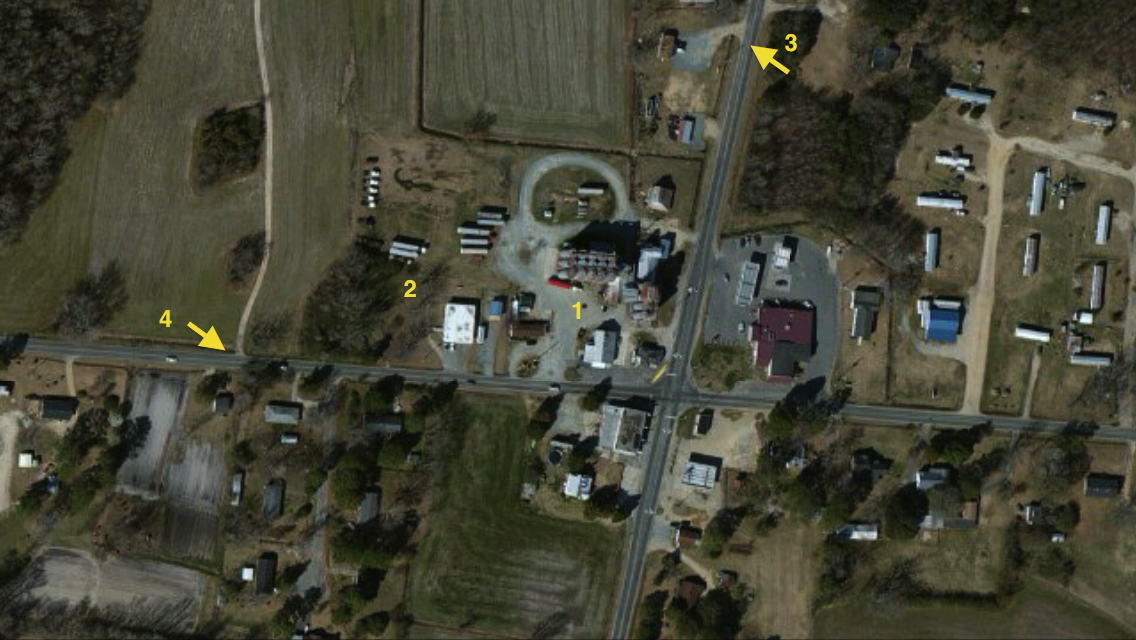
Here’s an aerial view of Dudley today: dudley intersection

Other than Road 1120/O’Berry Road at (4), there’s not much of anything that matches the plat. However, with the clue about the (1) feed or fertilizer silos, I’ve identified (2) as the approximate location of Grandma Mag’s house and the lots. (3) is Highway 117 Alternate.

My grandmother finally sold her lots in the late 1960s, ending more than 90 years of land ownership in Dudley by my line of Hendersons.

——

Interviews of Hattie Henderson Ricks by Lisa Y. Henderson; all rights reserved. 

Standard