Land, North Carolina, Oral History, Other Documents, Paternal Kin, Photographs

The lots.

Said my grandmother:

And Johnnie [Aldridge], he called me, and I was working to the hospital. And he called me and told me, at least he called the hospital and wanted to speak to me: “Well, if you want to see your daddy – you said you ain’t never seen him before – come down here. He’s down here now. So, don’t let him know I told you.” [Laughs.] So, I went down – I said, well, I’m gon go down there and see Silas Cox ‘bout selling the lots where Grandma Mag’s house was on. So, I got off. So, I got Mr. Fisher to take me down there. I said, “Mm, I wanna see that man.”

Image

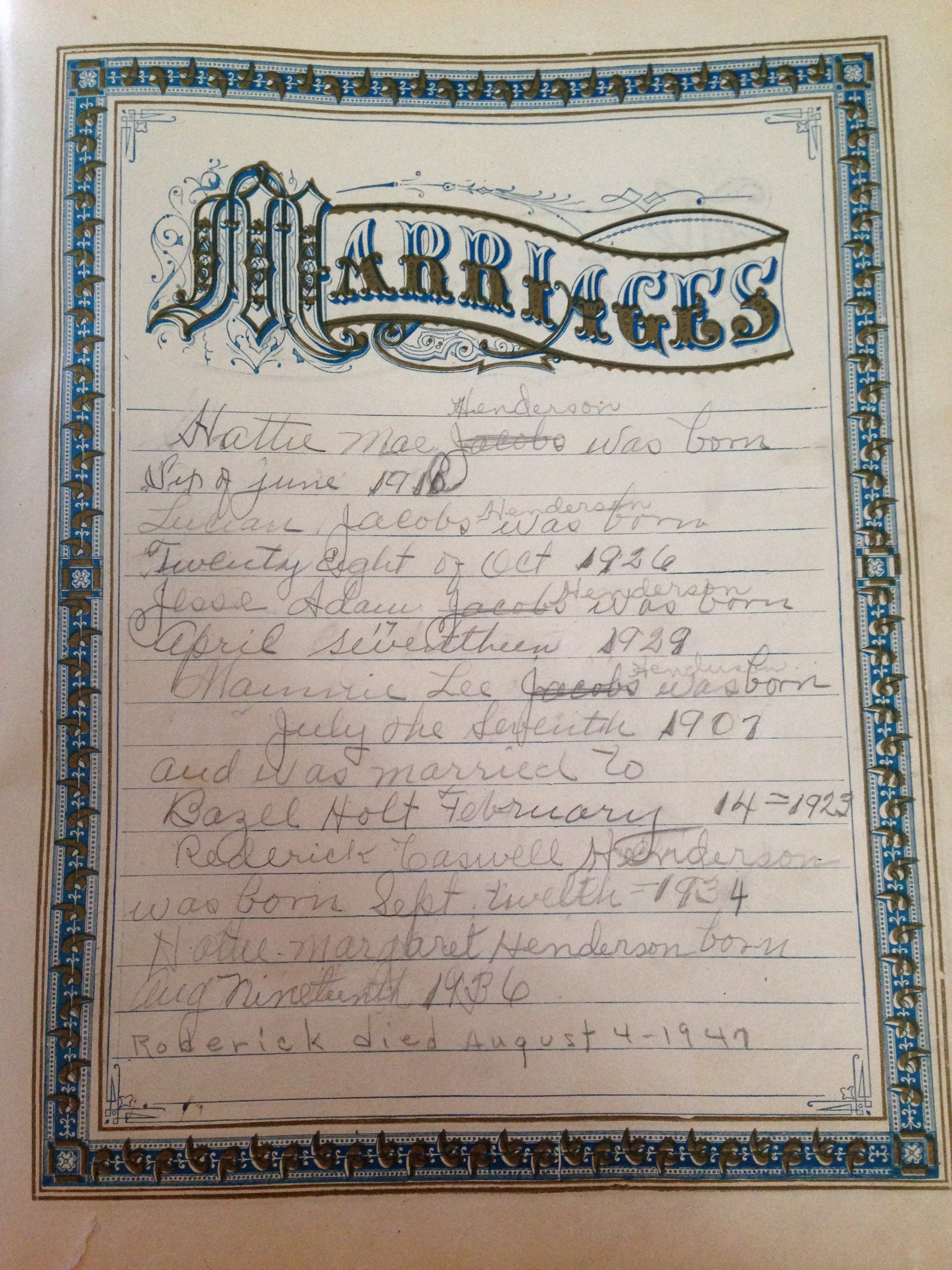
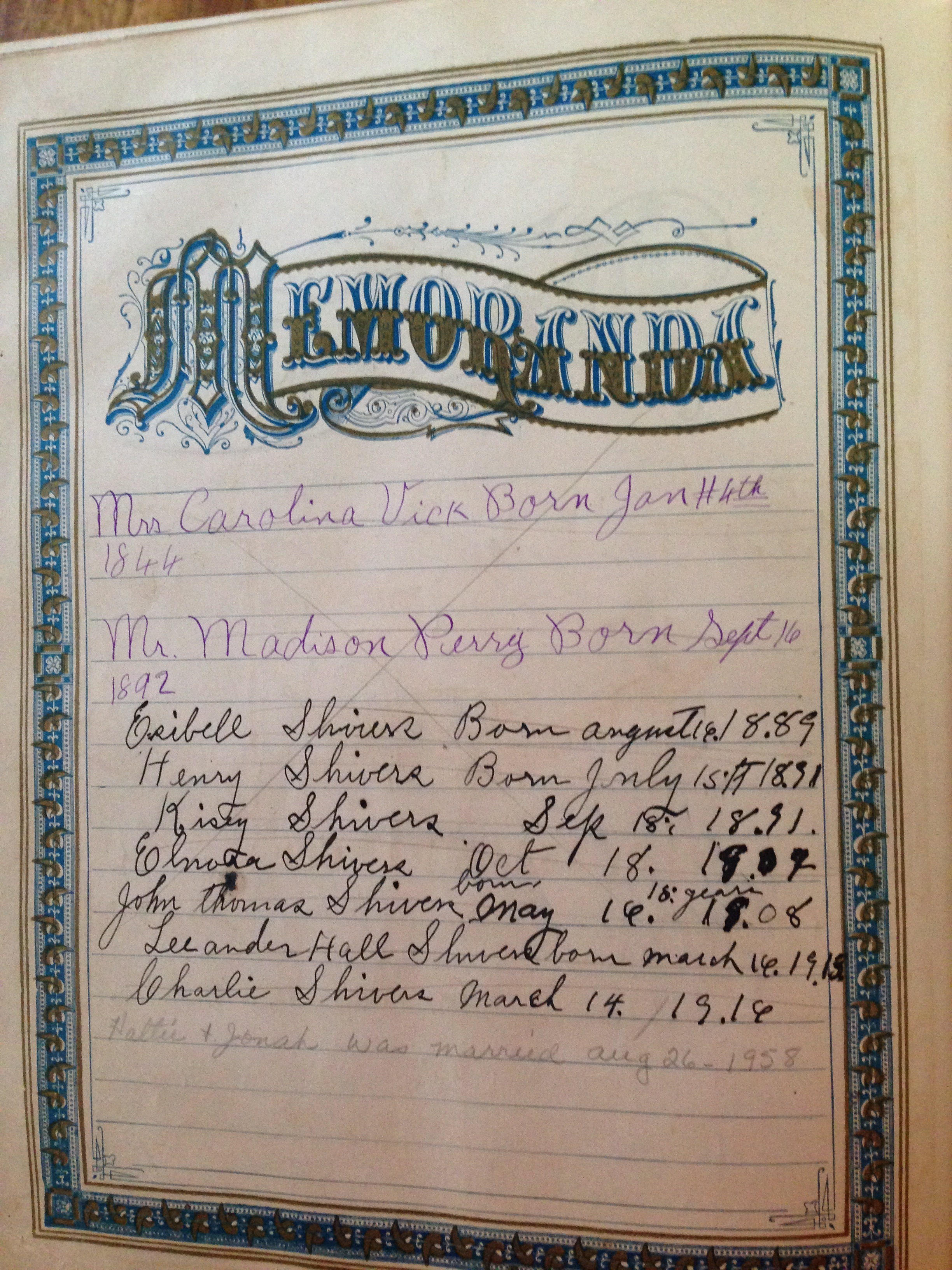
My grandmother inherited two lots in Dudley from Sarah Henderson Jacobs Silver, her great-aunt and foster mother. (Because she had been informally adopted by Sarah and her husband Jesse Jacobs, my grandmother used the surname Jacobs until adulthood, when she reverted to Henderson.)

Mama had the lot where the house was, where Grandma Mag lived. Had that house built for her. The house they was staying in was up by the railroad, was just about to fall down. Somewhere down up there by where the Congregational Church is. And she built that house down there next to Babe Winn. I don’t think it was but one room. The porch, one room, and a little shed kitchen, a little, small, like a closet almost, and had the stove in it. Then had a stove in the room where she was, one of them round-bellied stoves where you take the top off and put wood in it. I remember that. And Sis Winn, her name was Annie, and she had a daughter, and she named her Annie after her. So they called the mother Sis, and they called the daughter Annie. And they were living in the house right next to her, Grandma Mag’s house. As I can remember. And after Grandma Mag died, the old preacher stayed in there and burnt it up.

I posted a query to my cousins:

Can someone tell me if the Dudley VFD was at its present location in the 1960s? I’m trying to figure out where two lots were on a 1967 plat. The plat mentions NC Secondary Road 1120 (which seems to run east-west), Simmons Street (abandoned) and Walnut Street (abandoned). James Newkirk and William Newkirk owned land on either side of where the fire station was on 1120. Thank you!

No luck.

Dudley Volunteer Fire Department is now on Highway 117 Alternate, south of its intersection with O’Berry Road.  A Google search revealed that O’Berry was formerly known as Secondary Road 1120, so I now know that the fire department has moved around the corner.  My father recalled that his mother’s lots were just west of the intersection, behind Silas Cox’s feed silos.

Here’s an aerial view of Dudley today: dudley intersection
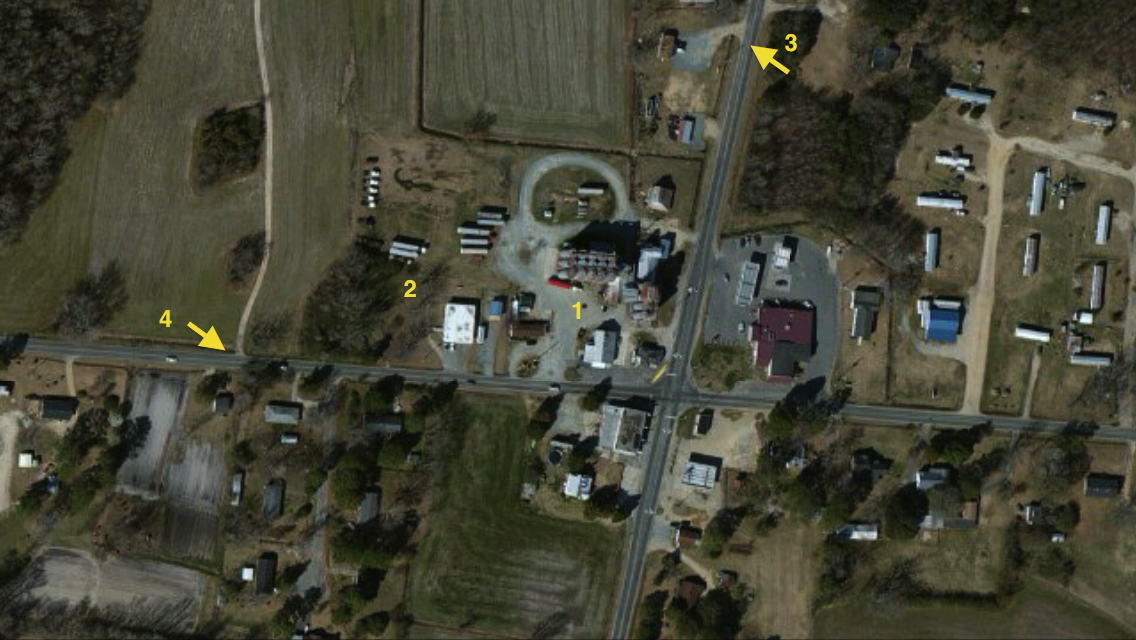
Other than Road 1120/O’Berry Road at (4), there’s not much of anything that matches the plat. However, with the clue about the (1) feed or fertilizer silos, I’ve identified (2) as the approximate location of Grandma Mag’s house and the lots. (3) is Highway 117 Alternate.

My grandmother finally sold her lots in the late 1960s, ending more than 90 years of land ownership in Dudley by my line of Hendersons.

——

Interviews of Hattie Henderson Ricks by Lisa Y. Henderson; all rights reserved. 

Standard
Births Deaths Marriages, North Carolina, Oral History, Paternal Kin, Photographs

Remembering Uncle Jesse.

My grandmother’s second boy. Smooth. Dapper. Slick. Artistic. A chef. A painter. A hustler. A beloved uncle.

Happy birthday, Jesse Adam Henderson (17 April 1929-5 August 2005)!

ImageLucian and Jesse Henderson, circa 1932, Wilson NC.

Image

 Jesse, circa 1938, Wilson NC.

Image

 Circa 1944, Wilson NC.

Image

 With wife Jean and my grandmother, probably in the late 1950s, perhaps at the Jersey Shore.

Image

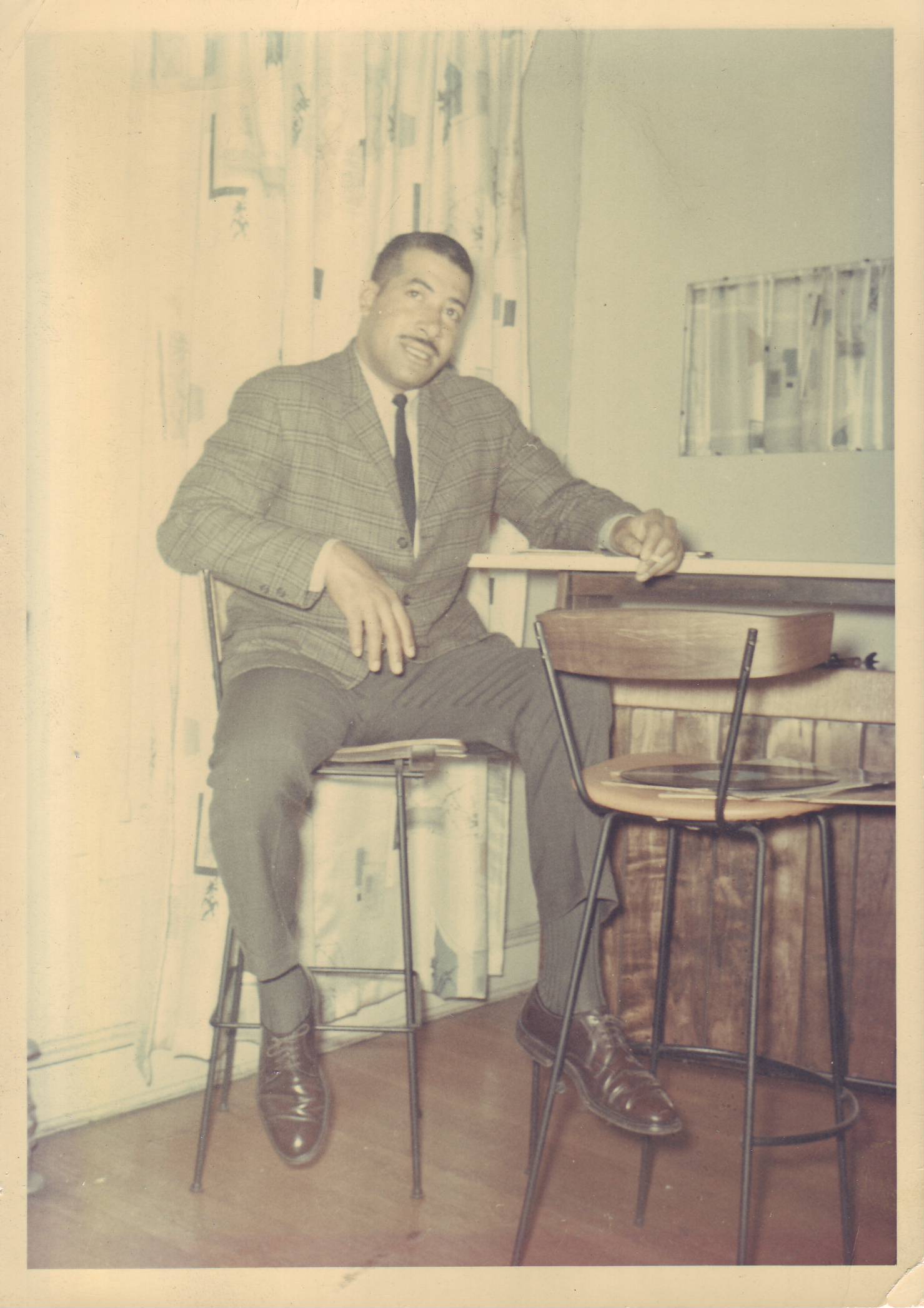
Always “clean,” posted at the bar, 1960s.

Image

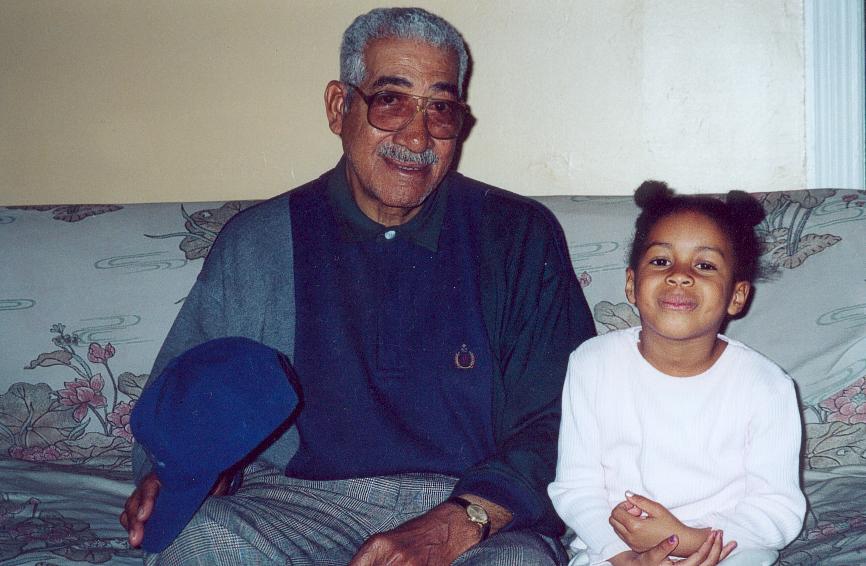
One of my favorite photos of my uncle, with my niece, who adored him. Philadelphia, 2001.

Standard
Births Deaths Marriages, North Carolina, Paternal Kin, Photographs

In memoriam: Joseph F. Barfield (1933-2014).

 JFB

Joseph Franklin Barfield, son of Walter and Katie Kornegay Barfield, died 12 April 2014 in Fayetteville, North Carolina. Cousin Joseph was born in 1933 near Mount Olive, Wayne County, North Carolina, and served honorably in the United States Army. He is survived by his wife and loving children, grandchildren and great-grandchildren, as well as a sister and brother.

joseph & alton

Joseph F. Barfield and Alton H. Barfield, who passed almost exactly one year before his older brother.

——

Top photo courtesy of Richard J. Barfield; bottom photo courtesy of Jerilyn James Lee, with thanks to Alicia Barfield.

Standard
Births Deaths Marriages, Enslaved People, Newspaper Articles, North Carolina, Photographs

Miss Speight & Mister Kenny.

My earliest memory: I am wrapped in a red blanket, slightly faded, edged in satin. The air is chilly. The light, low and pink-gold. It is morning, and I am being carried across the street to Miss Speight and Mr. Kenny’s house. They lived at 1400, and we lived at 1401, and I cannot be more than two years old.

My mother says that I cannot remember this. It must be an implanted recollection. I don’t think so, but perhaps. There is no question, though, that I retain other vignettes from the brief time that Nina Speight kept me: a canister of Morton salt on a kitchen table; a bag of wooden blocks on a shelf; a Maxwell House can brimming with snuff juice; a thin chenille spread over a four-poster bed; the dimness of the back room shared by the Speights’ teenaged grandsons. We left Carolina Street when I was nine, but my memories of my years at the edge of East Wilson are warm and tinged with gold.  Miss Speight and Mister Kenny loved and nurtured me early and rooted me firmly in the traditions of a Southern community in transition. They passed away within months of each other in 1982 — ironically, the year that I, too, left Wilson, for college.

Kenneth___Nina_Speight

Nina and Kenneth Speight.

——

Nina Darden Speight was born in 1901 in Black Creek township, Wilson County, to Crawford F. and Mattie Woodard Darden. Her family names indicate deep roots in southeastern Wilson County, which was part of Edgecombe before 1855. Her father, born about 1869, was the youngest of several children born to Howell Darden and Esther (or Easter) Bass, and the only child born free. (Esther’s maiden name also appears as “Jordan” on the marriage license of one of her children.)  On 11 August 1866, Howell and Easter registered their cohabitation with a county justice of the peace and thereby legalized their 18-year marriage. Their older children included Warren (born circa 1849, married Louisa Dew), Eliza (born circa 1852, married Henry Dortch), Martin (born circa 1853, married Jane Dew) and Toby Darden (born circa 1858.) Esther Darden died 1870-1880, and Howell Darden between 1880 and 1900.

Evidence that Howell Darden and Esther Bass were both owned by James A. Barnes may be found in the abstract of his will, dated October 14, 1848 and probated at February Court, 1849 in Edgecombe County. Among other property real and personal, Barnes’ wife Sarah received a life interest in several slaves — Mary, Esther and Charles — whose ownership would revert to nephew Theophilus Bass upon her death. To McKinley Darden, Barnes bequeathed “Negro Howell.” [Other enslaved people mentioned in Barnes’ will included Tom, Amos, Babe, Silvia, Ransom, Rose, Dinah, Jack, Jordan, Randy, Abraham, Rody, Alexander, Bob and Gatsey (the only slave to be sold.) Their relationships to Esther and Howell may never be known.]

Nina Speight’s mother Mattie Woodard Darden was born about 1873 in Wayne County to William and Vicey Woodard. She died 7 May 1935 in Wilson County. Crawford Darden died 3 August 1934.

Kenneth Speight was born about 1891 in Speight Bridge township, Greene County, North Carolina, to Callie and Holland Speight. (Some records show a 1899 or 1900 birth year, but he appears in the 1900 census as an 8 year-old.) His father Callie was born about 1855; his mother Holland, about 1860. Callie was the son of Callie (1825) and Allie Speight (1827). In the 1870 census of Greene County, the Callie and Allie Speight’s family is listed next to a wealthy white farmer named Abner Speight, who may have been their former owner.

In 1902, the Charlotte Observer ran an article by C.S. Wooten of LaGrange, North Carolina, “Old Southern Families: Farmers of Wayne and Greene,” a reminiscence about the “old plantations” and “typical Southern gentlemen” of those parts, including Abner Speight:

James Speight, a nephew of Jesse Speight, was Senator for Lenoir and Greene counties for ten years before the war. He married a niece of my father, Maj. Wooten. He was a splendid stump speaker, and I have seen him debate with lawyers on the stump and get the best of the discussion, indeed in those days the best politicians were farmers. His house was a nice place to visit. He always had a special brand of apple brandy made by Col. C.W. Stanton who could make as good brandy as was ever made. Edwin G. Speight, his cousin, was also Senator from Greene and Lenoir counties from 1842-1852. I was a small boy when he was a public man, but I have heard my father say he was a fine speaker and was a natural orator. His second wife was a daughter of Hon. Jake H. Bryan, of Raleigh, and he removed to Alabama where he died a few years ago. Abner Speight, a cousin of the above, was a large farmer, was a noble man and as good a citizen as the State ever had. He had two boys killed in the army, both bright, gallant young men. I have sometimes thought, suppose the South had not been checked in her onward march of prosperity and greatness what would we have been today. I have also thought that the gallant men, the flower of Southern chivalry that were sacrificed in that unhappy struggle were in vain, but I reckon not, for they by their gallantry and valor, have shed unfading justice upon Southern arms and have given her a name that will never be surpassed in the annals of mankind.

Callie and Holland Speight married about 1878, but little else is known of her. After Holland’s death just after 1900, Callie married Minnie Speight (1894-1947), daughter of Stephen and Dillie Woodard Speight, also of Greene County. In addition to Kenneth, Callie Speight’s children included Martha, Mary, Clara, Irwin, Charlie, Callie, Addie, Claud, Mary, Nancy, Flossie, Lewis, Clarence, Effie, Bessie, Pauline, George, Adell, Joe, James and Junius. Callie died after 1940.

——

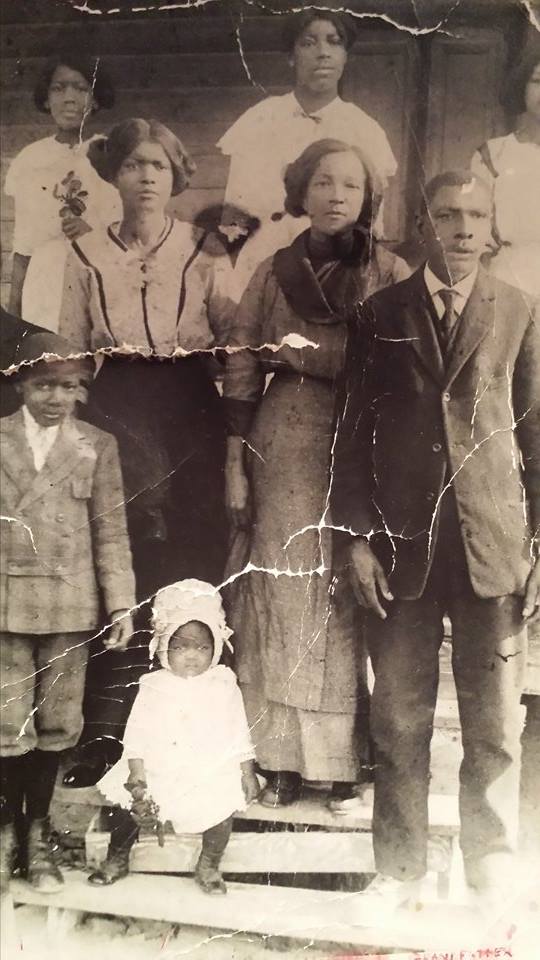
Postscript: After I posted this piece, the Speights’ grandson, whom I played with on his childhood visits from New York City, sent me another photograph. Nina Darden is standing at top left, holding a flower. Thanks, Tyrone, for both images!

Nina Darden

Standard
Maternal Kin, North Carolina, Oral History, Photographs

Papa used to keep him just slick and pretty.

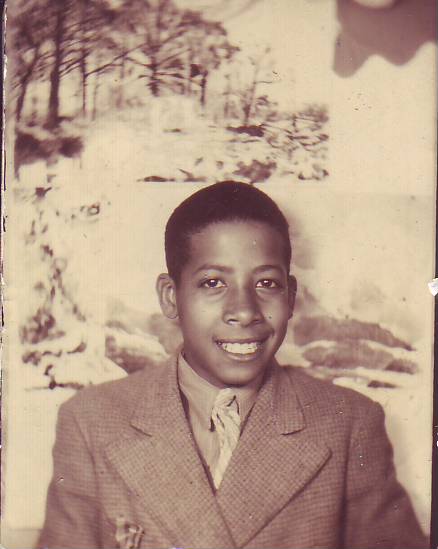
His name was Prince. And Papa sold Prince when he bought a car. But when he bought Prince, Prince had never been broken in. Nobody’d ever ridden him. And this man broke him in for Papa. But he was still high-spirited, because he was a race horse. And he had four white feet. That is what was so distinctive about him. He was chestnut. And we were so crazy about him that we would go in the – Papa had a big enclosed lot, like, that he could come out in. Other than the stable. And we would go in there with him, but he wouldn’t bother us. He would never bother us. And this old gentleman would be what was called currying. He would curry the horse and brush him and all, and he would hold me up and let me brush it. What was the man’s name? I can see him right now. He was an old man and real light. He was almost white. He had light hair, had white hair. And he loved Mama’s cooking. She used to bake something that was a pie. She called it a pie – but it was sweet potatoes. It was not mashed like you’d make up in a sweet potato pie ‘cause she would slice them and put them in the pie. Then she would make a sauce with nutmeg and lemon juice and thicken it with flour, you know. And then she would cook all of that in a big plate thing like that. And when Papa sold Prince, we went down where the man who had bought him had him, and he would look bad. His skin – you know Papa used to keep him just as slick and pretty. And that man would come to the house and wash him down with soap and water and everything and made him pretty. And he had pretty white feet. But Papa sold him to that man when he bought the car. And we went down there one day to see Prince, and he looked awful. He looked bony. He just looked awful. And we went down a little hill where he was in an enclosure. And we called him, and he came running over there where we were. We were so glad to see him. And we went home and told Papa that Prince said he wanted to come home. Yes, Lord. We wanted Prince moved.

COLVERT -- Colvert Girls & Bert

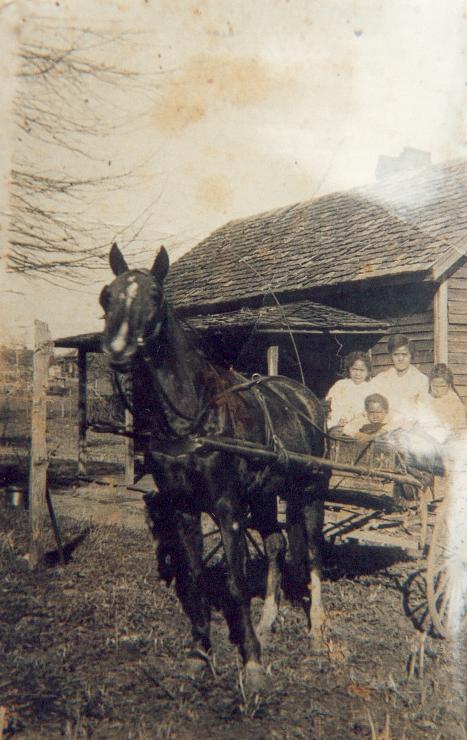
Possibly Prince (though he only has two white feet), circa 1913, with Louise Colvert, Launie Mae Colvert, Bertha Hart and Margaret Colvert.

—–

Interview with Margaret Colvert Allen by Lisa Y. Henderson; all rights reserved.
Standard
Free People of Color, Land, North Carolina, Paternal Kin, Photographs

Artis Town, at last.

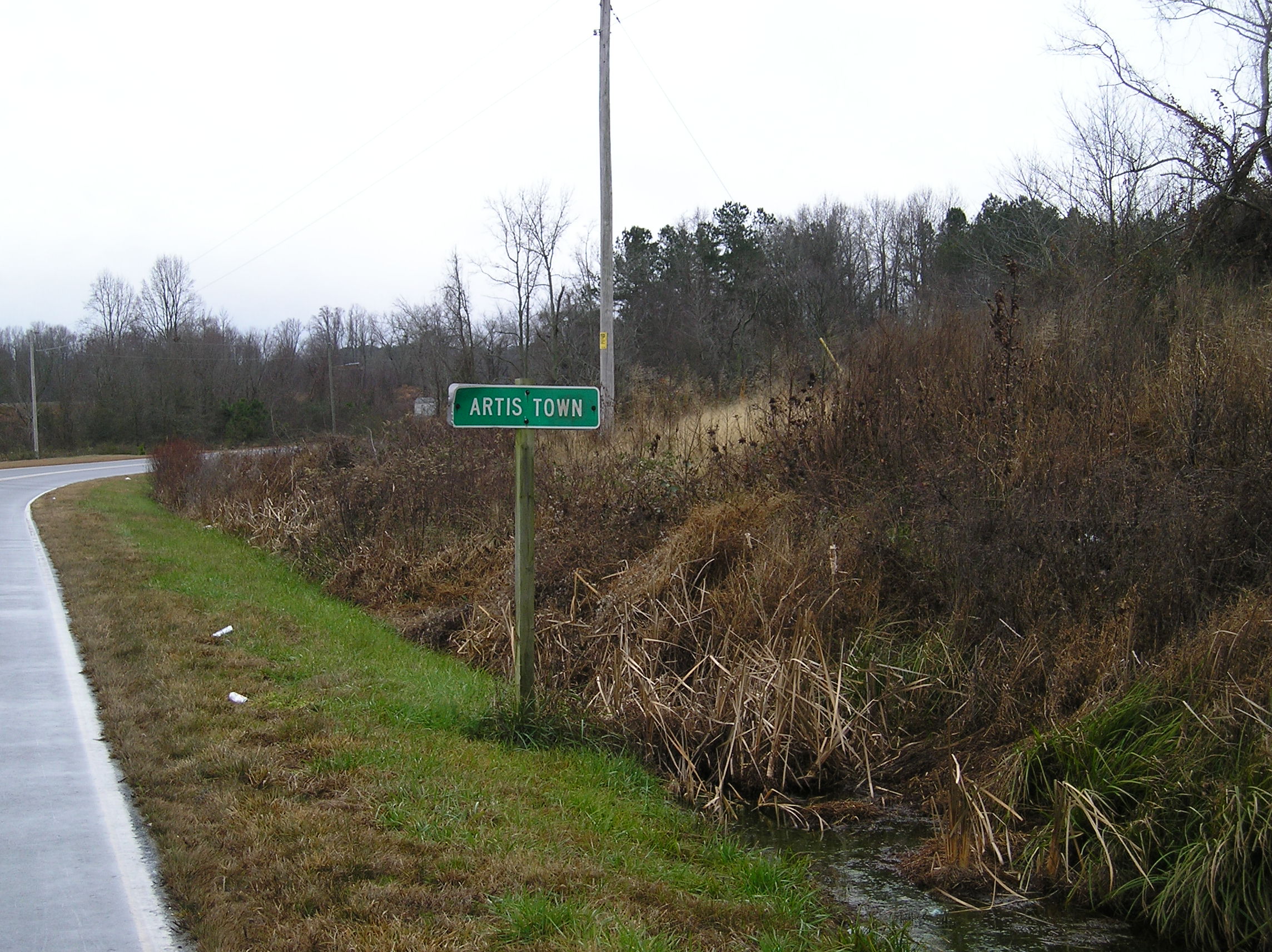
I checked first at the Court House. I had a hazy memory of a dusty, yellowed pull-down map hanging on a wall in the Register of Deeds office depicting Greene County townships in, perhaps, the 1950s. Most county roads were then unpaved, and the map bore witness to many now-abandoned crossroads and hamlets, including “Artis Town.” But the map was gone, cast aside in a reshuffling of office space that relegated Register of Deeds to the basement. The two ladies on duty — blue-permed and powder-fresh — interrupted their gossip (“He’s good as gold, but when he’s mad, he’ll … he’ll CATCH”) to help, gamely pulling two or three crumbling maps from storage, but none was what I sought. “Try EMS!,” one finally suggested, “They know all the roads.”

In the dim front office of a low brick building on the northern edge of Snow Hill, I explained myself: “I’m looking for a place in the road called Artis Town. There used to be a sign. Like, a green one with white letters. And it was somewhere off Speights Bridge Road, or maybe Lane Road, but I hunted up and down this morning and couldn’t find it.” The good old boys were puzzled. “Artis Town … Artis Town …” “Well, naw, I never heard of … Mike! You know where Artis Town is?” “Artis Town. Artis Town ….” An older man walked through the door and was put to the test. “Well, I think … hmmm. Hey. Call Donald. If he don’t know, don’t nobody.” … “Hey, Pam, is Donald — wait, you’re from out that way. Do you know where Artis Town is? … Okay … okay … okay. Donald? Yeah, Artis Town. … Okay … mm-hmm … that’s what Pam said. Okay, thankee.” And sure enough, it was in a bend of Lane Road, off Speights Bridge, and there had been a sign, and it was gone.

But I asked my mother about it, too, because she taught in Greene County for two years when she first came to North Carolina, and I thought maybe she’d heard of it. Her school had been in Walstonburg and probably drew students from Speights Bridge, and … “Let me look at my gazetteer.” She has the old version from the 1980s, which, of course, I pitched once I bought the shiny new one. And I’m regretting that surely, for Artis Town is marked quite clearly on her map, and I could have saved myself some gas and tire rubber had I consulted it. (Though I would have missed out on the helpful hospitality of the fine people of Snow Hill.)

I dug my old laptop out of storage today. It took a bit of searching, but finally: photos I took in December 2004 when I was wandering the roads of Greene County with no real purpose other than a penchant for what Least Heat-Moon calls “blue highways.” Almost ten years would pass before I’d connect Artis Town with my own Artises. The ancestors, though, are patient.

Image

Image

Photographs by Lisa Y. Henderson, 23 December 2004.

Standard
Births Deaths Marriages, North Carolina, Paternal Kin, Photographs

Family cemeteries, nos. 11 & 12: Rountree & Rest Haven.

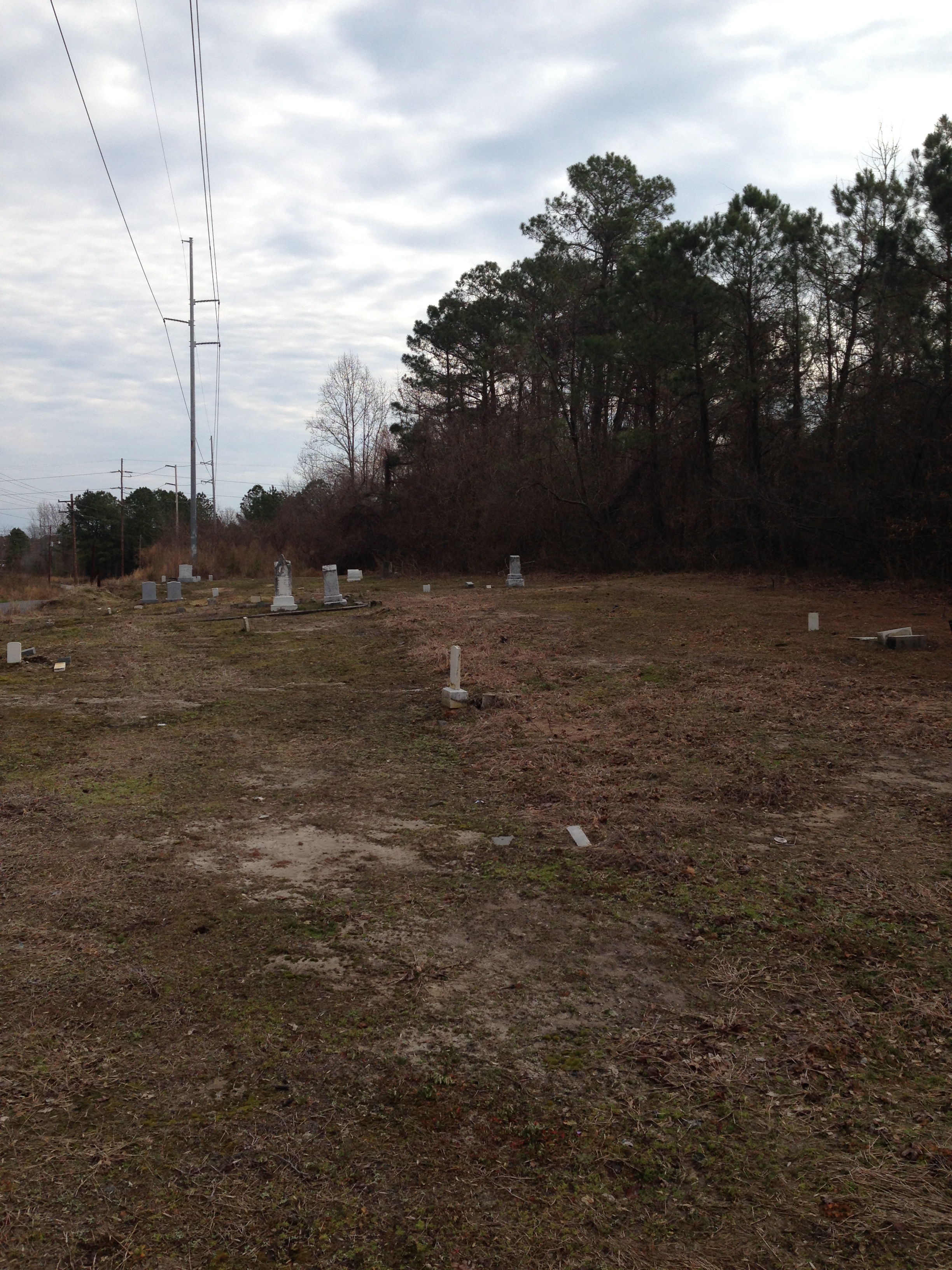
The wooden church was still standing then, on a sandy bank that rose from a curve in the highway at Lane Street.  In my father’s time, Rountree church was well beyond city limits, but our subdivision leapfrogged it in the early 1960s, and a grocery store popped up across the road, and it was no longer an outpost.  Still, when we were children, Lane Street was raw and unpaved and, for us, a gateway to adventure.  A hundred yards in, the road crossed over a sluggish branch, the pines began to crowd down to its ragged edge … and tombstones began to poke through the snarl of catbrier and cane choking the forest floor.  Here was the remnant of Wilson’s first colored cemetery*, abandoned at mid-century and, by the mid-1970s, when we prowled these woods, completely overgrown with bamboo and sweetgum and loblolly pine.  Burials by then had moved around the corner to Rest Haven cemetery, which is city-owned and maintained.  Perhaps 20 years ago, after several half-hearted clean-up efforts, a small, ragged section of Rountree was cleared and its remaining stones propped up.  A hundred yards down the road, in an open field, a memorial was erected to Rountree’s many hundreds of lost graves. A set of my great-grandparents were probably buried there, as well as my father’s stillborn brother, Uncle Jack’s sickly boys, and other kin unknown and maybe unknowable.

IMG_4992

 The sad remnants of Rountree cemetery, February 2014.

My grandmother was buried at Rest Haven in 2001 and my uncle in 2005, but only recently did I begin to regard that cemetery’s conventional, lettered rows as as interesting as wild Rountree. My grandmother’s headstone, like all from the last 30 years or so, is machine-cut, its lettering precise and even. Older markers, however, reveal an artist’s hand, quickly recognizable in a squarish font with flared serifs and, especially, the long, pointed tails of the 9’s. Marble cutter Clarence Benjamin Best carved headstones for more than 50 years, chiseling lambs, stars, flowers, and Masonic emblems, as well as pithy, grammatically idiosyncratic epitaphs, into slabs of gray granite. I have found his work in rural Wilson County cemeteries and as far afield as Wayne and Greene County, but Rest Haven is ground zero for his oeuvre.

IMG_4996

 An early example of Clarence Best’s marble-carving in Rountree — before he developed his signature long-tailed 9’s. (Foster was an early investor in Commercial Bank.)

IMG_8931

A late example — with 9’s and a bit of a extra verbiage, Rest Haven.

IMG_8937

 Rifle, fish, peaches — a Best creation for husband and wife, Rest Haven.

In addition to my father’s mother and brother, my paternal grandfather is buried in Rest Haven, as are my aunt’s husband; Uncle Jack and his family; Josephine A. Sherrod and countless other Artises; and, somewhere, Aunt Nina.

Jesse A Henderson headstone

My uncle, Jesse A. Henderson.

Jack Henderson headstone

Cousin Jesse “Jack” Henderson and wife, Pauline “Polly” Artis Henderson.

*I have since learned that it was not, in fact, the first. That distinction may belong to a small cemetery just off Pender Street, memorialized in today’s Cemetery Street. All traces of it have disappeared.

Standard
Births Deaths Marriages, North Carolina, Paternal Kin, Photographs, Religion

This Book was give to Sarah Jacobs.

Sarah Henderson Jacobs Silver left two Bibles. One, a gift from her second husband, Rev. Joseph Silver, had originally belonged to his first wife, Felicia Hawkins Silver. The other passed through several hands before arriving in mine.

There are three inscriptions inside the front cover. “This book was give to Sarah Jacobs from Ganny Caroline 1920 of Wilson NC” — that’s my grandmother’s handwriting. Then, faintly: “Present by Mrs Caroline Vick of Wilson N.C. present in May 18th year 1904.” Then: “Gladys OKelley book give to her by Charity Pitt keep as long as I live no one to take it a way from me year 1913 Dec 23.”

IMG_4928

Who are these folk?

Carolina Williamston Vick was born in Newton County, Georgia in 1844. How or why she came 425 miles north to settle in Wilson, North Carolina, may never be known, but a clue might lie in her maiden name. “Williamson” was a prominent southwest Wilson County family that included slaveholders. Did some migrate — or sell their slaves — South? In any case, Carolina was in Wilson by 1880 when she is listed in a household headed by 28 year-old Robert Vick. They are married and have three children, Alice, 18, Willie, 15, and Cora Vick, 3. (It appears that the older two were Robert’s step-children.) By 1900, Carolina was living in the 700 block of Green Street (around the corner from the Elba Street house) and spent the reminder of her life living with a rotating series of children, grandchildren, in-laws and lodgers and serving as a midwife to women in the community. “Granny Caroline” died in July 1925, when my grandmother was 15 years old.

carolina Vick

As for Gladys O’Kelly (or Gladys O. Kelly), the nine year-old that so vigorously assorted her ownership in 1913 — see below.

The Bible’s frontispiece introduces another owner:

IMG_4930

Unfortunately, her name is too common to begin to identify her.

As was custom in good quality Bibles of the era, the book’s text is halved by a shiny section of maps and illustrations and charts. My grandmother filled blank pages and the backs of leaves with the births and deaths and marriages of her family, her handwriting gradually shifting from a barely recognizable, youthful, curlicued version to the one I know so well.

IMG_4931

IMG_4932

The “Births” page introduces another family. Or maybe families. Gladys O’Kelly is there, and there are two Carolina Vick entries.

IMG_4933

The others seem to be members of an extended family I found in the 1880 census of Hillsboro, Orange County, North Carolina: Yunk Strayhorn (45), his wife Patsey (36), son Isaac (18), son-in-law Louis Pitt (25) and daughter Charity Pitt (23), children Rose (24), Jane (17), Henry and Reuben (13), Sandy (23) and Clara (21), and grandchildren Richard (3), Adeline (12) and Margaret (9). (Lewis Pitt married Charity Strayhorn in Edgecombe County in 1872 and moved to Wilson.) Little Gladys O’Kelly? She seems to have been the daughter of Rose Strayhorn’s daughter Gatsey and her husband, Reubin O’Kelly, both of Orange County.

And then there are Madison Perry, son of Carolina Vick’s daughter Cora, who married Isham Perry, and the Shiverses:

IMG_4934

IMG_4935I’ve been unable to find all the Shiverses, and what I have found doesn’t align cleanly with the dates inscribed here (for example, John and Nicey Shivers, born about 1872 and 1880, are listed in the 1900 census with six-month-old daughter Kizzy), but this appears to be a family that lived in Greenville, Pitt County at the turn of the 20th century.

I don’t hope to be able to reconstruct how this Bible bounced all over eastern North Carolina like this before coming to rest with my family, which has had it nearly 100 years. I share it here in hopes that descendants of the other families who cherished it will find themselves in its pages.

Standard
Enslaved People, North Carolina, Paternal Kin, Photographs

Appie Ward Hagans.

I’ve talked all around Apsilla (or, perhaps, Apsaline) “Appie” Ward Hagans here and here and here. So here she is:

Aspilla Ward Hagans

Appie and her twin Mittie Roena Ward were born 19 April 1849 near Stantonsburg, Wilson County, to David G.W. Ward and Sarah Ward, an enslaved woman. They likely spent their early years in and around this house. How and when Appie met her husband, Napoleon Hagans, who lived in northeast Wayne County perhaps 7 miles from the Ward plantation, is unknown. I have not located their marriage license. Appie and Napoleon had two sons, Henry Edward Hagans (1868-1926) and William Scarlett Hagans (1869-1946).

Appie left little trace in official records, appearing in two census enumerations and on a couple of deeds with her husband. She died 12 April 1895 and is buried near their home in northern Wayne County.

Photo courtesy of William E. Hagans.

Standard