Births Deaths Marriages, Paternal Kin, Photographs

Family cemeteries, no. 2: Artis & Bunch.

Image

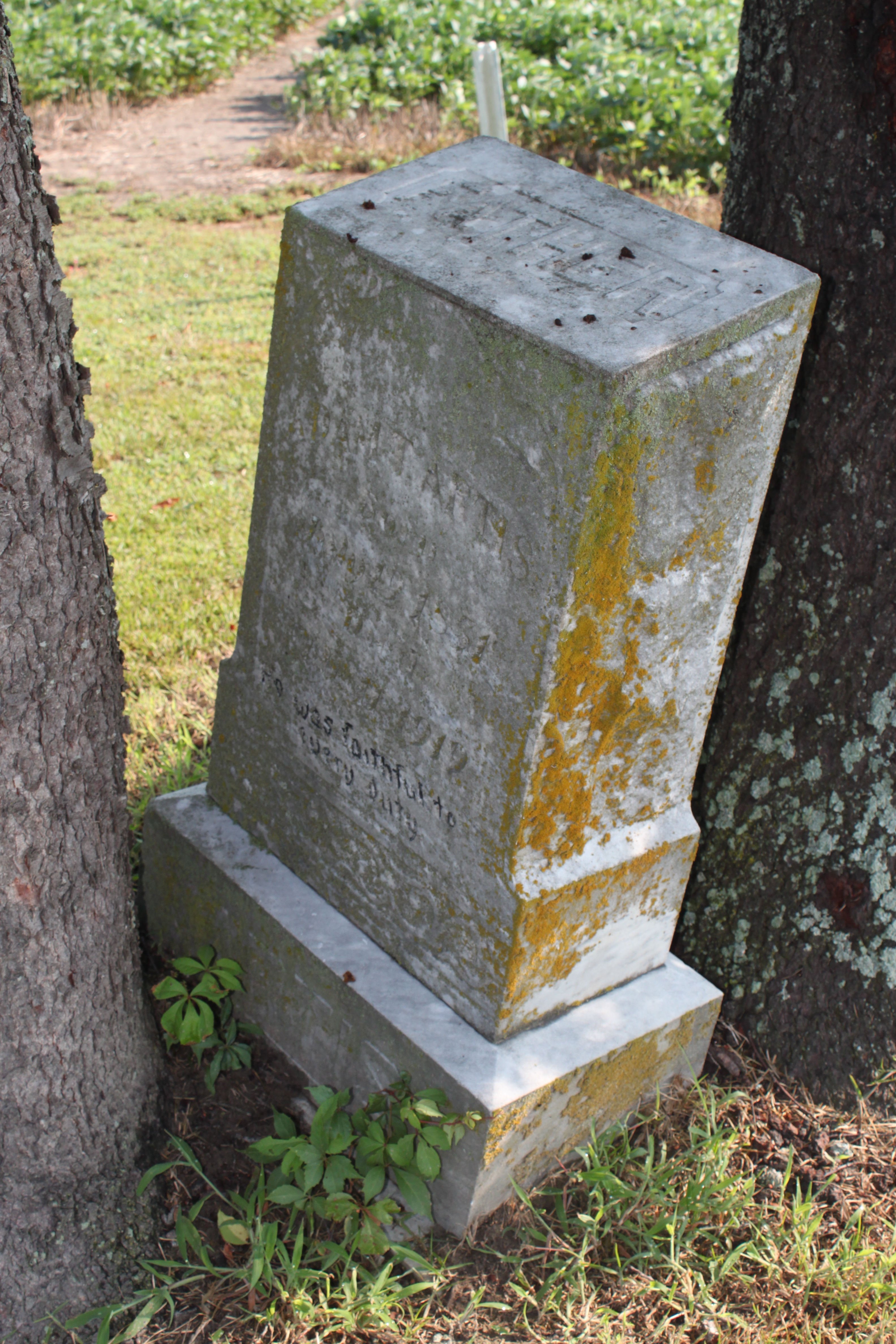
The small “Artis & Bunch” cemetery is located on Highway 222 East in Wayne County between Stantonsburg and Eureka NC on land still owned and occupied by Adam’s descendants. There are several graves, including those of Adam T. Artis (9 July 1831-11 February 1919) and his granddaughters Odessa Artis Baker and Esther Artis Bunch. (Apparently, none of Adam’s wives are buried with him.)

Image

——

Photographs taken by Lisa Y. Henderson, 2010.

Standard
Births Deaths Marriages, Paternal Kin, Photographs

Happy birthday, John J. Holt.

My grandmother said:

Papa closed John up in the couch.  Closed up the davenport on him. Just by it — he was grunting or groaning for breath or something.  I went out to see what it was, coming from out of the kitchen and dining room where he was in that room across the hall on that open couch.  That’s where Papa was looking his old shoes or something to put on, and he went there and turned up the end of that thing.  If he had shut him up in there, it’d a killed him, but he just turned up the end of it.  And he didn’t see his shoes, so he come on out.  And we heard this noise – “nyyyaaa-nya, nyyyaaa-nya.”  And we looked in and saw that thing turned up, and Mamie run in there and grabbed him, she grabbed up John and, oh, she was shaking and shaking and shaking, crying, and I was crying ‘cause I thought he had killed him.  So we had him up by the arms, just holding him, just fanning him and fanning him and fanning him, and I was just scared he was gon die.  You never know.  And so after that Mamie said, “Let me get out of here.”  ‘Cause you know Mamie and Papa didn’t get along – and she said that he was trying to kill her child.  Papa, well, he didn’t know what he’d done.  And he was sorry.  He said he was so sorry it happened, he wouldn’t hurt that child for nothing in the world.  And he was just crazy ‘bout John.  But Mamie left there that night, honey.  She left there with that baby, and she said, “I don’t know when I’ll be back here.”  So I got after Papa ‘bout it.  And he said he didn’t know the baby was in there.  He wouldn’t hurt that baby for nothing.  And so Annie Bell, she heard about it, and she come over there and laid Papa out.  He said he didn’t know the child was there.  He said, “Well, y’all ought to have taken up the bed when you got out.”  But the child was in there still sleep.  “But take him up and put him in another room.”  Not put him in that thing so he couldn’t get out.  So Mamie left there and went on back to Greensboro, and she didn’t never like Papa after that.  She didn’t like him no how.  Yeah, she just felt like he did it for meanness, but he didn’t.  Then Mamie said, well, she know he was getting old, and so she forgive him ‘cause things like that happen. She said, “I’m not gon fault him for doing that.  I don’t think he would have did it to the child.  He might would do something to me, but….” 

Image
 Cousin John around the time of the sofa debacle, circa 1924, Wilson NC.

John J. Holt was the first child born to Bazel and Mamie Henderson Holt. His harrowing enclosure in the couch left him with lingering injuries, but he overcame them to grow into a lean, green-eyed hipster with “Latin lover” looks.

Image

John Holt fedora

Cousin John, early 1940s.

After serving in the Army in World War II, John married Helen Mack and reared six children in Bronx, New York. At 90, he is the oldest living Henderson male.

Image

Happy birthday, John J. Holt!

——

Interview with Hattie H. Ricks by Lisa Y. Henderson, all rights reserved; photos or copies in collection of Lisa Y. Henderson.

Standard
Maternal Kin, Paternal Kin, Photographs, Vocation

Where we worked: barbers and hairdressers.

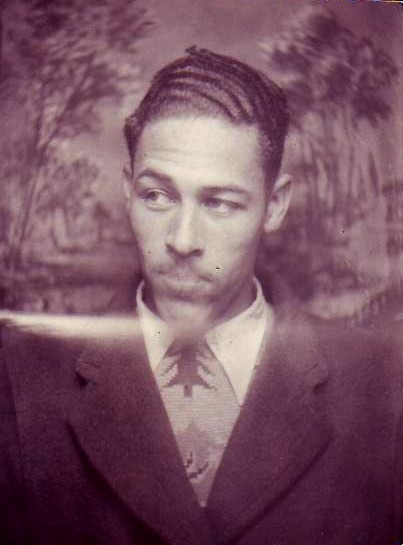
Lon W. Colvert, Statesville NC – owned and operated L.W. Colvert Barbershop, 1900s-1920s.

James N. Guess Sr., Goldsboro NC – owned and operated barber shop, 1900s-1950s; 114 Walnut East, circa 1906; 120 Walnut East, 1912.

H. Golar Tomlin, Statesville NC – barber in brother’s shop, 1910s.

Charles H. Henderson, Richmond VA – barber, 1910s-1920s.

Roderick Taylor Sr., Wilson NC – barber, 1910s-1947; Paragon Shaving Parlor, 1916; Tate & Hines Barbershop, New Briggs Hotel, Nash Street, 1917; Hines Barbershop, Nash Street.

Ernest Smith, Goldsboro NC – worked in uncle’s barber shop, circa 1917.

Golar Colvert Bradshaw, Statesville NC – Poro agent, 1920s.

John W. Colvert II, Statesville NC – barber, 1920s-1937.

Blanchard K. Aldridge, Fremont NC – barber, 1920s-1965.

Freeman Ennis, Wilson NC – bootblack, barber shop, circa 1930.

Julia Allen Maclin, Newport News VA – owned and operated hairdressing shop, 1940s-1970s.

Ardeanur Smith Hart, Columbus OH — hairdresser, 1940s?-1980s?

——

The third in an occasional series exploring the ways in which my kinfolk made their livings in the 19th and early 20th centuries.

POSTSCRIPT, 1/21/2014: This brief history focuses on an earlier period, but provides useful insight into the role of African-American barbers.

Standard
North Carolina, Paternal Kin, Photographs

Finding the Barfields.

Some time in the late 1980s, I learned the name of my great-grandmother Bessie Henderson’s father — Joseph Buckner Martin — and learned that, after the death of Bessie’s mother Loudie, Buck Martin had several children with a woman whose last name was Barfield.  I marinated on that for a few years, then a bit of sleuthing revealed that Sarah Barfield was the woman, and her children were Walter, Amy, Lillie and Daisy Barfield. I found Walter Barfield Jr. in the phone book, cold-called him, and found him to be a gracious and welcoming cousin. His father had passed away not too many years before, but Aunt Lillie was still living, and he was happy to introduce us the next time I came home to North Carolina.

sarah barfield

Sarah Barfield

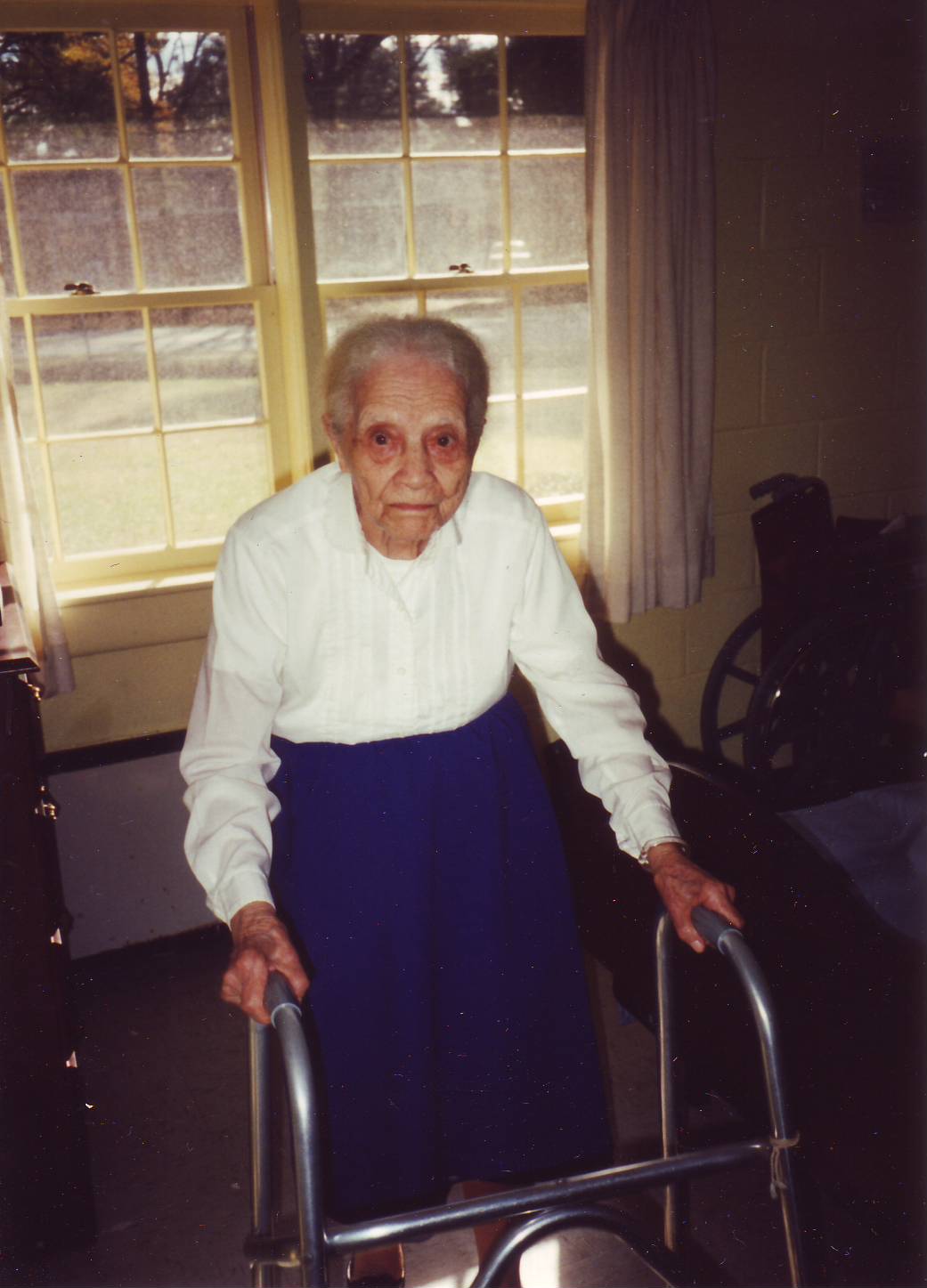
I met my great-great-aunt in the spring of 1993 at the nursing home in which she lived in Mount Olive. She was a tiny woman with a wizened, apple-cheeked face, her ivory-white hair pulled back in a small bun.

FB0036

I took  notes:

  • She said she never saw her half-sister Bessie Henderson, but remembers when she died [in 1910].  Her sister Amy went to the funeral and came home and cried and cried.
  • Jack Henderson, her half-brother, used to visit them in the country.  Once when he came, he wanted to meet their father.  She took him there, and Buck received his oldest son in a friendly manner.  He was good to his children.
  • Her sister Amy was in her 30s when she died; Daisy was 18.  They are buried in the Barfield cemetery, between Mount Olive and Dudley, not far from the railroad.
  • Her youngest granddaughter has a photo of Daisy.
  • She has a daughter Gladys and a son Walter Lee Holmes.
  • She bought the house that Buck left her mother from one of Ira Martin’s children, to whom it had reverted after her mother Sarah’s death.
  • Her house burned up with most of her photographs.
  • She knew Buck’s brother Alfred Martin.  He committed suicide.
  • Once on her way to Washington to see her husband, she spent the night in Wilson with Sarah Henderson Jacobs, who told her, “Don’t ever marry an old man.”  Walter Lee was 2 years old at the time. [This would have been about 1922.]
  • She remembered that my grandmother had children by a “barber man.”

The second time I visited Aunt Lillie was at Christmas, and I took my grandmother with me. When we walked in, Aunt Lillie stared wordlessly, then reached out to touch her face.

15768_176423273526_505368526_2933109_7444236_n

Lillie Barfield Holmes passed away peacefully on 1 June 2003, just shy of her 100th birthday.

——

Photographs taken by Lisa Y. Henderson, 1993.

Standard
Births Deaths Marriages, Maternal Kin, Newspaper Articles, North Carolina, Oral History, Photographs, Vocation

Lon Colvert: straight and shady.

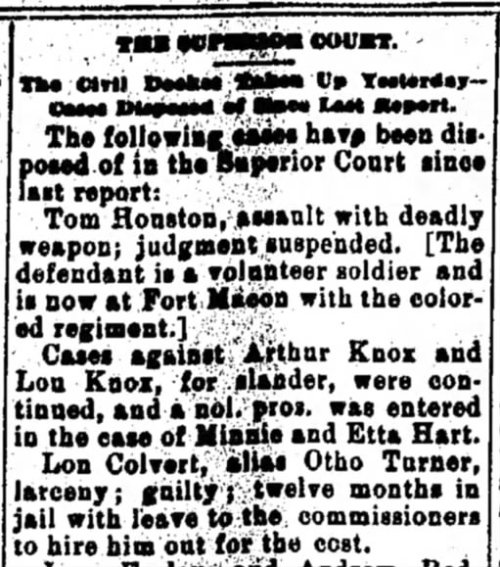
If reports are to be believed, Lon Colvert had a bit of a shaky start. “Otho Turner”?
Image

Statesville Landmark, 18 August 1898.
Carolina_Mascot_Sville_2_8_1900

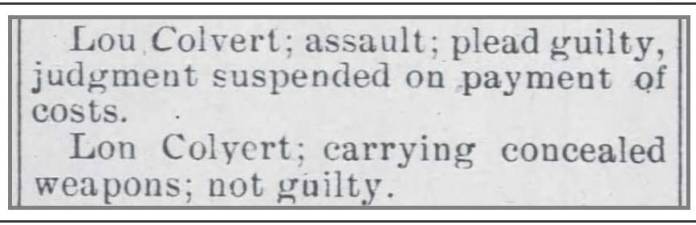
Statesville Carolina Mascot, 8 February 1900.

Lou Colvert was Lon’s uncle. No details on Lon packing. But he switched gears a bit.  To retailing, which specifically meant selling liquor — unauthorized.

Iredell County Superior Court —

Lon Colvert, retailing; guilty.  

— Statesville Landmark, 5 Nov 1901.

Another poor outcome.

“Cases Disposed of Since Monday — Some Recruits for the Chain Gang — A City Ordinance Held Invalid”

The following cases have been disposed of in the Superior Court since Monday:    …

Lon Colvert, convicted of retailing, was discharged on payment of the costs. 

— Statesville Landmark, 8 Nov 1901.

But somewhere along in here, he began to right his ship.

Notices of New Advertisements.

L.W. Colvert has moved his barber shop from Depot Hill to 109 east Broad street.

— Statesville Landmark, 23 Aug 1904.

It’s not clear when Lon first opened his barber shop, or how he got into the business, but it was a good move. Depot Hill was a few blocks south of downtown; the 100 block of East Broad was right at the heart of the business district. He had arrived.

Still, there were setbacks. (I read “liquor” in this “little pilgrimage,” but I could be wrong.)

“Played His Bondsman False and Will Spend his Holidays in Jail.”

Thursday afternoon a colored barber, Lon Colvert by name, braced Mr. J.P. Cathey for a horse and buggy with which to make a little pilgrimage that night, and Mr. Cathey refused.  Lon was just obliged to make that little run, so later he stated the case to Jo. Thomas.  Jo. is the colored individual who worked for Mr. Cathey then and who is now being boarded by the county.  Jo. slipped out with a horse and buggy.  Lon made his trip, came back, paid Jo. one plank, which he shoved down in his jeans, and then Jo. slept the sleep of the consciousless offender.

But the snow that fell during the interval between the exit and return of that buggy caused Jo’s little house of cards to tumble.  Next morning Mr. Cathey saw the tracks, asked Jo. who had got a buggy the night before, and Jo straightaway told the thing that was not.  So Mr. Cathey got off of Jo’s bond, which he had signed not long since, and now Jo. is behind bars.

— Statesville Landmark, 20 Dec 1904.

He pressed on.

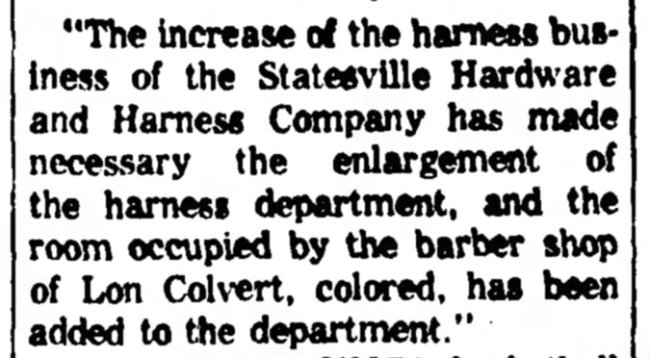
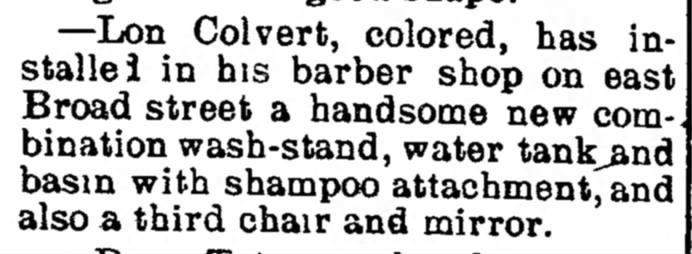
Lon Colvert, colored, has recently equipped his barber shop on east Broad street with a handsome two-chair dressing case and has made other improvements in the shop.

— Statesville Landmark, 1 Jan 1907.

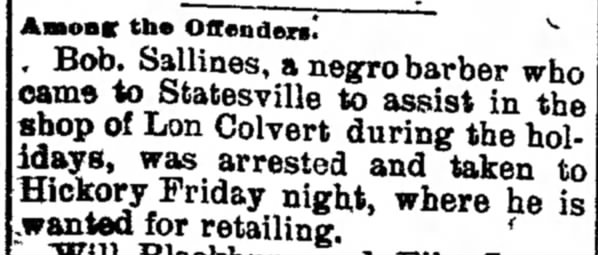
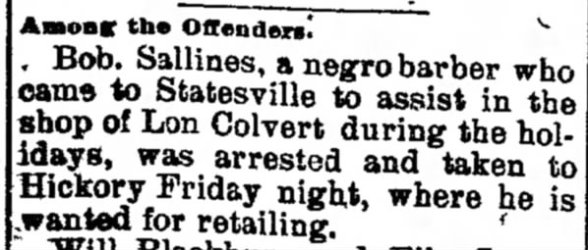
Occasionally, his friends let him down.
Image

Statesville Landmark, 1 January 1907.

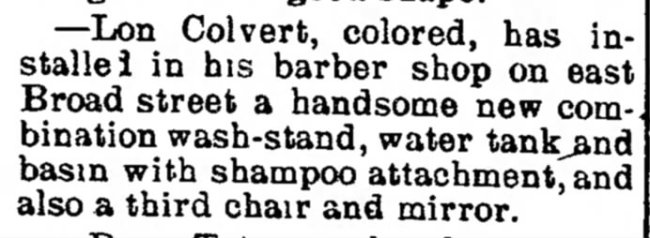
But he had a new wife and a new baby to add to his first three, and the straight and narrow was starting to win.
Image

Statesville Landmark, 7 May 1907.

Image

Statesville Landmark, 7 January 1910.

A momentary setback, no more. Lon moved his business back down Center Street toward the train depot and entered the golden age of his entrepreneurship, the period of my grandmother’s childhood.

Papa had a barber shop.  Well, of course, Papa did white customers. And, see, the trains came through Statesville going west to Kentucky and Tennessee and Asheville and all through there.  They came through, and they had, they would stop in Statesville to coal up and water up, you know.  There were people there to fill up that thing in the back where the coal was.  And there was another — it had great, big round things that they’d put in water.  And when those trains would stop for refueling, they would, there were a couple of men who would come. I can see Walker and my uncle and Papa standing, waiting for these men who were on the train to give them a shave and get back on the train in time.  And there wasn’t any need of anybody else coming in at that time ‘cause they couldn’t be waited on.  They were waiting for these conductors and maybe mailmen, but I know there would be at least three at a time.  And Papa would shave them.  And he made a lot of money.

Papa had a taxi, too. Walker drove it most of the time.  And then he would hire somebody to drive it other times.  And then when people had to go to Wilkesboro, Papa would take them.  Because Wilkesboro was a town north of Statesville. And there was no transportation out there.  No buses, no trains, or anything.  So when people would come on the train that were, what they call them, drummers, the salesmen, when they would come through, Papa would carry them up there. 

And he had this clean-and-press in the back of the barbershop. And, look, had on the window, on the store, ‘Press Your Clothes While You Wait.’  I can see those letters on there right now.  ‘Press Your Clothes While You Wait.’  And people would go in there, get their clothes pressed, you know.  And I know ‘barber shop’ was on the door….  ‘L.W. Colvert Barber Shop.’  ‘L.W.’ was on the side of this door, and ‘Colvert’ was on this side of the door.  They had a double door.

There were, of course, risks to doing business. Though I’m casting a side-eye at the carnie. (“H.G.” was Lon’s 21 year-old half-brother Golar, and I never knew he was a partner in the business.)

Damages for Scorching Suit — Court Cases.

Lon Colvert and H.G. Tomlin, doing a pressing club business under the name of Colvert & Tomlin, were before Justice Sloan Saturday in a case in which Chas. Moore, white, a member of the carnival, was asking $18 damage for them.  They pressed a suit for Moore and it was scorched, for which Moore asked damage.  The case was finally compromised by Colvert & Tomlin paying Moore $5 and $1.20 cost. 

— Statesville Landmark, 27 March 1917.

And there was the little matter of a charge of carrying a concealed weapon in 1919; a jury returned a not guilty verdict.  Still, a burglary at the shop was an omen. The good years were coming to an end. Lon was struck with encephalitis in the 1920s and was largely unable to work in his final years.
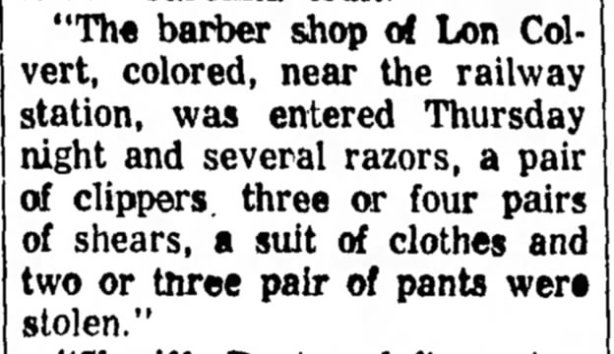
Image

Statesville Landmark, 25 September 1925.

By this time, Golda had embarked upon a peripatetic life in the Ohio Valley, and  Walker was left to keep his father’s businesses running.  He exercised his best judgment.

Walker Colvert, driver of the Wilkesboro jitney Steve Herman, driver of the Charlotte jitney, and Henry Metlock, driver of the Taylorsville jitney were charged with delivering passengers to the depot rather than the jitney station.  It appearing that all the violations were emergency calls, the defendants were discharged.

Statesville Landmark, 1 Mar 1926.

Lon Colvert died 23 October 1930.  “He was an old resident of Statesville,” his obituary noted, “and for a number of years had a barbershop on South Center street, near the Southern station.”
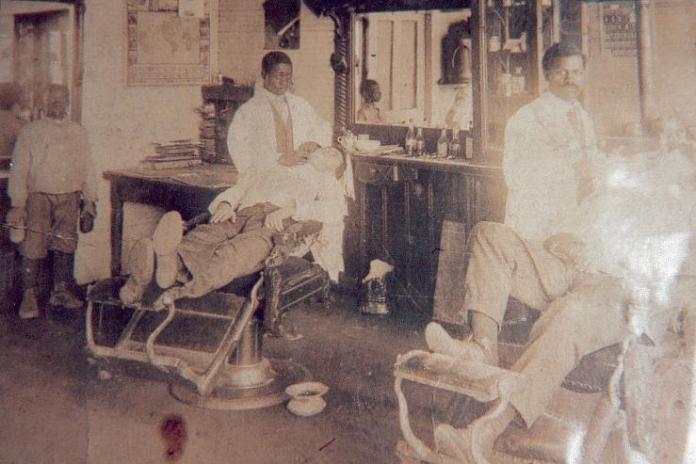
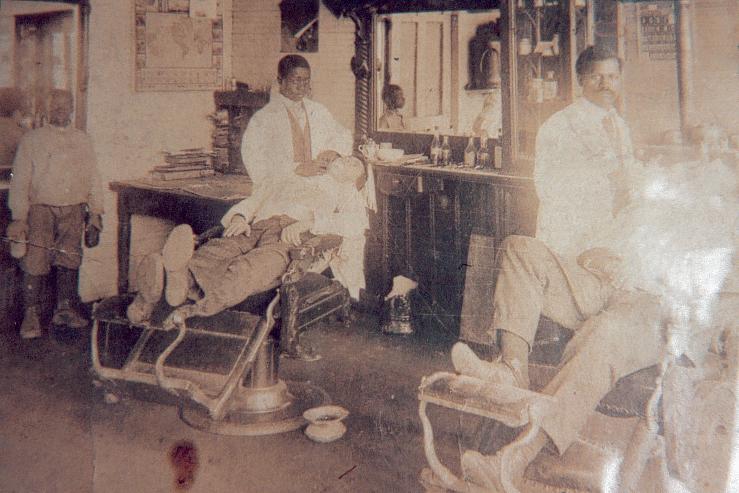
COLVERT -- Barbershop 2 The barbershop, 1918, when it was at 101 South Center Street. Walker Colvert, center, and L.W. Colvert, right.

——

Interview of Margaret C. Allen by Lisa Y. Henderson; all rights reserved. Copy of photograph in possession of Lisa Y. Henderson.

Standard
Births Deaths Marriages, North Carolina, Other Documents, Paternal Kin, Photographs

Funeral Program Friday: Bettie Aldridge Saunders.

BASaunders_Page_1BASaunders_Page_2

Betty Cecilia Aldridge Saunders was born in Dudley, Wayne County, North Carolina, the second daughter among John and Ora Bell Mozingo Aldridge‘s 11 children.  She died in 1990 and was buried in the cemetery of the church to which Aldridges have belonged since the 1870s.

Henderson group shot DudleyL. to R.: Horace “Snook” Henderson, Cecilia A. Saunders, William Saunders, Catherine Aldridge Davis, Frances Henderson Taylor, Carrie Lee Henderson Hill, ??, Johnnie “Dink” Henderson, Annabelle Henderson. Dudley NC, 1970s. Snook, Frances and Dink were Cecilia’s first cousins. Their mother, Nora Aldridge Henderson, was a sister of Catherine A. Davis and Cecilia’s father Johnnie Aldridge. Carrie was the Hendersons’ cousin on their father’s side.

——

(The first of an occasional spotlight on these funeral staples.)

Standard
Births Deaths Marriages, Education, Migration, Military, Newspaper Articles, Other Documents, Paternal Kin, Photographs

Col. Oscar Randall.

There were surely many more veterans than that, I thought, and I started poking around my files, looking for men and women I might have missed. Oscar Randall was a possible World War I veteran, but his draft card cast doubt — he claimed a service exemption on the basis that he was “rejected by recruiting officer.”

Image

Nonetheless, I Googled Randall and was stunned to find that not only did he serve, he led troops in battle in France during World War I, received a Purple Heart for wounds sustained in Italy during the Second World War, and achieved the rank of colonel. The most amazing find: two photos of Randall from the Chicago Sun-Times archives for sale on eBay!  I ordered them immediately, and they arrived in yesterday’s mail.

The first photo, taken after the First World War, depicts a smooth-faced, heavy-jowled man in officer’s uniform. Its reverse carries a scrap of newspaper article, as well as a note that the photo was copied from a portrait hanging in Randall’s living room.

O Randall 1921

The second photo, taken in 1982, shows a solemn-faced old man, silver hair swept back from his forehead, his eyes rheumy but mouth set firmly. Light from a window creates a dramatic chiaroscuro. On the back: a slightly longer clipping from the same article, detailing the colonel’s military achievements.

O Randall 1982

Back O Randall 1982

Oscar Randall was born 30 November 1896 in Washington DC, the first of George and Fannie Aldridge Randall‘s children born after their migration from Wayne County, North Carolina. After the War, he returned to college and received a Bachelor of Science in Civil Engineering from the University of Illinois. (He served as president of Tau chapter, Alpha Phi Alpha Fraternity, while there.) Randall taught mathematics at Chicago’s DuSable High School for many years and also worked as a civil engineer for the city’s sanitation department. In the 1950’s, he served as Chief of the U.S. Military Mission to Liberia, which advised that country’s military on training and defense. He married twice, but had no children.

Oscar Randall died three years after his Chicago Sun-Times interview. He was 88 years old.

A memorial service for Oscar Randall, 88, a civil engineer, will be held at 11 a.m. June 9 in St. Thomas Episcopal Church, 3301 S. Wabash Ave. Mr. Randall, of the South Side, died April 8 in Veterans Administration Lakeside Medical Center. A native of Washington, D.C., Mr. Randall graduated from the University of Illinois and worked for the Chicago Sanitary District for nine years. Mr. Randall also taught mathematics at Du Sable High School. In 1918 he joined the 8th Illinois infantry regiment, one of the nation’s first black-led military units. He also served in World War II. Survivors include his wife, Hilda; a stepdaughter, Vera Levy; two stepgrandchildren; two stepgreat-grandchildren; three sisters; and a brother.  

— Chicago Tribune, 23 May 1985.

——

[Sidenote: Pete Souza, who photographed Cousin Oscar, is now Chief Official White House photographer for President Barack Obama and Director of the White House Photography Office.]

Standard
Births Deaths Marriages, North Carolina, Other Documents, Paternal Kin, Photographs

Perhaps even the custom.

A Social Note: Miss Florence [sic: should read “Frances”] Ann Henderson married her first cousin, Israel H. Wynn. This relationship was very common in her youth, perhaps even the custom, she believes. Rev. R.B. Johns officiated at her marriage on December 12, 1908 in her parents’ home. Many friends and relatives attended including Val Simmons, Milford and Freddie Carter, Mrs. Eva Kornegay, and Mrs. Tina Hagans. In fact, there were so many guests that the floor of the house gave way under the weight of the people.

— from the souvenir booklet commemorating the 100th anniversary of the First Congregational Church, United States of Christ, Dudley NC, 1870-1970.

—–

Israel & Frankie

Frances Ann “Frankie” Henderson was the daughter of John H. and Sarah Simmons Henderson. Israel Henderson Wynn was the son of John’s sister Hepsie Henderson and her husband, Washington F. “Frank” Wynn.  Marriages among descendants of Wayne County’s free families of color were certainly the custom in the 50 years or so after the Civil War, and cousin marriages (if not first cousin) were concomitantly common.

Copy of photograph in possession of Lisa Y. Henderson.
Standard
Births Deaths Marriages, Maternal Kin, Oral History, Photographs

Mildred Wardenur Houser Jones.

Wardenur was a pianist, and played an organ for WOR radio station in Jersey City.  In Jersey somewhere.  Honey, she was — girl, she could play the piano.  And she played this organ, you know, they would have plays and have organ music, and she did that for them.  She could play.  And when I was up there one time, I went with her to take her piano lessons, and the lady said, ah, “What – you do play the piano or organ?”  I said, “No, ma’am, I don’t….”  Look like she looked at me like she thought I was about the worst she had ever seen.  [Laughs.] And her father made her take piano lessons. And the teacher graded her, and if she got anything below a B, her father would punish her severely.  But, honey, she could play a piano and organ.  She was good.

But she took TB and died.

Image

She was lovely — Wardenur. She was about 15 here, palling about with my grandmother, her older cousin, vying for the attention of the college boys mooning about them that summer in Bayonne.

Image

New York Age, 21 June 1930.

Wardenur graduated from the Lee Music School a couple of summers later and in February 1931 finished Bayonne High School.  A few years after that, her elopement was reported in the Age.

ImageNew York Age, 16 March 1935. 

Happy times did not last long. Wardenur contracted tuberculosis, the disease that had killed her aunt Elethea and beloved cousin Jay, and spent her last months in a sanatorium.  A short notice appeared in the 20 September 1941 issue of the Bayonne Times:

JONES – Mildred (nee Houser), of 421 Avenue C, on September 18, 1941, devoted wife of Willard Jones and beloved daughter of Irving and Emma Houser and sister of Henry and Irving Houser Jr.  Reposing at Wallace Temple A.M.E. Zion Church from 9 p.m. Sunday until funeral services at 2 p.m. Monday, September 22.  “Murray’s Service.”

She was 28.

Image

——

P.S. The taskmaster piano teacher was probably the inimitable Miss L.A. Lee of 100 Kearney Avenue, Jersey City, who, according to the Age, opened her well-regarded music school in 1907.

Interview of Margaret C. Allen by Lisa Y. Henderson, all rights reserved. Photographs in collection of Lisa Y. Henderson.

Standard
Births Deaths Marriages, North Carolina, Photographs

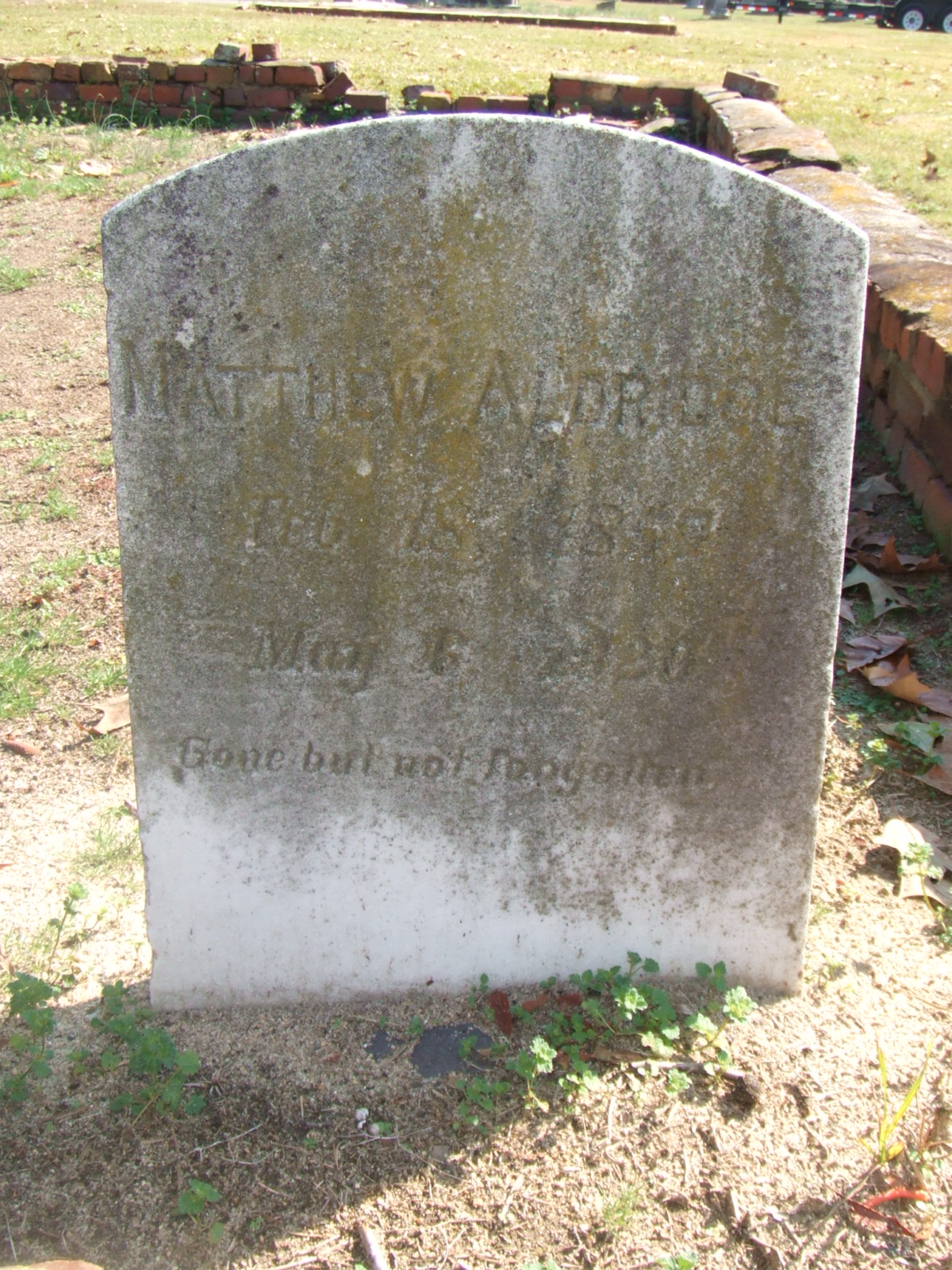
Family cemeteries, no. 1: Matthew Aldridge family.

A low brick wall, crumbling on its back edge, outlines the plot in Elmwood cemetery that holds the remains of Matthew W. Aldridge and his family. Elmwood, Goldsboro’s African-American cemetery, is easily overlooked by cars whizzing down US 117 Bypass South.  A tree-shrouded branch divides a newer section from an older one behind, and it is in the latter that the Aldridge graves can be found.

Image

Matthew W. Aldridge is here, and perhaps his wife, Fannie Kennedy Aldridge, though no stone for her is apparent. His marker is at the bottom right corner of the photo above.

Image

Few other graves in the enclosure are marked, though one memorializes one of the eight of Matthew and Fannie Aldridge’s children that died in childhood. Only three daughters — Daisy Aldridge Williams, Fannie Aldridge Randolph, and Mamie Aldridge Abrams Rochelle — reached adulthood.  Daisy, her husband Clarence and daughter Daszelle Williams are buried elsewhere in Elmwood.

Photos taken by Lisa Y. Henderson, March 2013. 

Standard