Migration, North Carolina, Oral History, Paternal Kin

The bread was all mashed up.

I won’t say this one of my grandmother’s favorite stories. It was too painful to be favored. But it was a story she told me over and over, without prompting and with little variation. It tears me up to read it even now, nearly a hundred years after the events it memorializes. I imagine that frightened little girl, a near orphan, left with this relative and that, yearning for comfort from a great-aunt who generally offered little in the way of emotion, but who, to provide, went North for short stretches for the extra money she could make doing “day’s work” for white families. Theodore and the bread and the doorbell. My heart breaks.

——

And I went over to stay until – Mama was working. And so Edward, that was – Edward or Theodore? Theodore. It was Carrie’s, Papa’s daughter Carrie, like Annie Bell’s sister Carrie. That’s where I was staying, over to her house. And Mama was working and staying on the lot with the people, and I was supposed to stay with them while I was up there. Until Mama, I reckon ‘cause she was gon be making a little money to buy something with, but I don’t know what she said she wanted. So by her being one place and I was in another. And then when her son, Theodore – we went to the store to get a loaf of bread, and I went with him, I wanted to go with him. And he took me on down to the store, got the bread, then he give me the bread to hold, and there was a place in the sidewalk of dirt, where wasn’t paved, and he stopped there with some children and started shooting marbles in little space, that little square. So I walked on down the street, and we wont too far from the house, but I kept looking and trying to figure out what house we were in. They were all joined together. And I had seen him go up there and put a hand upside the thing, and I said, ‘Must be a bell up there.’ And I went up there and mashed that button, and the door didn’t come open. And so then I went back down the street to where Theodore was, and he was still shooting marbles. And so, I said, “You better come on, I’m tired of holding this bread.” And so he said, “Okay, okay.” And so then he stopped, and we come on up there, and the door was cracked open. The door was cracked open. So when we got there, I said, “The door was open. And you didn’t even have to mash the button up there.” Mash the button where was to the apartment where you live in? And they would mash the button back to open the door. But the door was already open. But I had mashed it, see? I didn’t know. So when Theodore and I went back up there, and we went in, and I had the bread, and the bread was all mashed up where I had held it so tight holding it. And so she fussed him out and whipped him on top of that, and I went to crying ‘cause I thought she was gon whip me, too, ‘cause it was both of us. And so I said, “I want to go home. I want to go to where Mama is.” They said, “Well, she’ll be over tomorrow.” And I don’t know if it was tomorrow or the next day or two after, but anyhow Mama come and got me, and I told her that I wanted to come home. And she said, “Well, I thought you was doing all right. What’s the matter with you and Carrie?” And I said, “She beat Theodore.” And I said we were at the store getting a loaf of bread, and so we stayed too long. He was shooting marbles, and I was holding the bread, and I had mashed the bread up, and I thought she was gon whip me ’cause I forgot about the bread, and I couldn’t get in the house to bring it to her. And when I mashed the button, the door didn’t come open. So then when Theodore and I came back, went on up there, and honey, she took her husband’s belt, one of his belts he had, and she whipped him, and I was crying, and I’m still crying. I said, I reckon that’s where I started crying ’cause every time I see somebody else cry …. So I told them I wanted to go home, and she said, “Well, Mama’s coming over tomorrow.” And so I stopped crying, but I thought Carrie was gon whip me, just like she whipped Theodore, and I was the one that mashed the bread. But I didn’t tell it. But she said we stayed out too long. Bread’s all mashed up, said, “Should have come on home.” She was fussing with him, and then she took the strap and hit him two or three licks with that, and I thought she was ton hit me, too. And so Mama came and got me and took me back over Frances’ house. So then she said she was going back South. And I was just happy to go back there.

——

They said, well, [inaudible] get some bread, went to the store. I didn’t know where the store was, but I was just going with him to the store, you know? I got the bread, he give me the bread to hold, while he was shooting marbles in that little space was out there. And come on back, and I went way to the house and mashed the button ‘cause I’d seen him mash it. Didn’t want to ask nobody nothing. I said, I didn’t know them peoples up there. So the door didn’t open, and I went on back to find him and get him to come home. And I had held that bread so much and turned it from one end to the other under my arm holding it, and mashed the bread up. So Carrie looked at him: “Well, where y’all been so long?” And then she got that strap, ‘bout this long and ‘bout this wide. And she hit him a lick or two with that, and said, “I sent you out there after some bread, and you went off and stayed and stayed and stayed.” And so when she was hitting him, I went crying. So I thought she was gon beat me, too. But she didn’t. She didn’t even try to chastise me or talk nice to me or nothing. It was just simply ‘cause I’d done mashed that bread up – I had the bread when I went up there, see. She wont thinking ‘bout me. But I didn’t think that, nothing about it until it was later. I said, ‘No wonder she was gon beat me.’ ‘Cause I had done mashed that bread all up holding it up in my arms and changing it from one arm to the other, waiting on him shooting marbles. But I didn’t tell on him. But she knew he was shooting marbles.

——

... Mama took me to New York and everywhere she’d go. I stayed with Frances and her husband and son, when Mama went up there to work. And so I stayed with Carrie first. That was Albert Gay’s mama’s sister. She had one son, Edward. And she sent us to the store to get a loaf of bread. I’ll never forget it. And in the sidewalk, it was a block out the sidewalk where was closed up. And it just had dirt in it, and we went to get that loaf of bread. He handed me the loaf of bread, and when we got to that block it was boys shooting marbles in that little square where it was dirt. And so I got tired of standing there waiting on him. And I went on up to the house. And had seen them where they go up there and pushed the button. And the door didn’t come open then, and I went on back to where Ed was. And stood there waiting ’til he come to go in the house. And when we got to the house, the door was open. So when we got upstairs to the apartment floor, Carrie commenced fussing with him about ‘Who’s that coming in there playing with that bell?’ and opening the door, or something, I started to say it was me, and then I — she talked so hateful, and she beat Theodore, ’cause he got the bread all mashed up, with the belt. So I went to crying. I cried and I cried. I wanted to go home. I wanted to go where Mama was, but Mama wasn’t supposed to come over there ’til the next day or a day or two after that. I don’t know where she was working. Except that she was doing some day’s work. ‘Cause day’s work was plentiful then. People would clean up. So Mama wanted [inaudible] carried me with her and left Mamie there with Papa and knowing, too, Papa didn’t like Mamie. So, anyway, I cried so, and Mama took me over to Frances’ house. That’s where Mama come, after they took me over to Frances.’ I don’t think either one of ’em had no phone at that time and … but anyway, she come on over and got me, and I told her I didn’t want to stay there no more, I wanted to go home. I said I wanted to go where she was. She said, “Well, you can’t go right now,” said, “I got a job to do.” She said, “Well, I’ll take you over to Frances’. So that’s when she took me over to Frances’ house, and Edward.

——

“Mama” Sarah Henderson Jacobs (1874-1938) reared my grandmother and her sister Mamie, her great-niece. Sarah’s husband, “Papa,” was Jesse A. Jacobs Jr. (1856-1926). Annie Bell Jacobs Gay and Carrie Jacobs Blackwell (1890-1963) were Jesse’s daughters by his first wife, and Theodore Blackwell (1908-??), not Edward, was Carrie’s son.  At the time this story took place, the Blackwells were probably living at 37 West 112th Street in Harlem, just north of Central Park. In 1920, this was an all-African-American, fifteen-family building in a block otherwise occupied by Russian Jewish immigrants. Frances Aldridge Cooper Newsome was my grandmother’s paternal aunt, sister of her father Thomas Aldridge. Edward Cooper was Frances’ son.

Interviews of Hattie H. Ricks by Lisa Y. Henderson; all rights reserved.
Standard
Free People of Color, Migration, Newspaper Articles, North Carolina, Paternal Kin

Another Arkansas Artis.

Scrolling through old notes, I found two more Artises — Nathan and John — who migrated to Arkansas, probably in the 1880s.

Here’s what I know about them:

  • Nathan and John Artis were the sons of Charity Artis, daughter of Solomon Williams and Vicey Artis. I don’t know who their father was. They were first cousins of Gus Artis and Eliza Artis Everett and second cousins of Guy Lane Jr., all of whom headed west from Wayne County, North Carolina.
  • The 1870 census of Nahunta, Wayne County, shows Solaman Williams, 70 year-old farm laborer, with daughters Charity and Daliley and grandsons Anderson, Nathan, and John.
  • In the 1880 census of Pikeville, Wayne County, Nathan Artis is listed as a nephew in the household of farmer Jonoah Williams, farmer, his wife Pleasant, and children George, Cora, Clarissa, Willie and Vicey.
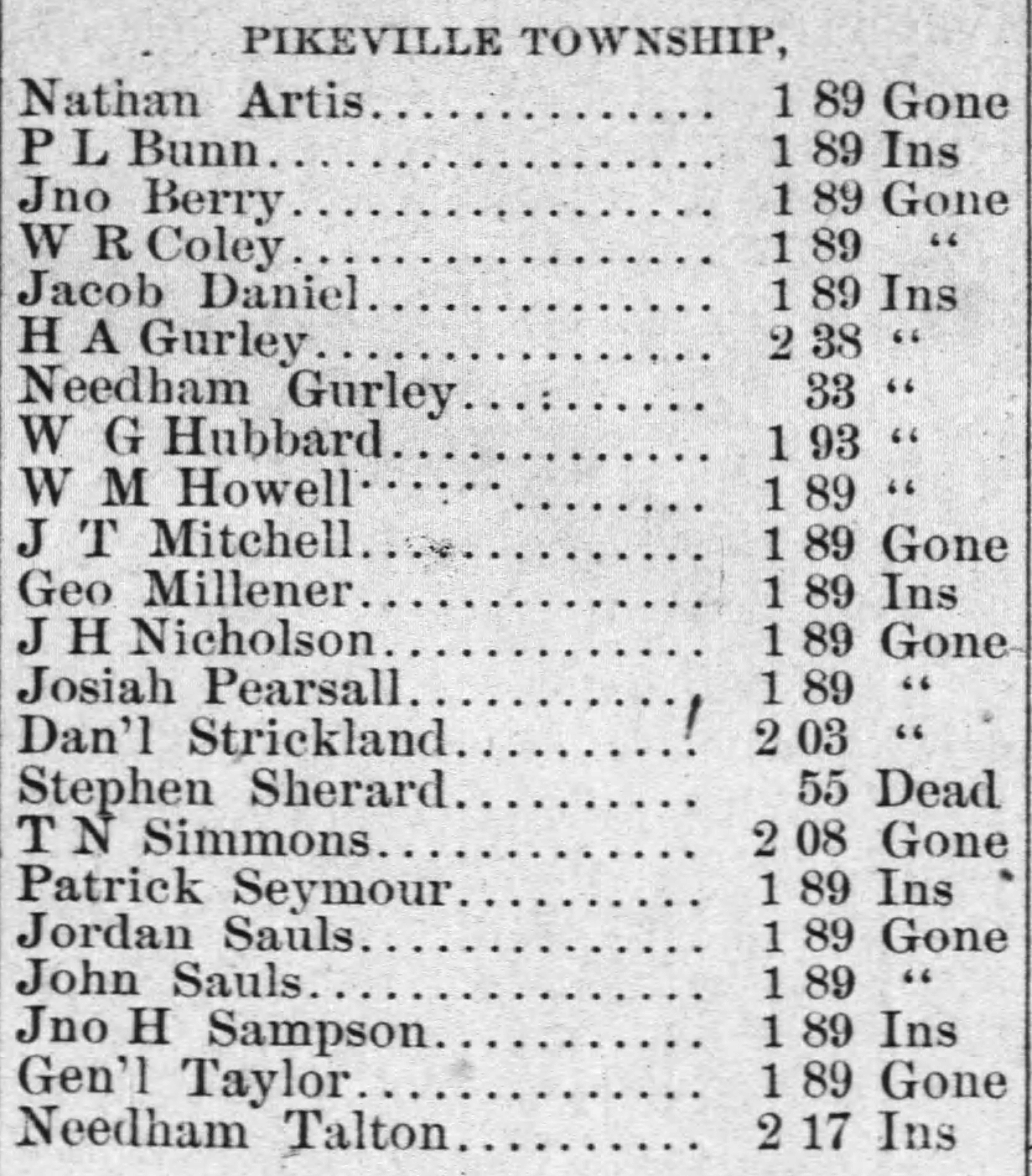
  • This is a notice of delinquent and insolvent taxpayers published in the Goldsboro Headlight on 28 September, 1893. Nathan Artis is GONE.

The_Goldsboro_Headlight_Thu__Sep_28__1893_

Goldsboro Headlight, 1893. 

  • In the 1900 census of Point, Woodruff County, Arkansas: Nathan Artist (born February 1852, NC, farmer), Nora (born Dec 1863), and children John F. (October 1877), Bicy Ann (December 1880), Nathan jr. (March 1883), Adalina (February 1885), James H. (October 1887), Lou (August 1890), Solomon (September 1891), and McKinley (November 1897); plus Nathan’s brother John Artis (May 1866, NC), nieces Parthena (December 1894) and Alsie (February 1899) and nephew John H. (February 1897).  Nathan’s last four children were born in Arkansas.  The nieces and nephews were born in Arkansas to a North Carolina-born father and Tennessee-born mother.
  • In the 1910 census of Point, Woodruff County, Nathan Artis (55, farmer, b. NC), wife Norah (50, b. NC), and children Solomon (16), McKenley (11), Markannon (11), Mittie Ann (8) and Anderson (6), all born in Arkansas.  Nora reported 10 of 15 children living. John Artis (47, born NC) appears in the same township with second wife Bettie (33, born Georgia) and children Parthenia (14), John Henry (12), Elsia Jane (11), Pinkie Ann (7), Josheway (5) and Daisy (3), plus Mary Artis (65), described as “mother.” [Who was this? A stepmother? Bettie’s mother?]
  • Nathan Artis died 3 August 1915 in Woodruff County, Arkansas, and was buried in Harris cemetery in that county. His headstone gives his birthdate as 23 January 1849.
  • Nathan’s five sons registered for the World War I draft: (1) Nathan Artis, born 12 March 1885; resided Brinkley, Monroe County, Arkansas; section laborer for St.L.S.W.Ry.; wife Mary Artis; tall, medium build, brown eyes, black hair; signed his name; registered 12 September 1918; (2) James Artis, born 14 November 1888 in “Goldsburg,” NC; resided Aubrey, Arkansas; farmer for self; supported wife and three children; medium height, slender, brown hair and eyes; registered 5 June 1917; (3) Mark Hanna Artis, born 6 November 1896; resided Audrey, Arkansas; employed by T.F. Turner; nearest relative, Nora Artis; medium height, slender, black hair and eyes; signed with X; registered 5 June 1918; Mark’s twin (4) McKinley Artis, born 6 November 1896; resided Audrey, Arkansas; employed by Angeline Steward; nearest relative, Frances Artis; tall, medium build, black hair and eyes; signed with X; registered 5 June 1918; and (5) Solomon Artis, born 16 November 1893; resided Aubrey, Arkansas; farmer for self; single; medium height and build, black hair and eyes; signed with X; registered 5 June 1917.
  • So did John’s oldest son John Henry Artist, born 8 April 1899; resided Gregory, Arkansas; farmer for John Artist; nearest relative, John Artist; tall, medium build, brown eyes, black hair; signed with X; registered 12 September 1918.
  • John Artis was alive as late as 1930, when he appears in the census of Mississippi County, Arkansas.
  • At least two of Nathan Artis’ sons migrated to the Memphis. McKinley, died there in 1925 of tuberculosis. His first cousin John Henry, who lived in Oakville, Shelby County, died three years later of the same disease brother. His brother “Jack,” however, lived into early middle age, dying in Memphis in 1939. The remainder of Nathan and John Artis’ children seem to have remained, at least till the eve of World War II, in eastern Arkansas.


Standard
Maternal Kin, Migration, North Carolina

William B. McNeely.

John Wilson McNeely‘s elder brother, William Bell McNeely, was born about 1804 in Rowan County. Their father was Samuel McNeely; their mother, Nancy Van Pool. The first known record of William’s life is John Van Pool‘s will, dated 13 October 1825 and probated in Rowan County at August term, 1827.  The document named John’s sons David, Jacob, and John Van Pool; his daughters Nancy [McNeely], Margaret [McNeely] and Maria Van Pool; son-in-law Samuel McNeely; grandson Elihu N. Pool; and granddaughters Eliza Pool and Margaret T. Pool. Samuel McNeely was named executor, and witnesses were John McNeely Sr. and Jr. and William B. McNeely. (“Senior” and “junior” did not necessarily mean father and son in that era. Rather, as “II” can today, a “junior” could simply be a younger relative with the same name. Margaret Van Pool married Samuel McNeely’s brother John McNeely, who was named after his father. However, John McNeely the elder died in 1801, so could not have been the Sr. here. If Samuel’s brother John himself had a son John, he would have been rather young to have been a legal witness in 1825. Long story short, I don’t know which John McNeely in the will is Margaret’s husband, or who the other one is. William B., of course, was Samuel’s son and may simply have been close at hand.)

Five years later, on 1 Aug 1832, William B. McNeely married Elizabeth McNeely in Rowan County. Undoubtedly cousins, their exact relationship is not known. Within just a few years, the family would leave North Carolina forever, headed west to Missouri to claim a land grant.

On 24 Jan 1837, William Bell McNeely of Cape Girardeau, Missouri, deposited a certificate with the registrar of the Jackson, Missouri, land grant office.  He registered a parcel described as the southwest quarter of the southeast quarter of section 25 in township 33, north, of Range 12, east and measuring 40 acres.

RHUSA2007B_MO0620-00086 copy

On 17 September, 1839, William B. McNeely married Elizabeth McPherson in Cape Girardeau County. William’s son Samuel was then about 4 years old, and it does not appear that William and his second wife had any children together.

On 10 Dec 1841, William McNeely made his final payment on the purchase of the parcel, which was located in Perry County, and took title. He had not finished moving though. In 1850, the censustaker of Saint Francois County, Missouri, counted among that county’s residents farmer William McNealy, 46, wife Elizabeth, 46, and Samuel E., 15. William claimed real estate valued at $300. Ten years later, after the formation of a new county, the family is listed in the Middlebrook postal district of Iron County: North Carolina-born farmer William B. McNeely, 56, wife Elizabeth, 56, and 7 year-old Catherine Green.  William claimed $2000 in real estate and $500 personal property.  Next door, son Samuel E. McNeely, 26, and his young family —  wife Emily, 20, and daughter Elizabeth, 5 mos. — appear.  Samuel reported $50 personal property.

William was too old to serve during the Civil War, and I have found no record that Samuel did either. William did, however, sign a loyalty oath in 1864.

In the 1870 census of Ironton, Iron County, Missouri, in Township 32, Range 3 East: Wm. B. McNeely, 66, farmer, appears with wife Elizabeth.  William claimed $2500 real estate; $200, personal property.

Meanwhile, back in North Carolina, William’s brother John W. McNeely edged toward death. John’s demise in mid-summer of 1871 makes clear the totality of William’s break with his home state. John’s administrator, Joshua Miller, initially named his heirs as his widow, “Acenith McNeely a sister reported to be in Missouri and a Brother name not known and residence not known.” A little information trickled in, and Miller’s next report  identified “Wm. B. McNeely, age 65, residing in Missouri Post Office unknown.” Though William had been in Iron County at least twenty years by then, Miller never found him (or Acenith), and the estate was settled without him.

Sometime between 1870 and 1880, William was again widowed. He appears in the census of Liberty, Iron County, in the household of his son, farmer S. McNeely, 45, with wife E., and children Ellen, Thomas, Owen, Margarett, Nancy, Charles, and George D. Samuel’s daughter Elizabeth — El. Huff — and her children William, 2, and Sam, 6 months, also lived in the house.

By 1900, Samuel McNeely was an elderly hired man living and working in Shoal Creek, Bond County, Illinois, some 125 miles northeast of Iron County. Samuel’s children, by this time, have moved west to Arizona and California. His father is not with him in Illinois and does not appear in the Missouri census. Most likely, he did not live to see the new century.

Standard
Migration, Newspaper Articles, North Carolina, Paternal Kin

That glorious climate of Arkansas.

Perhaps this sheds some light on Gus Artis and his sister Eliza Artis Everett‘s migration to Arkansas from North Carolina well after the Exoduster era:

Goldsboro_Headlight_11_6_1889_Arkansas_migrantsGoldsboro Headlight, 6 November 1889.

On 27 November 1889, the Wilson Mirror reprinted a Goldsboro Argus piece that described Williams and Herring as “railroad hirelings and speculators.” “However much the desire should be divided among our people — and by this we mean the white people — for the negro to exodus this country or remain, the solid, stubborn truth shall not be kept from the poor, deluded, half-informed negro, that this is his home, the climate of his nature; that our people are the most tolerant and generous in the world; and his best friends, and that, therefore, he should stay right here where his associations date back through the centuries; where his faults, and there are many (but who of us is without faults?) are borne with from custom; where his privileges as a free citizen are unquestioned and untrammeled, and where his destinies are linked by law with the whites, who, under a Democratic administration, have for twenty years paid 90 per cent. of his government and education, while he has furnished 90 per cent. of the crime and ignorance of the State.”

Best friends, indeed.

The 20 December 1889 issue of the Wilmington Messenger chimed in the mockery, noting that “Peg leg Williams and Silas Herring have not dissolved copartnership. Peg leg is now in [Goldsboro], and he and Silas are as active as bees in inducing the “coons” of this section to leave their homes of peace and plenty here, to go the far off miasmatic lands of the West, there to die like cattle with the black tongue.”

Robert “Peg-Leg” Williams is memorialized in 100 Americans Making Constitutional History: A Biographical History, edited by Melvin I. Urofsky. Described as the most famous and successful of Southern “emigrant agents, Mississippi-born Williams, a Civil War veteran, assisted 16,000 African-Americans in leaving North Carolina in the wake of discriminatory labor laws passed in 1889.

*Kizzy Herring Herring, who applied for her husband’s Civil War pension from Lonoke County, Arkansas, was another who left Wayne County for the West. So, I suspect was Guy Lane, Jr., son of Guy and Sylvania Artis Lane, who decamped from Wayne County to Memphis, Tennessee, sometime between 1880 and 1900. Did he just not quite make it to Arkansas? Or did he double back to the city after deciding that Arkansas did not suit?

Standard
Land, Migration, North Carolina, Other Documents, Paternal Kin

Artis in Arkansas, follow-up.

Shortly after posting on the migration to Arkansas of Gus Artis and Eliza Artis Everett, I contacted the Lonoke County Museum.  After a brief and helpful phone conversation with a staff member named Sheryll, I sent a letter (and a donation) requesting any information about my Artises.  (Put your money where your mouth is with these little grassroots organizations, folks.)

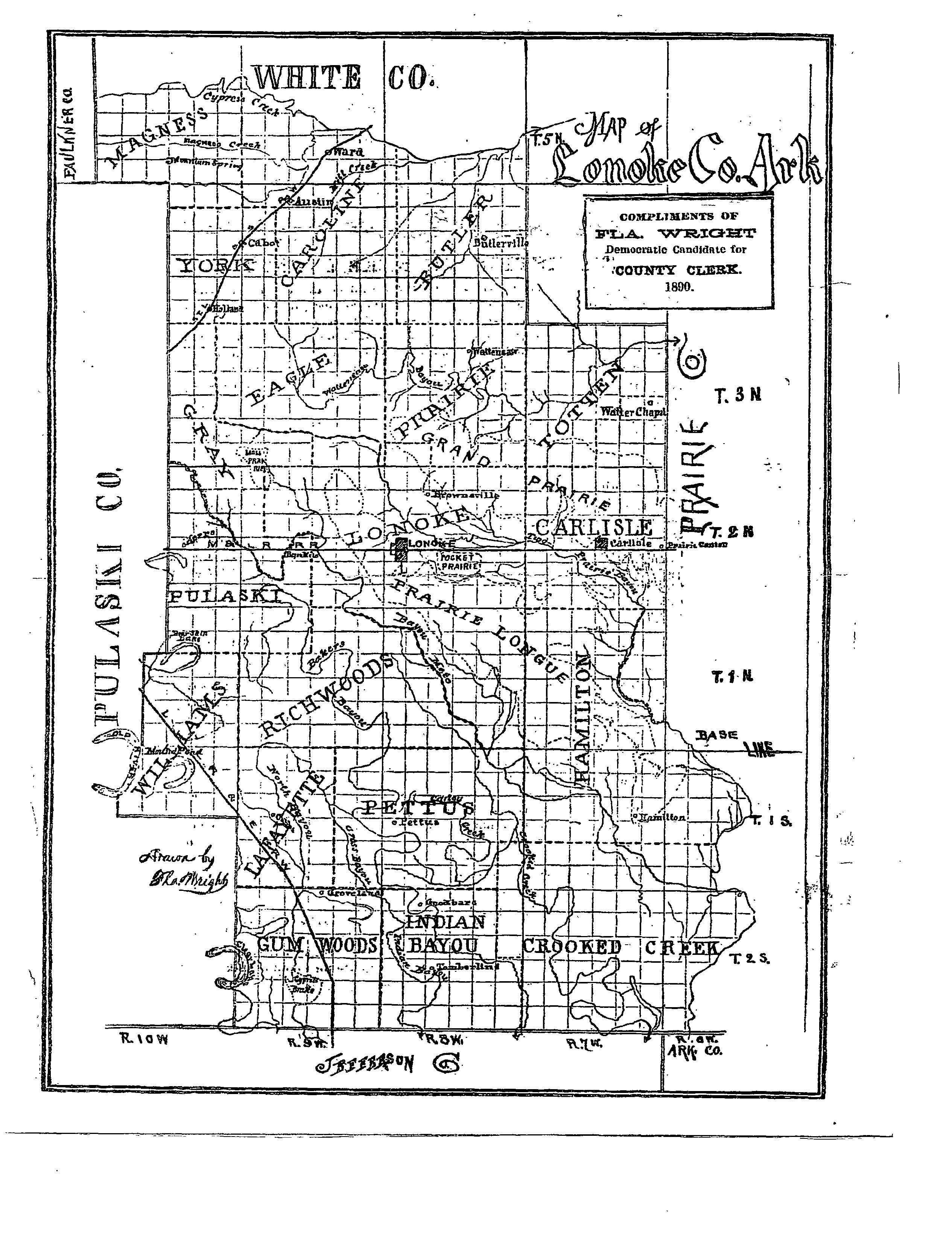
Yesterday, I received a slim packet in the mail, postmarked “Central Ar.” Inside, the fruits of Sheryll’s diligent search for my long-lost relations. Much of the information I already had, but two pieces were particularly helpful. First, an 1890 county map showing all the county’s townships. Williams, where Eliza and Haywood Everett lived, is a little bulge on the lower western flank of the county, sliced through by the now-defunct Little Rock & Eastern Railway. (U.S. 165 now tracks the line.) This corner of the county, pocked by horseshoe bends, lies within the rich alluvial plains of the Arkansas River.

Lonoke County Map

The second revelation came in a transcription of Lonoke County personal property tax registers. In my first blogpost, I wondered if Gus Artis had migrated to and settled temporarily in Lonoke County with the Everetts. The answer appears to be yes. Gus paid taxes on property in Williams township in 1890 and 1891. Haywood (Hayard, Hawood) Everett paid taxes in Williams in 1890 and 1891 and thereafter, as did his father Thomas Everett. With this information, my next step is to hunt down particulars of the land the Artises and Everetts were owned. 

Standard
Births Deaths Marriages, Free People of Color, Migration, North Carolina, Paternal Kin

Artis in Arkansas.

Surprisingly few of Adam Artis‘ 25+ children migrated out of North Carolina, perhaps because the family’s relative farming wealth and good standing in their community made life in North Carolina — even in the 19th century — attractive. Two who did strike out went West. Sort of. They went to Arkansas.

——

Augustus Kerney “Gus” Artis was born about 1857 to Adam and his wife Lucinda Jones. He was a mere toddler when his mother died, and he was reared primarily by Frances Seaberry Artis, whom Adam married in 1861. Gus inherited one-third of his mother’s share of the estate of her father Jacob Ing, a small nest egg that may nonetheless have represented the pinnacle of his wealth. In 1879, Gus married Rebecca Morgan in Wayne County. Though a 13 year-old girl is implausibly described as their daughter in the 1880 census, there is convincing evidence of a daughter Lena, born in 1882. What Gus did or where he was over the years after her birth is a mystery, for in 1893 he suddenly appears in the city directory of Little Rock, Arkansas, living at the corner of Allen and Elm in North Little Rock. (Which, by all accounts, was a swampy outpost known as Argenta at that time.) In 1898, Lena Artis married Charlie Hill in Pulaski County. By 1900, however, she was back in her parents’ house on Washington Avenue in North Little Rock.  Farm laborer Gustice Artis and wife Mary R. (presumably Rebecca), married 19 years, are listed with Lena, 18, born in North Carolina, and Mary, 13, an adopted daughter born in Arkansas. By 1910, both daughters had left the household, though Mary reported them living. Augustus, then in his early 50s, worked as a laborer in a greenhouse. Lena, described as a widow, was living and working as a “dining room girl” in a Scott Street boarding house. I’ve found none of the Artises in the 1920 census, though Gus and Mary were still alive. Gus didn’t last much longer though. He died of heart disease 2 June 1921 in Brandie township, Pulaski County, and was buried in the “fraternal cemetery.” His death certificate lists his final occupation as “scavenger.”

——

Twenty-five miles east of North Little Rock, Gus’ younger sister Eliza Artis Everett also built a life far from her home. She was the twin of my great-great-grandmother Louvicey Artis Aldridge; the girls were born in 1865 to Adam Artis and his second wife Frances. I have not found their marriage license, but around 1890, Eliza married Haywood Everett. By 1900, they had migrated to Williams township, Lonoke County, Arkansas, and joined a veritable colony of Wayne County migrants, including Haywood’s elderly parents. Families listed near them in the census carried such familiar surnames as Barnes, Best and Coley. In 1910, the Everetts appear in the Richwoods section of the county. In 1920 and 1930, they are in Walls township. They never had children. On 10 October, 1936, Eliza Everett died of pancreatic cancer. Her husband remarried before she was cold in her grave.

——

Did Gus and Mary Rebecca Artis and Haywood and Eliza Everett migrate together in the late 1880s/early 1890s? Why Arkansas? Did Gus and family originally settle among other Wayne County families in Williams township, Lonoke County, before moving closer to Little Rock? And then there’s this — the Lonoke County Race War of 1897-1898?!?!

Standard
Maternal Kin, Migration, North Carolina, Oral History

Finally they just trickled on.

Me: When did your aunts and uncles that moved to Ohio — when did they move?  And who was the first one to go.  Why did they pick Ohio?

My grandmother: Well, Mama had a sister named Janie, and she had three children by this man.  And he didn’t even –

Me [unfortunately, interrupting *sigh*]: That was J.T. and Charles and —

My grandmother: No, no, no, no, no.  That was –

Me:  Oh, Willa and them.  Okay.  Yeah. 

My grandmother:  Mm-hmm.  And he went to Columbus, Ohio, and he would want them to come, but they didn’t ever go.  So finally my Aunt Min and my cousin moved to Ohio — Columbus.  And my Aunt Dot and her family just trickled on.

Me:  Okay. So Aunt Min and who? 

My grandmother:  Ardeanur. 

Me:  Ardeanur.  Okay.

My grandmother:  Ardeanur. And she had a brother named James. And their mother died when they were little children, and Min reared them. Reared the children. So anyway after they went to Ohio, after she went, after Aunt Dot went to Ohio, I think.  Ardeanur and Aunt Min lived in Jersey City. But they moved out there.

Me:  Okay. So that’s how everybody wound up in Columbus.

My grandmother:  Columbus, Ohio.

——

Janie C. “Dot” McNeely, born 1894, was the youngest of the McNeely sisters. I’m not sure who the man who moved to Ohio is, but he probably was James M. Taylor, whom she married in 1923 shortly before their son Carl was born. (They’d had a daughter, Willa Louise, in 1918 and had a second son in 1925. Janie and her children (including older daughters Sarah and Frances) appear in Statesville in the 1930 census without James Taylor.

It’s still not clear to me when the McNeelys moved to Ohio. My grandmother’s statements about who went first seem to conflict, but I am fairly certain that she meant to say that Janie and her children were there before Minnie and Ardeanur. Minnie and Ardeanur were in Bayonne, New Jersey, before 1930, when Janie was still in Statesville.  However, because all of them — wherever they were — seem to have been omitted from the 1940 census, it’s difficult to guess when the move to Ohio took place.

Unfortunately, the Ohio branch of the McNeelys is now largely unknown to my family. Janie’s daughter Willa may still be living, but last we heard was fighting Alzheimer’s. Few of Janie’s children had children, maybe only one, and links to them have been lost.
Standard
Births Deaths Marriages, Maternal Kin, Migration, Newspaper Articles, North Carolina, Photographs

Sarah McNeely Green.

Image

There were three uncles, and some male cousins, but the McNeelys were basically a family of women.  My grandmother was the middle daughter of her mother’s three and grew up among six aunts who had many girls.

Janie McNeely, called “Dot,” was the youngest of Henry and Martha McNeely’s daughters.  Born in 1894, she worked as a laundress and reared her children in Statesville’s Rabbit Town section before migrating to Columbus, Ohio, in the 1940s.  Janie’s oldest child was Sarah Mae McNeely, born in 1911. She was followed by Frances V. McNeely (1913), Willa Louise McNeely (1918), Carl Graham Taylor (1923) and William Maurice McNeely (1925).

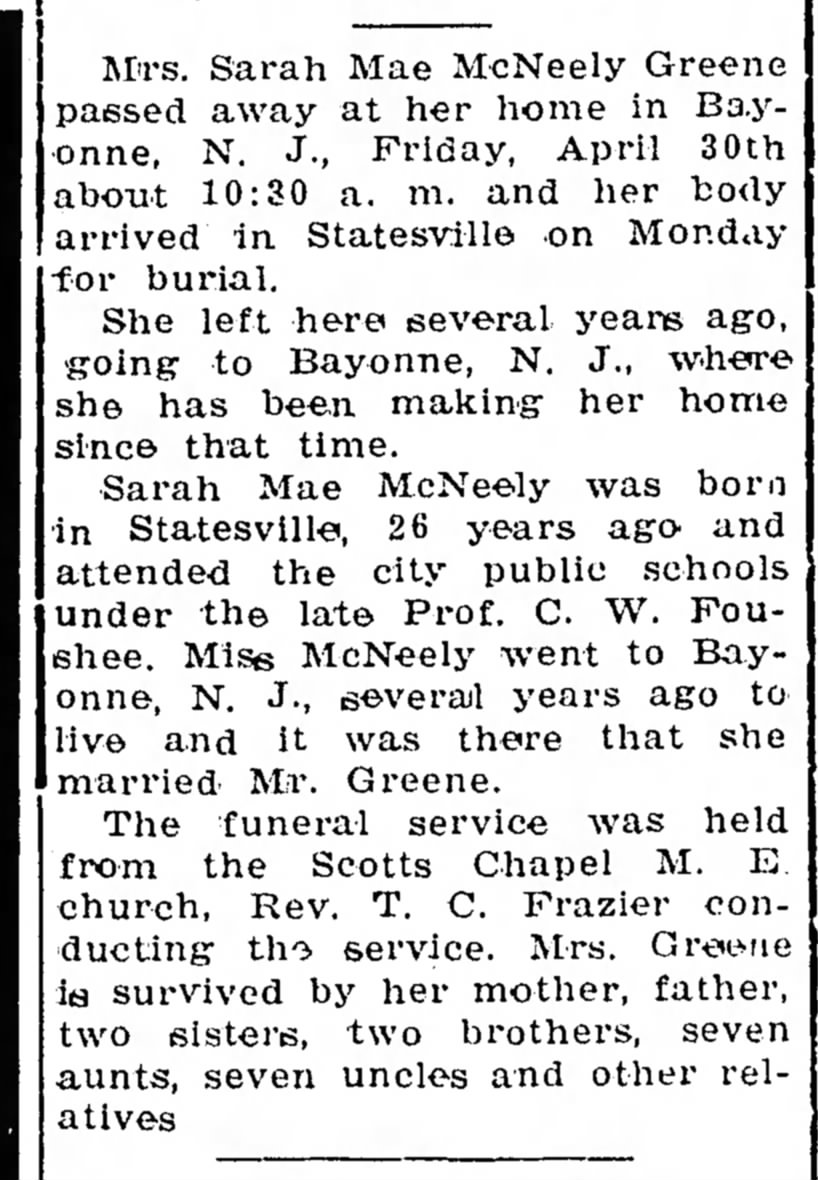
Sarah worked with her mother and sister at Statesville Laundry in the early 1930s. Soon after, she joined her grandmother, uncle John, aunt Emma and cousins in Bayonne, New Jersey, where she married a Mr. Green. (No one, including her obituary writer, seems to know his first name.)

Image

Statesville Landmark, 3 May 1937.

A few days later, in the Statesville Record‘s “News of Our Colored People”:

Image Statesville Record, 7 May 1937.

[Was Sarah survived by Mr. Green or not? Who was her father? And who were the extra aunt and all those uncles?]

Image

Photographs in the collection of Lisa Y. Henderson.

Standard
Births Deaths Marriages, Migration, Newspaper Articles, Paternal Kin

Anna’s children succumb.

Image

Kokomo Tribune, 13 April 1936.ImageKokomo Tribune, 13 September 1937. 

Image

Kokomo Tribune, 7 August 1942.

Edward Simmons, Susan Simmons Bassett and Muncie Simmons Bassett Palmer were children of Montreville and Anna J. Henderson Simmons.  Susan’s age was seriously overstated. (She was about 60.)  And Muncie’s obit completely elides the years the family spent in Ontario.

[By the way, Second Missionary Baptist Church in Kokomo remains active.]

Standard
Births Deaths Marriages, Maternal Kin, Migration, Newspaper Articles, North Carolina, Oral History, Photographs

Finding J.T.

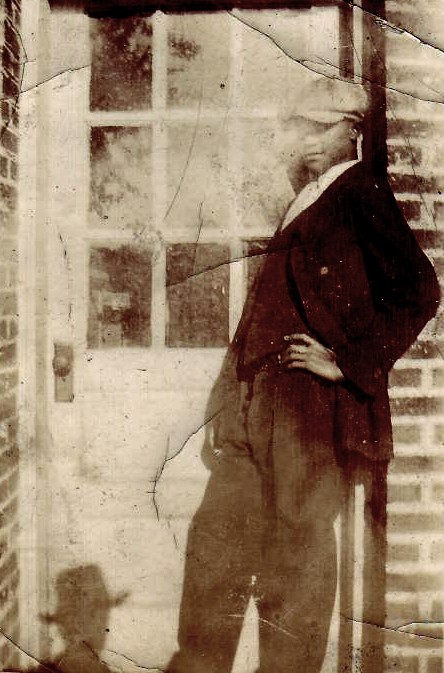
My grandmother’s favorite cousin was her Aunt Lethea’s son, “Jay” or “J.T.”:

My grandmother:  I had a cousin named Jay.  Aunt Lethea’s son.  She died and left three sons.  James –

Me:  Charles.

My grandmother:  Charles.  And Jay.

Me:  Okay.  J.T.

My grandmother:  Mm-hmm.  And Jay stayed with Aunt Min ‘cause Aunt Min reared him after Aunt Lethea died.  And he was at this same house with Aunt Minnie and Grandma.  Let’s see.  It was Aunt Min and Grandma and Uncle Luther and Jay and I.  We were all in the same house during the summer that I worked up there.  And Jay and I used to have a good time.  Oh, he was so nice.  He would, the first time I rode on a rollercoaster, he took me.  And we used to have a good time.  He was really nice.  He was a nice person.

McNEELY -- Jay McNeely in doorway

Jay had two brothers, William and Charles. In the 1910 census of Statesville, Iredell County, I found three boys, William, 5, James, 3, and Charlie McNeeley, 2, living in the household of Sam and Mary Steelman and described as their grandsons. I identified these children, correctly I believe, as Elethea McNeely‘s children.  I also guessed that Charlie Steelman, listed in the household, was their father.  If he was, he and Lethea never married. Instead, in 1920, she wed Archie Weaver, a man my grandmother spoke of with vitriol.

My grandmother: Jay’s daddy had TB, and he just gave it to them.  And his mother and Jay.  But he lived years and years and years after both of them died.

Me: The father did?  

My grandmother: [Inaudible] give them all this stuff.  Oh, I could not stand him. She was my special aunt because she had boys, and she didn’t have any girls.  And she just took me over her house, you know, and let me do things that girls did, you know. 

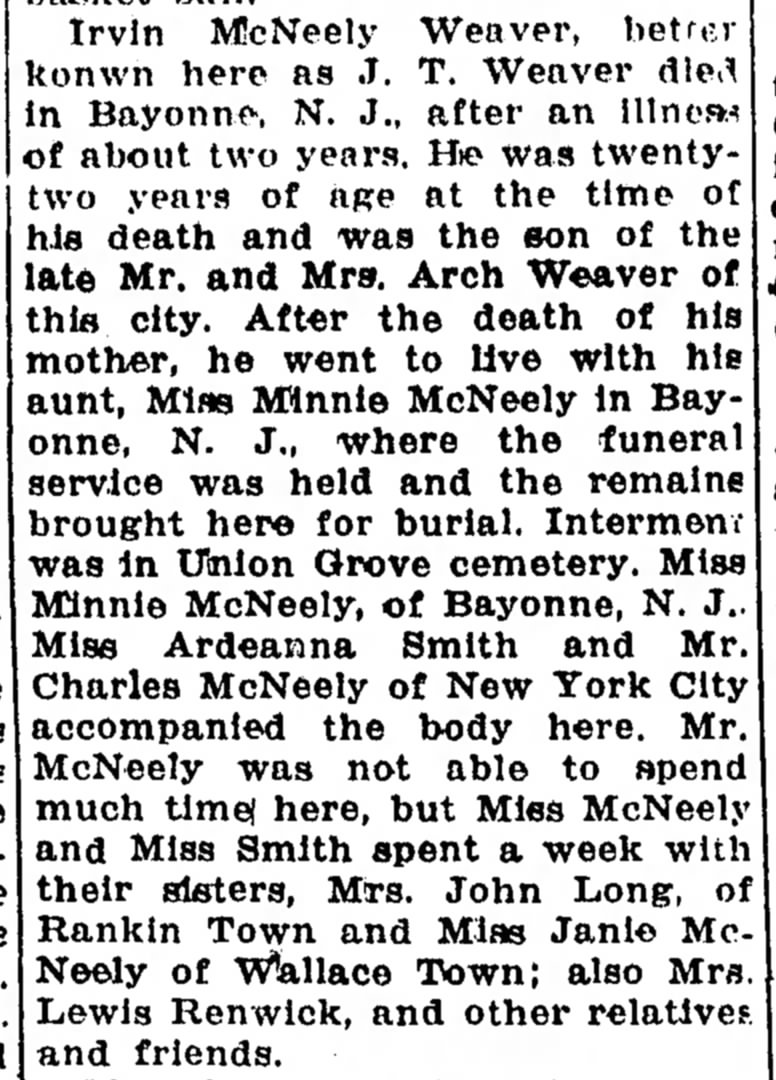
I was unable to find James McNeely, whom I believed to be “Jay,” in any other record. I knew Jay was reared by his aunt, Minnie McNeely, and died young of the same dread illness that killed his mother, but I was never able to find a trace of him. That changed last night, when I stumbled upon his death announcement in the 15 December 1933 issue of the Statesville Record & Landmark:

Image

As Grandma Carrie so memorably said, “Well, I’ll be damn.”  Here was J.T., as last. Not James McNeely — much younger, in fact — but Irvin McNeely Weaver. (The same “mysterious” Irving McNeely listed in the 1930 census in Martha McNeely‘s Bayonne household. He was described as her nephew, rather than her grandson, and I jotted in my notes: “Who is this???”) My grandmother was married and living in Newport News, Virginia, at the time of his death, and is not among his named survivors. Ardeanur Smith was his cousin, not his aunt, and Charles McNeely was his brother. Mrs. John Long was his aunt Lizzie McNeely Long, and Mrs. Lewis Renwick was his cousin Louise Colvert Renwick.

McNEELY -- McNeely Cousins

The first photo is Jay as a boy, perhaps around the time he moved to Bayonne. The second, taken in Bayonne circa 1928, shows Jay with his first cousins Ardeanur Smith, Margaret Colvert and Wardenur Houser, and an unknown girl seated in front. The last is Jay, alone, perhaps not long before he died.

McNEELY -- Jay McNeely near pole

——

This is just one of many, many times that I’ve found something that one or the other of my grandmothers would have been “tickled” to see. They both lived good, long lives — to 90 and 101 — but I would have kept them with me always if I could.

Interview of Margaret C. Allen by Lisa Y. Henderson; all rights reserved. Photos in the collection of Lisa Y. Henderson.

Standard