Births Deaths Marriages, Maternal Kin, Oral History, Photographs, Virginia

Mary Agnes Holmes Allen.

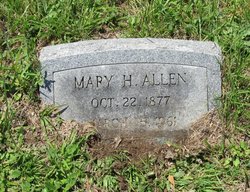
Her headstone is wrong. Mary Agnes Holmes was born October 15, 1877 — not October 22 — on the R.L. Adams’ plantation in Charles City County, Virginia. Her parents were tenant farmers there, and Agnes was one of a handful of Jasper and Matilda Holmes‘ children to survive to adulthood.

Agnes’ mother died when she was about 8 years old, and her father apparently did not remarry. Jasper Holmes was an ambitious man and managed to purchase several small plots of farmland upon which he supported his family in a degree of comfort. The Holmeses may have attended New Vine Baptist Church and, if so, that is likely where Agnes met John C. Allen.

There is an ugly story told about their marriage: John had quickly established himself as an eligible bachelor in Newport News’ East End, and his appeal was heightened — in the standards of the day — by his light skin and wavy hair. When he brought his new bride home shortly after Christmas 1900, his neighbors, peeking through curtains, were shocked to see a plain, broad-featured, brown-skinned woman step from the carriage. (Agnes herself was not immune to such prejudices, and her color-struck notions would reverberate among her offspring.)

Image

During the early years of her marriage, Agnes did “day’s work” as a housemaid. I did not know this. I had assumed that she was always a housewife, which is a reflection of my failure to understand just how my great-grandparents were able to achieve the middle-class respectability that marked their lives by the middle of the 20th century. (Not to mention how they maintained their dignity on the climb.)

Me:  Now, his mama didn’t ever work, did she?

My grandmother:  Who?  Indeed, she did work.

Me:  Like, outside the home?

My grandmother:  Yeah, during the late years, she didn’t, but she worked outside the home ‘cause she told me one time she walked across the bridge, ‘cross 25th Street bridge, and said it was snowing and ice, and the ice froze on the front of her coat.  And I never shall forget, she worked for a lady, and this lady had a small child.  And she asked her would she wash the child’s sweaters.  Sweaters that the baby had.  And she took and said, “Asking me to do all kinds of extra work like that,” and said, “You know what I did?”  Said, “I washed the sweater in hot water, and then I put it in cold water.  When I got through with it, it was ‘bout big as my fist.”  I said, “How can [whispering, inaudible.]”  And she knew it –

Cousin N: Was gon shrink up.

My grandmother:  And I said, “Oh, my God, that is awful!”  And it was.  Anyway, she told me that.  She said, “I washed it all right for her, and I put it in hot water, as hot as I could find, and then put it in cold water.  When I got through with it, couldn’t nothing wear it.”

By the time my mother and her siblings were children, Mary Agnes Allen had assumed the domestic role I’d always imagined her in — at home on Marshall Avenue, among Tiffany lamps and lace antimacassars, preparing roast beef to serve on Blue Willow china to a husband just home from this board meeting or that union affair. Her grandchildren speak of her ambivalently, aware of the casually cruel distinctions she drew among them, but unable to name any particular misdeed.

Me:  Well, was Mary Agnes mean to y’all or what?

My mother:  She was not to me, that I remember.  I don’t know what this was about.  Ahh … maybe it was that she was not friendly.  Maybe she wont like Grandma Carrie, joking and saying little funny stuff.  I don’t know.  I don’t know what it was.

Her grandchildren — at least, her son John’s offspring — felt that lack of warmth acutely. Though their 35th Street home was only a mile away from hers, Mary Agnes Allen does not feature much in the stories of their childhood. (Nor, frankly, does John Allen Sr.)  In her later years, she left Newport News to live with her daughter Edith Allen Anderson in Jetersville, Amelia County, Virginia. The photo below, I’m guessing, was taken shortly before her move. And seems to reveal a softer side.

Image

Mary Agnes Holmes Allen died March 15, 1961, just two months before my mother married in the sideyard at Marshall Avenue.  A brief obituary ran in the Daily Press on the 17th, noting that she was a member of Armenia Tent No. 104 and the Court of Calanthe. She was survived by three daughters, a son, a “foster son” (actually, her nephew), a sister, and, most curiously, “12 grandchildren and 10 great-grandchildren.” In fact, she had ten grands and no more than three great-grands.

Image

Interviews by Lisa Y. Henderson, all rights reserved.  Photographs in collection of Lisa Y. Henderson.

Standard
Births Deaths Marriages, Maternal Kin, Newspaper Articles, North Carolina, Oral History

Aunt Bert, as reported.

So, the conversation started with talk of Bill Bailey’s barbecue joint. Which was also a dance hall.  Which, though it was right up the road, was, as my grandmother put it, “strictly off-limits” to her and her sisters. “We couldn’t stand him,” she said, because “he did everything illegal and got away with it.” He had a great big stomach and was “trashy,” but his steaks pulled the best of Iredell County’s partying white folks.  And he was married to my grandmother’s Aunt Bert.

Me:  Now, she wound up … She shot somebody, or something, didn’t she?

My grandmother:  Yeah, she shot somebody.  She shot a white man.

My mother’s first cousin, N.:  What he do?  Slap her?  What did he do?  He did something to her.

My grandmother:  I don’t know what he did to her.  But maybe … seems like to me he kicked her.

N:  And she shot him.

My grandmother:  And she shot him.

N.: They had to take his leg off.

[Pause.]

Me:  Oh.  Well, good for Bert.

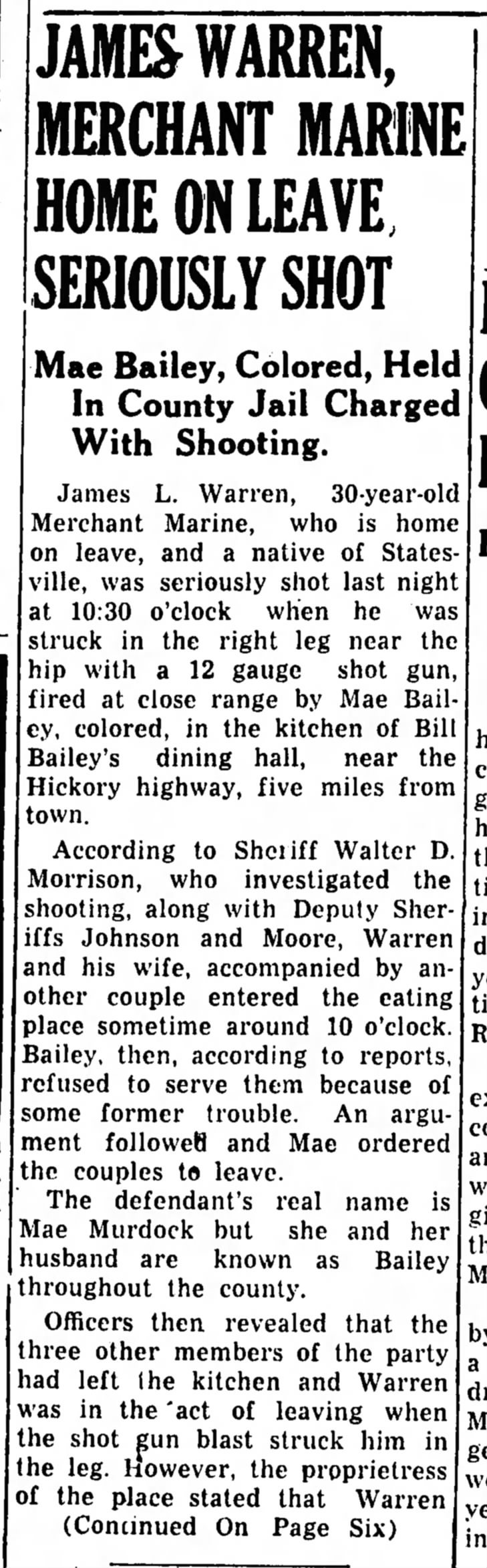
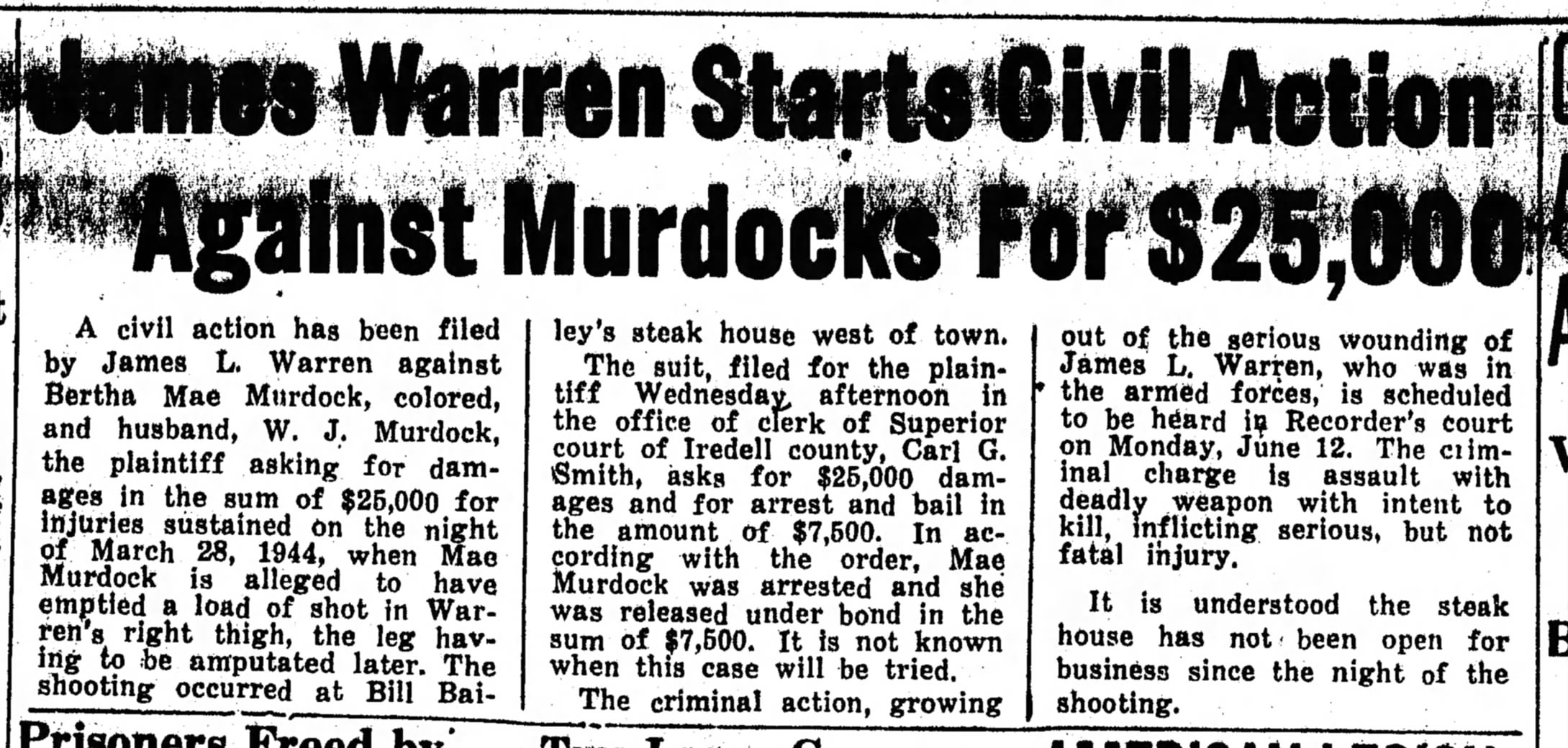
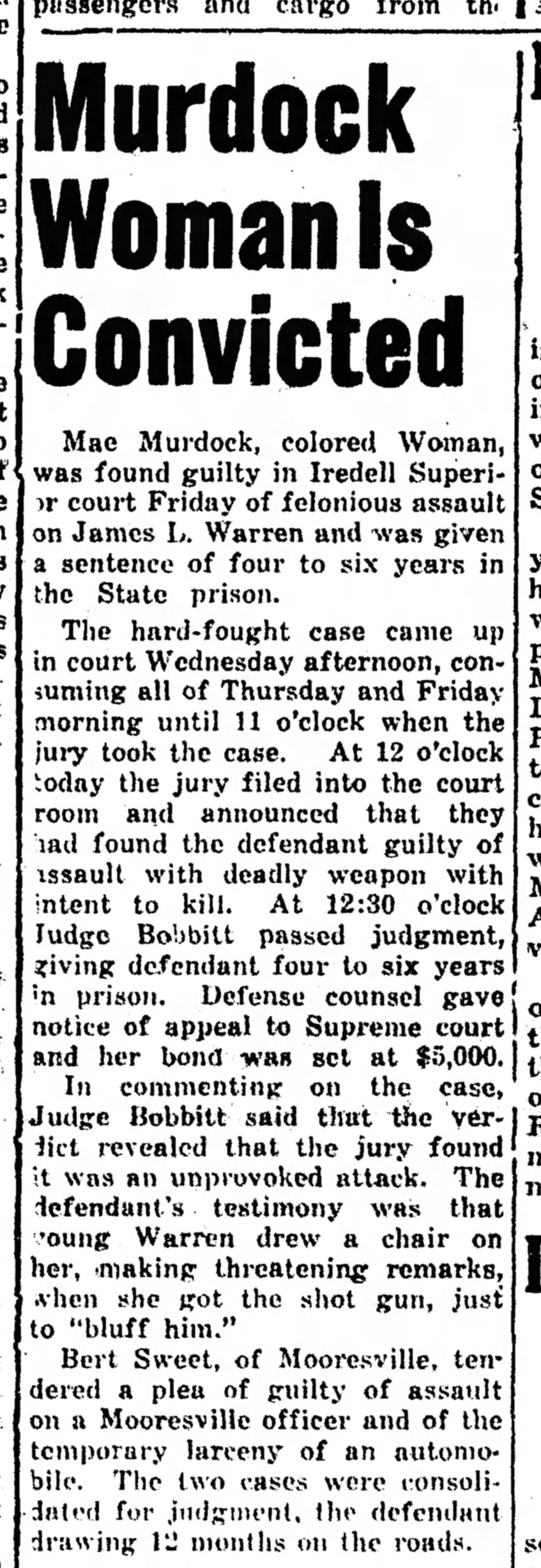
When I wrote about this before, I was looking for newspaper coverage of the incident, thinking that a black woman shooting a white man in North Carolina in 1944 had to have galvanized the public. Well, sure enough, the Statesville Record & Landmark covered every step of ensuing criminal trial, though in a considerably less salacious manner than I might have expected.  The headlines pretty much tell the tale:

James Warren, Merchant Marine Home on Leave, Seriously Shot. Mae Bailey, Colored, Held in County Jail Charged with Shooting. 29 March.

Warren Shot 3 29 44Warren shot contd

Warren Holding Own, But Will Not Be Out of Danger For Week.  30 March.

James Warren’s Leg Amputated.  3 April.

James L. Warren Is Better But Not Yet Out of Danger.  6 Apr.

Mae Bailey Freed from Jail Today, Hearing May 8th.  11 April.

May Postpone Murdock Trial.  29 April.

Warren Removed to the Naval Hospital at Portsmouth, Va.  1 May.

M. Murdock Trial Postponed Until Monday, June 12.  8 May.

James Warren Starts Civil Action Against Murdocks for $25,000.  11 May.

Murdock Civil Action 11 May 44 R and L

Mae Murdock Case Continued to August.  25 May.

Judge Bobbitt to Superior Court Preside August, Case of Mae (Bailey) Murdock Will Not Be Tried At This Term.  29 July 1944.

Murdock Trial Definitely Set For November 6, Warren is Able to Leave Hospital.  6 September.

Prosecuting Witness May Not Visit Scene of Shooting. 9 October.

Mae Murdock is Bound to Court Under $5000 Bond. 16 October.

Case Hinges on Warren’s Action Before Shooting, Testimony Rapidly Nearing Completion.  9 November.

Murdock Woman is Convicted. 13 November.

Conviction 13 Nov 1944

Murdock Case to Go to State Supreme Court.  14 November.

$25,000 Law Suit Against Murdock Woman Continued.  14 November.

Aunt Bert served her time at the state women’s prison in Raleigh and returned to Statesville after to pass her few remaining years.  She had  possessed considerable wealth after her father’s death in 1929, but lost much of it while she was away. My family maintains that William “Bill Bailey” Murdock had entrusted whites to help hide his shady assets, and they betrayed him after Bert shot one of their own.

Bert died in 1955. The Landmark ran her death notice without comment or reference to the incident for which she had been infamous just ten years earlier.

Bert Murdock Obit 26 May 1955 Record and Landmark


Interview of Margaret C. Allen by Lisa Y. Henderson; all rights reserved.


Standard
Births Deaths Marriages, Maternal Kin, Migration, Newspaper Articles, North Carolina, Oral History, Photographs

Finding J.T.

My grandmother’s favorite cousin was her Aunt Lethea’s son, “Jay” or “J.T.”:

My grandmother:  I had a cousin named Jay.  Aunt Lethea’s son.  She died and left three sons.  James –

Me:  Charles.

My grandmother:  Charles.  And Jay.

Me:  Okay.  J.T.

My grandmother:  Mm-hmm.  And Jay stayed with Aunt Min ‘cause Aunt Min reared him after Aunt Lethea died.  And he was at this same house with Aunt Minnie and Grandma.  Let’s see.  It was Aunt Min and Grandma and Uncle Luther and Jay and I.  We were all in the same house during the summer that I worked up there.  And Jay and I used to have a good time.  Oh, he was so nice.  He would, the first time I rode on a rollercoaster, he took me.  And we used to have a good time.  He was really nice.  He was a nice person.

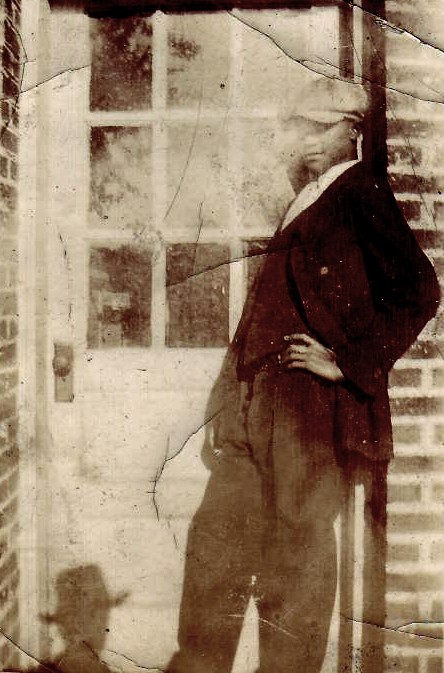
McNEELY -- Jay McNeely in doorway

Jay had two brothers, William and Charles. In the 1910 census of Statesville, Iredell County, I found three boys, William, 5, James, 3, and Charlie McNeeley, 2, living in the household of Sam and Mary Steelman and described as their grandsons. I identified these children, correctly I believe, as Elethea McNeely‘s children.  I also guessed that Charlie Steelman, listed in the household, was their father.  If he was, he and Lethea never married. Instead, in 1920, she wed Archie Weaver, a man my grandmother spoke of with vitriol.

My grandmother: Jay’s daddy had TB, and he just gave it to them.  And his mother and Jay.  But he lived years and years and years after both of them died.

Me: The father did?  

My grandmother: [Inaudible] give them all this stuff.  Oh, I could not stand him. She was my special aunt because she had boys, and she didn’t have any girls.  And she just took me over her house, you know, and let me do things that girls did, you know. 

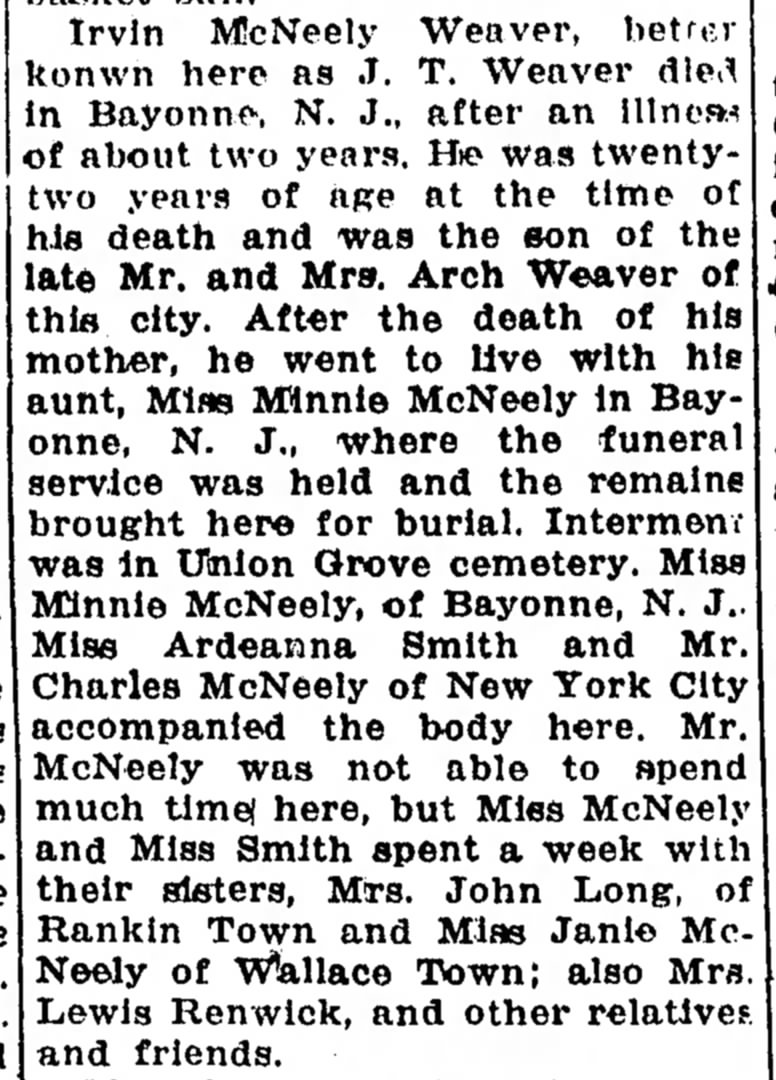
I was unable to find James McNeely, whom I believed to be “Jay,” in any other record. I knew Jay was reared by his aunt, Minnie McNeely, and died young of the same dread illness that killed his mother, but I was never able to find a trace of him. That changed last night, when I stumbled upon his death announcement in the 15 December 1933 issue of the Statesville Record & Landmark:

Image

As Grandma Carrie so memorably said, “Well, I’ll be damn.”  Here was J.T., as last. Not James McNeely — much younger, in fact — but Irvin McNeely Weaver. (The same “mysterious” Irving McNeely listed in the 1930 census in Martha McNeely‘s Bayonne household. He was described as her nephew, rather than her grandson, and I jotted in my notes: “Who is this???”) My grandmother was married and living in Newport News, Virginia, at the time of his death, and is not among his named survivors. Ardeanur Smith was his cousin, not his aunt, and Charles McNeely was his brother. Mrs. John Long was his aunt Lizzie McNeely Long, and Mrs. Lewis Renwick was his cousin Louise Colvert Renwick.

McNEELY -- McNeely Cousins

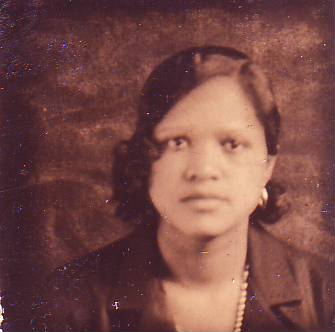
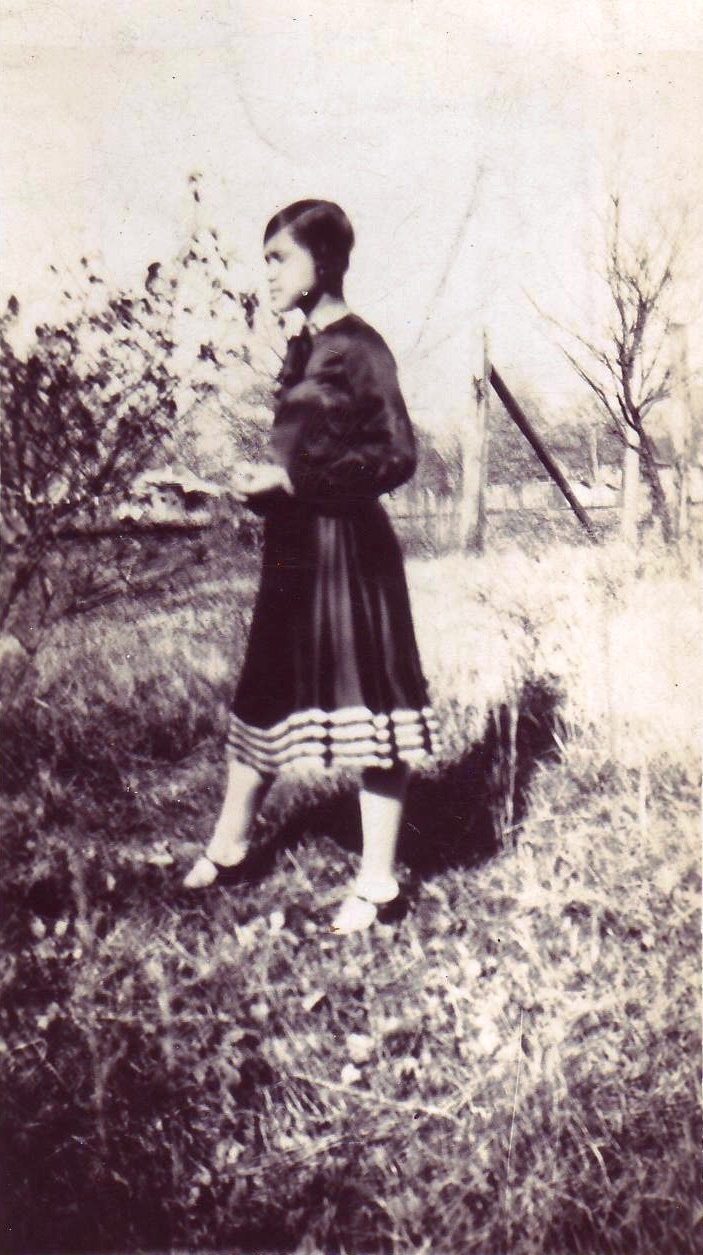
The first photo is Jay as a boy, perhaps around the time he moved to Bayonne. The second, taken in Bayonne circa 1928, shows Jay with his first cousins Ardeanur Smith, Margaret Colvert and Wardenur Houser, and an unknown girl seated in front. The last is Jay, alone, perhaps not long before he died.

McNEELY -- Jay McNeely near pole

——

This is just one of many, many times that I’ve found something that one or the other of my grandmothers would have been “tickled” to see. They both lived good, long lives — to 90 and 101 — but I would have kept them with me always if I could.

Interview of Margaret C. Allen by Lisa Y. Henderson; all rights reserved. Photos in the collection of Lisa Y. Henderson.

Standard
Births Deaths Marriages, Maternal Kin, Newspaper Articles, North Carolina, Oral History, Photographs

She was smart, and she was musical.

Image

FINALS AT COLORED SCHOOL.

Statesville Colored Graded School Closed Tuesday Night with a Very Creditable Performance.

The closing exercises of the Statesville graded school were held Tuesday night in the new building. Before the exercises began at 8.30, a representative of this paper had the pleasure of looking thru the building and inspecting the most creditable exhibits of the work accomplished by the pupils of the second, third, fourth, fifth, sixth and seventh grades. The exhibit showed surprising skill in drawing, sewing, fancy needle work and other forms of handiwork.

When the exercises began, the auditorium and two adjoining school rooms were filled, and the good order maintained was a noticeable feature.  The opening chorus and duet by members of the graduating class were much appreciated by the audience.

“Resolved: That girls are more expensive to raise than boys,” was the subject of the debate discussed in an interesting manner by Eugene Harris and Harry Chambers, on the affirmative, and Guy B.Golden and Jettie M. Davidson, on the negative.

GRADUATING EXERCISES.

Class History.      Buster B. Leach

Class Prophecy.   Annie B. Headen

Class Poem.      Willie D. Spann

Solo — ‘Be Still, O Heart.’   Thomas R. Hampton

Class Will.   Maurie Dobbins

Valedictory.    Louise Colvert

Class Song – ‘Fealty’

CLASS ROLL.

Mary Louise Colvert, Maurie Catherine Dobbins, Lillian Gennetta Moore, Willie DeEtte Spann, Buster Brown Leach, Annie Bell Headen, Thomas Richard Hampton, Eloise Earnestine Bailey.  

Class Motto – We Learn Not for School, But for Life.

The colored people of Statesville take great pride in their school.  They have a modern school building, steam heated and supplied with the latest equipment, something which very few towns and cities of the State have provided for its colored population.  C.W. Foushee, the principal, has proven himself to be a good school man.  He is assisted by eight teachers.

— Statesville The Landmark, 7 June 1923.

Image

Louise went up to New Jersey and finished high school.  They didn’t have a black high school in Statesville.  They just had tenth grade.  And she went to Jersey and finished high school in Jersey and then took a course in teacher’s education somewhere.  I don’t know whether it was Winston-Salem or Salisbury.  And then she taught at – Louise played an organ, I mean, she could play the piano. Yeah, she was just as smart as she could be.  And she not only could teach, but she was musical. And she had heard she could get a job anywhere because she could do that.  And I know Golar used to teach school, but Louise would do her commencement exercise for her.  She would, Louise would do that, and they would have concerts.  Not concerts, but the whole county would compete.  And Golar’s thing would always bring a group of children, ‘cause Louise would teach them, you know. I don’t know, I can’t remember the name of that place.  But she had a school out there.  Williams Grove. And Louise used to do all the playing for that school, and they would ask her to prepare them for the thing. They had these county somethings.  But it involved the whole county.  The schools were all over Iredell County.  And they would come together, and they would, it would be a big march, and then they would meet somewhere in particular, and then they would compete with the groups of singers and everything like that.  And, child, when Louise started that stuff, when she started teaching, she had groups singing – young people and the older people, and then Golar would take her to her school and get her to teach her children.

Happy birthday, Aunt Louise.
Mary Louise Colvert Renwick (6 October 1906-15 September 1989)
——

Interview of Margaret C. Allen by Lisa Y. Henderson; all rights reserved. Photographs in the collection of Lisa Y. Henderson. 

Standard
DNA, Maternal Kin, Photographs, Virginia

DNAnigma, no. 9: John Allen’s haplogroup.

JC Allen 2

John Allen resembled his mother Mary Brown Allen in the fullness of his face, in his heavy brow, and in the shape of his wide, straight mouth. Where her skin was a smooth walnut-brown, however, his was the creamy pale yellow of a pat of butter.  Of his father, we know nothing at all except this: he was white.  This conclusion, which has long rested on family lore, physical appearance and common-sense conjecture, has been confirmed in the Y-DNA haplogroup of his male descendants. The DNA of my uncle, son of John Allen’s son John Jr., yielded haplotype R1b1b2a1a1.  R1b is the most common haplogroup in western Europe and is particularly prevalent in men whose ancestors lived in modern-day England, Ireland and France.  Y-DNA is passed solely along the patrilineal line, from father to son.  (In other words, my grandfather and his brothers, then their sons, then the sons of those sons, inherited. By my count, seven of my great-grandfather’s patrilineal descendants survive.  Their ages range from 10 to 81.)  It does not recombine, and thus Y-DNA changes only by chance mutation at each generation. For this reason, it is useful in making connections among the male descendants of a common ancestor.  Additional testing may help solve the mystery of John Allen’s paternity. [Update here.]

Photograph in the collection of Lisa Y. Henderson.

Standard
Maternal Kin, Oral History, Virginia

Mystery sister.

In the early 1940s, my uncle recently said, a mysterious woman appeared at his grandparents’ house. My uncle alone was there because he stayed with them sometimes during the school year; his aunt Marion was his teacher. In the manner of the day, no one bothered to introduce a child to an adult, but he gathered that the woman was Papa Allen’s sister. This was a surprise to him, as he had not known his grandfather to have any such relatives. The woman looked much like Papa, with very light skin. He never saw her again, and whether she ever returned he cannot say.

Who was this woman? She was not Emma Allen Whirley, John Allen‘s younger half-sister, who was not light-skinned and probably was dead by 1940. Could she have been Nannie, the 5 year-old listed in Graham and Mary Allen‘s household in the 1880 census of Charles City County? Nannie’s birth predated Graham and Mary’s marriage, and it is not clear which is her parent. Her pale skin suggests that Mary was her mother, and her father was, perhaps, the same white man that begot John. No other record of her has been found.  She may have been the mother of Junius and Milton Allen, the grandsons recorded with Graham and Mary in the 1900 census, but I suspect that they were born to Emma before her marriage. Otherwise, if Nannie is the woman who appeared on Marshall Avenue just before the outbreak of World War II, she has eluded detection in the record.

Standard
Births Deaths Marriages, Maternal Kin, North Carolina

North Carolina death certificates: COLVERT.

North Carolina did not require death certificates until 1914. The following abstracts record the deaths of several generations of Colverts.

Lew Colvert.  Died 27 Mar 1915, Statesville, of cerebral paralysis.  Resided near Center Street, Statesville.  Black. Aged about 40. Married. “Laborer for city driving team mules.” Born in Iredell County NC to unknown father and Rebecca Colvert of Iredell County NC. Buried colored cemetery; J.W. Nicholson & Co., undertaker. Informant, L.W. Colvert.

A Runaway and a Driver Hurt

Wednesday afternoon Mr. Isidore Wallace’s team was being driven from the depot with a load of roots and herbs.  Just as the wagon turned into Front street from Center a sack of herbs fell off the wagon and struck one of the horses.  This frightened them and they ran away, colliding with an electric lightpole on the sidewalk.  The colored driver, Lou Colvert, was thrown off and a wheel passed over his head, inflicting a severe but not serious injury.  One of the horses broke loose from the wagon and the other ran on to the stables.  The wagon was slightly damaged. 

— Statesville Semi-Weekly Landmark, 11 Oct 1895.

——

Becky Colvert.  Died 26 May 1915, Statesville, of general paresis. Widow. Born 1839. Resided Harrison Street. Born to Jerry Gray and Lettie Gray, both of Iredell County. Buried Zion Hill cemetery; J.W. Nicholson, undertaker.  Informant, John Colvert.

——

Selma Eugenia Colvert.  Died 7 Oct 1916 of exhaustion from severe burns. Single. Born 25 Aug 1889 to John Colvert of Iredell County and Adaline Hampton of Wilkes County. Informant, John Colvert.

IMG_2082

——

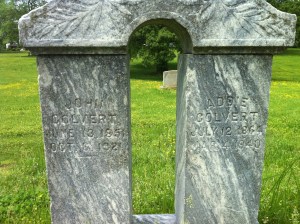
John Colvert.  Died 6 Oct 1921, Statesville, of endarteritis. Black. Married to Adline Colvert. Age 71. Worked as laborer/teamster driving team. Born Iredell County to Walker Colvert and Elvira Gray, both of Iredell County.  Married to Adline Colvert.  Teamster laborer, driving team.  Buried “colored cemetery,” 9 Oct.  Informant, Adline Colvert.

——

Frances Josephine Bradshaw. Died 6 November 1925, Statesville, of colitis.  Colored. Minor.  Born 12 May 1924, Statesville, to Will Bradshaw of Rowan County and Golar Colvert of Iredell County. Informant, Will Bradshaw.

Me: Now, who was it that you were telling me that — was it William Bradshaw’s sister?  What was it about, something about — there was a baby that couldn’t eat certain things. 

My grandmother: Oh, yes.  His sister….  Oh, she was the prettiest thing I ever saw in my life.  Like a doll.  Oh, she was a beautiful child.  And had this curly black hair just like Papa’s.  She was such a pretty little girl.

Me: And who fed her something that she wasn’t supposed to have?

My grandmother: You see, Golar, Mat and Walker’s mother was different from our mother. 

Me: Right.

My grandmother: And they would always go out in the country to visit these people.  You know.  And Golar took her children and went out, you know.  To visit.  And she, I don’t know what was wrong with the child that she couldn’t eat any, certain things she couldn’t eat.  And string beans was one of them.  And when she gave her some string beans, and it just …  just killed her.  And, ahhh, that child suffered.  My God, that child suffered.  I can remember that evening.  I can remember so well seeing that child.  She just suffered.  [Pants heavily.]  It was, I mean, that’s just the way she was breathing and everything.  So one morning after she had been sick, her daddy came over there, he said, “You all better come over to the house if you want to see the baby, ‘cause she is dying.”  I said, “You are crazy.”

My mother: What’d she have, Mama?

My grandmother: I don’t know what she had.  Don’t know what she had.  But they say whatever it was – it just tore her intestines.  … And little William.  William, he just grieved over that, he just grieved for that child.  William. We were just so sorry for that child.  And then on top of that, then his mother died.  It was just awful.

——

Laura Colbert.  Died 21 April 1926, Statesville, of mitral insufficiency. Widow of Louis Colbert. Age 66. Cook. Father, Noahie Sharpe of Iredell County. Mother, unknown. Informant, Adgie Colbert.

——

Lon Walker Colvert.  Died 23 Oct 1930, Statesville,  of encephalitis and catarrh pneumonia in Statesville NC.  Clinical test done by C.R. Nicholson, MD. Born 10 Jun 1875 to John Colvert and Harriet Nicholson.  Buried 24 Oct 1930 at Union Grove.

——

Adeline Hampton Colvert. Died 4 March 1940, Statesville, of uremia. Resided 623 Harrison Street. Negro. Widow of John Walker Colvert. Born 12 July 1864, Wilkesboro NC to Horace Hampton and Myra [last name unknown], both of Wilkes County. Buried Greenwood cemetery. Informant, Lillie Colvert.
IMG_2080

——

George Randolph Colvert.  Died 31 Jan 1959, Statesville NC.  Resided 423 Harrison Street. Laborer. Never married. Born 9 April 1917 to [illegible] Summers (name blacked out) and Lillie Mae Colvert.  Buried Belmont cemetery. Informant, Lillie Mae Colvert.

——

Ida Mae Stockton. Died 23 August 1967, Statesville, of cerebral hemorrhage. Resided 403 Harrison. Widow of Eugene Stockton. Born 27 June 1891, Iredell County, to John W. Colvert and Adline Hampton. Buried Belmont cemetery. Informant, Lillie M. Ramseur.

——

Interview of Margaret C. Allen by Lisa Y. Henderson, all rights reserved.

Standard
Births Deaths Marriages, Maternal Kin, Military, Other Documents, Photographs, Virginia

Edward N. Allen.

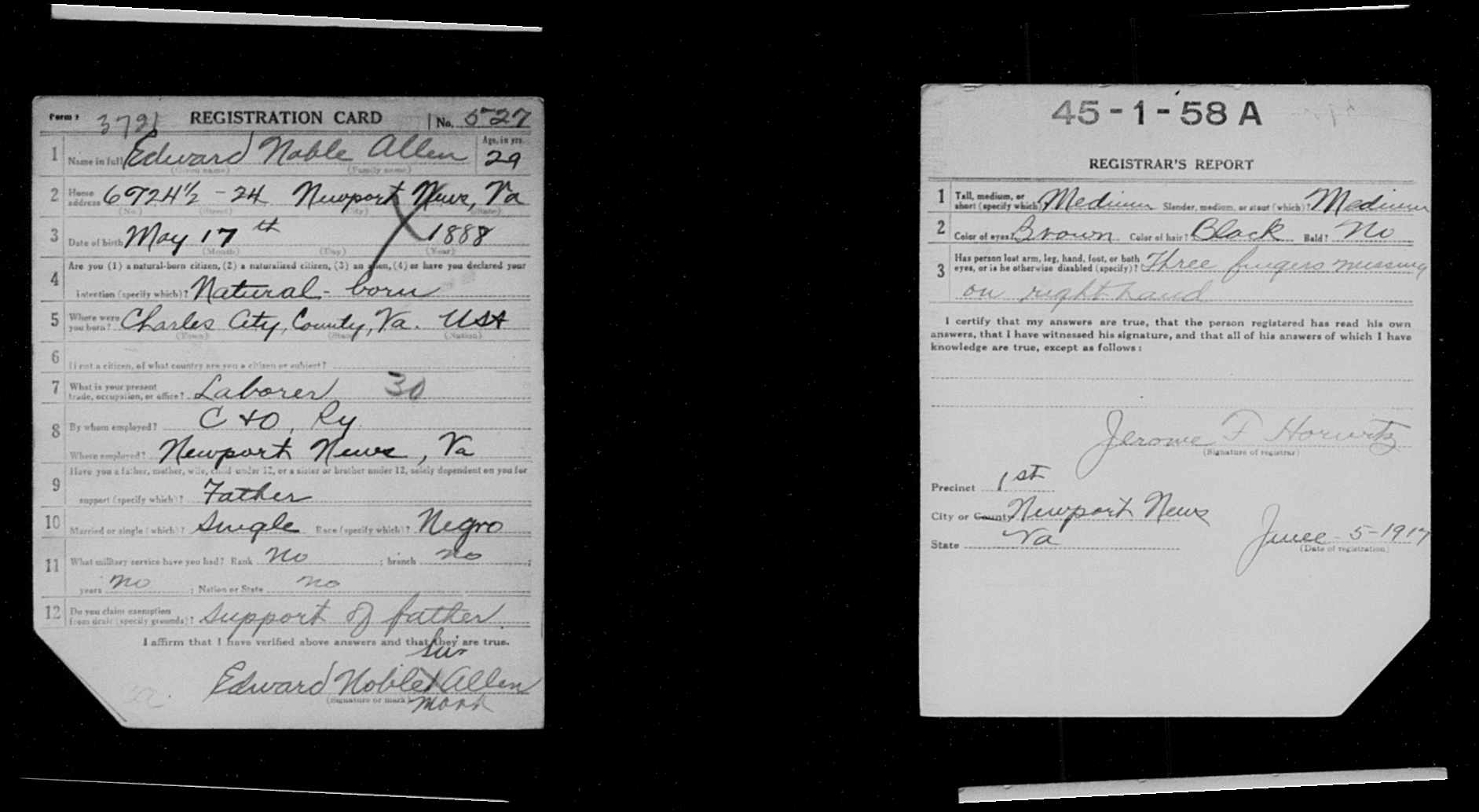
After John C. Allen‘s birth in 1876, Graham and Mary Brown Allen had four children together. Emma, their only daughter, was followed by Willie, Alexander and Edward Noble.

Edward N. Allen grew up in Charles City County, but followed his half-brother John to Newport News some time after 1910. He was working there as a laborer for the Chesapeake & Ohio Railroad when he registered for the draft at the outbreak of World War I. (And had had a tough life, as he reported missing three fingers on his right hand.)

ImageEdward survived the war, but his life over the next 15 years is hidden from history. He apparently never married or had children. Unless he is the Virginia-born Edward Allen that is listed as a farmhand in upstate New York in 1920, he appears in neither that nor the 1930 census. He was back in Charles City County by the early 1930s, though, and died in early 1933 at the U.S. Marine Hospital in Norfolk. He was only in his early 40’s, but beset with an old man’s diseases.

Edward_N_Allen_Death_Cert

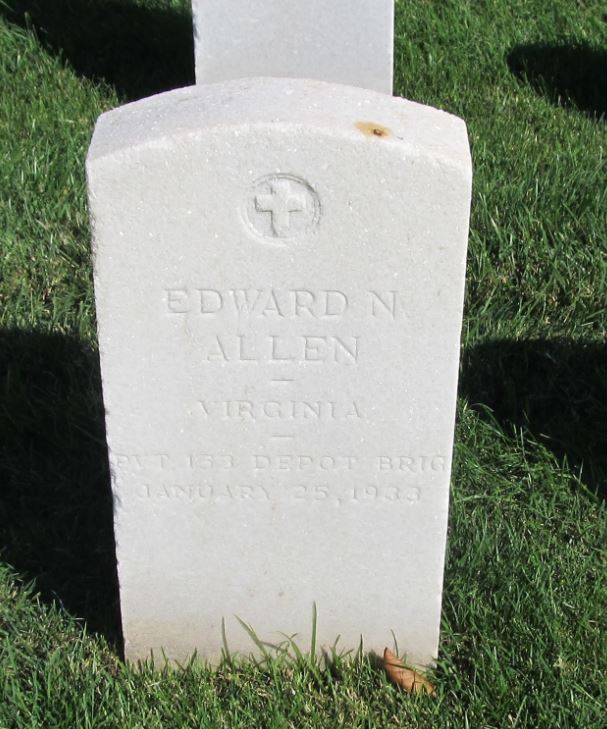
Edward Noble Allen is buried in Hampton National Cemetery.

Image

Standard
Maternal Kin, North Carolina, Oral History

Carrie, formally.

Me: Well, I wonder where she got her name from?

My grandmother: Who?

Me: Your mama. Your mother. Caroline Mary Martha –

My grandmother: Yeah.  Who ever heard tell of such as that?

Me: Fisher Valentine McNeely.  Well, I know where the Martha came from, ‘cause that was her mother’s name.

My grandmother: Yeah.

Actually, it was Caroline MARTHA MARY Fisher Valentine McNeely. And “Caroline” was the name of her aunt, Caroline McConnaughey, Martha Miller McNeely’s sister. But Mary and Fisher and Valentine?

——

Interview of Margaret C. Allen by Lisa Y. Henderson, all rights reserved.

Standard