Maternal Kin, Paternal Kin, Vocation

Where we worked: “All the live-long day.”

Henry Solice, near Mount Olive NC – railroad section hand, circa 1910.

Walter Holt, Greensboro NC – husband of Mollie Henderson Holt; fireman, Southern Railway Company, 1910s-20s.

Edward N. Allen, Newport News VA – railroad laborer, circa 1918.

Eli McNeely, Salisbury NC – worked in “scrap can” at Southern Railroad shop, circa 1920.

Atwood Artice, Portsmouth VA – machinist helper, railroad shop, circa 1920.

Freddie Artis, Portsmouth VA – railroad freighthandler, circa 1920.

Walter Godbold, Rocky Mount NC — husband of Tilithia Aldridge King Godbold Dabney; worked at roundhouse, 1920s.

Quincy McNeely, Asheville NC — mail porter, railway express, circa 1940.

——

The sixth in an occasional series exploring the ways in which my kinfolk made their livings in the 19th and early 20th centuries.

Standard
Vocation

Where we worked: laundresses, pressers and a bootblack.

Rachel Barnes Taylor, Wilson NC – laundress, 1900s-1927.

Sarah Henderson Jacobs Silver, Wilson NC – laundress, 1900s-1938.

Ella Mercer Barnes, Wilson NC – wife of Wesley Barnes; laundress, circa 1910.

Mary Mercer Barnes, Wilson NC – wife of Jesse Barnes; laundress, circa 1910.

Ida Colvert Stockton, Statesville NC – laundress, circa 1910.

Julia “Mollie” Henderson Hall Holt, Greensboro NC — washerwoman, circa 1910.

Agnes West Artis, Washington DC – wife of Adam T. Artis Jr.; laundress, circa 1910.

Lon W. Colvert, Statesville NC – owned and operated pressing & cleaning business, 1910s-1920s.

Bertha Taylor Reaves, Wilson NC – laundress, washerwoman, 1910s-1930s.

Selma E. Colvert, Statesville NC – laundress, 1910s.

Blanchard Aldridge, Fremont NC — pressing & cleaning, 1910s.

Hattie Mae Henderson Ricks, Wilson NC – laundress, 1920s-1930s.

Eliza Taylor Taylor, Wilson NC — laundress, circa 1920.

Greeman Taylor, Wilson NC – street bootblack, circa 1920.

Onie Miller, Salisbury NC — washing, circa 1930.

Daisy Barfield, Mount Olive NC — laundress, circa 1924.

Annie Artis Best, Wilson NC – laundress, circa 1930.

Sallie Wynn Manuel, Goldsboro NC — laundress, circa 1930.

Carrie McNeely Colvert, Statesville NC – laundress, 1930s.

Janie McNeely Taylor, Statesville NC – laundress, Statesville Steam Laundry, 1930s.

Frances McNeely, Statesville NC — laundress, Statesville Steam Laundry, 1930s.

Sarah McNeely Green, Statesville NC – laundress, Statesville Steam Laundry, circa 1930.

Sylvia Kornegay Smith, Goldsboro NC – wife of Johnnie Smith; laundress, circa 1930.

Madie Taylor Barnes, New York NY  – presser, dress factory, 1930s-1940s.

Vera Barnes, New York NY – presser, dress factory, circa 1940.

Rachel Barnes Stevens, New York NY  – presser, dress factory, circa 1940.

——

The fifth in an occasional series exploring the ways in which my kinfolk made their livings in the 19th and early 20th centuries.

Standard
Births Deaths Marriages, Maternal Kin, Oral History, Photographs, Virginia, Vocation

He designed every house he built.

About ten years ago, when we were all in Newport News for a family reunion, I asked my uncle to take us on a tour of houses our grandfather built.

——

He designed every house he built. And there were a couple he designed that he didn’t build. I’ll show you those, too. One of them, he really hated to lose. That was a, Dr. Woodard was a dentist. I mean, a pharmacist. And so, he – that was one of the lots that Daddy had sold, and so I think Daddy was a little ticked with the guy. He sold him the lot and designed the house, then the man went to another contractor. But you know what was interesting at that time? There were about five or six good general contractors around, you know, that did small buildings. And Daddy was one of those, but these guys were pretty competitive. They had a decent market. Daddy built an average of about a house a year, I guess. The war cut him off, you know. He had to get reestablished after the war. But he had a friend named Buster Reynolds. And Buster Reynolds was reputed to have made his money in the numbers, and so when the numbers were getting real hot and heavy, when it was reputed that the Mafia was trying to take the numbers over, Buster got out. And he built this service station, and he had a Texaco franchise, and he had Daddy to build the station. And Texaco liked the work so much that Daddy built two more stations for Texaco. And both of the stations that were built in the black community are still up. They’re not gas stations anymore, but the buildings are still up. And the one that was built Overtown is gone. But even the station that was in the white community Texaco had him to build that one, too. And with the money Daddy bought – I’ll never forget – he bought an International truck, great big truck, to carry his materials around.

Texaco 2

——

… the churches that he used to do expansions and modernizations on all the time, but I know one of ‘em is gone, and I don’t know where the other one is. I know the one – he used to take me down to that one from time to time. But I don’t know where they are now. The thing he did throughout all of these communities – he had a strong maintenance clientele, but Daddy was a – you see these cabinet shops now? Well, Daddy used to make, put in new cabinet work in people’s kitchens for them. And, so, that’s what carried him through the winter. ‘Cause he would also do designs and drawings for other contractors. Like Jimmy’s daddy. Mr. Scott. He used to do most of their design work, he’d sit there and draw those drawings for them. But that’s what got him through the winter. That and he used to do a lot of maintenance. Put in new windows, cabinet work, doors. Put little small additions to houses. But that was generally for a white clientele. He used to do a lot of work for the shipyard management people up in North Huntington Heights.

——

This house Daddy was building when he died. He was building it for a family named Kramer. A white family. See the one with the little entrance and the white wrought iron?

House 1

1316 – 22nd Street

——

The 800 block of Hampton Avenue, this is where Daddy owned those lots. Slow down … this house right here. This tan house. 855. This house was built at that time for the Tynes family, which owned a very nice house and property up in the next block.

Hampton Avenue 1

855 Hampton Avenue

But the Tynes family ran into some – I guess it was financial difficulty. Anyway, that house was sold to Wendell Walker, who was a lawyer and a part of the Walker family. You know his father was a lawyer, who was William. And his son William jr. is Howard Walker’s father, who was my classmate. And then there were, like, four sons and a daughter, I believe it was. Three of ‘em were lawyers, and then Wendell and Phillip were lawyers. The son William was an engineer, but when he came back home, he was manager of Aberdeen. He went into real estate and insurance. Daddy sold him the lot, designed and built the house.

——

Hampton Avenue 3.1

819 Hampton Avenue

Let me tell you about this house right here. This house was the undoing. This house was built for his friend Leroy Ridley. And there were, I think, four lots – four or three lots. Leroy Ridley was the son of John Ridley, who founded Crown Savings Bank with Pa Pa Allen. Okay? But he became – one of the Ridley sons, he became the one who took over the bank. And the man turned out to be not the most moral and forthright businessman. He talked into Daddy into $5000 worth of extras in this house, which was almost the same size as the house. And then when it came time to close the deal, he refused to pay Daddy because he said Daddy had not duly executed the extensions in the contract to do that. And not only that – Daddy had borrowed money from his bank. The long and short of the story is the last of that was paid when Pa Pa’s estate was executed [in 1961, 13 years after John Allen’s death.] We told Mother to pay that loan off ‘cause she still owed a thousand dollars. But this house turned out to be what kept Daddy from building Mama her house. ‘Cause he was gon build it on another lot. See? But when he got caught in that deal, then he couldn’t. So then he had to sell off all the lots that he had for houses, okay? So that’s when he sold this lot – the Woodard lot. And designed that house for Dr. Woodard.

Me: This incredible – this house right here?

My uncle: Yes. That’s Daddy’s design.

My cousin, J: Wow!

Me: Sheeze. Oh, my God.

He did not do it. He designed it. Okay. See, this was an extra lot. This is another one of the large lots he had. You see what I’m saying? And this house was across the street, that was his pride and joy. That was a Cape Cod. But I’m saying, the Ridley house was a fantastic house. I mean, you know, the design was great, but anyway, so this was done for his buddy Picott. Mr. Picott. He was president — well, he wasn’t president – yes, well, he was, of Virginia Education Association, which was the black unit of the National Education Association. He was one of the guys who lost their jobs over the equal rights fight with Mr. Palmer for black teachers to have equal pay. And he left and moved to Richmond, and that’s when he sold his house. But that was a beautiful home. Solid oak floors, cabinetry that Daddy built. All of that, that house. But that’s the thing that – she won’t talk about it too much – but that’s the thing that really embittered Mother, was when she lost the opportunity to build her house because of that deal.

Hampton Avenue 2

816 Hampton Avenue

——

2107 Marshall Ave

2107 Marshall Avenue, my great-grandparents’ house.

You know, he did all that for his father. He put the addition – designed that addition to go on the back. Right behind the bathroom window. Okay, that’s where the bathroom was. And then Daddy designed and started that addition for the house. And that’s when he went to the Army. And they put that addition up there so – so the bottom addition was the barbershop, remember? You remember the beauty shop? Yeah, the bottom addition was the beauty shop, and the upper addition was the bedroom for Aunt Nita for the war. Pa Pa did that for his children.

——

House 3

3105 [I didn’t note the street name]

On the corner here, similar to the Kramer house. Designed it and built it. That was done for Dr. Fultz, who was a dentist. Actually, he was the school dentist. He built 3015. This at that time was a predominantly white neighborhood. Yeah, that’s the house. See that little carpentry he did? Those little arched doorways? That’s the original wood. That’s Daddy’s work.

——

Remembering John Christopher Allen, Jr., carpenter, draftsman, builder, contractor, father of five, grandfather of eight, great-grandfather of six, born 107 years ago today.

—–

Interview by Lisa Y. Henderson; all rights reserved. Photos taken by Lisa Y. Henderson, 2002.

Standard
Maternal Kin, Paternal Kin, Vocation

Where we worked: teamsters, drivers and draymen.

Lewis Colvert, Statesville NC – drayman, circa 1895.

Haywood Artis, Norfolk VA – driver, 1897.

Isham Smith, Goldsboro NC – husband of Nancy Henderson Smith; wagon driver, circa 1900.

Wesley Barnes, Wilson NC – teamster, 1900-1910; drayman, Tomlinson Co., circa 1919.

Mike Taylor, Wilson NC – drayman, circa 1900; drayman, circa 1908-1910s.

Dock Simmons, Logansport IN – teamster, 1900s-1920s; trucking, circa 1945.

Luther McNeely, Statesville NC – driver, dray wagon, circa 1910; driver, Statesville Grocery Company, 1916.

John W. Colvert, Statesville NC – dray wagon driver, circa 1910; driver, circa 1916; teamster, circa 1920.

William Henderson, Goldsboro NC – driver, circa 1916.

Jack Henderson, Wilson NC – transfer driver, Sam Vick, circa 1917; truck driver for woodyard, circa 1920; truck driver, Liggett & Myers tobacco company, 1930s-1940s.

Junius Allen, Newport News VA – drayman, circa 1920.

John Sampson, Goldsboro NC – husband of Cora Reid Sampson; drayman for city, circa 1920.

Bazel Holt, Greensboro NC – husband of Mamie Henderson Holt; driver, 1920s-1950s; Foster-Caveness, Inc., circa 1930.

John Long, Statesville NC – husband of Lizzie McNeely Long; railway truck driver, circa 1930.

James L. Henderson, Goldsboro NC – truck helper, “CoCola” plant, circa 1936.

Jimmie Reaves, Greenville NC – husband of Bertha Taylor Reaves; driver for department store, circa 1940.

——

“Drayman” — historically, the driver of a dray, a low, flat-bed wagon without sides, pulled generally by horses or mules and used to transport goods.

“Teamster” — historically, the driver of a wagon drawn by a team of draft animals, usually oxen, horses, or mules.

——

The fourth in an occasional series exploring the ways in which my kinfolk made their livings in the 19th and early 20th centuries.

Standard
Maternal Kin, Paternal Kin, Photographs, Vocation

Where we worked: barbers and hairdressers.

Lon W. Colvert, Statesville NC – owned and operated L.W. Colvert Barbershop, 1900s-1920s.

James N. Guess Sr., Goldsboro NC – owned and operated barber shop, 1900s-1950s; 114 Walnut East, circa 1906; 120 Walnut East, 1912.

H. Golar Tomlin, Statesville NC – barber in brother’s shop, 1910s.

Charles H. Henderson, Richmond VA – barber, 1910s-1920s.

Roderick Taylor Sr., Wilson NC – barber, 1910s-1947; Paragon Shaving Parlor, 1916; Tate & Hines Barbershop, New Briggs Hotel, Nash Street, 1917; Hines Barbershop, Nash Street.

Ernest Smith, Goldsboro NC – worked in uncle’s barber shop, circa 1917.

Golar Colvert Bradshaw, Statesville NC – Poro agent, 1920s.

John W. Colvert II, Statesville NC – barber, 1920s-1937.

Blanchard K. Aldridge, Fremont NC – barber, 1920s-1965.

Freeman Ennis, Wilson NC – bootblack, barber shop, circa 1930.

Julia Allen Maclin, Newport News VA – owned and operated hairdressing shop, 1940s-1970s.

Ardeanur Smith Hart, Columbus OH — hairdresser, 1940s?-1980s?

——

The third in an occasional series exploring the ways in which my kinfolk made their livings in the 19th and early 20th centuries.

POSTSCRIPT, 1/21/2014: This brief history focuses on an earlier period, but provides useful insight into the role of African-American barbers.

Standard
Births Deaths Marriages, Maternal Kin, Newspaper Articles, North Carolina, Oral History, Photographs, Vocation

Lon Colvert: straight and shady.

If reports are to be believed, Lon Colvert had a bit of a shaky start. “Otho Turner”?

Image

Statesville Landmark, 18 August 1898.

Carolina_Mascot_Sville_2_8_1900

Statesville Carolina Mascot, 8 February 1900.

Lou Colvert was Lon’s uncle. No details on Lon packing. But he switched gears a bit.  To retailing, which specifically meant selling liquor — unauthorized.

Iredell County Superior Court —

Lon Colvert, retailing; guilty.  

— Statesville Landmark, 5 Nov 1901.

Another poor outcome.

“Cases Disposed of Since Monday — Some Recruits for the Chain Gang — A City Ordinance Held Invalid”

The following cases have been disposed of in the Superior Court since Monday:    …

Lon Colvert, convicted of retailing, was discharged on payment of the costs. 

— Statesville Landmark, 8 Nov 1901.

But somewhere along in here, he began to right his ship.

Notices of New Advertisements.

L.W. Colvert has moved his barber shop from Depot Hill to 109 east Broad street.

— Statesville Landmark, 23 Aug 1904.

It’s not clear when Lon first opened his barber shop, or how he got into the business, but it was a good move. Depot Hill was a few blocks south of downtown; the 100 block of East Broad was right at the heart of the business district. He had arrived.

Still, there were setbacks. (I read “liquor” in this “little pilgrimage,” but I could be wrong.)

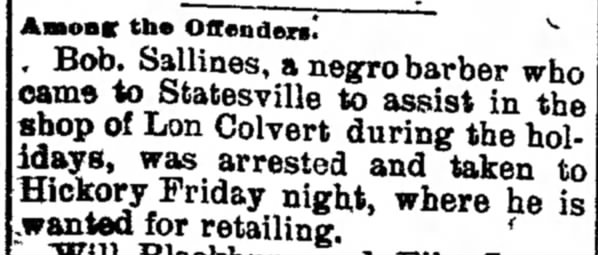
“Played His Bondsman False and Will Spend his Holidays in Jail.”

Thursday afternoon a colored barber, Lon Colvert by name, braced Mr. J.P. Cathey for a horse and buggy with which to make a little pilgrimage that night, and Mr. Cathey refused.  Lon was just obliged to make that little run, so later he stated the case to Jo. Thomas.  Jo. is the colored individual who worked for Mr. Cathey then and who is now being boarded by the county.  Jo. slipped out with a horse and buggy.  Lon made his trip, came back, paid Jo. one plank, which he shoved down in his jeans, and then Jo. slept the sleep of the consciousless offender.

But the snow that fell during the interval between the exit and return of that buggy caused Jo’s little house of cards to tumble.  Next morning Mr. Cathey saw the tracks, asked Jo. who had got a buggy the night before, and Jo straightaway told the thing that was not.  So Mr. Cathey got off of Jo’s bond, which he had signed not long since, and now Jo. is behind bars.

— Statesville Landmark, 20 Dec 1904.

He pressed on.

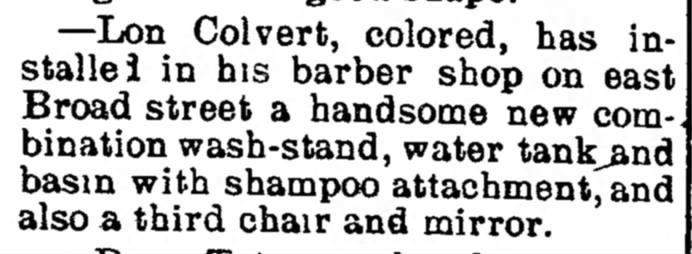
Lon Colvert, colored, has recently equipped his barber shop on east Broad street with a handsome two-chair dressing case and has made other improvements in the shop.

— Statesville Landmark, 1 Jan 1907.

Occasionally, his friends let him down.

Image

Statesville Landmark, 1 January 1907.

But he had a new wife and a new baby to add to his first three, and the straight and narrow was starting to win.

Image

Statesville Landmark, 7 May 1907.

Image

Statesville Landmark, 7 January 1910.

A momentary setback, no more. Lon moved his business back down Center Street toward the train depot and entered the golden age of his entrepreneurship, the period of my grandmother’s childhood.

Papa had a barber shop.  Well, of course, Papa did white customers. And, see, the trains came through Statesville going west to Kentucky and Tennessee and Asheville and all through there.  They came through, and they had, they would stop in Statesville to coal up and water up, you know.  There were people there to fill up that thing in the back where the coal was.  And there was another — it had great, big round things that they’d put in water.  And when those trains would stop for refueling, they would, there were a couple of men who would come. I can see Walker and my uncle and Papa standing, waiting for these men who were on the train to give them a shave and get back on the train in time.  And there wasn’t any need of anybody else coming in at that time ‘cause they couldn’t be waited on.  They were waiting for these conductors and maybe mailmen, but I know there would be at least three at a time.  And Papa would shave them.  And he made a lot of money.

Papa had a taxi, too. Walker drove it most of the time.  And then he would hire somebody to drive it other times.  And then when people had to go to Wilkesboro, Papa would take them.  Because Wilkesboro was a town north of Statesville. And there was no transportation out there.  No buses, no trains, or anything.  So when people would come on the train that were, what they call them, drummers, the salesmen, when they would come through, Papa would carry them up there. 

And he had this clean-and-press in the back of the barbershop. And, look, had on the window, on the store, ‘Press Your Clothes While You Wait.’  I can see those letters on there right now.  ‘Press Your Clothes While You Wait.’  And people would go in there, get their clothes pressed, you know.  And I know ‘barber shop’ was on the door….  ‘L.W. Colvert Barber Shop.’  ‘L.W.’ was on the side of this door, and ‘Colvert’ was on this side of the door.  They had a double door.

There were, of course, risks to doing business. Though I’m casting a side-eye at the carnie. (“H.G.” was Lon’s 21 year-old half-brother Golar, and I never knew he was a partner in the business.)

Damages for Scorching Suit — Court Cases.

Lon Colvert and H.G. Tomlin, doing a pressing club business under the name of Colvert & Tomlin, were before Justice Sloan Saturday in a case in which Chas. Moore, white, a member of the carnival, was asking $18 damage for them.  They pressed a suit for Moore and it was scorched, for which Moore asked damage.  The case was finally compromised by Colvert & Tomlin paying Moore $5 and $1.20 cost. 

— Statesville Landmark, 27 March 1917.

And there was the little matter of a charge of carrying a concealed weapon in 1919; a jury returned a not guilty verdict.  Still, a burglary at the shop was an omen. The good years were coming to an end. Lon was struck with encephalitis in the 1920s and was largely unable to work in his final years.

Image

Statesville Landmark, 25 September 1925.

By this time, Golda had embarked upon a peripatetic life in the Ohio Valley, and  Walker was left to keep his father’s businesses running.  He exercised his best judgment.

Walker Colvert, driver of the Wilkesboro jitney Steve Herman, driver of the Charlotte jitney, and Henry Metlock, driver of the Taylorsville jitney were charged with delivering passengers to the depot rather than the jitney station.  It appearing that all the violations were emergency calls, the defendants were discharged.

Statesville Landmark, 1 Mar 1926.

Lon Colvert died 23 October 1930.  “He was an old resident of Statesville,” his obituary noted, “and for a number of years had a barbershop on South Center street, near the Southern station.”

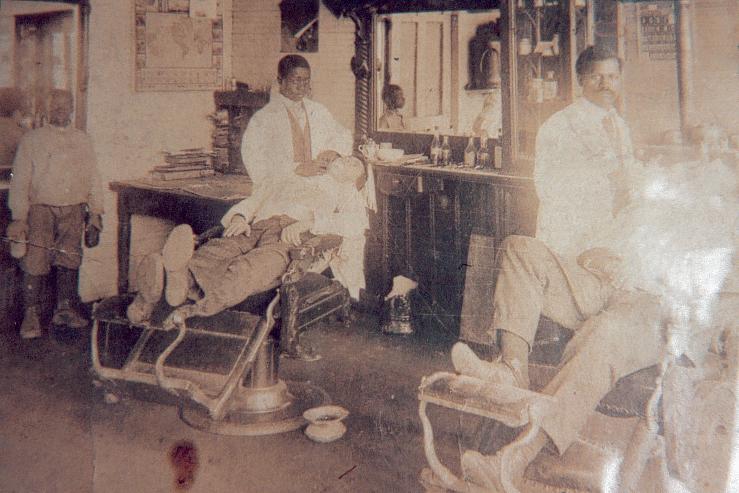
COLVERT -- Barbershop 2 The barbershop, 1918, when it was at 101 South Center Street. Walker Colvert, center, and L.W. Colvert, right.

——

Interview of Margaret C. Allen by Lisa Y. Henderson; all rights reserved. Copy of photograph in possession of Lisa Y. Henderson.

Standard
Maternal Kin, Other Documents, Paternal Kin, Vocation

Where we worked: hotels, clubs and boarding houses.

Caswell C. Henderson, Raleigh NC – porter, Yarborough House, circa 1886.

yarborough house

Richard Morgan, Asheville NC – husband of Elvira Colvert Morgan; saloon servant, circa 1900.

Larry R. Artis, Washington DC — porter, public house, circa 1920.

Rufus Williams, Charlotte NC — husband of Carrie Reeves Williams; porter, club, circa _____; waiter, clubhouse, circa _____.

John E. Reeves, Boston MA — hotel waiter, circa ___________.

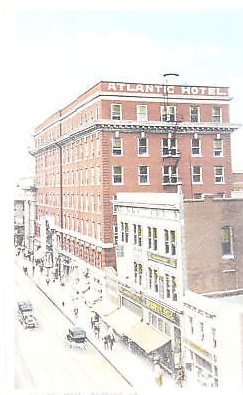
Ira Braswell Sr., Norfolk VA — husband of Mattie Brewington Braswell; hotel bellman, Atlantic Hotel, circa 1910s-1920s; head waiter, Atlantic Hotel, circa 1930.

atlantic hotel

Lewis Renwick Sr., Statesville NC – husband of Louise Colvert Renwick; porter, Battery Park Hotel, Asheville, 1917; bellman, Vance Hotel, 1920s-1950s.

Edward McNeely, Statesville NC – bellboy, Hotel Iredell, circa 1916; hotel porter, Hotel Iredell, circa 1917.

Lafayette Artis, Washington DC – bellboy, Harrington Hotel, circa 1917.

Earle M. Hagans, Norfolk VA – waiter, Southland Hotel, circa 1918.

Toney Brewington, Norfolk VA – bellman, Southland Hotel, circa 1918.

Ned Barnes, Raleigh NC – porter in club, circa 1920.

Quincy E. McNeely, Asheville NC – waiter, boarding house, circa 1930.

Curtis Braswell, Norfolk VA — hotel waiter, circa 1930.

Freeman Ennis, Wilson NC — bellboy, 1930s.

Hattie Brewington Davis, Atlantic City NJ – worked at Ostend Hotel, circa 1937.

ostend

—–

The second in an occasional series exploring the ways in which my kinfolk made their livings in the 19th and early 20th centuries.

Standard
Maternal Kin, Paternal Kin, Vocation

Where we worked: cafes, restaurants & eating houses.

Larry Artis, Norfolk VA – butcher, 1897.

Lloyd Artis, Norfolk VA –baker, 1897.

Celebus Thompson, Goldsboro NC — restaurant keeper, circa 1913.

Columbus E. Artis, Wilson NC — operated an “eating house” at 214 Goldsboro Street, circa 1912; proprietor of The Delicatessen, circa 1922.

Milford E. Carter — husband of Beulah Aldridge Carter; chef at the Lincoln Inn, Coatesville PA, circa 1917; New Britain CT, chef, circa 1924; Queens NY, restaurant chef, 1930s-1960s.

Tilithia Brewington King Goldbold Dabney,  Norfolk VA — owned and operated Strand Cafe, 426 Brambleton Avenue,  as early as 1920.

Mike Taylor, Wilson NC – cook, café (probably his son-in-law’s), circa 1920.

William I. Barnes, Wilson NC – husband of Madie Taylor Barnes; owned and operated café, circa 1920.

Barbara Brewington, Brooklyn NY —  wife of Elijah Brewington; worked in a “tea room” circa 1930.

Luther McNeely, Bayonne NJ — restaurant chef, circa 1930.

J. Maxwell Allen, Washington DC  — waiter in restaurant, circa 1930.

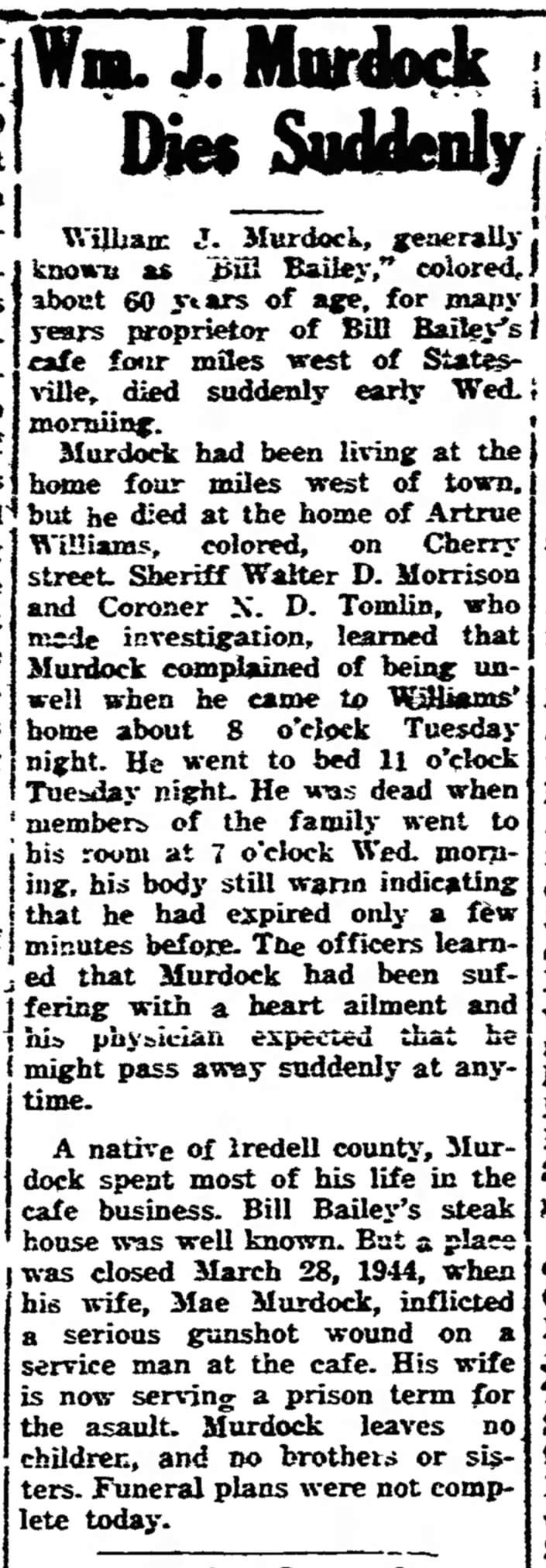
William J. Murdock, Statesville NC – husband of Bertha Hart Murdock; caterer, owned and operated Bill Bailey’s Steakhouse, 1930s-1944.

9 17 1943 reopening

Bertha Hart Murdock, Statesville NC – managed husband’s restaurant/roadhouse, 1930s-1940.

Allen Aldridge, Goldsboro NC — Central Cafe, Center Street, circa 1940s.

Milford Aldridge, Goldsboro NC – Central Café, Center Street, circa  1940s.

Adam H. Artis – restaurant cook, 1960s.

—–

The first in an occasional series exploring the ways in which my kinfolk made their livings in the 19th and early 20th centuries.

Standard
Births Deaths Marriages, Maternal Kin, Newspaper Articles, North Carolina, Oral History, Vocation

Bill Bailey’s life and times.

My grandmother did not mince words when it came to her aunt’s husband. William James “Bill Bailey” Murdock was “trashy.” “We couldn’t stand him,” she said. “He did everything illegal and got away with it.” I laughed, and thought, “Oh, Grandma. Really?”

Well, yes.

Consider this:

bill bailey youth 7 14 03 Statesville Landmark, 14 July 1903.

He was born William Bailey in Iredell County, the son of Lela Bailey, black, and John T. Murdock, white, both teenagers. His stepfather was Floyd Murdock, and he eventually adopted the surname, but he was known as “Bill Bailey” all his infamous life. His mother was a cook, and it is likely that he gained his culinary skills at her side. In 1920, he lived on Washington Street in Statesville’s Rabbit Town section with Lela and his first wife Hattie, biding his time as a flour mill laborer.

Two years later, Bill and his roadhouse merited their first in a long line of write-ups in the local newspaper:

11 27 1922 Roadhouse

Statesville Landmark, 27 November 1922.

Three months later, in March 1923, Ethel Wallace was arrested for shooting her husband — and the husband of her husband’s girlfriend — at Bill Bailey’s Emporium. Before this matter was even tried, Bill himself was arraigned on a charge of assault with a deadly weapon against Howard Houston. It didn’t stick. In February 1924, however, Bill plead guilty to bootlegging, was fined $50 and given two years’ probation. In January 1926, he was arrested for bootlegging again.

In December 1927, Bill was acquitted of assault with a deadly weapon in the shooting of “a colored girl” named Veola Knox and of transporting and possessing liquor, but fined $50 for assaulting Jim Moore. Two years later, on the day after Christmas, someone “severely carved up” Alfred Hough, slashed his jugular, outside Bill Bailey’s.

In July 1931, Bill was charged with manufacturing and possessing “home brew” — a barrel and 18 cases worth — on his premises just beyond the southern Statesville city limits. In November 1932, Crawford Scott was shot in the shoulder just passing by the place.  In 1934, three men were arrested for liquor possession at Bill Bailey’s, and 1936 brought this:

10 1 36 Liquor

Statesville Landmark, 1 October 1936. 

Nothing stuck.  As the Depression wound down and the War picked up, Bill Bailey’s reputation shifted from gutbucket to speakeasy to wholesome purveyor of steaks and libations to Statesville’s white middle class. Shootings and cuttings disappeared from the pages of the Landmark to be replaced by jovial accounts of “delightful fried chicken suppers” at Bill’s “popular resort,” enjoyed by society ladies, sportsmen, company men, and civic boosters alike.

The bonhomie slammed to a halt on the night of March 28, 1944, when Bertha Hart “Aunt Bert” Murdock shot James Warren, a white serviceman out to celebrate leave with a juicy steak.  My mother’s cousin N. asserts that Bill and Bert thought that their clientele, not to mention his father’s relatives — who’d kept Bill out of prison during Prohibition and rewarded his good cooking with steady patronage — would stand by them. It did not happen.  The place shut down, and just over a year after wife’s conviction, Bill Bailey was dead.

Murdock died 12 6 1945 LandmarkStatesville Landmark, 6 December 1945.

Standard
Agriculture, Free People of Color, Land, North Carolina, Other Documents, Paternal Kin, Politics, Rights, Vocation

I worked for it.

TESTIMONY OF NAPOLEON HIGGINS.

NAPOLEON HIGGINS, colored, sworn and examined.

By Senator VANCE:

Question. Where do you reside?  Answer. Near Goldsborough. I don’t stay in Goldsborough, but it is my county seat. I live fifteen miles from town.

Q. What is your occupation?  A. I am farming.

Q. Do you farm your own land?  A. Yes, sir.

Q. How much do you own?  A. Four hundred and eighty-five acres.

Q. How did you get it?  A. I worked for it.

Q. Were you formerly a slave?  A. No, sir; I was a free man before the war.

Q. You say you worked for it?  A. Yes, sir; I worked for it, and got it since the war.

Q. What is it worth per acre?  A. I don’t know, sir, what it is worth now. I know what I paid for it.

Q. What did you pay for it?  A. I believe I paid $5,500, and then I have got a little town lot there that I don’t count, but I think it is worth about $500.

Q. Then you have made all that since the war?  A. Yes, sir.

Q. How much cotton do you raise?  A. I don’t raise as much as I ought to. I only raised fifty-eight bales last year.

Q. What is that worth?  A. I think I got $55 a bale.

Q. How many hands do you work yourself?  A. I generally rent my land. I only worked four last year, and paid the best hand, who fed the mules and tended around the house, ten dollars; and the others I paid ten, and eight and seven.

Q. That was last year?  A. Yes, sir.

Q. What did you give them besides their pay?  A. I gave them rations; and to a man with a family I gave a garden patch and a house, and a place to raise potatoes.

Q. What about the rate of wages in your section of the country; does that represent them?  A. Yes, sir; of course a no account hand don’t get much, and a smart one gets good wages.

Q. Have you made any contracts for this year?  A. Yes, sir; but I am only hiring two hands this year.

Q. What do your tenants pay you for the use of your land?  A. Some of the tenants give me a third of the corn and a third of the cotton. Then I have got some more land that I rent out to white men, and they give me a fourth of the cotton, and another gives me a thousand pounds of lint cotton for twenty acres.

Q. Does anybody interfere with your right to vote down there?  A. No, sir.

Q. Or with any of the rights of your race?  A. No, sir; we vote freely down there. Of course, if one man can persuade you to vote with him, that is all right. But you can vote as you please.

Q. What are your politics? A. I am a republican, and that is the way my township generally votes.

Q. You say there is no interference with the rights of your race there?  A. Not that I know of.

Q. There has been something said here about the landlord and tenant act. Do you think that does anybody any harm? A. I think it is a good law.

Q. The object of it is to give you a lien on everything your tenant has until your rent is paid?  A. Yes, sir; and I think I am entitled to that.

Q. These white tenants can’t run off any of your cotton until you are paid?  A. No, sir; I am five or six miles from them, and they can’t run it off. They might do it and I not see them if I did not have the law to back me; and they are just as apt to run it off as not when they start.

Q. Then you think it is a good protection to you in your rights?  A. Yes, sir; I do.

Q. Do you have any schools down there?  A. Yes, sir.

Q. How is the money raised for them? Most of it is by a property tax, is it not?  A. Yes, sir.

Q. And the poll tax all goes to education except twenty-five cents on the dollar?  A. Yes, sir.

Q. Do you know how much land your race has acquired in that county?  A. I reckon they have got fifteen hundred acres in our township; but I could not tell how much in the county.

Q. Is there any distinction made between the whites and the blacks down there in the renting of lands?  A. None that I know of.

Q. Both are paid the same wages?  A. Yes, sir; unless a man wants to hire some man to lock his doors and look after and keep his keys; then they pay him more. And if it is a colored man that he has confidence in, they pay him the same.

Q. Is there any distinction there to take all white men as tenants?  A. No, sir; in our township they take them without regard to color. If a man is a smart man, he gets in just the same as a white man. Colored men rent from white men, and white men from colored men.

Q. Did you ever have any talk with any of those people who went to Indiana?  A. No, sir; I never saw one who went.

Q. Did you ever hear any of the speeches of any of these men who were stirring up these men?  A. No, sir.

Q. Did you see any of their circulars?  A. No, sir.

Q. Nor hear of any inducements offered to them? A. No, sir.

Q. Did you get any letters from any of them who went out there?  A. No, sir; I wasn’t acquainted with any who went. I learned more of it at Goldsborough last Monday night, when I was coming on here, than I ever knew before.

Q. Are there any complaints among your people to discriminations in the courts, between the whites and blacks?  A. Yes, sir; I have heard them say that the same evidence that will convict a colored man for stealing won’t convict a white man.

Q. When they are convicted, are they punished alike? Yes, sir; in the same cases. I have spoke to them and told them, lots of times, that of course they would be convicted many times where a white man would get out, and the only way to avoid that was to quit stealing. I told them, a white man has got more sense and more money to pay lawyers and knows better how to hid his rascality, and the best way for the colored man to keep out of the penitentiary was to quit stealing.

By Senator WINDOM:

Q. Is it the general impression among colored people down there that they don’t get justice?  A. Yes, sir; when two or three colored men get convicted they think so. But there are more black men convicted because there are more of them tried.

Q. You say they have not got sense enough to get out of it when they get in; they have attorneys, do they not? A. Yes, sir; but very often they have not got the money to feed up an attorney; and, you know, they more you pay a lawyer the more he sticks with you.

Q. Is there not discrimination there in the employment of mechanics? A. No, sir; I never heard of it.

By Senator VOORHEES:

Q. Do you know of any of these people, white and black, who have been convicted that you thought were convicted wrongfully?  A. No, sir.

Q. You thought they were rightfully convicted?  A. Yes, sir.

Q. You have been on juries yourself; did you ever make any difference between them?  A. No, sir; I have sat on juries there many times, and sat on a case of a white man who was tried for his life.

Q. Was there any other colored man on that jury? A. No, sir; I was the only one on that one; but I have been on others.

Q. You have sat on juries when white men’s cases were being tried, both on the criminal and on the civil sides of the court?  A. Yes, sir.

Q. Did any white man object to you sitting on them?  A. No, sir.

Q.Then most of this talk about discrimination and injustice is by men who have been disappointed in the results of their suits?  A. Yes, sir.

Q. You see no cause for it yourself?  A. No, sir.

Q. You have heard white men complain just as bitterly?  A. Yes, sir; of course. I suppose they are like I am.  I always try to beat the case.

By Senator WINDOM:

Q. You say you think this land and tenant act a good thing; do you think the renter is in favor of it?  A. I don’t know; they never say anything to me about it. I am on the other side of that question.

Q. Does not the fact that you own 285 [sic] acres of land give you a little better standing in the community than most of your colored friends?  A. Of course; I suppose it does.

Q. How did you start it?  A. I rented a farm and started on two government horses. I went to the tightest man I know and got him to help me. I rented from Mr. Exum out there.

Q. Are there others who have succeeded as well as you?  A. Yes, sir; there are. One or two men who have succeeded better than me. There are several of them in good circumstances there in our township. I think, altogether, they own 1,500 acres there.

Q. How many colored people own this?  A. I reckon 150.

Q. The 1,500 acres is divided up among 150 people?  A. No, sir; a good many of them have got none.

Q. This is what I asked you: How many own this 1,500 acres, all put together?  A. I reckon a dozen. It might not be more than eight. It is from eight to a dozen, anyhow. But there are a number who own some little lots of land of four or five acres that I have not mentioned.

This, of course, was Napoleon Hagans (not Higgins)’ testimony before a Senate Select Committee investigating the migration of hundreds of African-Americans from the South to Kansas Indiana in the late 1870s, allegedly because of “denial or abridgment of their personal and political rights and privileges.”  Hagans’ testimony about the source of his relative wealth, as well his opinions about the political and judicial climate for colored men in his part of North Carolina, were well-received by the committee, which concluded that all was well in Dixie. Nonetheless, it is perhaps possible — if one suppresses natural feeling and attempts to stand in Napoleon’s shoes — to detect a very subtle undercurrent of resistance here and there in the essential conservatism of his words.

Transcript in Senate Report 693, 2nd Session, 46th Congress: Proceedings of the Select Committee of the United States Senate to Investigate the Causes of the Removal of the Negroes from the Southern States to the Northern States, Washington DC, beginning Tuesday, 9 March 1880.

Standard