Births Deaths Marriages, Free People of Color, North Carolina, Other Documents, Paternal Kin

A Seaberry clue.

Back in December, I went on a hunt for Artis cemeteries in the Eureka area. One that I found, just south of the others, holds the remains of William M. Artis and his family. Today, while I was sorting old documents, I ran across William’s death certificate. His place of birth, which I’ve surely read a hundred times, seized my eye:

Wm_Artis_Death_Cert-1

“Family (Seabury)”? Was this graveyard originally the resting place of William’s maternal great-grandfather, Aaron Seaberry, who died just after 1910? Are there other Seaberrys here, including William’s mother Frances Seaberry Artis? (Who was erroneously referred to as Frances Hagans above. “Hagans” was her mother’s maiden name and the surname of her half-brother Napoleon Hagans. William’s age is off, too. He was 70 when he died.)

Standard
Births Deaths Marriages, Maternal Kin, Photographs

Family cemeteries, no. 14: Pleasant Shade.

Cardinal direction can be difficult to gauge on a peninsula, but you leave my late grandmother’s house in Newport News headed west (I think) on 35th Street. After a couple of blocks, you’ll cross Chestnut Avenue, and the street becomes Shell Road. You are now in Hampton, and a cemetery is on your left. Don’t turn at the entry to the first part — that’s white. Go down a little further to the second — Pleasant Shade.

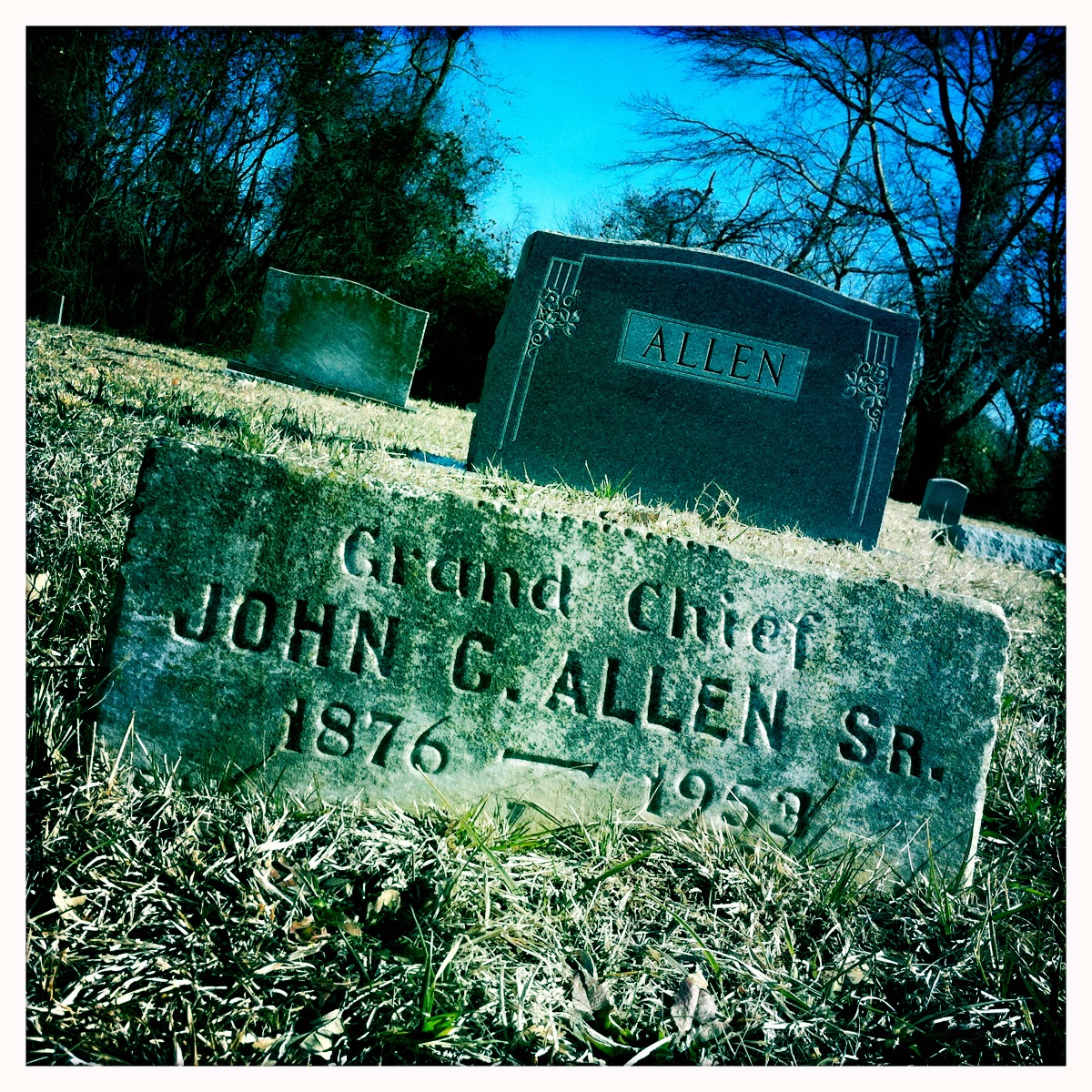
Pleasant Shade is, according to founder James East’s headstone, “the first cemetery to be operated and controlled by colored people in Tidewater Va.” My mother’s parents, John C. Allen jr. and Margaret Colvert Allen; her paternal grandparents, John C. Allen Sr. and Mary Holmes Allen; and her aunt Marion Allen Lomans are buried there.

I have never seen it looking wild (though it often feels desolate), but Pleasant Shade’s condition warranted the formation in 2011 of a restoration group. Its website mentions my great-grandfather John C. Allen Sr. among notable burials. Even had it not, I obviously need to contribute.

IMG_1275

IMG_1286

Photos by Lisa Y. Henderson, February 2011.

Standard
Births Deaths Marriages, Free People of Color, Land, North Carolina, Paternal Kin, Photographs

Final resting place.

I wasn’t sure how I was going to get at it. GPS coordinates and satellite views showed the cemetery way back from the road on private property, without even a path to get to it. I took a chance, though, and pulled up in the driveway of the house closest to it. A wary, middle-aged white woman was settling an elderly woman into a car as I stepped out. I introduced myself and told her what I was looking for. “Goodness,” she said. “I remember a graveyard back up in the woods when I was child. You should ask my cousin J.”

Following her directions, I knocked on the house of a door perhaps a quarter-mile down Turner Swamp Road. J.S. answered with a quizzical, but friendly, greeting, and I repeated my quest. Minutes later, I was sitting in J.’s back room, waiting for him to change shoes and look for me some gloves and find the keys to his golf cart. We bounced along a farm path for several hundred yards, then followed the edge of the woods along a fallow field. Along the way, J. told me about his family’s long history on the land, and the small house and office, still standing, in which his forebears’ had lived. As we approached the final stretch, he cautioned me about the briers that we were going to have to fight through and pulled out some hand loppers to ease our path. The cemetery, he said, was there — in that bit of woods bulging out into the plowed-under field.

IMG_4797

When they were children, J. and his cousins roamed these woods at play. Though only a few markers were now visible, he recalled dozens of graves on this hillock. Turner Swamp runs just on the other side of the tree line nearby. Without too much difficulty, we cut our way in and angled toward the the single incongruity in this overgrown copse — a low iron fence surrounding a clutch of headstones. I made for the tallest one, a stone finger pointing heavenward through the brush. At its base:

IMG_4783

Elder Jonah Williams, brother of my great-great-great-grandfather Adam T. Artis.

IMG_4786

At his side, wife Pleasant Battle Williams. And his children Clarissa, J.W. and Willie nearby.

IMG_4789

In Glimpses of Wayne County, North Carolina: An Architectural History, authors Pezzoni and Smith note that the largely forgotten graveyard was believed to hold the remains of members of the Reid family. This is quite possibly true as Reids have lived in this area from the early 1800s to the present. As I followed J. through the brush and my eye grew accustomed to the contours of the ground beneath us, I could see evidence of thirty to forty graves, and there are likely many more. Had this been a church cemetery? Was Turner Swamp Baptist Church (or its predecessor) originally here, closer to the banks of the creek for which it is named? If this were once the Reid family’s graveyard — known 19th and early 20th century burial sites for this huge extended family are notably few — how had Jonah and his family come to be buried there?

IMG_4794

I am indebted to J.S. for the warmth and generosity shown to a stranger who showed up unannounced at his doorstep on a chilly December day, asking about graveyards. I have been at the receiving end of many acts of kindness in my genealogical sleuthings, but his offer of time and interest and knowledge — and golfcart — are unparalleled. He has invited me back anytime, and I intend to take him up on the offer.

Standard
Births Deaths Marriages, Enslaved People, Free People of Color, Land, North Carolina, Paternal Kin, Photographs

Family cemeteries, no. 13: Artis Town.

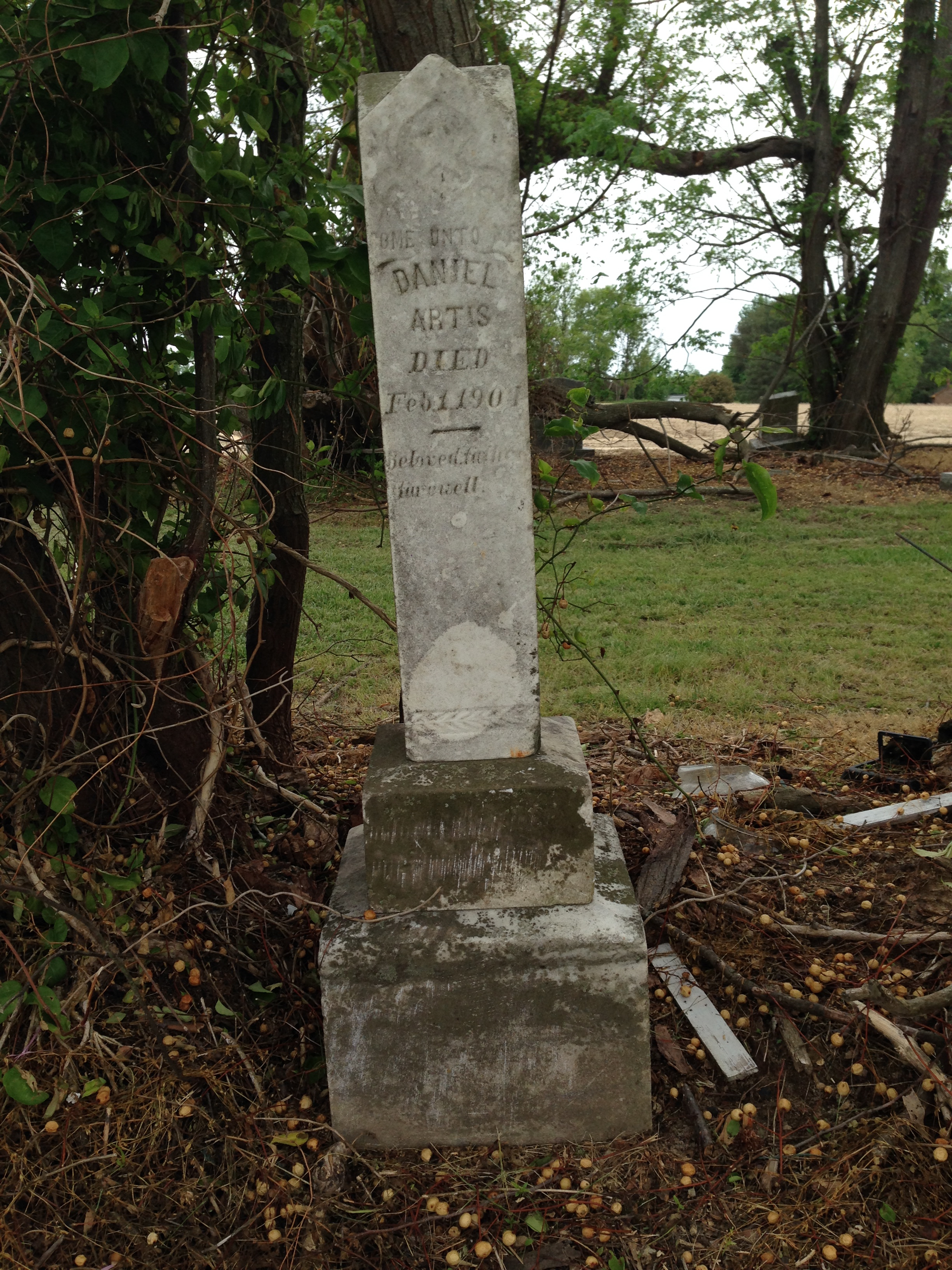
We passed Edwards cemetery on the left, rounded the curve, and there, just where I suspected, was the turn-off onto a farm road leading to Artis Town cemetery. The graveyard is a rectangle of green amid bare spring fields, neatly mowed. A row of weedy trees bristles down one side, broken limbs scattered from recent storms. The oldest stones tilt sideways or sprawl toppled on their backs, but the cemetery is obviously cared for. It lies at the heart of what was once known as Artis Town, a hundred or more acres between Highway 58 and Speights Bridge Road on which lived and farmed Artises and Edwardses in every direction, descendants of Daniel Artis, who bought the land in the 1800s. There was even a racetrack here, said my cousin, where men would line up horses and buggies for weekend contests. As time went by, however, the land got “swindled down.”

Daniel Artis’ headstone stands in a shadowy pocket underneath a chinaberry tree, the grave itself sprinkled with wrinkled yellow fruit. The small white marble obelisk is a testament to Daniel’s prosperity and the esteem in which his offspring held him.

IMG_5197

I did not locate stones for any of Daniel’s children in the graveyard, though surely some are buried there. (Daughter Clara Artis Edwards is buried in the nearby Edwards cemetery.) Many markers memorialize the deaths of descendants of Loderick Artis and Prior Ann Artis Sauls Thompson, including Loderick’s daughter Sarah Artis Speight:

IMG_5192

and son, Manceson Artis:

IMG_5210

and daughter Hannah Artis Mitchell, as well as Prior Ann’s daughter Mariah Sauls Edwards:

IMG_5195

and a host of other Saulses, Forbeses, Artises, Speights and Mitchells descended from Daniel Artis.

Photos taken by Lisa Y. Henderson, 2 May 2014.

Standard
Births Deaths Marriages, North Carolina, Paternal Kin, Photographs

Family cemeteries, nos. 11 & 12: Rountree & Rest Haven.

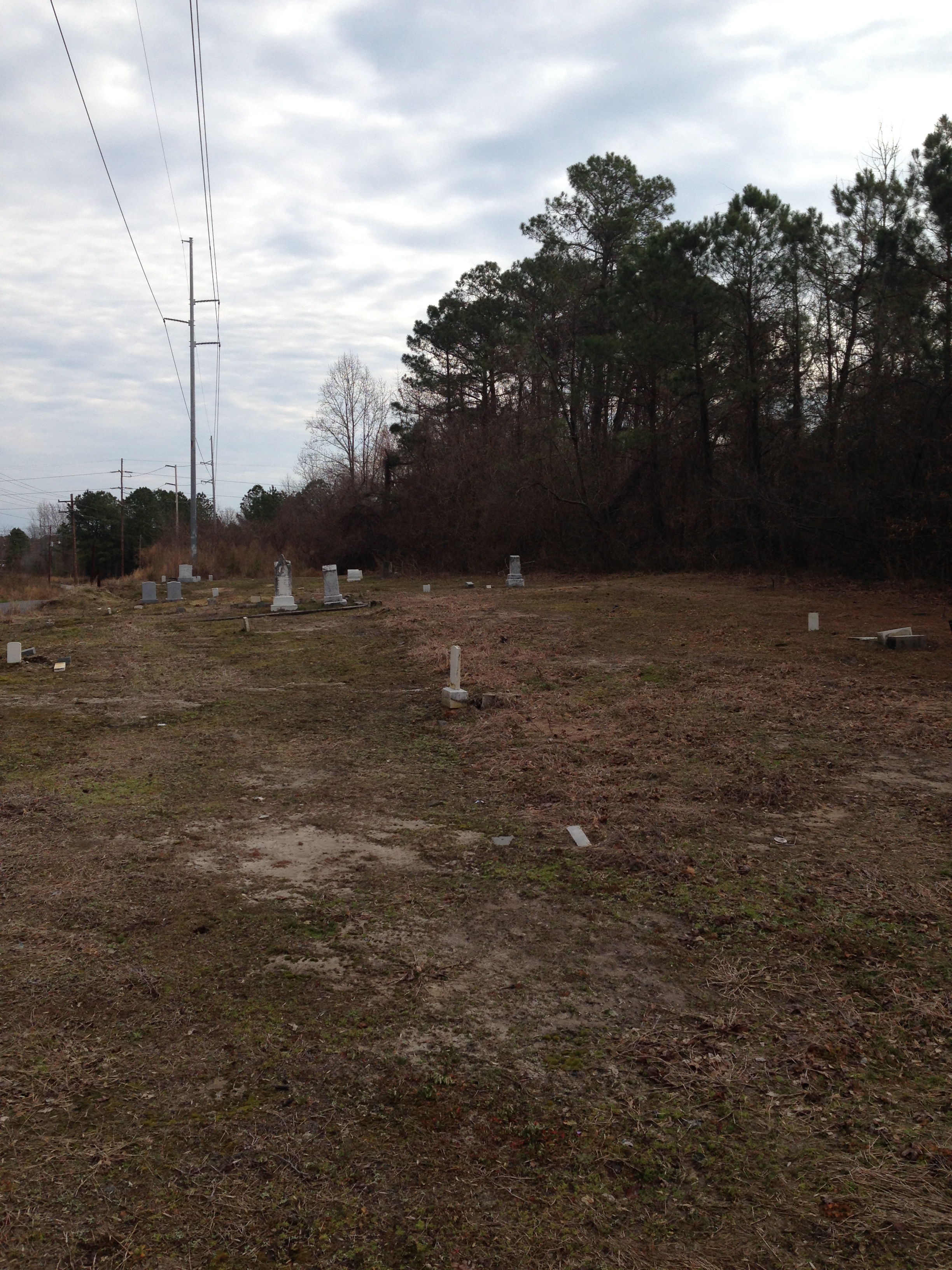
The wooden church was still standing then, on a sandy bank that rose from a curve in the highway at Lane Street.  In my father’s time, Rountree church was well beyond city limits, but our subdivision leapfrogged it in the early 1960s, and a grocery store popped up across the road, and it was no longer an outpost.  Still, when we were children, Lane Street was raw and unpaved and, for us, a gateway to adventure.  A hundred yards in, the road crossed over a sluggish branch, the pines began to crowd down to its ragged edge … and tombstones began to poke through the snarl of catbrier and cane choking the forest floor.  Here was the remnant of Wilson’s first colored cemetery*, abandoned at mid-century and, by the mid-1970s, when we prowled these woods, completely overgrown with bamboo and sweetgum and loblolly pine.  Burials by then had moved around the corner to Rest Haven cemetery, which is city-owned and maintained.  Perhaps 20 years ago, after several half-hearted clean-up efforts, a small, ragged section of Rountree was cleared and its remaining stones propped up.  A hundred yards down the road, in an open field, a memorial was erected to Rountree’s many hundreds of lost graves. A set of my great-grandparents were probably buried there, as well as my father’s stillborn brother, Uncle Jack’s sickly boys, and other kin unknown and maybe unknowable.
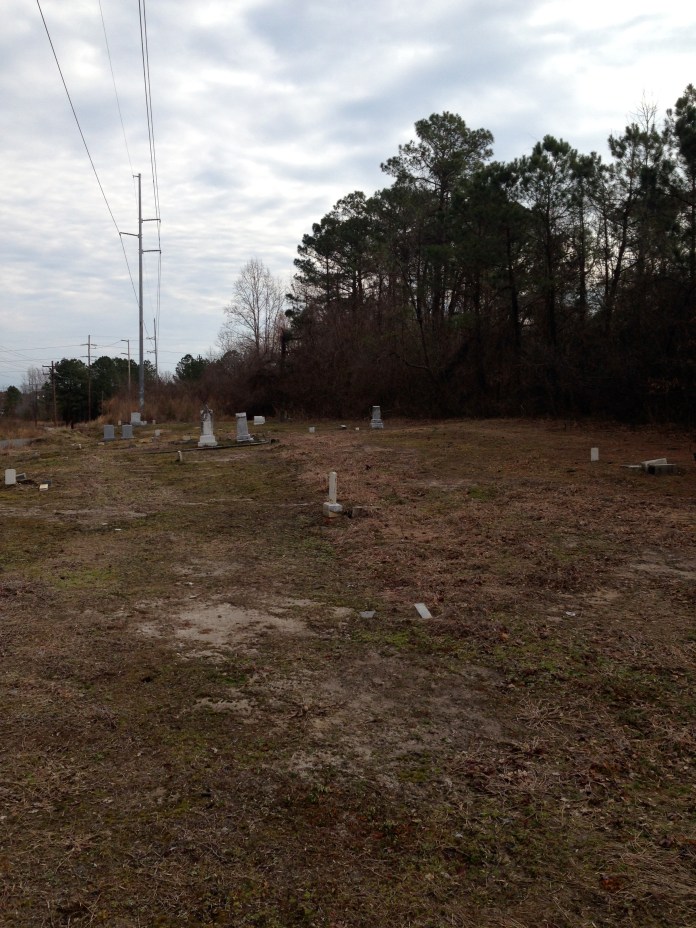
IMG_4992

 The sad remnants of Rountree cemetery, February 2014.

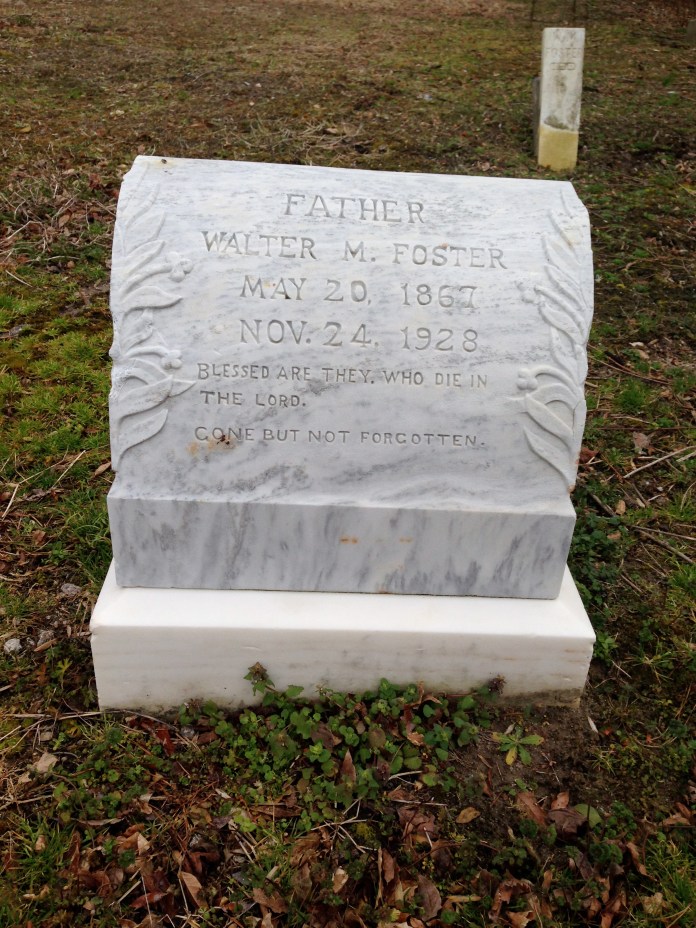
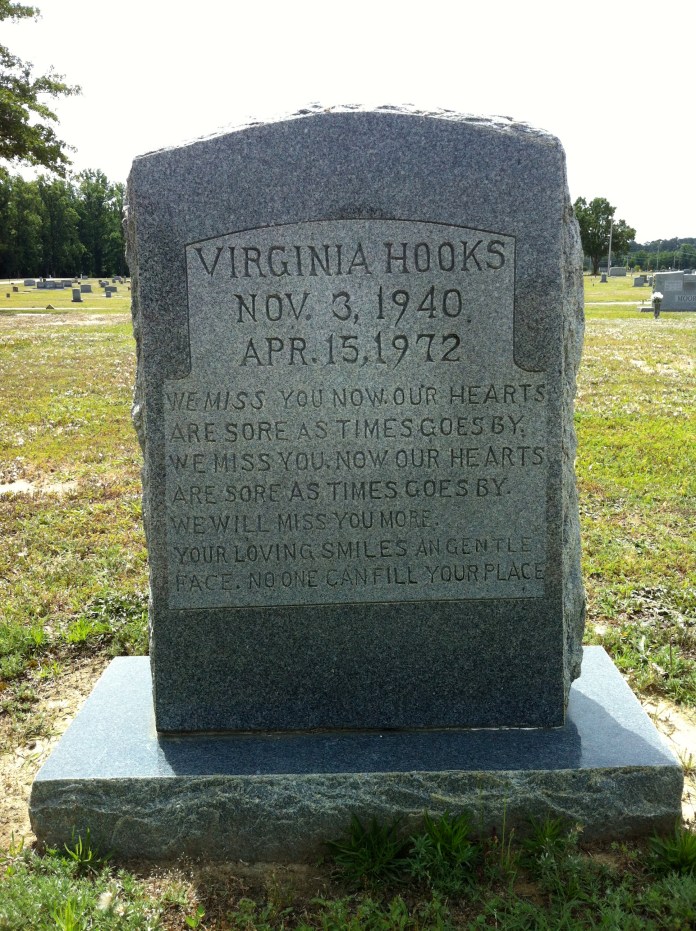
My grandmother was buried at Rest Haven in 2001 and my uncle in 2005, but only recently did I begin to regard that cemetery’s conventional, lettered rows as as interesting as wild Rountree. My grandmother’s headstone, like all from the last 30 years or so, is machine-cut, its lettering precise and even. Older markers, however, reveal an artist’s hand, quickly recognizable in a squarish font with flared serifs and, especially, the long, pointed tails of the 9’s. Marble cutter Clarence Benjamin Best carved headstones for more than 50 years, chiseling lambs, stars, flowers, and Masonic emblems, as well as pithy, grammatically idiosyncratic epitaphs, into slabs of gray granite. I have found his work in rural Wilson County cemeteries and as far afield as Wayne and Greene County, but Rest Haven is ground zero for his oeuvre.
IMG_4996

 An early example of Clarence Best’s marble-carving in Rountree — before he developed his signature long-tailed 9’s. (Foster was an early investor in Commercial Bank.)
IMG_8931

A late example — with 9’s and a bit of a extra verbiage, Rest Haven.

IMG_8937

 Rifle, fish, peaches — a Best creation for husband and wife, Rest Haven.

In addition to my father’s mother and brother, my paternal grandfather is buried in Rest Haven, as are my aunt’s husband; Uncle Jack and his family; Josephine A. Sherrod and countless other Artises; and, somewhere, Aunt Nina.

Jesse A Henderson headstone

My uncle, Jesse A. Henderson.

Jack Henderson headstone

Cousin Jesse “Jack” Henderson and wife, Pauline “Polly” Artis Henderson.

*I have since learned that it was not, in fact, the first. That distinction may belong to a small cemetery just off Pender Street, memorialized in today’s Cemetery Street. All traces of it have disappeared.

Standard
Births Deaths Marriages, Maternal Kin, North Carolina

Family cemeteries, no. 10: Green Street.

Green Street cemetery is a three-acre square smack in the middle of Statesville’s African-American southside. My great-aunt’s house faced the graveyard, but I don’t recall anyone ever talking about family members being buried there. Nonetheless, several years ago, I found three: my great-great-grandfather John W. Colvert, his wife Adaline Hampton Colvert (the double stone below) and their daughter Selma Eugenia Colvert, who is buried nearby. I suspect that others rest there, including John Colvert’s parents, his son Lon W. Colvert, Lon’s first wife Josephine Dalton Colvert, and his children Walker Colvert and Golar C. Bradshaw.

IMG_4585

IMG_4588

Standard
Births Deaths Marriages, Enslaved People, Free People of Color, North Carolina, Paternal Kin, Photographs

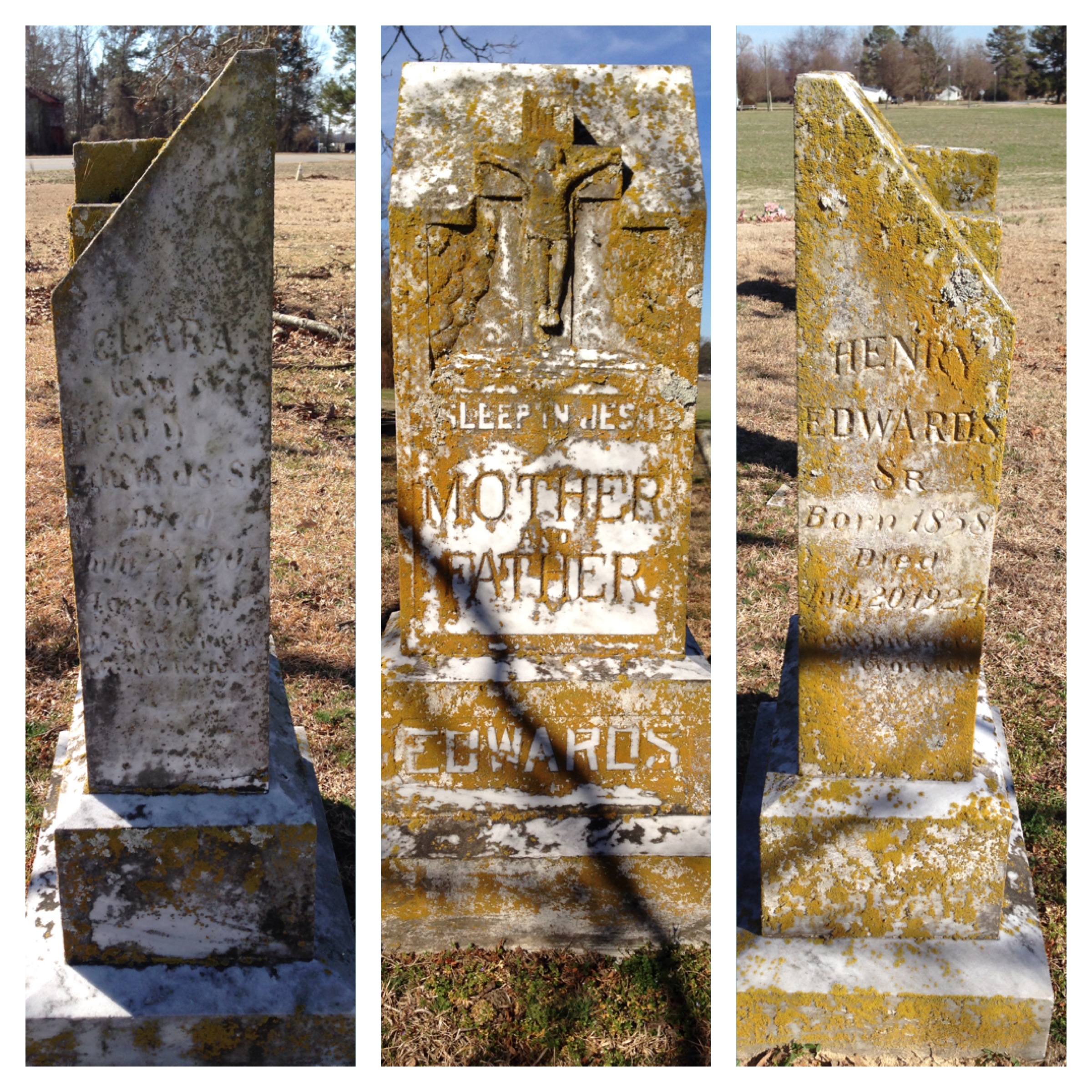
Family cemeteries, no. 9: Daniel Artis’ Edwardses.

A right turn out of my parents’ neighborhood puts me onto Highway 58. Head southeast, cross the edge of Stantonsburg, over Contentnea Creek and the Greene County line, and, 13 miles from home, you reach Lane Road. Turn left, round the curve, and there, neatly marked and kept, is the Edwards cemetery. Here are buried Daniel Artis‘ daughter Clara, her husband Henry Edwards, and their descendants.

Image

Photo taken today, Lisa Y. Henderson.

Standard
Births Deaths Marriages, Maternal Kin, North Carolina, Photographs

Family cemeteries, no. 8: The Nicholsons.

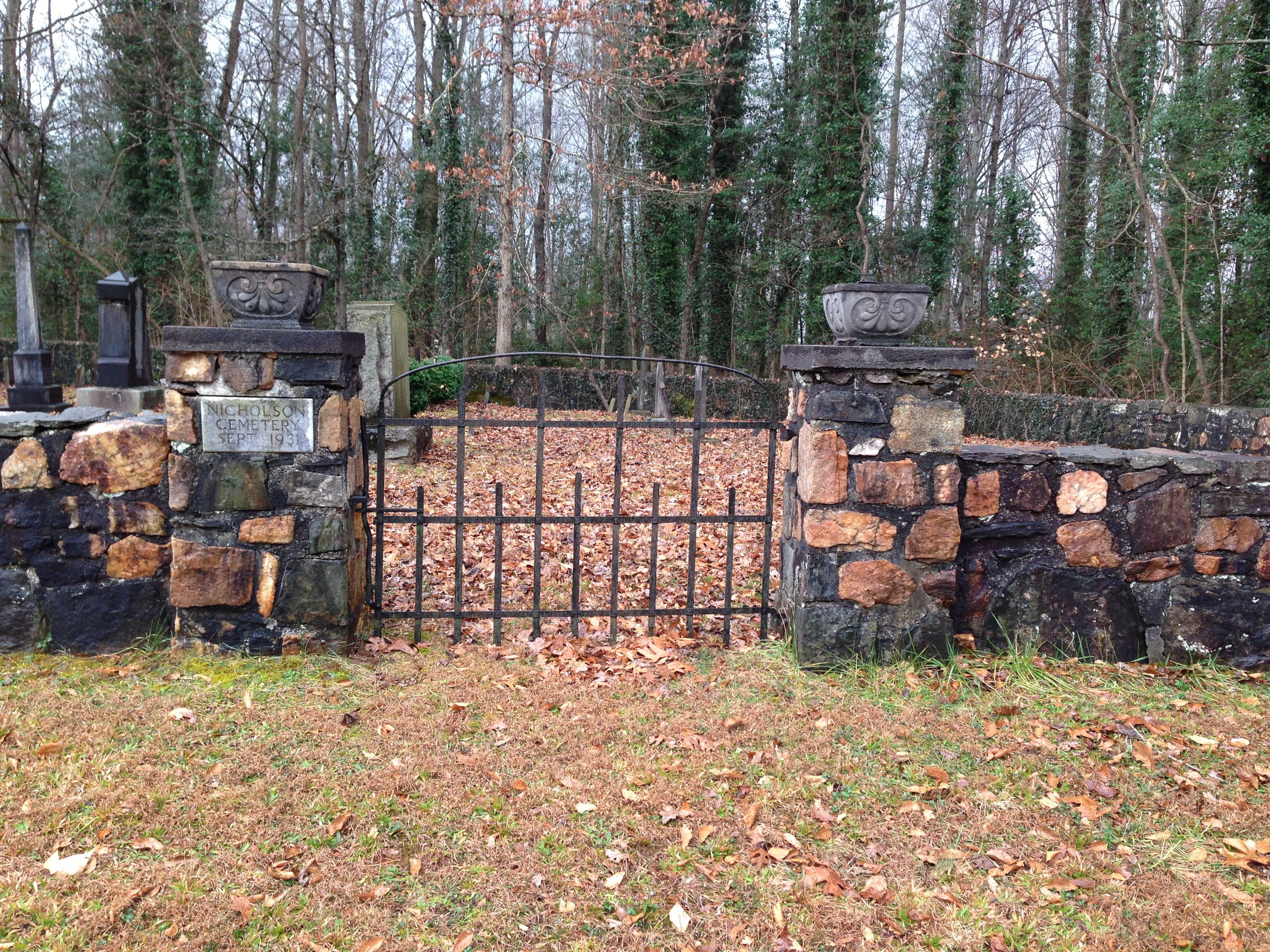
The map was not entirely clear, but the graveyard was definitely on Barnards Mill Road, which branched off Harmony Highway somewhere above Hunting Creek. Though morning, the sky was dark with impending rain. I kept an eye on the left side of the road. A bridge over the creek … an unmarked road … “Bridge Out.”  Wait, wasn’t the cemetery by a bridge?  I backtracked and turned off the highway. After a half-mile or so, the blocked bridge and a path, marked No Trespassing, leading into the woods. I am not a fool. I trotted up to the closest house and knocked. A middle-aged woman peered through a window, then motioned me around to the side door. “I’m looking for a cemetery near here. Welch-Nicholson.” She gestured behind me and smiled. Up the hill across the road, a low stacked-stone wall inset with a simple iron gate surrounded the remains of a hundred years of Nicholsons.

IMG_4594

My great-great-great-great-great-grandfather James Nicholson bought a mill on the creek in the late 1820s and probably established the graveyard. His father, Revolutionary War veteran John Stockton Nicholson, who was born 1757 in Princeton, New Jersey, and migrated to North Carolina circa 1800, is buried Muddy Creek Friends cemetery, Kernersville, North Carolina. He died in 1838.

IMG_4611

John was married twice, to Mary McComb, then Catherine Anne “Caty” Stevenson. Mary bore one son, the James Nicholson above. Caty bore ten, including John S. Nicholson Jr. Mary McComb Nicholson is buried near John Jr., whose stone is shown above. Caty is buried at Muddy Creek.

James Nicholson married Mary Allison in 1815; their children were Thomas Allison Nicholson and John McComb Nicholson. Thomas A. Nicholson married his first cousin Rebecca Clampett Nicholson, daughter of John S. Nicholson Jr. and Mary Fultz.

Thomas Nicholson’s broken gravestone is propped next to that of Rebecca.

IMG_4602

IMG_4605

Thomas and Rebecca’s oldest child James Lee Nicholson, my great-great-great-grandfather, is also buried here. He died a few weeks short of his 30th birthday in 1871.

Photos taken by Lisa Y. Henderson in December 2013.

Standard
Births Deaths Marriages, North Carolina, Paternal Kin, Photographs, Religion

Family cemeteries, no. 7: Turner Swamp Primitive Baptist Church.

Image

Rev. Jonah Williams once led the flock at Turner Swamp, and its cemetery is full of kin.

There’s Richard Artis (whose father Richard was Jonah’s — and my great-great-great-grandfather Adam Artis — brother) and his wife, Penny Coley Artis …

Image

… Richard’s brother John Henry Artis (1896-1963) and sister Emma Artis Reid (1877-1964) …

… and several of Richard and Penny’s children, including Alfonza Artis (1908-1948), C. Columbus Artis (1910-1985), Louis D. Artis (1916-1983), Jonah Artis (1918-1966) and Jesse L. Artis (1919-1960) …

… and Magnolia Artis Reid (1871-1939), daughter of Richard and Jonah’s sister Loumiza Artis Artis (wife of  Thomas Artis, no kin);

… and descendants of Adam, Richard, Jonah and Loumiza’s sister Zilpha Artis Wilson, wife of John Wilson, including her daughter Elizabeth Wilson Reid‘s children Milton C. Reid (1890-1961) and Iantha Reid Braswell (1893-1955) …

Nora Artis Reid (1894-1965), who was married to her cousin Milton Reid and was the daughter of Adam Artis’ son Noah Artis, and …

… even Wade Ashley Locus (1897-1945), a distant Seaberry relative of Adam’s wife Frances Seaberry Artis.

Photos taken by Lisa Y. Henderson, December 2013.

Standard
Births Deaths Marriages, Free People of Color, Land, North Carolina, Paternal Kin, Photographs

Where we lived: Adam Artis’ Eureka.

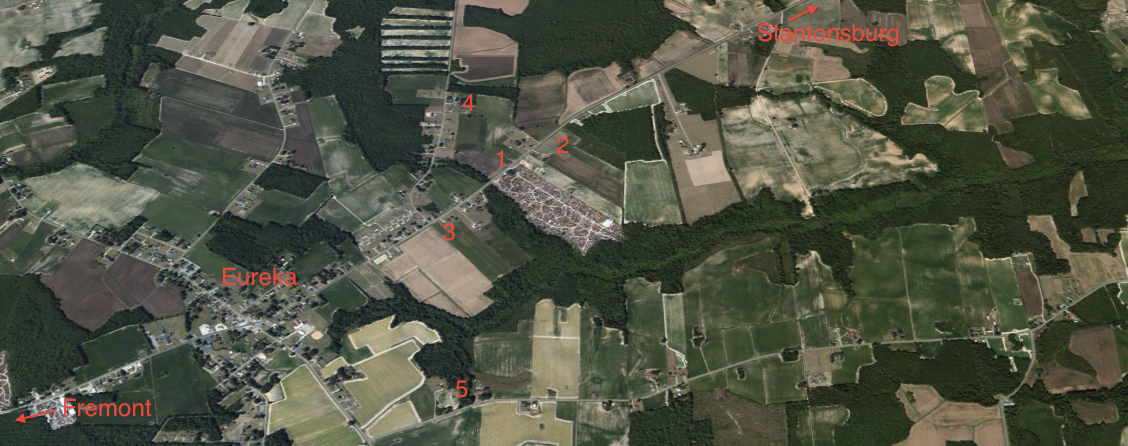
Adam Artis bought and sold hundreds of acres in northeast Wayne County in the last half of the 19th century. Almost 160 years after he filed his first deed, his descendants remain on pockets of his land strung along Highway 222. More enduringly, their family cemeteries cluster east of Eureka toward Stantonsburg — at the heart of his erstwhile empire.

eureka artis

#1 marks the location of Adam Artis’ grave. His many wives and children notwithstanding, until the mid-1980s, his was the only readily identifiable grave in the plot.

#2 is the self-proclaimed “Historic John I. Exum” cemetery. Adam’s kin intermarried considerably with Exums, including his granddaughter Cora Artis, who married John Ed Exum, and his sister Delilah Williams, who married Simon Exum. Delilah and Simon, however, are buried at #3, along with several of their descendants.

Red Hill Road debouches into 222 across from #3. Not a half-mile back up the road, at least two and possibly four of Adam’s sons rest. Noah and June Scott Artis are buried in #4 with several of June’s offspring, as well as their brother Robert‘s wife and their brother Henry J.B.‘s wife and children.

About a half-mile, as the crow flies, south of #3 is #5, which contains the graves of Adam’s son William M. Artis and his descendants, as well a daughter of Adam’s brother Jesse Artis.

The road snaking northwest out of Eureka becomes Turner Swamp Road past the city limits. Just off the edge of this map, perhaps a mile up the road, stands Turner Swamp Baptist Church, once led by Jonah Williams, brother of  Adam Artis, Jesse Artis and Delilah Williams Exum. A sizeable cemetery lies behind the church, and it contains the graves of Magnolia Artis Reid, daughter of Loumiza Artis Artis, who was another Artis sibling, as well as descendants of Zilpha Artis Reid and Richard Artis, yet more siblings. Turner Swamp itself appears as a dark green curve bracketing the upper left corner of the photo. It is likely that the original location of the church was north along the banks of the waterway, at the site where the overgrown graves of Jonah Williams and his family lie.

Back in the other direction, east on 222 toward Stantonsburg, lies Watery Branch Road. (The branch itself is the dark green sword piercing more than halfway into the frame from the right.) Perhaps a quarter-mile, if that far, down the road on the right lies the Diggs cemetery, another small family graveyard. Celia Artis, born about 1800, the wealthiest free woman of color in Wayne County, was the Diggs’ matriarch. She and Adam Artis’ kinship, if any, was unknown even to them. Two of Celia’s great-granddaughters married a son and a grandson of Adam Artis. Leslie Artis, his wife Minnie Diggs Artis, and some of their descendants are buried here.

Standard