DNA, Free People of Color, North Carolina, Paternal Kin

DNAnigma, no. 6.

I recognized his name immediately and shot off a message to his Ancestry.com inbox. … And then another message. … And then another one. … And still, crickets. In the meantime, I had an email from his first cousin, and I shared news of the match with her. She was excited and said she’d prod him.  Apparently, he is prod-proof.

In any case, this is another match between descendants of Adam T. Artis, with an Aldridge twist. H.B.’s great-grandfather was Henry J.B. Artis, son of Adam by his fourth wife, Amanda Aldridge, who was a daughter of Robert and Eliza Balkcum Aldridge. H.B. and I are roughly 4th cousins, which Ancestry correctly predicted.

Standard
Free People of Color, North Carolina, Paternal Kin, Rights

Grandfathered in.

Public Laws of North Carolina, 1899, chapter 218.

(Sec. 4.) Every person presenting himself for registration shall be able to read and write any section of the constitution in the English language and before he shall be entitled to vote he shall have paid on or before the first day of March of the year in which he proposes to vote his poll tax as prescribed by law for the previous year. Poll taxes shall be a lien only on assessed property and no process shall issue to enforce the collection of the same except against assessed property.

(Sec. 5.) No male person who was on January one, eighteen hundred and sixty-seven, or at any time prior thereto entitled to vote under the laws of any states in the United States wherein he then resided, and no lineal descendant of any such person, shall be denied the right to register and vote at any election in this state by reason of his failure to possess the educational qualification prescribed in section four of this article….

The following colored men registered to vote in Wayne County in 1902.  In accordance with Section 5, each was required to name the ancestor who “grandfathered” him in.

Joseph Aldridge, 36, Brogden, Robert Aldridge.

M.W. Aldridge, 45, Goldsboro, Robert Aldridge.

Robert Aldridge, 33, Brogden, Robert Aldridge.

Marshall Carter, 42, Brogden, Mike Carter.

Williby Carter, 22, Brogden, Mike Carter.

H.E. Hagans, 34, Goldsboro, Napoleon Hagans.

W.S. Hagans, 31, Nahunta, Dr. Ward.

John H. Jacob, 52, Brogden, Jesse Jacob.

——

The Aldridges you have met. The Carters have tangential connections. Marshall Carter’s son (and Williby’s brother) Milford Carter married Robert Aldridge’s granddaughter Beulah Aldridge, daughter of John W. Aldridge. Henry “H.E.” and William “W.S.” Hagans, sons of Napoleon Hagans, were the first cousins of Louvicey Artis Aldridge. (“Dr. Ward” was David G.W. Ward, former owner of their mother Apsilla Ward Hagans.) John Hacobs was a nephew of Jesse A. Jacobs Jr.

Standard
Births Deaths Marriages, North Carolina, Oral History, Paternal Kin, Photographs

Louvicey Artis Aldridge.

Image

Vicey was little, rawboned-ed.  With a peaked nose, and she was more Indian color.  But she had that pretty hair.  I remember her when she used to come to Wilson.  She come up there visiting once in a while.  Vicey was, ahh ….  You remember Josephine Sherrod?  Well, she was lighter than her.  But she had that peaky nose and had nice hair.

Image

This is my grandmother’s description of her paternal grandmother, Louvicey Artis Aldridge. Josephine Artis Sherrod (in the second photo) was Louvicey’s half-sister — and niece. Their father was Adam T. Artis. After the death of Vicey’s mother, Adam married Amanda Aldridge, sister of Vicey’s husband John W. Aldridge.

Photographs in the collection of Lisa Y. Henderson. Interview of Hattie H. Ricks by Lisa Y. Henderson; all rights reserved.

Standard
Births Deaths Marriages, Oral History, Paternal Kin

When Grandma Mag died.

My grandmother was 5 years old when her great-grandmother Margaret B. Henderson died in 1915. This is what she recalled:

I remember when Grandma Mag died.  I don’t remember ‘em burying her.  But I was up to Nora’s house.  That’s how come I remember it.  Grandma Mag was living, well, she was in bed, she was sick.  I don’t remember her being up. Grandma Mag stayed down in Dudley. When she died, I was down there, and we went to Nora’s house.  And I used to ask myself, ‘Why is she in the bed all the time?’  

During Grandma Mag’s funeral, I stayed with Aunt Vicey and Nora and Beulah, the one that had the wen under her neck.  We called her A’nt Vicey, but she was my grandmama. I stayed up there with them, and I was scared to sleep in the bed by myself. So Nora told me, “Well, if you get in the back and I’ll get in the front.”  So she said, “Well, I’ll be in here right with you,” so I went on to sleep.  That’s who I slept with. 

So, I stayed up there in that house when Grandma Mag died.  I stayed up there.  And I slept in her room.  I remember that.  But I don’t remember … they didn’t let me go to the funeral, I don’t think. 

“Aunt Vicey” was Louvicey Artis Aldridge (1865-1927), her father’s mother. “Nora” and “Beulah” were Vicey’s daughters Lenora Aldridge Henderson (1902-1961) and Beulah Aldridge Carter (1893-1986).

Standard
Free People of Color, Letters, North Carolina, Paternal Kin

The case for Eliza Balkcum Aldridge.

Image

She is obviously a very old woman, stooped and twisted, but with a full head of silvery hair pulled into a loose bun. Her daughter-in-law stands to one side, hand resting protectively on the back of her chair. The only known photographs of Mary Eliza Balkcum Aldridge, two of them, were taken the same day near the end of her long life.

The basic outline of Eliza’s life is established. According to her death certificate, she was born 29 February 1829 in Duplin County. She married Robert Aldridge around 1850, but no marriage license has been found for them. Eleven of her children lived to adulthood. She ran the domestic side of a farmer’s household and slipped out to deliver babies when called upon. She inherited 53 acres from her husband’s estate, but spent her last years in the households of her youngest sons, Robert and Joseph.

The details of her early life are less clear, but I believe she was born to an unorthodox white woman named Nancy Balkcum. Here’s the case:

  • About 30 years ago, a cousin prepared an unannotated family history (apparently based on oral tradition) that notes “Robert [Aldridge] married Eliza Bayscin in 1850.  Eliza was born in Johnson [sic] County, North Carolina in 1830.  She had two sisters, Mary and Maggie.”  Everything in this document must be taken with a grain of salt — it borders on the hagiographic and is very romantic — but the basic story seems to be rooted in fact.
  • In the 1850 census of Sampson County, a 21 year-old named Elizabeth Balkcum appears in the household of Lemuel Balkcum.  Elizabeth does not appear to be his spouse. She is listed last in the household, after minor children. As I’ll explain in another post, Lemuel Balkcum was the grandson of Hester Balkcum, and most likely the son of Nancy Balkcum. Though her name is slightly off, I believe “Elizabeth” is Eliza.
  • In 1854, Nancy Balkcum’s will was probated in Sampson County Court of Pleas and Quarter Sessions. Her legatees were “daughter Margaret Balkcum,” “two daughters Eliza and Mary,” and “son Harman.” (This matches the Mary and Maggie in the family history above, and I am certain its writer never saw Nancy’s will.)
  • In the 1860 census of Newton Grove, Sampson County, Mary E. Aldridge appears with her husband Robert and children. This is the only reference to her as “Mary E.” In subsequent censuses — 1870 and 1880 in Brogden township, Wayne County; 1900 in Providence township, Wayne County; and again in 1910 and 1920 in Brogden township — she is called Eliza Aldridge.
  • Eliza’s son Matthew Aldridge died in 1920 in Goldsboro, Wayne County.  His death certificate lists his mother as “Lizzie Borkem.”
  • Eliza Aldridge died 29 January 1924 of influenza.  She was just short of 95 years old. Eliza’s son Joseph did not know Eliza’s father, but gave her mother’s name as “Nancy.”
  • Son Joseph Aldridge died in 1934 in Wayne County. His death certificate lists his mother as “Eliza Barkin” of Sampson County.
  • Son Robert Aldridge died in 1940 in Wayne County. His death certificate lists his mother as “Eliza Baucom” of Wayne County.
Standard
Births Deaths Marriages, Free People of Color, North Carolina, Paternal Kin, Photographs

James Henderson’s children, part 1: the Skipps.

James Henderson had two sets of children. His first set bore the surname Skipp in childhood, when they were apprentices, and these facts suggest that James and their mother were not married. Son James Henry’s death certificate gives his mother’s name as Sallie Henderson. Was she instead Sallie Skipp?  Skipp is rare name in Onslow County, but a free man of color named William Skipp headed a household in 1820. Her father, perhaps?

The children of James Henderson and “Sallie Skipp”:

Lewis Henderson married Margaret Balkcum, a free woman of color from Sampson or Duplin County.  The family settled near Dudley, in southern Wayne County, and in 1870 Lewis and Mag became founding members of the Congregational Church.  By 1880, Lewis was growing corn, wheat and cotton on about 150 acres.  He and Mag had nine children, but descendants of only two, Ann Elizabeth and Loudie, remain today. Lewis died 12 July 1912.

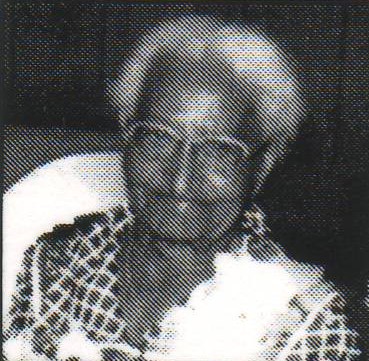
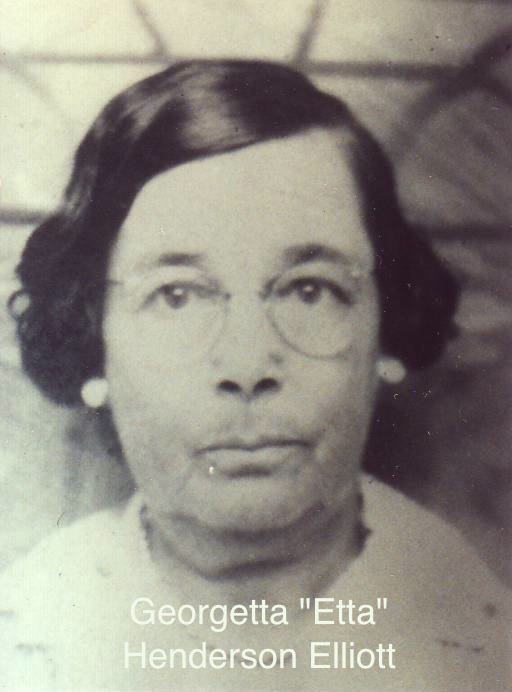
James Henry Henderson’s first child, Carrie Faison, was born about 1869 to Keziah Faison.  Soon after, James married Frances Sauls and settled in Wayne County as tenant farmers.  James and Frances’ children were Mary Ella Henderson (1867-??), Elizabeth Henderson (1869-??), Nancy Henderson (1873-??), Amelia Henderson Braswell (1877-1914), Elias L. Henderson (1880-1953), James Ira Henderson (1881-1946), Lewis Henderson (1885-1932), and Georgetta Henderson Elliott (1889-1972).  In 1900, James married Laura Roberts. Though James’ modern heirs descend from only a few of his children, Lewis, Georgetta “Etta,” and Elias, they comprise the largest sub-branch of the family. James died 21 June 1920 in Duplin County.

Mary E Henderson Text

Amelia Henderson 001 Text

Elias L Henderson Text

Georgetta Henderson 001 Text

Mary Henderson seems to have died in childhood.

Eliza Henderson moved to Sampson County with her rest of her family, but has not been found after the 1860 census.

Standard
Free People of Color, North Carolina, Paternal Kin, Religion

Church home, no. 1: First Congregational, Dudley NC.

“History of the First Congregational Church of Dudley, North Carolina, Given by Mr. General Washington Simmons, born December 22, 1856.”

In 1867, after Emancipation, came the first school for Dudley, taught four months by a white confederate soldier, John P. Casey, who was paid by the community families. The only textbook was the “blue-back speller.”

George Washington Simmons, father of General W. Simmons, corresponded with Mr. James O’Hara in Wilmington, Delaware, though whom the services of another white friend, Miss Jane Allen of Delaware, were secured for another two months’ session. She, too was paid by families.

From Oberlin College in 1868, came D.C. Granison, 23 or 24 years of age, the first Negro teacher, who remained for two years, residing in the home of George Washington Simmons. … His correspondence with the A.M.A. brought visitors in 1870, among whom were many to be remembered, especially Rev. D.D. Dodge, at that time pastor of the First Congregational Church in Wilmington, North Carolina. With his guidance our first Sunday School was organized. After several visits, he sent Rev. John Scott of Naugatuck, Connecticut, who began work in 1870. …

Just after Rev. Scott’s ordination, the First Congregational Church of Dudley was organized in what is known as the old “mission home.” … Charter members of the church were George Washington Simmons, James KingLevi Winn Sr., Levi Winn Jr., Henry Winn, George Winn, and members of their families. The first converts were Charity Faison and Sylvania Simmons. They were baptized in the “Yellow Marsh Pond” just north of the cemetery. …

Volume II [of the church records] summarizes the history from March 9, 1870. … The list of members, dating from 1870, is divided by male and female. It includes the names of Frank Cobb, William AldridgeBryant Simmons (Sr. and Jr.), John AldridgeLewis Henderson, Levi Wynn, Richard Brunt, Amos Bowden, Charles Boseman, M.A. Manuel, Solomon Jacobs, George Washington Simmons, …

From the souvenir bulletin of the 100th Anniversary, First Congregational Church United Church of Christ, 1870-1880.  Copy of bulletin in possession of Lisa Y. Henderson.

Standard
Free People of Color, North Carolina, Paternal Kin

The case for the Skipps as James Henderson’s children.

1. In the 1840 census of Onslow County, James Henderson is listed twice.  First, his household includes 1 male 24-26 [James]; 1 female 10-24 [Sallie Skipp?]; 2 males under 10 [Lewis and James]; and 1 female under 10 [Mary], all colored, and is listed between Bryant Koonce and William Mills.  Second, the household composition is the same, but is listed between William Boyett and Jesse King.

2. In the 1850 census of Upper Richlands township, Onslow County:  at household #32, Jim Henderson, 35, mulatto, mechanic, in the household of B.S. Koonce, farmer; at #34, Eliza Skipp, 7, mulatto, in the household of Jesse Alphin, farmer; at #60, Jim Dove, 14, and Mary Skipp, 10, mulatto, in the household of John Humphrey, farmer; at #65, Lewis Skipp, 16, laborer, and James Skipp, 10, both mulatto, in the household of Stephen Humphrey.

3. Neither James “Jim” Henderson nor the Skipp children appear in any Onslow County census thereafter.

4. In the 1860 census of Westbrooks township, Sampson County (about – miles from Upper Richlands): at #1033, Lewis Henderson, 25, turpentine laborer, with wife Margaret, 26, and children Lewis T., 4, James L., 3, and Isabella J., 4 months; at #1038, James Henderson, 52, carpenter, wife Eliza, 25, and children Anna J., 8, Susan, 6, Hepsie, 4, and Alex, 1; at #1039, Eliza Henderson, 18, in the household of John B. Sutton; at #1113, James Henderson, 22, farm laborer, in the household of Louis C. King. (Mary Skipp/Henderson has not been accounted for.) They are the only Hendersons in Westbrooks and were not in Sampson County in 1850.

5. In the 1870 census of Faisons, Duplin County: James Henderson “senior” is listed with his wife and children, including 27 year-old James. In Brogden, Wayne County: Lewis Henderson with his wife and children.

6. In the 1880 census of Brogden, Wayne County, James is listed with his wife and daughters. Lewis and his family were also in Brogden township. James senior remained in Faison.

7. Lewis Henderson had sons Lewis and James and a daughter Mary. James H. Henderson had sons Lewis and Elias Lewis and a daughter Mary.

8. James Henderson died in Faison, Duplin County, on 21 June 1920, aged about 80. His death certificate listed his birthplace as Onslow County and his parents as James Henderson and Sallie Henderson.

9. My grandmother, a great-granddaughter of Lewis, recognized Elias L. Henderson as a cousin. She recognized as aunts the daughters of James Henderson by his second wife. (They were actually her grandmother’s aunts, though they were contemporaries.) She also recognized as cousins the son and daughter of James’ son John Henderson.

——

In other words: in 1850, four children of ages to be siblings appeared in Onslow in proximity to a man believed to be their father. One of the children, Lewis, was born approximately the same year as Lewis Henderson. Ten years later, three of the four children, now bearing their father’s surname, appeared in proximity to him in Sampson County. (Surname shifts, especially among the children of unmarried parents, were not uncommon in free families of color.) The sons, Lewis and James, named sons after one another and settled sequentially in Brogden township, Wayne County.  Most of their half-siblings also migrated to Brogden, and their descendants maintained close family ties into the early 20th century. When James “junior” died, his death certificate acknowledged his birth in Onslow County and named James Henderson as his father.

Standard
DNA, North Carolina, Paternal Kin

DNAnigma, no. 3: An Artis match, after all.

I was geeked. After all, my great-great-great-grandfather Adam T. Artis had 25+ children, and I have thousands of cousins in their descendants. (Not to mention the descendants of Adam’s many siblings.)  I was crestfallen, then, when H.A. responded that he was descended from Absalom Artis, through Warren Artis, then Henry, then Alonzo, then William Henry Artis. I know the Absalom Artis line (though I didn’t know Warren was in it), and I have no known connection to them. Absalom was born in Virginia circa 1780 and was in northern Wayne County by the early 1800s. He and Adam lived in close proximity, but the record gives no clue to other links. Of course, ultimately, all of the free colored Artises in Wayne County – indeed, throughout Virginia and NC and out into Indiana and Ohio – were likely kin, but the links are so remote that reconstructing them is likely impossible. H.A. and I share enough DNA that our common ancestor had to have been within the last 5 generations or so. In other words, more recent than any common ancestor of Adam and Warren or Absalom.

But then….

While reviewing my notes for a post about Adam’s second set of children, I was reminded that his daughter Mary Jane Artis had married an Artis. Henry Artis. Son of Warren and Pearcy Artis. And mystery solved! H.A. and I are not related through his patrilineal Artis line, but via a wife whose father was my great-great-great-grandfather.

Standard
Free People of Color, North Carolina, Oral History, Paternal Kin

Lewis & Mag’s children, part 1: sons.

Lewis and Margaret Balkcum Henderson had nine or so children in Sampson County before shifting a few miles north into Wayne County, where they settled with other free-issue families near a tiny crossroads town called Dudley.  Before the Civil War, Margaret bore Lewis T. (1856), James Lucian (1858), Isabella J. (1860), Ann Elizabeth (1862), and Caswell C. (1864), and after, Mary Susan (1868), Carrie (1870), Sarah Daisy (1872), and Loudie (1874).

Of Lewis T., Isabella and Mary Susan, there is not enough known to talk about; they died as children.  But Lucian was my grandmother’s favorite great-uncle; the only one of Lewis and Mag’s children to stay in Dudley and farm.  He and his wife Susie (born a McCullin) had only one child, a daughter Cora Q., who died early and is remembered only by her headstone in the cemetery of the Congregational Church.  (I am endlessly fascinated by the Q.  What could it possibly have stood for?) Lucian so impressed my grandmother that she named her firstborn son after him. He is gone, but my cousins Lucian Jr., the III and the IV, remain.

My grandmother said:

Uncle Lucian, now he look more like an Indian to me than anybody.  Didn’t have too much hair, but what he had was straight and was that brownish color like it was fair.  We’d come down there and stay with them.  Get off the train and run all the way down there to their house.  That wont nothing.  And they had two beds in that front room.  One on one side and one on the other’n, and they slept on that one side, and me and Mamie slept in the other’n.  In the same room.  ‘Cause it wasn’t no door to it, and the fireplace was in the front room.  I don’t think they ever had a lamp or no light.  We’d go to bed with the chickens and get up with the chickens.  ‘Cause time it’s day, Uncle Lucian was up.  A’nt Susie couldn’t cook.  Because she couldn’t be over the stove, she’d fall out if she was over the stove.  She never left the house that I know of.  ‘Cause she had this thing, that, her head shook all the time.  I said to Mama Sarah, I said, “That thing’s gon shake her head off.”  I told Mama, “She’s gon shake her head off.”  She said, “It was a palsy, that’s how come.”  So Uncle Lucian always got up and cooked breakfast.  And, Lord, I used to love to go down there.  We would get up early mornings, and Uncle Lucian would cook breakfast and, honey, that old ham where he cooked you could smell a mile!  Honey, you could smell that ham before you even got there.  It was on the highway, and we didn’t go all the way ‘round the bend and come up the road.  We’d come down over the fence and come down the cornrow and come up to the house.  And he’d make rice, and it would be that ham gravy.  And the biscuits, they looked like they’s hamburg muffins, the biscuits was so big.  And you talking ‘bout good.   Ooo, you’d be ‘bout to have a fit, it smelled so good. Cooking ham and rice, and had to have ham gravy, just pour water in there from frying.  Great big old milk biscuits.  You eat one of them — you couldn’t even eat a whole one, ’cause they was so big.  And cooked on a little old bitty tin stove, a four-cap stove — the burner wont no more than bigger than that — where you had to put two, three pieces of wood in the stove, and the pipe run right straight up in the house.  Yeah, I thought that was some good days and some good food.  Look like to me, I thought it was the best.  We had good food at home, but seem like down there, it just taste better.  We didn’t have no ham everyday like they had down there, and by him having and curing it, the way they cured ham, his was different from what we had.  Like with that pepper and salt and stuff and seasoning outdoors.  And every one they’d kill, he’d get the hog and cook ‘em and hang ‘em in his packhouse. 

But every great-uncle was not as favored as Lucian.  There was also Caswell, from whom my father gained his middle name, but about whom my grandmother was ambivalent.  Caswell was in New York City by 1890, where he was a white man on his job with the Customs House, but moved among colored folks at home in the Tenderloin and later in Harlem and the Bronx:

Uncle Caswell come to Wilson visiting Mama Sarah.  He didn’t never bring his wife down there ‘cause he was passing for white, and she was kind of brown-complexioned.  But he’d leave our house, and he would go and get a paper every morning down there to Cherry Hotel.  Walk down there for the exercise and get that paper.  He’d go in the hotel there and ask for a paper and talk to the people, and they all said, “Who is this white man?”  And then he’d come all the way back a different way, then walk back down Green Street and come on home, so they wouldn’t know he was crossing the tracks.   And so he wanted Mamie, he didn’t want me, he wanted Mamie to come stay with him and his wife.  And he was gon send her to school and take care of her.  He’d buy all her clothes and everything.  But me, he ain’t said nothing ‘bout me.  But Mama said, “Naw, you can’t. I don’t want her to go to New York.  ‘Cause she don’t know nothing ‘bout New York, and, too, that would leave Hattie down here by herself.”  She said, “They’s gon stay, she gon stay with me ‘cause I promised Bessie that I’d take care of them as long as I lived.  I promised Bessie I’d keep ‘em together.  But if you want to give her something, or help me out with her, buy ‘em clothes or something like that, you can.”  So I didn’t like that. He ain’t said nothing ‘bout me.  But then they said I liked to read, and so he saved the papers where he was taking, and he would send ‘em in the mail to me.  But he sent Mamie candy.  And I told him I wont no goat!  Uncle Caswell didn’t like me.  And I started to tell him he was down there trying to be cute, playing, wanting folks to think he was white.  Passing for white.  Well, he could pass for white.  Least that’s what he was doing up in New York.  ‘Cause he was working at the roundhouse, had a good job.

——

Interview of Hattie H. Ricks by Lisa Y. Henderson; all rights reserved.

Standard