Enslaved People, Land, Maternal Kin, North Carolina

Between mills.

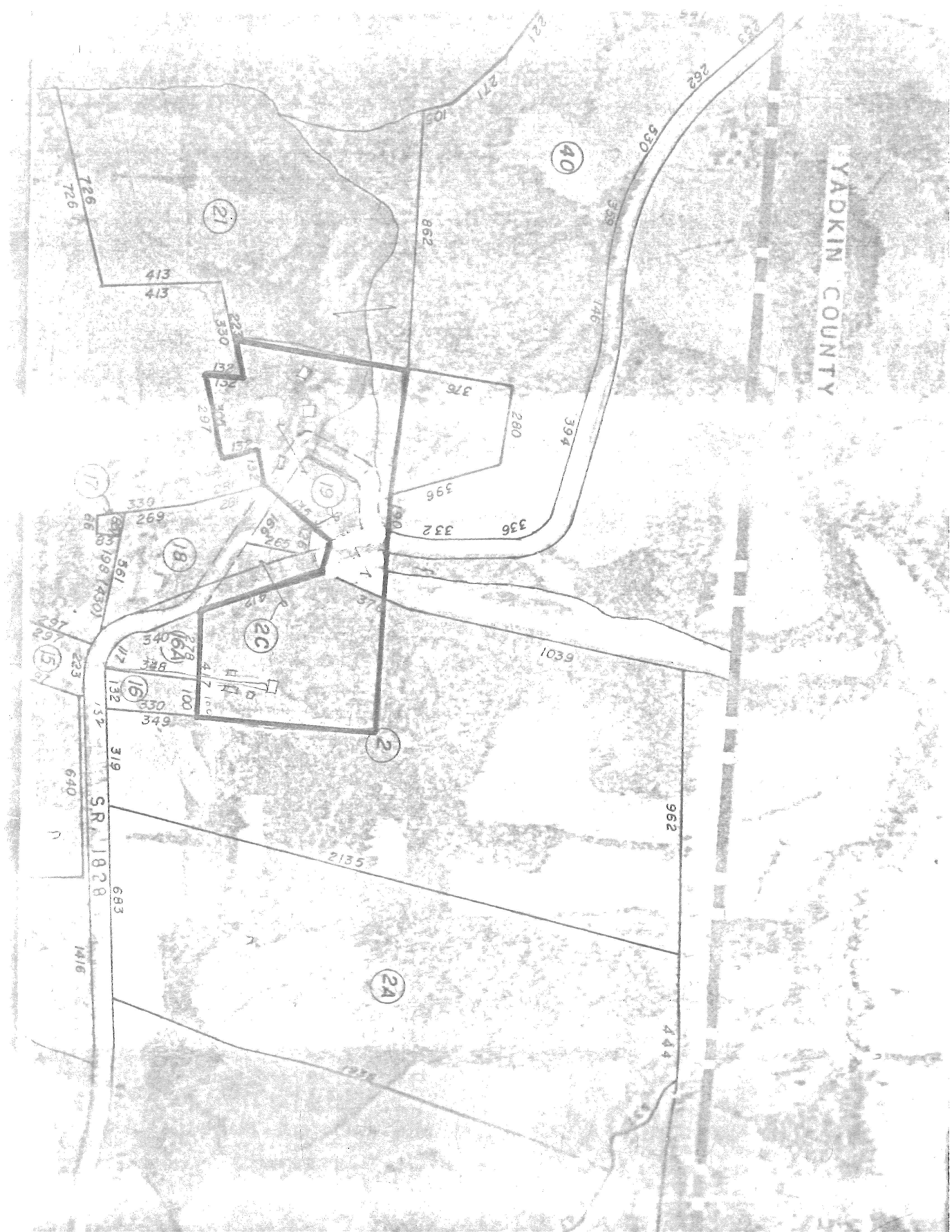
I was on my way to posting this map when I stumbled across the Welch-Nicholson House application. Back to it:

Miller_Map_section

Historian and genealogist Margaret Miller created and holds the copyright on this map of early Iredell County settlers and landmarks. The county, taller than wide, stands on a narrow foot, and I’ve excerpted a section that covers roughly the top fifth of its territory. The world of my 19th-century Iredell County ancestors was largely contained within the borders of the superimposed red box. There, just south of the Yadkin County line, is the Nicholson Mill that anchored the farm that James Nicholson bought in 1826. His half-brother John Nicholson lived on adjoining land, and their children Thomas A. Nicholson and Rebecca C. Nicholson married in 1839. Thomas and Rebecca reared their children in the house James had owned, and their slaves worked both the mill and the farm. One enslaved woman, Lucinda, likely worked with Rebecca in the house and, in 1861, gave birth to a daughter, Harriet, whose father was Thomas and Rebecca’s son Lee. That same year, Lee married Martha Ann Olivia Colvert.

In the early 1870s, the adolescent Harriet Nicholson met John Walker Colvert, a 22 year-old farmhand still living on the farm at which he had been born a slave. That farm, which is also where Martha “Mattie” Colvert was reared, was near Eagle Mills, the ill-fated cotton mill on Hunting Creek due south of Nicholson Mill. Mattie’s father William I. Colvert, an early small-scale industrialist, had been a partner in the development of Eagle Mills in the 1850s. William’s father John A. Colvert had died just a few years after arriving in Iredell County, and William — still a child — had inherited a boy named Walker Colvert, later the father of John Walker Colvert.

Just a few miles apart as the crow flies, Nicholson Mill and Eagle Mills were the poles of the community in which Harriet Nicholson’s family and John Walker Colvert’s family lived for generations before merging in my great-grandfather, Lon W. Colvert.

Standard
Agriculture, Enslaved People, Land, Maternal Kin, North Carolina, Other Documents, Photographs

The Welch-Nicholson House and Millsite.

How have I overlooked this?

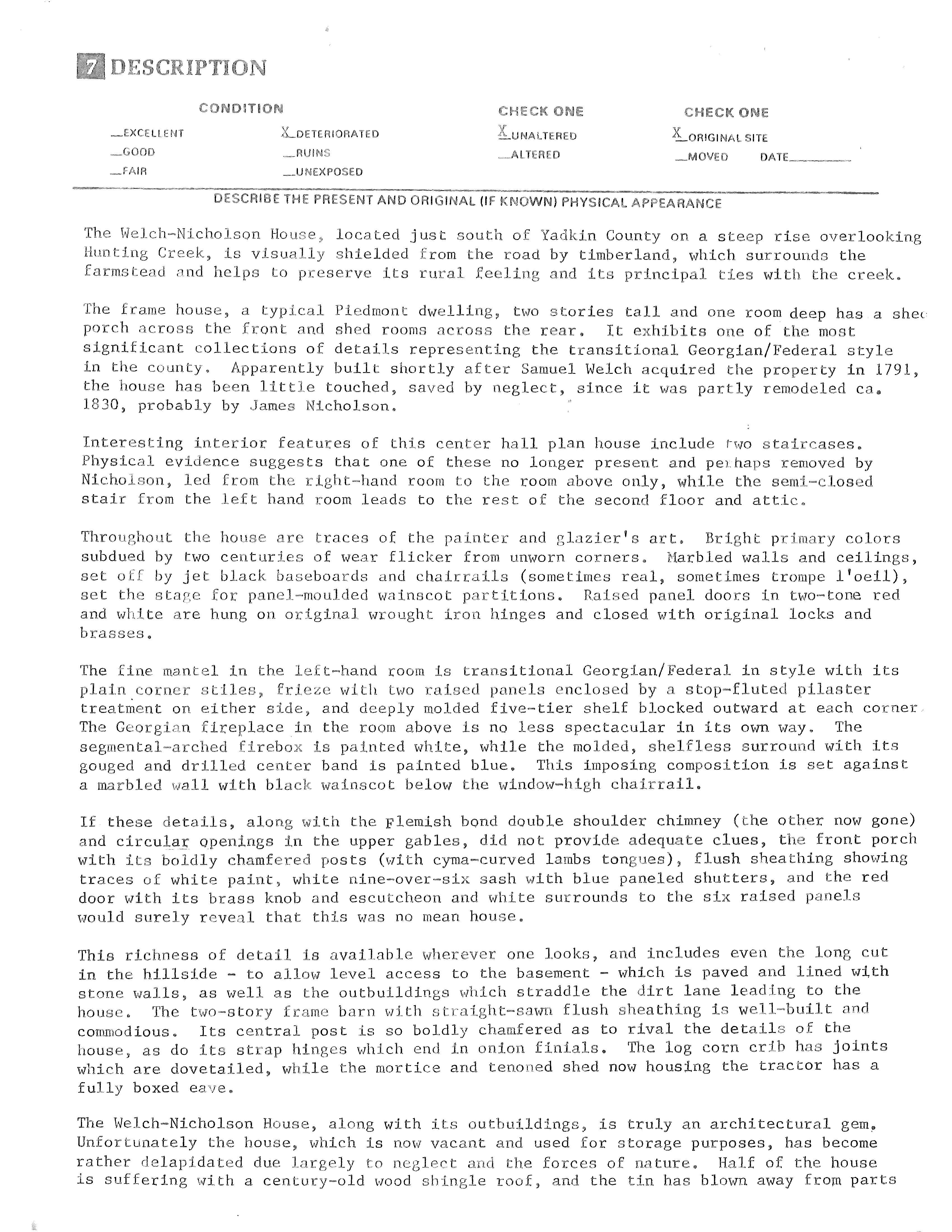
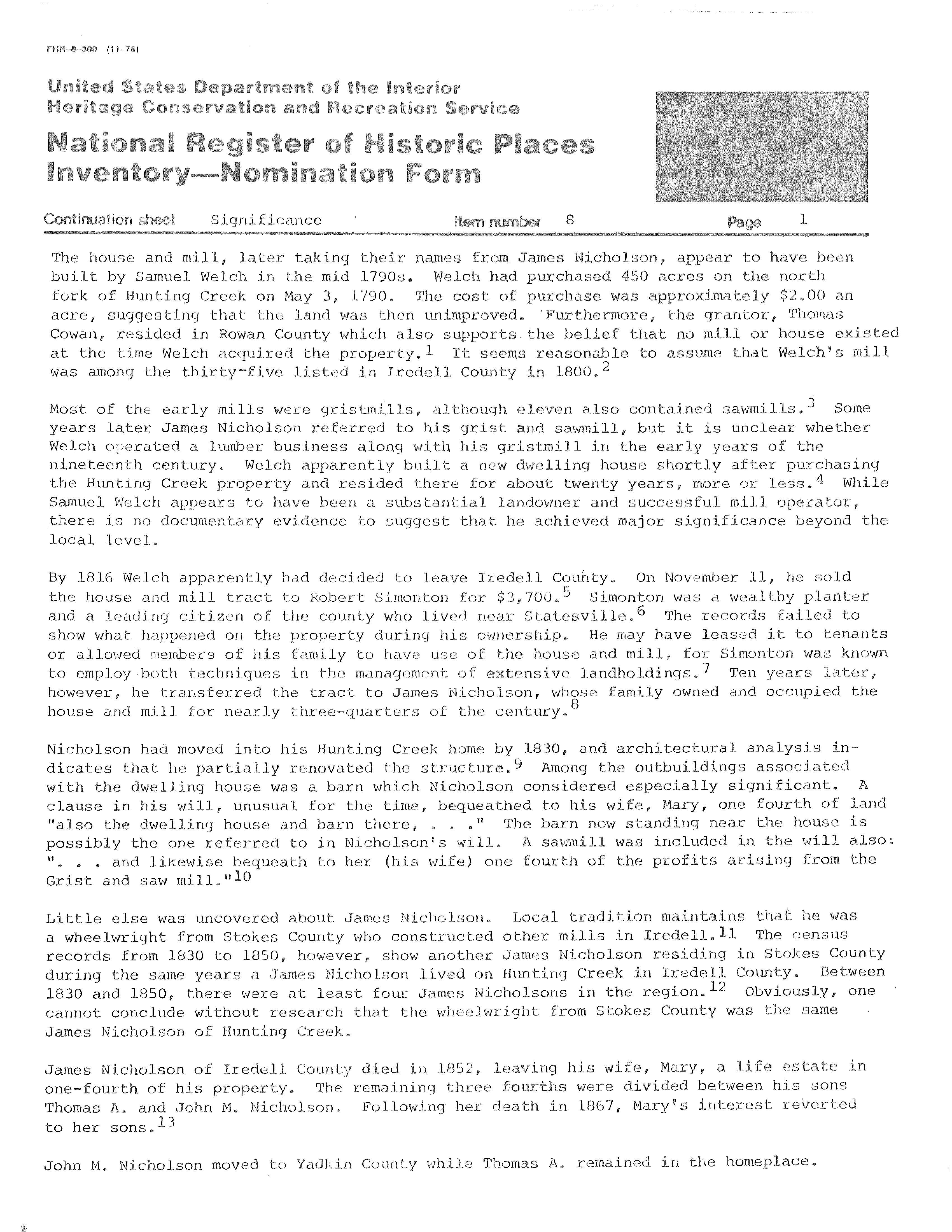
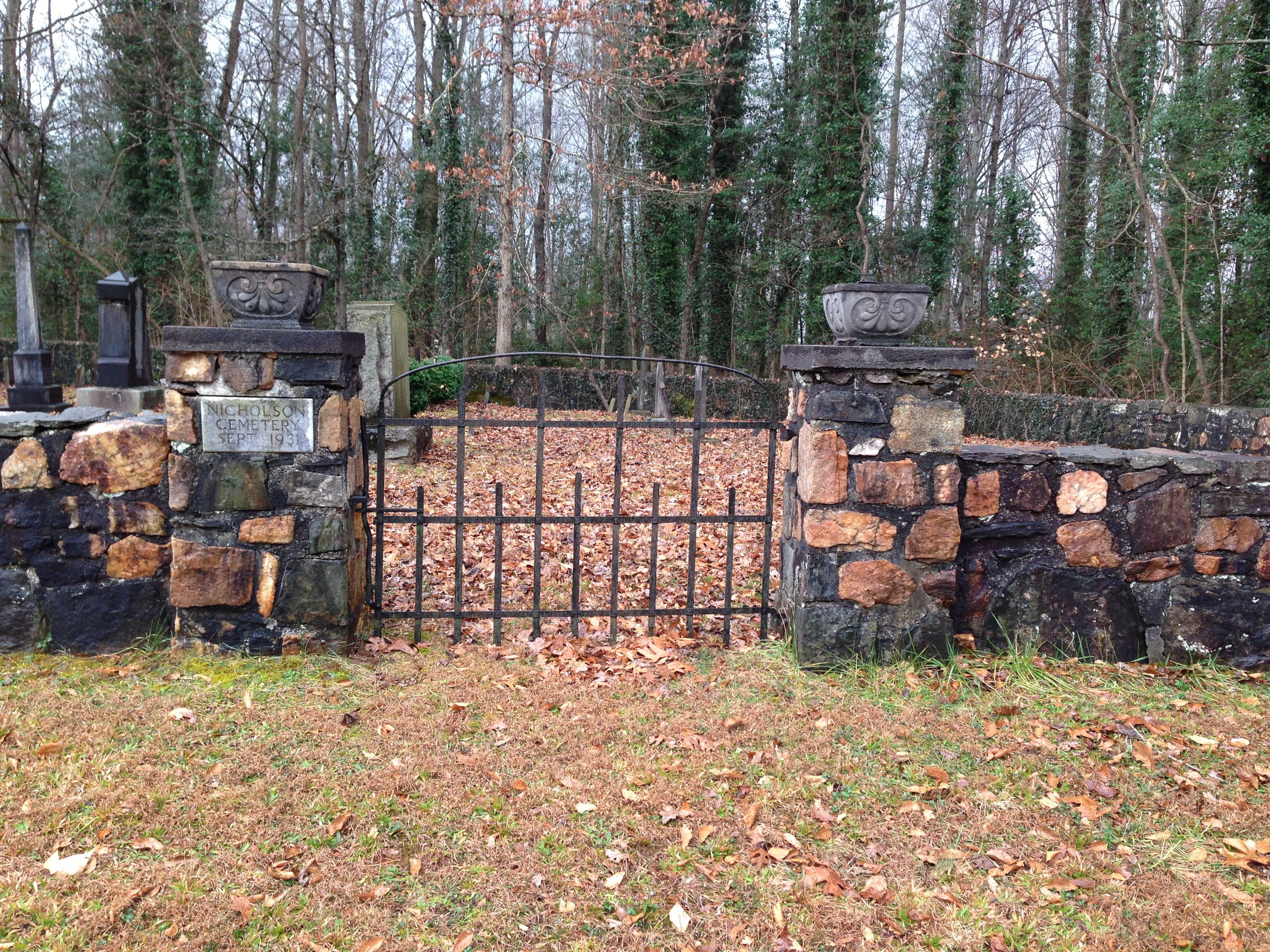
The house in which Thomas A. Nicholson lived, in which J. Lee Nicholson grew up, in which Lucinda Cowles Nicholson toiled, and in or around which Harriet Nicholson spent her childhood in slavery is listed in the National Register of Historic Places. Since 1980. And only today did I find the gloriously detailed nomination report — which includes a photo! And to think that I must have been within a few hundred feet of the place, if it’s still standing, when I nosed around the Nicholson cemetery in the rain last December.

Bear with me. Here’s the entire report, all 13 pages’ worth. I’ve only read it through once, but give me time.

Nicholson_NR_Page_01

Nicholson_NR_Page_02

Nicholson_NR_Page_03

Nicholson_NR_Page_04

Nicholson_NR_Page_05

Nicholson_NR_Page_06

Nicholson_NR_Page_07

Nicholson_NR_Page_08

Nicholson_NR_Page_09

Nicholson_NR_Page_11

Nicholson_NR_Page_12

Nicholson_NR_Page_13

Standard
Maternal Kin, North Carolina, Oral History, Politics, Rights

When time came for women to vote.

In which my grandmother schools me on her grandmother and voting:

NICHOLSON -- Harriet Nicholson 1

Harriet Nicholson Tomlin Hart (1861-1926)

Me: How did she work that? How did Harriet get to be the first black woman to vote?

Grandma: Well, because her husband [T. Alonzo Hart] was a lawyer.

Me: Right.

Grandma: He was a, whatchacall – a real estate lawyer. And he taught her how to read and write and do everything after he married her. Or while he was marrying her. Or something. And when time came for women to vote, she was the first black – he carried her down to the polls, and she was the first black woman to vote. And then at that time, you know, they gave you a quiz.

Me: Right. Right. Right. For black people to vote. Yeah. ‘Cause did your parents – well, did your father vote?

Grandma: Oh, yeah. Papa voted. He voted. And the people in my home, Lisa, fought in the streets [Statesville, North Carolina]. It was dange – I mean, we could not go outside the house on election night. The people — “Who’d you vote for?” “I’m a Democrat.” “I’m a Republican.” Pam-a-lam-a-lam! [Swings fists, and I break into laughter.] People acted like they were crazy! Papa didn’t allow us out the house. “You better be getting on home!” ‘Cause they were terrible.

Me: And now you got to drag people out to vote. And then you hear people going: “I’m not gon vote now. What’s the point? I blah-blah-blah.”

Grandma: Yeah. When I came here [Newport News, Virginia] you had to pay poll tax.

Me: Yeah.

Grandma: It wasn’t a whole lot, but it was ridiculous.

Me: Yep.

[My grandmother cast her last ballot — at age 100 — for Barack Obama in 2008.]

——

Interview of Margaret C. Allen by Lisa Y. Henderson; all rights reserved.

Standard
Maternal Kin, North Carolina, Photographs

The reunion.

Reunion 1978 01My grandmother and her children: the first reunion.

It was in July. I’m sure of that, but not the actual date. The first Colvert-McNeely family reunion. We gathered in Statesville, of course, where my grandmother Margaret and her sisters Louise and Launie Mae were born and grew up. The reunion called not only their descendants, but those of their older half-sisters, Mattie and Golar, and their maternal McNeely kin. I was 14 that summer and not much interested in anyone more than three or four years older than I. Nor had I been seized with the unquenchable genealogical fervor that would light me up a decade later . So I lounged around the hotel pool and wasted opportunities that year, and subsequent, to winnow every broad hint and slender clue from the ever-waning recollections of my elders. My great-aunt Louise, who lived in Statesville all her life and probably knew the most. My great-great-aunt Min, last of the McNeely siblings. The “other” Colverts, cousins and children of my great-grandfather’s half-sisters — were they even there? I’d been surprised to learn later that some were living in 1978. (They were not much spoken of. Was there a rift?) Who was in Statesville that summer? Whom did I miss?

CM Reunion 1978

The last day. Or maybe the first. My uncle John’s wife Gladys, my mother, my grandmother (in curlers — she would not approve of this post), my uncle John, an unknown man (a Colvert? a McNeely? who?), my mother’s first cousin Donald, my aunt Lynne, my father. Statesville, 1978.


Standard
Business, Civil War, Enslaved People, Land, Maternal Kin, Newspaper Articles, North Carolina, Photographs

Eagle Mills.

An abstract from Heritage of Iredell County, Vol. I (1980) —

In 1846, peddlar Andrew Baggerly bought the old Francis Barnard mill tract on Hunting Creek in north Iredell County.  In 1849, he placed an ad in Salisbury’s Carolina Watchman: “Capital Wanted And If Not Obtained Then Valuable Property For Sale.”  He described the property as “the most valuable water power in the Southern Country … situated on Hunting Creek in Iredell County, twenty-eight miles west of Salisbury … [on] a never-failing stream, … remarkable for its purity, … [and] adapted to the manufacture of paper, to calico printing, to bleaching etc.”  Baggerly noted that there was a dam in place, an active sawmill, a grist mill soon to open, and a factory building about half-finished.

On 2 Mar 1850, Baggerly, James E.S. Morrison, William T. Gaither, William R. Feimster, William I. Colvert, G. Gaither Sr. and Andrew Morrison filed a deed for a 318 1/4-acre tract called the Eagle Mills place.  By 1852, the factory was operating with William I. Colvert as its agent.  It had 700 spindles and 12 looms and employed an overseer and 22 workers, 20 of whom were women. By 1854 the adjacent former Inscore Mill had been added to the works, and Baggerly claimed the “intrinsic and speculative value” of the complex was $2,700,000.  

In 1855, Baggerly advertised in Charlotte’s North Carolina Whig and in the Carolina Watchman, calling the complex “Eagle City, the Great Point of Attraction, Destined to be the great center of manufacturing interests in Western North Carolina and perhaps the United States.”  He deeded the president and Congress of the United States a ten-acre block in Eagle City called Eagle Square, located on Market Street.  

After Baggerly was forced to liquidate his assets during the Panic of 1857, William Colvert became the owner of his interest in Eagle Mills.  “According to tradition there was a tobacco factory, hotel, oil mill, and general store at Eagle Mills in addition to the grist mill and cotton factory.  A number of homes stood in the horseshoe bend above the mills and a church was eventually constructed on the edge of the settlement.”

In the spring of 1865, Stoneman’s raiders came upon Eagle Mills unexpectedly and burned it to the ground.  The mills were rebuilt, but Eagle Mills never recovered its former prosperity.  The cotton factory and grist mill operated until destroyed by fire in April 1894.  At that time, William I. Colvert, Robert S. Colvert, and James E.S. Morrison were the owners.  

The only remains at the site are gravestones in the church cemetery, traces of the main road to the mill, the grist mill’s foundation stones, and, a short distance upstream, remains of the stone supports where a covered bridge crossed the creek.

——

Sville_Record_and_Landmark_4_19_1894_Eagle_Mills

Statesville Record & Landmark, 19 April 1894.

——

When William I. Colvert took charge of Eagle Mills in 1852, my great-grandfather Walker Colvert was in his early 30s and father of a one year-old boy, John Walker Colvert. I don’t know exactly what kind of work Walker did for W.I., but they had grown up together, and Walker was an entrusted slave. Even if his primary labors were not at the cotton factory complex, I am certain that he spent considerable time in and around his master’s largest investment. So, too, would John Walker, who remained with W.I. after Emancipation. He is listed in W.I.’s household in the 1870 and 1880 censuses, and I suspect he stayed at Eagle Mills until the final fire closed down the works.

On a rainy December morning I cruised the backroads of northern Iredell County, drinking in the landscape that was home to my Colverts and Nicholsons for much of the 19th century. I made a left onto Eagle Mills Road, headed north. A sharp bend in the road and there, a bridge over Hunting Creek. I pulled over and, ignoring a No Trespassing sign, clambered down to the sandy bank. The waterway is too shallow and rocky to have been paddled or poled, but I imagine that Walker and John Walker knew its course very well. Hunting Creek powered Eagle Mills and was a direct link between W.I. Colvert’s lands and those of Thomas A. Nicholson, whose son James Lee married W.I.’s daughter and whose granddaughter, Harriet Nicholson, gave birth to John Walker Colvert’s first child.

IMG_4618

Photograph by Lisa Y. Henderson, December 2013.

Standard
Births Deaths Marriages, Enslaved People, Land, Maternal Kin, North Carolina

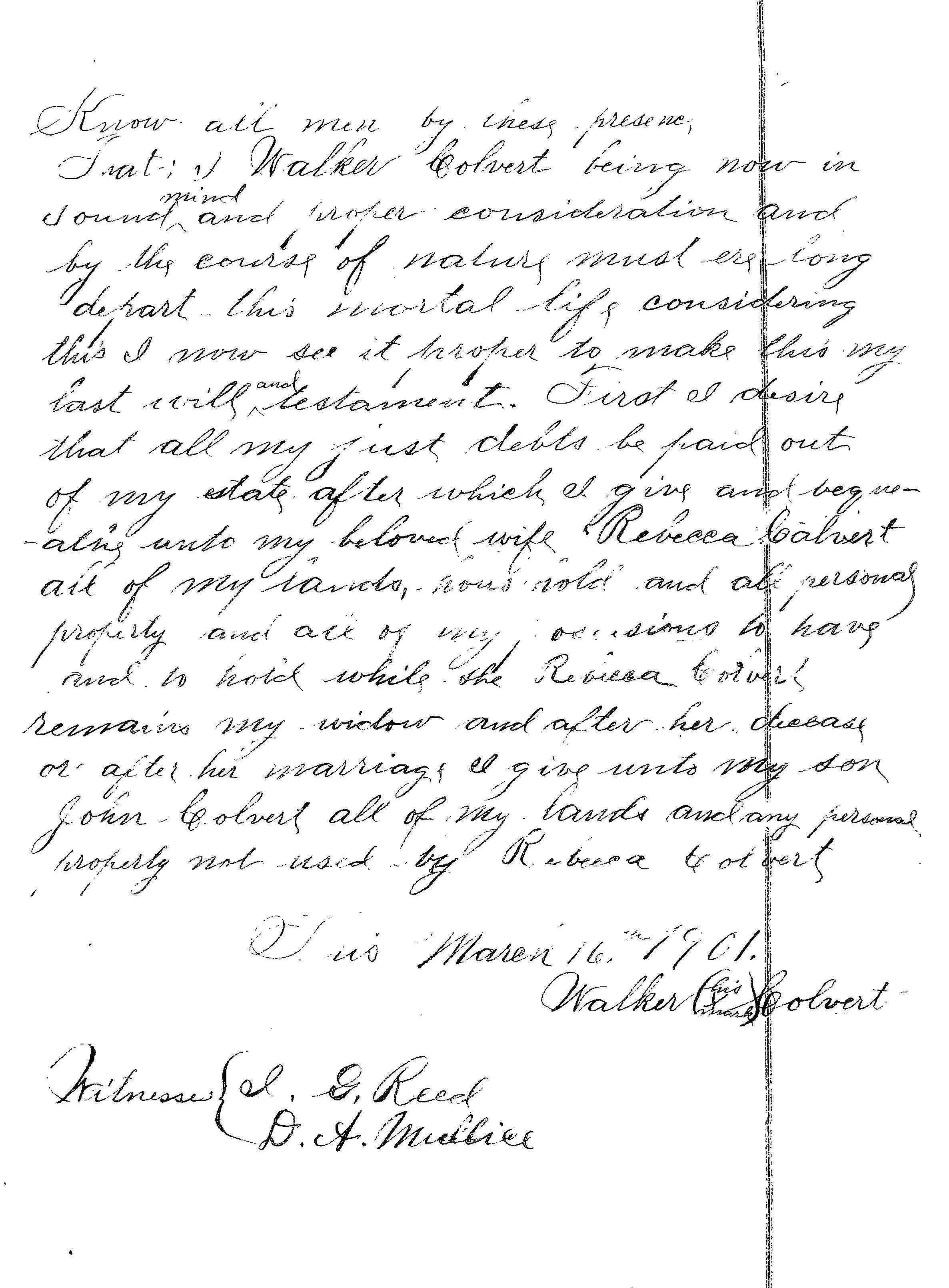
All of my possessions to have and to hold.

COLVERT -- W Colvert Will_Page_1

COLVERT -- W Colvert Will_Page_2

Born 40 years into American independence, and less than ten after the importation of African slaves was banned, Walker Colvert could have prayed for, but never foreseen, that he would gain his freedom just past the midpoint of his life and that he would die possessed of something to leave his wife and son.


Standard
Maternal Kin, North Carolina, Oral History, Photographs

Papa used to keep him just slick and pretty.

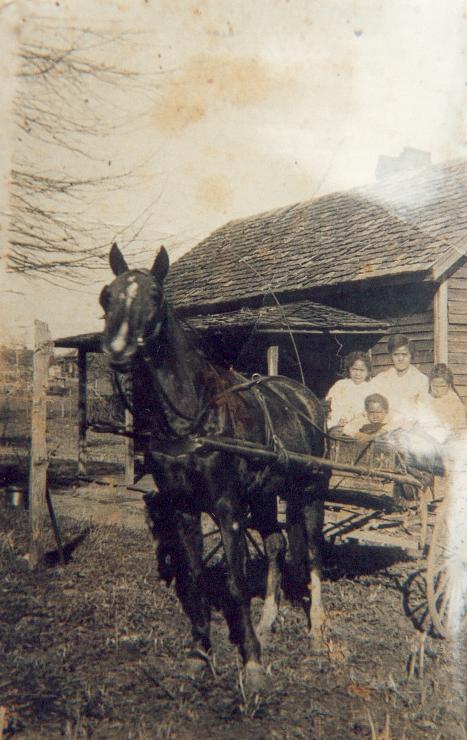
His name was Prince. And Papa sold Prince when he bought a car. But when he bought Prince, Prince had never been broken in. Nobody’d ever ridden him. And this man broke him in for Papa. But he was still high-spirited, because he was a race horse. And he had four white feet. That is what was so distinctive about him. He was chestnut. And we were so crazy about him that we would go in the – Papa had a big enclosed lot, like, that he could come out in. Other than the stable. And we would go in there with him, but he wouldn’t bother us. He would never bother us. And this old gentleman would be what was called currying. He would curry the horse and brush him and all, and he would hold me up and let me brush it. What was the man’s name? I can see him right now. He was an old man and real light. He was almost white. He had light hair, had white hair. And he loved Mama’s cooking. She used to bake something that was a pie. She called it a pie – but it was sweet potatoes. It was not mashed like you’d make up in a sweet potato pie ‘cause she would slice them and put them in the pie. Then she would make a sauce with nutmeg and lemon juice and thicken it with flour, you know. And then she would cook all of that in a big plate thing like that. And when Papa sold Prince, we went down where the man who had bought him had him, and he would look bad. His skin – you know Papa used to keep him just as slick and pretty. And that man would come to the house and wash him down with soap and water and everything and made him pretty. And he had pretty white feet. But Papa sold him to that man when he bought the car. And we went down there one day to see Prince, and he looked awful. He looked bony. He just looked awful. And we went down a little hill where he was in an enclosure. And we called him, and he came running over there where we were. We were so glad to see him. And we went home and told Papa that Prince said he wanted to come home. Yes, Lord. We wanted Prince moved.

COLVERT -- Colvert Girls & Bert

Possibly Prince (though he only has two white feet), circa 1913, with Louise Colvert, Launie Mae Colvert, Bertha Hart and Margaret Colvert.

—–

Interview with Margaret Colvert Allen by Lisa Y. Henderson; all rights reserved.

Standard
DNA, Maternal Kin, North Carolina

DNA Definites, no. 13: Nicholson.

For all I malign the inadequacies of Ancestry DNA, it has yielded up distant-relative matches in a way that 23andme has yet to touch. I did a search for “Nicholson” among my matches, and J.W.B. popped up. As I scanned his family tree, the name that snagged my eye first was “Jehu Idol.” I knew that name. I LOVED that name. So economical. So Biblical. So 18th century. And the husband of Hannah Nicholson, sister of John Stockton Nicholson Jr. and half-sister of James Nicholson. J.W.B. and I are 5th cousins, twice removed.

Standard
Births Deaths Marriages, Maternal Kin, North Carolina, Photographs

Remembering Ardeanur Smith Hart.

She was the oldest of the McNeely grandchildren.

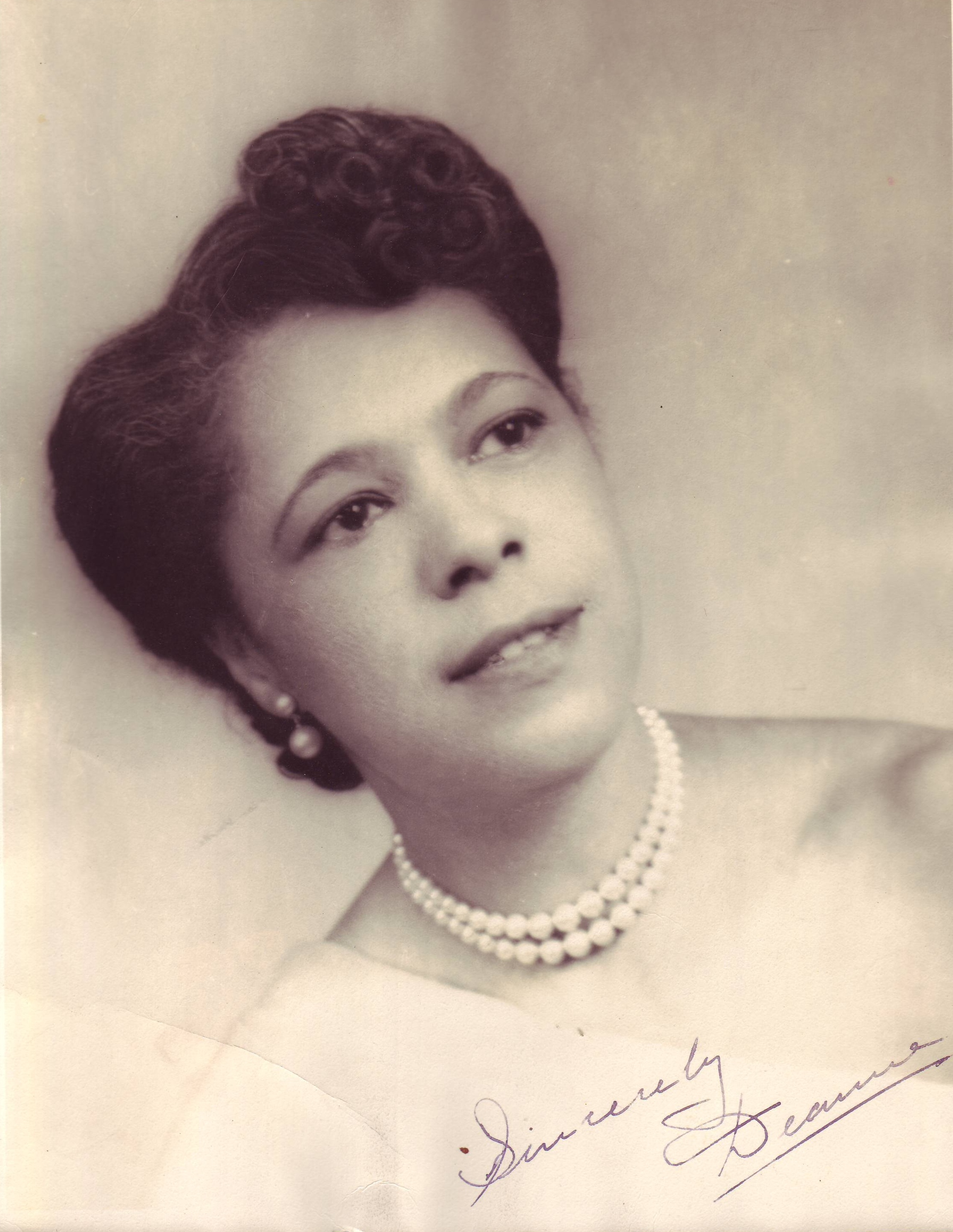
I can’t find the photo right now. The one I took at the last family reunion she attended in, perhaps, the mid-1980s. She was lovely. “Pulled,” as my friends say, with flawless caramel skin, steel grey hair swept in a neat chignon,* stately bosom encased in a champagne-colored lace sheath dress. Cousin Ardeanur Smith Hart, born one hundred twelve years ago today.

McNEELY -- Ardeanur Smith seatedArdeanur, circa 1928, Bayonne NJ.

McNEELY -- Ardeanur_Minnie_Louise_BertArdeanur; her aunt Minnie McNeely, who reared her after her mother’s death; her cousin Louise Colvert; a Murphy; and her uncle Lon Colvert’s sister, Bertha Hart. Statesville, mid-1920s.

McNEELY -- Ardeanur Smith with pearlsArdeanur Smith Hart (8 February 1902-14 January 1996).

*I found it. And I misremembered. Not a chignon, but a neat cap of curls.

Standard
Births Deaths Marriages, Maternal Kin, North Carolina, Photographs

Family cemeteries, no. 8: The Nicholsons.

The map was not entirely clear, but the graveyard was definitely on Barnards Mill Road, which branched off Harmony Highway somewhere above Hunting Creek. Though morning, the sky was dark with impending rain. I kept an eye on the left side of the road. A bridge over the creek … an unmarked road … “Bridge Out.”  Wait, wasn’t the cemetery by a bridge?  I backtracked and turned off the highway. After a half-mile or so, the blocked bridge and a path, marked No Trespassing, leading into the woods. I am not a fool. I trotted up to the closest house and knocked. A middle-aged woman peered through a window, then motioned me around to the side door. “I’m looking for a cemetery near here. Welch-Nicholson.” She gestured behind me and smiled. Up the hill across the road, a low stacked-stone wall inset with a simple iron gate surrounded the remains of a hundred years of Nicholsons.

IMG_4594

My great-great-great-great-great-grandfather James Nicholson bought a mill on the creek in the late 1820s and probably established the graveyard. His father, Revolutionary War veteran John Stockton Nicholson, who was born 1757 in Princeton, New Jersey, and migrated to North Carolina circa 1800, is buried Muddy Creek Friends cemetery, Kernersville, North Carolina. He died in 1838.

IMG_4611

John was married twice, to Mary McComb, then Catherine Anne “Caty” Stevenson. Mary bore one son, the James Nicholson above. Caty bore ten, including John S. Nicholson Jr. Mary McComb Nicholson is buried near John Jr., whose stone is shown above. Caty is buried at Muddy Creek.

James Nicholson married Mary Allison in 1815; their children were Thomas Allison Nicholson and John McComb Nicholson. Thomas A. Nicholson married his first cousin Rebecca Clampett Nicholson, daughter of John S. Nicholson Jr. and Mary Fultz.

Thomas Nicholson’s broken gravestone is propped next to that of Rebecca.

IMG_4602

IMG_4605

Thomas and Rebecca’s oldest child James Lee Nicholson, my great-great-great-grandfather, is also buried here. He died a few weeks short of his 30th birthday in 1871.

Photos taken by Lisa Y. Henderson in December 2013.
Standard