Births Deaths Marriages, North Carolina, Other Documents, Paternal Kin

Jonah’s Jonah.

This caught me a bit by surprise.                                    42091_343647-01367

Jonah Reid’s first wife was Magnolia “Maggie” Artis, daughter of Thomas Artis and Loumiza Artis ArtisPatrick Exum and J.D. Reid witnessed their marriage on 30 August 1892 in Wayne County.  Patrick’s mother, Delilah Williams Exum, was Maggie’s late mother’s sister.  (Judge James Daniel “J.D.” Reid was Jonah’s maternal uncle.  He would later become a prominent school principal, bank promoter and hospital administrator in Wilson, North Carolina.  Jonah and Maggie named their son Judge Daniel Reid in his honor.) Magnolia Artis Reid died of apoplexy on 1 June 1939 in Township No. 13 [Cokey], Edgecombe County. She was 68 years old.

Three months later, as shown above, Jonah Reid remarried. That’s a little surprising. So soon. At his age. But what’s really surprising is whom he named as his father. Jonah Williams?

Elder Jonah Williams?

Jonah Reid appears in the 1880 census of Nahunta, Wayne County, in the household of his widowed grandfather Wash Reid (spelled “Reed.”) Washington Reid was one of several related Reids, born free in the early 19th century, who built successful farms in the area of Turner Swamp. Several members of this family intermarried with Artises, including Isaac Reid, who married Adam T. Artis‘ daughter Ida in 1877; William Reid, who married Zilpha Artis Wilson‘s daughter Bettie in 1882; Henry Reid who married Adam Artis’ daughter Georgianna in 1883; John Gray Reid, who married Richard Artis‘ daughter Emma in 1907; and Milton C. Reid, grandson of William and Bettie, who married his cousin Nora M. Artis, granddaughter of Adam Artis, via son Noah, in 1916. Wash and Penninah Reid’s daughter Louisa gave birth to Jonah Reid about 1874. (She later married Perry Barnes.) That same year, Jonah Williams’ wife Pleasant had a daughter, named Vicey after his mother.

Jonah Reid’s first marriage license does not list his parents. (If in fact his father was the Jonah Williams, Reid was marrying his first cousin, which was not uncommon during the time.) In his second, he openly claimed Jonah Williams as his birth father.  His marriage license is not proof of paternity, but does suggest a starting point for researchers in his line.

Standard
Births Deaths Marriages, Maternal Kin, Migration, North Carolina, Oral History, Other Documents, Photographs, Vocation

His name was Golar, and we called him “Doc.”

My grandmother:  He had a brother that was a barber. His name was Golar, and we called him “Doc.” Papa had him in there. Papa had a chair, and Doc had the second chair, and Walker had the third chair. 

Harvey Golar Tomlin was the only one of Harriet Nicholson Tomlin Hart‘s second set of children to see the twentieth century. Harriet and Abner Tomlin had as many as six children together, but I only know the names of three — Milas, Lena and Harvey Golar.

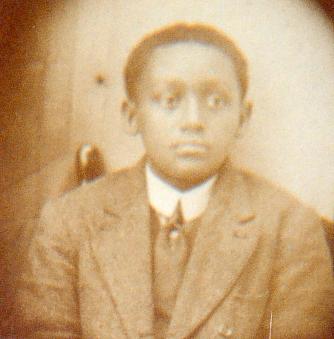
After Ab’s death about 1899, and perhaps Lena’s around that time, too, Harriet packed up her youngest son and took him to Charlotte, where they are found in the 1900 census living at 611 East Stonewall with Harriet’s half-brother William H. Nicholson. This photo may have been taken there:

NICHOLSON -- Doc Tomlin

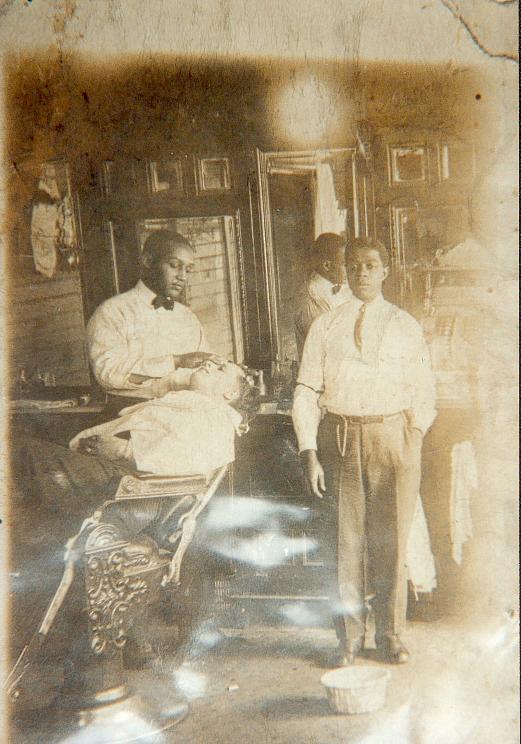
They did not stay long. In 1902, Harriet gave birth to Bertha Mae Hart, whose father Alonzo she married in 1904. By 1910, Harvey Golar, called “Doc,” had left his mother and stepfather’s household and was living in the Wallacetown neighborhood of Statesville with his half-brother and family: Lon W. Colvert, a barber, wife Caroline, and children Mattie, Gola, Walker, Louise, and Margaret (my grandmother). He trained under Lon and went to work in his shop. In the photo below, which can be dated to 1917 by another taken at the same time and showing a calendar, Doc appears with Lon’s son Walker and a client.
COLVERT -- Barbershop 1

On 11 Jan 1917, H.G. Tomlin sold a parcel of land to L.W. Colvert and wife Carrie Colvert for $10.  In a deed filed at Iredell County Courthouse, the land was described as “Beginning at a stake at a post oak, Ramsour’s old corner, running North 88 W. 16 1/2 poles to a stake on road East of the track of the A.T. & O. R.R.; thence S. 8 W. 9 1/2 poles to a stake Pearson’s corner; thence S. 88 E. 16 1/2 poles to a stake; thence N. 8 E. 9 1/2 poles to the beginning, containing one acre more or less and being the identical lands conveyed by William Pearson and wife to Abb. Tomlin by deed, dated 19th day of June, 1891 and recorded in deed Book No. 17 at page 101 of the Records of Deeds of Iredell County.”  Doc apparently had inherited the property from his deceased father, though I’ve found no estate file.

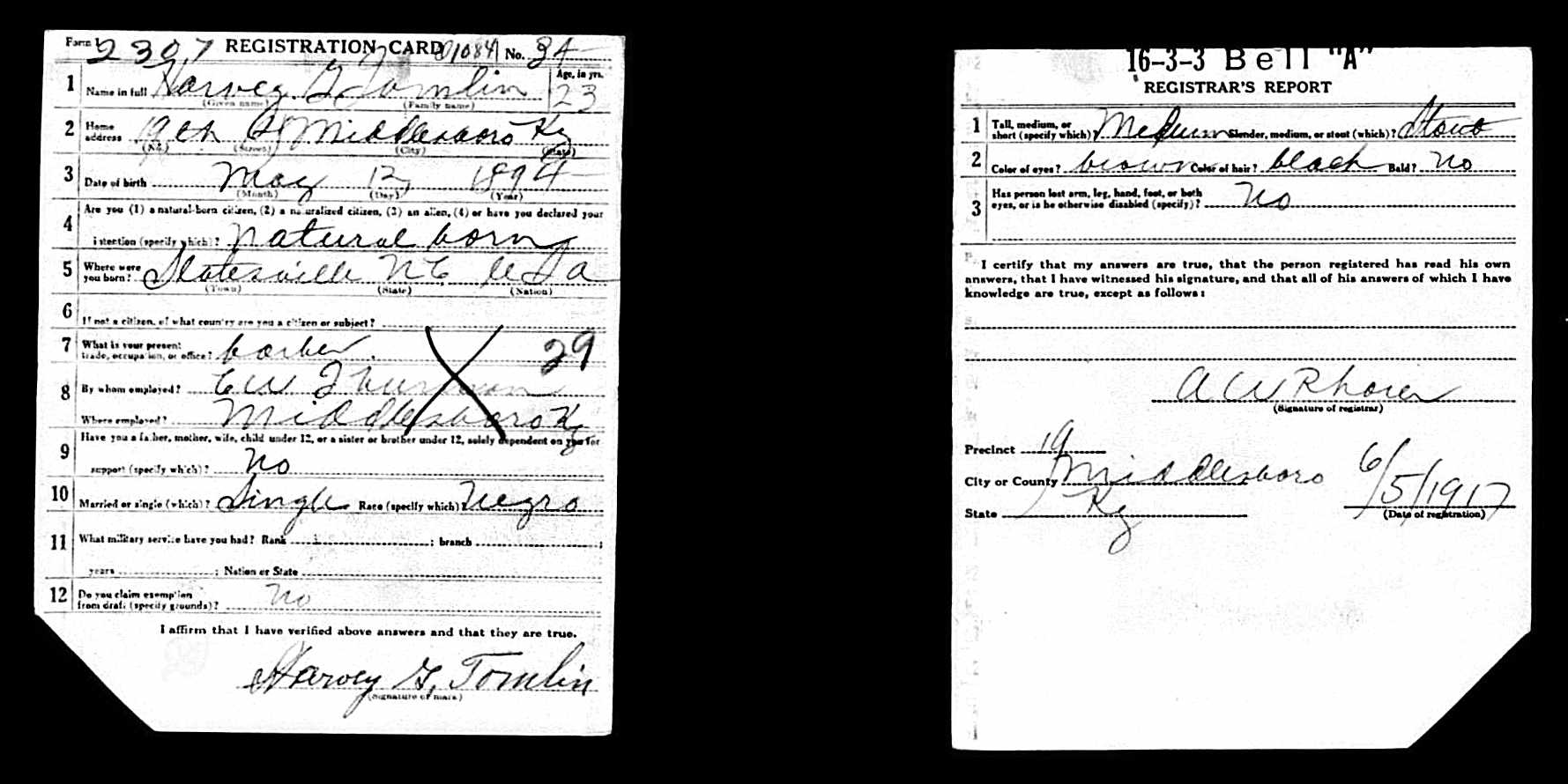
Doc was possibly liquidating his assets as he pulled up stakes in Iredell County. Five months later, he registered for the World War I draft in Middlesboro, Bell County, Kentucky. (Middlesboro, Kentucky? What was the pull? The push?) Though he was prime age and had no infirmities, I have no evidence that he ever served in the military.

005150645_02349

In any case, Doc seems not to have stayed gone for long. On 7 September 1918, Harvey Golar Tomlin applied for a marriage license for himself, of Iredell County, age 24, colored, son of Ab Tomlin (dead) and Hattie Hart (living), and Flossie M. Stockton of Iredell County, age 24, colored, daughter of Mr. and Mrs. Henry Stockton, both dead.  L.W. Colvert witnessed the application, and W.O. Carrington, minister of the A.M.E. Zion Church, married the parties on 8 September 1918 before L.W. Colvert, N.S. Allison, and Eugene Stockton.  (Flossie was the sister of Dillard and Eugene Stockton, both of whom married Lon Colvert’s half-sister Ida Mae Colvert.)

42091_334854-00723

The couple’s only child, Annie Lavaughn Tomlin, was born 9 August 1919 in Statesville. At least part of that year, however, Doc was in Louisville, Kentucky, as shown in the city’s 1919 directory:

Screen Shot 2015-07-24 at 3.37.52 PM

The 1920 census shows the family in the north Statesville suburbs: Jessie Stockton, age 28; his sister Flossie Tomlin, age 25, a public school teacher; niece Anna L. Tomlin, 4 month; and brother-in-law Havey Tomlin, age 26, barber. Doc’s last-place listing in the household is telling. Was he really there? Or tacked on as an afterthought because, after all, he was Flossie’s husband?

There are clues. Both Flossie and Doc were enumerated twice in the 1920 census. On Garfield Street in Statesville, public schoolteacher Flossie Tomlin and her daughter Annie L. appear in the household of Flossie’s brother Eugene Stockton, his sister-in-law (technically, but in reality his common law wife) Ida M., and their four children. The enumerator recorded this household in January 6, 1920. Seven or eight days later, however, 200 miles away in Lynch, Harlan County, Kentucky, another censustaker recorded 26 year-old North Carolina-born barber Harvie Tomlin as a roomer in the household of barbershop manager Alex R. Simpson and his wife, Lina. Then on March 3, Flossie and Annie were recorded in Jesse’s house, above. I’d bet money that Doc was actually in Kentucky.

I don’t know where Doc spent the 1920s, but it was more likely that he drifted around the Appalachian Plateau than returned to Statesville. There are glimpses.

For example, in the 1925 Dayton, Ohio, city directory:

Screen Shot 2015-07-24 at 9.28.55 PM

And then the 1926 Portsmouth, Ohio, city directory:

Screen Shot 2015-07-24 at 9.31.39 PM

Doc did not stay long at the Play House. On 19 May 1927, the barbershop ran an ad in an announcement of the grand re-opening of the Play House building and its businesses. Harvey G. Tomlin is not among the barbers listed:

Portsmouth_Daily_Times_Thu__May_19__1927_

The 1930 census found barber Harvey Tomlin in Carnegie, Allegheny County, Pennsylvania, living at 205 Broadway in the household of Sabry Goldsmith, a 35 year-old Florida-born barbershop proprietor. He was described as single.

Perhaps he was.

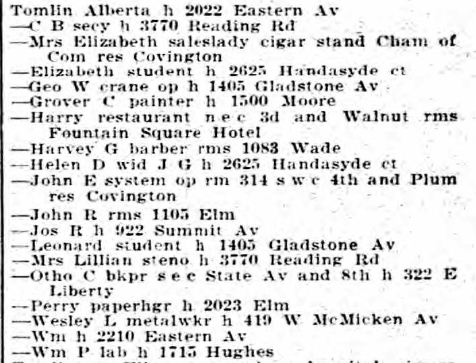
The 1932 city directory of Cincinnati, Ohio, shows Doc living in a boarding house on Wade Street:
Screen Shot 2015-07-24 at 3.35.59 PM

However, on 6 July 1933, in Newport, Campbell County, Kentucky, Harvy G. Tomlin, 40, colored, divorced, born in North Carolina to Ab and Harriett Tomlin and a resident of “Cin. O.” married Lena R. Simpson, 49, colored, widowed, born in Kentucky to John and Elizabeth [no last name reported]. Thomas Hanly, J.P., performed the ceremony before Helen Peddiford and Helen Byers. The couple had applied for the license in neighboring Kenyon County, Kentucky. Lena Simpson, you may recall, was married to Doc’s employer and landlord at the time of the 1920 census.

The 1936 Cincinnati city directory shows Doc living in a house, presumably having found SROs unsuitable to married life:
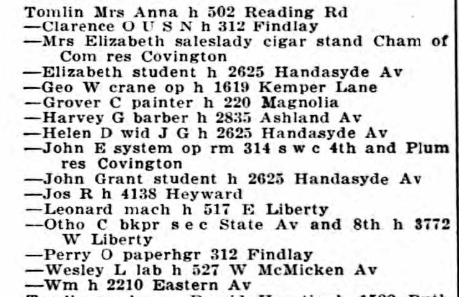
Screen Shot 2015-07-24 at 3.37.14 PM

In the 1940 census of Cincinnati, Hamilton township, in a rented two-family house at 943 Monastery Road, the census taker encountered Harvey G. Tomlin, 48, and Lena R. Tomlin, 58. Harvey apparently had put down his barbering tools and worked as a butler for a private family. The couple are erroneously described as white, and their birthplaces are reversed. (Harvey’s is listed as Kentucky; Lena’s, as North Carolina.)

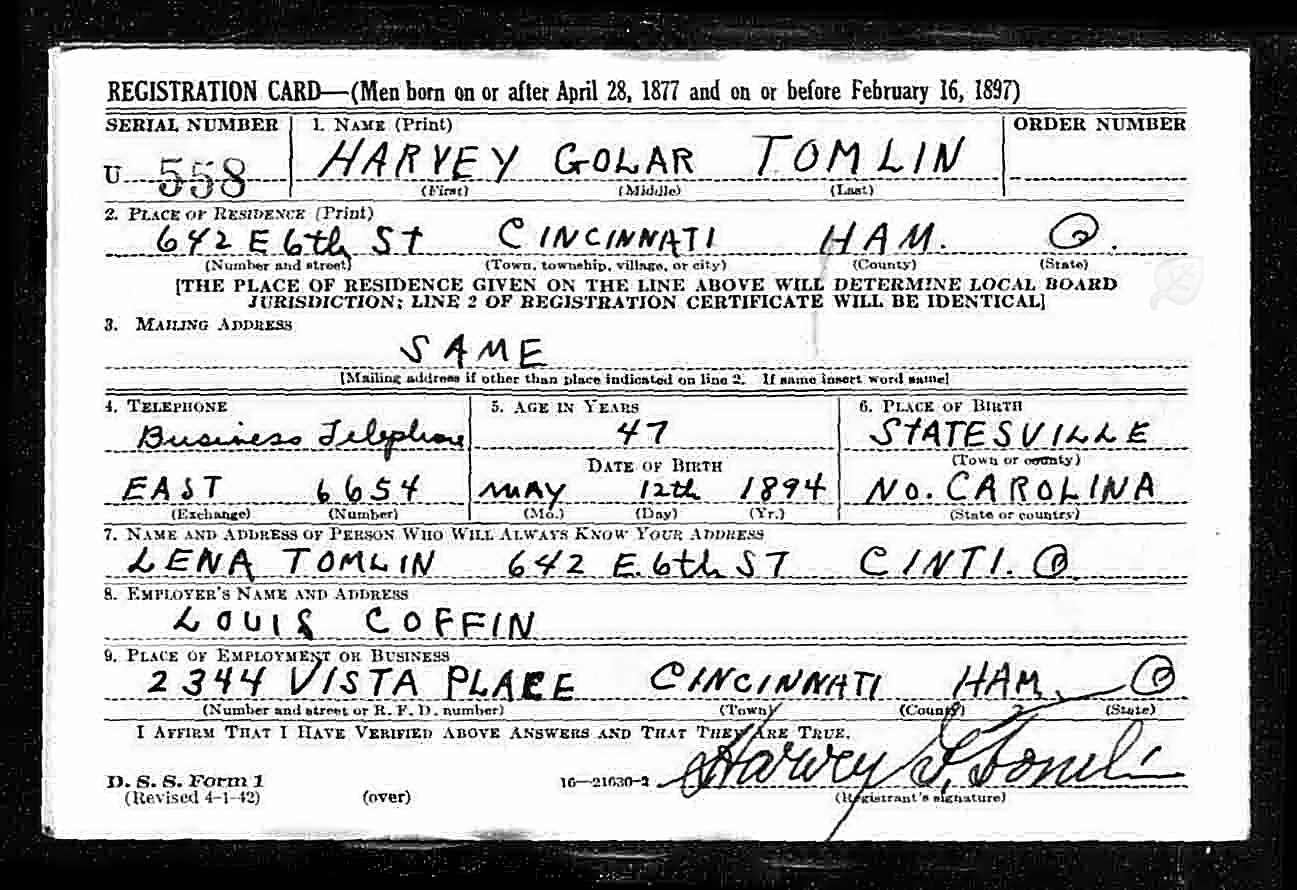
Two years later, despite a negligible chance of being called up, Harvey Golar Tomlin registered for the World War II draft in Cincinnati.

004151102_00088

The back of the card noted that he was 5’4″ tall and weighed 198 pounds and that he had brown eyes, black hair and dark skin.

The following year, Doc returned to Statesville to obtain a so-called delayed birth certificate. It was filed on 31 July 1943, showing that Harvey Golar Tomlin was born 12 May 1894 in Statesville, that his birth was attended by Dr. Long, and that his parents were Abb Tomlin, colored, born 1852 in Iredell County, and Harriet Nicholson, colored, born 1862 in Iredell County NC.

I lose sight of Doc for more than a decade until the Statesville Record & Landmark posted a brief article on 8 June 1955 mentioning that Bertha Hart Murdock had left half-interests in a lot to her brother “Harry” G. Tomlin and niece LaVaughn Schuyler.

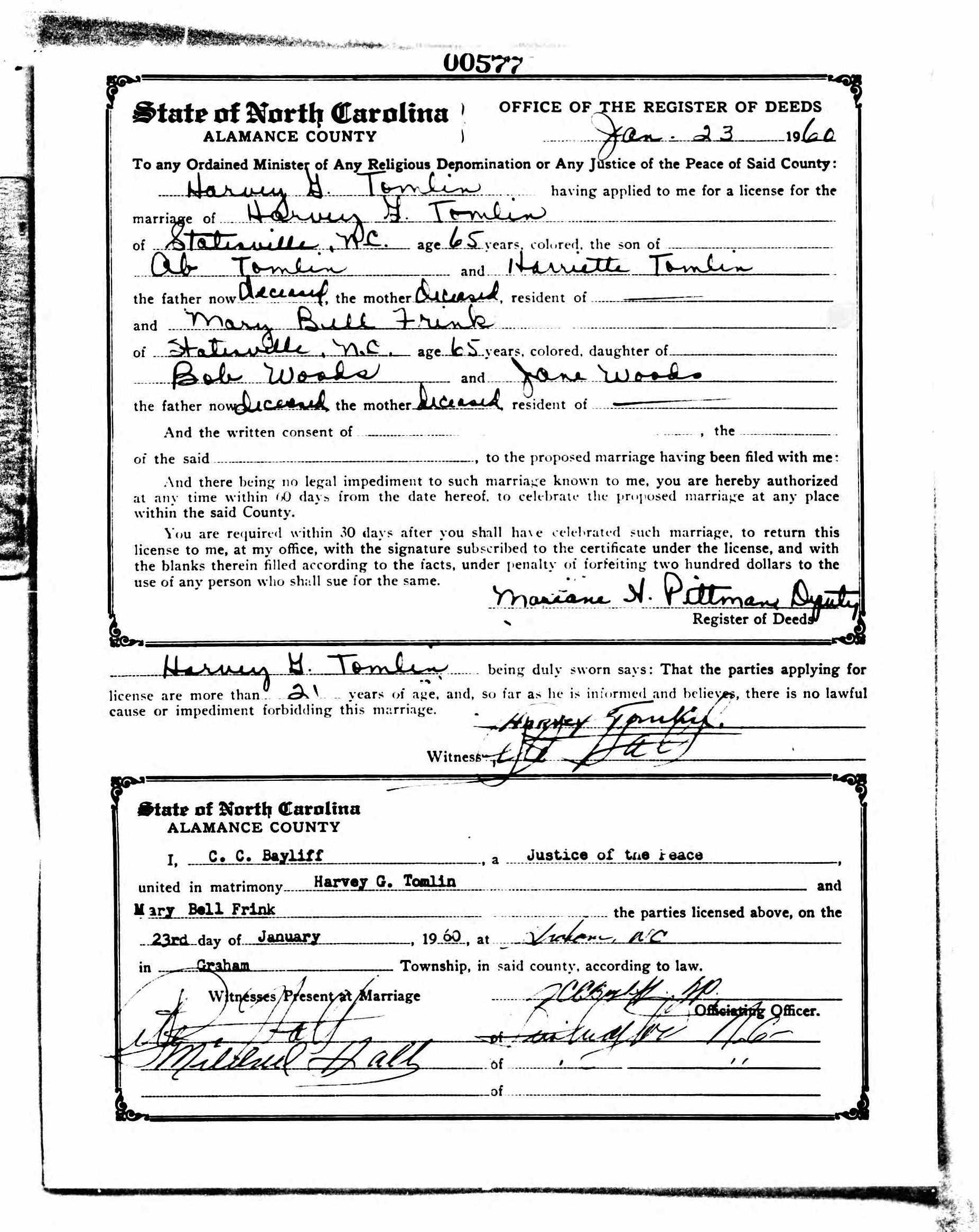
Lena Tomlin died 17 July 1959 in Cincinnati. Doc did not grieve long for he was back in Statesville getting married six months later. In another small-world, keep-it-in-the-family moment, Doc’s third wife, Mary Bell Frink, was the widow of William Luther McNeely, whose sister Caroline married Doc’s brother Lon Colvert.

42091_327534-00581

It was a short-lived union. On 8 May 1961, Harvey G. Tomlin, son of Abbe Tomlin and Harriet last-name-unknown, died in Statesville of coronary thrombosis. He had been living at 229 Garfield Street (Ida Colvert Stockton lived at 214 Garfield) and working as a butler.

I’ve been able to find very little about Doc’s only child. Social Security records indicate that Lavaughn Tomlin married a Scruggs in about 1943 and a Schuyler about 1953. She lived in Jamestown, New York, in the 1940s and died 30 May 1997 in Salisbury, North Carolina. An abstract of her death certificate reveals that she had worked as a registered nurse. She was my grandmother’s first cousin. Did she know her at all?

[Follow-up, 5 August 2015: I just found this snippet in which my grandmother mentions Doc being in the Midwest:

My grandmother: And he [her brother Walker Colvert] got a girl pregnant, and Papa sent him to Kentucky rather – so that he wouldn’t have to marry that girl.

Me: Really?

Grandma: Yes, he did.

Me: What did he do in Kentucky?

Grandma: He was a barber out there.

Me: Oh, okay.

Grandma: And I had, I had an uncle. Uncle – I don’t know if you’ve seen Doc or not. … Doc was out there. In Louisville. And he sent for Walker. And Papa sent him out there ….]

Interview of Margaret C. Allen by Lisa Y. Henderson; all rights reserved.

Standard
Education, Maternal Kin, North Carolina, Other Documents

Signature Saturday, no. 4: Harriet Hart’s men.

Harriet Nicholson Tomlin Hart was not an educated woman. She did not lack for ambition, though, and made sure that both her sons received schooling.

The bold, instantly recognizable signature of Lon W. Colvert (1876-1930), on a marriage license:

LW Colvert Sig

The somewhat shakier signature of his half-brother Harvey Golar Tomlin (1894-1961):

HG Tomlin Sig

Her last husband, Thomas Lonzo Hart (1866-1929), may have been trained as a lawyer, and his business acumen was recognized throughout his community. He had the practiced hand of a literate man and, in fact, taught Harriet how to read and write:

TL Hart Sig

Standard
Land, North Carolina, Other Documents, Paternal Kin

Country roads, Nahunta.

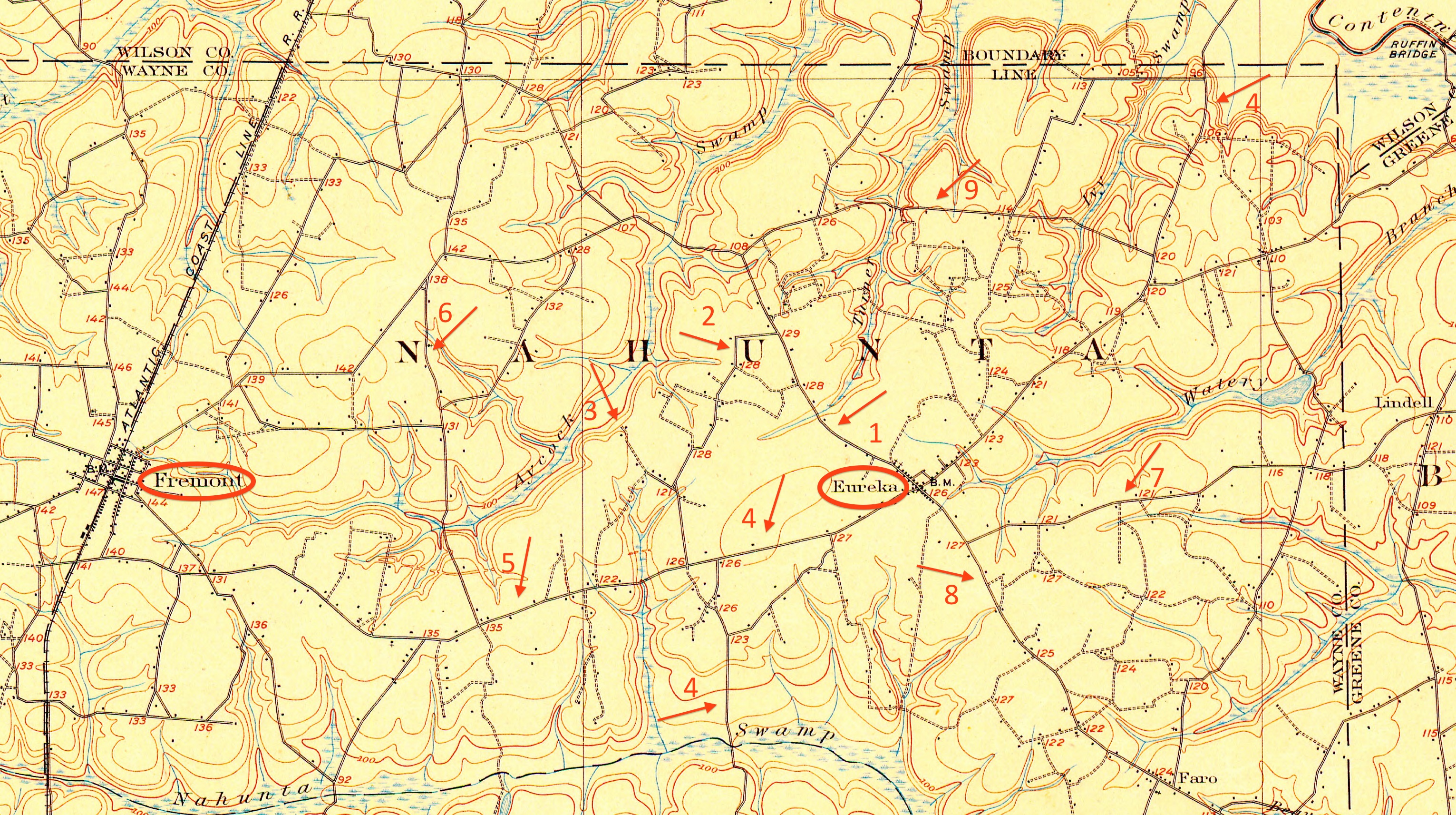
This is a section of a 1904 topographical map of parts of Wilson and Wayne Counties, North Carolina. I am amazed at how much of the blueprint, so to speak, of Nahunta, is the same. More than one hundred years ago, kinfolk traveling from Wilson to Eureka or Fremont would have taken the same roads that I drive now. Today these roads are paved, but the paths they cut over branches and through fields across the countryside have otherwise changed little.

wilson-1904_lnr copy 2

1. Turner Swamp Road runs from the crossroads at the center of Eureka northwest to dead-end at Davis Mill Road (9). Jonah Williams‘ church is on this road, and his brother Richard Artis’ family were among early members.

2. Reidtown Road arcs to connect Highway 222 and Turner Swamp Road. It is named for the community formed by the Reid family, free people of color who settled here as early as the 1830s and intermarried with Artises.

3. Napoleon Road, a spur off Reidtown Road, now cuts across Aycock Swamp to meet Davis Mill Road. It remains unpaved, and the only house standing on it is the one Napoleon Hagans built in the 1870s or ’80s. I believe the speck to the left of the road’s end on this map is Hagans’ house.

4. NC 111, which runs with NC 222 northeast to NC 58 at Stantonsburg in Wilson County.

5. NC 222.

6. Black Creek Road connects Fremont (via its Old Black Creek Road spur) and the town of Black Creek in Wilson County. (Black Creek was once the northernmost section of Wayne.) The road is called Frank Price Church Road in Wilson County.

7. Lindell Road runs from Faro Road (8), just south of Eureka, east into Greene County’s Bullhead district. Much of Adam Artis‘ land lay between NC 111 and Lindell Road.

8. Faro Road, the continuation of Turner Swamp Road, runs south from Eureka toward the unincorporated community of Faro, famous as the site where two hydrogen bombs dropped when a B-52 broke up in flight in 1961.

9. Davis Mill Road arcs from Fremont as the northernmost east-west artery across Nahunta.

Standard
Education, Maternal Kin, North Carolina, Other Documents

Football squad.

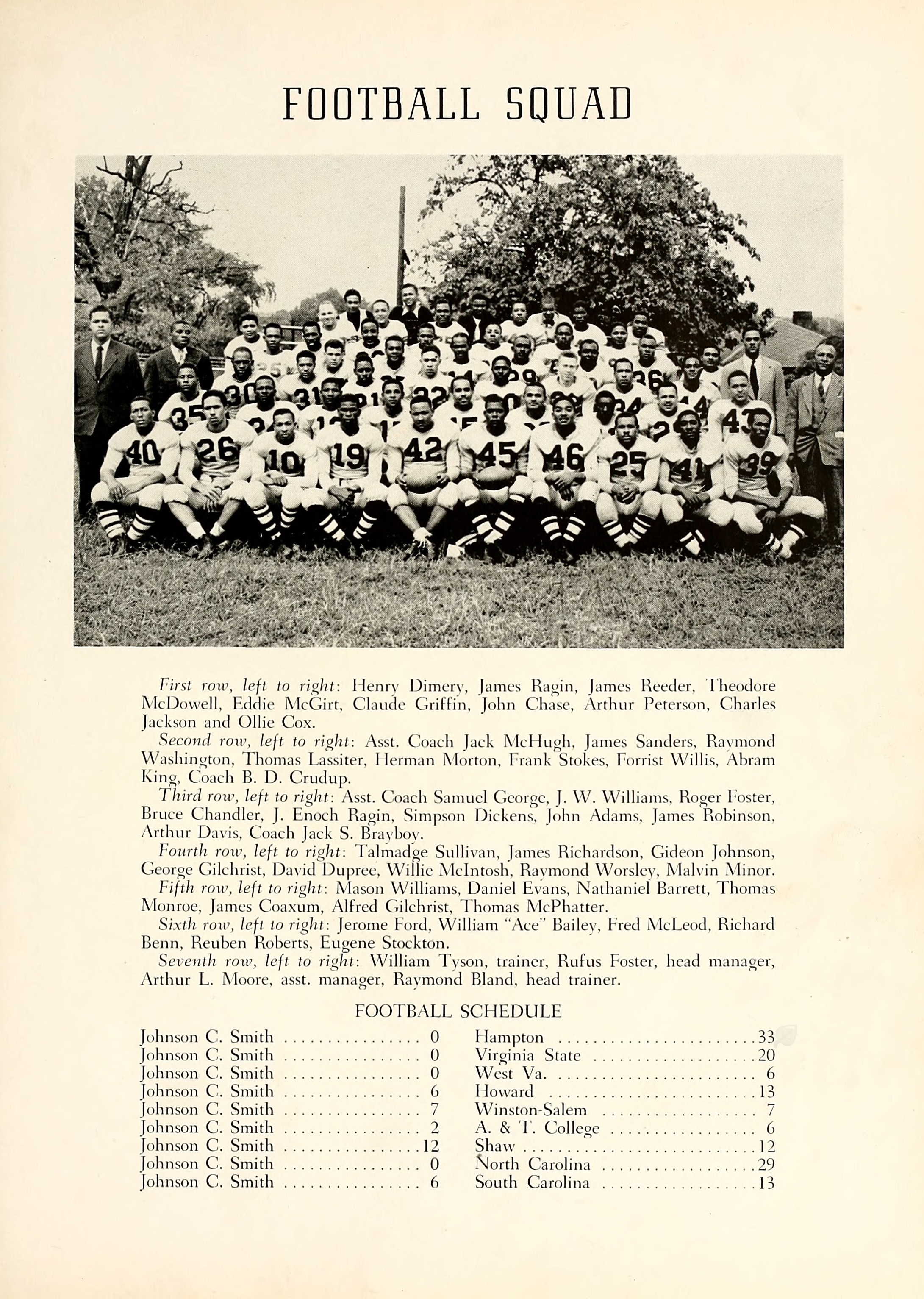
From the 1949 yearbook of Johnson C. Smith University, the Bull:

40146_b081595-00060

At the end of the sixth row, my grandmother’s first cousin Army-veteran-turned-scholar Eugene Stockton Jr., son of Eugene and Ida Mae Colvert Stockton.

From the university’s 1956 yearbook, another gridiron star:

Screen Shot 2015-07-24 at 1.14.14 PM

On the top row, my mother’s first cousin, No. 20, Hayden Bently “Benny” Renwick, son of Lewis C. and Louise Colvert Renwick.

Standard
Agriculture, North Carolina, Other Documents

Where we worked: tobacco manufacturing.

I am maybe 12 or 13. It’s late summer, eastern North Carolina broiling summer, and I am whining to be allowed to hop on a truck at dawn and spend my days “cropping” tobacco. Some of my friends are going to do it, and it sounds like fun? My father laughs this away. No. My friends lasted a day, two days, then toppled from sun or nicotine poisoning or monstrous tobacco worms. I am still thanking him.

——

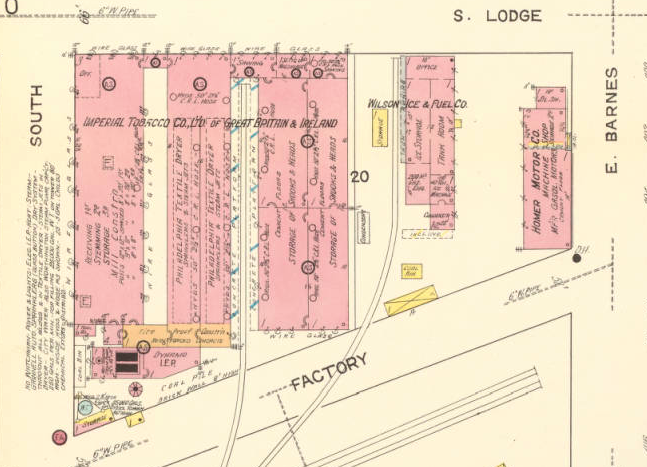
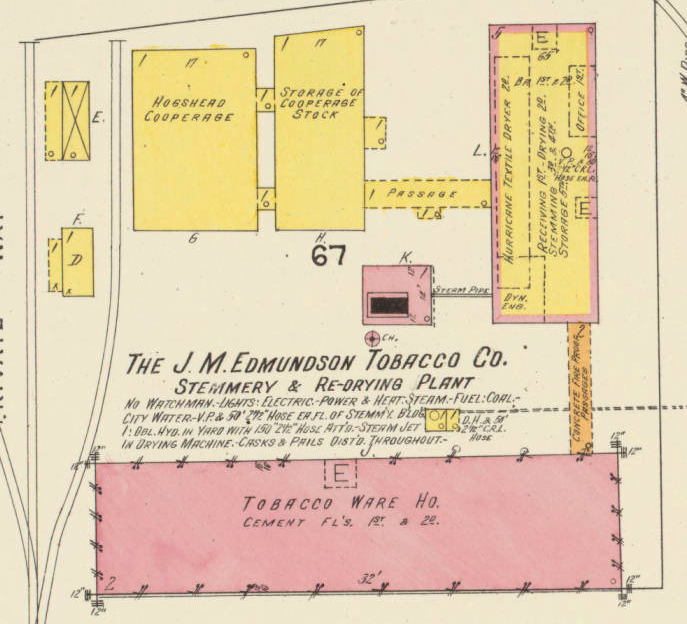
East to west, the tobacco industry dominated North Carolina’s economic life for much of the 20th century. Though I honor their memory, there is no way to list everyone in my family who raised tobacco or labored in its fields. They number in the thousands. However, here are some who worked to prepare the Golden Weed for market or manufacture, mostly in the cavernous brick warehouses and factory buildings that stretched for blocks across southeast Wilson:

Eugene Stockton, Statesville NC – husband of Ida Colvert Stockton Stockton; tobacco roller at tobacco factory, circa 1910.

Mary Barnes Jones, Wilson NC – stemmer, tobacco factory, 1910s.

Sarah Henderson Jacobs Silver, Wilson NC – occasional tobacco factory worker, 1910s-1920s.

William I. Barnes, Wilson NC – husband of Madie Taylor Barnes; laborer, Export Leaf Tobacco Company, circa 1918.

Watt Kilpatrick, Winston-Salem NC – husband of Lizzie McNeely Kilpatrick Long; shape puller, R.J. Reynolds Tobacco Company, circa 1918.

Sylvester Watson, Wilson NC – tobacco worker, circa 1920.

Elnora Artis, Norfolk VA – stemmer, tobacco factory, circa 1920.

Hattie Artis Johnson, Norfolk VA – stemmer, tobacco factory, circa 1920.

Sylvester Barnes, Wilson NC – tobacco factory worker, circa 1936.

Eliza Taylor Taylor, Wilson NC – tobacco factory worker.

Jordan T. Taylor, Wilson NC – husband of Eliza T. Taylor; tobacco warehouse worker.

James Beasley, Greensboro NC — husband of Doris Holt Beasley; P.J. Lorillard employee, 1950s-1980s.

James W. Cooper, Wilson NC – husband of A. Alberta Artis Cooper; fireman, Jas.I. Miller tobacco company, 1960s.

——

Screen Shot 2015-07-17 at 3.38.52 PM

Screen Shot 2015-07-17 at 3.37.15 PM

Screen Shot 2015-07-17 at 3.36.33 PM

From the 1913 Sanborn Fire Insurance maps of Wilson, North Carolina.

Standard
Agriculture, Land, North Carolina, Other Documents, Paternal Kin, Photographs

Swamps and sandy loams.

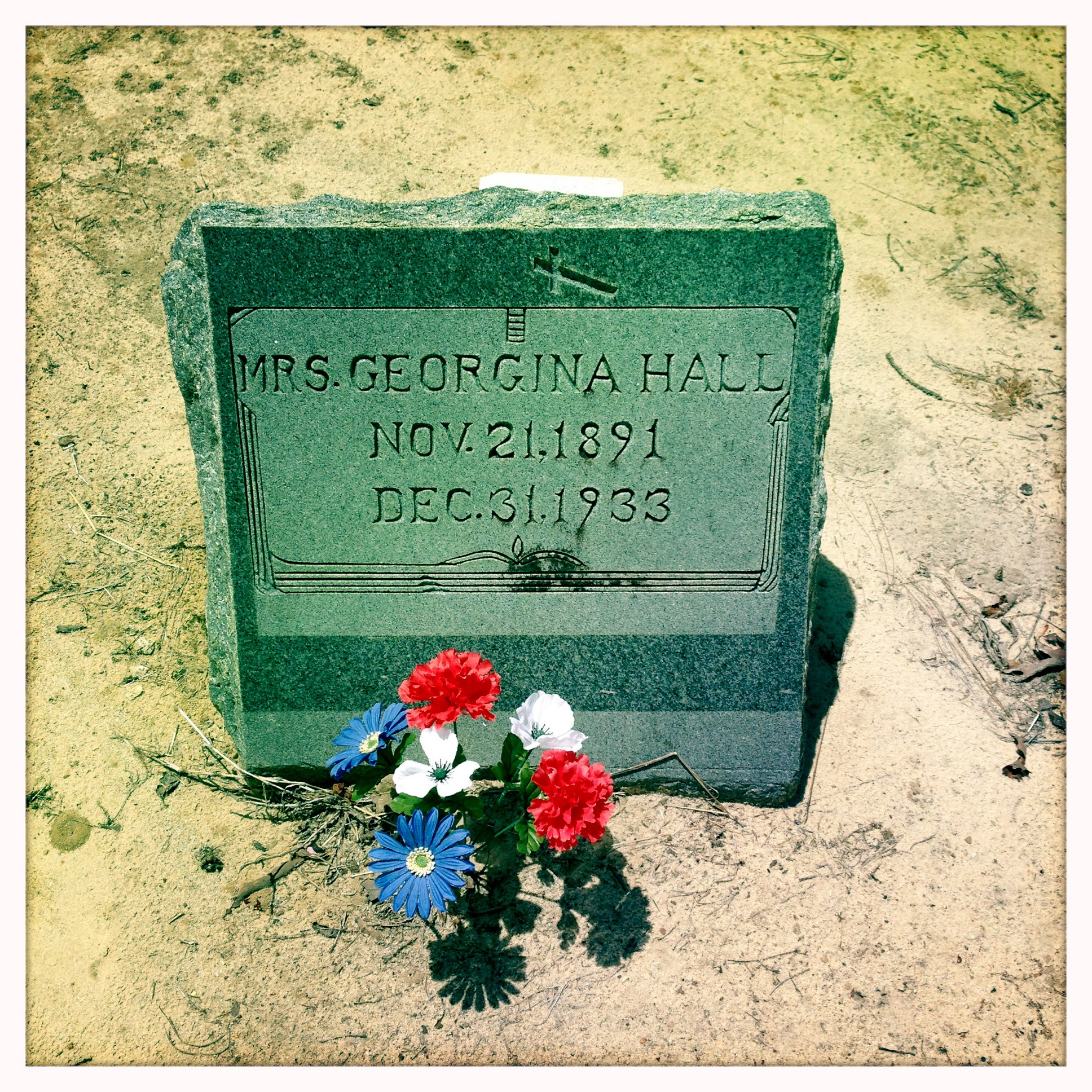
This is what dirt looks like where I’m from. It is not the plush black alluvial loam of the Mississippi Delta or the thin, rock-bedeviled soil of New England. It looks, mostly, like sand. Like in this graveyard, just south of Stantonsburg, Wilson County, where some of my Hall collateral kin lie. IMG_2195 The landscape of my childhood was level. Pine trees and flatness. Devoid, I thought, of any markers of geographical history. No boulder-strewn outcroppings, no foreboding hills, no deep-cut canyons. However, to the contrary, the most obvious relic of deep time was right under my feet.

I grew up on the western edge of North Carolina’s Coastal Plain, which was once the ocean floor. What looked like sand thrown up into the heels of my sneakers in fact was. The story wasn’t quite that simple though. I recall that patches of dirt in some places — like my parents’ back yard — are a pale gray, while others are the soft yellow of the Hall graveyard or, in veins here and there, the rusty-red of clay.

A few days ago, I found a soil survey map of Wayne County, North Carolina, dated 1916. Wayne, where my father’s mother’s people have lived since beyond memory, is just south of my home county. Seldom do I visit my parents that I don’t hop in the car for a quick dip down there. It’s a mere ten miles to the northern corner where my Artises and Haganses and Seaberrys lived, and just another 30 to get down to Dudley, where my Hendersons and Aldridges took root. What could this map, with its colorful camouflagey swirls of color, tell me about their land? The soil from which they pulled sweet potatoes and collards and the cotton and tobacco that put money in their pockets?

Screen Shot 2015-07-14 at 9.53.24 PM

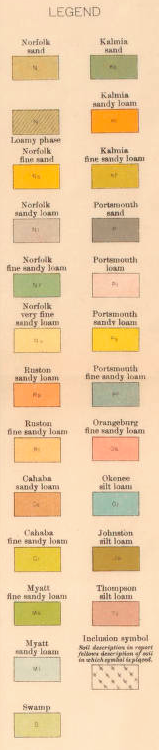
Here’s Nahunta, with Fremont at far left and Eureka at right. The road crossing from edge to edge is now known as Highway 222, and I have cousins that still live on it. That brownish sickle under N A H is marked S, which the key tells us is “Swamp.” Specifically, this is Aycock Swamp, upon whose banks Napoleon Hagans built his house. Another bit of S juts between U and N — that’s the tail end of Turner Swamp. And reaching in from Greene County is the swamp that envelops Watery Branch. Screen Shot 2015-07-14 at 9.49.48 PM Just below Eureka is a blob of Nv, “Norfolk very fine sandy loam.” The greenish Nf that dominates the frame is “Norfolk fine sandy loam.” This is Adam Artis territory. The pale lavender-gray that washes across the middle is plain “Norfolk sandy loam,” Nl. The only color left in the areas in which my family lived is the sliver of peach that hugs the south side of Aycock Swamp — Ps or “Portsmouth sandy loam.” What is all this?

From a very helpful PDF linked to the pittcountync.gov website: “The Norfolk series consists of well-drained, nearly level and gently sloping soils on uplands. These soils formed in Coastal Plain sediment. A seasonal high water table is below a depth of 5 feet. In a typical profile, the surface layer is dark grayish-brown and light yellowish-brown sandy loam about 10 inches thick. The subsoil is olive yellow and brownish yellow to a depth of about 84 inches. In the upper part, the subsoil is friable sandy clay loam mottled with red. In the lower part, it is friable sandy loam mottled with red and gray. Natural fertility and the content of organic matter are low, and available water capacity is medium. Permeability is moderate, and shrink-swell potential is low. In areas that have not received lime, reaction is strongly acid or very strongly acid. The Norfolk soils of Pitt County are important for farming. Slope is the major limitation to their use. Most of the acreage is cultivated or in pasture. The rest is chiefly in forest and in housing developments or other nonfarm uses. Where crops are grown, response is good to recommended applications of fertilizer and lime.” (Pitt County is on the other side of Greene from Wayne County.)
From the same source:  “The Portsmouth series consists of very poorly drained, nearly level soils on stream terraces. These soils formed in alluvial sediment. A seasonal high water table is at or near the surface. In a typical profile, the surface layer is very dark gray and very dark grayish-brown loam about 15 inches thick. The subsoil is about 24 inches thick. The upper part is grayish-brown, friable sandy loam mottled with grayish brown. The lower part is grayish-brown, friable, sandy clay loam mottled with yellowish brown. Below the subsoil and extending to a depth of about 68 inches is grayish-brown and light brownish-gray sand and coarse sand. Natural fertility is low, and the content of organic matter and available water capacity are medium. Permeability is moderate, and shrink-swell potential is low. In areas that have not received lime, reaction is strongly acid or very strongly acid. The Portsmouth soils in Pitt County are of only minor importance for farming. Major limitations to their use are the seasonal high water table and frequent flooding for brief periods. Most of the acreage is in forest, and the rest is chiefly in cultivated crops or pasture. Where crops are grown they respond well to recommended applications of fertilizer and lime.”

These flat acres of mostly Norfolk series soil, then, with liberal amendment, were much better quality farmland than I would have supposed.

The same was true in Brogden township, at the other end of the county. Today’s major roads, two-lane 117 Alternate and four-lane 117, which roughly parallel the railroad to the west, did not exist in 1916. (In fact, what is now Highway 117 was cut through well into my adulthood.) The railroad is still there, though, as is the road (now called O’Berry/Sleepy Creek Road) that crossed the tracks at Dudley’s little heart. Some of the little black specks you can barely see marked my people’s houses. I know, for example, that Aldridges lived along the railroad among the little dots marked opposite COAST. And the Congregational Church cemetery was just below Yellow Swamp, the shallow branch in which my people were baptized.

Soil_survey_of_Wayne_County_North_Carolina copyThe Hendersons and Aldridges and their related families, Simmonses, Wynns, Manuels, and Jacobses among them, lived within a few miles’ radius of Dudley. The soils they wrestled with included Norfolk sand (N), Norfolk sandy loam (Nl), Portsmouth sandy loam (Ps), and Ruston sandy loam (Rs). The same basic dirt as in the north of the county, with the addition of the Ruston, defined here: “The Ruston series consists of very deep, well drained, moderately permeable soils that formed in loamy marine or stream deposits. These soils are low in fertility and within the root zone have moderately high levels of exchangeable aluminum that are potentially toxic to some agricultural crops but are ideal for the production of loblolly, slash, and longleaf pine. The soils have slight limitations for woodland use and management.”

Standard
Births Deaths Marriages, Free People of Color, North Carolina, Other Documents, Paternal Kin

Collateral kin: Celia Artis and family.

As noted previously, there is no known relationship between Celia Artis and my great-great-great-grandfather Adam T. Artis, though it is likely that most free colored Artises shared a common ancestor in the misty mists of time. Like, the late 17th century. Celia’s family and Adam’s family were among several sets of Artises living in northeastern Wayne County in the antebellum era, and they intermarried and otherwise interacted regularly. Here’s what I know of Celia Artis and her descendants.

Celia Artis was born just before 1800, presumably in Wayne County. Nothing is known of her parentage or early life. She married an enslaved man named Simon and gave birth to at least six children. In 1823, she gave complete control over her oldest children to two white neighbors, brothers (or father and son) Elias and Jesse Coleman, in a dangerously worded deed that exceeded the scope of typical apprenticeship indentures: This indenture this 16th day of August 1823 between Celia Artis of the County of Wayne and state of North Carolina of the one part, and Elias and Jesse Coleman of the other part (witnesseth) that I the said Celia Artis have for an in consideration of having four of my children raised in a becoming [illegible], by these presence indenture the said four children (to viz) Eliza, Ceatha, Zilpha, and Simon Artis to the said Elias and Jesse Coleman to be their own right and property until the said four children arives at the age of twenty one years old and I do by virtue of these presents give and grant all my right and power over said children the above term of time, unto the said Elias and Jesse Coleman their heirs and assigns, until the above-named children arives to the aforementioned etc., and I do further give unto the said Elias and Jesse Coleman all power of recovering from any person or persons all my right to said children — the [illegible] of time whatsoever in whereof I the said Celia Artis have hereunto set my hand and seal the day and year above written,    Celia X Artis.

Despite the “own right and property” language, Celia did not sell her children exactly, but what drove her to this extreme measure? Because she was not legally married, her children were subject to involuntary apprenticeship until age 21. This deed records her determination to guard her children from uncertain fates by placing them under the control of men she trusted, rather than those selected by the court.

Despite the deed’s verbiage, it is likely that the children continued to live with their mother during their indenture. Certainly, Celia, unlike many independent women of the era, had the wherewithal to care for them, as evidenced by her purchase of 10 acres from Spias Ward in 1833. Wayne County deeds further show purchases of 124 acres and 24 acres from W[illiam] Thompson in 1850 and 1855.

By 1840, Celia Artis was head of a household of eight free people of color in Black Creek district, Wayne County — one woman aged 36-54; three girls aged 10-23 [Eliza, Leatha, Zilpha]; one girl under 10 [unknown]; two boys aged 10-23 [Calvin and Simon]; and one boy under 10 [Thomas].

In the 1850 census, she was enumerated on the North Side of the Neuse, Wayne County, as a 50 year-old with children Eliza, 34, Zilpha, 28, Thomas, 15, and Calvin, 20, plus 6 year-old Lumiser, who was probably Eliza’s daughter. Celia is credited with owning $600 of real property (deeds for much of which went unrecorded), and the agricultural schedule for that year details her wealth:

  • Celia Artis.  50 improved acres, 700 unimproved acres, value $600. Implements valued at $25. 2 horses. 1 ass or mule. 1 ox. 21 other cattle. 40 sheep. 500 swine. 500 bushels of Indian corn. 100 lbs. of rice. 2 lbs. of tobacco. 100 lbs. of wool. 100 bushels of peas and beans. 200 bushels of sweet potatoes.

She also appears in the 1850 Wayne County slave schedule, which records her (and another free woman of color Rhoda Reed’s) ownership of their husbands:

1850 slave sched Celia ARtis

In 1860, in a surprise move, the census taker listed Simon Pig Artis, Celia’s husband, as the head of household. If he’d been freed formally, there’s no record of it. (Simon Pig’s nickname is explained here.) He is also listed as the 70 year-old owner of $800 of real property and $430 of personal property — all undoubtedly purchased by Celia. Their household included son Thomas, daughter Zilpha, and granddaughters Lumizah, 17, and Penninah, 11. On one side of the family: the widower Adam T. Artis, his three children, his sister and her child; on the other: Celia and Simon’s son Calvin, his wife Serena [maiden name Seaberry, and a cousin of Adam’s next wife Frances Seaberry], and their four children. Other neighbors included Lemuel Edmundson.

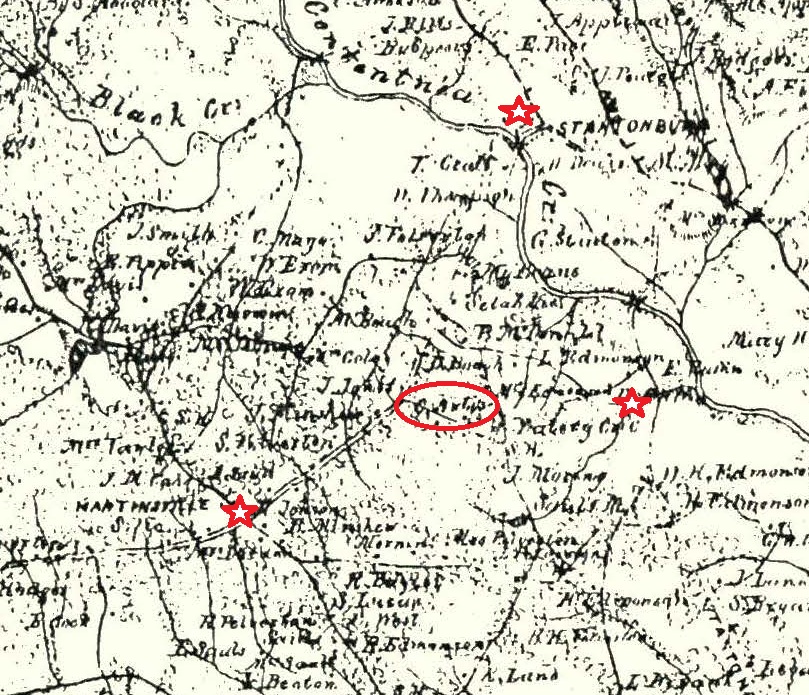
The 1863 Confederate field map below indicates “C. Artis” near Watery Branch and “L. Edmundson.” (The stars mark the creek and the towns of Stantonsburg and “Martinsville,” now Eureka.) The family’s cemetery remains on that land, as marked in the second map. (Watery Branch is perhaps a mile south along Watery Branch Road. And Diggs Chapel, presumably, is connected to the family. See Eliza Artis, below. The road visible below Celia’s name on the 1863 map was probably the precursor of Watery Branch Church Road.) Conf Field Map 2

Watery Branch

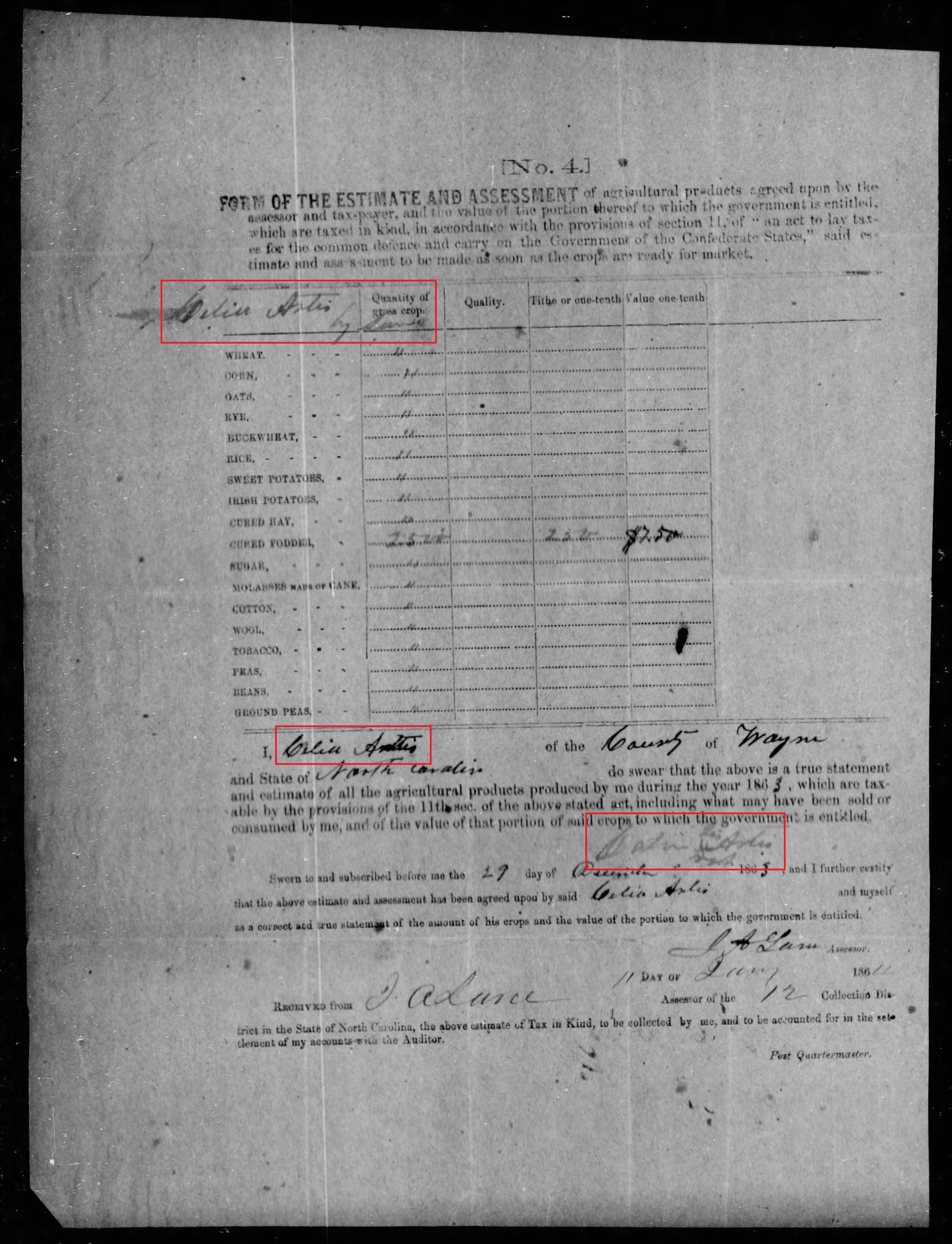
During the Civil War, both Celia Artis and her son Calvin were assessed taxes by the Confederate state government in the form of tithed crops. In December 1863, Celia had to hand over a tenth of her 2500 pounds of cured fodder to support the war effort.

celia artis conf

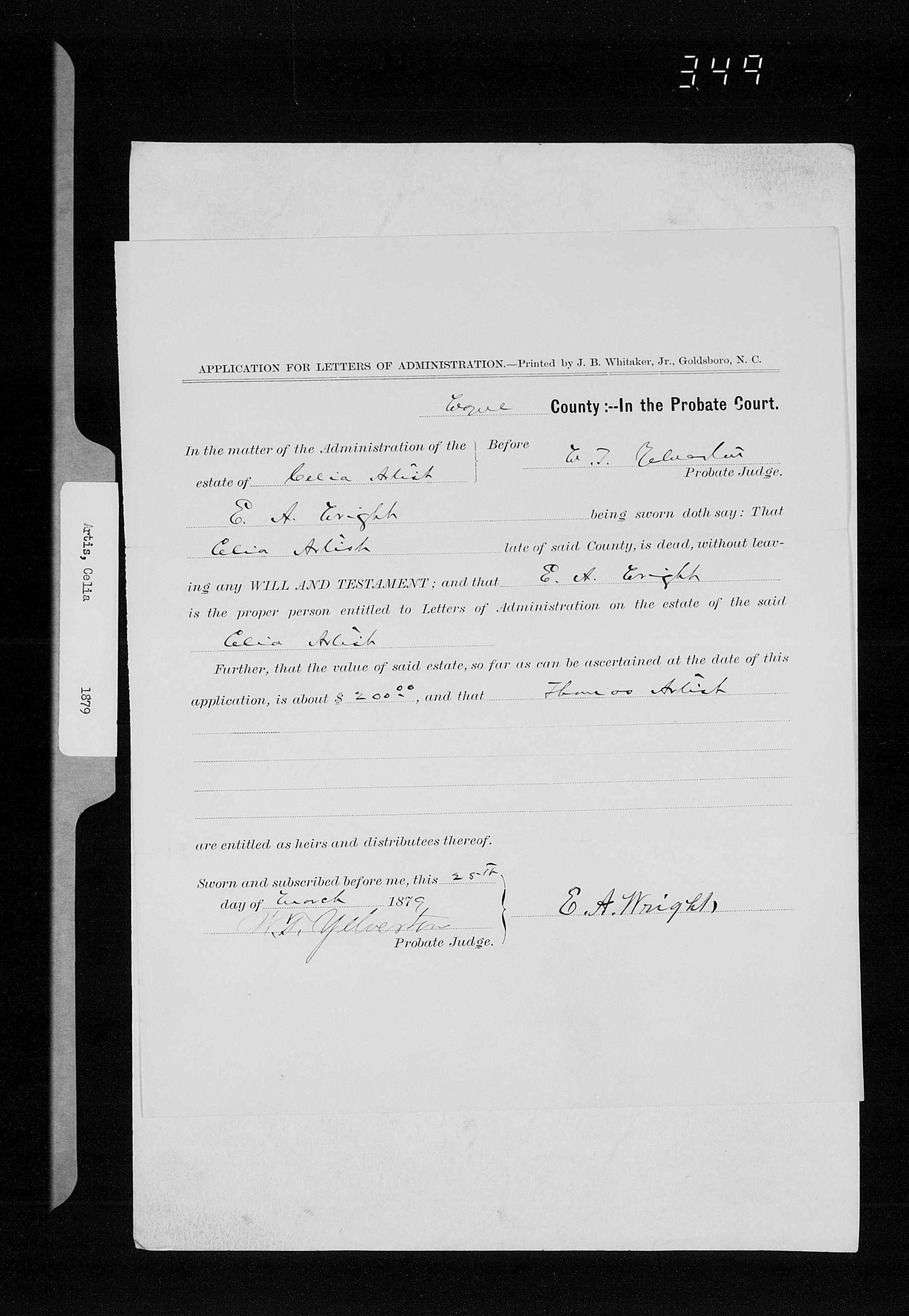
Neither Celia nor Simon appears in the 1870 census. It seems likely that Celia was alive for at least a few more years, however, as her estate was not opened until 1879. It was surprisingly small, suggesting that she had distributed most her land and valuables (or otherwise lost them) before her death. Son Thomas is listed as the sole heir to her $200 estate. I don’t know what became of Simon Pig.

record-image_TH-1971-35571-13786-29

Here’s what I know of Celia Artis’ children:

  • Eliza Artis was born circa 1816. She never married but had at least three daughters, Loumiza, Frances and Penina Artis. Descendants assert that the father of some or all of them was James Yelverton, a white farmer who lived nearby. Loumiza is known only from the 1850 and 1860 censuses. Frances was born about 1845. She never married but had at least two children, Sula and Margaret, allegedly by Wilson (or William) Diggs, whom she married in Wayne County on 15 October 1868. (Margaret’s daughters Etta and Minnie Diggs married William M. Artis and Leslie Artis, respectively, a son and grandson of Adam T. Artis. Sula’s daughter Lizzie Olivia married Leslie Artis’ brother Odell.) Penina, born about 1849, married James Newsome. Eliza’s will was filed in Wayne County:

In the Name of God Amen: I Eliza Artis of the County of Wayne and State of North Carolina being of sound mind and memory and considering the uncertainty of human life do therefore make Publish and declare this to be my last Will and testament: That is to say first after all my burial expenses are paid and discharged the residue of my estate. I give and bequeath and dispose of as follows to wit to John Newsom son of James Newsom and Penina Newsom Four Dollars to Francis Diggs all the balance of my personal and real estate that I may be in Possession of at my death during her Natural life and after the death of said Francis Diggs all of said Personal and real estate is to be equally divided between Francis Diggs’s three children Sula Artis Margrett Diggs and William Diggs Likewise I make constitute and appoint Noble Exum and George Exum to be my Executors to this my last Will and testament hereby revoking all former wills made by me In witness whereof I have hereunto subscribed my name and affixed my seal this the eleventh day of February in the year of our lord one Thousand eight hundred and Ninety  Eliza X Artice {seal} In the presence of Witnesses John H. Skinner, R.H. X Locus  Hand-written notation in margin: “See Book No 32 Page 320 Register of Deeds Office” [Wayne County Will Book 1, page 524]

IMG_2213

——

  • Letha Ann Artis (the “Ceatha” above) was born about 1820 and married John Artis. They lived in the Eureka area of Wayne County and their children included Sarah Artis, Zachary/Zachariah Artis, James Artis, Mildly Artis Baker (whose grandson Richard V. Baker married Lillie Odessa Artis, daughter of Henry J.B. Artis and granddaughter of Adam T. Artis), William Thomas Artis, Elizabeth Artis Brantham, and Jackson Artis. Letha Ann died circa 1896.

I Lethy Ann Artice of Nahunta Township, State of North Carolina being of sound mind and memory, do declare this to be my last will and testament. I give and bequeath to my son James Artice Five acres of land known as my fathers place to have to hold through his natural life, after his death to Maggie Artis his daughter. But should she want to live on said land before his death, I give her a right, so to do. I give and bequeath to Luby Baker and Anna Baker the children of Mildly Baker Four acres provided Mildly Baker shall be guardian for said children until they reach their majority. I give and bequeath to Bettie Bradford and Brantham Five acres land to have and to hold their natural life afterwards to their heirs. I give and bequeath to Zachary Artice Five acres land. I give and bequeath to John and Octavius the sons of Thomas Artis my son Four acres land if they should want to sell each other all right but no one else. I give and bequeath to Zachary his fathers chest. All heirs to pay Zachary Artice for burial expenses Sarah & Jackson, before coming in possession of the property I give. I also give to Zachary the big pot, I also give him his house, no matter on whose land it falls on. Be it understood I have already given Zachary ½ acre during my life time. I also gave Thomas Two Dollars and a Bull. I also give Baker a cow and calf, Betsey two Dollars I say this to show what I have given. Betsey and Mildly I give one bed a piece, my large bed to be divided between Tom & Zachary. I also give Maggie Artice James daughter, Sarahs chest. I also give the [illegible] and gear to Scintha Ann Artice. All the heirs, with Scintha Ann take my wearing clothes also House furniture also. But should Zachary want any particular thing, as he been my protector let him have it I appoint I.F. Ormond Executor of this will. In witness whereof I Letha Ann Artice have herewith set my hand and seal This 9th day of Oct 1892   Letha Ann X Artice Subscribed by the testator in the presence of each of us and declared by her to be the last will testament Witnesses   J.H. Skinner, Noble Exum  [Wayne County Will Book 2, page 184; proved 2 January 1897, Superior Court, Wayne County]

——

  • Zilpha Artis was born in the 1820s. She never married and had no known children. She died in 1882, leaving this will:

Know all men by these presents that I Zilpha Artis of the County of Wayne and State of North Carolina being of sound mind and memory but considering the uncertainty of life do make and declare this my last will and testament in manner and form following that is to say. That my Executor Philip Fort shall provide for my body a decent burial according to the wishes of my relatives and friend and pay all funeral expenses together with my just debts to whomsoever due out of the money that may first come into his as a part or parcel of my estate. I give and devise to my niece Francis Diggs all of my entire lands and all my household and Kitchen furniture to have and to hold to her the said Francis Diggs for and during the time of her natural life and after her death to be equally divided between her two children Sula Artis and Margaret Diggs their heirs and assigns forever I give and bequeath to my Sister Eliza Artis the sum of fifty cents I give and bequeath to my Sister Leatha Artis the sum of fifty cents I give and bequeath to Brother Calvin Artis the sum of fifty cents And I give and bequeath to my brother Thomas Artis the sum of fifty cents And lastly I do hereby appoint and constitute Phillip Fort my lawful executor to all intents and purposes to execute this my last will and testament according to the true intent and meaning of the same and every part and clause therein hereby revoking and declaring utterly void all other wills and testaments by me heretofore made. In testimony whereof I the said Zilpha Artis do hereunto set my hand and seal this 19th day of November A.D. 1881    Zilpha X Artis {seal} Signed and sealed in the presence of B.J. Person, John B. Person [Wayne County Will Book 1, page 245; proved 20 September 1882, Probate Court, Wayne County]

——

  • Simon Artis. I’ve found no record of Simon after his 1823 indenture to the Colemans.

——

  • Calvin Artis, known as Calv Pig, was born about 1830. In 1853, he married Serena Seaberry, daughter of Theophilus and Rachel Smith Seaberry and a cousin of Adam Artis’ wife (and my great-great-great-grandmother) Frances Seaberry Artis. Their children were Martha Artis Locus, Polly Artis, James Madison Artis (who married Adam T. Artis’ oldest daughter Caroline Coley), Henry T. Artis, Nettie Artis Exum, Ellen Artis, Talitha Artis, Simon Artis, and Jeffersonia Artis. Calvin seems to have died between 1880 and 1900.

——

——

Federal population, agricultural and slave schedules;Confederate Papers Relating to Citizens or Business Firms, 1861-1865, National Archives and Record Administration; Deeds, Register of Deeds Office, Wayne County Courthouse, Goldsboro; Will Books, Office of Clerk of Superior Court, Wayne County Courthouse, Goldsboro.

Standard
Education, Other Documents, Paternal Kin

Bison.

I’ve been striking gold with the Randalls. A number of Howard University’s yearbooks have been digitized, and searches of random years yielded these Randall collegians, as well as a cousin descended through their grandmother Fannie‘s brother Matthew: Screen Shot 2015-07-05 at 8.13.44 PM

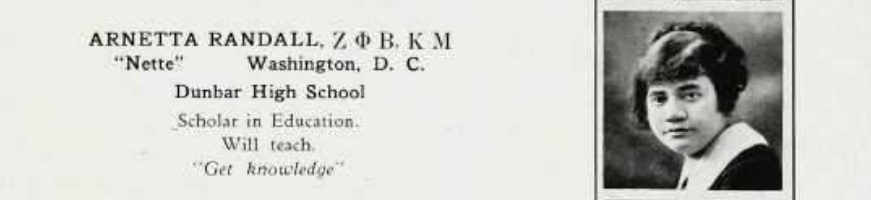
Arnetta L. Randall, Class of 1925.

Arnetta was the second daughter and seventh child of George and Fannie Aldridge Randall. (Oscar and Fred Randall were among her brothers.) A teacher and lifelong resident of the District, she never married.

——

Screen Shot 2015-07-12 at 1.38.01 PM

Screen Shot 2015-07-12 at 1.45.27 PM

Mable Margaret Williams, Class of 1933.

Screen Shot 2015-07-05 at 8.24.02 PM

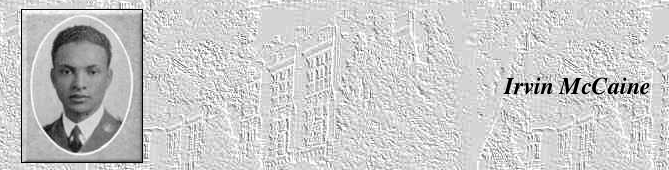
Irvin LeFetus McCaine, Class of 1934.

Irvin L. McCaine married Mable Margaret Williams, daughter of Clarence J. and Daisy B. Aldridge Williams of Goldsboro and later Asheville, North Carolina. Mable’s maternal grandparents were Matthew W. and Fannie Kennedy Aldridge. Here’s Cousin Irvin in high school (Class of 1929), courtesy of an Oakland High School memorial website:

Screen Shot 2015-07-05 at 11.00.51 PM

——Screen Shot 2015-07-05 at 8.02.52 PM

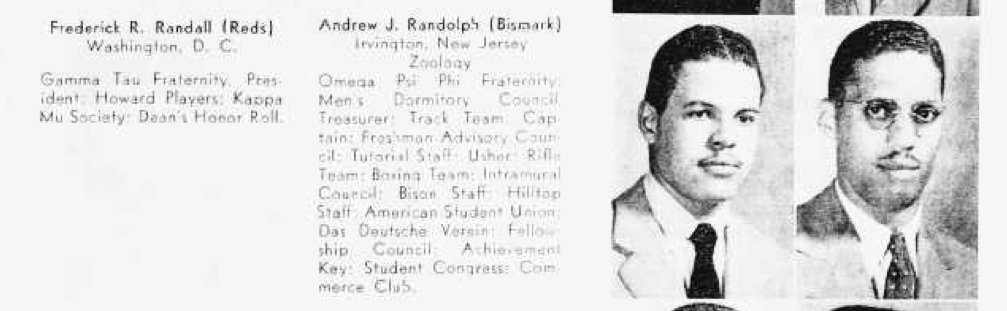
Frederick Russell Randall, Class of 1942.

Son of Fred R. and Lucille Stewart Randall, Frederick Randall also attended medical school at Howard and briefly practiced at the hospital there before moving to New York City. (Ada Randall Reeves was his sister.)

Screen Shot 2015-07-05 at 10.10.03 PM

The Crisis, December 1962.

Ten or 15 years ago, I received an email message from a professional genealogist in New York who had been hired to research Dr. Frederick Randall’s family. Through her I learned what had become of my great-great-grandfather’s youngest sister Frances Aldridge Locust — Cousin Frederick’s grandmother — whom I’d lost track of after her marriage. She and her husband had changed their surname to Randall, it turns out, and moved to Washington DC. The genealogist and I exchanged information over the course of several emails and letters, and I spoke with Cousin Frederick by phone — among other things, about his interaction with his cousin, and my great-grandfather J. Thomas Aldridge — but I never got the opportunity to meet him. I Googled his name tonight and found this:

RANDALL–Frederick R., MD. 91. Former Surgeon and Professor of Surgery at Columbia-Presbyterian Medical Center. He had compassion for his patients; and wisdom for his students. A devoted husband and loving father, he leaves Elizabeth [W. Glover], his wife of over 68 years and his sons, Derek and John. A bereaved family is consoled by cherished memories. What be it worth the life of a man, but that which he himself has given to it? This strong man gave much. Published in The New York Times on Apr. 6, 2014.
Standard
Land, North Carolina, Other Documents, Paternal Kin

Cousins and covenants.

“In November of 1945, Ada Reeves bought a charming little bungalow at 1303 Kearny St. NE in Brookland. She expected to move in without any problems, but instead was sued by her neighbors. The cause? The color of her skin. Ada Reeves was African American, and her new home’s deed contained a covenant that said the house was not to be sold to a black person.”

While running a Google search for Fred R. Randall, I happened upon a blog dedicated to the history of Brookland, a neighborhood in northeast Washington DC. A December post on racially restrictive covenants opened with the sentences above. Further down: “As for the case of Ada Reeves: her father, Fred Randall, contacted Charles Hamilton Houston in 1945 to look into the case,” and copies of a letter from Randal to Houston. Charles Hamilton Houston, called “The Man Who Killed Jim Crow” was an early African-American civil rights lawyer and mentor to Thurgood Marshall. And Fred Randall is Cousin Fred.

Many thanks to Bygone Brookland, and for the full post, see here.

Standard